In my years as a biologist, I’ve learned that the “eagle” is as much a symbol as it is a biological classification. Whether I was scanning the rugged cliffs of the Australian Outback or navigating the dense, humid rainforests of Central America, that moment of looking up and seeing a massive silhouette never loses its magic.
But here is the thing: what you think is an eagle often isn’t. I can’t tell you how many times I’ve seen tourists in Mexico point at a type of vulture or a Caracara and yell “Eagle!” While they share that predatory “vibe,” of many birds of prey, eagles are a distinct group within the family Accipitridae.
In this deep dive, we are moving past the common mistakes. We aren’t talking about owls, falcons, kestrels, or hawks today. We are focusing strictly on the true heavyweights: the various kinds of eagles. From the iconic Bald Eagles I’ve watched by the hundreds in British Columbia to the “ghosts” of the canopy like the Harpy, let’s break down 15 species that define what it means to be a raptor.
What Defines an Eagle?
Before we get into the list, we have to define our scope. Biologically, “eagle” is a bit of an informal term. Eagles are large diurnal raptors belonging to the family Accipitridae and consist of several genera. Most belong to four main groups:
- Sea and Fish Eagles: Water lovers (like the Bald Eagle).
- Snake and Serpent Eagles: Specialists that hunt reptiles.
- Harpy (Forest) Eagles: Giant, short-winged powerhouses of the deep woods.
- Booted (True) Eagles: Recognizable by their feathered legs (like the Golden Eagle).
Eagles are often informally divided into four groups: snake eagles, fish eagles, booted eagles, and harpy eagles.
There are roughly 60 to 64 species of eagle worldwide, found on every continent except Antarctica. Most of the 68 species of eagles are found in Eurasia and Africa.

1. Bald Eagle (Haliaeetus leucocephalus)
Region: North America
A true conservation success story, the Bald Eagle is now common across Canada and the Pacific Northwest, especially around salmon rivers where large numbers gather.
This sea eagle gains its iconic white head and tail at about 4–5 years; juveniles are mottled brown and often mistaken for Golden Eagles. In flight, it holds its wings flat while gliding, and young birds show pale mottled wing linings.
Adults are unmistakable: dark brown body, snowy white head and tail, and a large yellow-based bill. They stay close to big waterways, build enormous stick nests (eyries) in tall trees, and typically mate for life.

2. Golden Eagle (Aquila chrysaetos)
Region: Northern Hemisphere — North America, Europe, Asia, North Africa
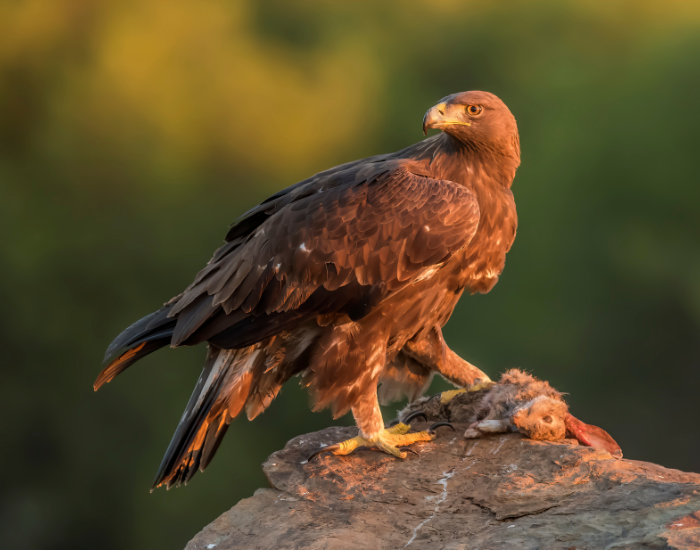
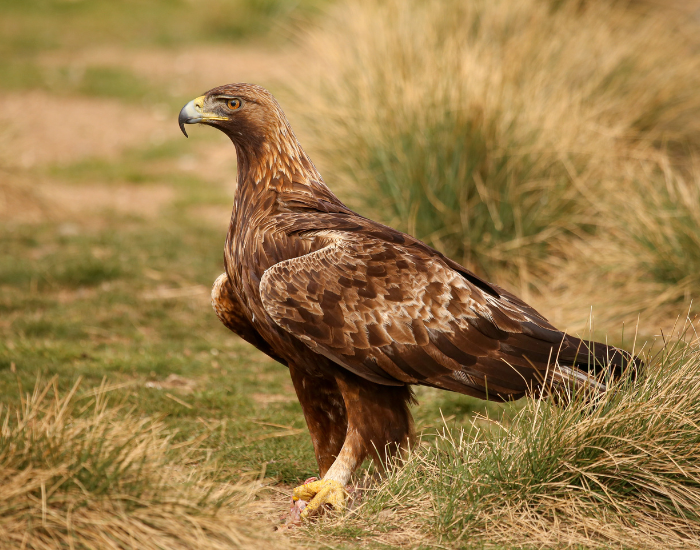
This is the standard-bearer for true eagles. Unlike the Bald Eagle, Aquila chrysaetos is a booted eagle, meaning its feathers go all the way down to its toes — the classic sign of the genus Aquila. In my experience, Golden Eagles are far more elusive than their famous counterpart. They prefer open country across North America, Asia, and North Africa — mountains and plateaus where they use a 7-foot wingspan to soar for hours, scanning for prey like rabbits, ground squirrels, and even medium-sized ungulates. The Golden Eagle has the widest range of any eagle on the continent.
3. Steller’s Sea Eagle (Haliaeetus pelagicus)
Region: Northeast Asia (Vagrants occasionally seen in North America)
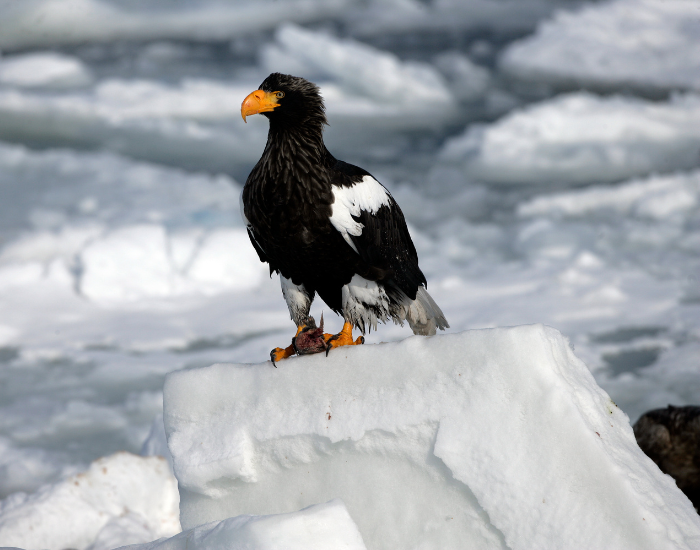
This is arguably the most impressive bird you will ever see. It’s a massive, yellow-beaked tank. The Steller’s Sea Eagle is one of the heaviest eagles, recognized by its dark body and massive yellow bill. While native to Russia and Japan, a “vagrant” Steller’s Sea Eagle famously became a viral sensation between 2021 and 2025. Coastal Alaska is a prime location for observing Steller’s Sea Eagles, though sightings are rare. If you’re ever lucky enough to spot one, look for the massive white shoulder patches and a beak that looks like it could crush a bowling ball.
4. Harpy Eagle (Harpia harpyja)
Region: Central and South America
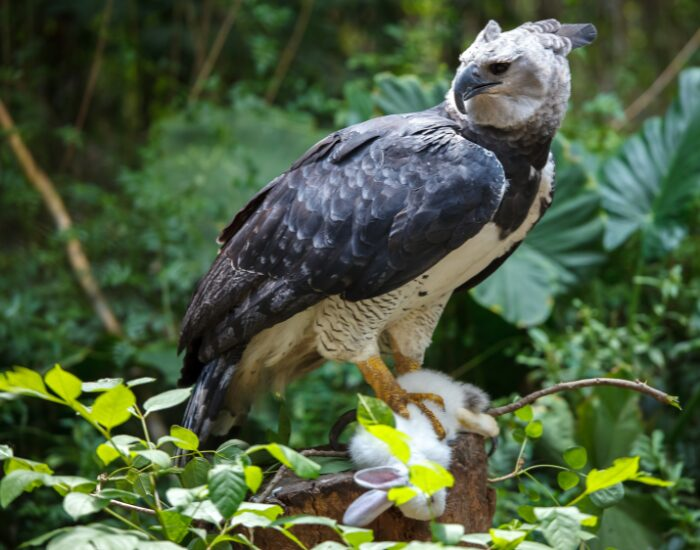
The Harpy is the stuff of legends. An iconic jungle bird. I spent weeks in the Darien Gap trying to catch a glimpse of one. They are the largest eagle in the Americas and hunt within the tropical rainforests of Central and South America. Their talons are the size of grizzly bear claws, which they use to snatch sloths or monkeys right off the branches. Because they live and hunt within dense forest, the Harpy Eagle has relatively short, broad wings, designed for agility rather than soaring. If you want to find one, look up in the canopy, not out over open fields.
5. Philippine Eagle (Pithecophaga jefferyi)
Region: Philippines
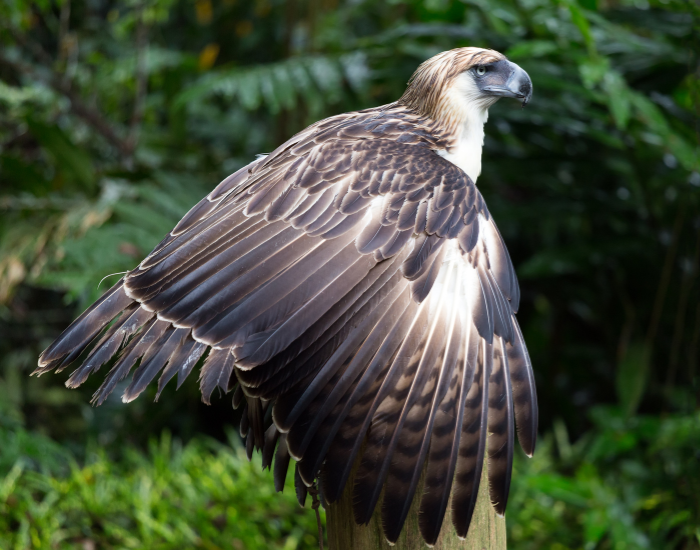
Often called the Monkey-eating Eagle, this critically endangered species has a long, shaggy crest that makes it look like it stepped out of a prehistoric jungle. It competes directly with the Harpy and Steller’s for the title of largest eagle in terms of length and wing surface area. Conservation programs are fighting to preserve its last remaining forest habitat, making every sighting a rare and deeply meaningful event.
6. Wedge-Tailed Eagle (Aquila audax)
Region: Australia and Southern New Guinea
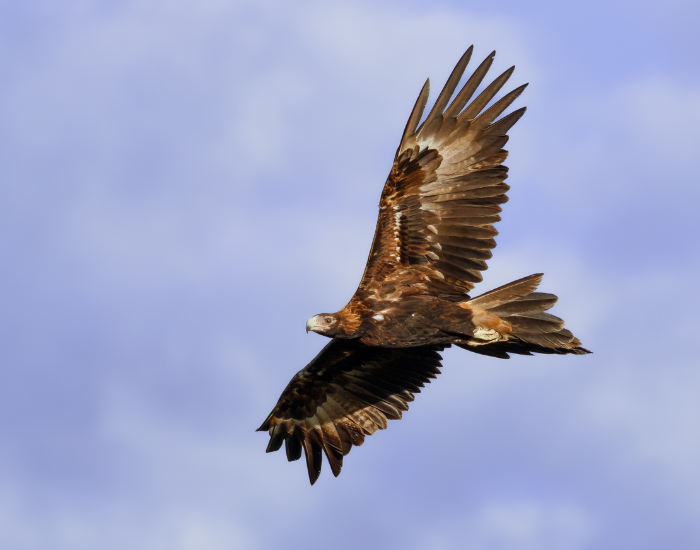
In Australia, Wedgies are the undisputed kings. Their tail — a distinct diamond or wedge shape — makes them very easy to identify even at a distance. They are among the top 10 largest eagles by wingspan, and their dark brown plumage is a great identifier over the Australian scrublands. Because they belong to the genus Aquila, they also have those characteristic feathered legs all the way down.
7. African Fish Eagle (Haliaeetus vocifer)
Region: Sub-Saharan Africa
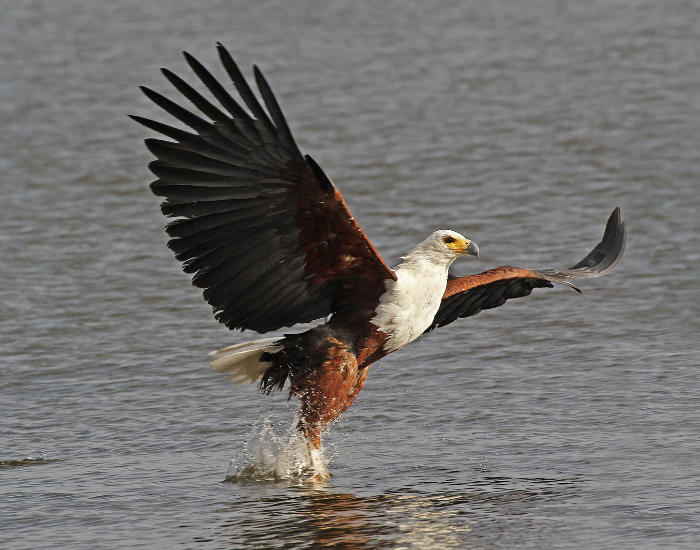
If you have ever watched a nature documentary set in Africa, you know the sound of this sea bird — a haunting, high-pitched call that echoes across every river and lake on the continent. The African Fish Eagle is a sea eagle that looks like a sleeker, more colorful cousin of the Bald Eagle: white head, white chest, and rich chestnut body. They hunt fish with extraordinary precision, diving talons-first and snatching prey right out of the water. Across Sub-Saharan Africa, they are a defining symbol of the wilderness.
8. Martial Eagle (Polemaetus bellicosus)
Region: Sub-Saharan Africa
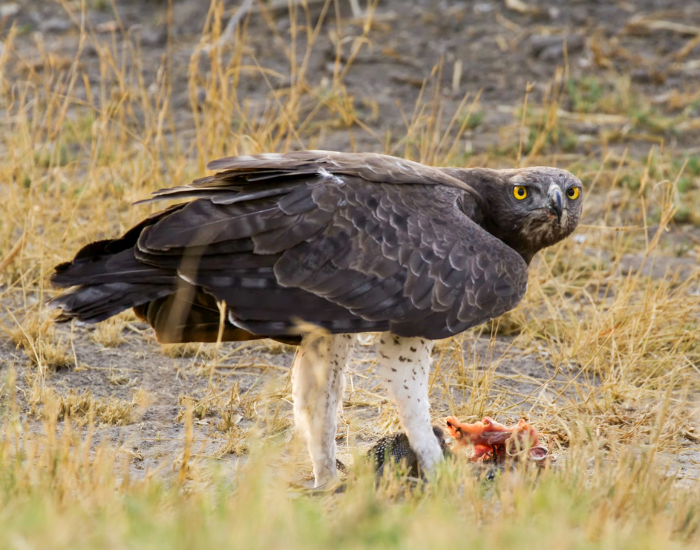
This is the largest eagle in Africa by weight, and it commands absolute respect. The Martial Eagle is a booted eagle with a spotted chest and an attitude to match its size. Reports of these birds taking down prey as large as small antelopes or young jackals are well documented. What sets them apart from many African raptors is their strategy: they hunt by soaring high above open terrain, using their keen eyesight to spot prey from extraordinary distances, then diving with devastating speed.
9. White-Tailed Eagle (Haliaeetus albicilla)
Region: Eurasia and Greenland
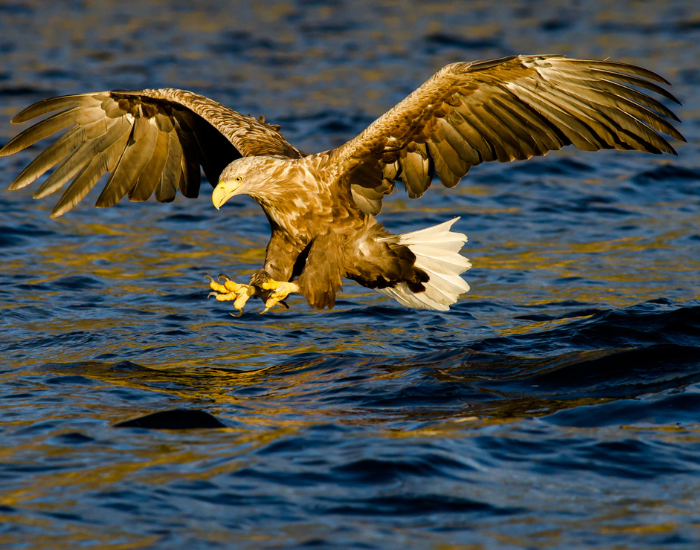
Think of this as the European cousin to the Bald Eagle. Also known as the Erne, the White-Tailed Eagle was once nearly extinct in the UK but has made a massive comeback thanks to dedicated reintroduction programs. Their barn-door wingspan — up to 8 feet — makes them look more like a flying rug than a bird. Unlike the Bald Eagle, this species has bare lower legs and a noticeably shorter, wedge-shaped white tail. Soaring over Scottish lochs or Scandinavian fjords, they are a conservation success story worth celebrating.
10. Bateleur (Terathopius ecaudatus)
Region: Africa and Arabia
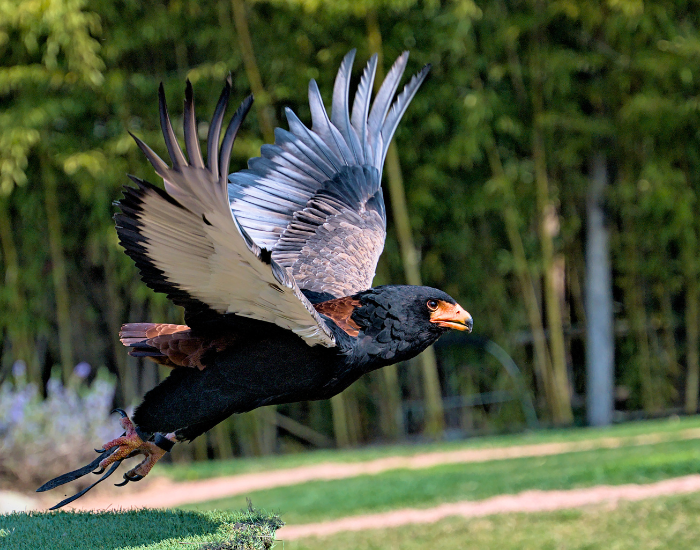
The Bateleur is a snake eagle — but an eccentric one. It has an extremely short tail and long wings, giving it a distinctive rocking flight pattern that makes it unmistakable in the sky. In French, bateleur means “tightrope walker,” and that name fits perfectly. They’re also remarkably colorful, with bright red facial skin and striking black, white, and chestnut plumage. In Africa, they are reliable indicators of healthy savanna ecosystems.
11. Crested Serpent Eagle (Spilornis cheela)
Region: Tropical Asia
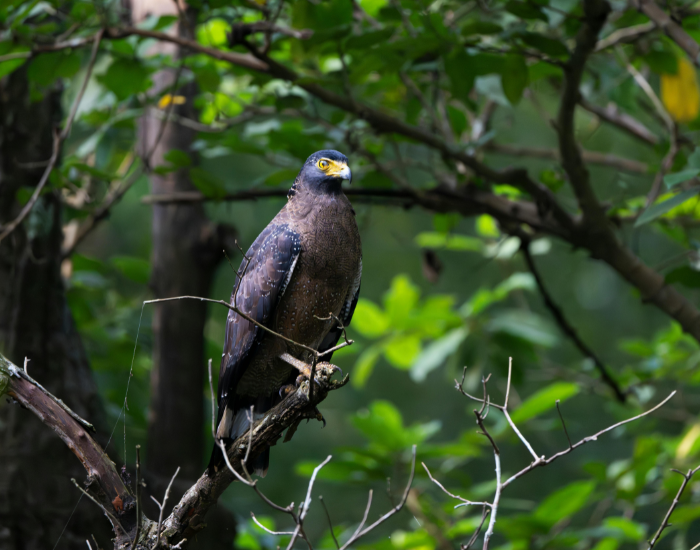
These are true specialists. If you are in the forests of India or Southeast Asia and spot a medium-sized eagle with a speckled belly, it is almost certainly a Crested Serpent Eagle. Like all serpent eagles, they have thick, scaled tarsi to protect against the venomous snakes they hunt. Their broad, rounded wings help them maneuver through dense Asian forest cover. Watch for the bold black-and-white crest when they are alarmed, it fans out dramatically.
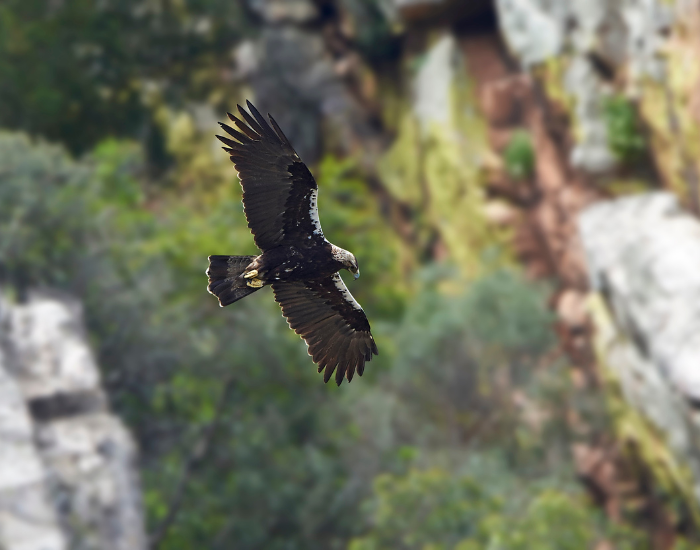
12. Spanish Imperial Eagle (Aquila adalberti)
Region: Iberian Peninsula
One of the rarest eagle varieties in the world, the Spanish Imperial Eagle was nearly wiped out in the 20th century. Thanks to intensive conservation work in Spain, the population has recovered from a low of around 30 breeding pairs. It looks similar to a Golden Eagle but carries distinct white epaulettes on its shoulders — a reliable field mark. It is a booted eagle of the genus Aquila, hunting rabbits and other prey across the cork oak forests of Iberia.
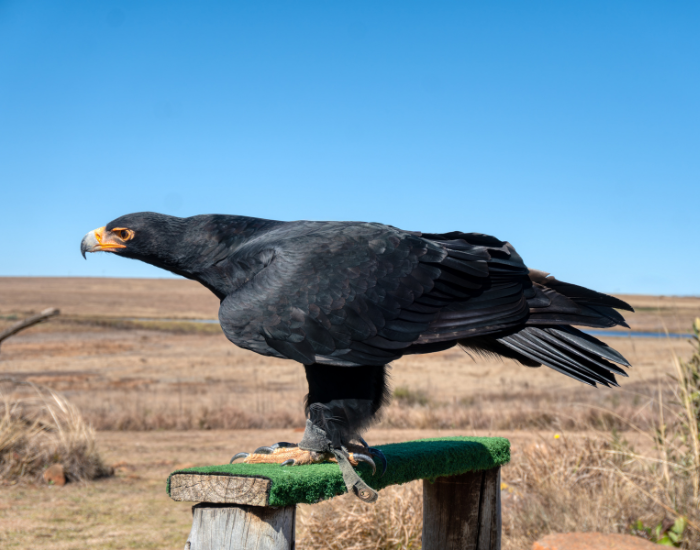
13. Verreaux’s Eagle (Aquila verreauxii)
Region: Africa
Also known as the Black Eagle, Verreaux’s Eagle is one of the most visually striking raptors in Africa. Its jet-black plumage contrasts sharply with a white V on its back and white wing patches visible in flight. But what makes this eagle truly fascinating is its extreme dietary specialization: it almost exclusively hunts rock hyraxes, small social mammals that live in rocky kopjes and mountain outcrops. Follow the hyraxes, and you’ll find the eagle.
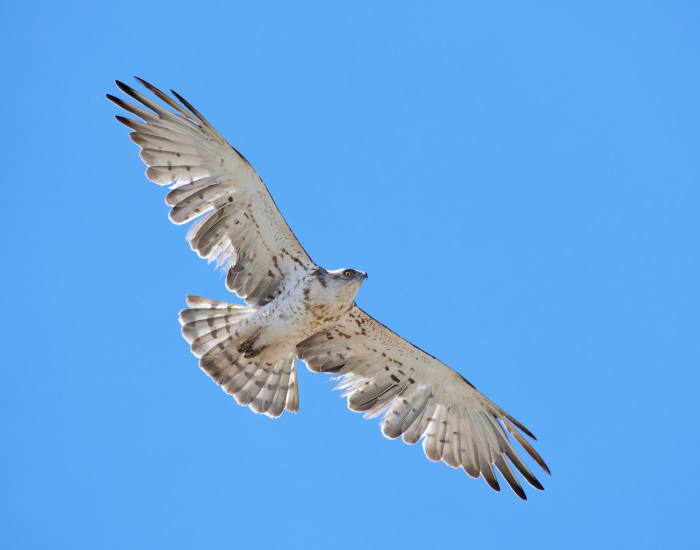
14. Short-Toed Snake Eagle (Circaetus gallicus)
Region: Europe, North Africa, and Asia
As the name suggests, this eagle has short, powerful toes designed to grip slippery snakes. They hunt across open habitats from Mediterranean Europe to Central Asia, and their pale underparts and owl-like face make them recognizable once you know what to look for. They’re an excellent example of how serpent eagles have evolved entirely around a single prey type.
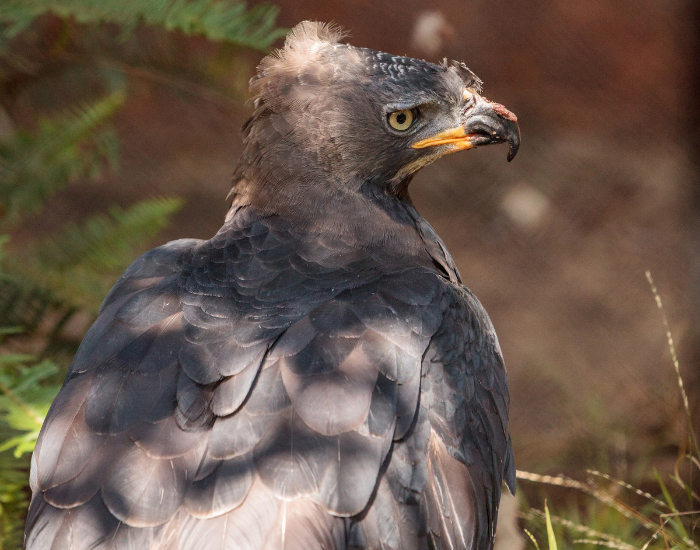
15. Crowned Eagle (Stephanoaetus coronatus)
Region: Sub-Saharan Africa
While the Martial Eagle is Africa’s largest, the Crowned Eagle is arguably its most powerful. It lives in the forest and has relatively short wings for maneuvering through trees. It’s a specialist at hunting monkeys, often working in pairs to flush them out.
Eagle Identification: Quick Tips for the Field
Identifying different types of eagles comes down to three things: Silhouette, Range, and Age.
While North America (north of Mexico) only has two resident species—the Bald Eagle and the Golden Eagle—they belong to two entirely different genera. Understanding their distinct traits is the first step toward master-level birding:
- Look at the legs: If they are feathered to the toes, it’s a “True Eagle” (like a Golden). If the legs are bare, it’s likely a Sea or Snake eagle.
- Check the tail: A wedge shape? Probably a Wedge-tailed Eagle. A white tail? Likely an adult Bald or White-tailed.
- Location is everything: You won’t see a Harpy Eagle in Canada, just like you won’t see a Bald Eagle in the Australian bush.
- Context of Habitat: Beyond Eurasia and Africa, eagles thrive across the Americas and Australia, each adapted to their specific environment—from the dense jungles of the Amazon to the open scrublands of the Northern Territory.
FAQ: Common Questions About Eagle Species
There are approximately 70 to 75 recognized species of eagles globally. Eagles are generally distributed in all types of habitats across the world, from tundra to tropical rainforests and deserts.
By most metrics (weight and wingspan), the top five are the Steller’s Sea Eagle, Philippine Eagle, Harpy Eagle, White-tailed Eagle, and the Wedge-tailed Eagle. The largest eagles are often debated based on different measurements such as weight, length, or wingspan.
There are only two resident species: the Bald Eagle and the Golden Eagle. Occasionally, vagrants like the Steller’s Sea Eagle or the White-tailed Eagle (in Alaska) are spotted.
The Golden Eagle has the widest distribution of any eagle, ranging across the entire Northern Hemisphere.
The smallest species of eagle is the Great Nicobar serpent eagle, weighing about 450 grams.
Know What You’re Looking At
Understanding the various types of eagles is about more than just checking a name off a list. It’s about seeing the “design” of nature, how a Harpy’s wings are short for the forest, or how a Snake Eagle’s legs are armored for battle.
Next time you look up, don’t just say “eagle.” Look for the leg feathers, the tail shape, and the habitat. You might realize you’re looking at something much rarer than you thought.
References:
Airola, D. A., Jones, J., Skalos, S., Hunter, C., Estep, J. A., Williams, R., & Kayner, K. (2025). Bald eagle population increase, reproductive success, and nesting habitat in central interior California. California Fish and Wildlife Journal, 111(3). https://doi.org/10.51492/cfwj.111.3
Ferrer, M., Newton, I., & Muriel, R. (2013). Rescue of a small declining population of Spanish imperial eagles. Biological Conservation, 159, 32–36. https://doi.org/10.1016/j.biocon.2012.10.011
Karabanina, E., Lansink, G. M. J., Ponnikas, S., & Kvist, L. (2024). A renewed glance at the Palearctic golden eagle: Genetic variation in space and time. Ecology and evolution, 14(3), e11109. https://doi.org/10.1002/ece3.11109
Mamarajabov, S. N., & Ochildiev, O. S. (2023). Diversity of birds of prey belonging to the Accipitridae family in the eastern part of the Kugitang Range. E3S Web of Conferences, 390, Article 07047. https://doi.org/10.1051/e3sconf/202339007047
Murgatroyd, M., Avery, G., Underhill, L. G., & Amar, A. (2016). Adaptability of a specialist predator: The effects of land use on diet diversification and breeding performance of Verreaux’s eagles. Journal of Avian Biology, 47(6), 834–845. https://doi.org/10.1111/jav.00944
Sutton A. E. (2015). Leadership and management influences the outcome of wildlife reintroduction programs: findings from the Sea Eagle Recovery Project. PeerJ, 3, e1012. https://doi.org/10.7717/peerj.1012