
The Quiet Observer
I’ve always been a quiet kid, perhaps a bit of an enigma myself. While others ran, I watched. While they spoke, I listened. That deeply observant nature, that instinct to find the beauty and complexity in the stillness, is what eventually led me down the winding path of a biologist, traveling to remote corners of the world to study the wild things.
There is one creature, however, that has always mirrored that early sense of mystery for me: the owls.
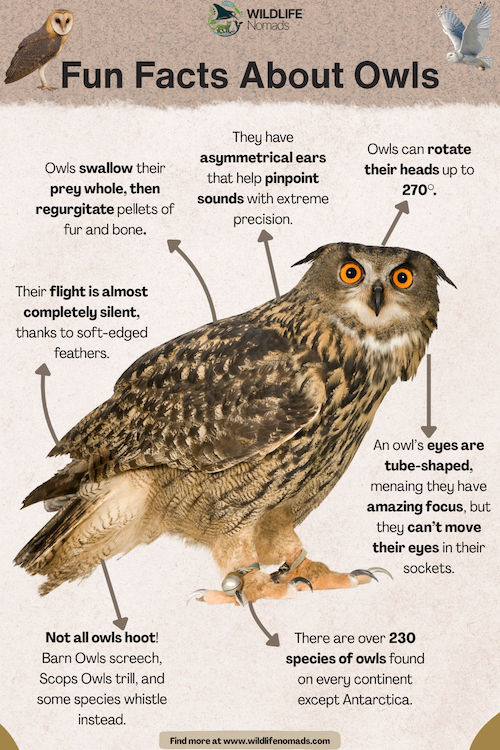
Everywhere I went, from the varied landscapes in latin america to the forests of australia, the simple presence of an owl, often unseen, but always felt, carried that same intense, quiet power. Their almost supernatural silence in flight, their piercing, knowing gaze, and their profoundly nocturnal habits made them, to me, the ultimate wildlife discovery.
The world of owls is far richer than just the familiar “hoot.” They are master predators, ecological keystones, and, yes, some of the most beautiful and diverse birds on the planet. Forget the academic jargon; let’s dive into the field, put on our critical-thinking caps, and explore the science and stories behind the most iconic types of owls you can find.
Are Owls Birds, Animals, or Something Else? Clearing Up the Classification
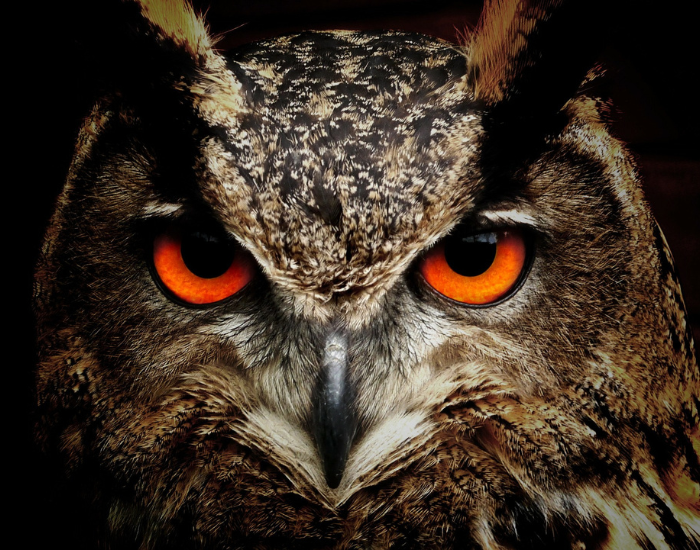
Let’s tackle the foundational question that pops up everywhere: Is an owl considered an animal? Are owls birds?
The short answer is yes to both! Every bird is classified as an animal. Specifically, owls belong to the Class Aves (birds) and the Order Strigiformes (birds called Strigiformes). This makes them fully fledged birds, not mammals (like bats, for example). So, if you ever wonder, “what kind of animal is an owl?”, you can confidently say it’s a raptor, a bird of prey, known for its incredible hunting prowess.
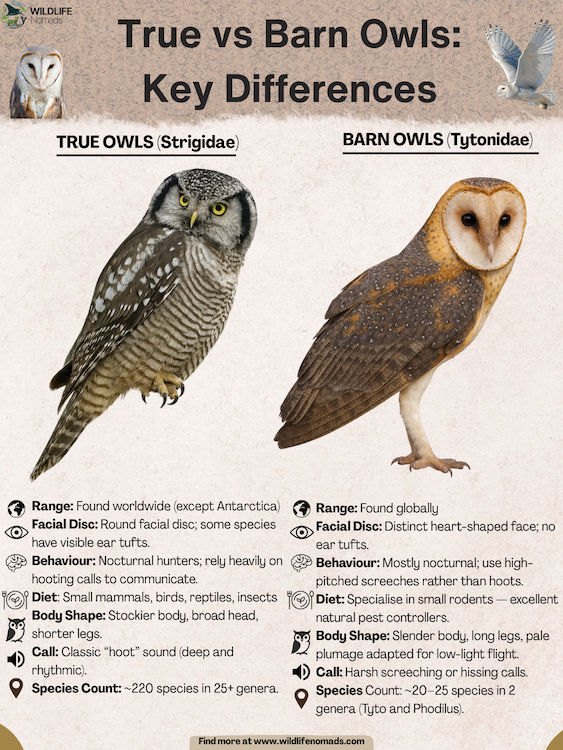
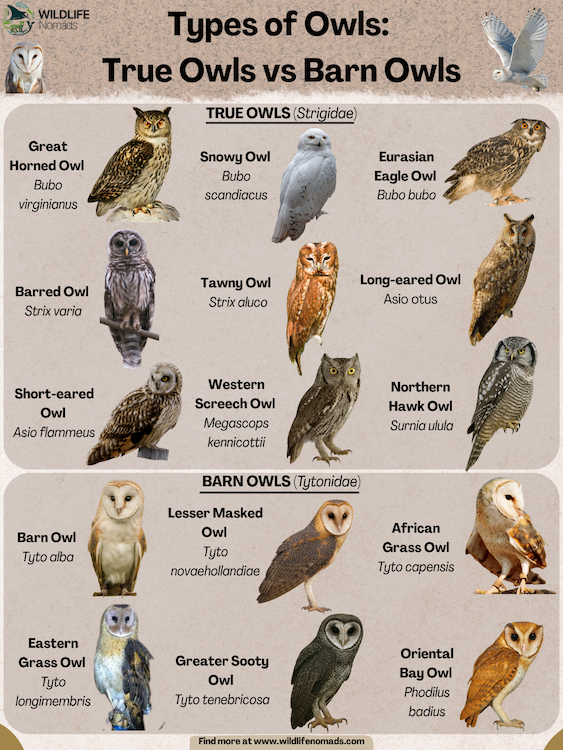
The classification of owls places them into two families:
- Tytonidae: The barn owls (and related species), characterized by their distinctive heart-shaped faces. There are several species within this family, each with distinct traits.
- Strigidae: Often referred to as the typical owls, this family includes the vast majority of owl species and is characterized by rounder faces and visible eared owls (ear tufts), even if they don’t have external ears. Typical owls are closely related to each other within the broader avian classification, and there are several species in this family as well.
Typical owls (Strigidae) were once more morphologically uniform and are closely related, but have since diversified into several species with unique adaptations.
15 Iconic Types of Owls: A Global Field Guide
From the snow-covered Arctic to the dense tropical forests, owl species have adapted to almost every environment. Here are 15 of the most iconic types of owls that have captured my attention (and likely yours!):
The Great Horned Owls Group: Apex Predators
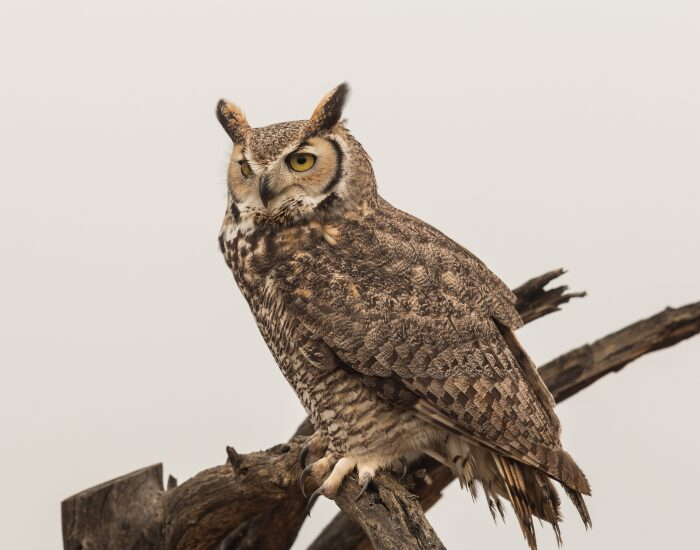
Great Horned Owl (Bubo virginianus):
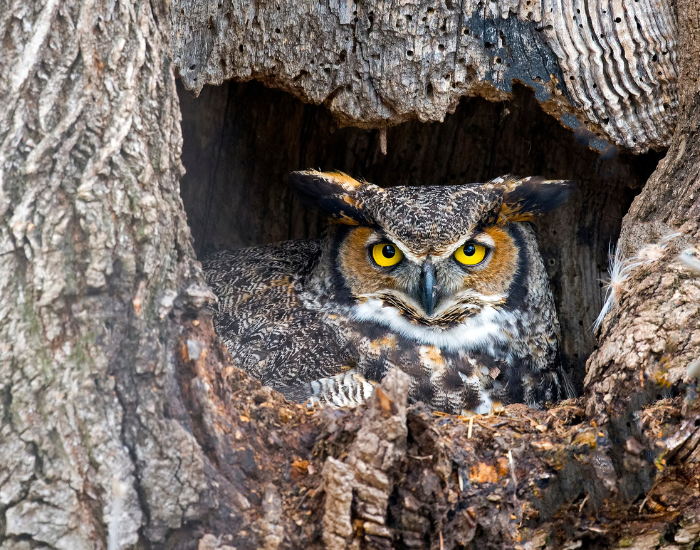
Known as the “tiger owl“ for its ferocity, this large North American owl is a powerful predator, capable of taking down skunks and large rodents. Its deep, resonant deep hoots (“hoo-hoo-hooo…”) are instantly recognizable. Unlike some other owls, the Great Horned Owl has exceptionally strong talons and a broader prey range, making it one of the most adaptable members of its group.
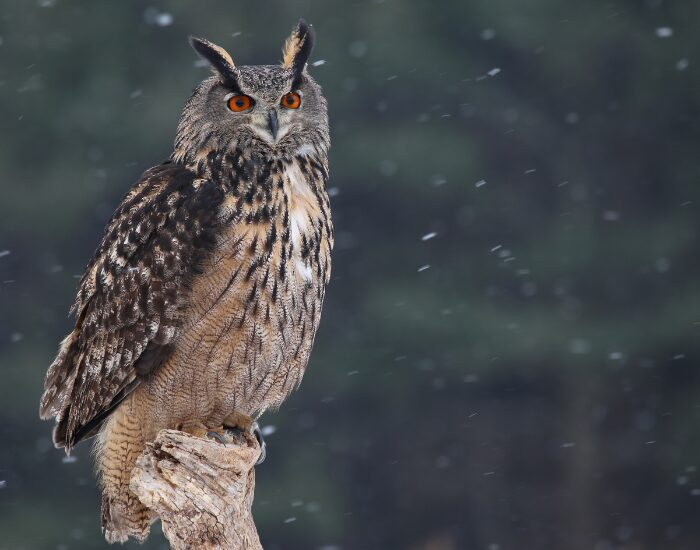
Eurasian Eagle Owl (Bubo bubo):
One of the largest owls in the world, these impressive eagle owls boast striking orange eyes and massive ear tufts. They hunt diverse prey across Europe and Asia, from hedgehogs to small deer. Compared to other owls, the Eurasian Eagle Owl stands out for its size and powerful build, allowing it to tackle much larger prey than most owl species.
The True Owls (Strigidae) of the Forest
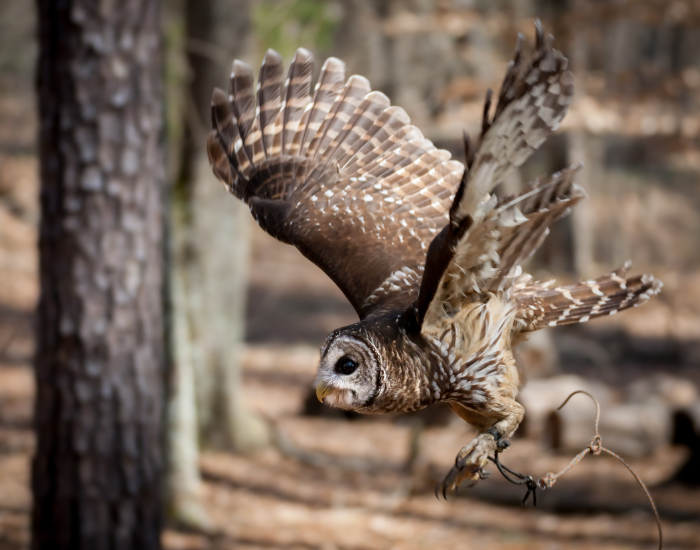
Barred Owl (Strix varia)
Famous for its call, often translated as “Who cooks for you? Who cooks for you all?” The barred owl is a talkative, mid-sized owl found primarily in eastern North America’s dense woodlands. They favor riparian areas and are one of the most species seen during the day.
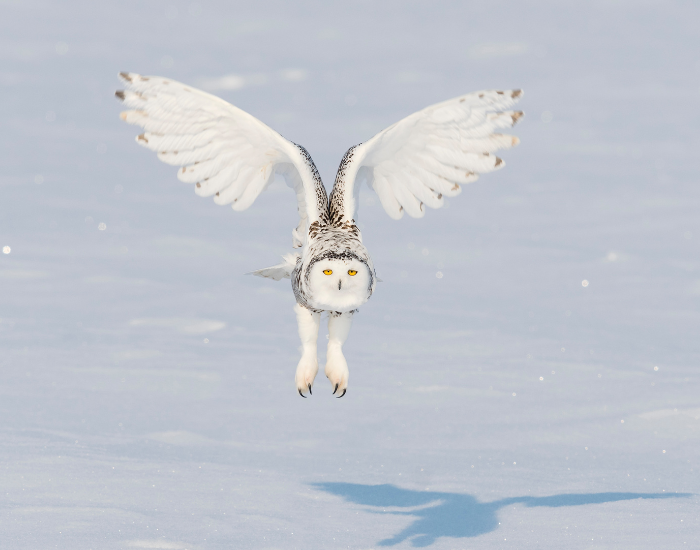
Snowy Owl (Bubo scandiacus)
A breathtakingly beautiful owl of the Arctic tundra. These massive owls are mostly white to blend into their surroundings. They are unusual among most owls because they are often active during daylight hours in the summer when the sun never sets. Their presence in the lower 48 US states is often a result of “irruptions”, a natural migration following cycles of their main prey, the lemmings.
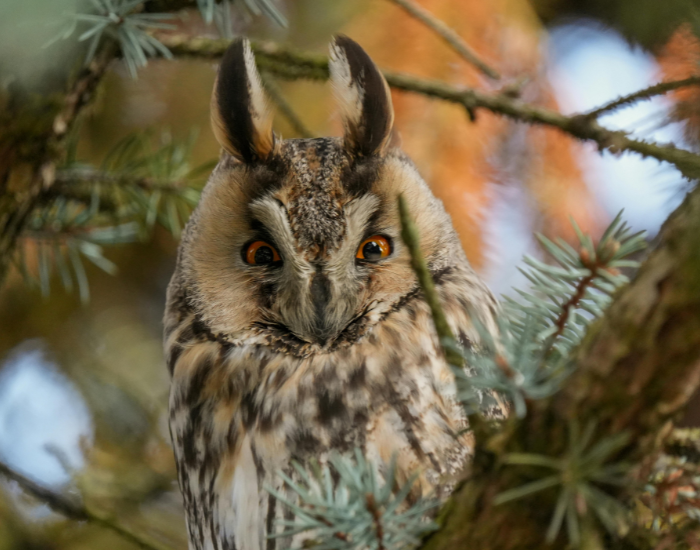
Long-eared Owl (Asio otus)
A mid-sized eared owl that is highly elusive. Its long, close-set ear tufts make it look constantly surprised. These owls tend to nest in abandoned nests of other birds and rely on their incredible camouflage.
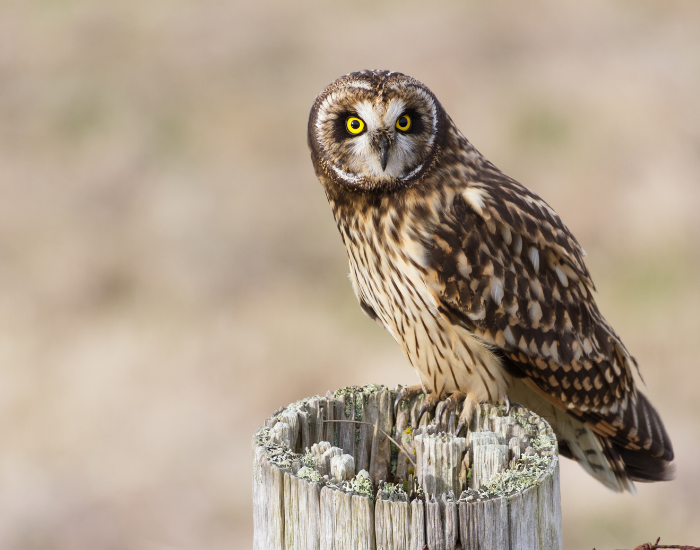
Short-eared Owl (Asio flammeus)
Unlike most species, short-eared owls prefer open country and grasslands. They have small ear tufts that are often hard to see. They are one of the few species that hunt during the day and are often seen flying low (“quartering”) over fields.
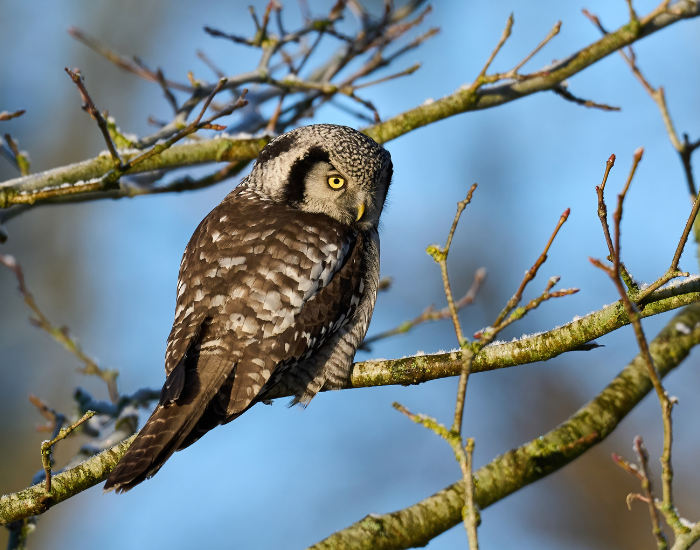
Northern Hawk Owl (Surnia ulula)
This fascinating owl defies the typical nocturnal habits. It’s diurnal (day-active) and resembles a hawk in its pointed wings and hunting style, often perching atop tall trees to spot small rodents.
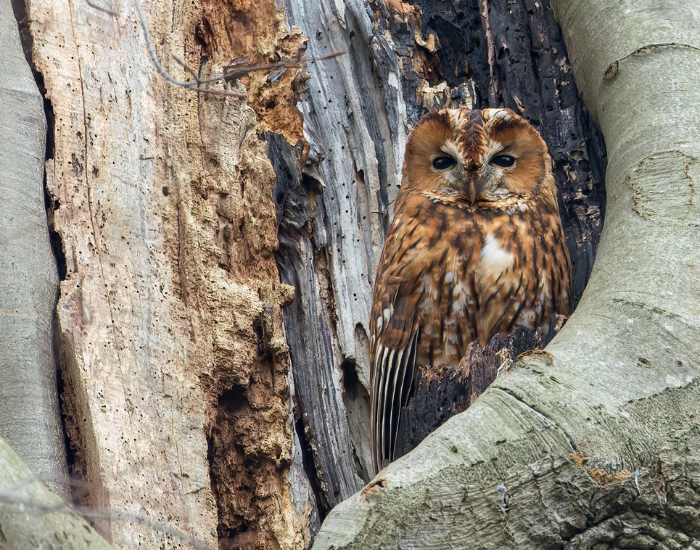
Tawny Owl (Strix aluco)
A quintessential European owl known for its wide vocal repertoire. It’s often associated with ancient forests and tree cavities.
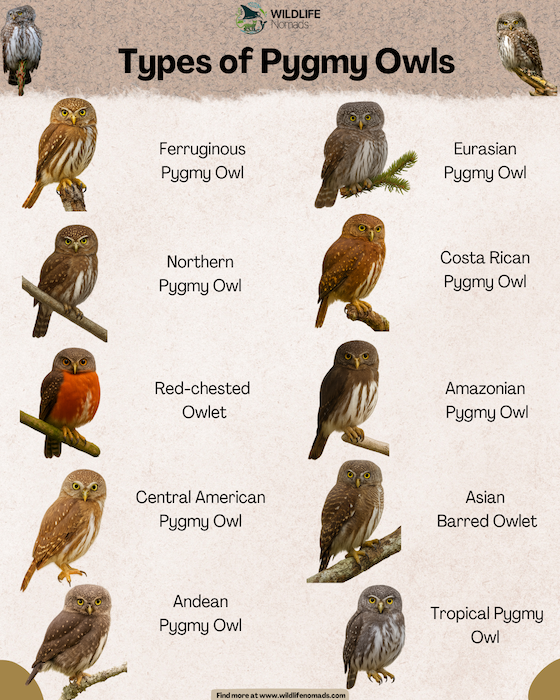
Northern Pygmy Owl (Glaucidium gnoma)
Don’t be fooled by its size, the Northern Pygmy Owl is a fierce little predator, often hunting prey larger than itself. Found across North and Central America, this tiny owl is one of the few species that hunts during the day (diurnal). With a body length of just 16–18 cm, it relies on sharp vision and agility to ambush small birds, insects, and rodents.
Have a look at our blog about pygmy owls.
The Tytonidae Family: Heart-Shaped Wonders
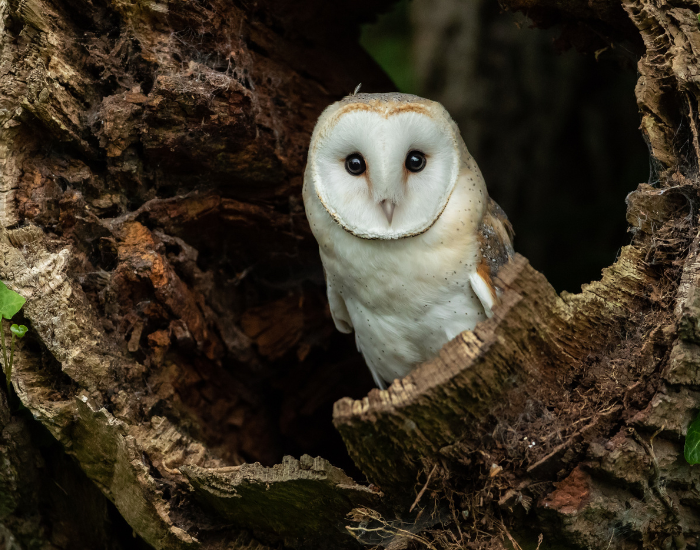
Barn Owl (Tyto alba)
With its iconic heart-shaped faces and pale plumage, the barn owl is distributed globally. Their eerie, non-hooting calls (a long, raspy screech) are perfect for their role as efficient, low-flying hunters in open country. They are fantastic pest controllers.
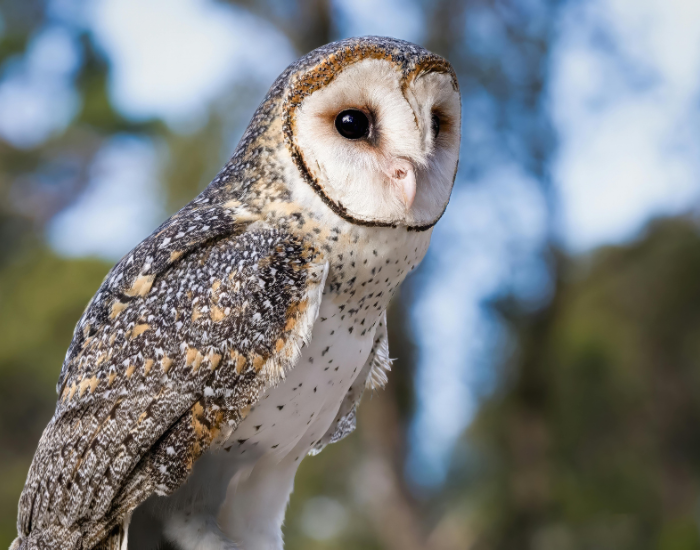
Lesser Masked Owl (Tyto novaehollandiae)
Found in Australia and New Guinea, this striking owl is a close relative of the barn owl, though it is larger and darker.
The Smaller Species: Mighty in Miniature
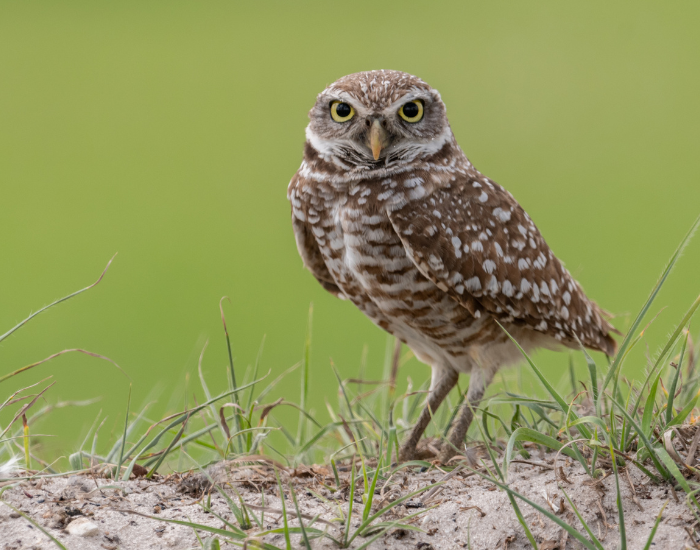
Burrowing Owls (Athene cunicularia):
These charming owls live up to their name. Unlike most birds that use tree cavities, they nest and roost underground in burrows, often created by ground squirrels or prairie dogs. I always loved watching them bob their broad head in agitation, a real character among owl species.
Little Owl (Athene noctua)
A small, stocky owl native to Europe, Asia, and North Africa, introduced in the UK. This small owl is often seen perching on telegraph poles or low walls. It’s one of the more common and observable types of owls.
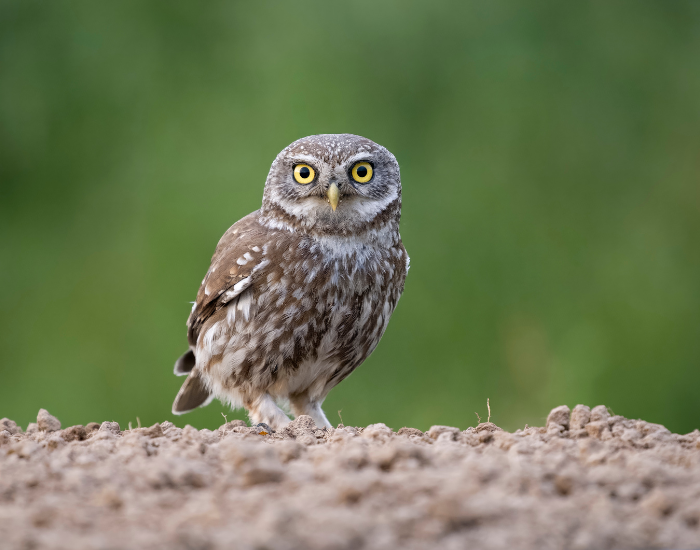
Elf Owl (Micrathene whitneyi)
The smallest owl species in the world, standing only about 5-6 inches tall. They nest in woodpecker holes in large cacti (like the Saguaro) and primarily eat insects.
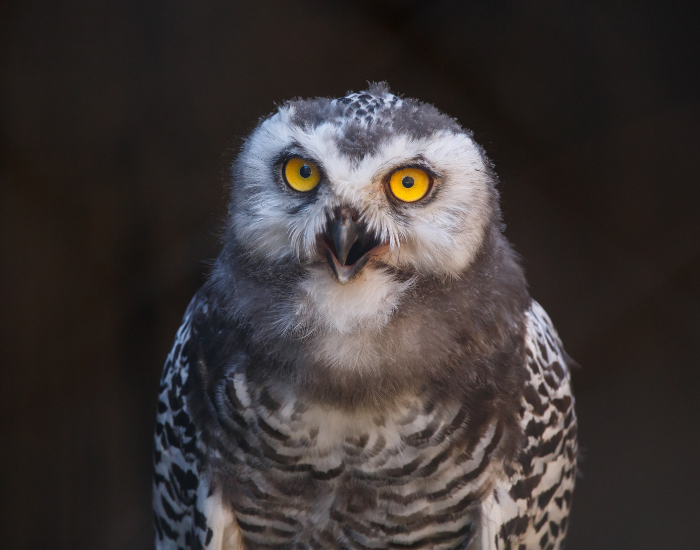
Western Screech Owl (Megascops kennicottii)
A master of camouflage, this small owl has tufts and excellent bark-like plumage. It uses an incredibly fast, descending trill call to communicate across North America.
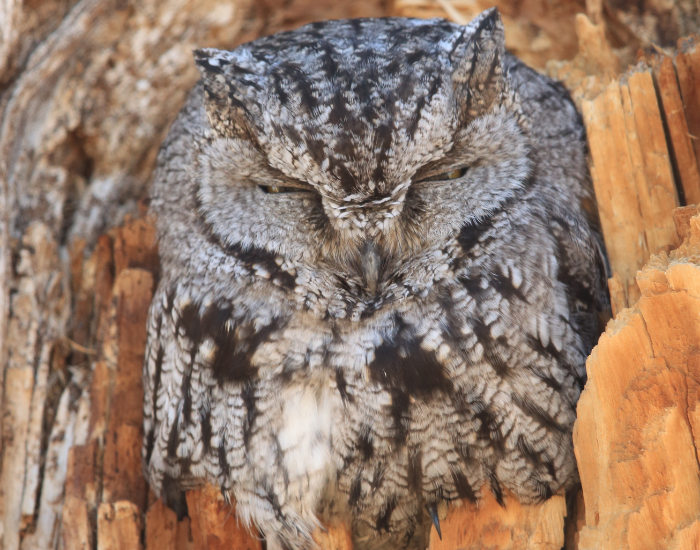
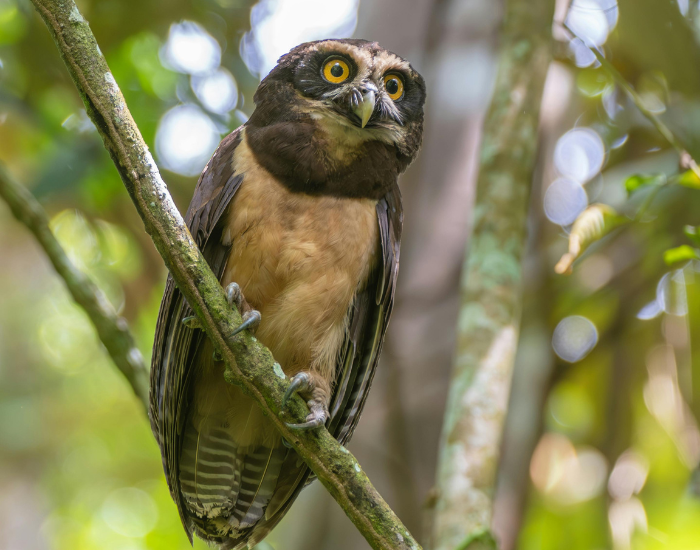
Spectacled Owl (Pulsatrix perspicillata)
A large, non-tufted owl of Central and South American rain forests, known for the pale markings around its eyes that give it the appearance of wearing spectacles. A majestic sight I was lucky enough to capture a photo of during my time in Costa Rica.
What Owls Do at Night: Behavior and Hunting
Most owls are solitary and adhere to their nocturnal habits, which minimizes competition with diurnal birds of prey like peregrine falcons.
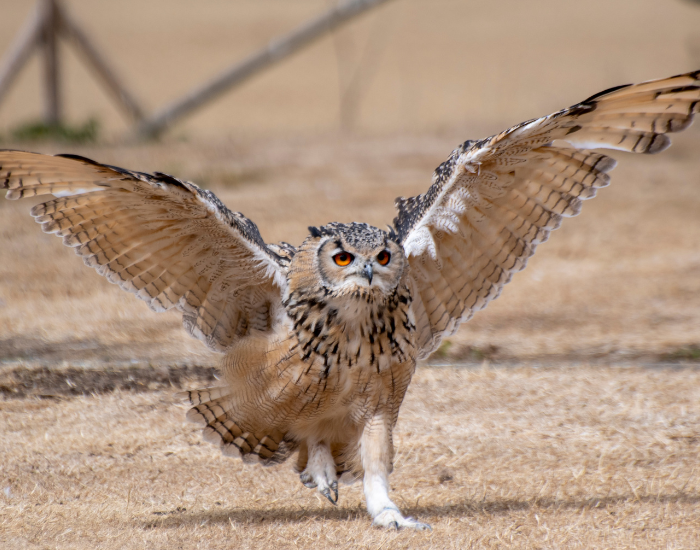
When an owl hunts, it employs incredible patience. They often use a “perch-and-pounce” strategy, waiting on a vantage point until they hear movement. Their diet varies greatly between owl species, but it generally includes small rodents, hares, small birds, fish, and even large insects. After swallowing prey whole, owls later regurgitate owl pellets, compacted, undigested material like bone and fu, a great tool for scientists to study their diet without disturbing the owl animal itself. After hunting, owls return to their roosts, which provides safety from predators and opportunities for social interaction with other owls.
Owl Pellets and Diet: Unraveling the Secrets of the Hunt
If you’ve ever stumbled upon a small, grayish lump beneath an old barn or forest roost, you’ve found one of the most fascinating clues to an owl’s secret life: the owl pellet. Owls regurgitate these compact bundles of fur, bones, and other indigestible bits after swallowing their prey whole. For biologists, owl pellets are like nature’s detective kits, each one tells a story about what these birds of prey have been hunting.
By carefully dissecting owl pellets, researchers can identify the exact menu of most owl species. For example, barn owls are famous for their appetite for small rodents, often leaving behind tiny skulls and bones in their pellets. Great horned owls, on the other hand, have a more varied diet, sometimes including other birds and even small mammals. Scops owls and long-eared owls tend to focus on insects and invertebrates, which can be seen in the chitinous remains found in their pellets. This kind of dietary detective work helps us understand how different owl species fit into their ecosystems and how changes in prey availability might affect their survival. Ultimately, studying owl pellets not only satisfies scientific curiosity but also guides conservation efforts to ensure these remarkable birds continue to thrive.
Ecology, Habitats, and the Owl Life Cycle
Owls live across the globe, from the Arctic to the equator, demonstrating a wide array of nesting and lifestyle choices.
Habitat and Nesting
- Tree Cavities: Many true owls nest in natural holes in trees or snags. Species like the Barred Owl rely on old, mature forests that contain these deep tree cavities.
- Abandoned Nests: Large owls like the Great Horned Owl often take over the abandoned nests of other birds or other animals, such as eagles or hawks.
- Ground Nests/Burrows: Short-eared owls scrape out shallow nests on the ground in open fields, while burrowing owls utilize underground tunnels.
Breeding and Young Owls
The breeding season for most owls starts in the early spring (sometimes even mid-winter for great horned owls), ensuring their young hatch when prey is becoming abundant. Female owls lay eggs, and the resulting young owls are called owlets. These fluffy, voracious youngsters rely completely on the male owls and female owls for food.
An owl has a long life cycle relative to their size. Many species can live for 10-15 years in the wild, sometimes longer in captivity.
Owls in Human Culture: What Do Owls Symbolize?
For centuries, the owl has held a significant place in human culture, often taking on contrasting meanings:
- Wisdom and Knowledge: In Western culture, the owl is famously associated with the Greek goddess Athena, symbolizing wisdom, scholarship, and strategic thinking. This is the predominant modern perception of the owl personality.
- Ill Omen or Death: In many indigenous and non-Western cultures, the owl’s nocturnal habits and haunting calls linked it to the darkness, the spirit world, and sometimes death or an ill omen.
Regardless of the meaning, the owl’s presence is powerful—a reminder of the natural world’s profound mystery.
Community Engagement and Education: Inspiring the Next Generation of Owl Stewards
Protecting owls isn’t just a job for scientists, it’s a community effort. Inspiring people of all ages to care about these mysterious birds is key to their long-term survival. Across the country, organizations like the American Bird Conservancy are leading the way with creative education programs and hands-on activities. Imagine joining a guided owl walk at dusk, helping install an owl nesting box in your local park, or attending an owl festival where you can meet experts and see live birds up close.
Workshops on owl monitoring teach volunteers how to listen for calls and spot signs of nesting, turning everyday nature lovers into valuable contributors to conservation. These community-based initiatives not only raise awareness about the challenges owls face but also empower people to take action, whether it’s protecting old trees, supporting habitat restoration, or simply spreading the word about the importance of owls in our ecosystems. By fostering a sense of wonder and responsibility, we can ensure that the next generation grows up as passionate owl stewards, ready to defend these birds and the wild places they need.
FAQs About the Owls
There are over 200 recognized owl species worldwide, classified into two families (Tytonidae and Strigidae).
Yes! Owls are excellent natural pest control. Their main prey includes mice, rats, and small rodents, which helps keep your property free of these pests.
Both. Owls are birds, and they are also a specific type of bird of prey, or raptor, known for their diet of meat and powerful hunting tools (sharp talons and beaks).
Both. Owls are birds, and they are also a specific type of bird of prey, or raptor, known for their diet of meat and powerful hunting tools (sharp talons and beaks).
Yes, as an owl bird, female owls lay eggs, which hatch into young owls or called owlets.
Final Hoot: Our Responsibility to the Night
My journey as a biologist has taught me that the silence of the night is not empty; it’s filled with the unseen dramas of hunters and prey. The owl, this magnificent animal bird owl, is the quiet sentinel of that world. The profound sense of wonder I felt as a quiet kid, and the respect I feel today, must translate into real-world action.
Let’s work together to ensure that the unique call of the Barred Owl, the silent flight of the Barn Owl, and the presence of all owl species continue to enrich our ecosystems for generations to come.
Further Reading
- The 10 Most Fascinating Extinct Birds You Should Know About
- The Complete Guide to Bird’s Beak Types
- Fascinating Facts About the Turtle Dove