
The first time I held a bat, my hands were shaking more than the animal. It was a university field trip, and I helped our team gently untangle little insectivorous bats from a mist net at dusk. That tiny, warm, indignant creature changed how I saw the night sky forever. Since then, bats have followed me across the world, from the agave fields of Mexico to a gum tree outside my old house on the Gold Coast.
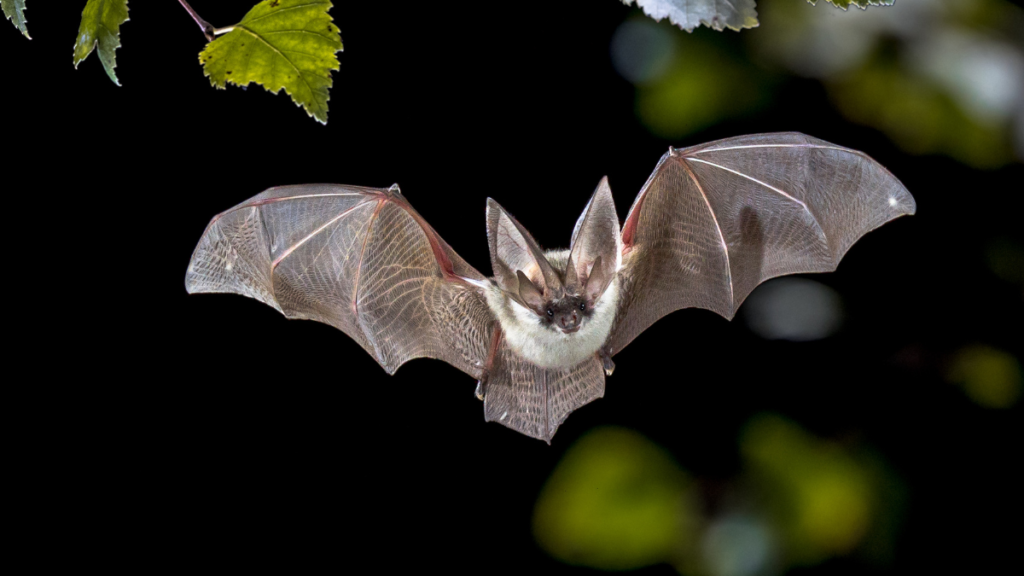
Here is the thing most people miss. There are over 1,500 species of bats worldwide, and no two are alike. Bats vary more than almost any other mammal group. Some weigh less than a coin. Others stretch a wingspan wider than a doorway. Bats are the only mammals capable of true, sustained flight, and they hold up entire ecosystems while doing it.
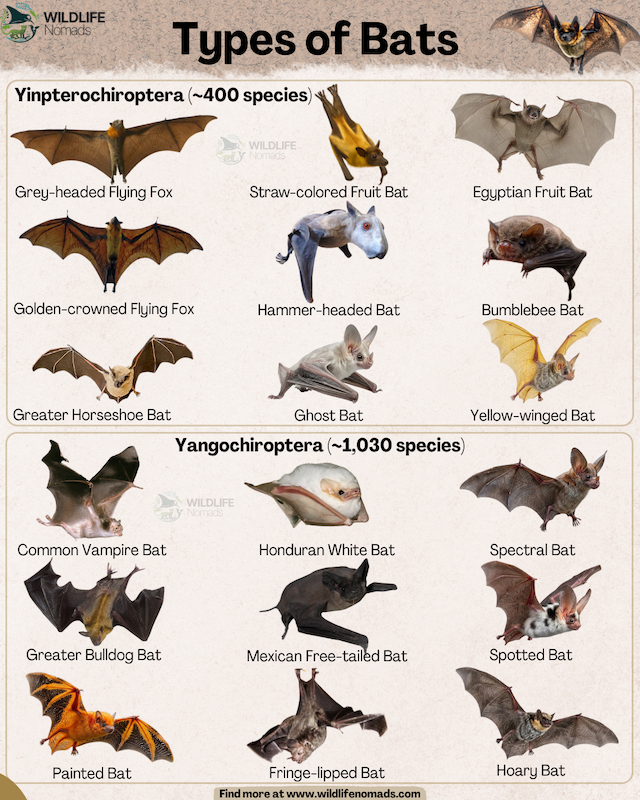
This is my shortlist of 15 iconic bats you should know, chosen to show how much these amazing animals vary. Along the way I will bust a few myths, share some field stories, and explain why protecting bats matters more than you think.
Why Bats Deserve Your Attention
Bats belong to the order Chiroptera, and they account for nearly 20% of all classified mammal species. That is roughly one in five mammals on Earth. Put another way, bats account for a staggering slice of mammalian diversity. Scientists traditionally split them into two suborders, Megachiroptera and Microchiroptera, though modern genetics has blurred that neat line.
The old shorthand still helps, though. Megabats typically rely on sharp eyesight and a powerful sense of smell to find fruit, nectar, and pollen. Microbats, by contrast, use echolocation. These bats emit high-frequency calls and read the returning echoes to hunt insects in total darkness.
Bats live on every continent except Antarctica, and bats worldwide fill nearly every night-time niche. They hang upside down to roost in caves, rock crevices, hollow trees, and yes, sometimes suburban rooftops. Bats spend their days roosting like this, some as a single bat tucked into bark, others in colonies of millions.
The bats’ ecological roles are enormous. Bat pollination supports over 300 species of plants, from wild agave to the balsa wood tree, whose pale flowers open at night just for them. Fruit-eating bats drive seed dispersal, and in some tropical regions they account for up to 95% of new forest growth. Insectivorous bats hunt thousands of night-flying insects nightly, holding down pest and insect populations, while their guano cycles nutrients back into the soil.
The 15 Bat Species
1. Giant Golden-Crowned Flying Fox
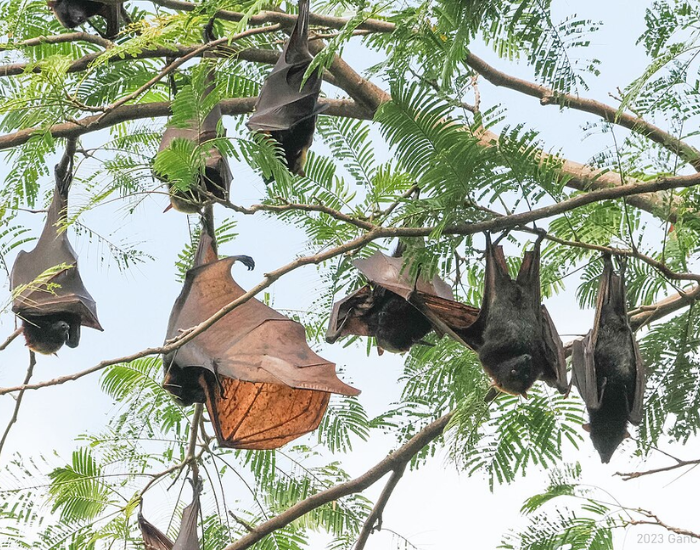
Let me start big. The giant golden-crowned flying fox is the largest bat species alive, with a wingspan reaching nearly 5.5 feet. Native to the Philippines, this megabat feeds mostly on figs and roosts in large, noisy colonies.
Despite the dramatic size, it is a gentle fruit specialist, not a predator. Sadly, habitat loss and hunting have pushed it toward endangerment. Its conservation status is now a real concern, and it survives only where old-growth forest remains.
2. Kitti’s Hog-Nosed Bat (Bumblebee Bat)
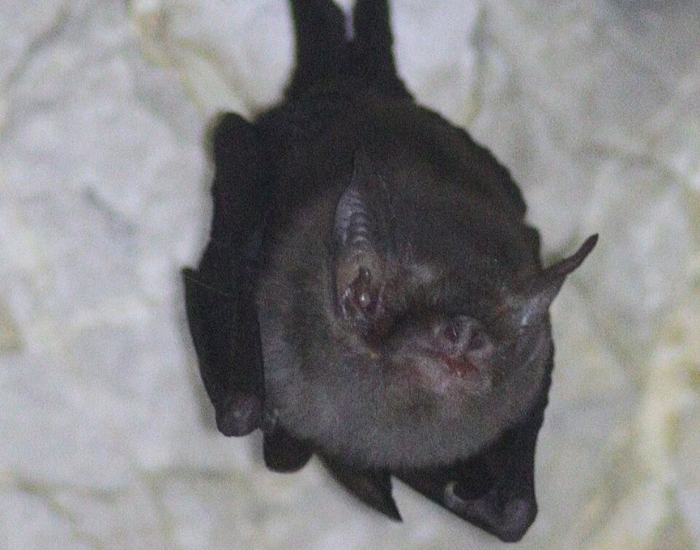
At the other extreme sits the smallest bat on the planet. Kitti’s hog-nosed bat, also called the bumblebee bat, weighs just 0.06 ounces, lighter than a dime. It is often considered the smallest mammal in the world by body weight.
This single bat could perch on your fingertip and barely register. It lives in a few limestone caves in Thailand and Myanmar, hunting tiny flying insects at dawn and dusk. With such a narrow range, it is listed as near threatened and remains vulnerable to disturbance.
3. Mexican Free-Tailed Bat
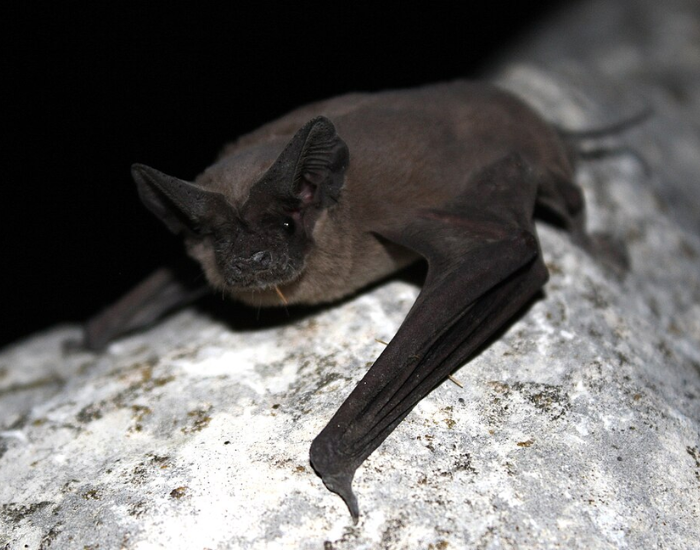
Few bats put on a bigger show. Mexican free-tailed bats roost in the millions, and Bracken Cave in Texas holds one of the largest bat colonies on Earth. At sunset they pour out in a living ribbon that stretches for miles.
I find them endlessly impressive. As one of the fastest bats known, they reach flight speeds topping 60 to 100 miles per hour in bursts. Like most insect eating bats, they hunt on the wing, and they devour huge numbers of the corn earworm moth. That appetite saves farmers real money and earns their nickname as a farmer’s secret weapon.
4. Common Vampire Bat
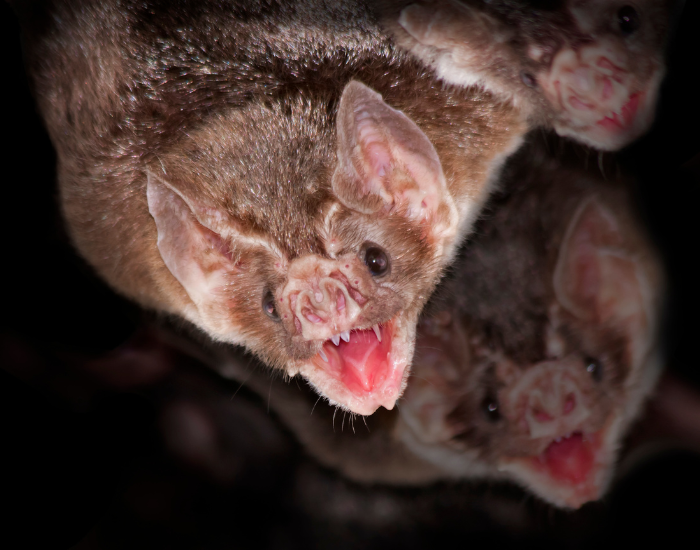
Yes, vampire bats are real, and they are far stranger than folklore. The common vampire bat feeds exclusively on blood, usually from sleeping livestock, using heat sensors to find a warm vein. It laps the blood rather than sucking it.
Here is the part that fascinates me most. Vampire bats practice food sharing, regurgitating a meal for a hungry roost-mate who missed dinner. That reciprocity looks a lot like friendship, and it has made these bats a favorite subject for studying social behavior.
5. Lesser Long-Nosed Bat (The Tequila Bat)
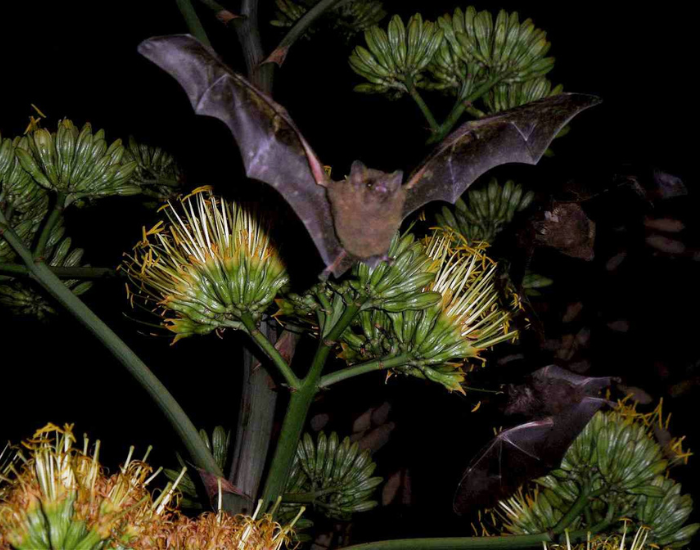
This one is personal. In Mexico, where I have spent years in the field, we know that nectar-feeding bats keep the agave plant healthy, and therefore tequila itself. Bats are essential pollinators of the agave used to make it, a link most drinkers never hear about.
The lesser long-nosed bat migrates north in early spring, following a corridor of blooming cacti and agave. A friend of mine researched exactly these bats with UNAM, tracking their nectar routes. Once one of Mexico’s most threatened bats, its recovery is one of conservation’s quiet wins, proof that focused conservation efforts actually work.
6. Mexican Long-Tongued Bat
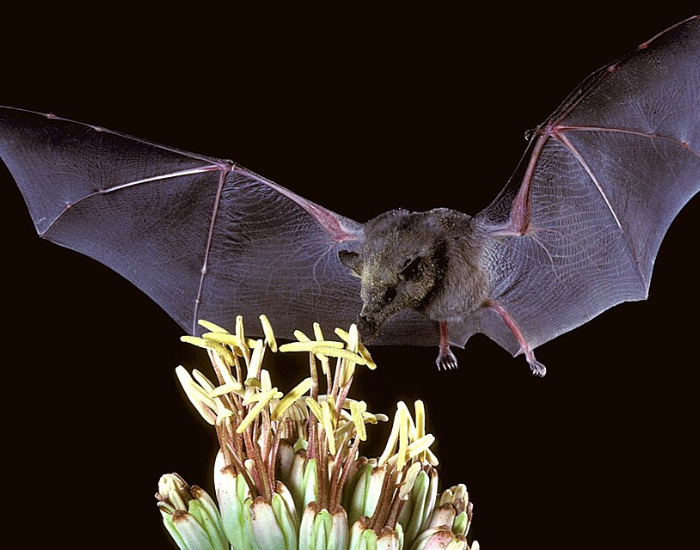
Staying with the pollinators, the Mexican long-tongued bat carries a tongue nearly as long as its body. It hovers at night-blooming flowers like a furry hummingbird, lapping nectar and dusting itself with pollen.
This species ranges from the southwestern United States down through Mexico. Because so many desert plants rely on it, its decline would ripple outward fast. It is a reminder that a single bat species can prop up an entire plant community.
7. Little Brown Bat
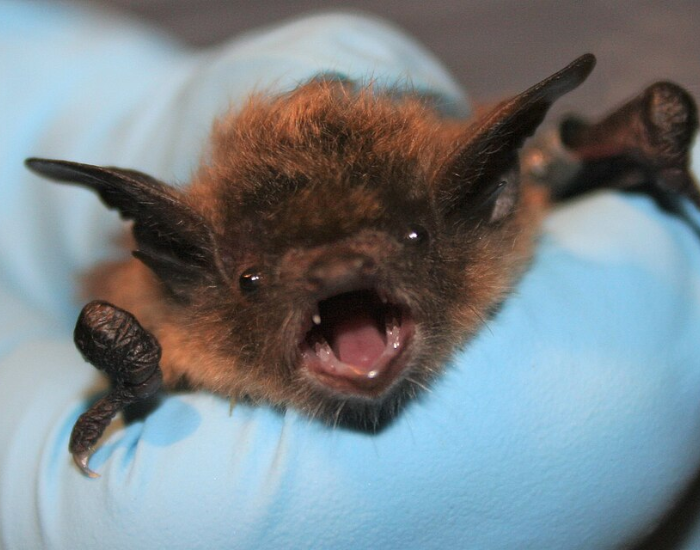
For many North Americans, this is the bat in the attic. The little brown bat once ranked among the most common mammal species across the United States and Canada. A single one can eat up to half its body weight in insects nightly.
Then disaster struck. Little brown bats hibernate in cold caves through winter, and that is exactly when white nose syndrome strikes. This cold-loving fungus has killed over 90% of some populations since 2006, and researchers have found dead bats blanketing cave floors. Watching a once-abundant species collapse this fast is heartbreaking, and it is why hibernating bats now need our protection.
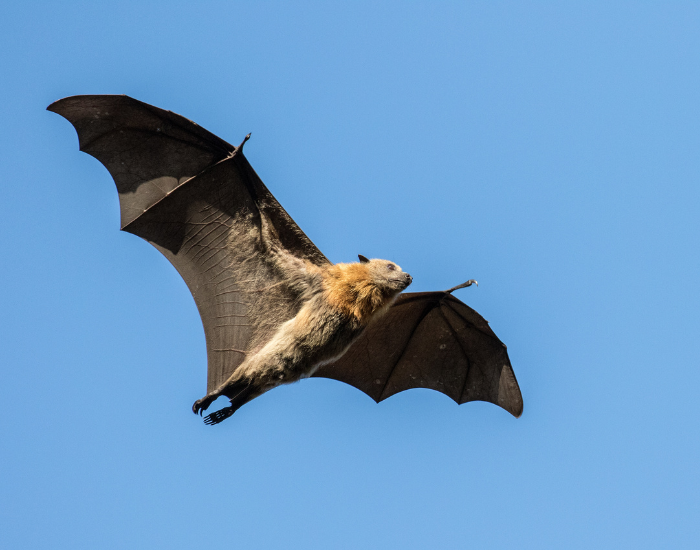
8. Grey-Headed Flying Fox
When I lived on the Gold Coast, a flying fox moved into the tree outside my house, and I loved it. Most likely a grey-headed flying fox, it hung upside down all day and clattered off at dusk to feed. Honestly, I found it incredibly cute, even if my friends did not agree.
This Australian megabat is a keystone pollinator and seed disperser for native forests. Heat waves, habitat loss, and human conflict have made it vulnerable. If you want more on the wildlife I met there, see my guide to the animals of Australia.
9. Egyptian Fruit Bat
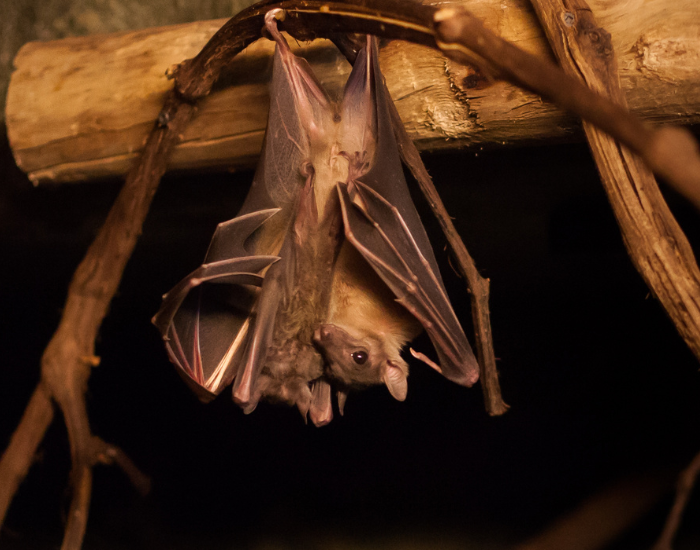
Not every fruit bat sticks to eyesight alone. The Egyptian fruit bat is one of the only species of megabat that echolocates, clicking its tongue to navigate dark caves. It roosts in huge colonies and ranges across Africa and the Middle East.
I include it because it breaks the tidy megabat versus microbat rule. Like other fruit eating bats, it feeds on figs and soft fruit and disperses seeds widely as it flies. For more on the fruit-eating side of the family, I dug deeper in my article on fruit bats.
10. Honduran White Bat
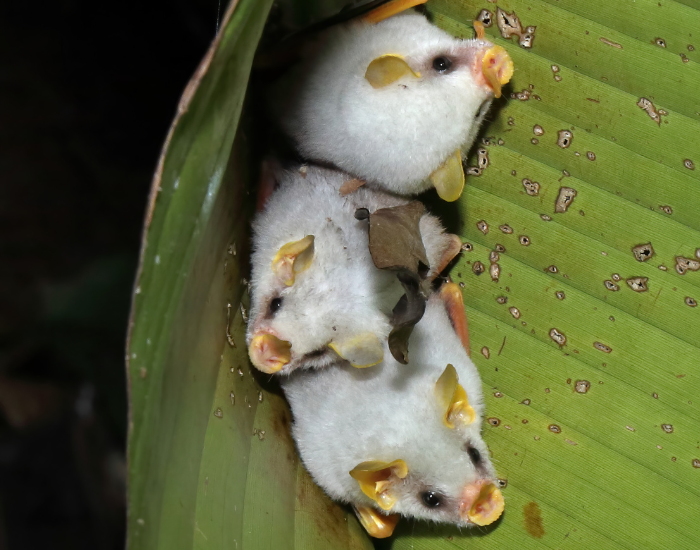
This is possibly the most adorable bat alive. The Honduran white bat is a tiny, fluffy, snow-white species with a bright yellow nose and ears. Small groups roost together beneath large leaves they chew into tent-like shelters.
The green light filtering through the leaf even tints their fur, helping them hide. They feed almost entirely on a single species of fig. Few animals make the case for protecting bats as instantly as this cotton-ball with wings.
11. Hoary Bat
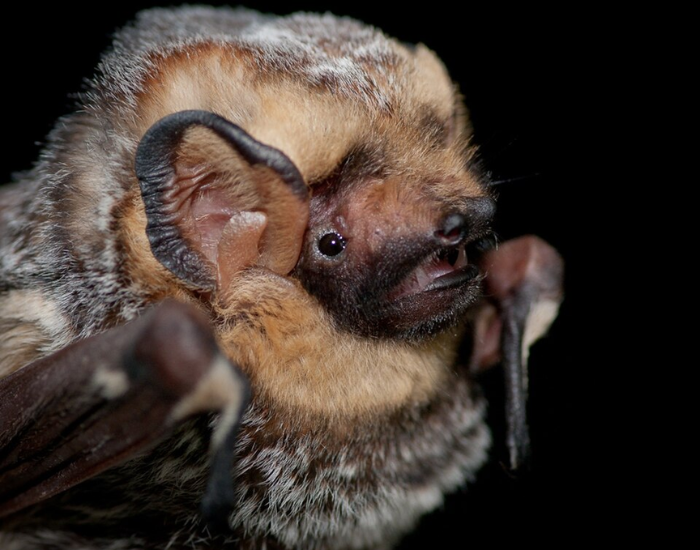
The hoary bat is a loner and a traveler. Frosted silver-tipped fur gives it a “hoary” look, and it roosts solitarily in foliage rather than in caves. It is one of the most widespread bats in the Americas.
Unfortunately, its long-distance migration puts it in the path of wind turbines, now a leading cause of death for the species. As a strong insectivore, it helps control moth and beetle populations across huge ranges. Its story shows that even common, wide-ranging bats can slip toward trouble.
12. Greater Bulldog Bat (Fishing Bat)
Some bats fish. The greater bulldog bat drags oversized, clawed feet across the water’s surface, snatching small fish and insects it detects by echolocation. It lives across Latin America, near lakes, rivers, and coasts.
I love this one because it defies expectations of what a bat “should” do. It proves how flexible the group is, filling niches from the forest canopy to the water line. Evolution rarely leaves a food source untouched, and bats prove it.
13. Spectral Bat
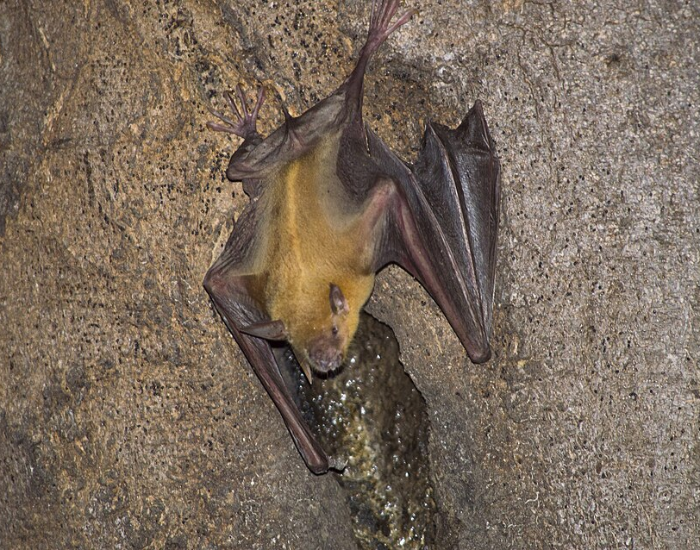
Meet the largest carnivorous bat in the Americas. The spectral bat, sometimes called the great false vampire, hunts birds, rodents, and even other bats. It does not drink blood, despite the ominous name.
What surprised researchers is its private life. It is one of the few monogamous species among mammals, forming lasting pairs that roost in small family groups inside hollow trees. Its heavy diet of live prey makes it a true apex hunter of the night.
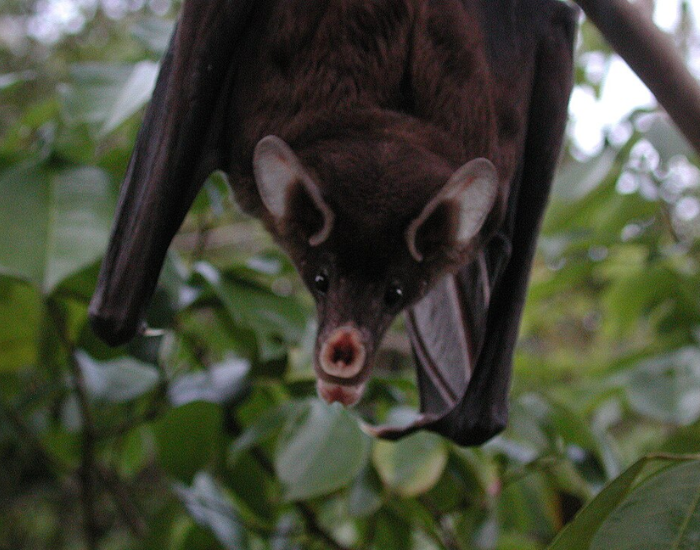
14. Hammer-Headed Bat
Africa’s hammer-headed bat is the continent’s largest bat, and the males look genuinely bizarre. They grow an enormous, horse-like muzzle that acts as a built-in megaphone. During the breeding season, males gather at a river’s edge and honk to attract females.
That display is called lekking, where female bats cruise the line and choose the loudest performers. Multiple females may visit before settling, and it is one of only a handful of mammal species to court this way. Reproductive success here is a contest of pure volume, so the males with the deepest honk win the breeding season.
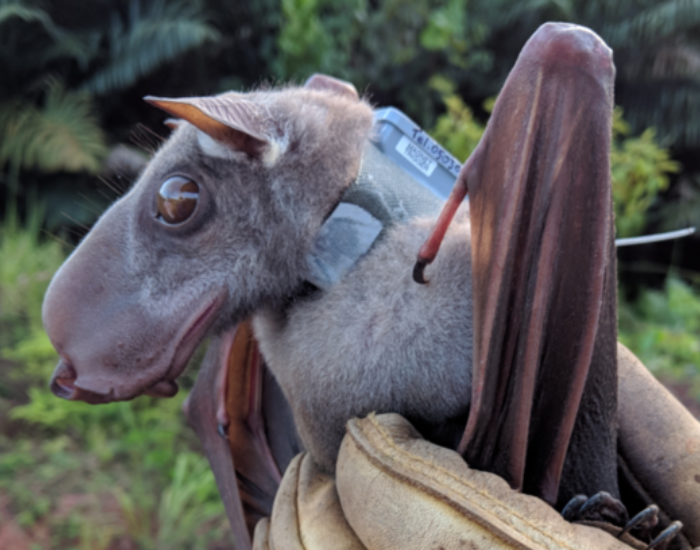
15. Townsend’s Big-Eared Bat
Finally, a specialist with unmistakable gear. Townsend’s big-eared bat carries ears nearly half the length of its body, tuned to detect the faintest insect wingbeat. It roosts in caves, mines, and rock crevices across western North America.
These bats are famously sensitive to disturbance, and a single visit can make a colony abandon its roost. Several regional subspecies are now considered imperiled. Their oversized ears are a masterclass in how echolocation shapes bat anatomy.
How Bats Are Faring, and Why It Matters
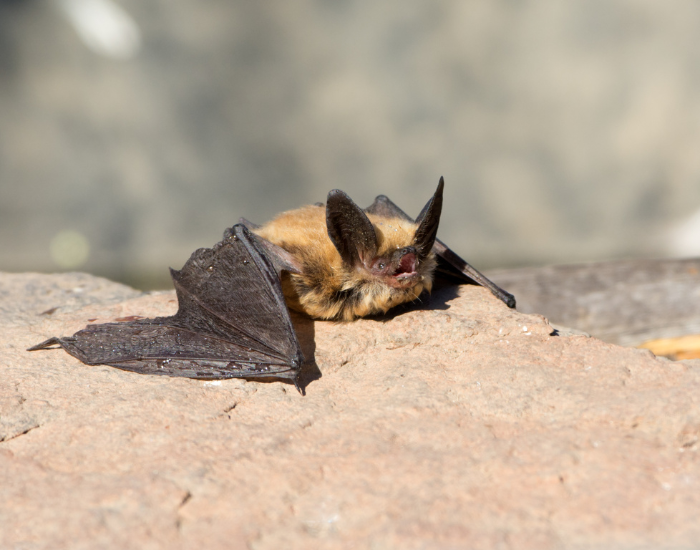
The picture is mixed and urgent. According to recent assessments, 52% of North American bat species face severe population declines within 15 years. Many bats now sit on official red lists, and the IUCN ranks a share of the world’s species as critically endangered. Several species are already gone, and the number of endangered bat species keeps climbing.
Extinction is not hypothetical here. The Christmas Island pipistrelle was declared extinct in 2009, its last calls recorded before it vanished. Other species remain “data deficient,” meaning we barely know enough to help them.
The threats stack up. Habitat loss, climate change, wind energy, and disease all hit at once, and white nose syndrome alone has killed millions of hibernating bats. Ironically, healthy colonies help us fight invasive insect species and crop pests, which is exactly why humans rely on them. Conservation efforts led by groups like Bat Conservation International are fighting back, and in the UK bats are protected under the Wildlife and Countryside Act.
There are things you can do too. You can attract bats with a simple bat box, avoid disturbing roost sites, and support local conservation efforts. Small actions help a group that quietly keeps our farms and forests running.
Frequently Asked Questions
Bats are the only mammals capable of true, sustained flight. Their flexible wing membranes stretch between elongated finger bones, giving them remarkable maneuverability. Other “flying” mammals only glide, so bats stand alone among the more than 1,500 species in their group.
No other mammal achieves powered flight. Flying squirrels and colugos glide using skin flaps, but they cannot flap and gain altitude. Only bats generate genuine lift, which makes them unique among all mammal species.
Bats are prey for owls, hawks, snakes, and even some larger carnivores that raid roosts. Owls are among their most persistent nighttime predators. That said, the biggest modern threat to bats is not a predator at all, but disease and habitat loss caused by humans.
Most bats are shy and want nothing to do with us. In fact, most bat species are harmless insect or fruit eaters that avoid people entirely. They are not aggressive, but you should never handle a wild bat with bare hands. A small number carry rabies, which can transmit through a bite and requires immediate medical attention, so admire them from a distance.
Can You Name That Bat? 🦇
A 15-photo identification challenge — the wrong answers are deliberately tricky look-alikes from a similar group. Go back and change any answer before you score.
Which bat is this?
The Bottom Line
Across just these 15 bat species, we go from a coin-sized insect hunter to a fox-faced giant, from blood drinkers to the tequila-makers of the agave fields. That range is exactly why bats matter, and why losing them would quietly unravel farms, forests, and food webs we all rely on.
So next time you see a shape flicker across a streetlight at dusk, stop and watch. You are looking at the only mammal that ever learned to fly. If a bat has surprised you in the field or in your own backyard, tell me about it in the comments, and if you want more, wander over to my deep dive on fruit bats.
References:
Adams, R. A., et al. (2024). The state of the bats in North America. Annals of the New York Academy of Sciences, 1541(1), 115–128. https://doi.org/10.1111/nyas.15225
Boyles, J. G., Cryan, P. M., McCracken, G. F., & Kunz, T. H. (2011). Economic importance of bats in agriculture. Science, 332(6025), 41–42. https://doi.org/10.1126/science.1201366
Cheng, T. L., Reichard, J. D., Coleman, J. T. H., Weller, T. J., et al. (2021). The scope and severity of white-nose syndrome on hibernating bats in North America. Conservation Biology, 35(5), 1586–1597. https://doi.org/10.1111/cobi.13739
Frick, W. F., Kingston, T., & Flanders, J. (2020). A review of the major threats and challenges to global bat conservation. Annals of the New York Academy of Sciences, 1469(1), 5–25. https://doi.org/10.1111/nyas.14045
Frick, W. F., Pollock, J. F., Hicks, A. C., Langwig, K. E., et al. (2010). An emerging disease causes regional population collapse of a common North American bat species. Science, 329(5992), 679–682. https://doi.org/10.1126/science.1188594
Kunz, T. H., Braun de Torrez, E., Bauer, D., Lobova, T., & Fleming, T. H. (2011). Ecosystem services provided by bats. Annals of the New York Academy of Sciences, 1223(1), 1–38. https://doi.org/10.1111/j.1749-6632.2011.06004.x