
Fruit bats are not the creepy, blood-drinking creatures of horror films. They are, in fact, some of the most important animals on Earth. These magnificent megabats pollinate forests, disperse seeds across vast landscapes, and even keep the tequila industry alive. Most people know almost nothing about them. However, that is about to change. From the limestone caves of the Philippines to the botanical gardens of Northern Australia, fruit bats play a role that no other species can replicate. Therefore, here are 12 facts about fruit bats that will completely reshape how you think about bats.

1. What Exactly Is a Megabat?
When people say “fruit bat,” they almost always mean megabats. These bat species belong to the family Pteropodidae of the order Chiroptera. As of 2025, 197 species of megabat had been described. They are built completely differently from the small, insect-eating microbats you might spot at dusk. Megabats are larger, bolder, and far more visually striking.
The key difference comes down to senses. Microbats use echolocation to hunt moths and insects in total darkness. Megabats, however, with few exceptions, skip echolocation entirely. Instead, they rely on massive eyes and a keen sense of smell to locate ripe fruit. Megabats can be distinguished from microbats by their dog-like faces, the presence of claws on the second digit, and by their simple ears, lacking cartilage flaps projecting (tragi) in front of the ear canal, which are present in many microbat species. Think of them as the visual hunters of the bat world.
Most megabat wings insert laterally at the sides of the body, but in at least one species, such as Dobsonia, the wings attach nearer the spine, giving a ‘bare-backed’ appearance. Most megabats have reduced or absent tails, but not all species; for example, Notopteris species have a long tail. Megabats also have reduced hind limbs and a greatly reduced uropatagium compared to other bats.

2. Size Matters: How Big Do Fruit Bats Get?
The size variation The size variation among megabat species is staggering. On the small end, species like the spotted-winged fruit bat weigh only about 14 grams. On the other end, the giants take over.
The Indian flying fox holds the record for the heaviest bat species. Its body weight can reach up to 1.6 kg (3.5 lbs). The great flying fox ties it at a similar weight. Therefore, these two flying foxes share the top spot in the animal kingdom.
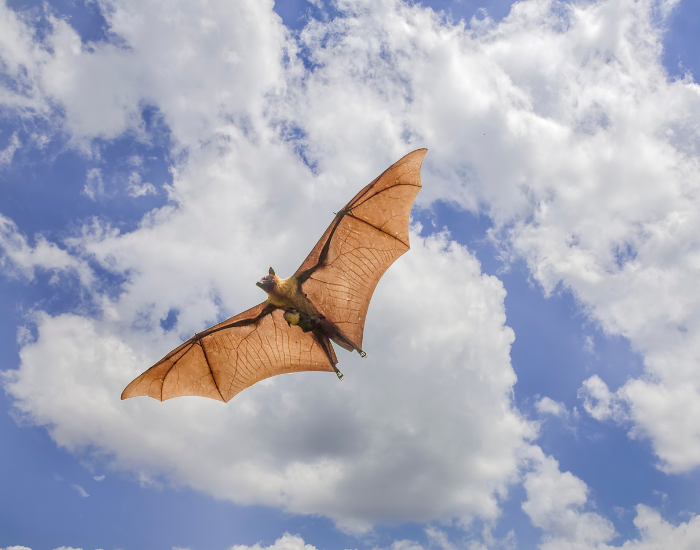
Wingspan tells an even more dramatic story. The giant golden-crowned flying fox, endemic to the Philippines, can spread its wings up to 1.7 m (5.6 feet) wide. That is wider than most humans are tall. These wings are not like bird wings, however. A fruit bat’s wings are modified hands with elongated finger bones. A thin flight membrane stretches between them, creating a surface area built for gliding mid air over long distances.
3. The Tequila Connection: Bats and Agave
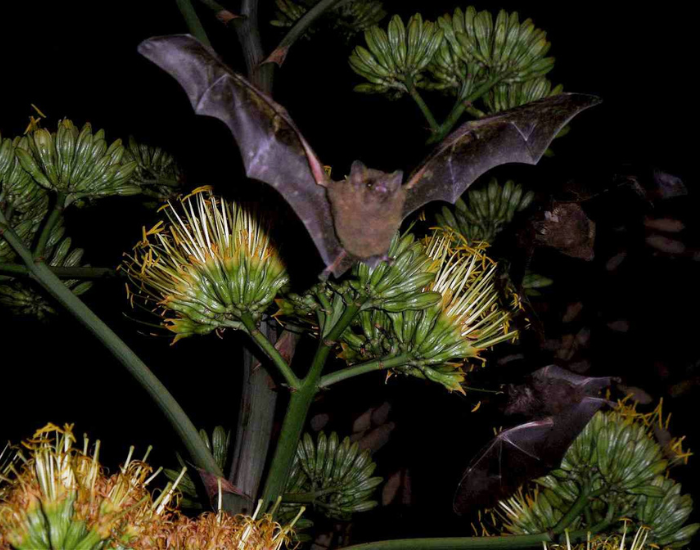
Here is a story that surprises almost everyone. The lesser long-nosed bat is the primary pollinator of the blue agave plant in Mexico. Blue agave is the single plant species from which tequila is made. However, it is worth noting: the lesser long-nosed bat is technically a microbat species, not a megabat. Its story is so closely tied to bat conservation, though, that it deserves a place here.
These bats have evolved elongated snouts and long tongues to reach deep into agave flowers. As they drink nectar, their fur picks up pollen and carries it from plant to plant. This creates the genetic diversity that agave needs to survive. Without bats, agave farmers would rely entirely on cloned plants, crops vulnerable to a single disease wiping out entire harvests.
Conservation efforts have paid off dramatically. The lesser long-nosed bat was listed as endangered in 1988, when fewer than 1,000 individuals remained. Thanks to “bat-friendly” tequila certification programs and habitat restoration, the population has recovered to an estimated 200,000 bats. It became the first bat species ever removed from the U.S. Endangered Species Act due to recovery. Therefore, the next time you enjoy a margarita, there is a bat to thank.
4. They Are Prodigious Eaters
Fruit bats do not snack. They feast. A single megabat can consume up to 2.5 times its own body weight in fruit in a single night. For a human, that would be the equivalent of eating roughly 400 hamburgers in eight hours.
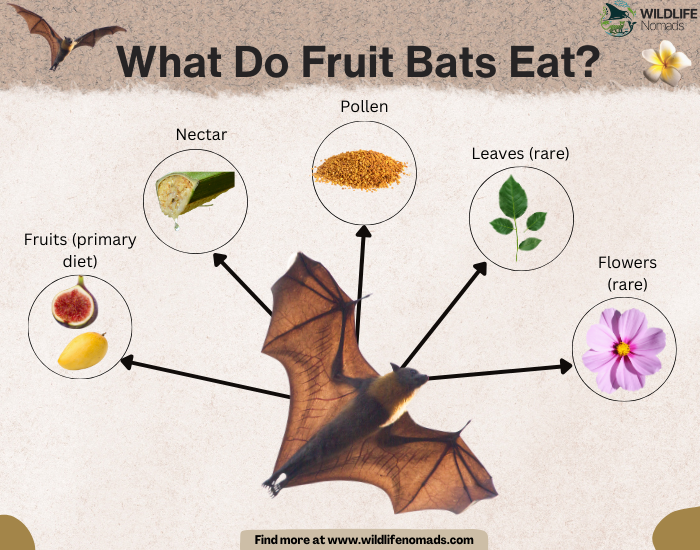
Most fruit bats are primarily frugivorous. They consume a diverse array of fruit from nearly 188 plant genera. In addition, their diet includes other food resources such as nectar, pollen, leaves, seed pods, bark, and twigs. Seed pods play a key role in seed dispersal, supporting plant reproduction and ecosystem health.
Their digestive systems are remarkably fast. Some species pass seeds through their gut in under 20 minutes. Seeds exit largely intact and ready to germinate. This makes fruit bats the most efficient seed dispersers in tropical ecosystems. They can disperse up to 60,000 seeds in a single night over a distance of 50 km.
5. They Are Far From Blind
One of the most common myths about bats is that they are blind. For megabats, this could not be further from the truth. In fact, flying foxes have some of the best night vision in the entire animal kingdom.
Most fruit bats do not use echolocation; with few exceptions, they rely on excellent night vision and a keen sense of smell to find food. Megabats have keen senses of smell that rival that of the domestic dog.
Their large, forward-facing eyes provide excellent binocular vision, even in low light. Unlike microbats, which have tiny bead-like eyes, megabats possess eyes with both rods and cones. Rods help with shape and pattern recognition in darkness. Cones allow them to perceive colour. This is why fruit bats have those distinctive “dog-like” faces. Their wings also play a role in sensing the environment, the membrane contains nerve endings sensitive to airflow and temperature.
6. Where Do Flying Foxes Live?
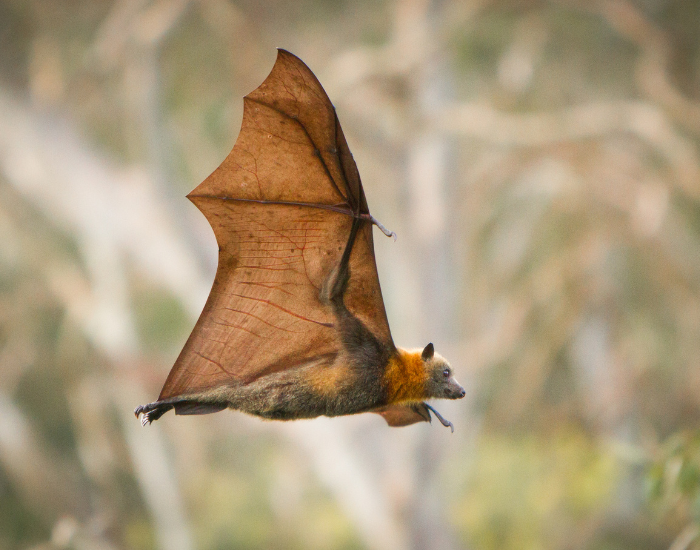
Fruit bats are creatures of the tropics. Their primary habitats span Africa, India, Southeast Asia, and Northern Australia. Bats live in a variety of environments, including rainforests, caves, mangroves, coconut groves, and even urban parks. However, they need fruit-bearing trees to survive year round.
World fruit bats display remarkable diversity across many continents and islands. Megabat found in diverse geographic locations often show unique adaptations, with some species being endemic to single islands. In some isolated regions, only species of flying fox are found, making them unique to those specific habitats. During periods of inactivity, megabats roost in trees or caves. Megabats are widely distributed in the tropics of the Old World, occurring throughout Africa, Asia, Australia, and throughout the islands of the Indian Ocean and Oceania.
If you live in the continental United States, you will not find megabats in the wild. The bats you see at dusk are almost exclusively microbat species. However, fruit bats do inhabit some U.S. territories, including the Northern Mariana Islands and American Samoa. The Mariana fruit bat, specifically Pteropus mariannus, is a species of significant conservation concern in that region. Papua New Guinea is another critical hotspot, with rainforests home to megabat species that play an irreplaceable role in seed dispersal.
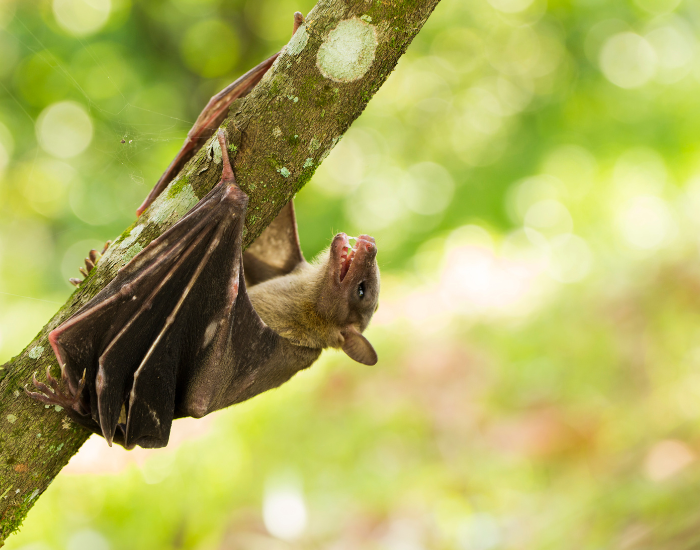
7. Keystone Species of the Forest
Fruit bats are classified as keystone species. This means they have a disproportionately large impact on their ecosystem, far beyond what their numbers alone would suggest. Remove them, and entire forests begin to collapse.
In Papua New Guinea, many rainforest trees produce seeds so large or tough that only a big fruit bat can carry and disperse them. Flying foxes act as “gardeners of the sky,” dropping seeds across cleared land as they fly. After digesting fruit, they release intact seeds mid flight through their droppings. These seeds germinate into new trees, slowly rebuilding the forest canopy.
Flying foxes can disperse seeds up to 20 km from the parent tree. In fragmented forests, this long-distance dispersal is vital, most other frugivores stay within a small patch. Without megabats, biodiversity in tropical regions would suffer devastating losses.

8. They Live in Massive Social Colonies
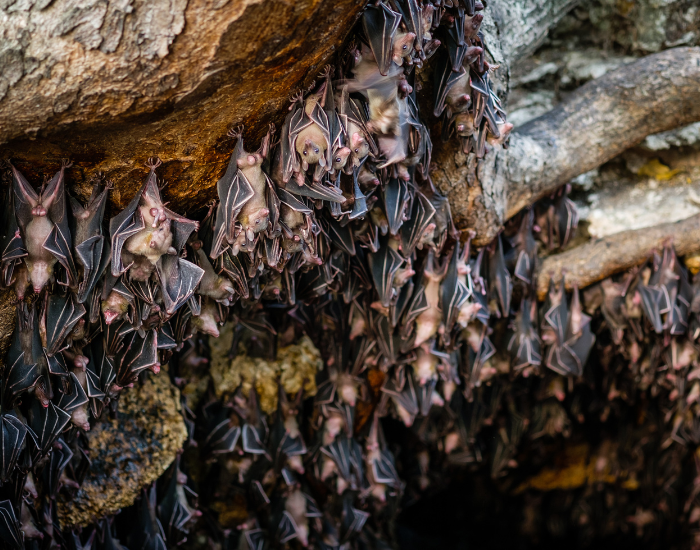
Fruit bats are remarkably social. They live in groups called “camps”, and these large colonies can be enormous. Many megabat species are highly gregarious, often gathering in huge roost sites.
The Indian flying fox, for example, roosts in large colonies of up to 1,000 individuals during the day. Grey headed flying foxes gather in colonies that sometimes number in the hundreds of thousands, one of the most striking sights in the natural world.
Within these colonies, bats maintain complex social hierarchies. Males defend roosting territories. Females choose mates partly based on the quality of the roost. During the day, bats wrap their wings around their bodies to stay warm. On sunny days, they fan their wings to cool down. The noise is constant, a mix of chatters, squeaks, and squabbles over the best branch. Scientists are still working to fully decode their vocalizations. Research suggests the calls serve purposes ranging from territory defence to mate attraction.
9. What Are the Main Threats to Fruit Bats?
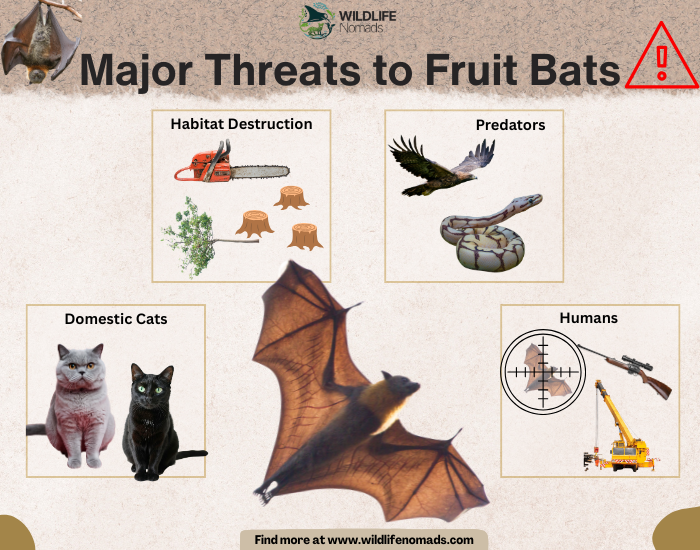
Fruit bats are frugivores and nectarivores, they eat plants, not other animals. However, they face serious predation and persecution from multiple directions. Their main threats include:
- Birds of prey — Eagles and hawks actively hunt flying foxes.
- Pythons — Especially in Australia and Southeast Asia, where reticulated pythons ambush roosting bats.
- Domestic cats — A major and growing issue in urban-adjacent habitats.
- Humans — Hunting for bushmeat remains a serious problem across parts of Southeast Asia and the Pacific Islands. Hunting bats is also a traditional and cultural practice in many regions, with half of all megabat species hunted for food.
- Habitat loss — Deforestation destroys roosting and foraging habitat across their range. Habitat loss and resulting urbanization lead to the construction of new roadways, making megabat colonies easier to access for overharvesting. Climate change also threatens food sources year round, particularly during heatwave events.
10. The Bizarre Tube-Nosed Fruit Bat
Not all fruit bats look alike. The tube nosed fruit bat is one of the strangest members of the family. Tube nosed fruit bats are known for their two yellow, tubular nostrils protruding from their face, giving them an almost science-fiction appearance. These bats possess advanced olfactory capabilities, using their unique nasal structure for stereo olfaction, scent-based navigation, and scent-marking behaviors.
Those tubes are not decorative. They function like snorkels, allowing the bat to breathe comfortably while it buries its face deep into messy, succulent fruit. Evolution, it turns out, is nothing if not practical.
This species shows the incredible diversity within the megabat family. Across different habitats and food sources, fruit bats have evolved an extraordinary range of physical adaptations, each one perfectly tailored to a specific ecological niche. Some Australian trees produce nectar that specifically attracts fruit bats, which helps in their pollination.
11. Intelligence and Impressive Longevity
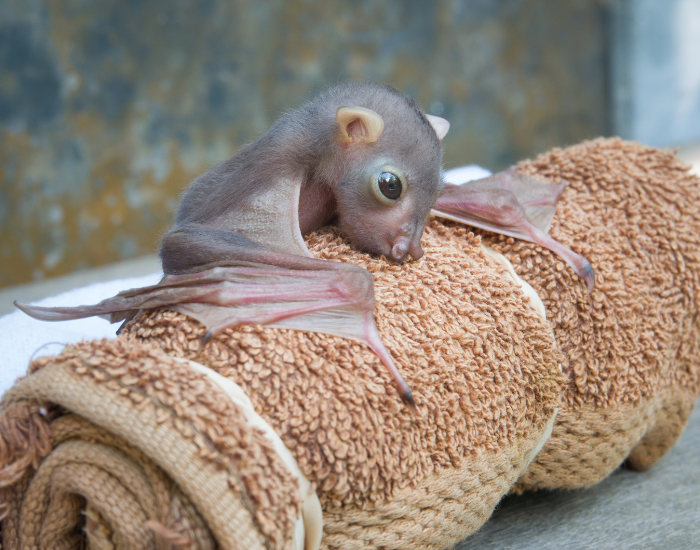
Do not let the “sky puppy” nickname fool you. Fruit bats are sharp, capable species. The Indian flying fox is considered one of the most intelligent bat species in the world. Individuals can navigate hundreds of kilometres and return to the exact same tree, year after year.
Flying foxes communicate through vocalisations. They identify each other by scent. They even plan foraging routes based on seasonal fruit availability. Watching a colony launch into the air, thousands of wings beating in unison, is one of nature’s most breathtaking displays.
Longevity backs this up, too. In the wild, flying foxes typically live around 15 years. In captivity, Indian flying foxes have lived well over 30 years, an incredible long lifespan for a mammal of its size. This longevity makes them a fascinating subject for researchers studying aging and disease resistance.
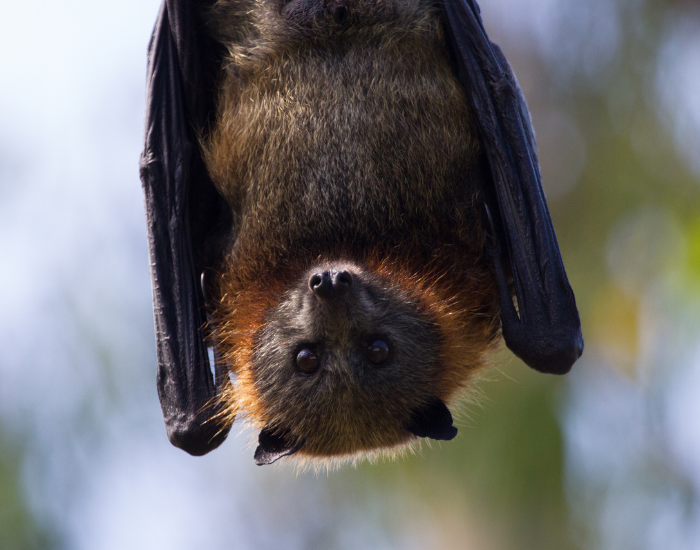
12. Conservation: The Mariana Fruit Bat and Beyond
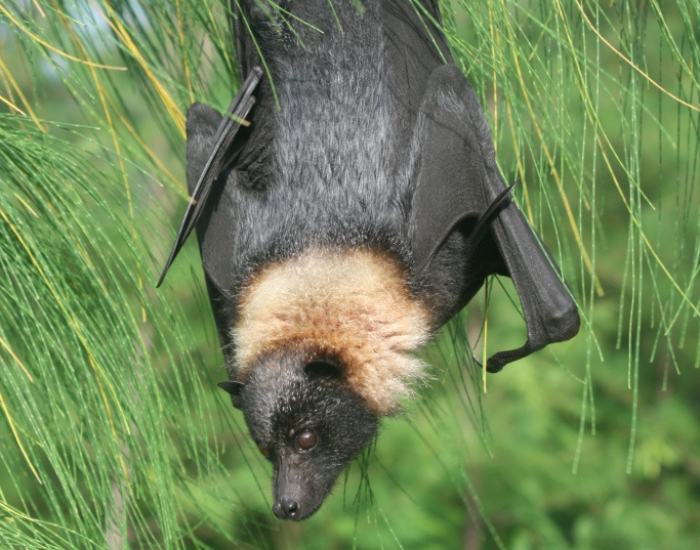
Many fruit bat species are in serious trouble. For examples the Mariana fruit bat — Pteropus mariannus — is classified as Endangered on the IUCN Red List. It is also listed as Threatened by the U.S. Fish and Wildlife Service. The Mariana fruit bat is a medium-sized fruit bat in the family Pteropididae that weighs 0.66 to 1.15 pounds (330 to 577 grams), with a forearm length ranging from 5.3 to 6.1 in (13.4 to 15.6 cm), and its underside is colored black to brown, with gray hair interspersed, creating a grizzled appearance. Habitat loss remains the primary driver of its decline. Poaching and invasive species like the brown tree snake have compounded the problem across the Northern Mariana Islands. In some regions, only two species of megabat may be present, highlighting the importance of protecting these limited populations.
FAQ: Your Fruit Bat Questions Answered
No. Fruit bats are not aggressive and generally avoid humans. However, like any wild animal, they will bite if cornered or handled without care. Some bat species can carry viruses such as Lyssavirus or Nipah. The golden rule is simple: look, but do not touch. Megabats, which include fruit bats, typically have smaller genomes than most other mammals.
Their name is straightforward. Fruit and nectar make up the bulk of their diet. Fruit bats differ from most other bats by being generally larger and feeding primarily on fruit, nectar, and pollen. They belong to genera like Pteropus, which literally translates to “wing-foot.”
A fruit bat’s wings are actually modified hands with elongated finger bones. A thin flight membrane stretches between these bones, supported by lightweight cartilage. These wings allow flying foxes to generate lift and glide over long distances with ease. Some species can fold their wings tightly against their body when roosting. The wings also help regulate body temperature in the tropical heat.

Why We Should Care
The animals we fear most are usually the ones we understand the least. Fruit bats are not harbingers of doom. They are vital workers, silent gardeners of the night who keep our forests green. Whether it is the little red flying fox of the Australian outback or the great flying fox soaring over tropical canopies, these species deserve our attention, respect and protection.