Before moving to Australia, I lived in Mexico, where city life didn’t offer many chances to see wildlife up close. But on field trips, whenever I managed to escape the city and spend time in nature, I was lucky enough to spot owls. Those encounters always left an impression on me, there’s something about their quiet presence and watchful eyes that feels both mysterious and grounding. One owl in particular struck me and stayed with me through the years: the barred owl (Strix varia). Since then, this species has fascinated me, and even after relocating across the world, I still find myself drawn back to its story.
Known for its distinctive calls, especially the rhythmic “Who cooks for you? Who cooks for you all?”. this vocal owl has become one of the most widely recognized species across the United States and Canada.
But the barred owl is more than just a call in the night. It’s a highly adaptable predator, an expanding competitor to the endangered spotted owl, and a bird with both ecological importance and cultural meaning. Here are 12 deep-dive facts about barred owls, blending science, conservation, and a little of my own perspective as someone who’s endlessly curious about animals.
1. What Does a Barred Owl Look Like? A Black-Eyed Owl in the Forest
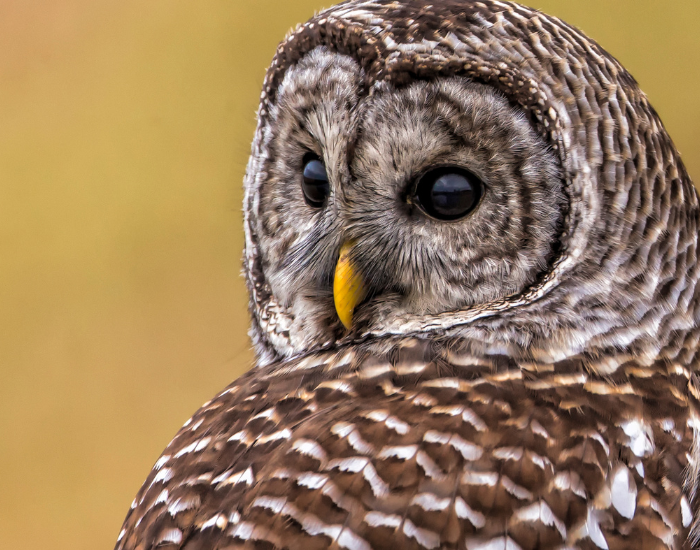
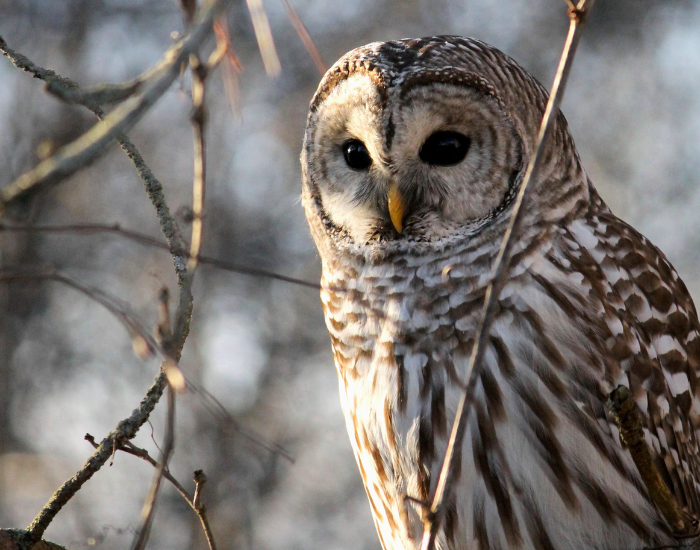
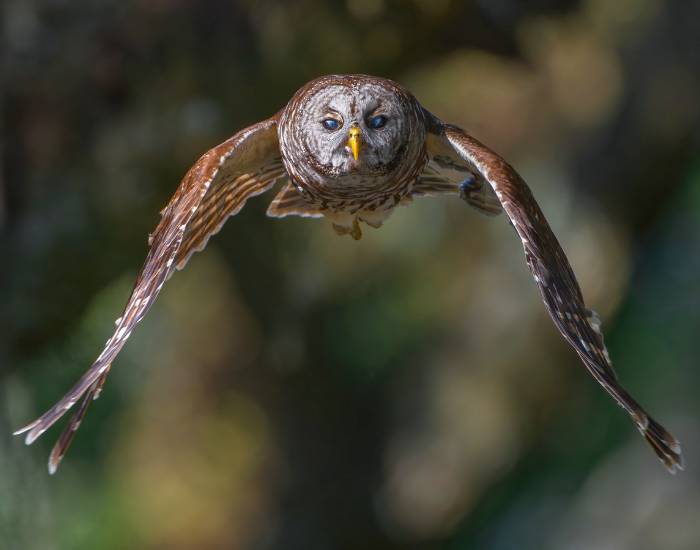
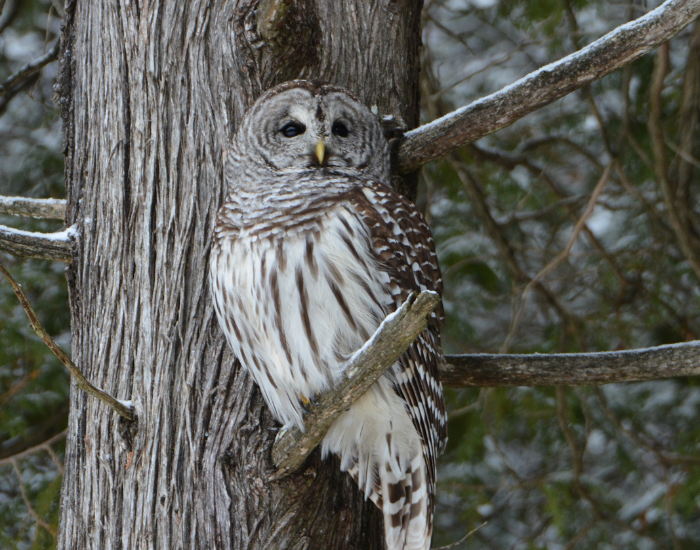
If you’ve ever wondered “What does a barred owl look like?”, the answer is striking. Barred owls are black-eyed owls, a rare trait among North American raptors, since most species, like barn owls and great horned owls, have yellow or orange eyes. Their dark eyes give them a soulful, almost haunting expression.
Other barred owl characteristics include:
- A round head with no ear tufts
- A pale barred owl face framed by concentric rings of brown and gray
- Brown and white barring across the chest, with streaks down the belly
- A stocky body and powerful talons
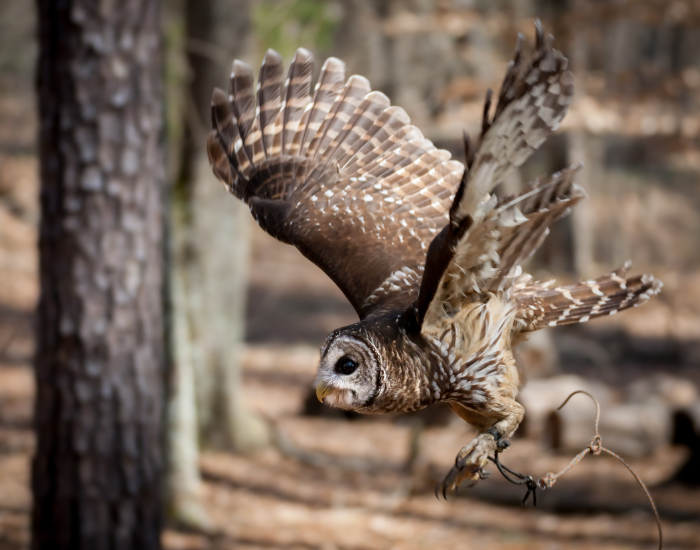
Barred owl size: Adults measure 40–63 cm (16–25 in), with a wingspan of 96–125 cm (38–49 in). Females are larger than males, a common trait in owls.
Compared to barn owls, which have heart-shaped faces and pale plumage, barred owls look darker, more heavily streaked, and, in many ways, more imposing.

2. Where Are Barred Owls Found? From Eastern Canada to the Pacific Northwest
The barred owl location has shifted dramatically over the past century. Originally, they were birds of eastern Canada, the southern Canada woodlands, and the eastern U.S.. Thanks to changes in forest cover, they expanded westward and now occupy a much larger range.
Barred owls’ habitat includes:
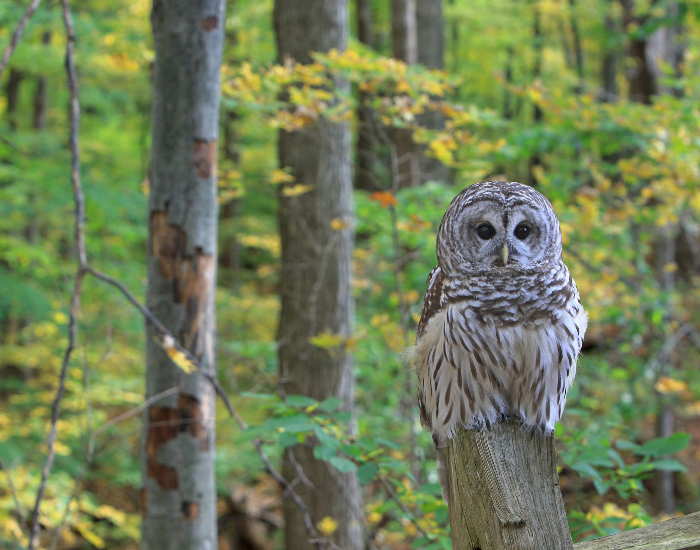
- Mature forests and mixed woods
- Deciduous trees and large trees with cavities
- Wooded swamps and riparian areas
- Even suburban neighborhoods with enough dense foliage
Today, barred owls live across:
- North America’s eastern forests
- Southern Canada and the northern part of the U.S.
- The Rocky Mountains and into the Pacific Northwest
- As far as Alaska and British Columbia
Their adaptability to forest habitat and even semi-urban environments explains why so many people ask: “Is it common to see a barred owl?” Yes, in many places it is.
3. What Do Barred Owls Eat? From Small Mammals to Frogs
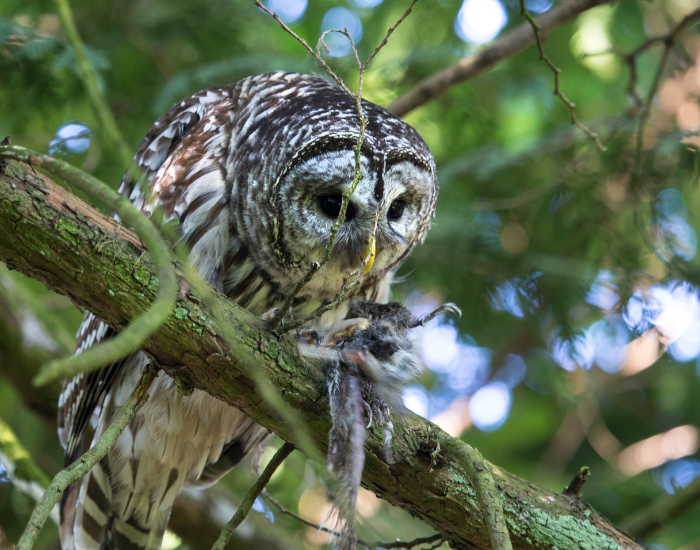
The barred owl diet is diverse. While they rely heavily on small mammals like voles, mice, small rodents, squirrels, and rabbits, they’re opportunistic hunters.
They also eat:
- Frogs, snakes, salamanders, and other amphibians
- Birds (including smaller owls and other raptors)
- Fish and crawfish from streams and wetlands
- Insects and even the occasional lizard
They’re perch hunters, sitting quietly until prey passes below, then swooping silently thanks to specialized wing feathers. Studies of owl pellets (regurgitated masses of bones and fur) show just how varied their prey can be.
This diet flexibility helps explain their successful expansion into the Pacific Northwest and deep woods where they overlap with other owl species.
4. The Famous Barred Owl Calls: “Who Cooks for You?”
If you’ve ever walked through a forest at night and heard the phrase “Who cooks for you? Who cooks for you all?”, you’ve heard a barred owl. This barred owl sound is one of the most distinctive in the bird world.
Barred owl call meanings include:
- Territory defense
- Courtship communication
- Pair bonding during the breeding season
- Alarm calls when threatened
But the repertoire doesn’t stop there. Barred owls are known for:
- Caterwauling: chaotic, duetting screams between mates or rivals
- Monkey calls: bizarre, shrieking sounds reminiscent of primates
- Clicking noises: often part of close-range communication
They’re sometimes nicknamed the “eight hooter” or “hoot owl” because of their vocal variety. For many, these calls are the first sign of a barred owl’s presence.
5. Nesting Habits: Where Barred Owls Raise Their Young
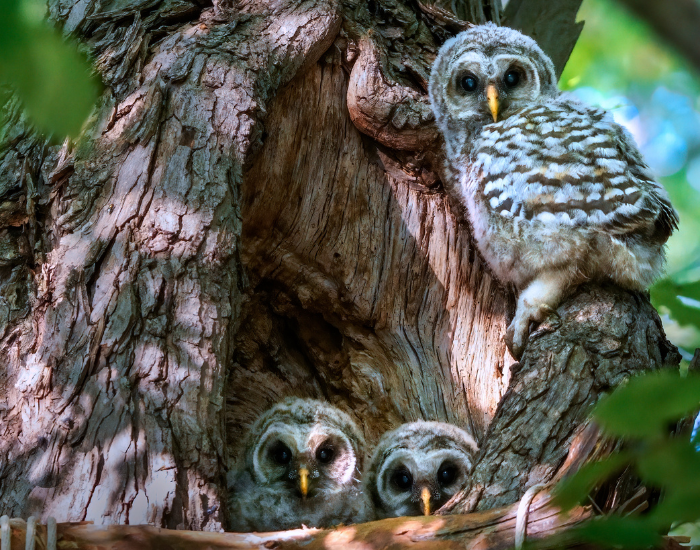
Barred owls are cavity nesters. They typically choose a nest tree with a large hollow, but will also use abandoned hawk nests, squirrel dreys, or even nest boxes provided by people.
Breeding facts:
- Pairs are monogamous and often mate for life.
- Typical clutch: 2–3 pure white eggs.
- Incubation: About 28–33 days, handled by the female.
- Parents care for the chicks together, with the male delivering food.
Young barred owls are fluffy and white at hatching, growing into streaky brown juveniles before developing adult barring. Watching them “branch”, clambering out of the nest onto nearby branches before they can fly, is a highlight for many birders.
6. Courtship Rituals: Bobbing, Bowing, and Duets
Courtship among barred owls is both visual and vocal. Pairs perform dramatic displays, including:
- Head bobbing and bowing
- Wing flutters and exaggerated postures
- Duetting hoots and caterwauling
During this time, the male brings food to the female, reinforcing the pair bond. Together, they may call loudly through the night, making them one of the most noticeable vocal owls in their range.
7. How Aggressive Are Barred Owls?
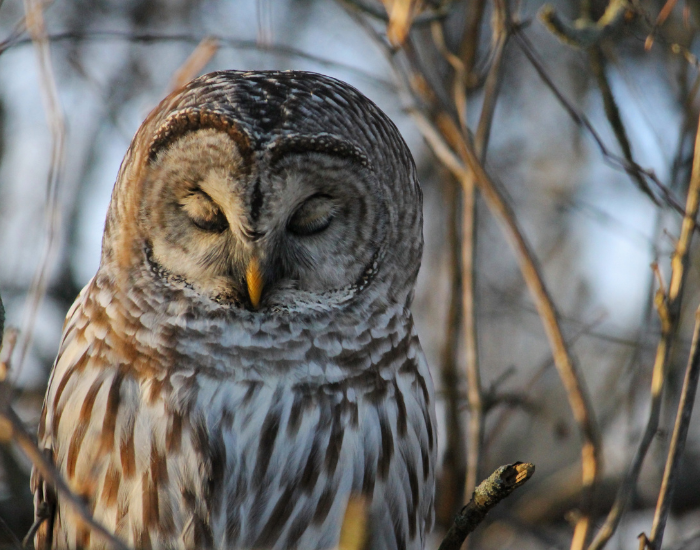
Barred owls are known for their boldness. They’re not usually aggressive toward humans, but they will fiercely defend nests and young. Birders and joggers have reported being swooped at by territorial pairs.
Against other wildlife, they’re formidable. They occasionally prey on other owls, like screech owls, and have even been recorded attacking crows and hawks. Their fiercest threat, however, comes from larger owls.
8. The Great Horned Owl: A Barred Owl’s Fiercest Enemy
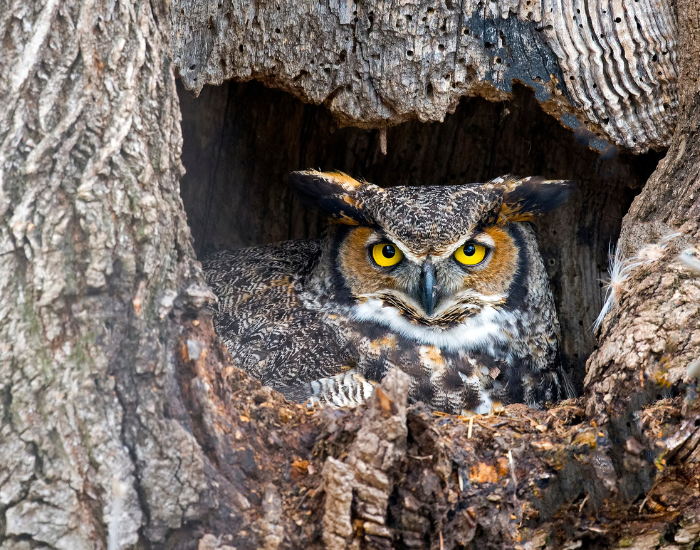
The great horned owl is the primary predator of barred owls. Larger, stronger, and more powerful, great horned owls often displace or kill barred owls when territories overlap.
This predator-prey dynamic has shaped barred owl behavior. They avoid open areas at night when great horneds are active, preferring dense foliage and deep woods.
Ironically, barred owls themselves are aggressive competitors, especially against the spotted owl in the Pacific Northwest, where they have contributed to population declines.
9. How Long Do Barred Owls Live?
In the wild, barred owls typically live around 10–15 years, though some reach 20. In captivity, lifespans can extend further.
Threats include:
- Predation from great horned owls
- Collisions with cars and windows
- Exposure to rodenticides
- Habitat loss and fragmentation
Despite these challenges, their adaptability to both mature forests and suburban areas makes them one of the most common owl species in North America.
10. Spiritual Meanings: What Does It Mean When a Barred Owl Visits You?
Like many owls, the barred owl carries spiritual and cultural weight.
- Some traditions view their calls as omens or warnings.
- In Indigenous folklore, they may symbolize death or transformation.
- For modern birders, hearing a barred owl often signals the health of the local forest habitat.
So when people ask, “What does it mean when you hear a barred owl?”, the answer varies, from mystical interpretations to the simple fact that a powerful predator is nearby.
11. Barred Owls in Conservation: Friend or Foe?
While the barred owl itself is not endangered, its expansion west has created challenges. In the Pacific Northwest, barred owls outcompete the northern spotted owl, a species already struggling with habitat loss.
The U.S. Fish and Wildlife Service has taken controversial steps, including lethal control of barred owls, to protect spotted owl populations. Research from the Cornell Lab and Owl Research Institute continues to track these dynamics.
This raises ethical questions: how do we conserve one species without harming another? It’s a reminder that ecosystems are complex and that human land use often sets the stage for such conflicts.
12. Quickfire Facts: The Personality of the Barred Owl
- Nicknames: Great barred owl, eight hooter, black-eyed owl
- Habitat: Forests, wooded swamps, suburban large trees
- Favorite foods: Small mammals, frogs, rodents
- Personality: Bold, curious, and highly vocal
- Fun detail: Barred owls tend to stay in the same area year-round, rarely migrating long distances

FAQ: Barred Owls
No. They’re common across much of North America, especially in the eastern U.S. and southern Canada.
Not very, if you’re near mature forests or wooded swamps, you’ll likely hear their famous call.
Barn owls have heart-shaped faces and pale plumage, while barred owls have round heads and dark barring.
Usually to defend territory or during intense caterwauling in the breeding season.
Ideally toward a forest edge, away from prevailing winds, and near open hunting grounds.
Unlikely—barred owls typically hunt prey under 2 lbs, though pets should still be supervised outdoors.
A Lovely Owl
The barred owl is one of North America’s most adaptable and fascinating birds. From its soulful black eyes to its famous “Who cooks for you?” call, it represents both the wonder of wildlife and the complexities of conservation.
For me, the barred owl embodies why I study animals in the first place: because every species, common or rare, carries layers of ecology, behavior, and meaning worth uncovering.