Last spring I was crouched in the leaf litter of the Great Dividing Range in Australia, watching a possum’s eyes flash back at my headlamp. I have spent decades in woodland like this, from oak forests in Mexico to eucalyptus country Down Under. Every trip reminds me how many woodland animals we walk straight past without noticing.
So let’s fix that. A woodland is simply a habitat where trees grow with gaps between their crowns, letting light reach the ground. That open structure creates distinct layers, the canopy, the understory, and the forest floor — and each layer feeds and shelters different wildlife. Healthy woodlands support remarkable biodiversity, from black bears in dense undergrowth to insects tucked under bark.
This guide walks through 15 common woodland animals, grouped by region: North America, Europe, and Oceania. For each species I have added its scientific name, its range, and field notes from places I have actually stood. My aim is simple: help you discover the creatures hiding in plain sight.
What makes a woodland animal a woodland animal?
Living among trees demands specific traits. Camouflage helps woodland creatures blend into bark, moss, and shadow, and that same adaptation lets them avoid detection by predators. Burrows and nests offer shelter from weather and hunters, while many mammals survive cold winters through hibernation, torpor, or careful food storage.
Movement matters too. Squirrels and possums need specialized locomotion to travel through three-dimensional forest spaces, leaping between branches with ease. Many woodland animals carry sharp claws for climbing and foraging, plus acute senses of smell and hearing for detecting food and predators in low light. Nocturnal habits help countless species dodge daytime hunters entirely.
The forest floor hides its own specialists. Red-backed salamanders, small woodland amphibians, respire entirely through their skin, so they live under moist leaf litter and rotting logs where the air stays damp. These lungless creatures are a favorite of mine — a whole life lived in a few square meters of ground. You can read more in my guide to woodland amphibians and frogs.
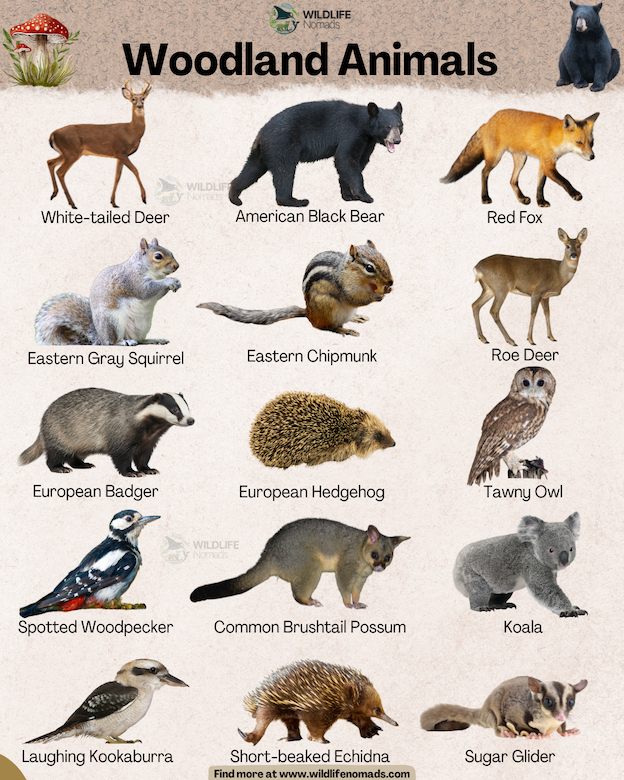
Woodland animals of North America
North America’s mixed forests run from Canada to Mexico, and I have chased wildlife across much of that range. These wooded areas hold everything from the adaptable raccoon, a primarily nocturnal omnivore, to the wild turkey, which can fly in short bursts at up to 55 miles per hour. Larger residents like the moose browse the northern forests too. Here are five iconic species you have likely seen but forgotten.
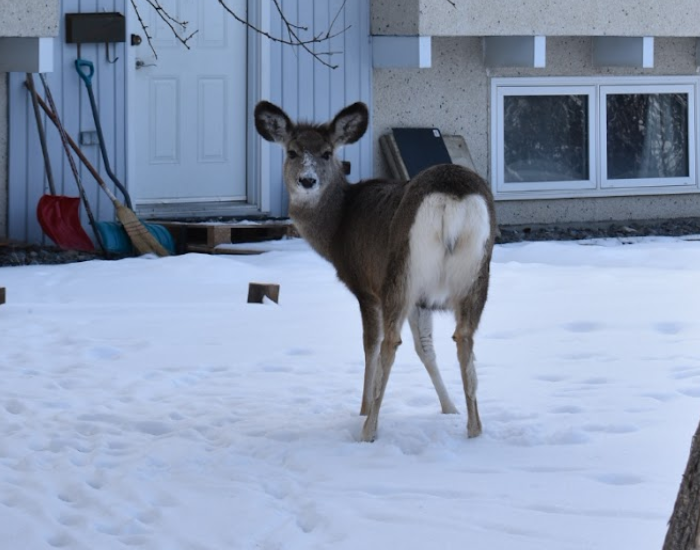
1. White-tailed Deer (Odocoileus virginianus)
The white-tailed deer is found throughout the Americas, favoring forest edges and mixed woodlands where cover meets open feeding ground. I have watched them at dawn in Mexican oak forests, ears swiveling like radar dishes and in urban areas in Alberta, Canada. When alarmed, they raise their white tails as a warning signal to others nearby. Their diet shifts with the seasons, buds and leaves in spring, acorns and fruit in autumn.
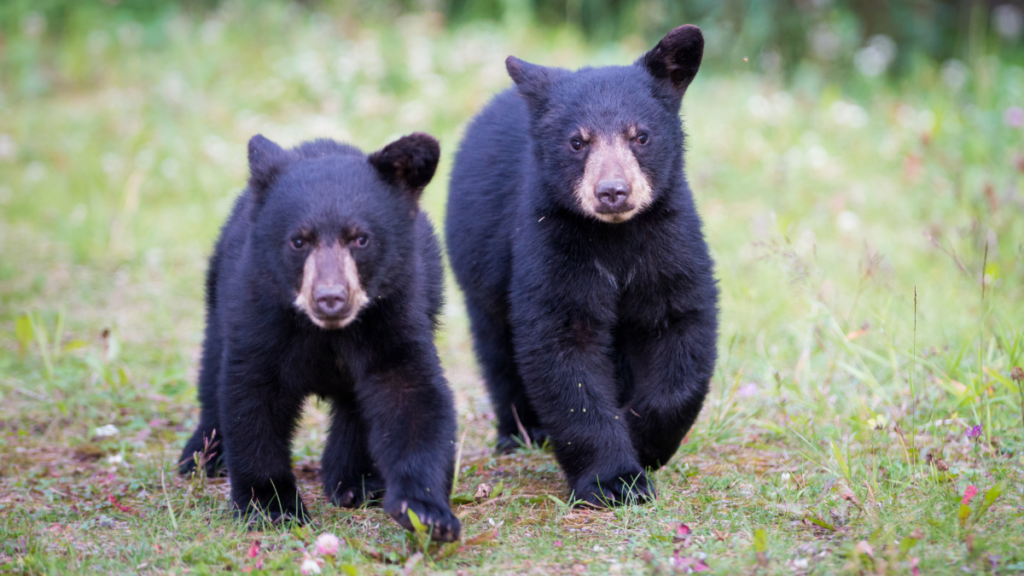
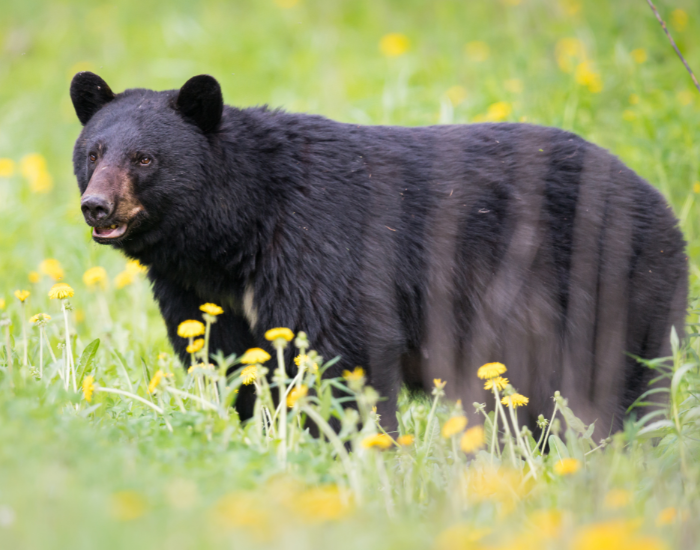
2. American Black Bear (Ursus americanus)
Despite its bulk, the American black bear is the smallest bear species in North America. It thrives in heavily forested areas with dense undergrowth, which offer both food and cover. These omnivores adapt their diet to whatever the season provides: berries, nuts, insects, and the occasional fish from rivers. Come winter they hibernate in dens, suppressing their metabolism dramatically while barely dropping their body temperature. I once tracked one for a week in Appalachia; it moved like a shadow through the trees.
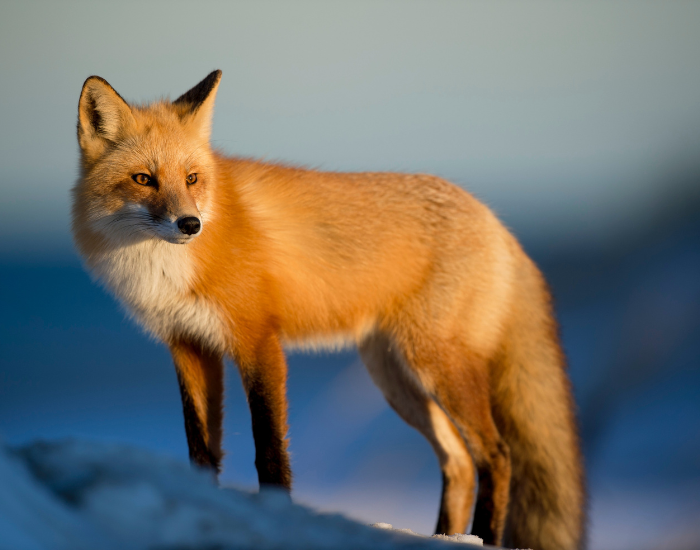
3. Red Fox (Vulpes vulpes)
The red fox is the largest species of the genus Vulpes, and one of the most widespread carnivores on Earth. It prefers mixed landscapes where wooded areas meet open fields, giving it both shelter and hunting room. Red foxes dig burrows called dens, where females raise their young each spring. Their hearing is so acute they can locate a mouse under snow.
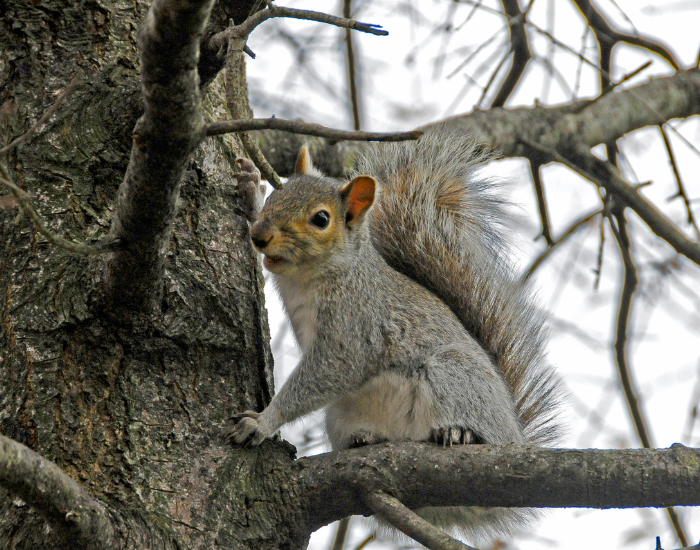
4. Eastern Gray Squirrel (Sciurus carolinensis)
The eastern gray squirrel lives across eastern North America and rules the canopy through sheer agility. It practices scatter-hoarding, caching thousands of seeds and nuts across its territory each autumn. Research shows these rodents even sort their stores by type, a mnemonic trick for finding food months later.
By contrast, red squirrels are often pushed out where greys spread, while the Indian giant squirrel, native to India, feeds mainly on fruits and nuts high in the trees, sharing its forests with big cats like leopards. Explore the family in my squirrels guide.
5. Eastern Chipmunk (Tamias striatus)
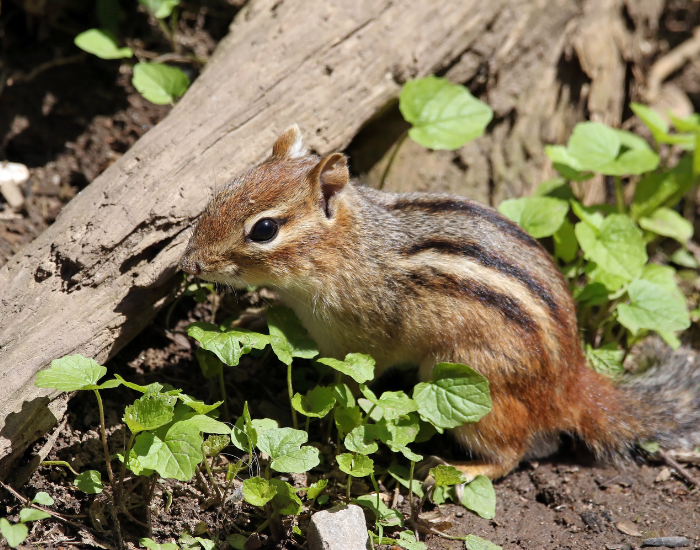
The eastern chipmunk is a pocket-sized ground dweller that creates complex underground burrow systems. Through autumn it gathers and stores seeds and nuts, stuffing its cheek pouches until its head looks comically swollen. Chipmunks spend the cold months underground in torpor, waking occasionally to eat their stash.
Woodland animals of Europe
European woodlands feel different… older, more storied. I have spent damp mornings in British forests where badgers and owls rule the night. These forests also shelter the elusive Eurasian lynx, a cat that primarily hunts ungulates like deer through the understory. Below are five species that define the region, several of which I have watched myself.
6. Roe Deer (Capreolus capreolus)
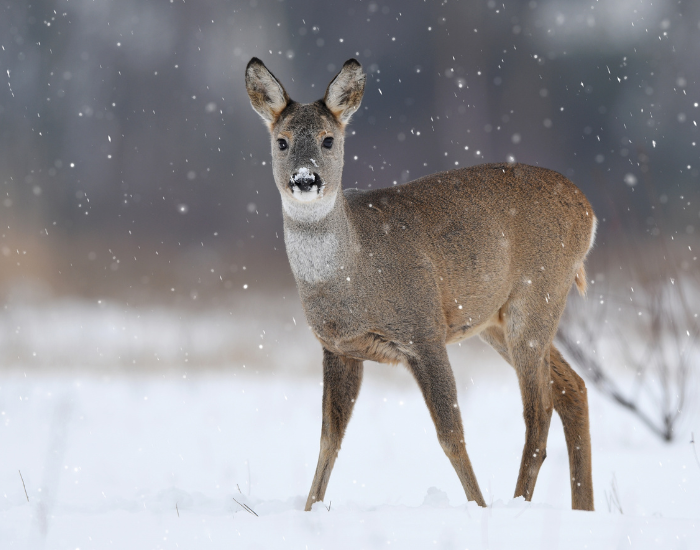
Roe deer are the most common deer species in Britain, slipping through hedgerows and woodland margins at dawn and dusk. Males grow short antlers with up to three points, shed and regrown each year. Interestingly, roe deer were reintroduced to England in the 19th century after earlier local extinctions. I have seen them freeze mid-step in the woodlands of Wales, trusting their coat to hide them against the bracken.
7. European Badger (Meles meles)
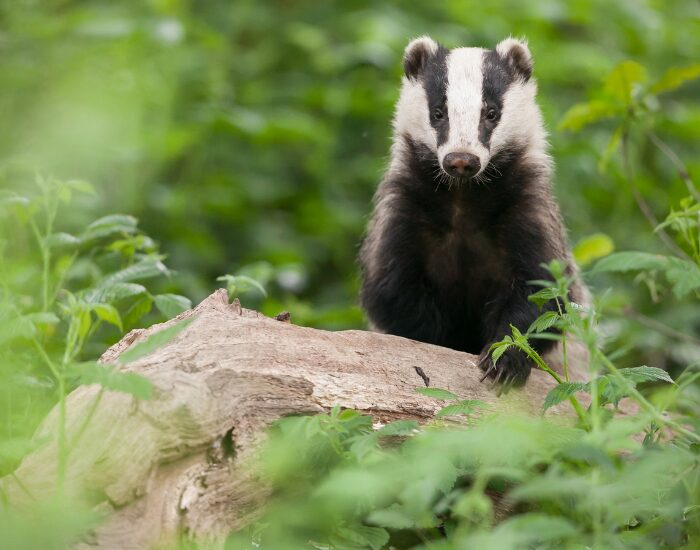
European badgers are nocturnal mammals found across Europe and Asia, and they are social in a way few carnivores are. They live in groups known as clans, sharing complex burrow systems called setts that can persist for generations. Their varied diet includes earthworms, fruits, roots, and small insects, shifting with the seasons. Badgers are protected by law in many regions, including much of Britain.
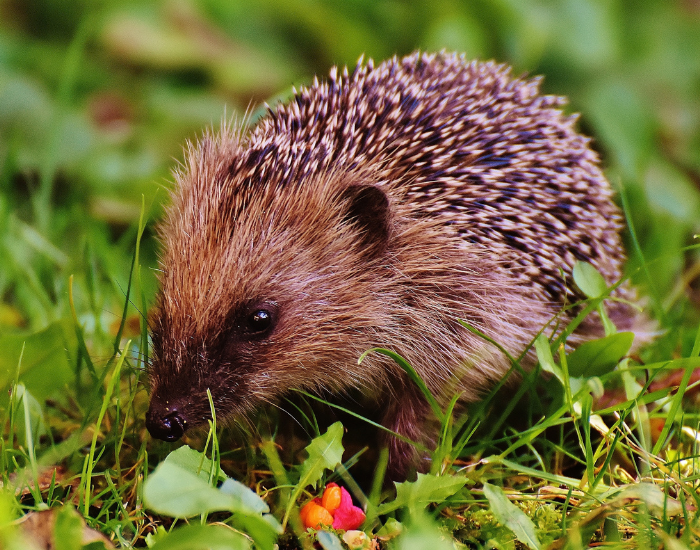
8. European Hedgehog (Erinaceus europaeus)
The European hedgehog is a small nocturnal mammal covered in protective spines. When threatened, it curls into a tight ball, tucking its soft face and belly out of reach. I find them enchanting, a living pincushion snuffling through the undergrowth for beetles, worms, and slugs. They hibernate through winter, so a warm autumn of heavy feeding is vital to their survival. Learn more in my hedgehogs guide.
9. Tawny Owl (Strix aluco)
The tawny owl is a nocturnal hunter known for its distinctive calls, that classic “twit-twoo” is actually two birds answering each other. It relies on silent flight and extraordinary hearing to catch prey in total darkness. I have stood beneath oak canopies at midnight just to hear one claim its territory. Owls like this one show how acute senses replace eyesight when the forest goes dark.

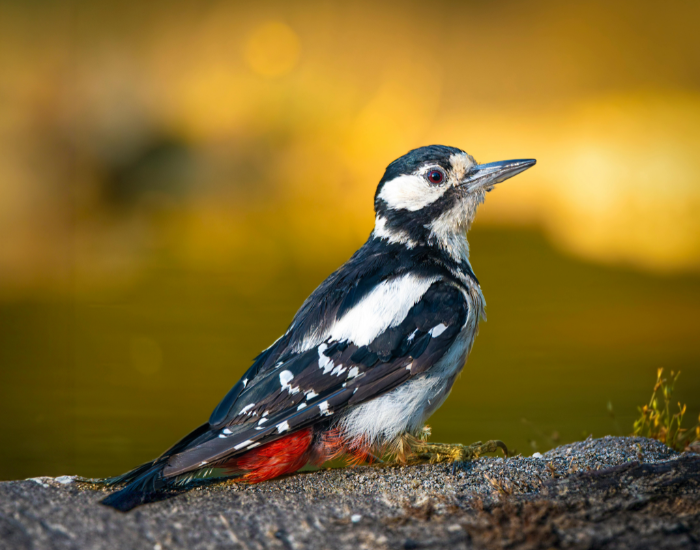
10. Great Spotted Woodpecker (Dendrocopos major)
The great spotted woodpecker ranges across Europe and northern Asia, hammering at tree trunks with startling force. It uses drumming for communication and territory defense, a sound that carries far through quiet forests. Its diet consists mainly of insects prised from bark, though it raids nuts and seeds too. Its cousin, the green woodpecker, is known instead for its loud laughing call. For the whole clan, browse my woodpeckers guide, and for the birds of prey that share these woods, my hawks guide.
Woodland animals of Oceania
Australia’s woodlands broke every rule I thought I knew. In the Great Dividing Range I spent nights among eucalypts alive with marsupials found nowhere else on Earth. These five species are among the most iconic, and yes, I was lucky enough to watch several in the wild.
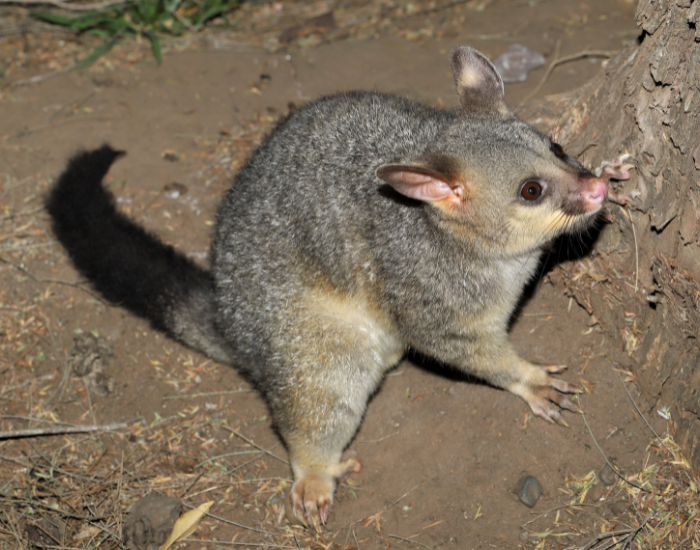
11. Common Brushtail Possum (Trichosurus vulpecula)
The common brushtail possum is a nocturnal marsupial found throughout Australia, and often the first mammal you meet after dark. It dens in tree hollows by day and forages through the canopy at night for leaves, fruit, and flowers. The one I watched in the ranges regarded me with total indifference before vanishing up a trunk. Its bushy tail grips branches like a fifth limb.
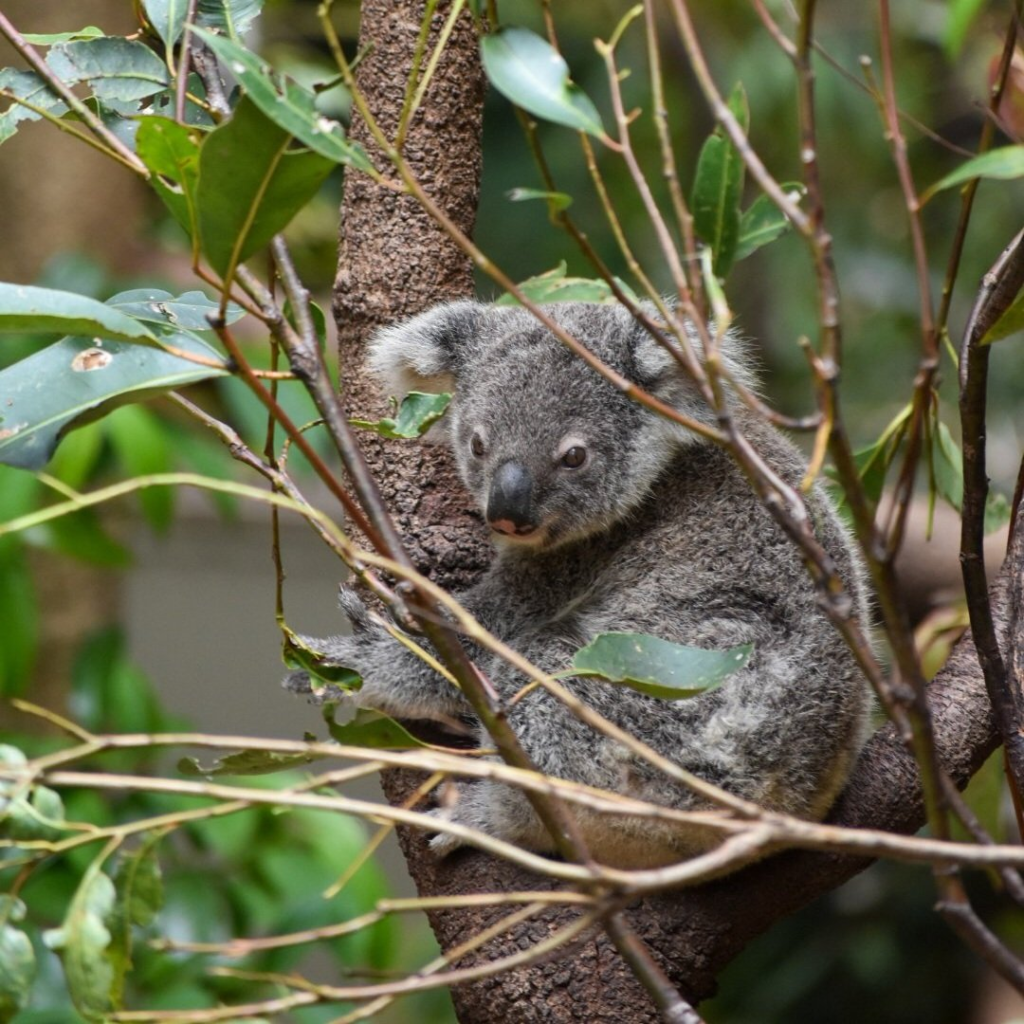
12. Koala (Phascolarctos cinereus)
The koala is a woodland specialist so committed to eucalyptus that it rarely eats anything else. Those leaves are low in energy, so koalas sleep up to 20 hours a day to conserve fuel. I searched for hours before spotting the firs one, mudge wedged in a fork, easy to miss. Their range has contracted sharply, making every sighting a small privilege.
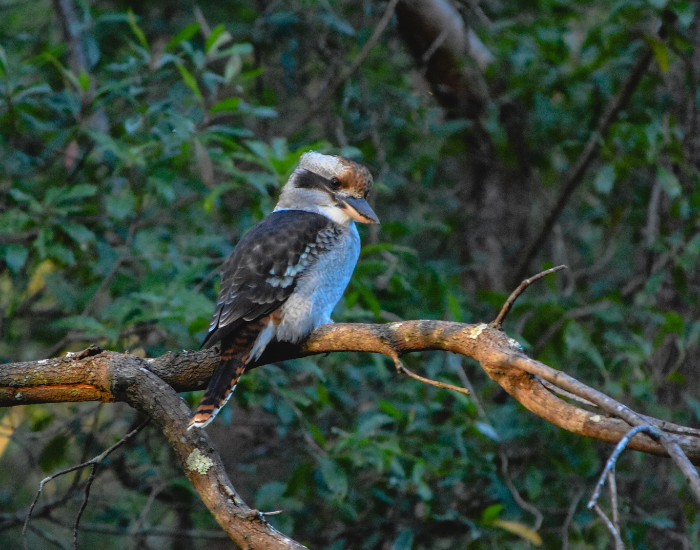
13. Laughing Kookaburra (Dacelo novaeguineae)
The laughing kookaburra is a stout woodland bird whose cackling call is the unofficial sound of the Australian bush. It is actually the world’s largest kingfisher, though it hunts land prey rather than fish. From a low branch it drops onto snakes, lizards, and large insects with precision. Hearing a family chorus at dawn is something I will never forget.
14. Short-beaked Echidna (Tachyglossus aculeatus)
The short-beaked echidna is one of the few egg-laying mammals, and a master of woodland foraging. It uses a long sticky tongue and strong claws to raid nests of ants and termites. When threatened, it curls up or digs straight down, leaving only a dome of spines exposed. I nearly stepped on one before it rolled into a tidy ball at my feet.

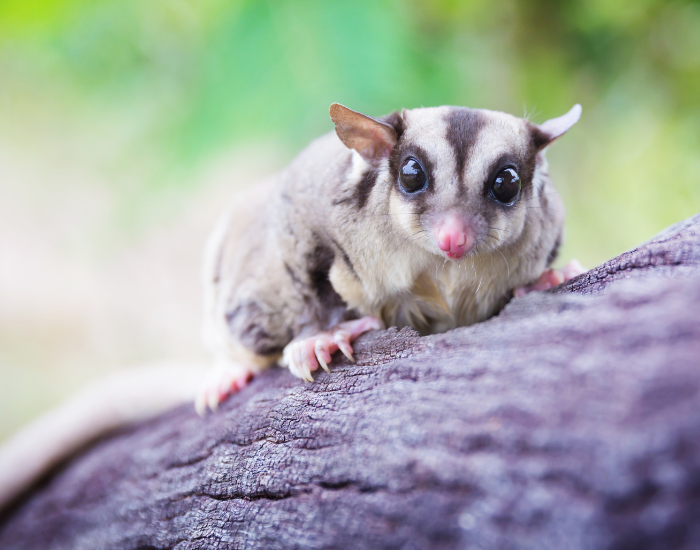
15. Sugar Glider (Petaurus breviceps)
The sugar glider is a tiny nocturnal marsupial that soars between trees on flaps of skin stretched from wrist to ankle. It can glide over 50 meters in a single leap, steering with its tail. These social animals live in family groups and feed on nectar, sap, and small insects such as moths and beetles. Watching one launch into the dark is pure woodland magic.
Frequently asked questions
Many of the best woodland creatures are small. Chipmunks, red squirrels, hedgehogs, sugar gliders, and red-backed salamanders all fit in your hand. These small woodland creatures survive through camouflage, burrows, and nocturnal habits that keep them hidden from larger predators.
Forests are full of small animals working the understory and forest floor. Look for mice, chipmunks, salamanders, songbirds such as thrushes, and countless insects. Each occupies a specific niche, from seed-hoarding rodents to insect-hunting birds probing bark and branches.
If cute is the goal, hedgehogs, chipmunks, sugar gliders, and young roe deer are hard to beat. Their large eyes and compact bodies are adaptations for woodland life, not just charm. Even so, I always remind readers to observe from a distance and never feed wild animals.
Ready to look closer
Woodlands reward the patient. Once you learn the layers and the adaptations, the camouflage, the burrows, the acute senses, you start seeing woodland animals everywhere you thought were empty. That shift in attention is the real gift of fieldwork, and it costs nothing but a slow walk and an open eye.
So here is my ask: next time you are among the trees, stop, stay quiet, and search the branches, the bark, and the leaf litter at your feet. Note what you find, and tell me about it in the comments — I read every one. Then wander over to my guides on deer, thrushes, and owls to keep the discovery going. Protect these habitats, and they will keep surprising us for generations.
Woodland Animals: Fact or Fiction? 🌲
Ten statements about the creatures hiding in the trees — five true, five myths. Can you tell them apart?
Fact or Fiction?
References:
Delgado, M. M., & Jacobs, L. F. (2017). Caching for where and what: Evidence for a mnemonic strategy in a scatter-hoarder. Royal Society Open Science, 4(9), 170958. https://doi.org/10.1098/rsos.170958
Macdonald, I. M. V. (1997). Field experiments on duration and precision of grey and red squirrel spatial memory. Animal Behaviour, 54(4), 879–891. https://doi.org/10.1006/anbe.1996.0528
McGee-Lawrence, M. E., Wojda, S. J., Barlow, L. N., Drummer, T. D., Bunnell, K., Auger, J., Black, H. L., & Donahue, S. W. (2015). Suppressed bone remodeling in black bears conserves energy and bone mass during hibernation. Journal of Experimental Biology, 218(13), 2067–2074. https://doi.org/10.1242/jeb.120725
Scott, T., Bradley, R. L., & Bourgault, P. (2023). Non-native earthworms increase the abundance and diet quality of a common woodland salamander in its northern range. Biological Invasions, 25(12), 3893–3906. https://doi.org/10.1007/s10530-023-03168-3
Silva, M., Rosalino, L. M., Alcobia, S., & Santos-Reis, M. (2021). Sett use, density and breeding phenology of badgers in Mediterranean agro-sylvo-pastoral systems. Animals, 11(9), 2663. https://doi.org/10.3390/ani11092663
Tøien, Ø., Blake, J., Edgar, D. M., Grahn, D. A., Heller, H. C., & Barnes, B. M. (2011). Hibernation in black bears: Independence of metabolic suppression from body temperature. Science, 331(6019), 654–657. https://doi.org/10.1126/science.1199435