Five years ago, my Wildlife Nomads teammate Jackie texted me from a bench in Central Park. She had just watched a tiny, racing-stripe-clad rodent dart across the path and vanish into a stone wall. “Cesar, there are chipmunks EVERYWHERE.” For a New Yorker, this was background noise. For a field biologist who had spent months chasing far more elusive animals, her message landed differently.
I love that pattern. We get blind to the wild creatures we share space with. I have watched wallabies hop past gas stations in Australia and macaques steal sunglasses from tourists in Southeast Asia. The local crowd shrugs. The chipmunk in your backyard deserves the same wide-eyed attention you would give a snow leopard. So let me share what makes this striped little rodent so worth knowing.
1. Yes, a Chipmunk Is a Squirrel
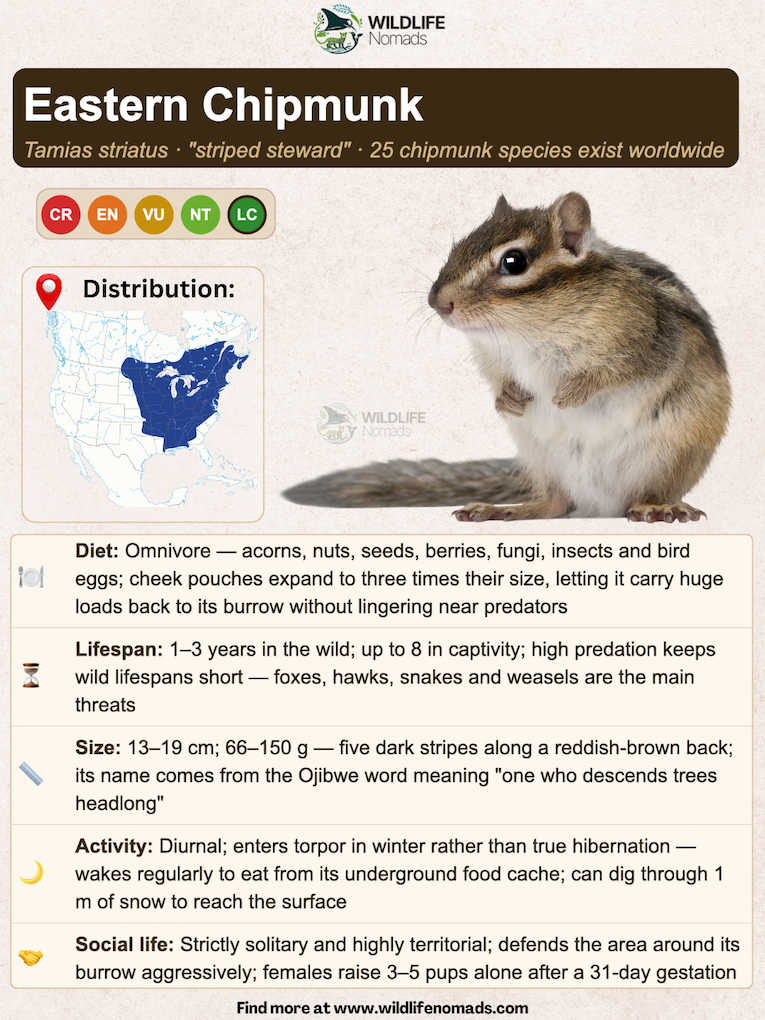
Is a chipmunk a squirrel? Yes. The chipmunk belongs to the squirrel family, Sciuridae, which also includes tree squirrels, red squirrels, ground squirrels, and marmots. The scientific name of the eastern chipmunk is Tamias striatus, and the genus Tamias means “the one who stores” or “steward” in Greek. That name does a lot of work, as you will see.
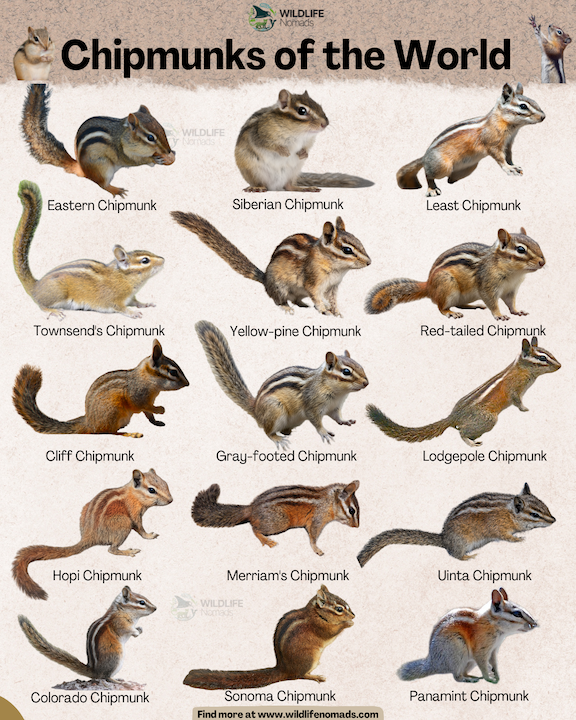
There are 25 species in the chipmunk lineage, and 24 of them live in North America. The least chipmunk (Tamias minimus) is the smallest, often no bigger than a chocolate bar with a tail. The eastern chipmunk is the chunky cousin, and it is the one most readers will recognize from gardens, parks, and trailheads. Compared to chunkier rodents like coypus or the giant capybara, this animal is a featherweight.
2. The Eastern Chipmunk Has Cheek Pouches That Defy Physics
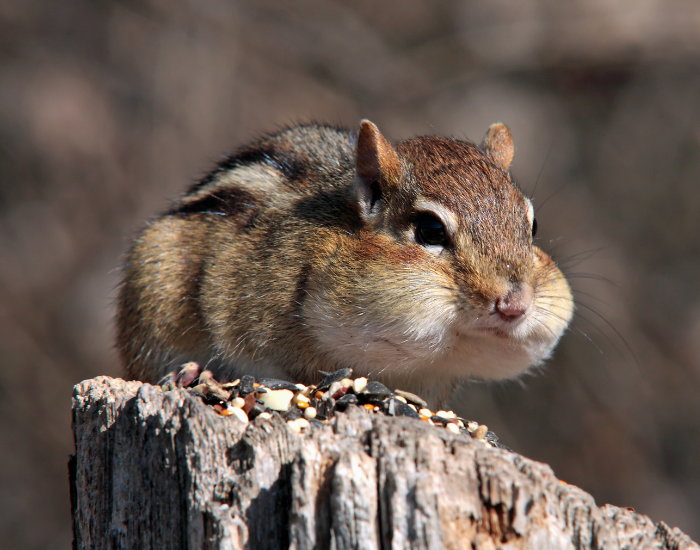
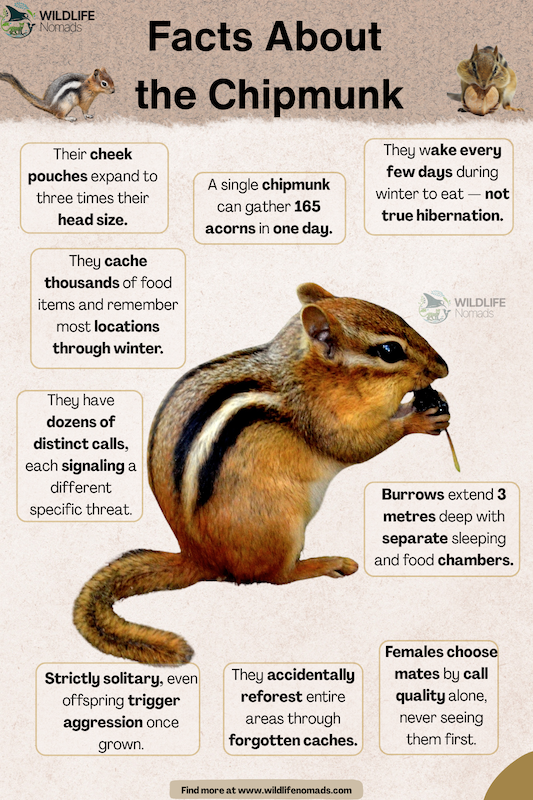
I have watched an eastern chipmunk pack its cheek pouches with sunflower seeds until its head was wider than its body. Cheek pouches are elastic skin sacs that extend from the mouth back past the ears, and they can stretch to triple the size of the head. Each chipmunk can carry dozens of seeds, several acorns, or a handful of berries in a single trip.
This is not a party trick. The cheek pouches let chipmunks haul food back to the burrow without exposing themselves to predators for long. Speed plus storage equals survival. Other rodents like hamsters and ground squirrels use similar setups, but none with the same forest-floor athleticism.
3. Eastern Chipmunk Habitat Is Wider Than You Think
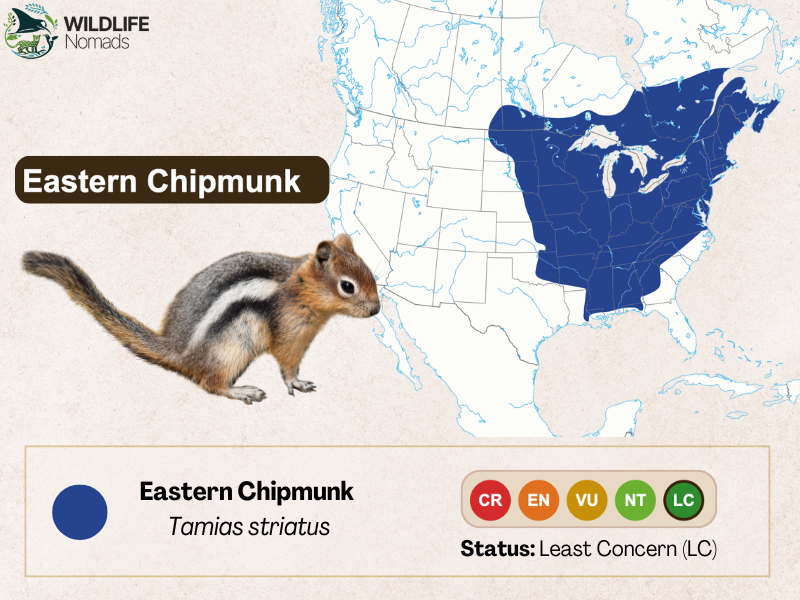
Where does the eastern chipmunk live? Tamias striatus ranges across eastern North America, from Quebec down to the Florida panhandle and west toward the Great Plains. The eastern chipmunk habitat is anchored in deciduous forests, where oak, maple, hickory, and beech trees produce the seeds and nuts that fuel its year.
That said, chipmunks habitat is not limited to deep forests. I have seen them living happily along stone walls in Vermont, in suburban gardens in Pennsylvania, and, of course, in Central Park itself. The chipmunk in Virginia might forage along a Blue Ridge trail or in someone’s tomato patch. Wherever ground cover is good and the food is varied, these animals thrive in deciduous forests and the edges around them.
4. They Are Not True Hibernators
Here is one of my favorite chipmunk facts. Do chipmunks hibernate? Sort of. They are not true hibernators like groundhogs or some bats. Instead, eastern chipmunks enter torpor in winter, a deep rest where heart rate plummets and body temperature drops. Every few days, however, they wake up.
What do they do during these wake-ups? They eat. The eastern chipmunk does not pack on a thick fat layer for winter the way a beaver does. Instead, it stores a huge pantry of nuts, seeds, and dried fruits inside the burrow chamber. Throughout winter the chipmunk rouses, nibbles, and goes back to rest. It is the most efficient nap strategy in the rodent world.
5. Their Burrows Are Underground Cities
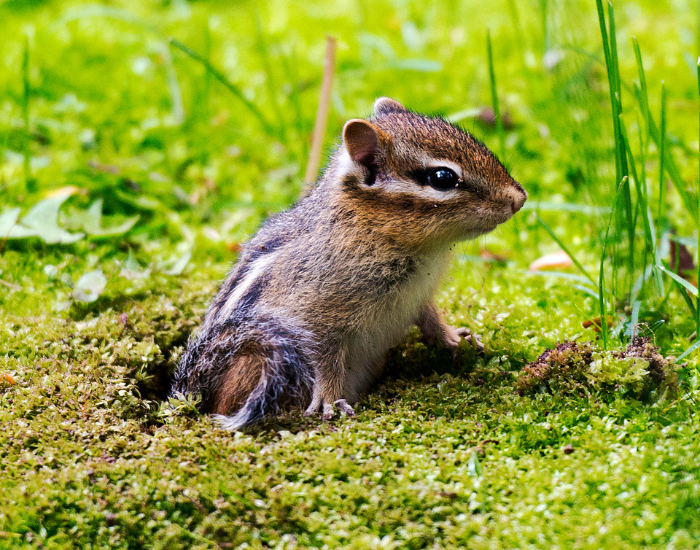
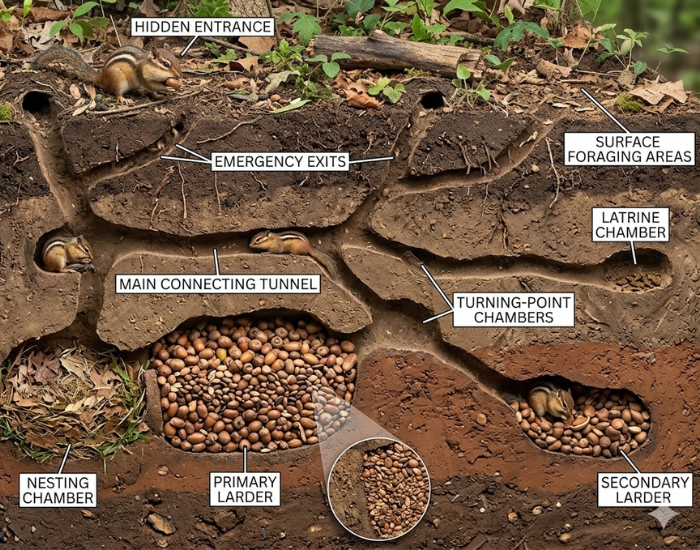
A single eastern chipmunk burrow can stretch over ten feet long, with multiple chambers and side tunnels. There is usually a sleeping nest, a pantry for stored food, a latrine, and one or more emergency exits. The main burrow entrance is often hidden under rocks, logs, or roots, and the chipmunk takes great care to remove excavated soil so the burrow entrance looks natural.
I once watched a chipmunk near a trail carry mouthfuls of dirt twenty feet away from its burrow. It dumped each load behind a tree stump. That is anti-predator engineering. A clean, hidden burrow keeps the local hawks, foxes, and weasels guessing. Even other chipmunks rarely find a well-built burrow without a fight.
6. What Does an Eastern Chipmunk Eat? Almost Anything
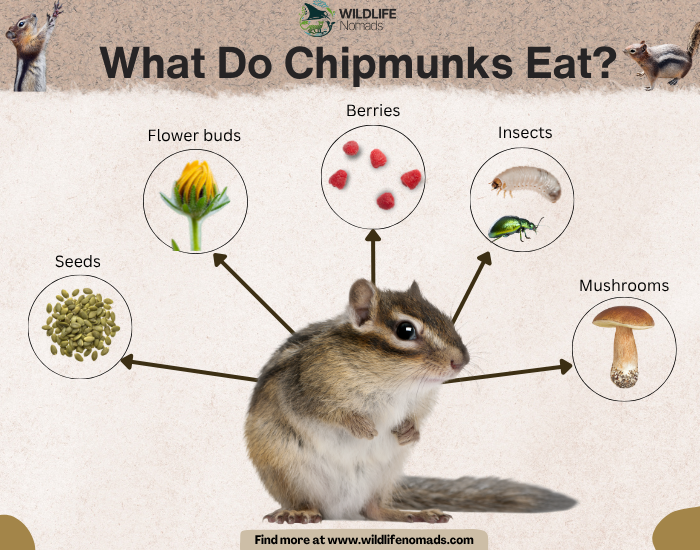
What does an eastern chipmunk eat? The eastern chipmunk diet is gloriously varied. Their food list includes nuts, seeds, berries, fruits, mushrooms, grass shoots, plants, insects, insect larvae, snails, slugs, earthworms, beetles, frogs, small birds, and even bird eggs. Yes, chipmunks eat eggs when they find an unattended nest.
I find this part of their biology fascinating. Most people picture a chipmunk nibbling a sunflower seed. Few people picture one raiding bird nests for protein. Eastern chipmunks are technically omnivores, and that flexibility is why they can colonize forests, gardens, and suburbs equally well. Calling them simple pests in a garden misses the bigger story.
7. Their Stripes Are Camouflage, Not Decoration
A chipmunk has five dark stripes alternating with light stripes along its back, plus light brown stripes on its face. From above, those stripes break up the body’s outline against dappled forest light. To a hawk circling overhead, a still chipmunk can look like a fragment of leaf litter.
This is countershading and disruptive coloration working together. The bold stripes on a chipmunk are not for show. They are how a small, slow rodent stays alive in a world full of birds of prey. The tail doubles as a signal flag when the chipmunk runs for cover.

8. Mating, Litters, and the Wild Schedule
The eastern chipmunk’s mating season starts in early spring, often as soon as the snow recedes. After a gestation period of about 31 days, the female gives birth to a litter of three to five young, usually in April or May. A second mating window can produce another litter in July, giving the species one or two litters per year and stretching the busy spring season into mid-summer.
The young are born hairless, blind, and entirely dependent on the female. The male plays no role after mating. After about six weeks, the young emerge from the burrow and begin learning the family business from their parents — well, from their mother — before scattering. Those early weeks below ground are the most vulnerable period of their lives. By the end of their first season, the young must dig their own tunnels among trees and roots and start storing food for winter. The growth period from hairless newborn to independent forager takes barely four months, with no second chances in chipmunk childhood.
9. Predators Are Everywhere
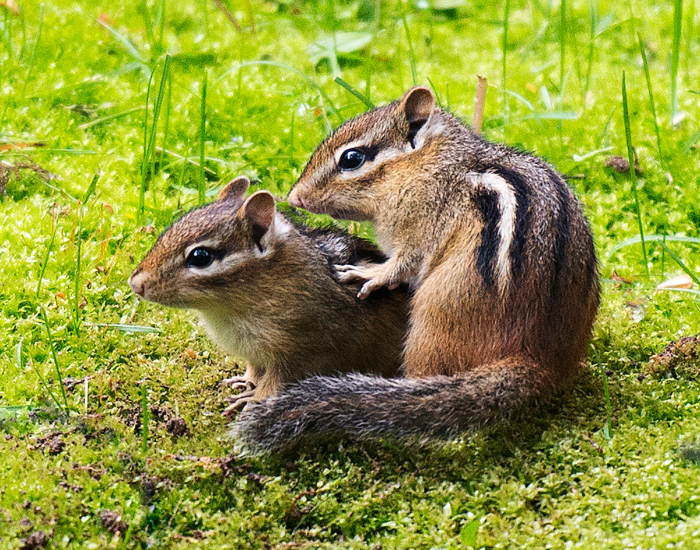
The list of predators for an eastern chipmunk reads like the guest list at a raptor convention. Hawks, owls, and eagles take them from the air. Foxes, coyotes, weasels, snakes, and domestic cats hunt them on the ground. Even larger rodents and other birds will take a young chipmunk if the chance appears.
Their defense is the burrow, the cheek pouches, and the stripes. A chipmunk that lingers in the open is a chipmunk that does not come home. That is why their behavior looks so frenetic to us. Every minute above ground is a calculated risk.

10. Internet Stars With a Real Ecological Story
Eastern chipmunks have gone viral more times than I can count. From the “chipmunk eating raspberries” videos to entire Disney franchises, these animals have become memes because of their cute face and tiny hands. I love that they are famous. I also want people to look past the cute face.
The eastern chipmunk is a seed disperser, a soil engineer, and a critical food source for forest predators. The Mass Audubon Society has documented the role of these animals in regenerating oak and maple forests across New England. Every cached acorn the chipmunk forgets becomes a tree. That is a wild legacy for a five-ounce rodent.
Size, Lifespan, and Captivity
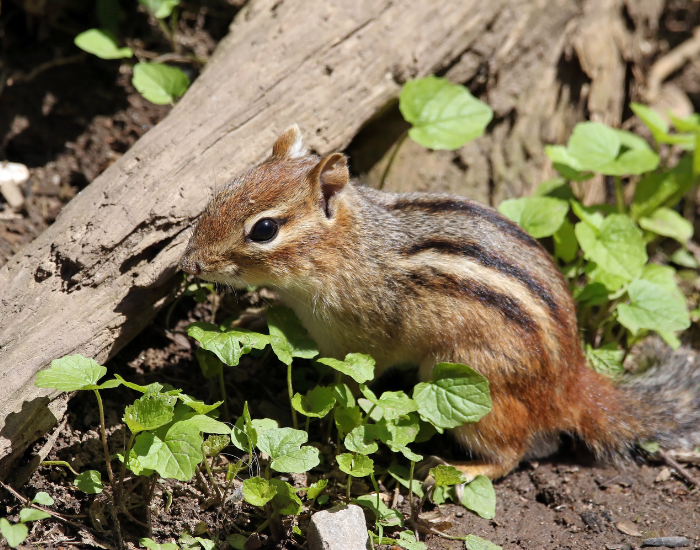
Eastern chipmunk size is small but not tiny. Adults measure five to six inches long, with the tail adding another three to four inches. They weigh between two and five ounces, roughly the weight of a small lemon. In the wild, lifespan is brutal — most chipmunks survive only two to three years. In captivity, where predators and winter cannot reach them, they can live up to eight. I have always preferred meeting them in the field.
FAQs About Chipmunks
Yes. A chipmunk is a member of the squirrel family, Sciuridae. The eastern chipmunk is closely related to ground squirrels but has its own genus, Tamias. So while every chipmunk is a squirrel, not every squirrel is a chipmunk.
Food and shelter. Bird feeders that spill seeds, fallen fruit, pet food left outside, and uncovered compost all draw chipmunks to the house. Stone walls, woodpiles, and dense shrubs near the foundation give them ready-made cover. If you want fewer chipmunks, clean up the food and seal the shelter.
Enjoy it. Eastern chipmunks are diurnal, so daytime sightings are normal and healthy. Keep pets back, do not try to feed it by hand, and let it forage. Wild chipmunks are not aggressive toward humans and rarely carry diseases that affect us. They are safer to watch than most animals on your block.
Strong smells and open ground. Eastern chipmunks dislike the scent of peppermint, garlic, and predator urine. They also avoid wide spaces without rocks, plants, or cover nearby. Combine scent deterrents with the removal of food and hiding spots if you need them out of certain gardens.
The Real Reason to Look Twice
Jackie’s text from Central Park stuck with me because it captured something the rest of us forget. Right now, somewhere within a few miles of you, a chipmunk is hauling seeds into a burrow, watching the sky for hawks, and writing the next chapter of a forest. The eastern chipmunk is not just internet content. It is a working part of the ecosystem that survives because it has refused, for millions of years, to be ordinary.
Next time you spot one, sit for two minutes and watch. Notice the stripes, the cheek pouches, the constant scanning. If you have a chipmunk story or a sighting from somewhere unexpected, drop it in the comments. I would love to hear it. And if you want to keep meeting the small mammals that share our world, my pieces on voles, guinea pigs, and the broader bird guide are good next stops.
References:
Bergeron, P., Réale, D., Humphries, M. M., & Garant, D. (2011). Anticipation and tracking of pulsed resources drive population dynamics in eastern chipmunks. Ecology, 92(11), 2027–2034. https://doi.org/10.1890/11-0766.1
Munro, D., Thomas, D. W., & Humphries, M. M. (2008). Extreme suppression of aboveground activity by a food-storing hibernator, the eastern chipmunk (Tamias striatus). Canadian Journal of Zoology, 86(5), 364–370. https://doi.org/10.1139/Z08-008
Landry-Cuerrier, M., Munro, D., Thomas, D. W., & Humphries, M. M. (2008). Climate and resource determinants of fundamental and realized metabolic niches of hibernating chipmunks. Ecology, 89(12), 3306–3316. https://doi.org/10.1890/08-0121.1
Schnurr, J. L., Ostfeld, R. S., & Canham, C. D. (2002). Direct and indirect effects of masting on rodent populations and tree seed survival. Oikos, 96(3), 402–410. https://doi.org/10.1034/j.1600-0706.2002.960302.x
Elliott, L. (1978). Social behavior and foraging ecology of the eastern chipmunk (Tamias striatus) in the Adirondack Mountains. Smithsonian Contributions to Zoology, 265, 1–107. https://doi.org/10.5479/si.00810282.265