
The first hamsters I ever owned came from a folding card table at my elementary school festival. It was April 30 (Día del Niño in Mexico) and the playground had been transformed into a chaotic carnival of food stands, balloon games, and somehow, a tiny rodent vendor. I was a kid with a few coins left after lunch. I made a decision that morning that would shape the rest of my life as an animal person, and definitely ruin my mom’s afternoon.
When she picked me up and saw the little brown creature peering out of a paper bag, she nearly drove into a curb. “Is that a mouse?” she asked, voice climbing two octaves. It was, in fact, a Syrian hamster — and over the next few years, that small animal taught me more about behavior, husbandry, and the strange world of small rodents than any textbook ever did. Hamsters are far stranger and more remarkable than most pet owners realize. Here are twelve things I wish I had known before that festival.

1. Every Pet Hamster on Earth Descends From a Single Litter
Here is a fact that still stops me cold as a biologist. The entire global population of pet Syrian hamsters traces back to one mother hamster and her litter, captured in Aleppo in 1930 by zoologist Israel Aharoni. The hamster today originates almost exclusively from that founding group. Billions of pet hamsters, all from one Syrian family.
Aharoni was hunting for wild Syrian hamsters to use in leprosy research. He found a mother hamster and her pups in a burrow nearly eight feet deep. Only three survived to breed in captivity. From those three, every domesticated hamster you have ever met descends. That is one of the tightest genetic bottlenecks in any pet species on Earth.

2. Wild Hamsters Are Real, and Some Are Critically Endangered
People often forget that wild hamsters still exist. The European hamster, also called the common hamster, once roamed agricultural fields from France through eastern Europe to Russia in massive numbers. Today, wild hamster populations have collapsed. The IUCN listed the European hamster as critically endangered in 2020.
Wild Syrian hamsters, by contrast, are nearly impossible to find in their natural habitat. I have spoken with researchers who spent weeks in Turkish and Syrian grasslands hoping to spot one. Wild populations of the wild Syrian hamsters are estimated in the low thousands. The contrast is striking — billions in cages, almost none left in the wild.
3. Yes, Hamsters Are Rodents (and Yes, They Are Mammals)
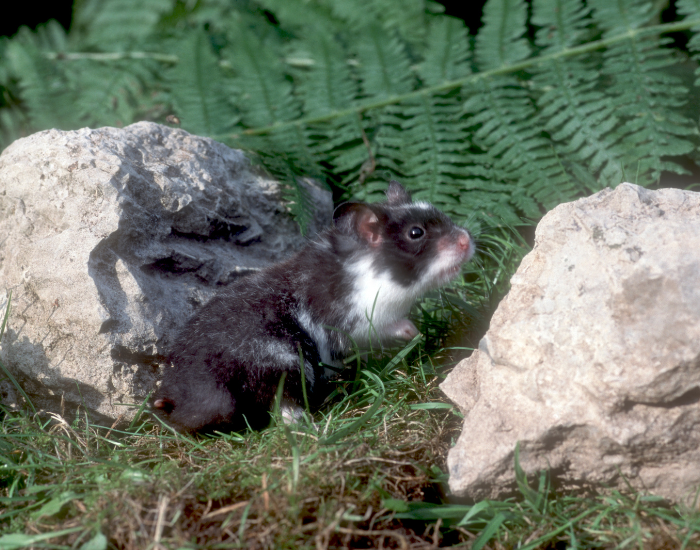
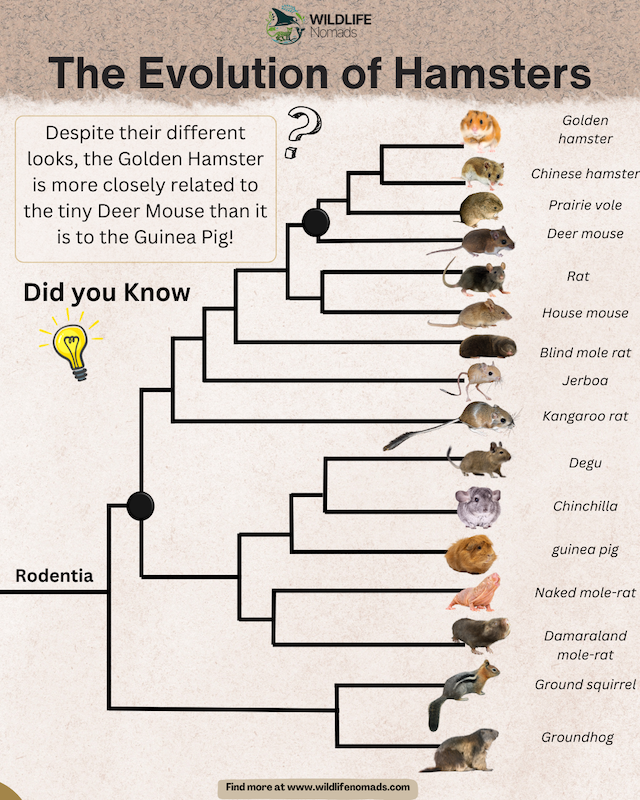
I get asked this constantly. Are hamsters rodents? Are hamsters rats? The answer to all three is essentially yes, hamsters are rodents and mammals, but they are not rats. Hamsters belong to the order Rodentia, family Cricetidae, which also includes voles and lemmings.
So while hamsters are rodents, they sit in a different family than rats or brown rats, which belong to Muridae. If you want to read more about other small rodents I have covered, my piece on voles digs into one of the hamster’s closest cousins. The animals hamster owners often confuse with their pets — gerbils, mice, voles — are all in the same order but not the same family.
4. They Have Astonishingly Poor Eyesight
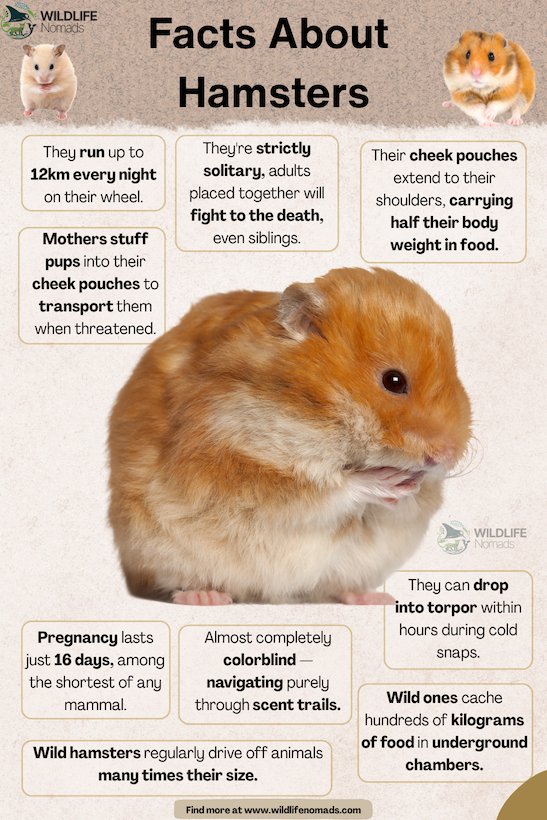
Hamsters have very poor eyesight. They are nearly blind beyond a few inches in front of their face. In my early days of keeping that Mexican festival hamster, I noticed she would walk right off the edge of the couch. Not from clumsiness, but because she literally could not see the drop.
To compensate, hamsters rely on scent glands along their flanks and an acute sense of smell. They also use their whiskers and furry ears to navigate. Loud noises and sudden movements stress them because they cannot visually confirm what is happening. Most hamster species share this same sensory limitation, including the common hamster and every domesticated golden hamster lineage.

5. Cheek Pouches Are Mobile Pantries
Watching a hamster fill its cheek pouches is mesmerizing. These elastic pouches stretch from the cheeks all the way back to the shoulders. A wild hamster’s natural foraging behaviors revolve around stuffing these cheek pouches with seeds and grains, then returning to its burrow to store food.
Researchers have documented Syrian hamsters carrying up to 20% of their body weight in their cheek pouches. This is why enrichment that encourages natural foraging behaviors — scatter feeding, hidden treats — matters so much for pet hamsters. A bored hamster with no foraging outlet becomes stressed, and stressed hamsters eat less, sleep poorly, and develop health issues.

6. Most Hamster Species Are Strictly Solitary
This is the single most misunderstood fact about pet hamsters. Syrian hamsters and Chinese hamsters are aggressively solitary. Putting two adult Syrian hamsters in one cage is a death sentence for one of them. They will fight to the death. I learned this the hard way after a well-meaning pet store clerk in Mexico City sold my mom two hamsters as a “pair.”
Dwarf hamsters are slightly more nuanced. Some dwarf hamsters species — like the Djungarian hamster, which is the same animal as the winter white dwarf hamster — can live with siblings, but only with careful introduction. The grey dwarf hamster and Roborovski tolerate company best among other hamsters. Female hamsters tend to be more territorial than male hamsters across most species.
7. There Are Far More Hamster Species Than You Think
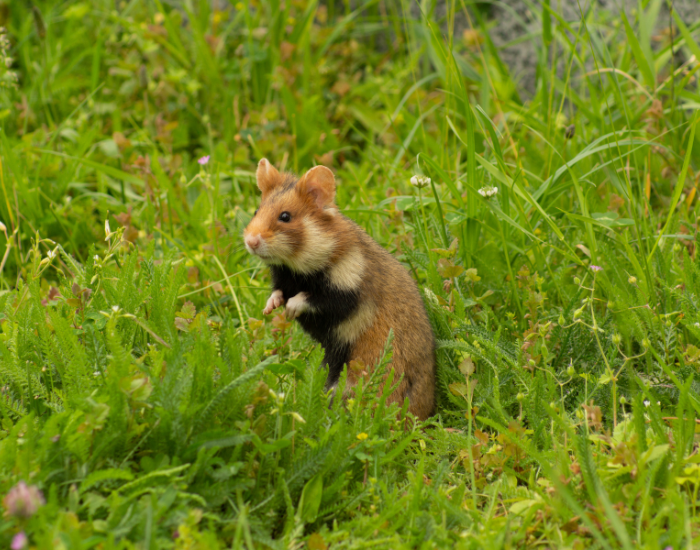
When people picture a hamster, they imagine the golden hamster, the classic teddy-bear-faced Syrian. But there are roughly 19 recognized hamster species worldwide. The most common in the pet trade are the Syrian, the Djungarian, the Campbell’s, the Roborovski, and the Chinese hamsters.
Wild hamsters span an impressive geographic range. The common hamster covers eastern Europe through Russia. The Chinese hamsters live across Mongolia and northern China. The Mongolian gerbil and the domesticated gerbil today are often confused with hamsters, but a domesticated gerbil is technically a different rodent in a separate family. Even pet mice and the house mouse share the order but not the family with hamsters.

8. They Are True Nocturnal Animals, Do Not Fight It
Hamsters are nocturnal animals. Their internal clock is hardwired to peak activity around dusk and again before dawn. In their natural habitat, this timing helps them avoid predators and the brutal midday heat of the Syrian desert during breeding season and beyond.
New pet owners often try to “train” their hamsters into a daytime schedule. It never works. Forcing a hamster awake during the day raises body temperature, causes chronic stress, weight loss decrease in lifespan, and dental health issues. Respect the schedule. Let them sleep when the sun is up. A healthy mouse lives by similar rules, a healthy mouse and a healthy rat both follow predator-avoidance circadian patterns inherited from their wild ancestors.
9. Wild Hamsters Dig Burrows Up to Eight Feet Deep
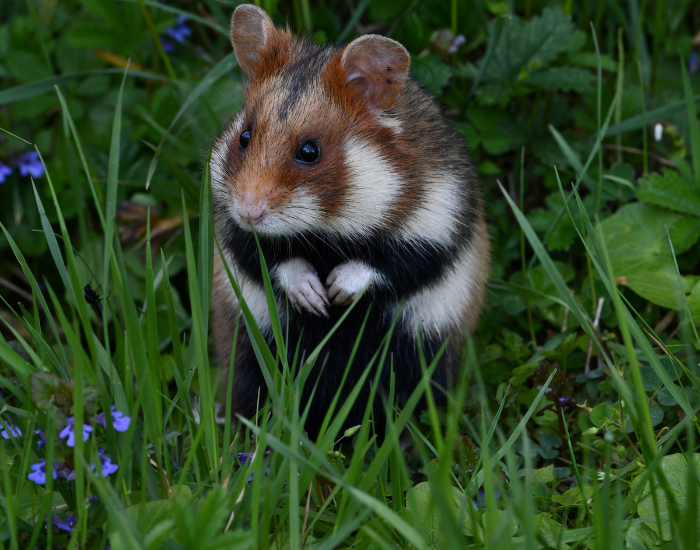
The mother hamster Aharoni captured was found at the bottom of a burrow nearly two and a half meters underground (yrian hamsters usually max out around 1 to 2 meters). Wild hamsters dig burrows with multiple chambers, one for sleeping, one for food, even one for waste, like a primitive litter box.
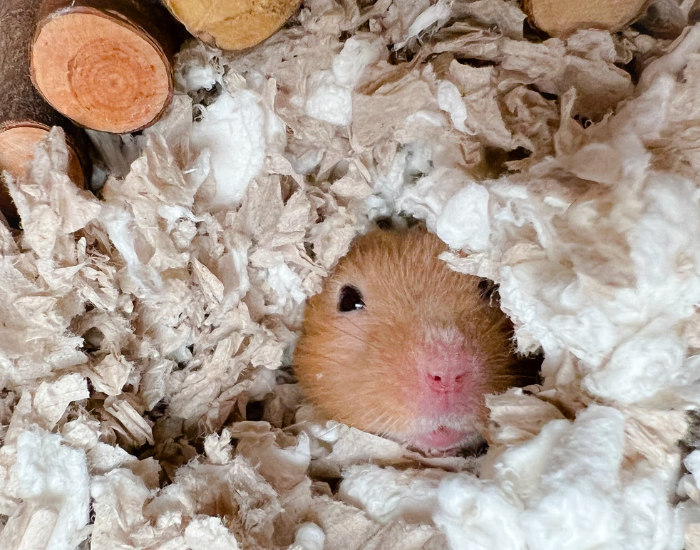
This is why I strongly recommend you avoid plastic enclosures with shallow bases. A glass or plastic aquarium that allows for at least six inches of bedding gives a pet hamster room to accommodate natural burrowing. Wire cages with thin trays simply do not allow this behavior. Hamsters live richer lives when they can dig burrows the way their wild cousins do. A hamster that cannot dig is a hamster missing half of what makes it a hamster.
10. Their Diet Should Mirror the Wild
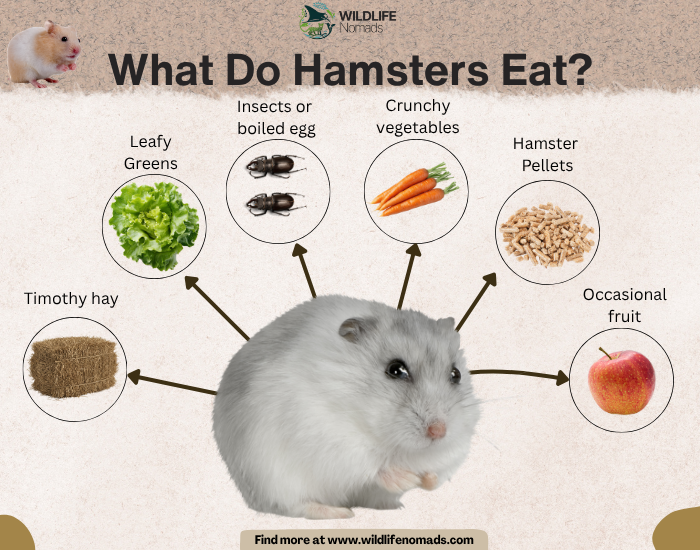
A wild hamster’s diet centers on seeds, grains, roots, fresh leafy greens, and yes — insects. Hamsters eat insects regularly in the wild. Crickets, mealworms, and small beetles provide essential protein. A high fiber diet centered on whole grains, supplemented with fresh vegetables and occasional protein, mirrors what wild hamsters consume in eastern Europe and Asia.
What should a hamster not eat? Citrus, onions, garlic, raw potatoes, almonds, chocolate, and most processed “delicious foods” marketed to humans. Sugary treats lead to fast abnormal eating habits, obesity, and digestive trouble. The digestive system slows with age, so older hamsters need especially careful diet management. Hamsters belong on a high fiber diet, not the same kibble you might give other small animals.
11. They Rarely Bite, But They Absolutely Can
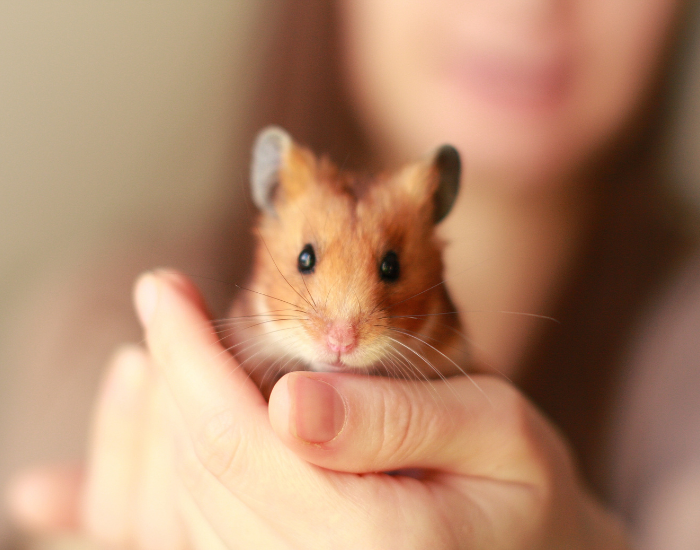
Hamsters rarely bite when handled correctly. Most bites I have witnessed came from people grabbing a sleeping hamster from above, triggering its predator-avoidance instinct. Their very poor eyesight means a descending hand looks like a hawk. Approach from the side, let them sniff first, and bites become extremely rare.
A bitten or stressed hamster sometimes shows blood on a soiled tail, soiled tail blood is a warning sign of stress, mites, or wet tail disease. Mice tend to react similarly when handled roughly. Never leave a hamster unattended around dogs, cats, or young children. A hamster unattended on a couch will fall. A rat unattended around a hamster will often kill it. These rules sound obvious until you see what happens when they are broken.
12. Their Lifespan Is Heartbreakingly Short
Here is the hardest fact for kids and adults alike. A pet hamster lives, on average, two to three years. Compared to a healthy mouse — and a healthy mouse lives about the same — hamsters live brief, intense lives. House pets like guinea pigs and rabbits stretch much further; my guinea pigs lived nearly six years each.
My festival hamster lived about two and a half years. When she passed, I cried for three days. That hamster taught me that loving an animal — even one of the smaller, popular rodent pet species — means accepting grief as part of the bargain. I went on to keep guinea pigs and rabbits after her, but that first hamster shaped how I think about every small animal I have ever met in my career.
Frequently Asked Questions
Yes. Wild hamsters exist across Europe, the Middle East, and Asia. The European hamster, the Syrian hamster, and several dwarf hamsters species all maintain wild populations, though many are in steep decline. The European common hamster is now critically endangered, with hamster populations dropping over 90% in some regions.
Hamsters can trigger asthma in sensitive individuals. They produce dander, and their bedding releases dust that irritates sensitive respiratory systems. If you have asthma, spend time around a friend’s hamster before committing. Some people tolerate hamsters fine; others react severely. Pet stores rarely warn buyers about this risk.
Avoid citrus fruits, onions, garlic, raw potatoes, almonds, chocolate, and any sugary processed foods. These cause digestive upset, toxicity, or long-term harm. Stick to a high fiber diet of commercial pellets, fresh leafy greens, occasional fruit, and small amounts of insect protein. Other rodents follow similar dietary rules.
The Syrian hamster — the most common pet — originates from a small region around Aleppo, Syria. The European hamster is native to eastern Europe and western Russia. Dwarf hamsters like the Djungarian and Campbell’s come from Mongolia, Siberia, and northern China. The pet hamsters in your local pet store have surprisingly narrow geographic origins.
Small Paws, Big Lessons
The hamster from that Mexican school festival changed the trajectory of my life. Small animals carry enormous lessons, and the popular rodent pet sitting in millions of bedrooms is no exception. If you are considering one, take the natural habitat, solitary nature, and short lifespan seriously, hamsters deserve more than a plastic aquarium and a squeaky wheel.
If this resonated, you might enjoy my deep dives into other rodents: the engineering brilliance of beavers, the social chaos of guinea pigs, the desert-leaping jerboa, the strange semi-aquatic coypus, the world’s largest rodent the capybara, and the surprisingly elephant-related hyrax. Drop your own hamster story in the comments — I read every one.
References:
Banaszek, A., Bogomolov, P., Feoktistova, N., La Haye, M., Monecke, S., Reiners, T. E., Rusin, M., Surov, A., Weinhold, U., & Ziomek, J. (2020). Cricetus cricetus (European hamster). The IUCN Red List of Threatened Species 2020: e.T5529A111875852. https://doi.org/10.2305/IUCN.UK.2020-2.RLTS.T5529A111875852.en
Fischer, K., Gebhardt-Henrich, S., & Steiger, A. (2007). Behaviour of golden hamsters (Mesocricetus auratus) kept in four different cage sizes. Animal Welfare, 16(1), 85–93. https://doi.org/10.1017/S0962728600030967
Johnston, R. E., & Bhorade, A. (1998). Perception of scent over-marks by golden hamsters (Mesocricetus auratus): novel mechanisms for determining which individual’s mark is on top. Journal of comparative psychology (Washington, D.C. : 1983), 112(3), 230–243. https://doi.org/10.1037/0735-7036.112.3.230
Gattermann, R., Fritzsche, P., Neumann, K., Al-Hussein, I., Kayser, A., Abiad, M., & Yakti, R. (2001). Notes on the current distribution and the ecology of wild golden hamsters (Mesocricetus auratus). Journal of Zoology, 254(3), 359–365. https://doi.org/10.1017/S0952836901000851
Hauzenberger, A. R., Gebhardt-Henrich, S. G., & Steiger, A. (2006). The influence of bedding depth on behaviour in golden hamsters. Applied Animal Behaviour Science, 100(3–4), 280–294. https://doi.org/10.1016/j.applanim.2005.11.012
Hirose, M., & Ogura, A. (2018). The golden (Syrian) hamster as a model for the study of reproductive biology: Past, present, and future. Reproductive medicine and biology, 18(1), 34–39. https://doi.org/10.1002/rmb2.12241
Surov, A., Banaszek, A., Bogomolov, P., Feoktistova, N. Y., & Monecke, S. (2016). Dramatic global decrease in the range and reproduction rate of the European hamster Cricetus cricetus. Endangered Species Research, 31, 119–145. https://doi.org/10.3354/esr00749