The first wildlife at Trial Bay Gaol campground met us before we had even checked in. We had already rolled out the awning on site 26 when we realised the office expected us first. So we walked. On the grass beside a towering granite wall, an eastern rosella was feeding in the sun. A pair of masked lapwings stood guard nearby, and kangaroos grazed at the edge of it all.
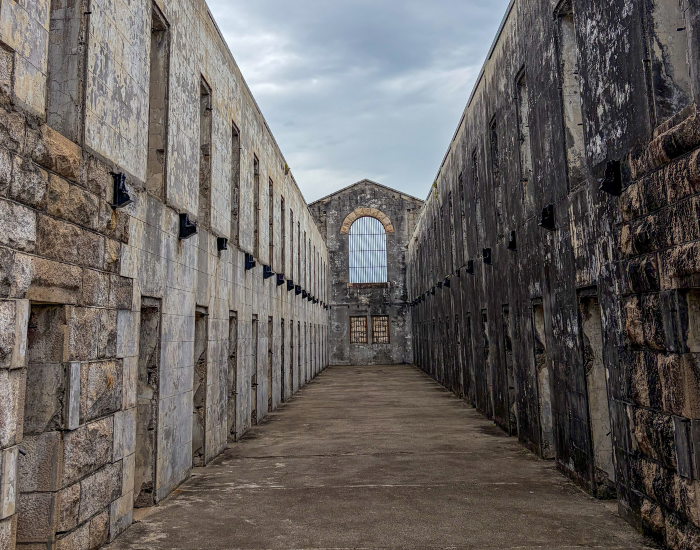
That wall belongs to a prison that opened in 1886. A bright parrot under a colonial gaol is quite a contrast, and the whole place works like that.
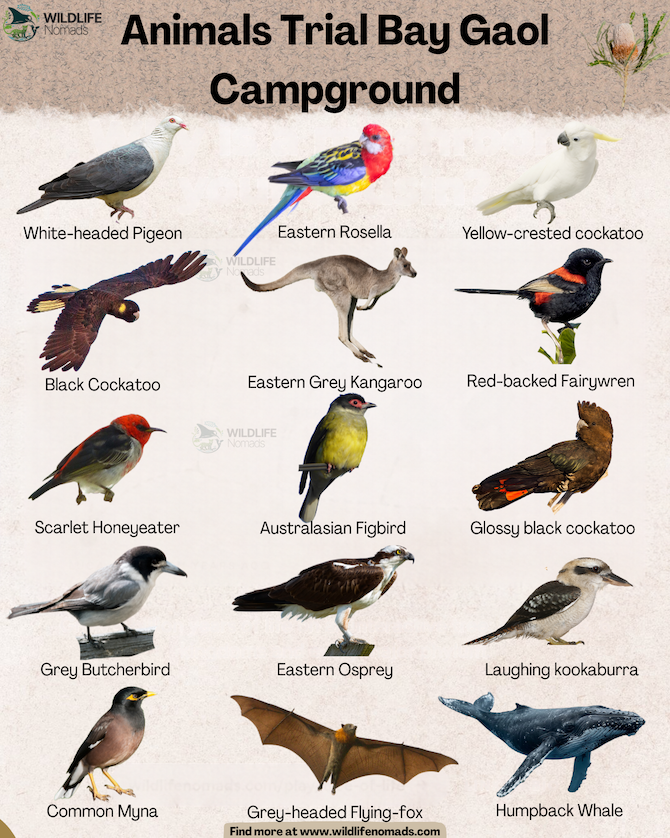
Trial Bay was stop nine of our lap around Australia, right after Nambucca Heads. We stayed just one night, yet we logged 17 species. Those included humpbacks breaching at sunset and a vulnerable black cockatoo. Below is every animal we saw, where we found it, and what you need to know before you camp.
Where Is Trial Bay Gaol Campground?
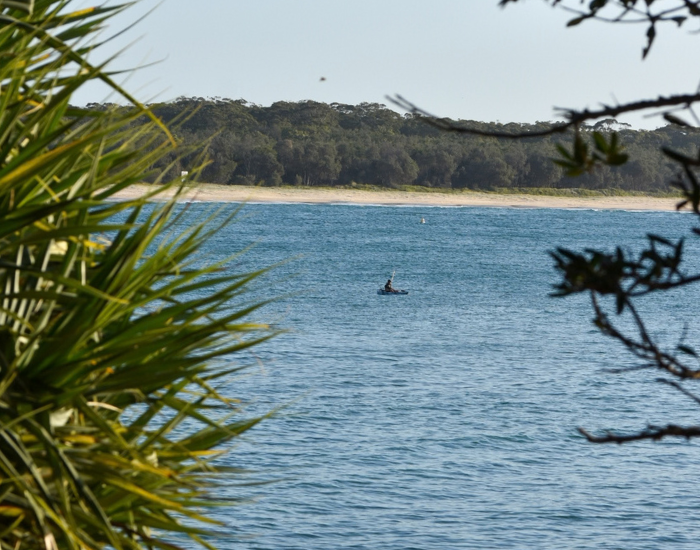
Trial Bay Gaol campground sits 4.8 km east of South West Rocks, inside Arakoon National Park on the NSW Mid North Coast. The coordinates are -30.877995, 153.0687717. Its 91 campsites take tents, campervans, camper trailers and caravans. Most occupy an enviable position right beside Front Beach.
The amenities feel closer to a holiday park than a bush camp. It has hot showers, drinking water, power, a camp kitchen, laundry, picnic tables, a picnic area and a boat ramp. Disabled access is available too. Fires are not allowed. Check-in runs from 2pm at the office, and fees apply for late check outs.
We paid $58 per night because we arrived on a public holiday. A few days later the same site was listed at about $35. My advice is to avoid big holidays and book ahead in peak periods. Expect lots of families and a relaxed atmosphere.
Pack your swimmers, fishing rod, walking shoes and surfboard. Most importantly, pack binoculars. This land is Dunghutti Country, and the headland carries cultural significance that goes far deeper than the gaol.
Mammals at Trial Bay Gaol Campground
1. Humpback Whale (Megaptera novaeangliae)
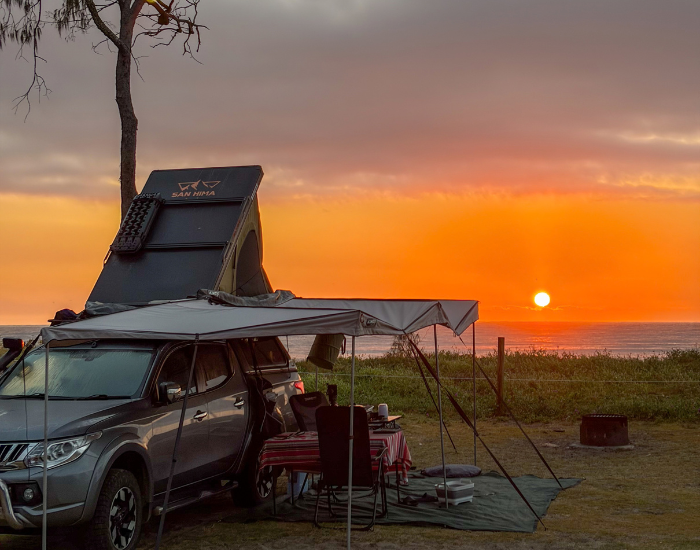
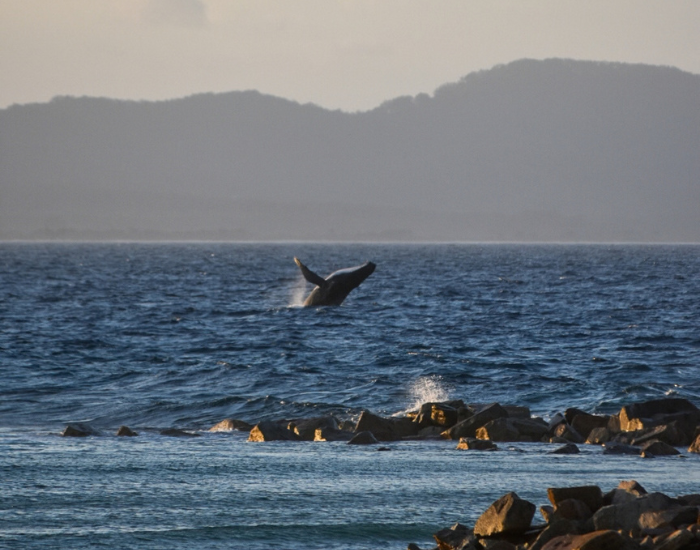
Sunsets are rare on Australia’s east coast because you face the ocean at dawn. Trial Bay breaks that rule. The bay opens to the north, so the sun drops over the water at the end of the day. We sat on the grass and watched humpbacks breach close to shore as the sky turned orange.
In winter, these whales make their annual migration north to calving grounds off Queensland. In spring, during September and October, they head south hugging the coast. Mothers often rest with their calves inside sheltered bays like this one. I finally got a photo of a breach. A really big one. It was distant, but the light made it glorious.
Why do they breach at all? Researchers watching migrating humpbacks in Queensland found breaching was more likely when other groups were over 4 km away. That suggests the splash works as long-range communication. Slapping fins and tails seems to serve closer conversations. The east Australian population has also recovered remarkably since whaling ended.
2. Eastern Grey Kangaroo (Macropus giganteus)
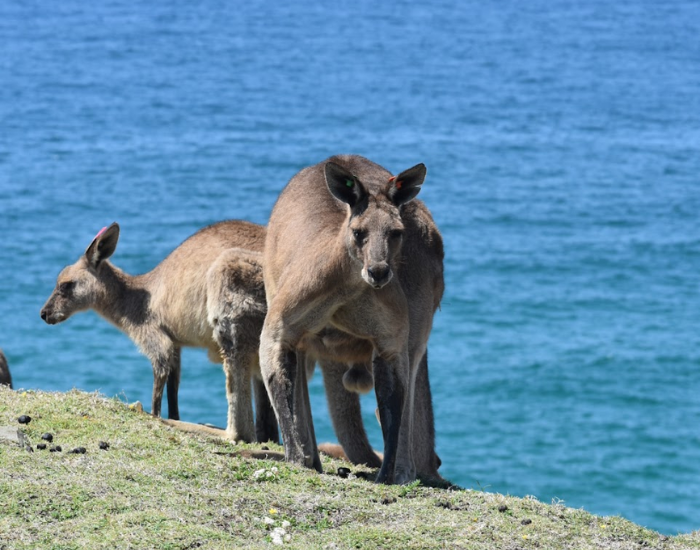
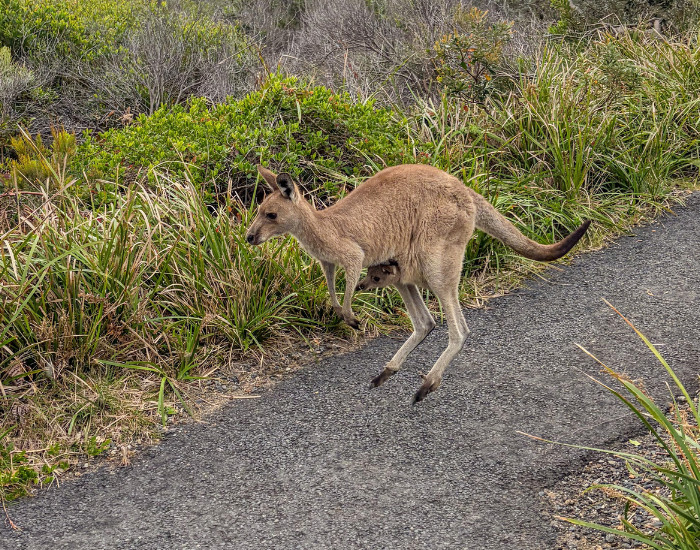
We had to stop the car several times to let kangaroos cross. The males here were some of the biggest I’ve seen in a while. Their chests and forearms were heavily muscled. Male eastern greys keep growing throughout life, so old bucks dwarf the females.
My favourite moment came on the narrow Monument walk. A female carrying a joey came hopping straight toward us. She stopped and looked at us. We stepped aside, and she carried on politely, almost the way a person would on a footpath.
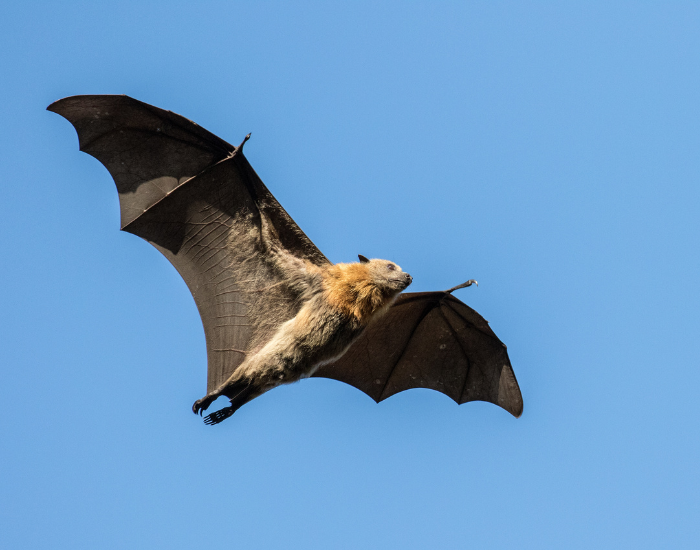
3. Grey-headed Flying-fox (Pteropus poliocephalus)
At dusk, flying-foxes crossed over the campground toward flowering trees. These are Australia’s largest bats and important long-distance pollinators of eucalypts. The species is listed as vulnerable. Extreme heat is a serious threat: a single heatwave day in 2002 killed thousands across NSW colonies. Our fruit bat facts post explains why they matter.
Birds Along the Monument Walk
The next morning we walked the German Monument track toward Little Bay. Honestly, this short trail produced more birds than almost anywhere else on the lap so far. If you only have time for one walk, choose this one. The coastal views are a bonus.
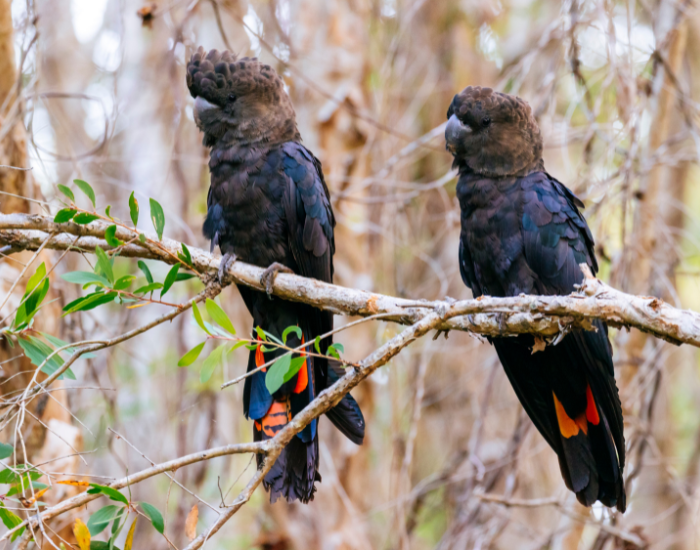
4. Glossy Black-Cockatoo (Calyptorhynchus lathami)
Trial Bay gave us more black cockatoos than anywhere I’ve been. At least 15 flew together just above our heads, calling loudly. It was the morning after our sunny arrival, and drizzle had started. Afterwards we read that in some Aboriginal traditions, black cockatoos carry ancestral meaning and also signal coming rain. Standing there in the drizzle, it made complete sense.
I had noticed glossy black-cockatoo signs in several national parks, so finding them felt like a reward. At first the birds with yellow on the face all looked alike. Then I looked closer. Some had glossy red barring in the tail and yellowish patches on the head. Those were female glossies.
This species feeds almost entirely on she-oak seeds from Allocasuarina and Casuarina trees (Cameron, 2005). That narrow diet makes it vulnerable to habitat loss and fire. If you see one, report it. Compare species in our black cockatoos of Australia guide.
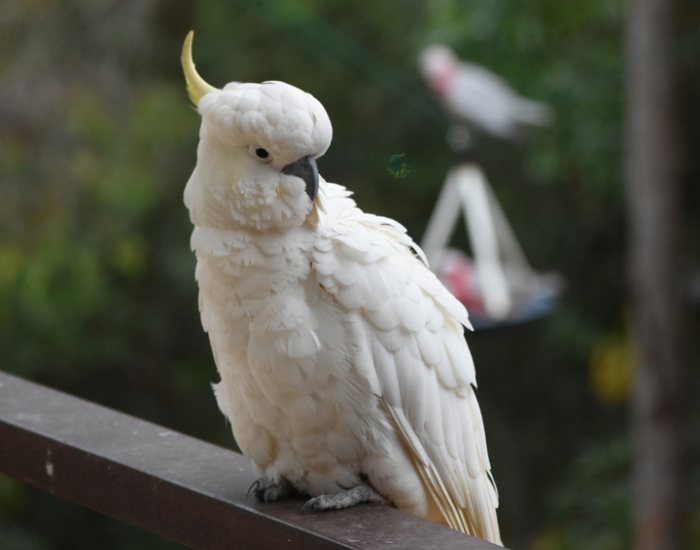
5. Sulphur-crested Cockatoo (Cacatua galerita)
I’ve seen plenty of these in Sydney, the Sunshine Coast and Tallebudgera. On this trip, though, they’ve been surprisingly scarce, and here only three flew over. Sulphur-crested cockatoos are long-lived and highly social. Feeding flocks often post sentinels that screech at any sign of danger. I’m sure they’ll become a daily sight once we head further south.
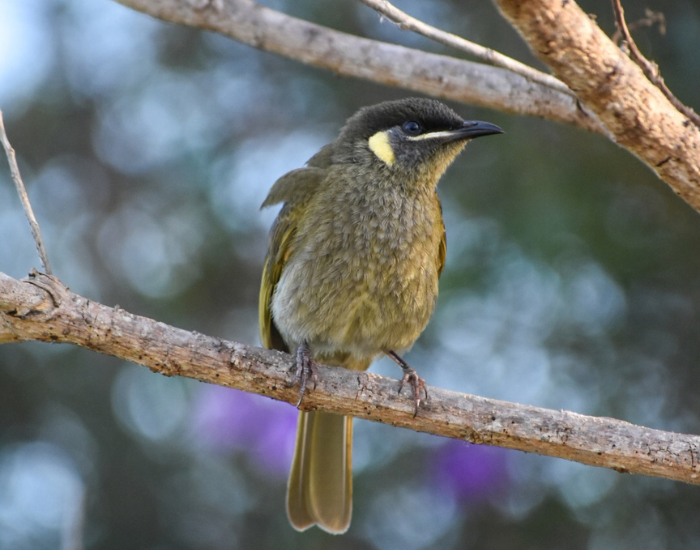
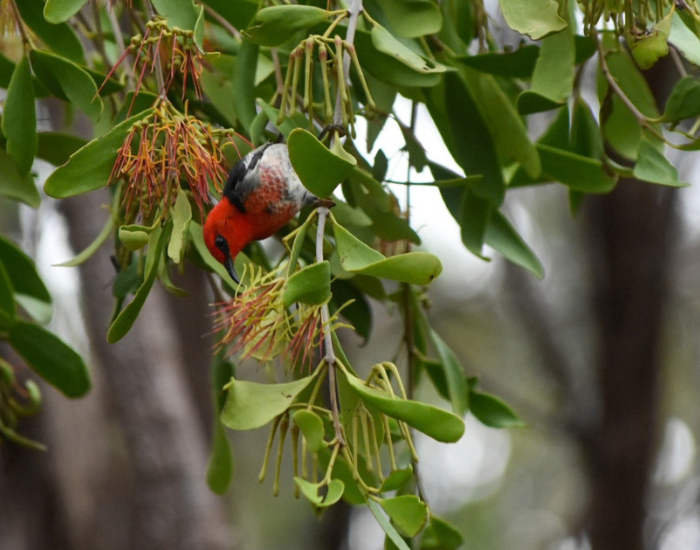
6. Scarlet Honeyeater (Myzomela sanguinolenta)
This tiny bird is around 10 cm long and moves almost like a hummingbird. Males have a blazing red head and breast. Photographing one was nearly impossible. It kept snapping its head side to side like a boxer dodging punches. Find its relatives in our honeyeaters of Australia guide.
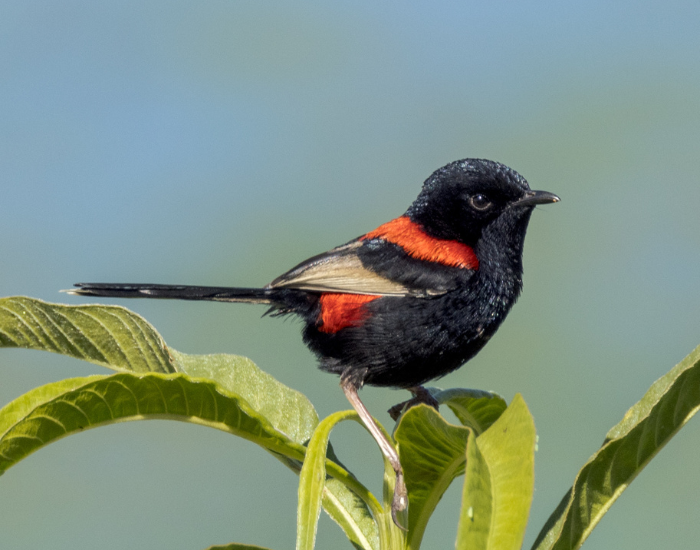
7. Red-backed Fairywren (Malurus melanocephalus)
This was the only place on the lap so far where we saw red-backed fairywrens. It’s Australia’s smallest fairywren. Breeding males are jet black with a scarlet back. Interestingly, some males breed while still in plain brown plumage. Researchers think this trades attractiveness for lower costs.
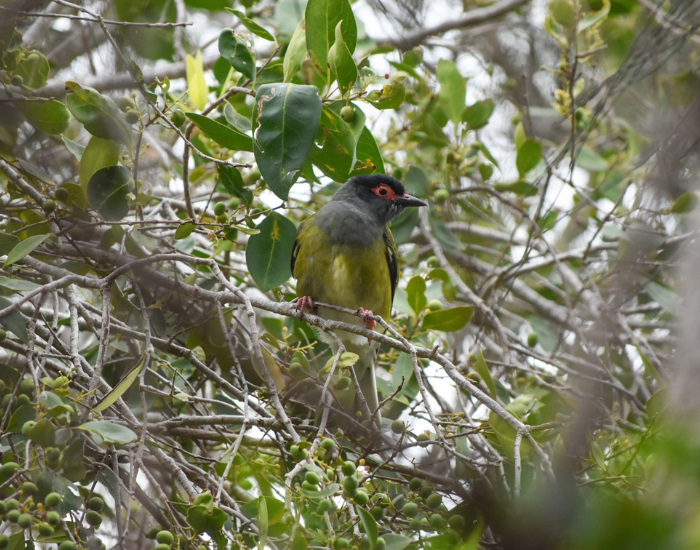
8. Australasian Figbird (Sphecotheres vieilloti)
This was only our second figbird of the trip, and we found a couple on the Monument walk. Males show a patch of bare red skin around the eye. Figbirds feed on native figs and other fruit, often in noisy flocks. That makes them useful seed dispersers along the coast.
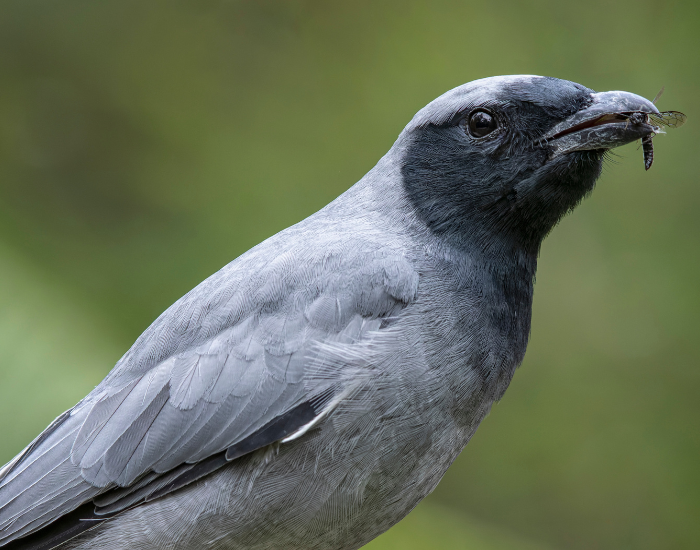
9. Black-faced Cuckooshrike (Coracina novaehollandiae)
This was our first cuckooshrike of the trip. Before this, I had seen one only on a rock at Kingscliff. It is neither a cuckoo nor a shrike. Watch for the giveaway habit of shuffling its wings right after landing. I’m still annoyed my photo came out blurry.
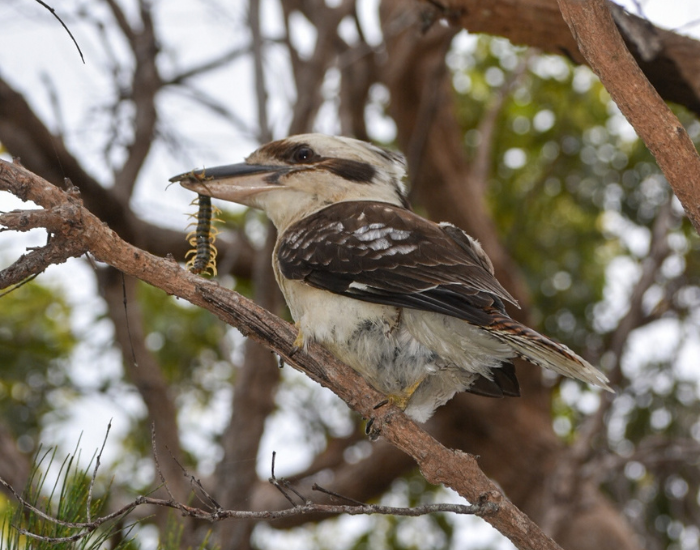
10. Laughing Kookaburra (Dacelo novaeguineae)
A kookaburra sat on the trail tearing apart a centipede. It was raw to watch, but fascinating. Kookaburras are the world’s largest kingfishers. However, they rarely fish. They hunt insects, reptiles and even small snakes.
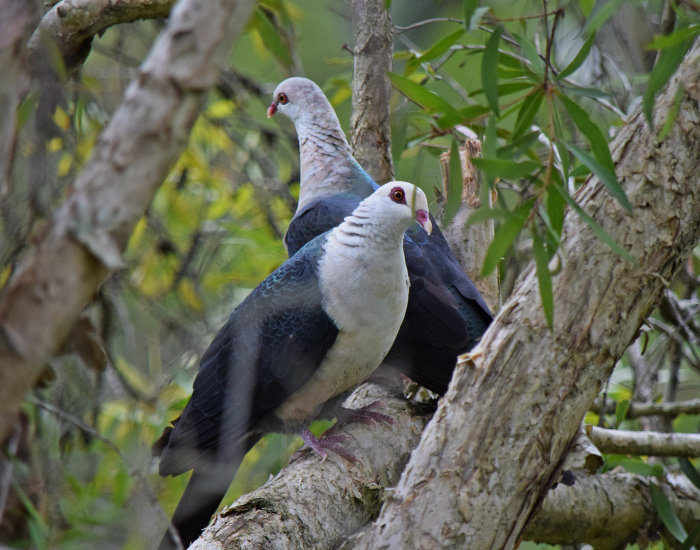
11. White-headed Pigeon (Columba leucomela)
We found this one on the Monument walk too, which kept proving itself as the best trail here. The white head and chest contrast sharply with the dark grey-black wings, so it’s easy to identify. White-headed pigeons are rainforest fruit-eaters that move between fruiting trees. Interestingly, they also feed heavily on introduced camphor laurel, which has helped them in some cleared landscapes.
Birds Around the Campground
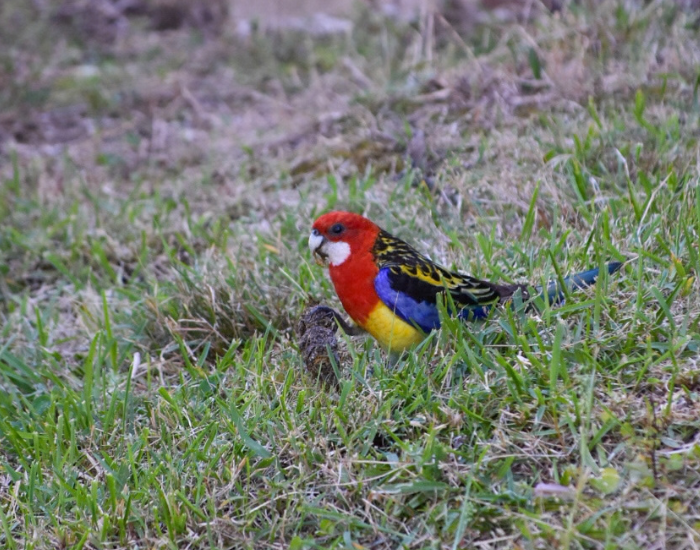
12. Eastern Rosella (Platycercus eximius)
This was our first rosella of the trip, and I rarely see them in Queensland. After that first bird by the gaol wall, they appeared all over the campground. They feed mostly on grass seeds on the ground. That makes the mown lawns perfect habitat.
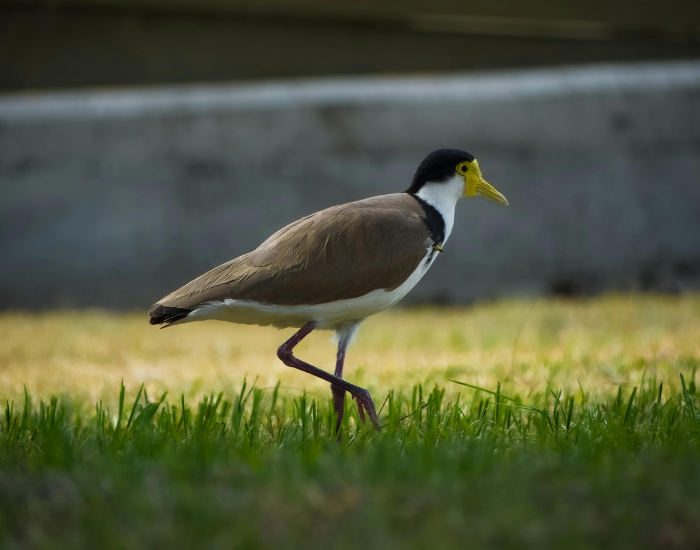
13. Masked Lapwing (Vanellus miles)
They stood right beside the old prison wall. More birds have swooped me in Australia than any other animal, and lapwings are on that list. They nest directly on open ground. Both parents defend the eggs with loud calls, dive-bombs and a small spur on each wing.
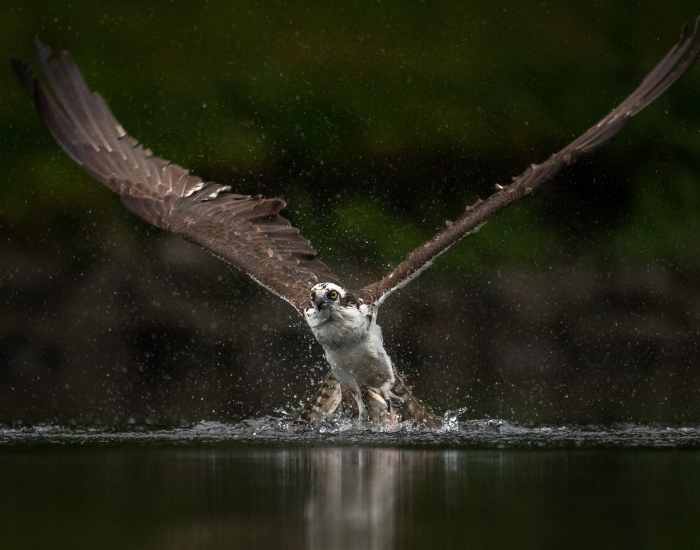
14. Eastern Osprey (Pandion cristatus)
On our last morning, an osprey circled above the campground. Ospreys eat almost nothing but fish. A reversible outer toe helps them grip slippery prey. Watch for them near the boat ramp, where the fishing action happens.
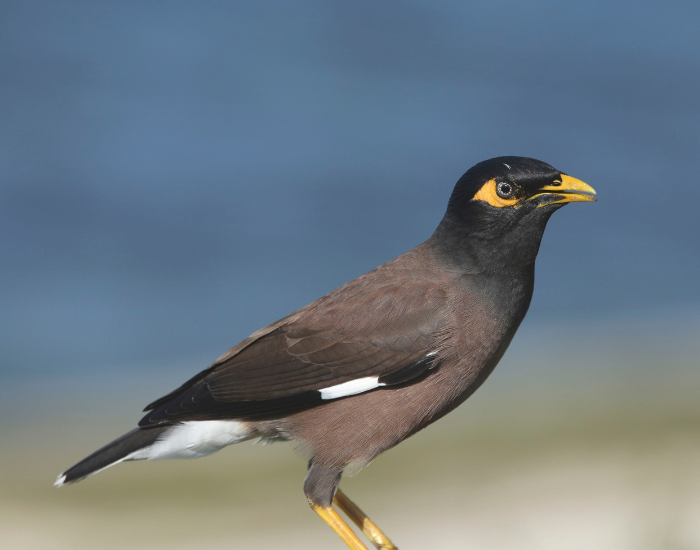
15. Common Myna (Acridotheres tristis)
As we drove out, mynas stood on the grass by the road. This introduced species competes with native birds for nest hollows. Research in Canberra linked myna numbers to declines in several cavity-nesting natives (Grarock et al., 2012). One thing we didn’t see here was a scrub brushturkey, which had been a daily companion further north.
The History of Trial Bay Gaol
I would happily have skipped the gaol, but Jackie was excited, so we went in. I’m glad we did. The museum tells two very different stories. The guard tower also has a view where you can sometimes spot whales.
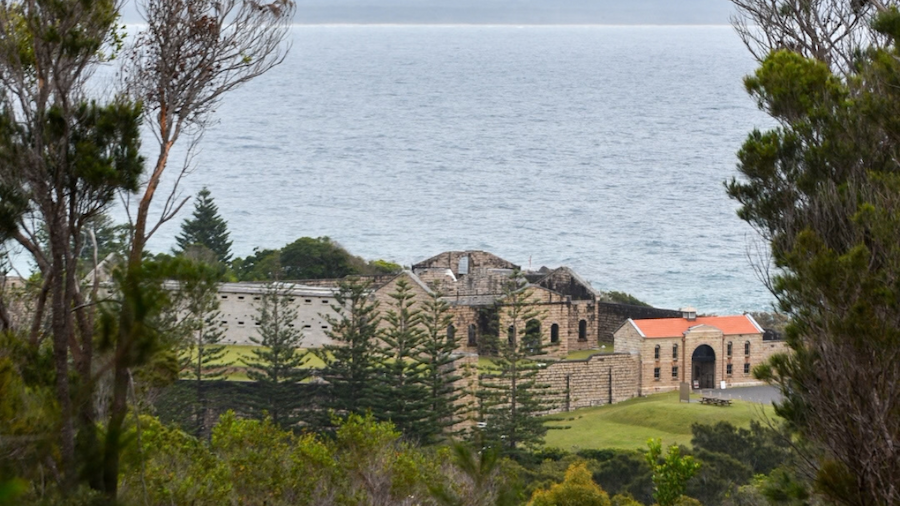
The bay is named after the brig Trial, wrecked here in 1816 after convicts seized it. Trial Bay Gaol opened in 1886 as a public works prison. Inmates were meant to build a breakwater from Laggers Point to shelter passing ships. During World War I, it reopened as an internment camp for around 500 men of German descent. The internees built the German monument on the hill to honour those who died here. Today the ruins are a historical attraction in Arakoon National Park.
FAQs you May Have
Yes, especially if you like wildlife and history together. The gaol museum and guard tower take about an hour. The campground offers sunsets over the water, whale watching and some of the best birding on the NSW north coast. Avoid public holidays, when prices nearly double.
It opened in 1886 as Australia’s first public works prison. Well-behaved inmates quarried granite to build a breakwater across the bay. From 1915 to 1918, during World War I, it served as an internment camp for German-born residents of Australia.
The breakwater project failed. Storms repeatedly destroyed the work, and after 17 years it had reached only about 300 m of a planned 1.6 km. The government abandoned it, and the gaol closed in July 1903. The internment camp closed in 1918.
Front Beach is sheltered and good for swimming, paddleboarding and fishing. Always check conditions before you go in. NSW National Parks warns that nearby Mermaid Pools is not suitable for swimming because waves can wash people off the rocks.
Humpbacks pass in winter heading north and in spring heading south. September and October are best, because mothers rest with calves in the bay. Bring binoculars and watch from the campground or the guard tower.
Book in Advance!
One night at Trial Bay Gaol campground gave us 17 species, a sunset breach and a walk through Australian history. That’s a strong case for slowing down, even on a tight schedule. If we hadn’t been pushing south, we would have stayed longer.
If you’re planning the NSW north coast, start with our earlier stops: Woody Head, Evans Head, Red Cliff and Illaroo. Our list of the best NSW national parks will help with the rest. And if you camp here, tell me in the comments what you saw. I’m still hoping someone gets a better cuckooshrike photo than mine.
References:
Grarock, K., Tidemann, C. R., Wood, J., & Lindenmayer, D. B. (2012). Is it benign or is it a pariah? Empirical evidence for the impact of the common myna (Acridotheres tristis) on Australian birds. PLoS ONE, 7(7), e40622. https://doi.org/10.1371/journal.pone.0040622
Karubian, J. (2002). Costs and benefits of variable breeding plumage in the red-backed fairy-wren. Evolution, 56(8), 1673–1682. https://doi.org/10.1111/j.0014-3820.2002.tb01479.x
Kavanagh, A. S., Owen, K., Williamson, M. J., Blomberg, S. P., Noad, M. J., Goldizen, A. W., Kniest, E., Cato, D. H., & Dunlop, R. A. (2017). Evidence for the functions of surface-active behaviors in humpback whales (Megaptera novaeangliae). Marine Mammal Science, 33(1), 313–334. https://doi.org/10.1111/mms.12374
Noad, M. J., Kniest, E., & Dunlop, R. A. (2019). Boom to bust? Implications for the continued rapid growth of the eastern Australian humpback whale population despite recovery. Population Ecology, 61(2), 198–209. https://doi.org/10.1002/1438-390X.1014
Welbergen, J. A., Klose, S. M., Markus, N., & Eby, P. (2008). Climate change and the effects of temperature extremes on Australian flying-foxes. Proceedings of the Royal Society B, 275(1633), 419–425. https://doi.org/10.1098/rspb.2007.1385