At university, I helped a professor build a pollinator garden from bare dirt. We planted native flowers from across Mexico and waited. Within two seasons the plot hummed. Bumblebees worked the salvias, moths and other insects arrived after dusk, and spiders strung webs between the stems.
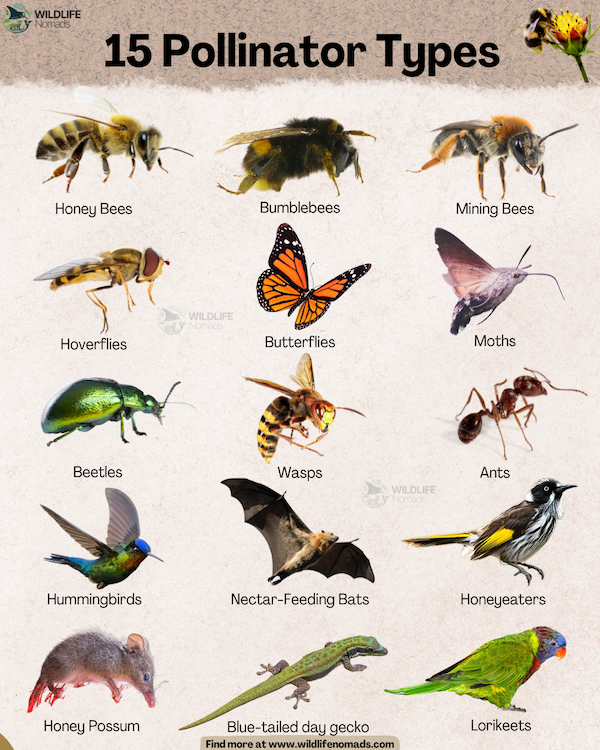
That garden taught me something I still repeat. Pollinators are not just bees. They include butterflies, bats, birds, beetles, flies, wasps, and animals most people never picture near a flower.
The stakes are enormous. Roughly one in three bites of food on your plate depends on pollination. Around 87% of the world’s flowering plants rely on animal pollinators to reproduce. Pollination services underpin hundreds of billions of dollars in global agriculture each year.
Below are 15 types of pollinators, why each one matters, and what I have watched them do in the field. Some will surprise you.
What Pollinators Actually Do
Pollen must move from one flower to another before most plants can set seed. Animal pollinators do that transport work, usually by accident, while gathering pollen or drinking nectar.
That movement drives cross-pollination, which maintains genetic diversity among plant species. Many plant species cannot reproduce at all without it. Without cross-pollination, populations inbreed, fewer new plants establish, and resilience to disease and climate change drops.
The knock-on effects run deeper than food. Pollinators support over 180,000 plant species globally, and those plants feed and shelter countless other animals. Their roots stabilise soil, reduce erosion, and help filter water. Pollination is one of the few natural resources nobody can manufacture.
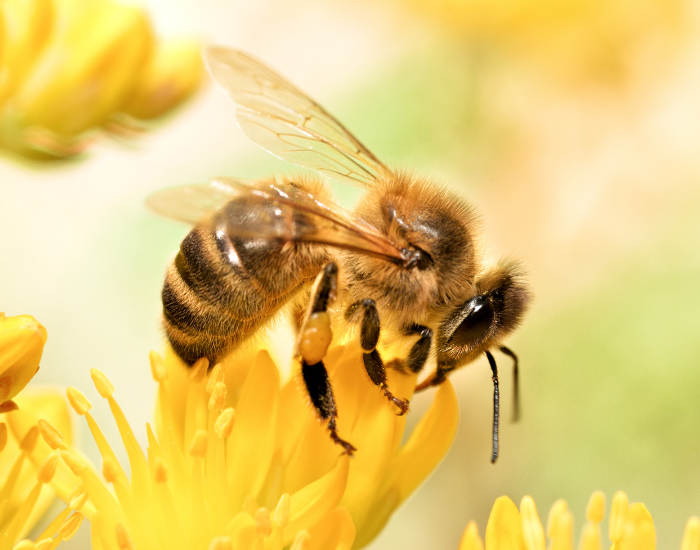
1. Honey Bees
Honey bees (Apis mellifera) are the world’s most famous managed pollinators. Beekeepers truck hives to almond, apple, and blueberry farms to pollinate crops on demand.
Watch a forager closely and you will see pollen packed into baskets on her hind legs. That yellow cargo feeds larvae back at the hive. The grains she drops along the way fertilise the next flower.
Here is the nuance most articles skip. Honeybees are livestock, not wildlife. High hive densities can outcompete wild bees and other pollinators for the same flowers. Cane, J. H. and Tepedino quantified that pressure in 2017, and the numbers are sobering. As a result, “save the bees” campaigns sometimes help the wrong species.
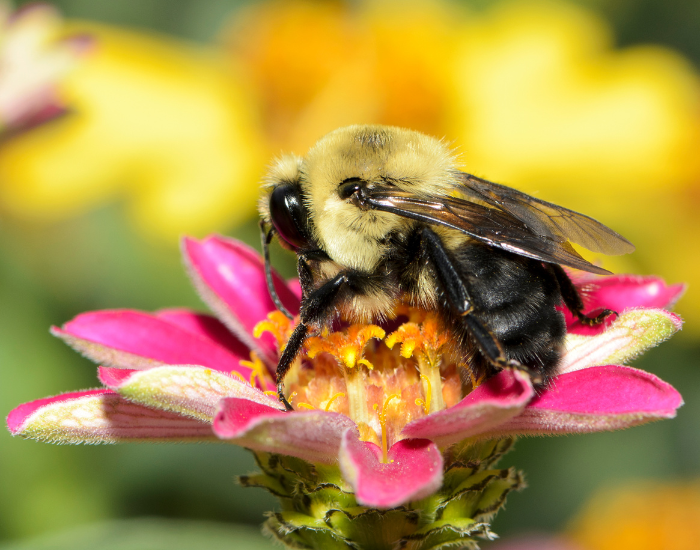
2. Bumblebees
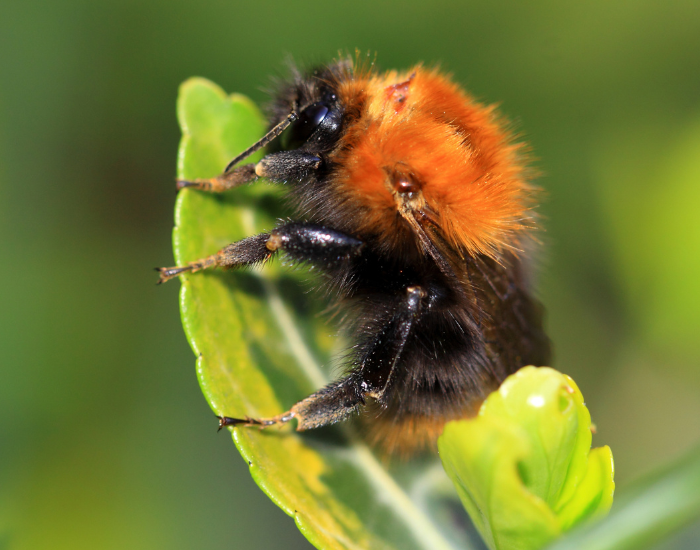
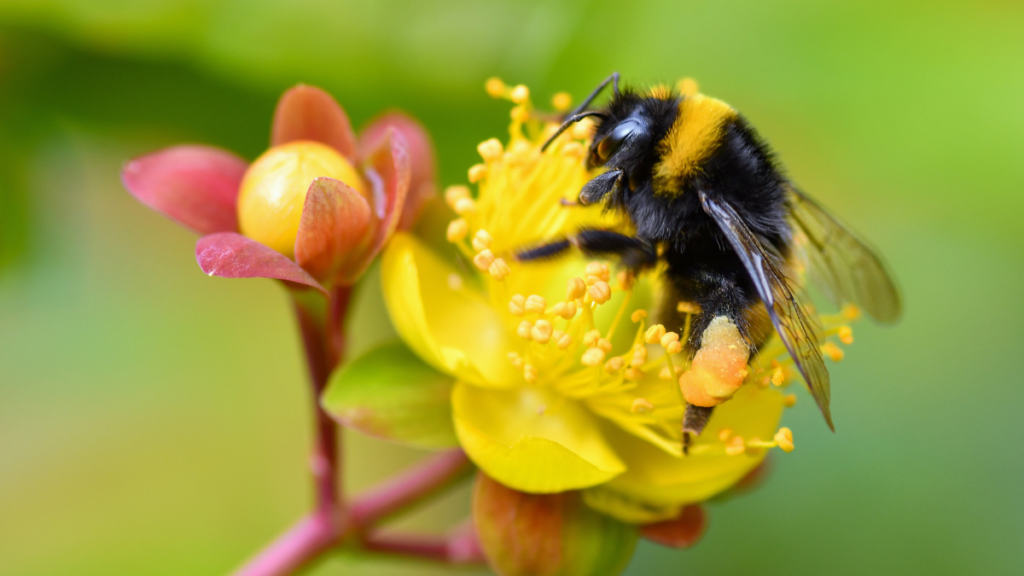
Bumblebees (Bombus spp.) are the heavy machinery of pollination ecology. Their thick fur traps pollen, and their size lets them fly in cold, wet weather that grounds honey bees entirely.
They also perform buzz pollination. A bumblebee grips the flower, vibrates her flight muscles, and shakes pollen loose from tubular anthers. Tomatoes, blueberries, and cranberries all depend on this trick.
Queens emerge in early spring, weeks ahead of most other pollinators, and individual workers forage several kilometres from the nest. In our university garden, bumblebees were the first heavy visitors, arriving before the smaller natives found the plot.
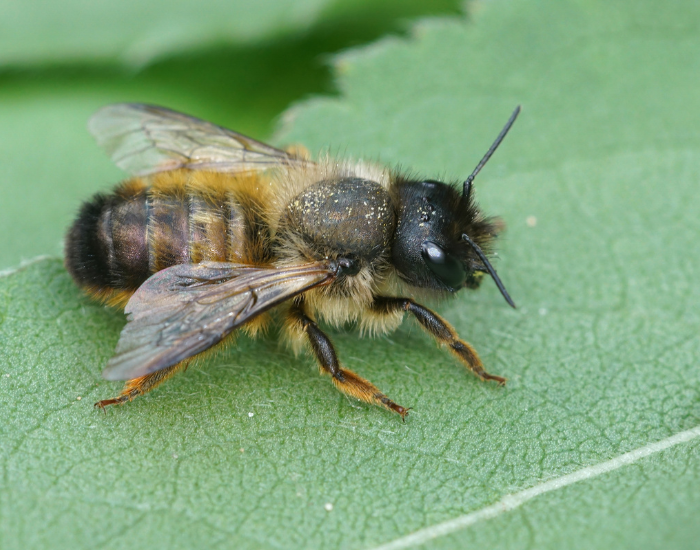
3. Solitary and Mining Bees
Most bee species live alone. Nearly 250 solitary bee species occur in the UK. In addition, more than 3,500 species of native bees pollinate crops across North America.
Mason bees and leafcutters are startlingly efficient. A single female can outperform dozens of honey bees on orchard fruit. She carries dry pollen loosely on her belly and loses plenty to every flower.
They nest in hollow stems, old beetle holes, and bare soil. Leave a patch of your garden untidy and you will attract pollinators you never knew lived there.
4. Stingless Bees
In southern Mexico, Maya beekeepers have tended Melipona beecheii for well over a thousand years. These stingless bees produce a thin, tart honey used traditionally as medicine.
Stingless bees pollinate tropical flowering plants that honey bees handle poorly, including coffee, mango, and macadamia. Their colonies are small, so each one services a tight local radius.
Their decline tracks deforestation almost exactly. Where the forest fragments, the log hives empty out.
5. Hoverflies
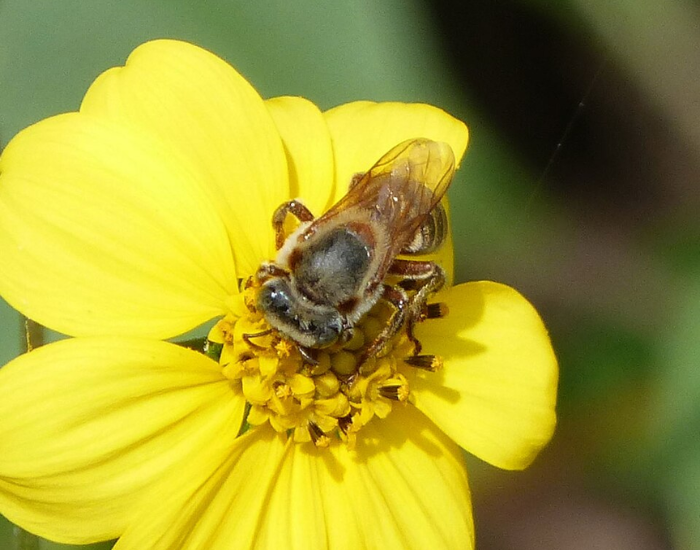
Hoverflies look like wasps and behave like nothing of the sort. Research published by the Royal Society found they visit at least 72% of global food crops. The same work covers over 70% of animal-pollinated wildflowers. That makes them the second most important group of insect pollinators after bees.
Their second job is pest control. Hoverfly larvae eat aphids by the thousand, so a field full of adults means fewer chemical sprays.
Migration is their real superpower. Up to four billion hoverflies move across southern Britain annually. Sheer abundance is how they compensate for being clumsier than bees on any single flower.
6. Midges and Other Flies
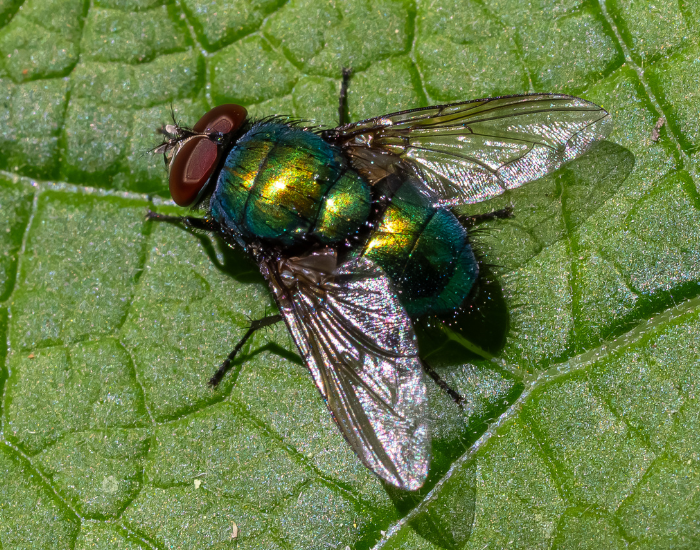
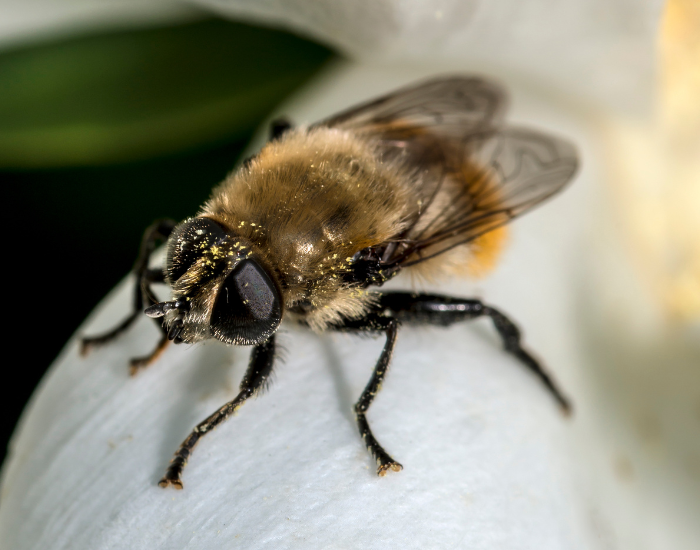
Chocolate exists because of biting midges. Cacao flowers are tiny, downward-facing, and structurally awkward, and only Forcipomyia midges reliably work them.
Flies dominate pollination in cold and high-altitude places where bees struggle. In the Arctic and on alpine peaks, they are often the only animal pollinators present.
They also care far less about flower colour and scent. For example, they happily work carrion flowers, umbellifers, and other blooms bees ignore.
7. Butterflies
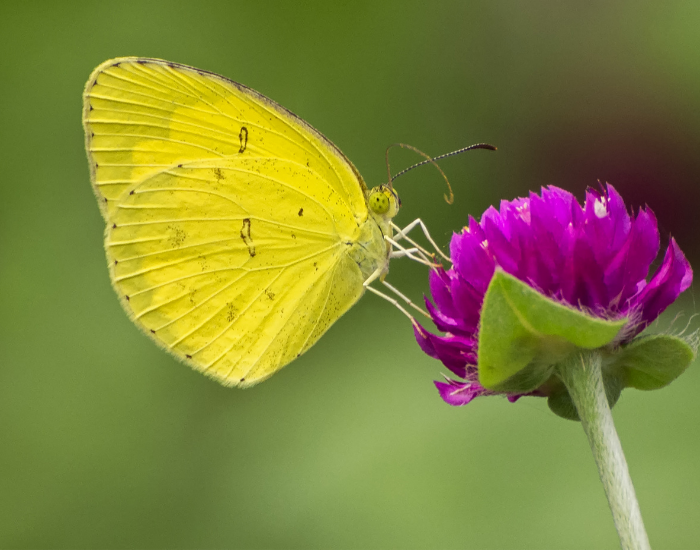
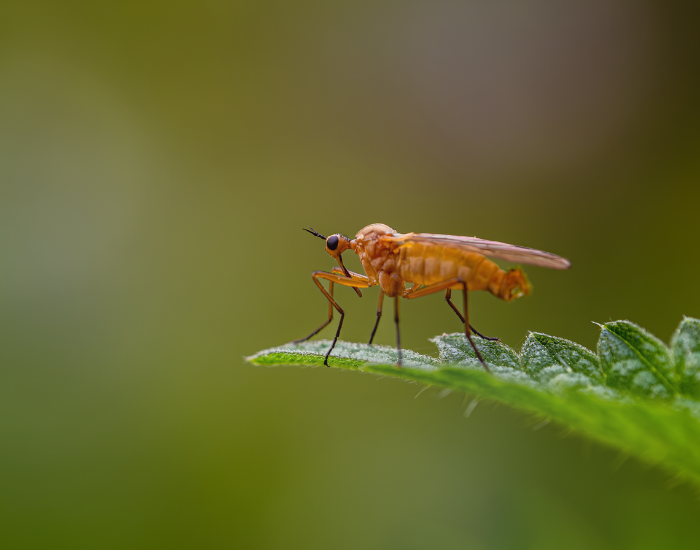
Butterflies drink nectar through a coiled proboscis while perched on the flower’s landing platform. They carry pollen on their long legs rather than in dense body fur. Each visit therefore transfers less than a bee’s.
What they lack in efficiency they make up in range. Monarch butterflies (Danaus plexippus) cross a continent, moving pollen between populations separated by thousands of kilometres.
Their conservation status is genuinely contested. The IUCN listed the migratory monarch as Endangered in 2022. It then revised that to Vulnerable in 2023, after correcting the population trend calculations. Both listings still describe a species under real pressure.
8. Moths
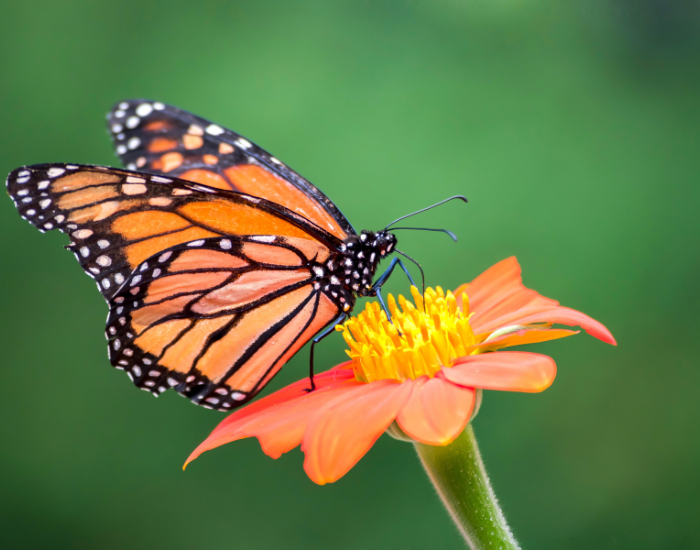
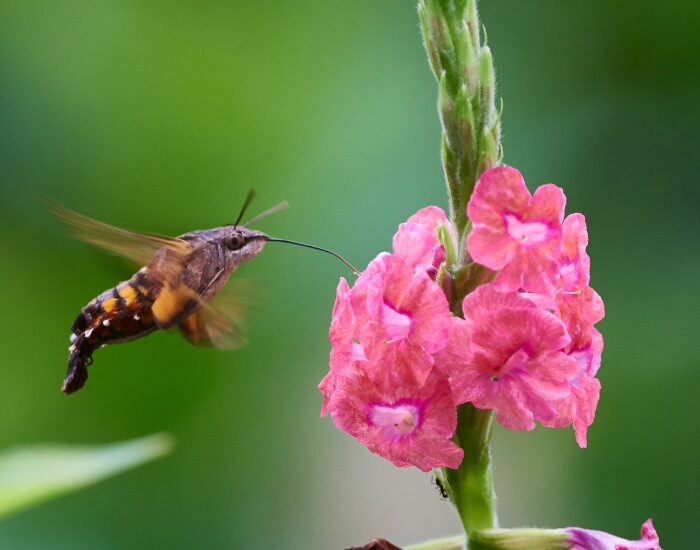
Moths work the night shift, far better than their reputation suggests. They pollinate many plants that daytime insects also visit, adding redundancy to the system.
Hawkmoths hover like hummingbirds and unroll tongues long enough to reach nectar at the base of deep white flowers. From the shape of one Madagascan orchid, Darwin predicted a moth with a 30-centimetre tongue. Xanthopan praedicta turned up decades later.
In our Mexican garden, the moths arrived once the evening-scented natives established. I had not planted for them, and they came anyway.
9. Beetles
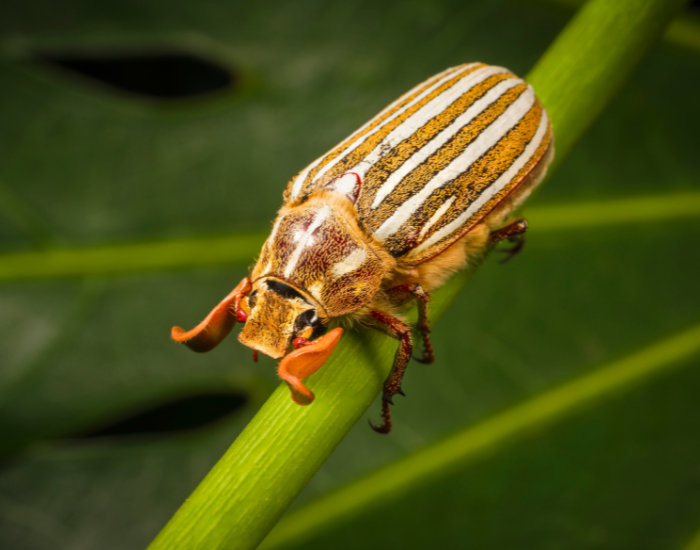
Beetles were pollinating flowers before bees existed. Magnolias and water lilies still carry tough petals built to survive clumsy visitors.
Many species of beetles pollinate plants in the UK alone, roughly a quarter of the country’s beetle fauna. Soldier beetles are the easiest to spot, clustering on cow parsley and other flat white umbels through summer.
Their method is crude and effective. They chew, crawl, and defecate on the flower, then blunder to the next one covered in pollen.
10. Wasps
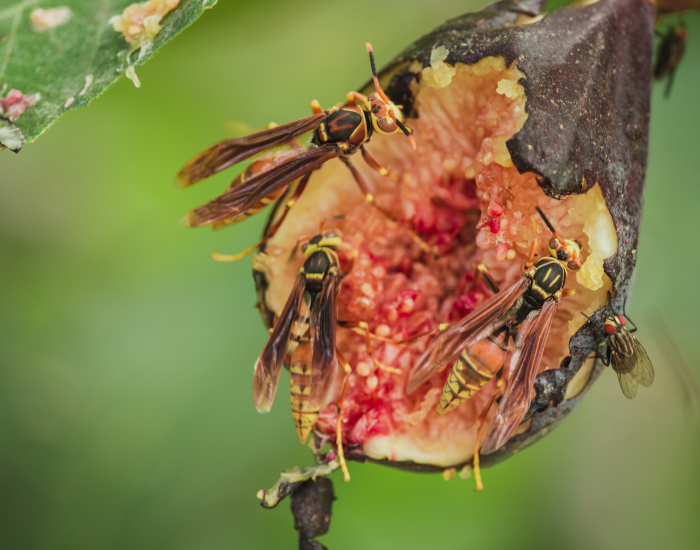
Wasps get no credit and deserve some. Adults drink nectar for energy, and in doing so they pollinate flowers across many families.
Fig wasps are the extreme case. Each fig species has its own wasp. She crawls inside the fruit, pollinates the flowers within, lays her eggs, and dies there.
That relationship is roughly 75 million years old. Around 750 fig species depend on it. So do the birds, bats, and primates that eat figs when nothing else fruits.
11. Ants
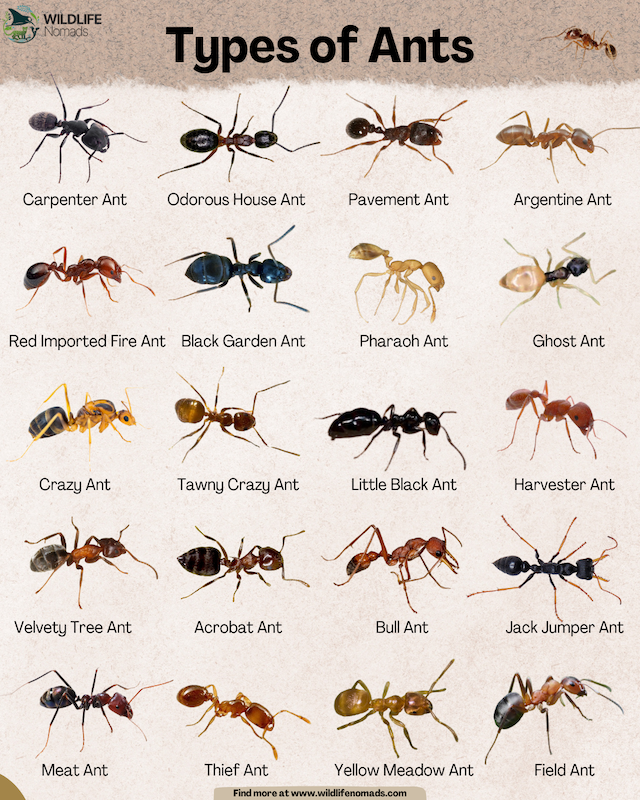
Ants visit flowers constantly, yet they pollinate poorly. Their bodies secrete antimicrobial compounds that kill pollen grains on contact, and they walk rather than fly between plants.
A handful of species do the job properly. Low-growing alpine and coastal plants sometimes rely on ants. Their flowers sit close to the ground, exactly where ants already travel.
I include them deliberately. Many species visit flowers without moving meaningful pollen, and pollination ecology is full of that distinction.
12. Hummingbirds
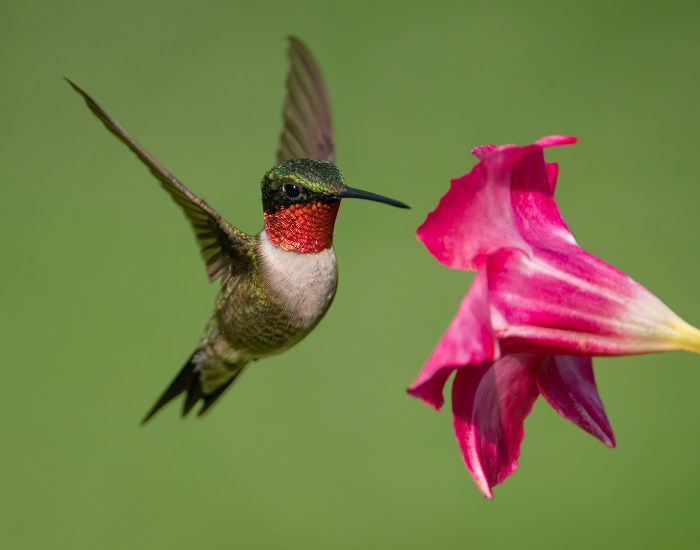
Hummingbirds hover, feed, and leave pollen dusted across their foreheads and bills. Their metabolism is brutal, so they visit hundreds of flowers daily just to stay alive.
Bird-pollinated flowers here share a look: red or orange, tubular, and scentless. Most insects cannot reach the dilute nectar inside.
They pollinate over 7,000 plant species across the Americas. Many of those plants have no backup pollinator at all.
13. Nectar-Feeding Bats
On a trip through an agave plantation, a local guide asked me a question I have used ever since. Do you know what pollinates the plant your tequila comes from?
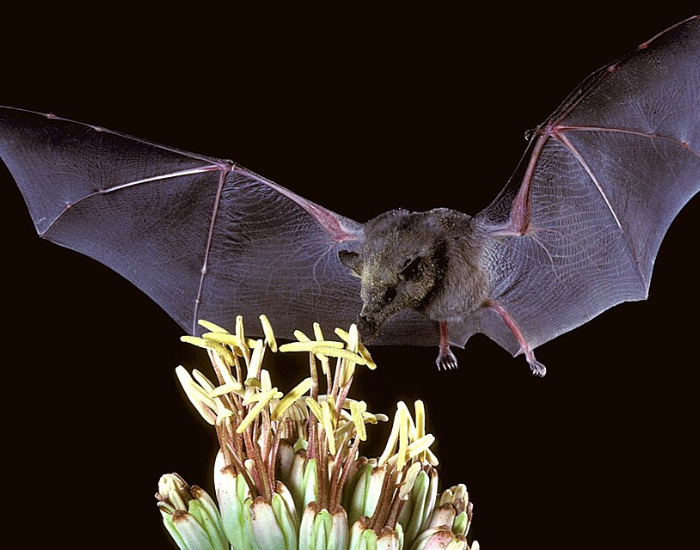
The answer is bats. Lesser long-nosed bats (Leptonycteris yerbabuenae) migrate up to 1,200 kilometres between central Mexico and the US Southwest. Each spring they follow agave and cactus blooms north, arriving pregnant, with nectar fuelling the entire journey.
Here is the uncomfortable part. Commercial tequila producers cut the flowering stalk before it opens, concentrating sugars in the heart of the plant. No flowers means no bats. It also means agave propagated as clones, with almost no genetic diversity left in the crop. Bat-friendly certification schemes now ask growers to let a small percentage flower. Meanwhile the bat population has climbed from a very small population in 1988 to roughly 200,000.
14. Honeyeaters, Lorikeets, and Sunbirds
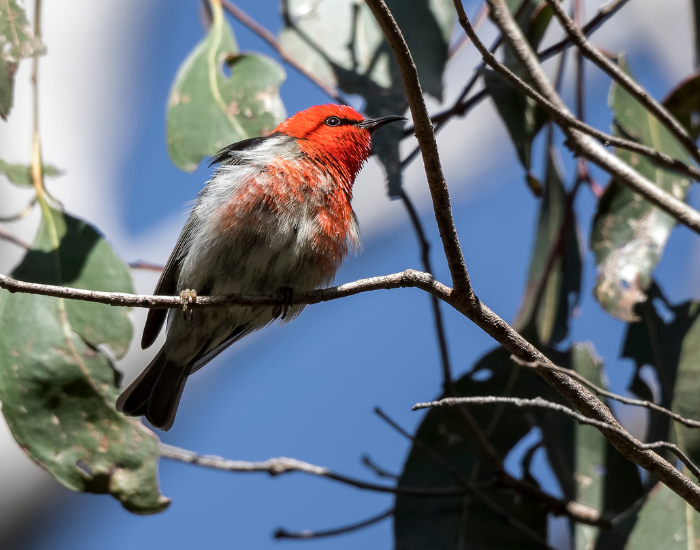
Australia’s flowering plants lean heavily on birds. Since moving to Queensland, I have watched rainbow lorikeets strip grevillea and banksia blossom while covering their faces in pollen.
Honeyeaters have brush-tipped tongues built for lapping nectar from banksias and eucalypts. Sunbirds fill the same role across Africa and Asia, though they usually perch rather than hover.
These birds move pollen far further than most insects. In fragmented landscapes, that long-distance transfer may be what keeps isolated tree populations from collapsing.
15. Small Mammals and Reptiles
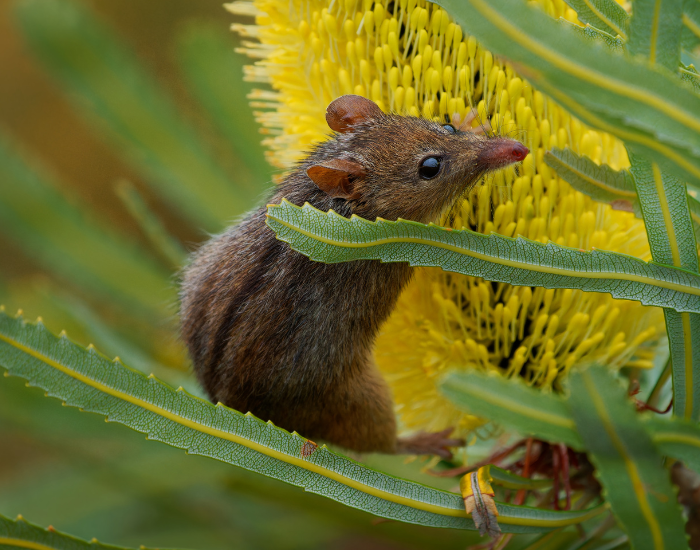
Some pollinators have fur or scales. Small mammals turn up on flowers far more often than most people assume. Some possums, like the honey possum (Tarsipes rostratus) of Western Australia eats nothing but nectar and pollen. Very few mammals survive on flowers alone.
Black-and-white ruffed lemurs pollinate the traveller’s palm in Madagascar, prising open the tough bracts with their hands. In South Africa, rodents pollinate ground-level Protea species overnight.
Lizards do it too. On Mauritius, the blue-tailed day gecko (Phelsuma cepediana) pollinates Trochetia blackburniana. The plant produces red nectar, apparently to advertise itself to lizards.
Why Pollinator Decline Should Worry You
Over 40% of invertebrate pollinators face extinction risk in some regions. Nearly one in four native bee species in the United States is imperiled. Habitat loss, pesticides, disease, and climate change all contribute.
Healthy ecosystems absorb the loss of one species. They do not absorb the loss of whole guilds. When bees, flies, and beetles decline together, no backup group remains.
The human cost is measurable. A 2022 modelling study estimated that inadequate pollination already causes around 427,000 excess deaths annually. The mechanism is reduced access to fruit, vegetables, and nuts, which are rich sources of essential vitamins.
Fixing this is not complicated. Plant native plants and wildflowers, skip the pesticides, leave bare ground and dead stems for nesting, and stop mowing everything. The Pollinator Partnership publishes free regional planting guides that tell you exactly what works where you live.
Frequently Asked Questions
Pollinators are important because roughly three-quarters of flowering plants and 35% of food crops depend on them to reproduce. They also sustain the ecosystems that other wildlife feeds and shelters in. Lose them, and both agriculture and wild plant communities unravel together.
Bees are the world’s most important pollinators. The western honey bee (Apis mellifera) is the single most economically significant species. That said, wild and native bees pollinate many crops more efficiently than managed hives do. Over 20,000 bee species exist globally, and most are solitary.
Plants do not pollinate themselves in the way the question implies, but many flowering plants attract pollinators exceptionally well. Cow parsley, lavender, salvias, borage, milkweed, and native goldenrods all draw heavy insect traffic. Grasses and conifers skip animals entirely and let wind carry their pollen instead.
Plant a mix of native flowering plants that bloom across the whole growing season, so food never runs out. Add water, leave some bare soil and hollow stems for nesting, and stop using pesticides. Diversity beats size, and a small messy garden outperforms a large tidy one.
Watch Your Own Patch
The pollinator garden I helped build was a few square metres of native plants on a campus. It pulled in bumblebees, moths, beetles, and the spiders that hunted them. A working food web rebuilt itself from almost nothing.
That is the part worth holding onto. Pollinator populations respond quickly when you give them food and habitat. The animals doing that work are far stranger and more varied than the honey bee on the jar.
You can explore flowering plants and the animals that pollinate them in my tree of life.
Go and look at one flower for ten minutes. Count what lands on it, and tell me in the comments what showed up.
Pollinators Challenge 🐝
Ten questions on the animals that keep our plants alive — first a fact-or-fiction round, then multiple choice. How many can you get?
References:
Cane, J. H., & Tepedino, V. J. (2017). Gauging the effect of honey bee pollen collection on native bee communities. Conservation Letters, 10(2), 205–210. https://doi.org/10.1111/conl.12263
Doyle, T., Hawkes, W. L. S., Massy, R., Powney, G. D., Menz, M. H. M., & Wotton, K. R. (2020). Pollination by hoverflies in the Anthropocene. Proceedings of the Royal Society B: Biological Sciences, 287(1927), 20200508. https://doi.org/10.1098/rspb.2020.0508
Garratt, M. P. D., de Groot, G. A., Albrecht, M., Bosch, J., Breeze, T. D., Fountain, M. T., … Zhusupbaeva, A. (2021). Opportunities to reduce pollination deficits and address production shortfalls in an important insect-pollinated crop. Ecological Applications, 31(8), e2445. https://doi.org/10.1002/eap.2445
Garratt, M. P. D., Bishop, J., Degani, E., Potts, S. G., Shaw, R. F., Shi, A., & Roy, S. (2019). Pollination treatment affects fruit set and modifies marketable and storable fruit quality of commercial apples. Royal Society Open Science, 6(11), 190326. https://doi.org/10.1098/rsos.190326
Rodger, J. G., Bennett, J. M., Razanajatovo, M., Knight, T. M., van Kleunen, M., Ashman, T.-L., … Ellis, A. G. (2021). Widespread vulnerability of flowering plant seed production to pollinator declines. Science Advances, 7(42), eabd3524. https://doi.org/10.1126/sciadv.abd3524
Smith, M. R., Mueller, N. D., Springmann, M., Sulser, T. B., Garibaldi, L. A., Gerber, J., … Myers, S. S. (2022). Pollinator deficits, food consumption, and consequences for human health: A modeling study. Environmental Health Perspectives, 130(12), 127003. https://doi.org/10.1289/EHP10947