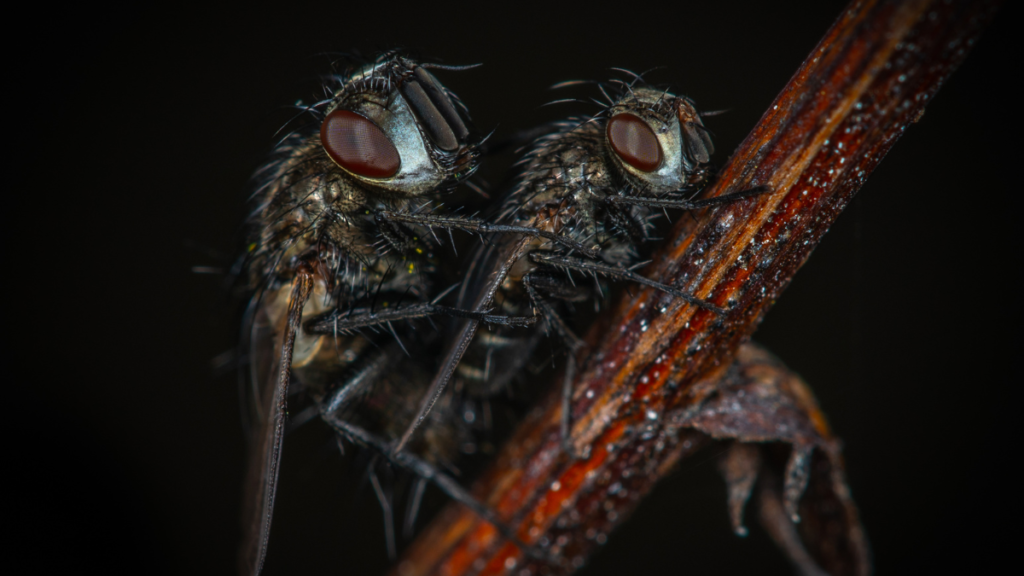
A dead wallaby taught me more about flies than any textbook ever did. I was roadtripping on K’gari (formerly Fraser Island) in Queensland, and I found the carcass not long after the dingoes had walked away. The air already shimmered with metallic green bodies. Within an hour, three distinct fly species had claimed different parts of the animal. Each arrived on schedule, like shifts changing at a factory.
That morning rewired how I see these insects. Most people meet flies as indoor pests buzzing around a kitchen. I meet them as one of the most successful animal groups on Earth, with roughly 160,000 described species and probably far more waiting.
This guide walks through 15 types of flies you can actually learn to recognize. You will get field marks that work at arm’s length, the biology behind each one, and honest advice on which species matter for your health and which ones simply annoy you. By the end, you should identify most flies in your house or yard without a microscope.
What Makes a Fly a True Fly
Here is the single best trick in fly identification. True flies belong to the order Diptera, and the name means “two wings.” Adult flies have only two wings, while almost every other group of winged insects carries four. Flies traded their hind pair for halteres, tiny drumstick-shaped organs that spin and sense rotation like gyroscopes.
Look closely at a resting fly and you can see them. Those halteres explain the aerobatics. A house fly can reverse direction in under a tenth of a second, which is exactly why your fly swatter keeps missing.
So mosquitoes, gnats, and midges all count as flies. Wasps, bees, beetles, and most other insects do not.
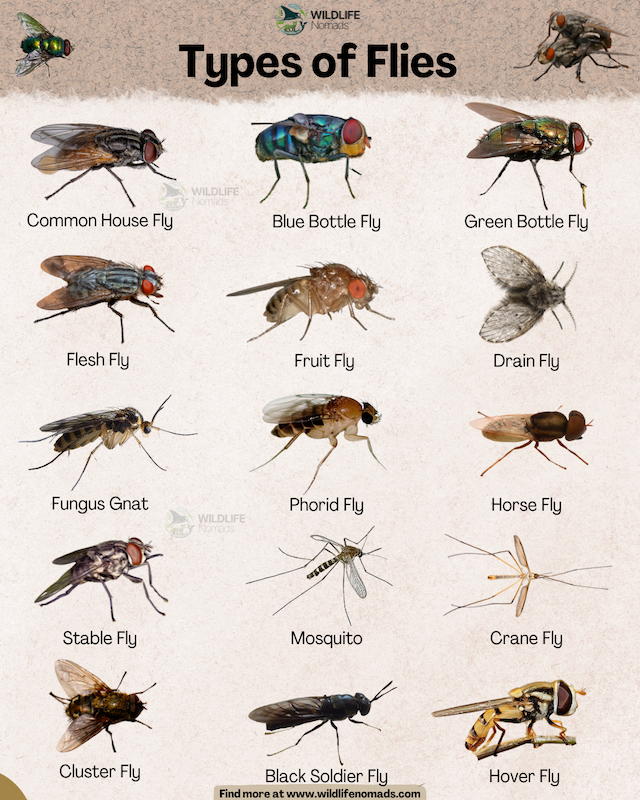
The 15 Most Common Fly Species
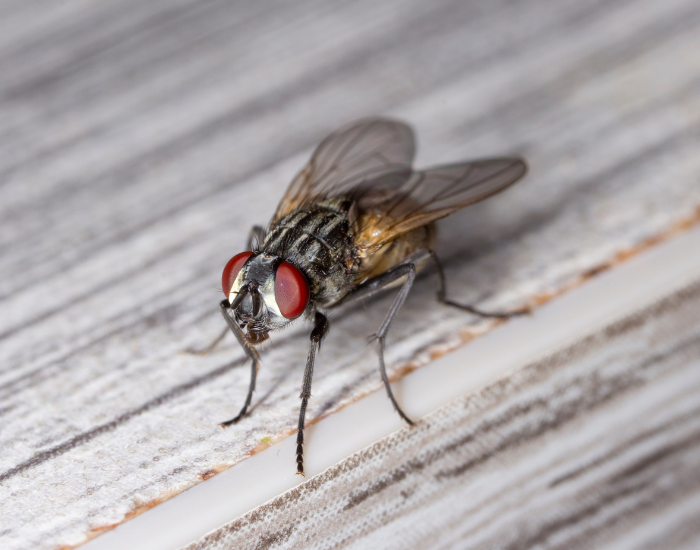
1. Common House Fly (Musca domestica)
The common house fly is dull dark gray, about 6 to 7 millimeters long, with four dark stripes running down the thorax. Those stripes settle the identification instantly. Red compound eyes and a sponging mouthpart complete the picture.
House flies matter because of what they carry. Research has found that house flies can carry over one million bacteria on their bodies and legs. They transmit diseases including cholera and dysentery, mostly by walking across animal feces and then across human foods. Adults typically live for 15 to 30 days, and a marked individual can migrate up to 20 miles chasing food.
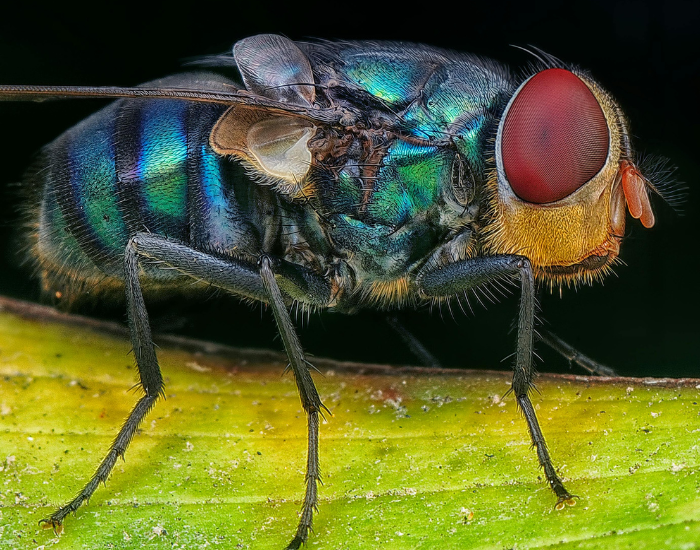
2. Blue Bottle Fly (Calliphora vomitoria)
Bottle flies are the loud, heavy blow flies that blunder into windows. This one wears a shiny blue abdomen that looks almost enameled in sunlight. So do not confuse them with green bees or even bluish bees. Its buzz is noticeably deeper than a house fly’s.
Blue bottles breed in carrion and animal waste. I have used their arrival as a tracking cue in the field, because a sudden cloud of them usually means a carcass sits within a hundred meters.
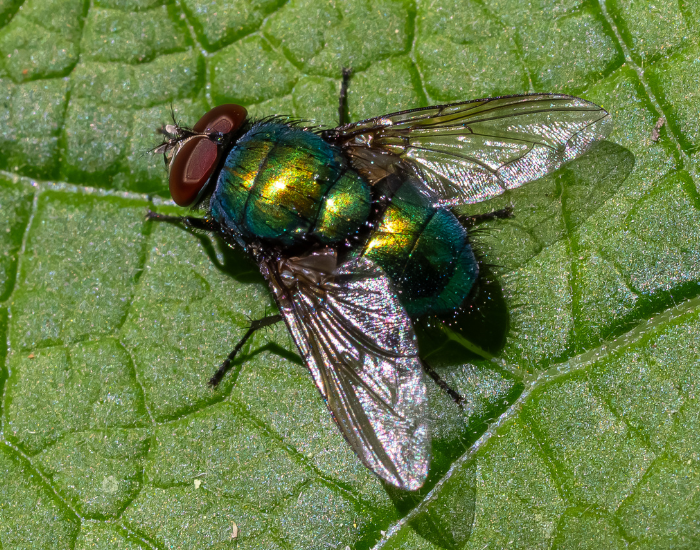
3. Green Bottle Fly (Lucilia sericata)
The green bottle is the metallic emerald species I watched swarm that wallaby. Blowflies are attracted to decaying organic material, and this one finds fresh remains within minutes.
Forensic scientists lean on it hard. Blow fly larvae grow at rates that track temperature closely, so their development helps investigators estimate time of death. Medical teams also use sterile Lucilia larvae to clean stubborn wounds.
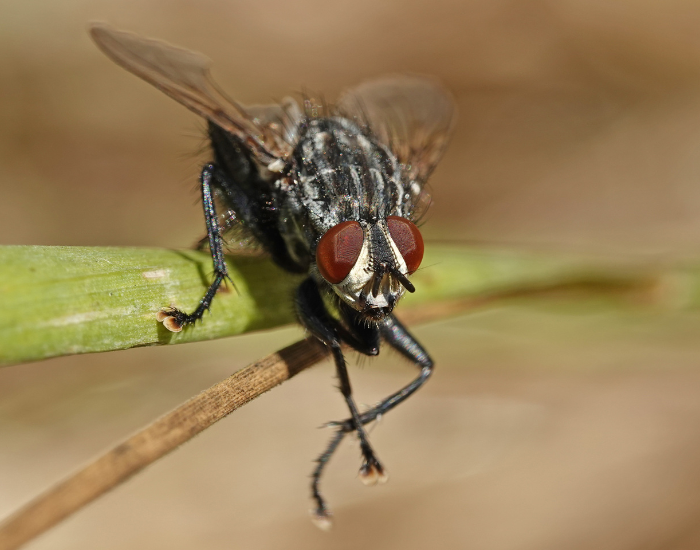
4. Flesh Fly (Sarcophaga spp.)
Flesh flies look like oversized house flies with a checkerboard-patterned abdomen and three bold thoracic stripes. Their red eyes are large and glossy.
They skip the egg stage entirely. Females deposit live larvae directly onto dead animals, open wounds, or dung, which gives their offspring a head start. Blow flies and flesh flies can transmit disease agents from decaying matter to food, so screen them out of kitchens.
5. Fruit Fly (Drosophila melanogaster)
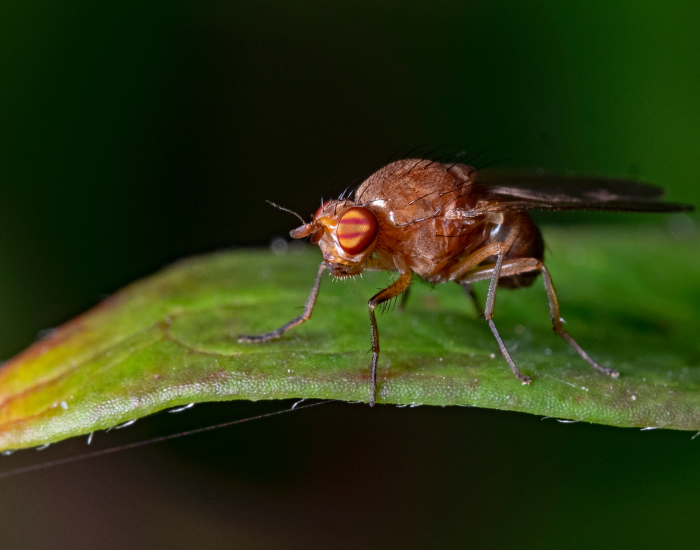
Fruit flies measure only 3 millimeters, with tan bodies and bright red eyes. They hover over ripe bananas, wine glasses, and forgotten food waste.
Their numbers explode fast. Fruit flies can lay up to 500 eggs at one time and complete their life cycle in as few as 8 days. Their surface contamination can cause intestinal upset and diarrhea in humans, which surprises people who treat them as harmless.
A friend of mine spent his entire thesis staring at these flies. He studied sexual selection, so he sat at a bench for hours logging which males courted successfully and which got rejected. Watching it was excruciatingly boring. That tedium, however, made Drosophila the poster child of lab research, and it underpins much of what we know about genetics today.
6. Drain Fly (Clogmia albipunctata)
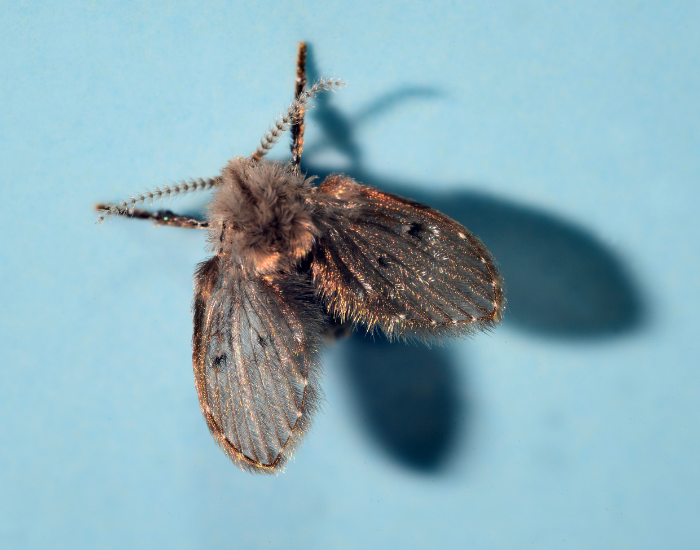
Drain flies are also known as moth flies, and one glance explains why. Fuzzy wings held roof-like over the body give them a tiny moth silhouette. They rest motionless on tile, then flutter weakly when disturbed.
They breed in drains and septic tanks. Their larvae feed on the gelatinous organic debris and decaying material coating pipe walls. Adults do not bite or spread disease. They simply signal a plumbing problem you have been ignoring.
7. Fungus Gnat (Bradysia spp.)
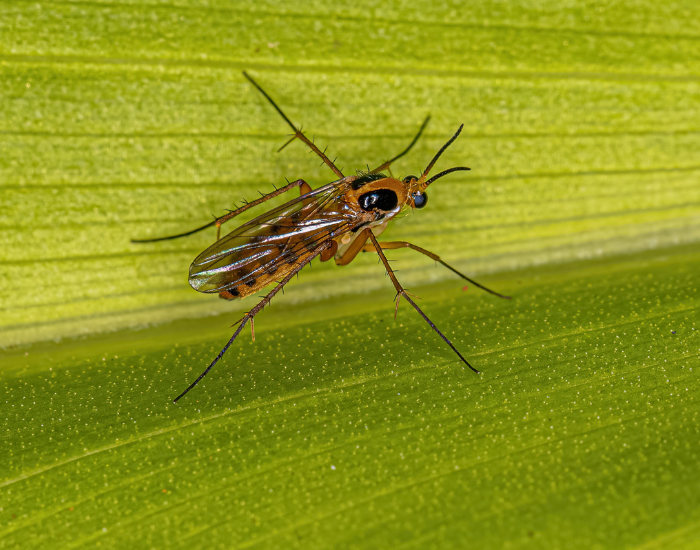
Fungus gnats are the delicate black specks drifting out of houseplant soil. They have long legs, clear wings, and a wobbly, aimless flight.
Their larvae feed on fungi and root hairs in moist potting mix. I killed an entire tray of seedlings in graduate school by overwatering. Let the top inch of soil dry between waterings and the problem collapses.
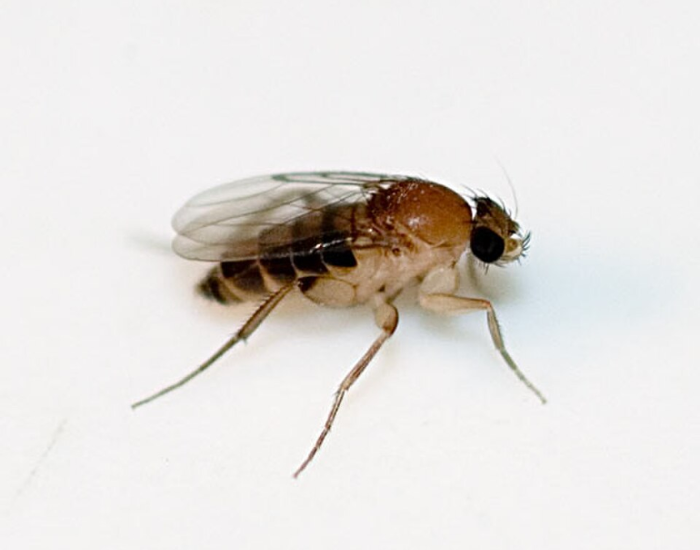
8. Phorid Fly (Megaselia scalaris)
Phorid flies have a distinctive humpbacked profile and a habit of running in quick bursts instead of flying. That scuttling motion identifies them across a room.
They breed in almost anything organic, including drain scum, garbage cans, and even corpses inside sealed buildings. Some tropical relatives parasitize ants, decapitating the host as the larva develops.
9. Horse Fly (Tabanus spp.)
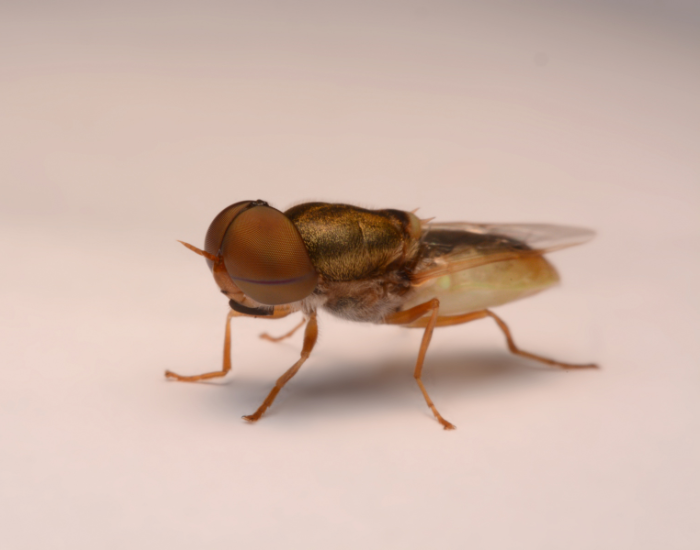
Horse flies are among the larger flies you will ever meet. Horseflies range from 3/8 inch to 1 inch long, with enormous iridescent eyes banded in green or purple.
Only females bite. They slash the skin with blade-like mouthparts, then lap the pooling blood meal, which is why the bite hurts far more than a mosquito’s. They pester domestic animals relentlessly in summer pasture. Their smaller cousins, the snipe flies, look similar but rarely bite people.
I have been their victim more times than I can count, especially across Australia. You rarely notice the bite while it happens. Hours later, sometimes a full day later, the site swells into a hot welt that throbs for days. Long sleeves and light colors help more than any repellent I have tried.
10. Stable Fly (Stomoxys calcitrans)
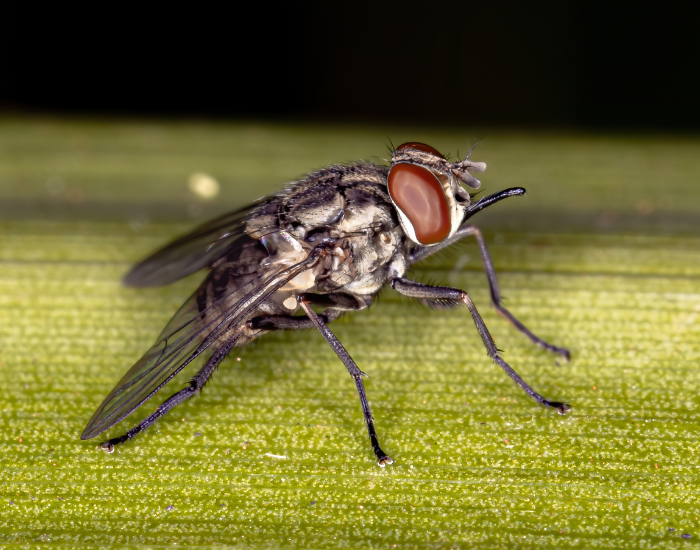
Stable flies fool almost everyone. They look nearly identical to house flies, but a rigid, needle-like proboscis juts forward from the head. Both sexes drink blood.
Their painful bite usually lands on ankles and lower legs. These ones can transmit some viruses but are not significant disease carriers for humans. They breed in wet straw, animal feed, and rotting grass clippings.
11. Mosquito (Culicidae)
Mosquitoes are true flies, a fact that still startles people. There are over 3,500 species of mosquitoes worldwide, and only a fraction bite humans.
Females need a blood meal to develop eggs. Larvae develop in standing water, from marsh edges to bottle caps.
The Wildlife Nomads team got thoroughly smashed by them in the jungles of Sumatra. We were searching for orangutans and gibbons, and we camped beside a river for the night, which was a rookie mistake. The slow water bred mosquitoes by the thousand, and they found every gap in our clothing. I now treat any still water within fifty meters of camp as a warning sign.
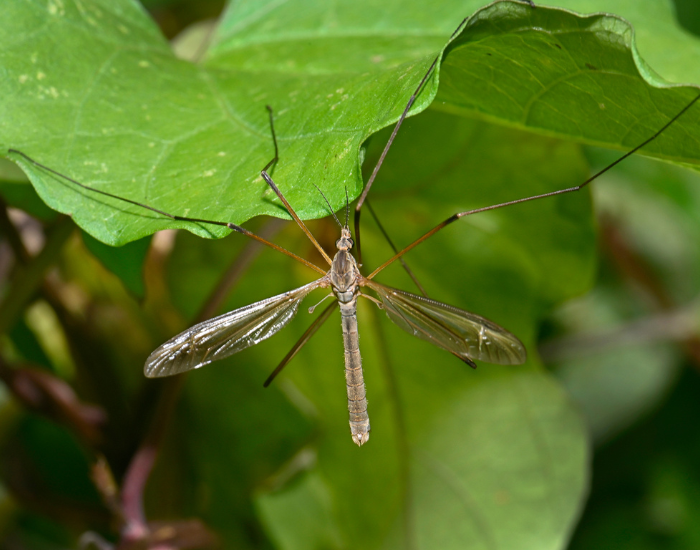
12. Crane Fly (Tipula spp.)
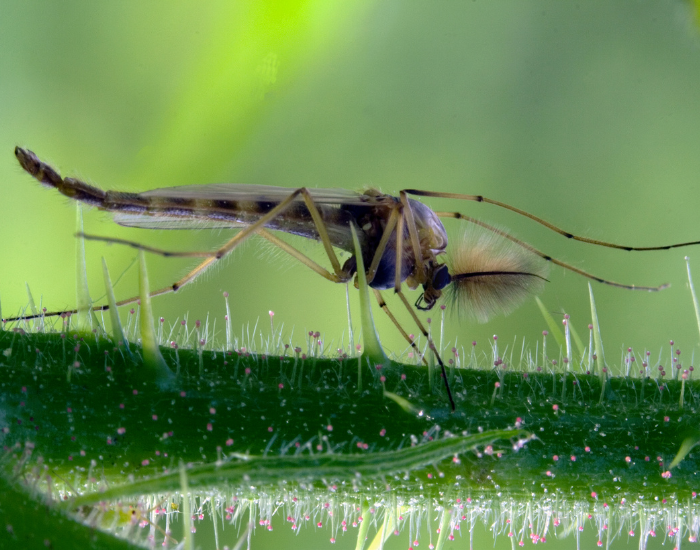
Crane flies look like mosquitoes scaled up ten times, with impossibly long legs that snap off when handled. Panic is misplaced. Adults do not bite, and most barely feed at all.
Their larvae, called leatherjackets, chew grass roots in damp lawns. Adults live only a few days, spending that time mating and laying eggs. They rank among the most misunderstood insects I get emails about.
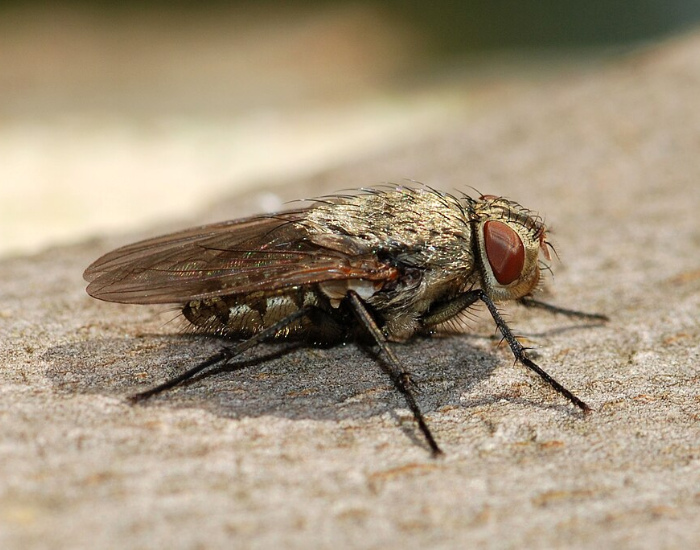
13. Cluster Fly (Pollenia rudis)
Cluster flies are slightly larger than house flies, with golden hairs on the thorax and a dark checkered abdomen. They fly sluggishly and gather at sunny windows in autumn.
Their larvae parasitize earthworms in soil. Adults then pile into attics and wall voids to overwinter, which produces alarming indoor infestations in October and again on the first warm day of spring.
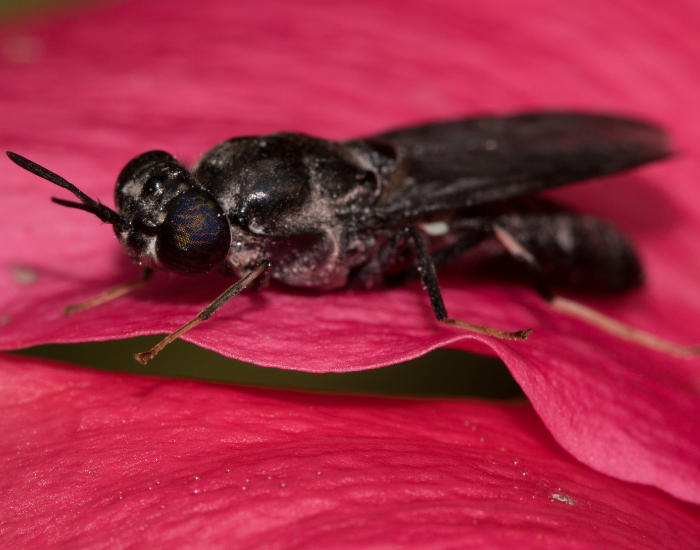
14. Black Soldier Fly (Hermetia illucens)
Soldier flies are slender, wasp-like, and about 15 millimeters long, with two translucent windows on the abdomen. Adults have no functional mouthparts and never feed.
Their larvae are agricultural superstars. They convert food waste and manure into protein at remarkable speed, and farms now raise them as animal feed. In addition, their presence suppresses house fly breeding by outcompeting them in the same substrate.
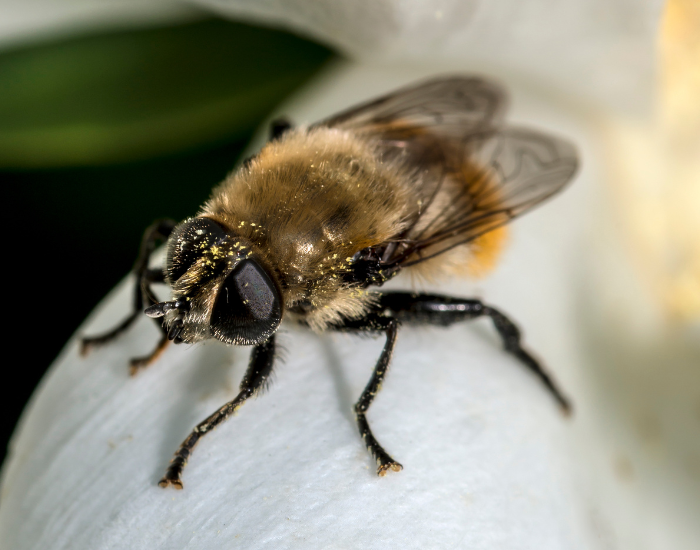
15. Hover Fly (Syrphidae)
Hover flies mimic bees and wasps with yellow and black banding, then give themselves away by hanging motionless in midair. Two wings and no sting mean you are looking at a fly.
They pollinate more than most people realize. Flies are the second largest group of pollinators after bees, and hover flies do much of that work. Their larvae also devour aphids by the hundreds. For the fuzzier side of pollination, see my guide to types of bumblebees.
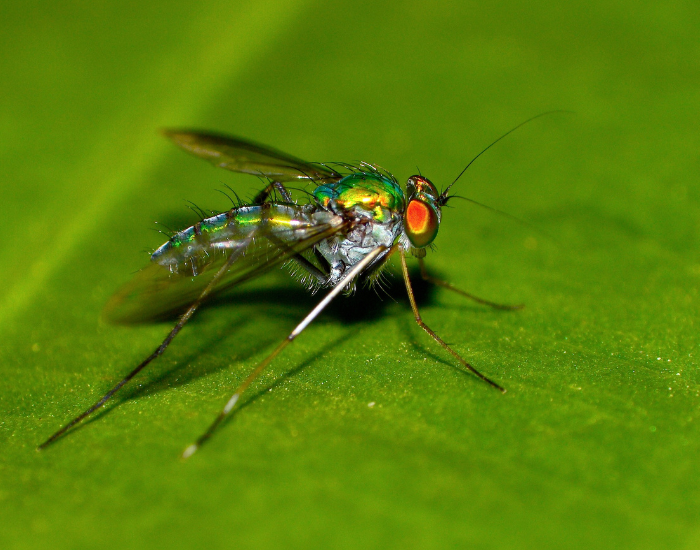
Bonus: Long-Legged Flies (Dolichopodidae)
These tiny metallic green predators glint on leaf surfaces in every garden I have surveyed. Long legged flies hunt mites, aphids, and other small insects. Watch a hedge for two minutes in June and you will spot dozens.
How the Fly Life Cycle Works
You don’t need to hike into a remote jungle to witness this biological phenomenon up close. Most people accidentally host a front-row masterclass right in their own homes. I’ll admit it’s happened to me a couple of times over the years: you forget to take out the rubbish containing raw chicken scraps on a warm summer week, and you return a few days later to a squirming mass inside the bin.
That unpleasant surprise is complete metamorphosis playing out in real time across four distinct life stages: egg, larva, pupa, and adult.
It begins when female flies deposit eggs directly into moist organic materials like feces, compost, or that forgotten household garbage. Depending on the ambient temperature, those eggs hatch within just 8 to 24 hours into legless Dipteran larvae—what we call maggots. These larvae feed continuously on decaying organic matter, molting three times as they rapidly gain size. Once fully grown, they migrate to a dry spot to pupate, hardening their last larval skin into a protective shell. Inside these pupae (which take various structural forms, including obtect and coarctate types), the insect undergoes a complete structural reorganization.
The transition to the adult stage arrives dramatically. I’ve watched freshly emerged adults pump fluid and air through their body to inflate their crumpled wings until they stiffen and lock into place. In warm weather, a common house fly can cycle from egg to adult in as little as 7 days, which is why immature flies stack up indoors far faster than most homeowners anticipate.
Fly Control That Actually Works
Early on in my entomology work, I realized that chasing individual flies with a spray can is a losing battle. Insecticide sprays might offer a brief moment of satisfaction, but they accomplish almost nothing long term. If you want to drop fly populations, you have to focus on eliminating local food sources and breeding grounds.
Start outdoors, where most household problems originate. Covering trash and using tightly sealed bins removes the single richest breeding site around any property. Clearing out standing water eliminates breeding grounds for mosquitoes and drain flies alike. If you keep a compost pile, managing it properly by turning it regularly and keeping it covered deters flies without needing a drop of chemical spray.
Next, focus on physical barriers. Maintaining tight window screens and keeping doors shut forms your first line of defense. (It’s the exact reason commercial kitchens mount heavy-duty air curtains over their loading doors). Flies also tend to return to the exact same resting sites over and over, so wiping down high-traffic door frames and light fixtures disrupts their daily routine.
This multi-pronged approach forms the core of integrated pest management (IPM): combining strict sanitation, physical exclusion, and targeted traps, while reserving chemical insecticides strictly as a last resort. Lastly, keep in mind that many flies easily travel farther than the boundaries of a single yard, so outdoor fly control works best when you coordinate with your neighbors.
Why Flies Deserve More Respect
Flies serve critical ecosystem functions such as decomposition and nutrient recycling. Maggots break down dead bodies and accelerate decomposition, returning nitrogen to soil within days rather than months. Some species lay their fly eggs in decaying plant material, cycling organic matter through leaf litter. Flies also act as scavengers, consuming carrion and waste that would otherwise pile up.
They also feed the food web. Swallows, bats, trout, and dragonflies all depend heavily on adult flies and larvae. Many flowers depend on flies for pollination, especially in colder climates where bees fly poorly. On a survey above the Arctic Circle, I watched flies do nearly all the pollination work for miles.
Frequently Asked Questions
Start with size, color, and location. Dark gray flies with four stripes indoors are house flies. Metallic blue or green flies near windows are blow flies. Tiny flies around fruit are fruit flies, while fuzzy flies on bathroom tile are drain flies. Where you find them narrows the answer as much as how they look.
Often yes, to the family level at least. Photograph the fly from the side and from above, focusing on the thorax pattern and mouthparts. Apps like iNaturalist and Seek handle common species well. Precise species identification within groups like fungus gnats still requires a specialist and a microscope.
House flies, fruit flies, blow flies, drain flies, and fungus gnats account for the vast majority of household fly complaints. Horse flies, stable flies, and mosquitoes dominate outdoor encounters. Cluster flies spike seasonally in autumn.
Check the proboscis first. The common house fly has a soft sponging mouthpart, while the similar-looking stable fly carries a rigid piercing one. Face flies look nearly identical to house flies but cluster around the eyes of cattle. Little house flies are smaller and hover in slow triangular patterns indoors..
Can You Name That Fly? 🪰
A 16-photo identification challenge — the wrong answers are deliberately tricky look-alikes from a similar group. Go back and change any answer before you score.
Which fly is this?
References:
Wiegmann, B. M., Trautwein, M. D., Winkler, I. S., Barr, N. B., Kim, J.-W., Lambkin, C., … Yeates, D. K. (2011). Episodic radiations in the fly tree of life. Proceedings of the National Academy of Sciences, 108(14), 5690–5695. https://doi.org/10.1073/pnas.1012675108
Nayduch, D., & Burrus, R. G. (2017). Flourishing in filth: House fly–microbe interactions across life history. Annals of the Entomological Society of America, 110(1), 6–18. https://doi.org/10.1093/aesa/saw083
Junqueira, A. C. M., Ratan, A., Acerbi, E., Drautz-Moses, D. I., Premkrishnan, B. N. V., Costea, P. I., … Schuster, S. C. (2017). The microbiomes of blowflies and houseflies as bacterial transmission reservoirs. Scientific Reports, 7, 16324. https://doi.org/10.1038/s41598-017-16353-x
Rader, R., Bartomeus, I., Garibaldi, L. A., Garratt, M. P. D., Howlett, B. G., Winfree, R., … Woyciechowski, M. (2016). Non-bee insects are important contributors to global crop pollination. Proceedings of the National Academy of Sciences, 113(1), 146–151. https://doi.org/10.1073/pnas.1517092112
Orford, K. A., Vaughan, I. P., & Memmott, J. (2015). The forgotten flies: The importance of non-syrphid Diptera as pollinators. Proceedings of the Royal Society B, 282(1805), 20142934. https://doi.org/10.1098/rspb.2014.2934
Wilkerson, R. C., Linton, Y.-M., Fonseca, D. M., Schultz, T. R., Price, D. C., & Strickman, D. A. (2015). Making mosquito taxonomy useful: A stable classification of tribe Aedini that balances utility with current knowledge of evolutionary relationships. PLoS ONE, 10(7), e0133602. https://doi.org/10.1371/journal.pone.0133602
Tomberlin, J. K., Mohr, R., Benbow, M. E., Tarone, A. M., & VanLaerhoven, S. (2011). A roadmap for bridging basic and applied research in forensic entomology. Annual Review of Entomology, 56, 401–421. https://doi.org/10.1146/annurev-ento-051710-103143