

If you have ever been to a whale watching tour, you know how special it is to lock sight with a gray whale or spot a breaching humpback whale. Killer whales, though, have always held a special place in my mind. Their intelligence, their culture, the way different pods develop entirely different hunting strategies, it all captivates me.
So when I was watching a documentary about killer whales one evening and the narrator casually mentioned “false killer whales,” I almost dropped my drink. False killer whales? How had I never heard of these marine mammals?
That question launched me into a deep dive through peer-reviewed marine mammal science journals, NOAA reports, and hours of footage. What I found was an animal so fascinating, so overlooked, and so threatened that I had to write about it. Here are 12 facts about the false killer whale (Pseudorca crassidens) that will change how you see the ocean.
1. They’re Not Whales at All… They’re Dolphins
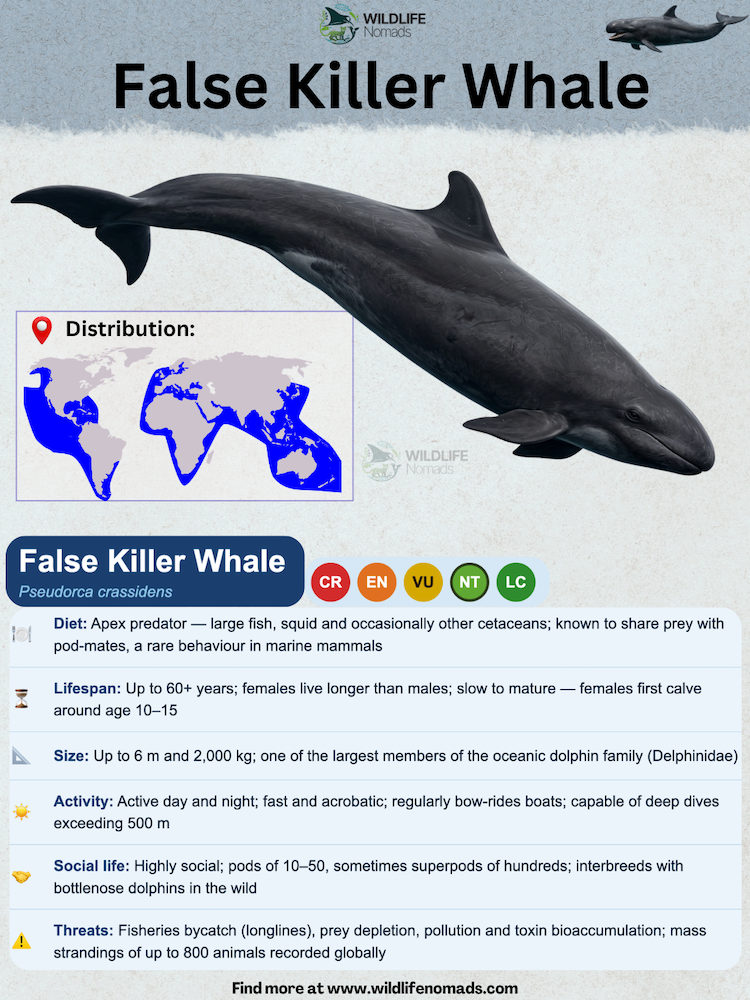
Let’s clear this up immediately. The false killer whale (Pseudorca crassidens) belongs to the family Delphinidae, making it one of the largest oceanic dolphins in the world’s oceans. They share this classification with killer whales (Orcinus orca), pilot whales, and other marine mammals you might not expect.
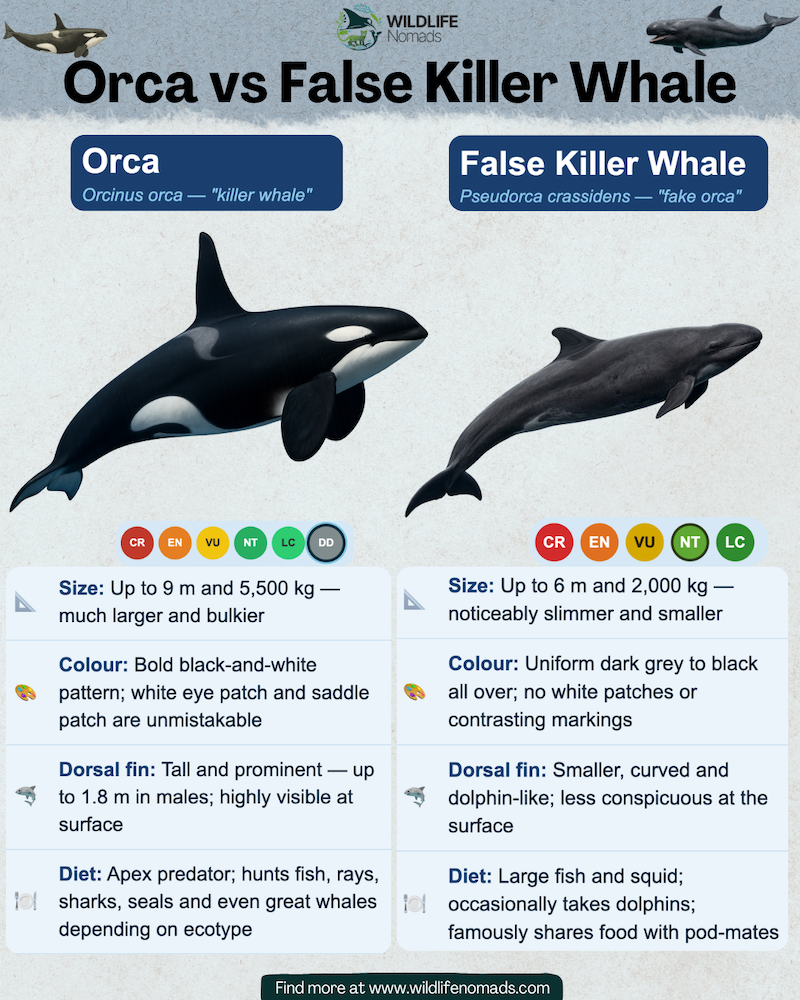
In fact, killer whales themselves aren’t true whales either. Both false killer whales and killer whales are oceanic dolphins, two species that confuse people with their common names. The false killer whale reaches up to 6 meters (about 20 feet) in length. Females are slightly smaller, and typically max out around 5 meters. By contrast, a killer whale can exceed 9 meters. Still, the false killer whale ranks as the third-largest member of this cetacean family.

2. Their Name Comes from a 180-Year-Old Fossil Skull
So why is it called a false killer whale? The answer involves a paleontologist, a swamp, and a very old skull. In 1843, a subfossil skull surfaced from the Lincolnshire Fens near Stamford, England. British biologist Richard Owen examined it and noticed striking physical similarities to the skull of the killer whale, Orcinus orca. He described it in 1846 as a new genus: Pseudorca, from the Greek “pseudo” meaning false.
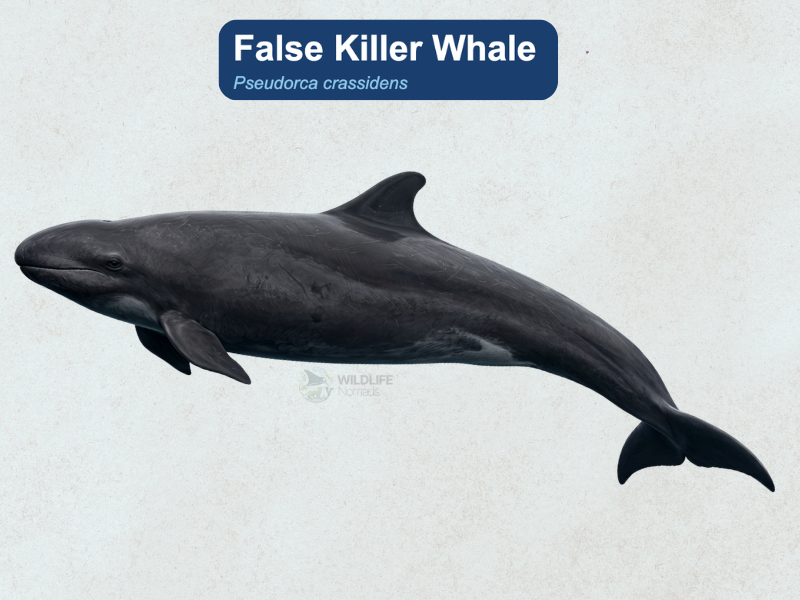
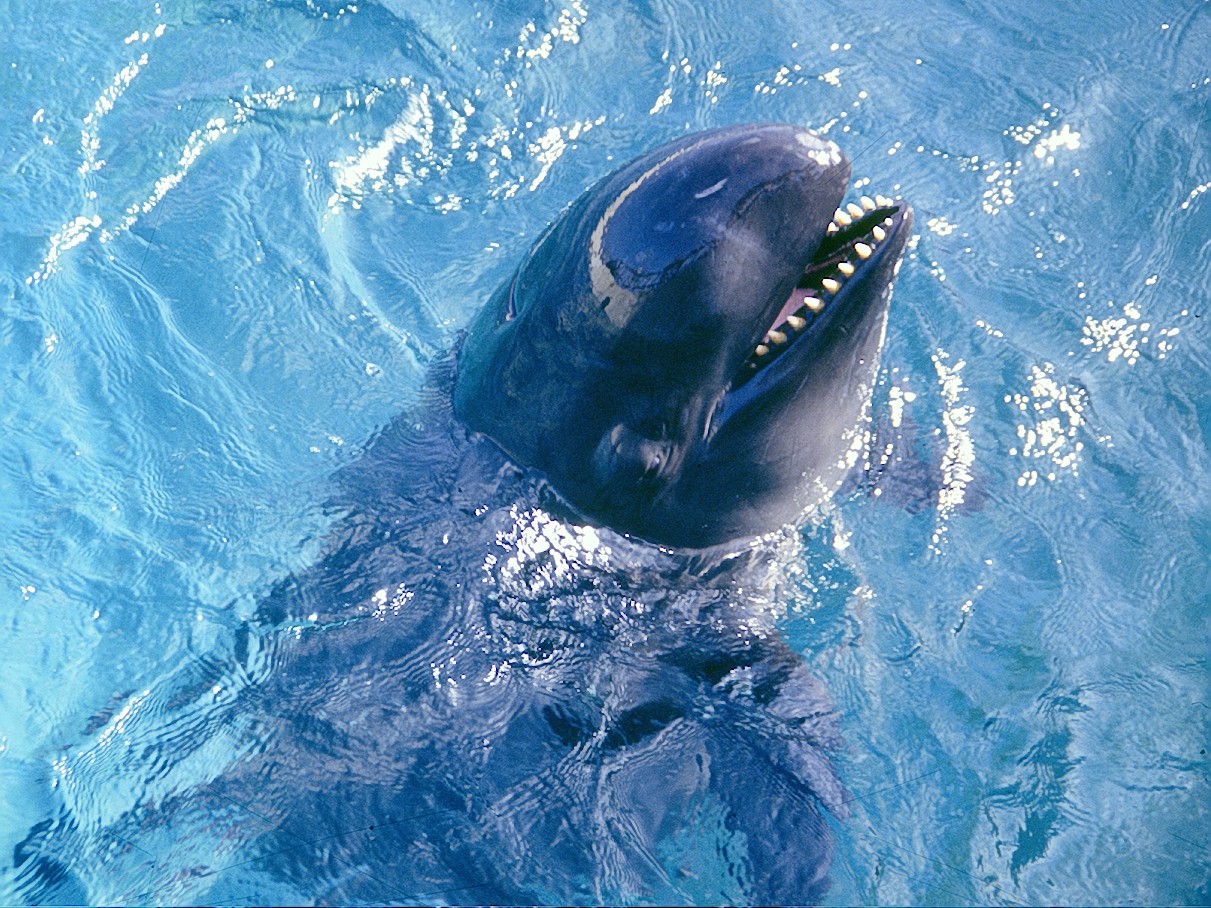
The species name, crassidens, means “thick-toothed.” So the false killer whale Pseudorca crassidens literally translates to “the false orca with thick teeth.” The resemblance is strictly skeletal. Externally, false killer whales look nothing like killer whales. They’re uniformly dark gray to black, with no white patches and a much smaller dorsal fin. Their natural history remained largely mysterious for decades after Owen’s description.

3. They Live in Every Ocean, But You’ll Rarely See Them
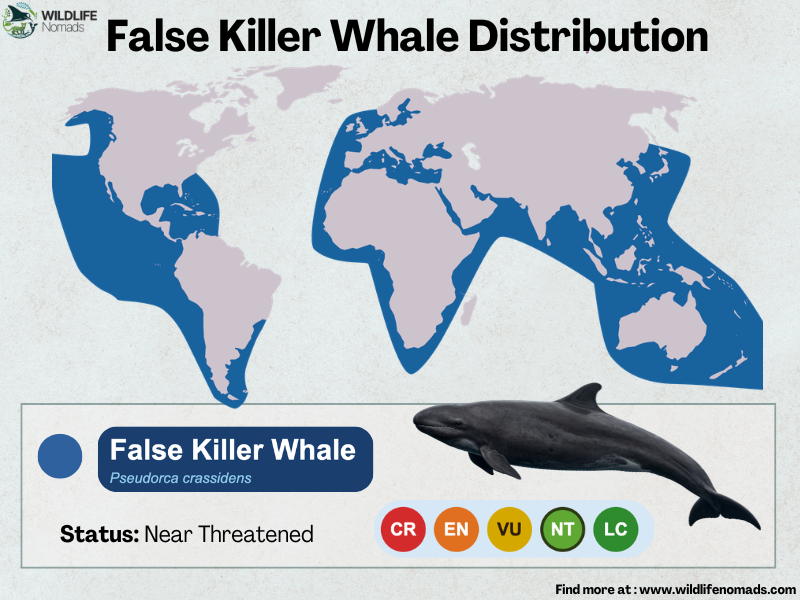
False killer whales are found across tropical and temperate waters worldwide. Their range spans the Pacific Ocean, the Atlantic, and the Indian Ocean. False killer whales have been found in the eastern tropical Pacific, the southwestern Atlantic Ocean, and throughout tropical regions near the equator. The distribution of false killer whales spans every major warm ocean basin. They also appear in warm temperate waters at higher latitudes. However, the distribution of false killer whales skews heavily toward deep, offshore environments.
These aren’t coastal animals. The distribution of false killer whales favors open ocean habitat far from shore, which makes sightings rare and means false killer whales are found far less often than coastal species. Where do false killer whales live? Essentially everywhere warm and deep. They occupy Hawaiian waters, the west coast of South America, temperate waters off Japan, and the marine environment surrounding most oceanic islands.
4. Hawai’i Is Ground Zero for False Killer Whale Research
Three distinct populations of false killer whales inhabit the Hawaiian Islands. The main Hawaiian Islands insular population stays year-round near the main Hawaiian Islands, rarely venturing far from shore. The Northwestern Hawaiian Islands population occupies waters around the Northwestern Hawaiian Islands. A third pelagic population roams the open ocean surrounding the Hawaiian Islands in deeper offshore waters.
Each pelagic population and insular group faces different threats. The main Hawaiian Islands insular population has drawn the most attention from marine mammal science researchers. Photo identification data collected over two decades has revealed that these false killer whales show remarkable site fidelity. They make inter island movements between the main Hawaiian Islands but don’t mix with the pelagic population or the Northwestern Hawaiian Islands population. This isolation makes the main Hawaiian Islands insular false killer whales genetically distinct, and extremely vulnerable.
5. They Share Food — Even with Humans
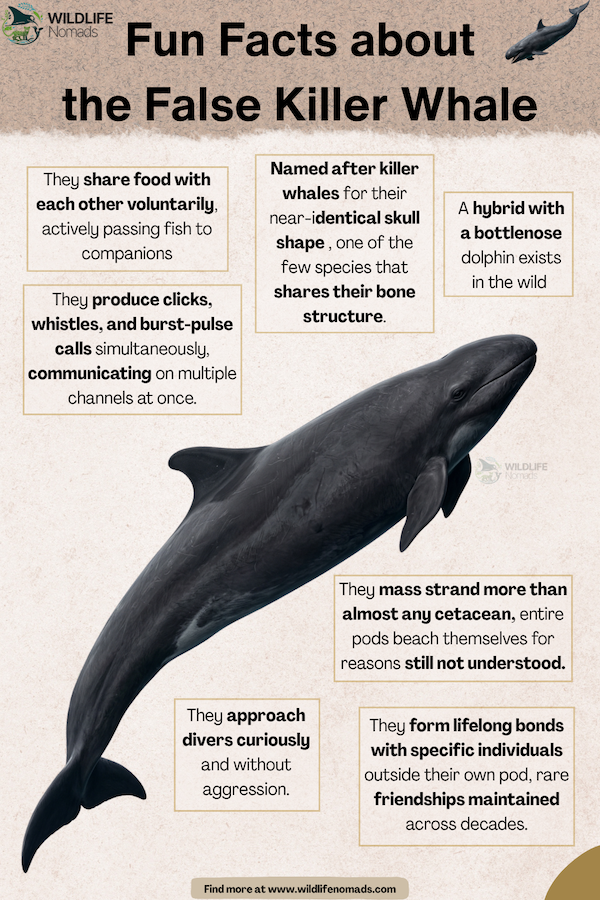
Here’s where false killer whales get truly extraordinary. Pod members routinely share prey with each other during hunts. A false killer whale will catch a large fish, tear off a chunk, and pass it to a companion. This food-sharing behavior isn’t just within families. False killer whales have been documented offering fish to human divers and snorkelers. Imagine being underwater and having a 600-pound dolphin swim up and push a freshly caught tuna toward you.
That’s not aggression. That’s generosity. This feeding behavior hints at complex social bonds within pods. Pod members stay together for years, sometimes over 15 years, forming association patterns that marine mammal science researchers compare to the social structures of killer whales and sperm whales. Their feeding habits center on large pelagic fish, tuna, mackerel, mahi-mahi, marlin, and squid.
6. They Form Genuine Friendships with Bottlenose Dolphins… But Still Eat Them
False killer whales don’t just tolerate other species. They actively seek them out. Research published in marine science journals has documented long-term bonds between false killer whales and common bottlenose dolphins. These aren’t random encounters. Specific individuals from both species choose each other as companions, swimming together for over five years across distances exceeding 650 kilometers. Scientists tracking these mixed groups observed that false killer whales and bottlenose dolphins engaged in coordinated travel, play, and even foraging.
The relationship between these two species goes even further. False killer whales and bottlenose dolphins can hybridize. The offspring, informally called a “wholphin,” has been documented in captivity. This interspecies bond is rare among marine mammals and speaks to the social flexibility of false killer whales. Members of the dolphin family rarely form such lasting cross-species alliances.
7. They’re Prone to Devastating Mass Strandings
False killer whales hold a grim record in marine biodiversity records. The largest known cetacean mass stranding involved over 800 false killer whales beaching at Mar del Plata, Argentina, in 1946. Mass strandings of false killer whales occur more frequently than in most other dolphin species. Scientists believe their tight social bonds drive this pattern. When one individual becomes disoriented, possibly due to underwater noise, illness, or environmental contaminants, the entire pod follows it ashore.
Mass strandings have been recorded across the Pacific Ocean, the Atlantic, and in Hawaiian waters. Each event can devastate local populations. For the already-depleted main Hawaiian Islands insular population, even a single mass stranding event involving a few individuals could push the group closer to extinction. Understanding what triggers these events remains a significant conservation issue for marine science.
8. Fishing Gear Is Their Biggest Killer
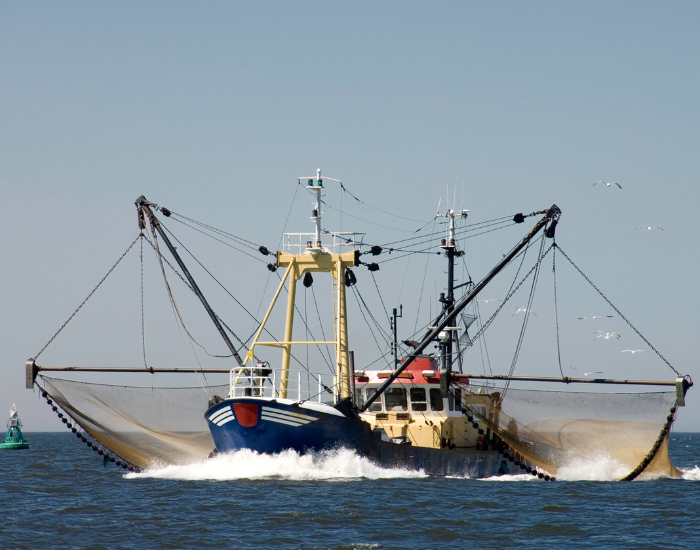
The most urgent threat false killer whales face comes from fishery interactions. False killer whales are intelligent predators. They’ve learned to steal fish directly off longlines, a behavior called depredation. It’s clever but dangerous. In the process, false killer whales get hooked on fishing lines or entangled in fishing gear. The result: serious injury or death. In Hawaiian waters, dorsal fin and mouthline scarring from fishing gear appears on a disturbingly high percentage of individuals. Killer whales in other regions face similar gear entanglement, but the false killer whale population is far smaller and less resilient.
NOAA researchers estimate that fishery interactions cause unsustainable levels of serious injury and mortality in the main Hawaiian Islands insular population. Each incident of serious injury compounds the crisis. The deep set longline fishery targeting tuna and the broader longline fleet operating around the Hawaiian Islands pose the greatest risk. Every false killer whale lost to fishing gear represents a significant blow to a population of fewer than 170 animals.
9. The Hawaiian Population Is Endangered… and Still Declining
The conservation status of the false killer whale Pseudorca crassidens varies by population. Globally, the IUCN lists the species as Near Threatened. However, the conservation status of the main Hawaiian Islands insular false killer whales tells a far more dire story. In 2012, NOAA listed this distinct population segment as endangered under the US Endangered Species Act. Abundance estimates from photo identification data suggest the false killer whale population had dropped to fewer than 139 individuals as of 2022.
The false killer whale population has declined steadily despite protections under the Endangered Species Act and the Marine Mammal Protection Act. NOAA published a draft recovery plan in 2021, later finalized as a comprehensive recovery plan with specific actions: designating critical habitat around the main Hawaiian Islands, reducing fishery interactions, and funding research.
Despite these conservation efforts, endangered false killer whales in the main Hawaiian Islands insular population continue to face serious injury from fishery interactions and declining prey availability. Both pelagic false killer whales and the Northwestern Hawaiian Islands population remain classified as threatened species under different management frameworks. These threatened species require their own targeted protections.
10. They’re Built Like Torpedoes with an Oversized Personality
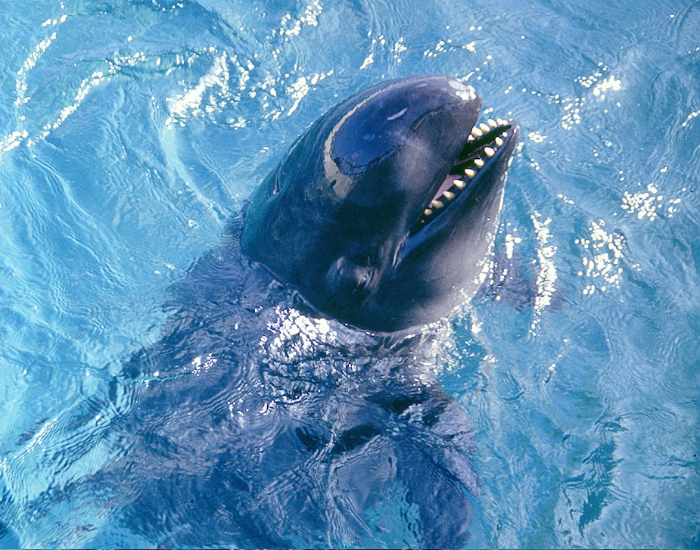
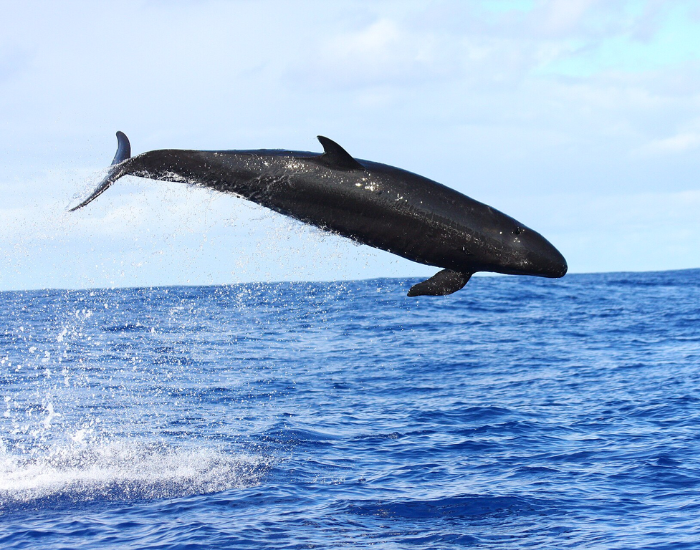
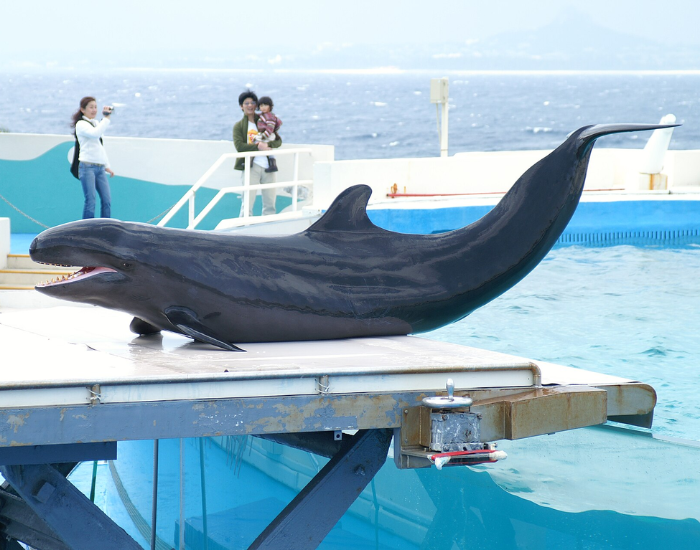
The false killer whale characteristics that first strike you are physical. They have a sleek, elongated body — dark gray to black — with a distinctive rounded head and no beak. The dorsal fin sits mid-back, slightly falcate, and smaller than you’d expect. Their pectoral flippers have a unique forward-pointing “elbow” bend found in no other dolphin species. But their personality overshadows their appearance. False killer whales are fast, acrobatic, and intensely curious.
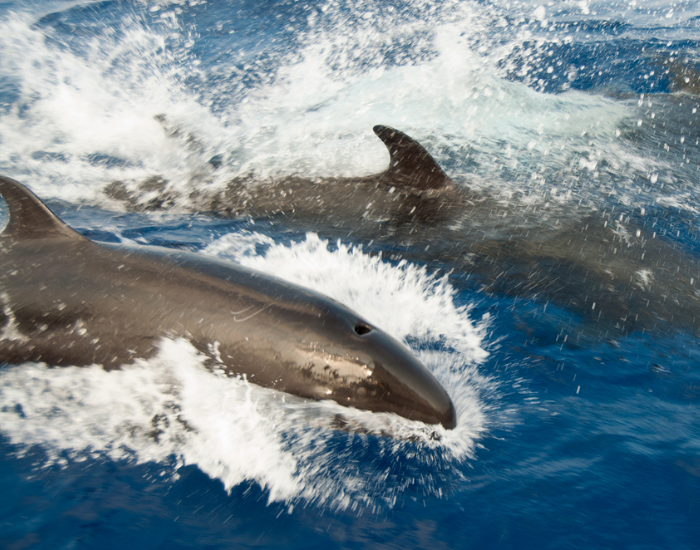
They breach, spy-hop, and bow-ride with obvious enthusiasm. Divers who’ve encountered them describe an animal that approaches without fear, maintains eye contact, and seems genuinely interested in human activity. False killer whales reach sexual maturity between ages 8 and 14. Female false killer whales reproduce slowly, calving only every 6 to 7 years. This slow reproduction rate compounds the population crisis. The false killer whale lifespan stretches to around 60 years for females, making each individual’s survival critical.
11. The False Killer Whale Compete with Large Sharks
False killer whales sit near the top of the marine food chain. Their diet overlaps with large sharks, billfish, and other apex predators. Groups of false killer whales have been observed harassing and even attacking large sharks in the open ocean. Their cooperative hunting style, similar to that of killer whales, gives them an edge that solitary predators lack.
In the same waters, false killer whales occasionally interact with other marine mammals. They’ve been seen alongside pilot whales, sperm whales, and various migratory species, sometimes even traveling in the same species groups. These encounters are typically non-aggressive. However, false killer whales do occasionally prey on smaller cetaceans and other species of marine life. This predatory flexibility makes them adaptable hunters, though it also brings them into direct competition with commercial fisheries chasing the same large pelagic fish.
12. Their Future Depends on What Happens in the Next Decade
The false killer whale (Pseudorca crassidens) population around the main Hawaiian Islands represents one of the most pressing conservation challenges in marine mammal science today. Killer whales attract global attention, yet false killer whales face equally dire circumstances with far less public awareness. With abundance estimates hovering around 139 individuals in the main Hawaiian Islands insular population, every source of serious injury matters. NOAA’s recovery plan identifies reducing fishery interactions as the top priority.
The agency has established take reduction measures, including seasonal closures of longline fishing areas around the Hawaiian Islands. Critical habitat has been formally designated. However, enforcement remains inconsistent, and the deep set longline fishery continues to operate in areas where false killer whales forage.
FAQs about False Orcas
False killer whales are not aggressive toward humans. They’re highly social marine mammals known for approaching divers with curiosity and even offering them food. However, they are apex predators. False killer whales do hunt smaller cetaceans occasionally and compete with large sharks. Toward people, though, they’re consistently gentle and inquisitive.
Yes. False killer whales have been documented preying on smaller cetaceans, though this behavior appears uncommon. Their primary diet consists of large pelagic fish and squid. When they do target other marine mammals, it’s typically smaller oceanic dolphins rather than species like bottlenose dolphins, with whom they form long-term social bonds.
By all documented accounts, yes. False killer whales rank among the friendliest marine mammals toward humans. They share food with divers, approach boats willingly, and display playful, curious behavior. Pod members also demonstrate remarkable loyalty to each other, staying together for years and supporting injured companions.
There are limited documented cases of killer whales (Orcinus orca) attacking false killer whales. Both species are apex predators, and their ranges overlap in many tropical and temperate waters. However, direct predation by killer whales on false killer whales appears rare. Killer whales generally occupy different ecological niches — favoring cooler waters while false killer whales prefer tropical regions.
The false killer whale (Pseudorca crassidens) is one of the ocean’s most charismatic, intelligent, and underappreciated animals. Yet most people have never heard of them. Unlike killer whales, which star in countless documentaries, false killer whales remain in the shadows. If you’ve read this far, you now know more about false killer whales than most marine biologists did just 30 years ago.
References:
Baird, R. W., Webster, D. L., Mahaffy, S. D., McSweeney, D. J., Schorr, G. S., & Ligon, A. D. (2008). Site fidelity and association patterns in a deep-water dolphin: Rough-toothed dolphins (Steno bredanensis) in the Hawaiian Archipelago. Marine Mammal Science, 24(3), 535–553. https://doi.org/10.1111/j.1748-7692.2008.00201.x
Baird, R. W., Mahaffy, S. D., Gorgone, A. M., Cullins, T., McSweeney, D. J., Oleson, E. M., Bradford, A. L., Barlow, J., & Webster, D. L. (2015). False killer whales and fisheries interactions in Hawaiian waters: Evidence for sex bias and variation among populations and social groups. Marine Mammal Science, 31(2), 579–590. https://doi.org/10.1111/mms.12177
Fortune, S. M. E., Cheng, X., Holmes, K., & Trites, A. W. (2025). Cooperative foraging between dolphins and fish-eating killer whales. Scientific reports, 15(1), 42897. https://doi.org/10.1038/s41598-025-22718-4
Galatius, A., Racicot, R., McGowen, M., & Olsen, M. T. (2020). Evolution and Diversification of Delphinid Skull Shapes. iScience, 23(10), 101543. https://doi.org/10.1016/j.isci.2020.101543
Martín López, L. M., Miller, P. J., Aguilar de Soto, N., & Johnson, M. (2015). Gait switches in deep-diving beaked whales: Biomechanical strategies for long-duration dives. Journal of Experimental Biology, 218(9), 1325–1338. https://doi.org/10.1242/jeb.106013
NOAA Fisheries. (2021). Final Recovery Plan and Recovery Implementation Strategy for the Main Hawaiian Islands Insular False Killer Whale Distinct Population Segment. https://www.fisheries.noaa.gov/resource/document/final-recovery-plan-and-recovery-implementation-strategy-main-hawaiian-islands
Badger, J. J., Baird, R. W., Johnson, D. S., Bradford, A. L., Mahaffy, S. D., Kratofil, M. A., Cullins, T., Currie, J. J., Stack, S. H., & Oleson, E. M. (2025). Accounting for spatiotemporal sampling bias in a long-term dataset establishes a decline in abundance of endangered false killer whales Pseudorca crassidens in the main Hawaiian Islands. Endangered Species Research. https://doi.org/10.3354/esr01423
Zanardo, N., Parra, G. J., & Möller, L. M. (2022). Evidence of resident coastal population(s) of false killer whales (Pseudorca crassidens) in northern Australian waters. Frontiers in Marine Science, 9, 1067660. https://doi.org/10.3389/fmars.2022.1067660




_(http-www.bluekaymahahual.com)_-_panoramio.jpg)
.jpg)