Meet a Flightless Bird
The ostrich, known as the world’s largest living bird (with the cassowary coming close), is one of the most fascinating and misunderstood birds on the planet. Belonging to the Struthionidae family, ostriches are part of the ratite group, which also includes emus, kiwis, and rheas.
This article is your go-to source for ostrich facts, covering their physical characteristics, behavior, habitat, diet, and more.
Unlike their avian relatives, flightless birds like ostriches have evolved to thrive on land, losing the ability to fly over time. Ostriches stand out from other birds due to their exceptional size, powerful legs, and unique adaptations such as keen eyesight and speed. With its towering height, exceeding that of an average man by about one meter, powerful legs, and unique behaviors, this flightless bird native to Africa is packed with surprises. In this guide, we’ll uncover 17 interesting facts about ostrich birds that might just change the way you see them. Let’s dive into the wild world of the ostrich!
1. The Largest Bird on Earth
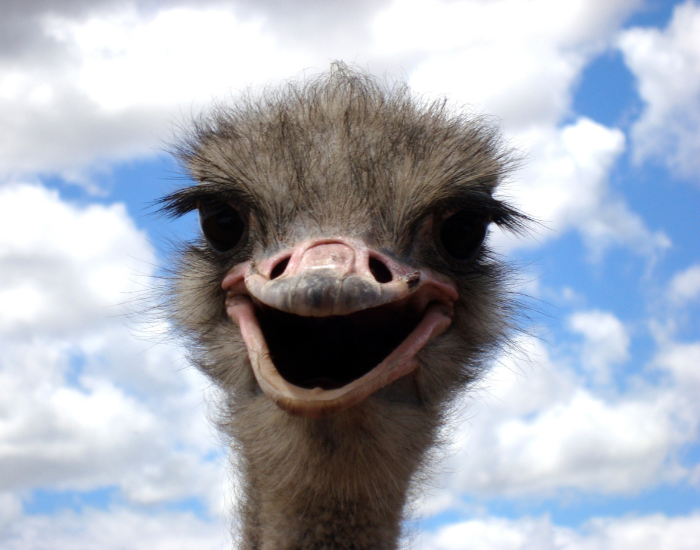
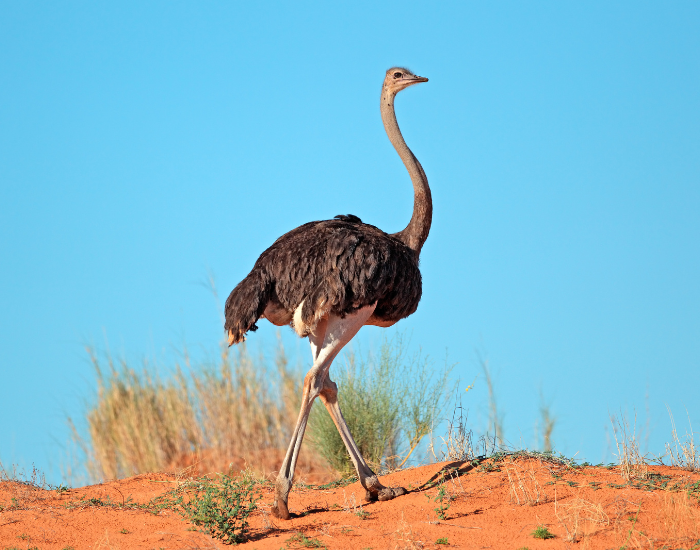
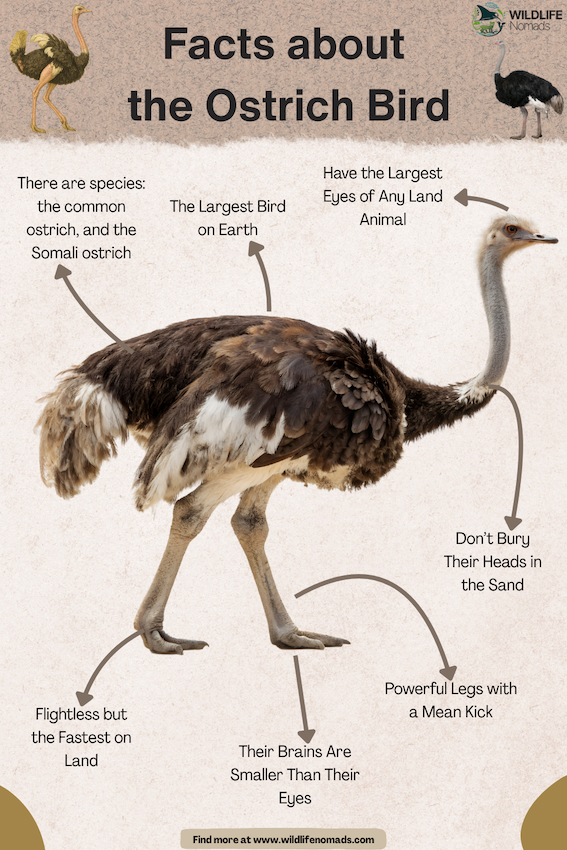
When it comes to size, there is a lot to say about the size of the ostrich, which is the world’s largest bird. Standing up to 9 feet (2.7 meters) tall and weighing as much as 320 pounds (145 kg), the ostrich is the largest living bird on the planet. Despite their size, these birds are surprisingly agile and fast. The ostrich’s eyes are among the largest of any land animal, measuring two inches across—significantly larger than its brain. The ostrich’s eyes are crucial for survival, providing them with excellent eyesight to detect predators in their desert habitats.
2. Flightless but Lightning Fast
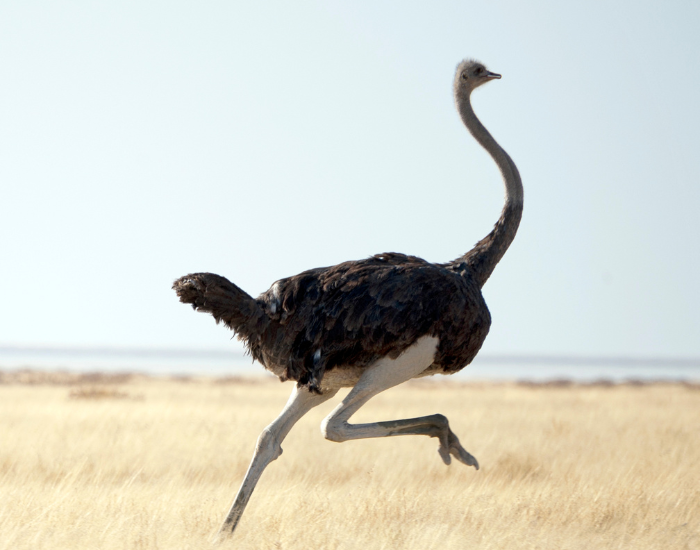
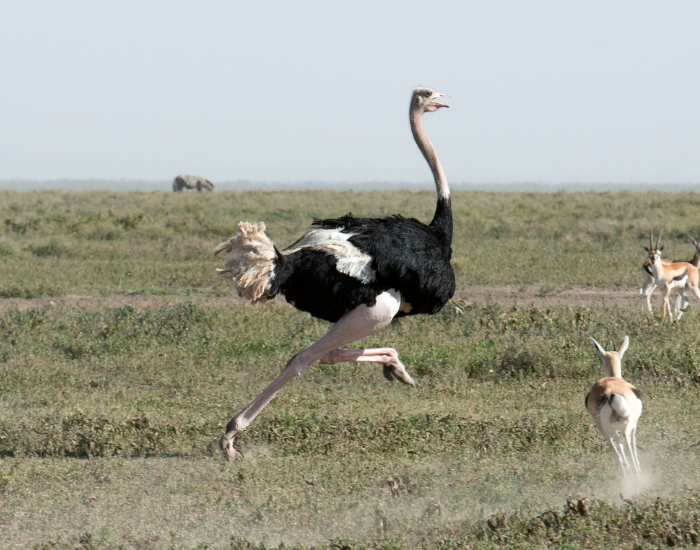
Ostriches may not fly, but they more than make up for it on land. Unlike birds adapted for flying, ostriches lack certain features such as hollow bones. The absence of hollow bones makes their skeletons heavier and contributes to their inability to achieve flying. They can cover up to five meters in a single stride. They are the fastest animals in the world and the fastest bird on foot, capable of sprinting up to 43–45 mph (70 km/h) in short bursts and maintaining speeds of around 45 mph (72 km/h). Their long, muscular legs are built for speed and distance.
3. The Largest Eyes on Land (And Why the Brain is So Small)
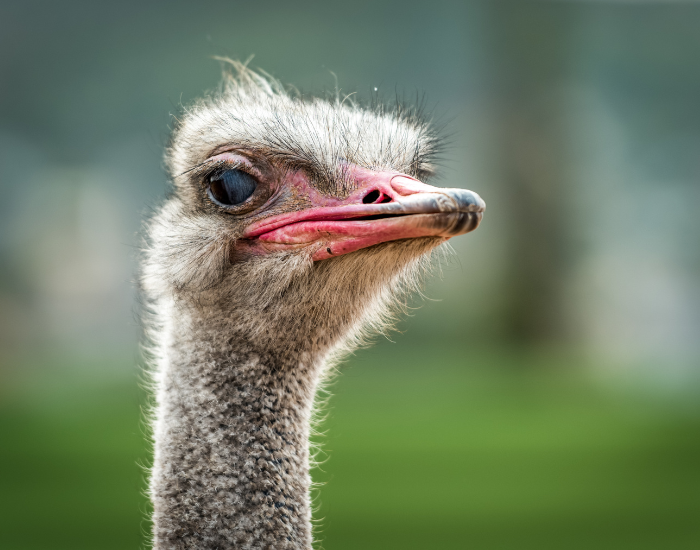
One of the most visually striking facts about the ostrich is its exceptional eyesight. Each eye measures about 2 inches (5 cm) in diameter, making them the largest eyes of any land animal (relative to body size). This excellent vision allows them to spot predators from vast distances across their open habitats.
Despite their huge size and sharp vision, ostriches have relatively small brains. In fact, the size of an ostrich brain is smaller than one of its eyes. This significant difference in size has led to the popular, though incorrect, myth that ostriches aren’t very intelligent. However, their highly successful survival skills. relying on speed and vision, prove otherwise. This unusual anatomy means ostriches prioritize detection over complex processing, setting them apart from many other bird species.
4. Powerful Legs with a Mean Kick
An ostrich’s strong legs aren’t just for running, they’re also formidable weapons. Ostriches can deliver kicks strong enough to deter lions. Additionally, they can defend against approaching lions or leopards using their powerful legs. Each foot has two toes, with the larger one sporting a claw that acts almost like a hoof or weapon in self-defense.
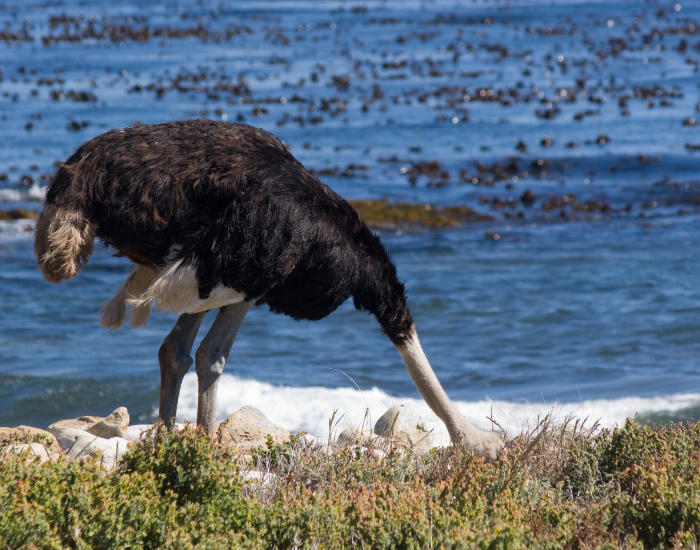
5. Ostriches Don’t Bury Their Heads in the Sand
Let’s bust a myth. Ostriches do not actually put their head in the sand. This misconception likely arose from their behavior of lying low and stretching their necks flat on the ground when they feel threatened, which can look like head-burying from a distance.
6. They Lay the Largest Eggs in the World
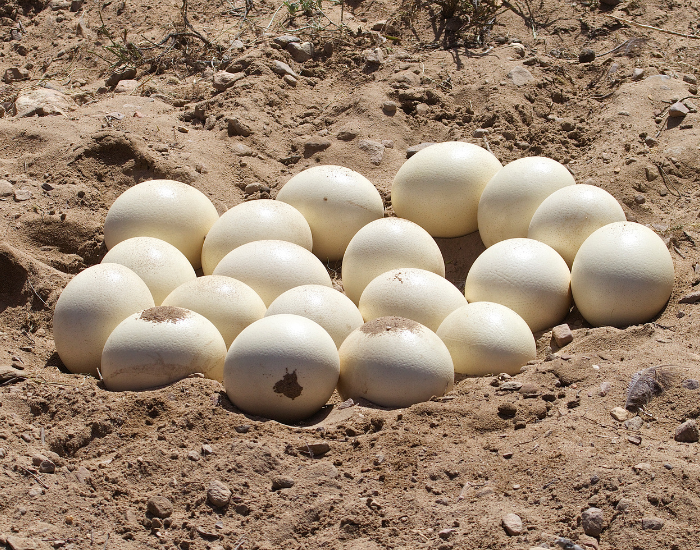
It’s no surprise that the largest bird lays the largest egg, known as the ostrich egg. Ostrich eggs weigh about 3 pounds (1.4 kg) and are roughly the size of 24 chicken eggs. The shells are so thick they require a drill or hammer to crack open.
7. Ostriches Have a Unique Temperament
Ostrich temperament can vary, but they are generally wary, curious, and occasionally aggressive, especially during breeding season when female ostriches are choosy and take the lead in the mating chase, showcasing the males’ stamina and speed. Domesticated ostriches have been known to interact well with humans, but wild ostriches will defend themselves fiercely.
8. They Can Survive Without Water for Days
Ostriches are perfect desert animals. They have adapted to arid climates, ostriches can go several days without water by extracting moisture from the plants they eat. However, they will drink and bathe in water when it is available.
9. A Group of Ostriches Is Called a Herd
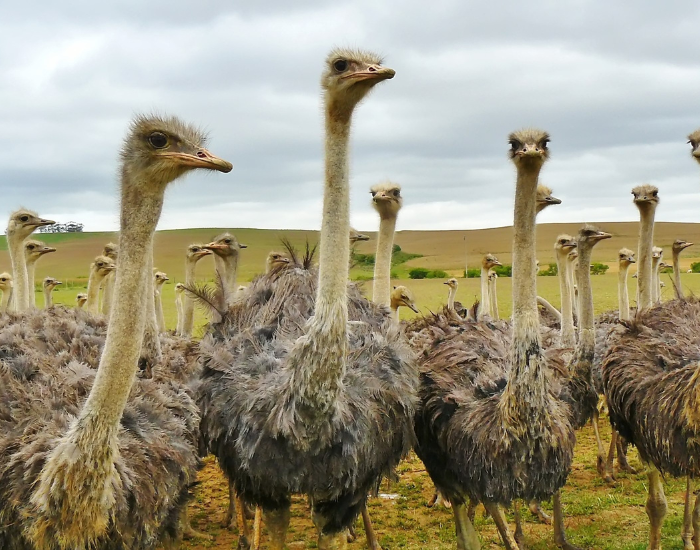
Ostriches are social animals that often live in groups called herds, flocks, or sometimes even “congregations.” They commonly live near grazing animals such as wildebeest, antelopes, and zebras, benefiting from a symbiotic relationship where the grazers stir up insects for the ostriches and the ostriches provide a warning system against predators. These herds can consist of 5 to 50 birds and provide safety in numbers from predators. Within these groups, a dominant male competes for control over females, referred to as hens. The dominant male primarily mates with one female, while the other hens also contribute by laying eggs in a communal nest, showcasing a collective breeding strategy.
10. Their Wings Serve Important Purposes
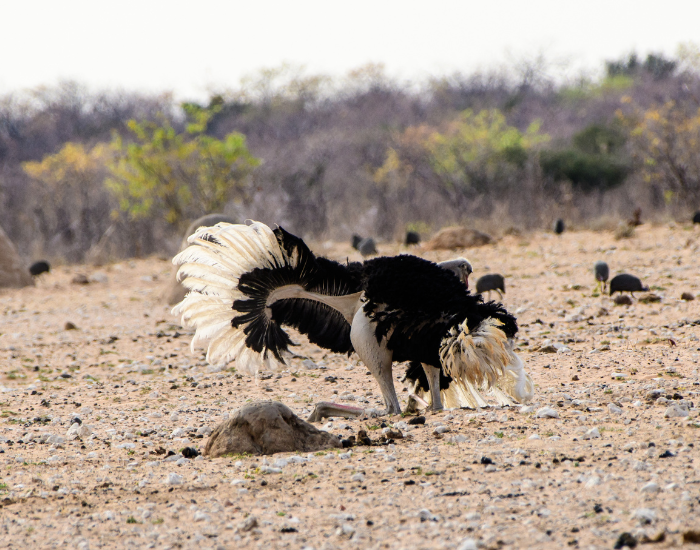
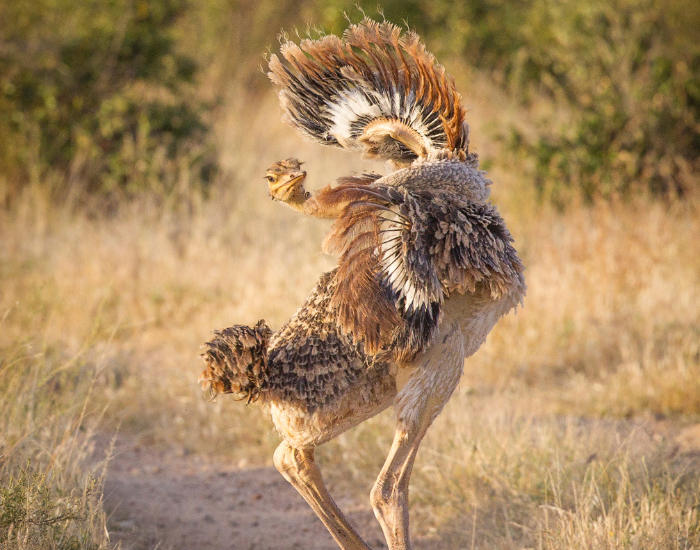
Even though ostriches can’t fly, their short wings are far from useless. They use them for balance when running, mating displays, and shading their chicks. Wings are also used in threat displays to appear larger and more intimidating.
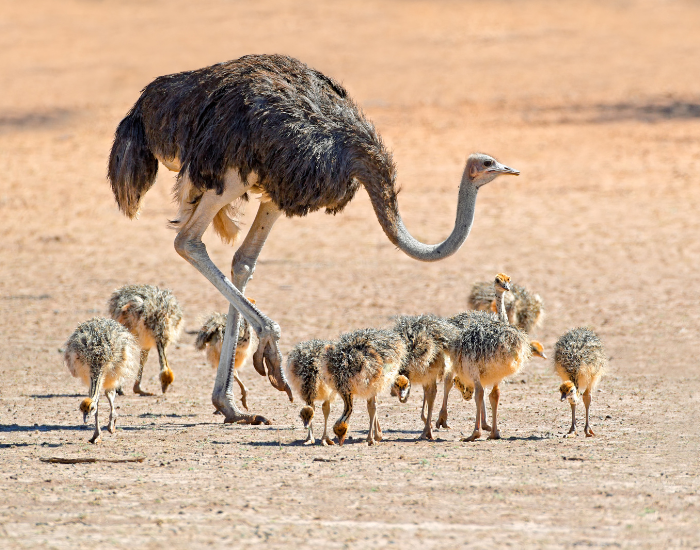
Ostrich chicks hatch fully feathered and are ready to run immediately after they emerge from their eggs, showcasing their adaptability and survival skills from a young age.
11. Defense Mechanisms of the Ostrich
Ostriches are equipped with several defense mechanisms to protect themselves from predators. Their powerful legs and sharp claws are their primary weapons, capable of delivering dangerous kicks with great force. These long legs not only help them run at high speeds but also serve as formidable tools for self-defense.
In addition to their physical prowess, ostriches use their wings for balance and steering while running, making it more challenging for predators to catch them. When threatened, they often lie low to the ground, using their feathers to blend in with the surrounding environment, a behavior that can make them appear as if they are burying their heads in the sand.
12. Breeding, Mating Rituals, and Communal Nesting
Breeding and mating rituals in ostriches are nothing short of a spectacle. Males perform a unique dance involving wing-flapping, head-swaying, and dramatic postures to attract females. It’s a theatrical display that rivals any bird-of-paradise performance.
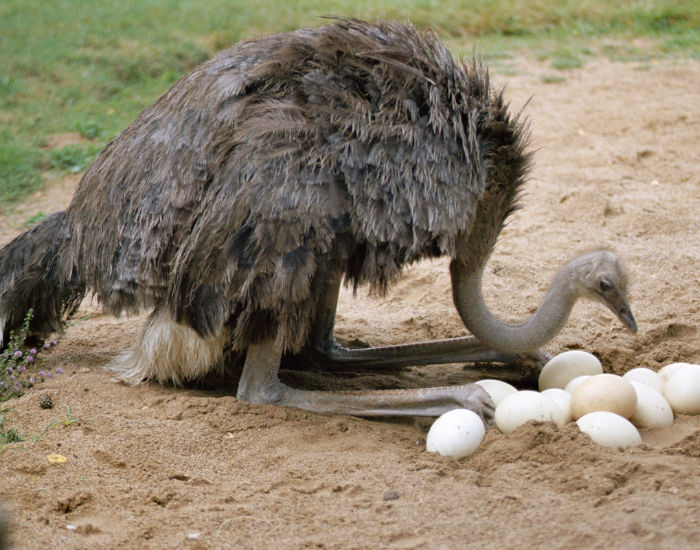
The dominant male, often the most impressive dancer, will mate with several females, who then lay their eggs in a communal nest. This nest is a shallow depression in the ground, and the dominant female lays her eggs in the center (the safest position), while other females place theirs around the edges.
Once the eggs are laid, incubation duties are shared. The male ostrich takes on the primary role of incubating the eggs at night, his black feathers providing better camouflage in the dark. The dominant female takes over during the day, using her lighter plumage to blend with the sandy soil. This shared responsibility ensures the eggs are kept at a consistent temperature for up to 42 days. During this period, the male and female defend the nest against predators, using their powerful legs and sharp claws to ward off any threats.
After the chicks hatch, the male ostrich continues to play a crucial role, teaching them essential survival skills and protecting them from predators. Ostrich eggs are the largest of any bird species, weighing around 3 pounds (1.4 kg) and requiring significant effort to crack open.
13. Their Memory May Be Better Than We Thought
While ostriches are often mocked for having tiny brains, recent research suggests their memory and problem-solving abilities are underestimated. They can recognize familiar humans, navigate vast distances, and remember routes to water sources.
14. Ostrich Feathers Were Once High Fashion
In the 19th and early 20th centuries, ostrich feathers were a prized luxury fashion item, especially in Europe. Ostrich farming became a booming industry to meet the demand for hats and accessories.

15. There are two Ostrich Species
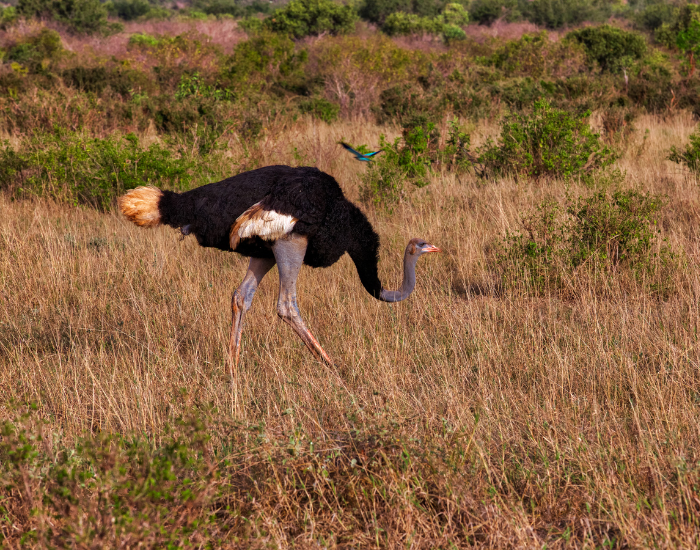
There are two living species of ostriches: the common ostrich (Struthio camelus) and the Somali ostrich (Struthio molybdophanes). Known for their long legs, powerful thighs, and excellent eyesight, ostriches can reach speeds of up to 45 miles per hour and deliver dangerous kicks to deter predators.

Habitat and Distribution
Ostriches thrive in diverse habitats such as savannahs, grasslands, and open woodlands. Native to Africa, ostriches live in sub-Saharan regions, including the southern Sahara, and parts of East and Southern Africa. Small populations also exist in Australia due to human introduction. The common ostrich resides in sub-Saharan regions, while the Somali ostrich is found in the Horn of Africa. These birds prefer areas with low vegetation, allowing them to run freely and spot predators from a distance. The coloration of their feathers helps them blend into environments with sandy soil, providing camouflage to evade predators.

Diet and Foraging Habits
Ostriches have a varied diet that includes plants, seeds, and small insects. They are opportunistic feeders, often foraging for food in the early morning and late afternoon. One fascinating aspect of their diet is their consumption of small stones, which help grind and digest food in their gizzards. This adaptation allows them to extract maximum nutrients from their plant-based diet. Ostriches are also known to eat small animals and insects, making them omnivores. Their foraging habits are influenced by the availability of food and water, and they can travel long distances to find sustenance.
Conservation Status of Ostriches
The conservation status of ostriches varies by region and species. While the common ostrich is not currently endangered, it faces threats from habitat loss, hunting, and climate change. The Somali ostrich, however, is classified as vulnerable due to habitat degradation and hunting pressures. Conservation efforts are in place to protect ostrich populations, including habitat preservation, anti-poaching measures, and breeding programs in ostrich farms and sanctuaries.
The Ostrich Is More Than Just a Fast Bird
From their incredible size and speed to their fascinating anatomy and misunderstood brain, ostrich birds are among the most remarkable species in the avian world. Unlike other flightless birds, which evolved alternative adaptations to escape predation, ostriches have developed the ability to run at high speeds as a key survival trait. They create a communal nest where females lay all the eggs collectively. The chicks hatch fully feathered and ready to walk shortly after birth. Whether you’re intrigued by the size of an ostrich’s brain or simply amazed by their massive eggs, there’s no denying these birds are evolutionary marvels.
So next time you think of an ostrich, don’t just picture a bird that can’t fly, picture a resilient survivor, a speedster, and a female ostrich that plays a crucial role in their fascinating mating rituals and communal parenting.
Where to Go for the Best Ostrich Sightings in Africa
For travellers hoping to spot ostriches in the wild, a small number of parks offer exceptional viewing thanks to their vast open landscapes and healthy populations. The Serengeti and Maasai Mara are the most reliable places to encounter ostriches year-round, while Etosha, Kgalagadi, and Kruger provide equally rewarding sightings in southern Africa. These parks are ideal for wildlife-focused safaris, and below, you’ll find curated safari experiences to help you explore these regions with local experts.
This blog is reader-supported. When you buy experiences through links listed on this site, we may earn an affiliate commission.