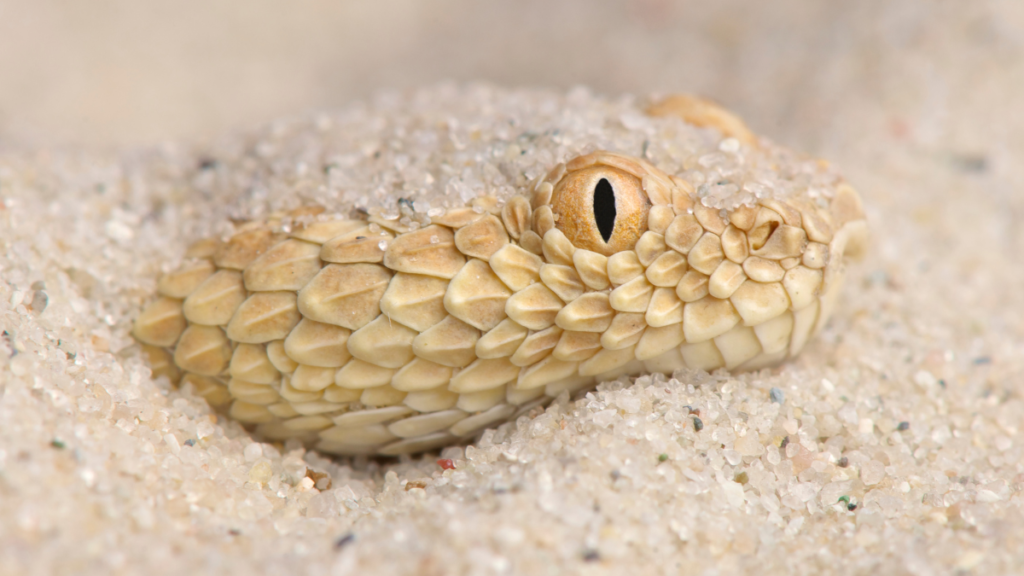
Deserts may look empty, but they’re full of life. From the speedy roadrunner to the hardy desert tortoise and camel, meet the animals that survive and thrive in extreme heat.
The first time you step into a desert, the silence is what hits you first, but as any field biologist will tell you, that silence is an illusion.
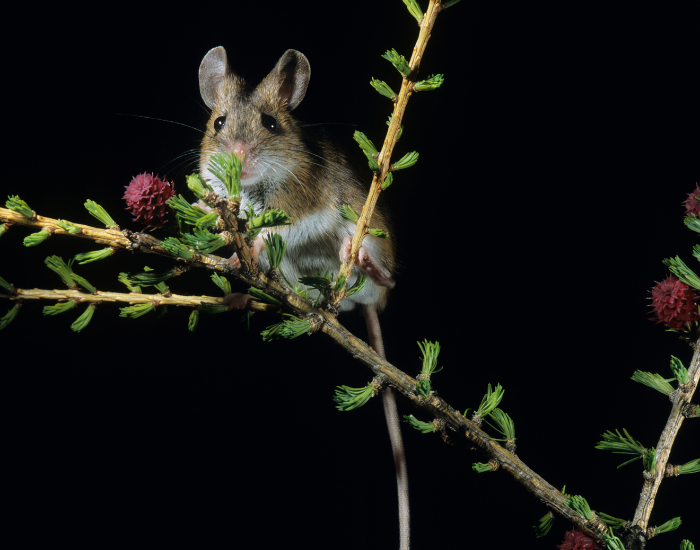
I’ve spent weeks trekking through the Baja California Desert and the arid heart of Australia, and let me tell you: the heat is brutal. During my undergrad, I joined a field team from Terra Peninsular for a conservation project in Baja. Our goal? To find the San Quintín kangaroo rat (Dipodomys gravipes), a species that was thought to be extinct for 30 years before being rediscovered in 2017.
We spent two weeks setting camera traps and trekking through sand that felt like it was baking our boots. Even though we didn’t spot the “ghost” on that specific trip, the experience marked me. It made me respect the sheer resilience of desert life. If a human with a gallon of water and sunblock struggles after four hours, how does a 5-inch rodent thrive here for a lifetime?
Deserts aren’t empty; they are masterclasses in efficiency. From the “Grandpa” lizards of the Australian outback to the specialized kidneys of the North American kangaroo rat, desert animals have evolved some of the most extreme survival strategies on Earth. Here are the 12 animals that define desert resilience, and the new 2026 research showing how they are adapting to a rapidly changing climate.
🏜️ Quiz at the end: by the time you finish, you’ll have met 13 desert species. Can you name every one in the Name That Desert Animal photo challenge?
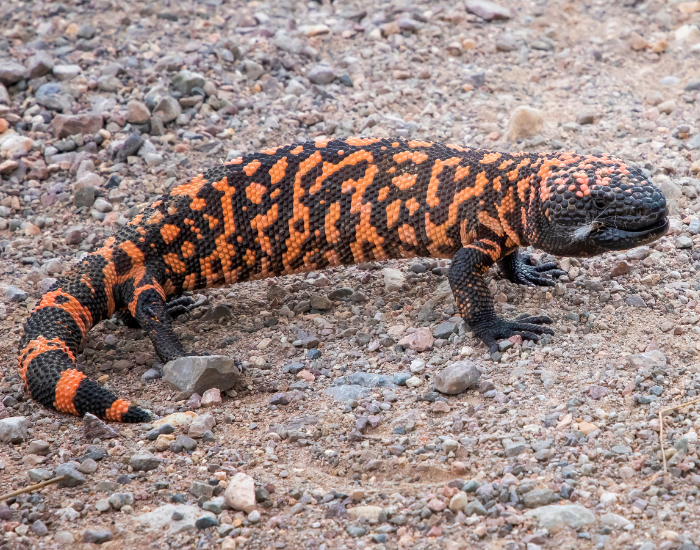
Gila Monster | Photo by Erin Donalson
Desert Primer: How Animals Beat Heat and Water Loss
Before we meet the cast, here are the playbooks desert animals use to cope:
Timing: Many animals avoid daytime entirely. They hunt at night and rest by day.
Shelter & design: Burrows, rock crevices, and anatomical features like huge ears (good for shedding heat) help animals escape the worst of the sun.
Water math: Some species get nearly all their water from food and metabolic processes (hello, kangaroo rat).
Movement: Specialized gaits (think: sidewinder snake) let animals slide over loose sand efficiently.
Quick reminder: deserts include far more than the Sahara. The Mojave, Sonoran, Chihuahuan, and Great Basin are all North American deserts, each with its own community of desert wildlife.
The Top 12 Desert Creatures
1) Desert Tortoise (Mojave & Sonoran)
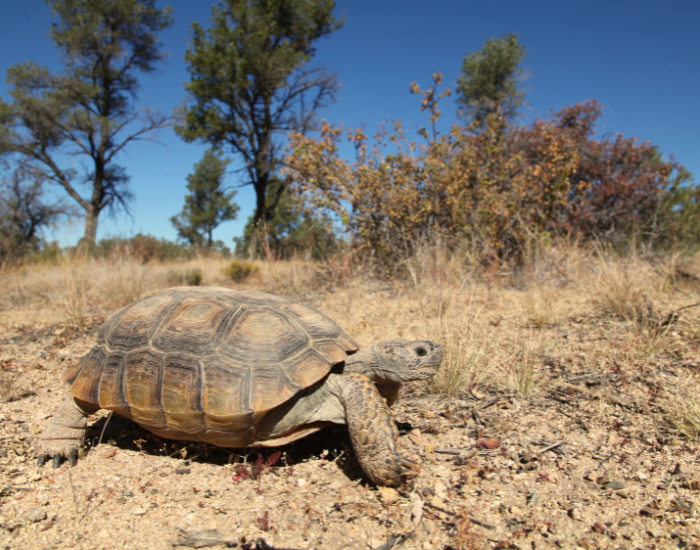
The desert tortoise (sometimes confused with the gopher tortoise) spends most of its life underground in burrows, using this natural shelter to escape the heat and conserve water. These slow-moving desert animals graze on grasses, cacti, and wildflowers after rare rains. Found across the American Southwest, including southern Nevada, western Arizona, southeast California, and southwest Utah, the Mojave population is listed as Threatened due to habitat loss, disease, and predators such as ravens.
Desert Tortoise | Via Twildlife, Getty Images
2) Greater Roadrunner
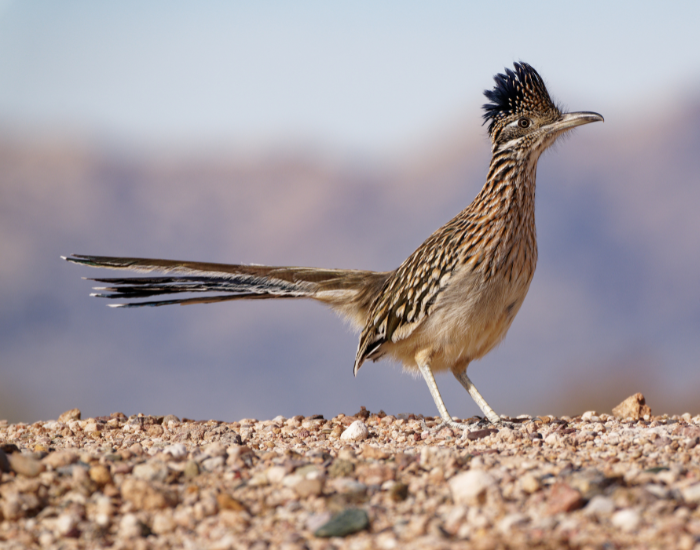
The greater roadrunner is a ground-dwelling bird capable of running at speeds up to 25 mph, allowing it to catch lizards, snakes, and insects. This iconic member of desert wildlife lives in the Sonoran Desert, Mojave Desert, and nearby aridlands of the American Southwest, thriving in open scrub and desert flats where it can sprint to escape predators.
Greater road runner | Getty Images
3) Sidewinder Rattlesnake
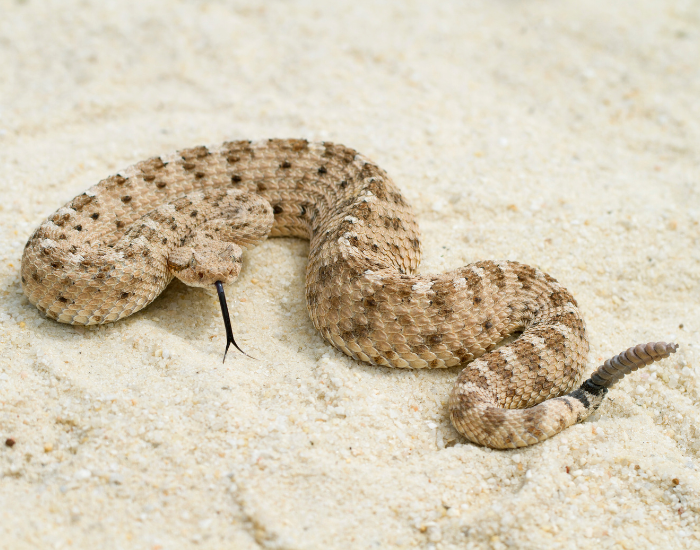
The sidewinder rattlesnake is famous for its unique sideways movement, which helps it travel quickly over loose sand while minimizing contact with the hot surface. This desert reptile leaves distinctive J-shaped tracks across dunes and sandy washes. Sidewinders live in the Sonoran and Mojave Deserts, where they hunt small mammals like rodents and lizards, perfectly adapted to survive in scorching environments.
Sidewinder Rattlesnake | Photo by Mark Kostich
4) Kangaroo Rat
Kangaroo rats are tiny nocturnal mammals that can go their entire lives without drinking water. Instead, they rely on dry seeds and produce “metabolic water” to stay hydrated. These desert creatures live in sandy flats and scrubby areas, most active at night when they hop through the dark to avoid predators and conserve moisture.
Searching for a Ghost with Terra Peninsular “Working with the biologists from Terra Peninsular taught me the ‘unseen’ side of conservation. While most people think of rats as pests, the San Quintín kangaroo rat is an ecosystem engineer. They create complex burrow systems that other species rely on for shelter from the sun. Even though they were famously rediscovered, 2025/2026 monitoring shows they are still critically endangered due to habitat loss.
Kangaroo Rat | DAPA Images
Special Mention to the Jerboa
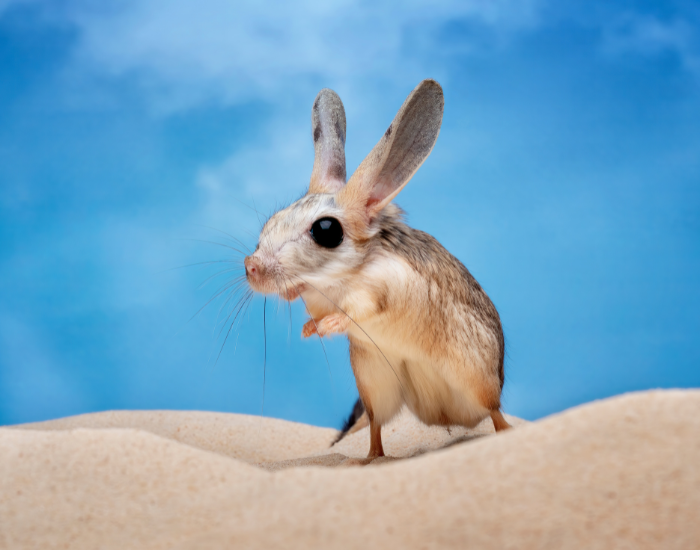
The Jerboa is the Eurasian and African ecological equivalent of the North American kangaroo rat, demonstrating a remarkable case of convergent evolution. Jerboas are small, bipedal rodents found in the deserts and steppes of North Africa and Asia, from the Sahara to the Gobi desert in Mongolia. Like kangaroo rats, they rarely drink water, instead obtaining necessary moisture from their diet of seeds, roots, and insects.
Thet thrive in deserts | Photo by Tanto Yensen
5) Gila Monster
The Gila monster is one of the few venomous reptiles in the world. It stores fat in its tail and spends long stretches underground, only emerging to feed a few times a year. This striking lizard with orange-and-black beaded skin is native to the Sonoran Desert of Arizona and northern Mexico, and it plays an important role in controlling populations of small prey.
Gila Monster | Photo by Erin Donalson
6) Desert Bighorn Sheep
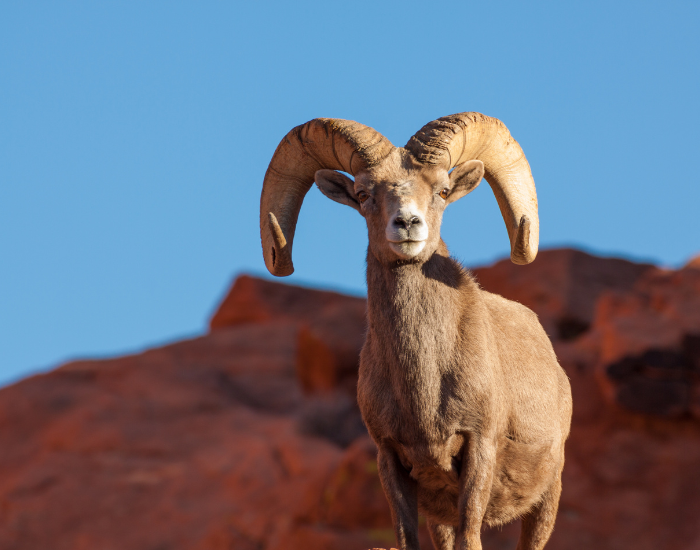
Desert bighorn sheep thrive in rugged canyons and rocky slopes (now competing with other desert animals like the introduced species in Texas: the Aoudad) where their split hooves and incredible agility help them climb steep cliffs to escape predators. Found in the American Southwest, especially in the Sonoran and Mojave Deserts, these large mammals rely on seasonal vegetation and scarce water sources, and conservation projects often provide artificial catchments during drought years to help herds survive.
Desert Bighorn Sheep | Getty Images
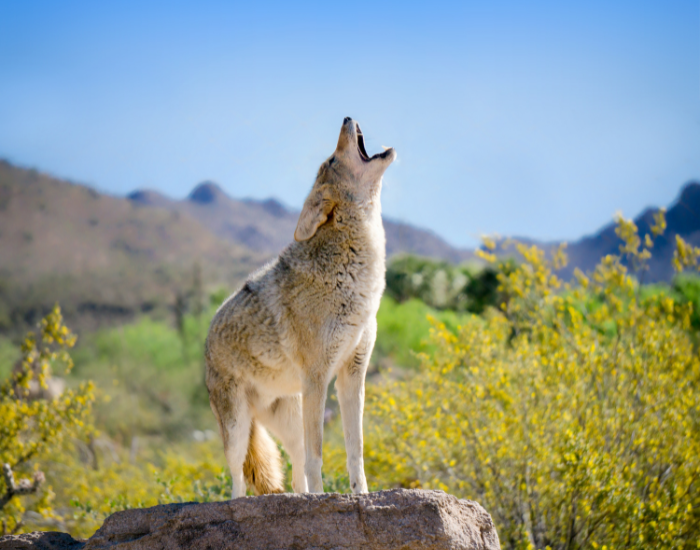
7) Coyote
The coyote is one of the most adaptable desert animals, able to live in remote wilderness or alongside human settlements. Omnivorous and opportunistic, they eat small mammals, reptiles, fruits, and even carrion, showing their ability to thrive in changing environments. Many coyotes subspecies are widespread across the American Southwest and beyond, playing a crucial role as mid-level predators in desert ecosystems.
Coyote | Photo by Jaypiers Photo
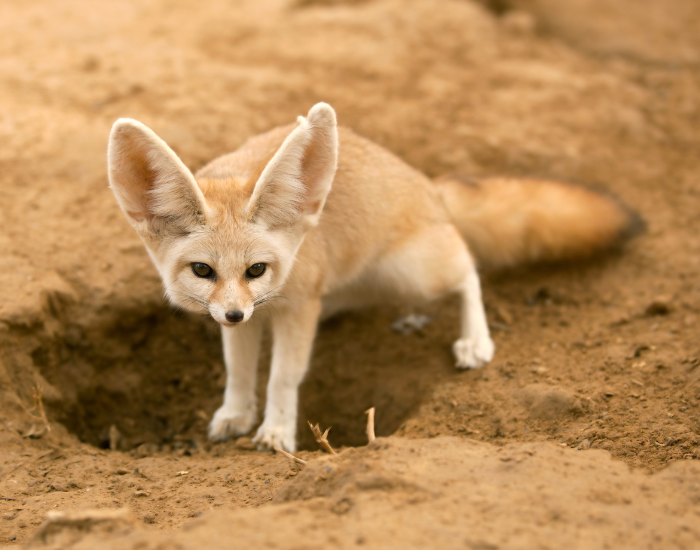
8) Kit Fox & Fennec Fox
The kit fox, found in the American Southwest, and the fennec fox, native to the Sahara, are small desert creatures built for the heat. Their oversized ears radiate excess body warmth, and both species hunt at night for rodents, insects, and small reptiles. Agile and resourceful, these foxes are perfect examples of how desert wildlife adapts to arid landscapes.
Fennec Fox | Getty IImages
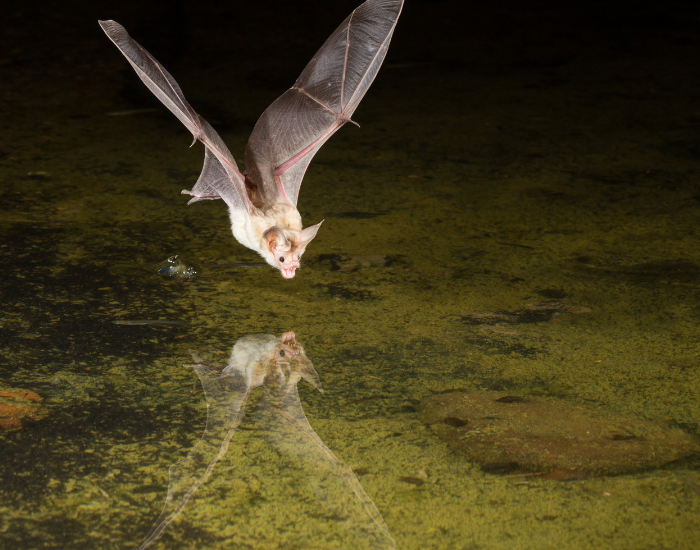
9) Pallid Bat & Desert Long-Eared Bat
Bats are unsung heroes of desert wildlife. The pallid bat, found in western North America, is known for feeding on insects like crickets and beetles and can even handle scorpion stings. The desert long-eared bat, found in North Africa and the Middle East, specializes in hunting venomousscorpions directly off the ground. Both species highlight how desert mammals exploit niches to survive in harsh conditions.
Pallid Bat | Via Getty Images
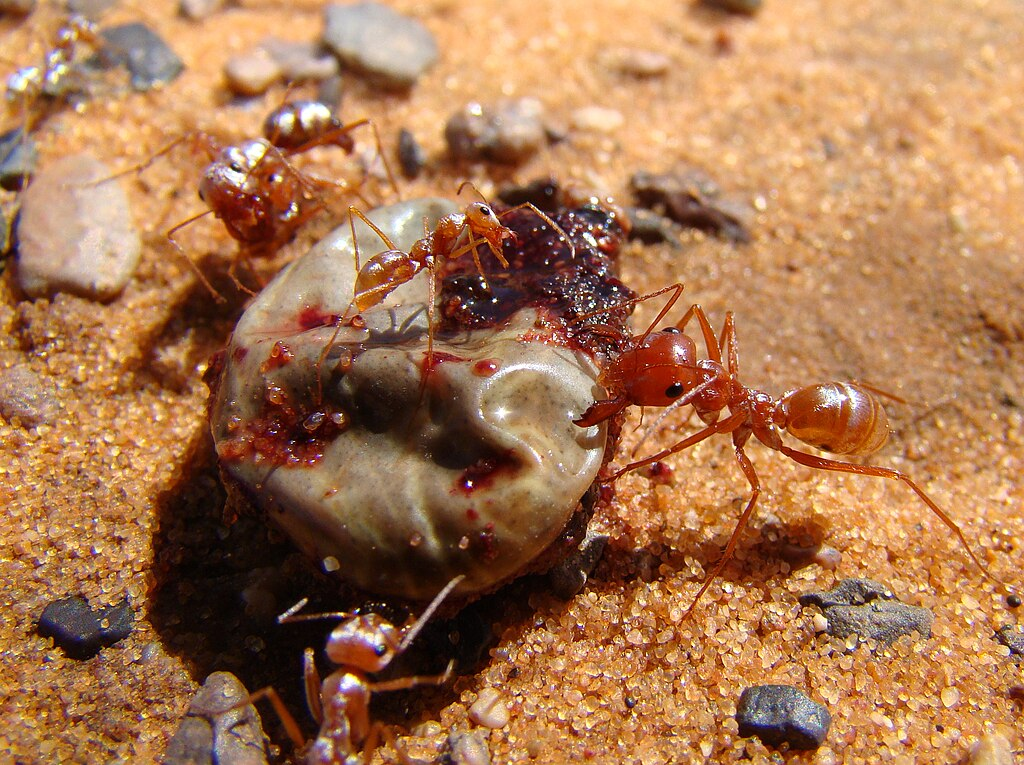
10) Saharan Silver Ant
The Saharan silver ant may be tiny, but it’s one of the fastest insects on Earth, capable of sprinting across scorching sand at astonishing speeds. Active during the hottest part of the day, it uses this extreme niche to avoid predators that cannot withstand the same temperatures. These desert creatures are evolution’s answer to survival in one of the hottest habitats on the planet.
The black-tailed jackrabbit is a large desert hare with enormous ears that help dissipate heat. Known for its explosive bursts of speed, it relies on zigzag sprints to escape predators such as coyotes. These mammals are widespread across the American Southwest, thriving in open desert scrub where they feed on grasses, shrubs, and cacti.
Black-Tailed Jackrabbit | Getty Images
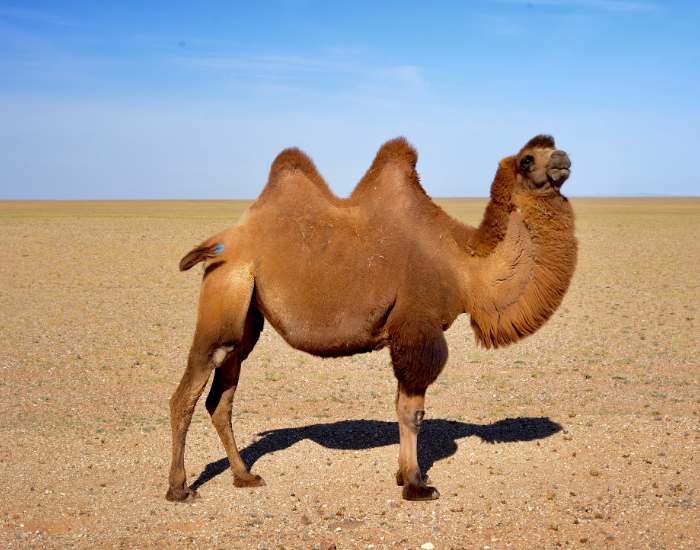
12) Camels
Camels are among the most iconic and largest desert animals, perfectly adapted to arid environments. The wild Bactrian camel (Camelus ferus), a Critically Endangered species of Asia’s harsh deserts, specially from the Mongolian Gobi Desert. They can tolerate salty water and extreme temperature shifts. With fat-filled humps for energy storage, protective lashes, and specialized nostrils to block sand, camels are masters at conserving water and enduring some of the toughest desolate landscapes in the world.
Camel | Photo by Mark Honos Vitaly
Where to See Desert Wildlife (Responsibly)
Sonoran Desert: Arizona’s Biodiversity Engine
If you’re asking “What wildlife is in the Arizona desert?”, start here. The Arizona-Sonora Desert Museum lists dozens of species, from greater roadrunner and Gila monster to rattlesnakes, the Sonoran desert toad, bobcats, and javelina, with detailed natural-history notes. Plan a dawn or night excursion for the best viewing.
Mojave Desert: Rocks, Joshua Trees, and Bighorns
From Las Vegas out to Death Valley, look for desert bighorn sheep on rugged slopes, sidewinders in sandy flats, and burrowing owls along desert washes. Park biologists are actively working to maintain bighorn connectivity across public lands.
Coachella Valley & Palm Springs: A New Refuge
The Desert Wildlife Center in Palm Springs (Indio) just opened to provide medical care and rehabilitation for injured or orphaned birds, with plans to expand to reptiles and mammals, a huge win for local desert wildlife and humane education. If you live nearby, this is where volunteering makes a real difference.
Mid-level predators: fox species, birds of prey such as hawks and owls, badgers, snakes (e.g., rattlesnakes).
Specialists: bats that take insects and even scorpions; roadrunners that eat small reptiles and rodents.
For a species-by-species deep dive, check the Arizona-Sonora Desert Museum fact sheets and state agency resources for coexistence tips. Desert Museum
How Desert Animals Actually Survive (The Science Bit)
Water budgets:Studies shave shown that some mammals (e.g., kangaroo rats) generate metabolic water and have ultra-efficient kidneys, reducing water loss.
Locomotion on sand: Sidewinder snakes use a unique gait to reduce friction and heat exposure; studies also inspire desert robotics.
Timing strategies: Nocturnal hunting avoids daytime heat, with animals using burrows and rock shade by day (classic shelter strategy).
Cultural Corner: Deserts in Story & Myth
Deserts always pull double duty, real landscapes and story stages. A recent example is Kay Chronister’s novel “Desert Creatures”, a post-apocalyptic trek across the unsettling expanse of the American Southwest. An eleven-year-old Magdala and her father travel toward the holy city of Las Vegas, where “vigilante saints reside,” glowing with neon power. It’s a moving debut novel, a haunting exploration of faith, survival, and the fragile line between refuge and ruin. (If that line sounds wild, that’s the point.)
Why include fiction in a wildlife article?
Because stories shape how people see desert wildlife, sometimes as monsters, sometimes as miracles. Good stories send more visitors, volunteers, and donors to the places that need them most.
Common FAQs about Desert Animals
What kind of animals live in the desert?
A mix of mammals (coyotes, jackrabbits, bighorn sheep), reptiles (Gila monsters, lizards, rattlesnakes), birds (roadrunners, owls, hawks), and insects (ants, beetles, bees). Adaptations include burrowing, nocturnality, water-saving physiology, and heat-shedding ears.
What wildlife is in the Arizona desert?
In the Sonoran Desert: desert tortoise, Gila monster, greater roadrunner, coyotes, bobcats, javelina, rattlesnakes, elf owls, pallid bats, and more. The Arizona-Sonora Desert Museum has species fact sheets for all of these.
What predators live in Arizona?
Mountain lions, bobcats, coyotes, hawks, owls, and eagles. Many smaller desert creatures, from rodents to lizards, adjust behavior to avoid them (e.g., being active at night).
What is the largest animal in the desert?
Globally, camels rank among the largest desert mammals; in North America’s deserts, desert bighorn sheep are the standout large native herbivore. For camels, the wild Bactrian (Camelus ferus) is Critically Endangered and emblematic of desert conservation urgency.
Field Guide: Spotting the Big 12 (At a Glance)
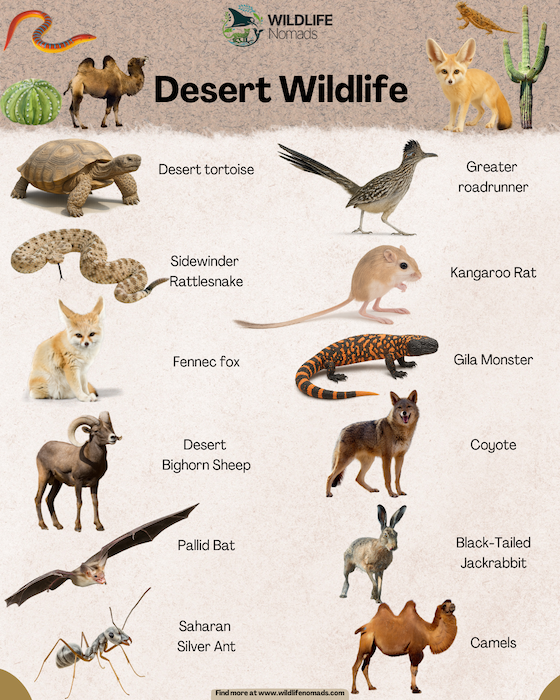
Desert tortoise: low, domed shell; grazing after rains; shelter in burrows.
Greater roadrunner: long tail, head crest, ground-runner up to ~20 mph.
Coyote: adaptable omnivore of washes and foothills.
Kit/fennec fox: small body, giant ears; listens for prey underground.
Pallid & long-eared bats: glean scorpions from the ground.
Saharan silver ant: tiny but unbelievably fast.
Black-tailed jackrabbit: long ears, explosive sprint.
Camels (global deserts): humps store fat; wild Bactrian camel is Critically Endangered.
Animals of the desert | Wildlife Nomads
Palm Springs Spotlight: How a City Helps Desert Wildlife
The Desert Wildlife Center in Palm Springs (Indio) is now a dedicated refuge for sick, injured, and orphaned desert animals, starting with birds and expanding to reptiles and mammals. Run by Greater Palm Springs Animal Allies (formerly Friends of the Palm Springs Animal Shelter), the center pairs care with education so people and wildlife can coexist. If you live nearby, consider donating, volunteering, or attending a community talk.
Travel Tips for Ethical Desert Wildlife Watching
Beat the heat: Go early or late; avoid midday stress on animals (and you).
Use long lenses: Give desert creatures space to escape if they need to.
Stay on crust: Biological soil crust is living armor. Stepping off-trail damages years of growth.
Leave water wisely: Don’t put out bowls unless guided by local rehab centers; you can unintentionally habituate wildlife or spread disease.
Control pets: Leashes save wildlife and paws.
Pack out microtrash: Tiny bits kill birds and reptiles.
Report injured animals: In Coachella Valley, call the Desert Wildlife Center or local animal services.
Can You Name That Desert Animal? 🏜️
A 13-photo identification challenge. Pick the species you think it is — go back and change any answer before you score.
Which desert animal is this?
These 12 Desert Animals Matter
Every desert morning is a lesson in survival. A roadrunner darts and the sand settles; a tortoise disappears into the cool dark; a bighorn draws a line across the cliff and keeps going. These animals don’t just get by, they thrive, and they reveal how much life is possible with the right shelter, timing, and ingenuity.
Protecting desert wildlife isn’t abstract. It’s speed limits at dawn, corridors across highways, native plants in our yards, clean camps, and a few volunteer hours at your local wildlife center. Do those small things well, and this “empty” world will stay very, very full.
Experience Desert Wildlife
This blog is reader-supported. When you buy experiences through links listed on this site, we may earn an affiliate commission.
References:
Andrade-Sánchez, J., Mellink, E., Riojas-López, M. E., Tremor, S., & Vanderplank, S. E. (2023). Site occupation and range expansion by the endangered, Mexican microendemic San Quintín Kangaroo Rat (Dipodomys gravipes). Journal of Mammalogy, 105(1), 168–174. https://doi.org/10.1093/jmammal/gyad113
Faraz, A., Masebo, N. T., Hussain, S. M., Waheed, A., Ishaq, H. M., Tauqir, N. A., Abbasi, A. R., Saleem, F., & Padalino, B. (2025). Association of environmental temperature and relative humidity with ocular and flank temperatures in dromedary camels. Animals, 15(3), 309. https://doi.org/10.3390/ani15030309
Holderied, M., Korine, C., & Moritz, T. (2011). Hemprich’s long-eared bat (Otonycteris hemprichii) as a predator of scorpions: Whispering echolocation, passive gleaning and prey selection. Journal of Comparative Physiology A, 197(5), 425–433. https://doi.org/10.1007/s00359-010-0608-3
Murray, I. W., & Wolf, B. O. (2013). Desert tortoise (Gopherus agassizii) dietary specialization decreases across a precipitation gradient. PLOS ONE, 8(6), e66505. https://doi.org/10.1371/journal.pone.0066505
Tingle, J. L., Sherman, B. M., & Garland, T., Jr. (2023). Locomotor kinematics on sand versus vinyl flooring in the sidewinder rattlesnake Crotalus cerastes. Biology Open, 12(11), bio060146. https://doi.org/10.1242/bio.060146
Villacís Núñez, C. N., Ray, A. P., Cooper, K. L., & Moore, T. Y. (2022). Metatarsal fusion resisted bending as jerboas (Dipodidae) transitioned from quadrupedal to bipedal. Proceedings of the Royal Society B: Biological Sciences, 289(1984), 20221322. https://doi.org/10.1098/rspb.2022.1322
I'm Cesar, a conservation biologist, science communicator, and the founder of Wildlife Nomads. I've tracked wildlife through 30+ countries and done fieldwork in Sweden, Australia, and Mexico, but the work I care about most happens after the field notes are filed: turning research into stories that actually reach people. That's what Wildlife Nomads is for.
We've compiled over 1,000 incredible facts across 200+ animals into one giant collection — lions, narwhals, hippos, capybaras, sharks, whales and everything in between. One PDF, endless wildlife knowledge.
1,000+
animal facts
200+
species covered
227
pages of content
Secure payment via Stripe • Instant PDF delivery
Get this infographic free
Enter your email and we'll send you the full-resolution version to download and keep.
✓ Check your inbox — it's on its way!
🎨 Coloring Books
Wildlife coloring books
30+ pages each, with fun facts on every animal. $4 per book.