
Recently, while creating my Animals of Africa ebook, I spent a lot of time diving into the continent’s ecosystems — and one that kept pulling me in was the desert. It’s easy to think of deserts as empty or lifeless, but the reality is the opposite. African desert wildlife is packed with specialists that have evolved incredible ways to survive with little to no water, from the fennec fox and sand cat to tiny mammals like the jerboa and elephant shrew. These animals don’t just survive harsh conditions — they thrive in them, revealing how resilient and adaptable life can be in extreme environments.
The aoudad (Ammotragus lervia), commonly called Barbary sheep, is more than just another exotic animal. It’s a story of desert adaptation, controversial introductions, and conservation paradoxes. These wild sheep thrive in some of Earth’s harshest environments while simultaneously creating ecological challenges in their introduced ranges.
In this blog, I’ll share the top 10 facts about aoudad. I’ll weave in field observations and scientific insights. The study of aoudad also contributes valuable knowledge to wildlife management, especially in understanding invasive species impacts and desert ecology. I’ll also answer common questions about these striking animals.
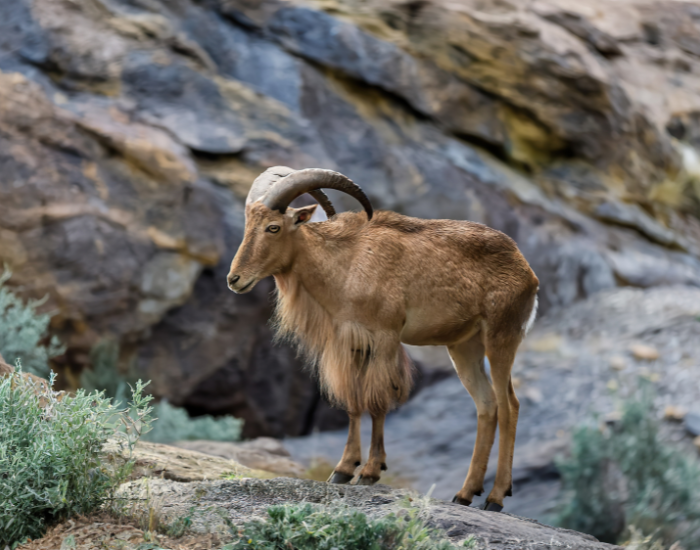
1. Aoudad Are Neither True Sheep Nor Goats
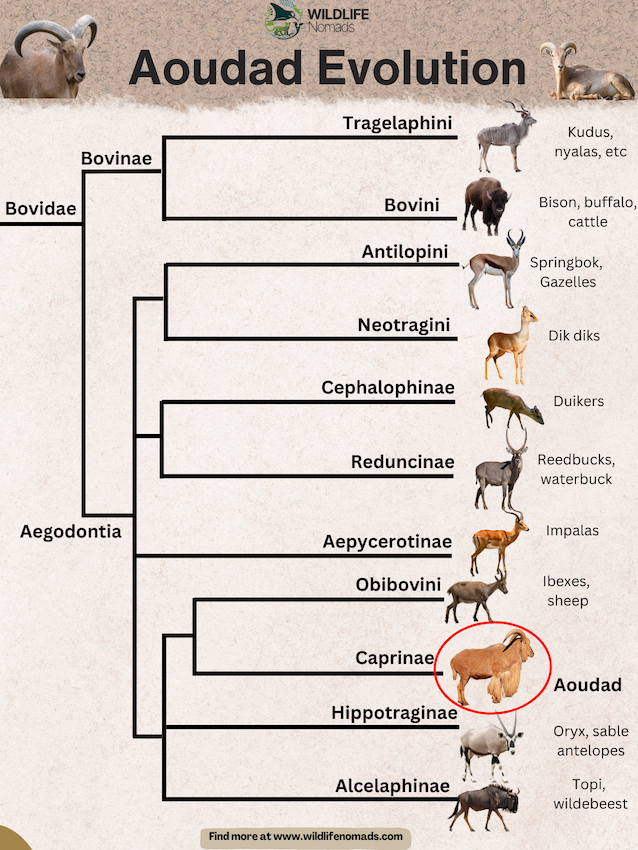
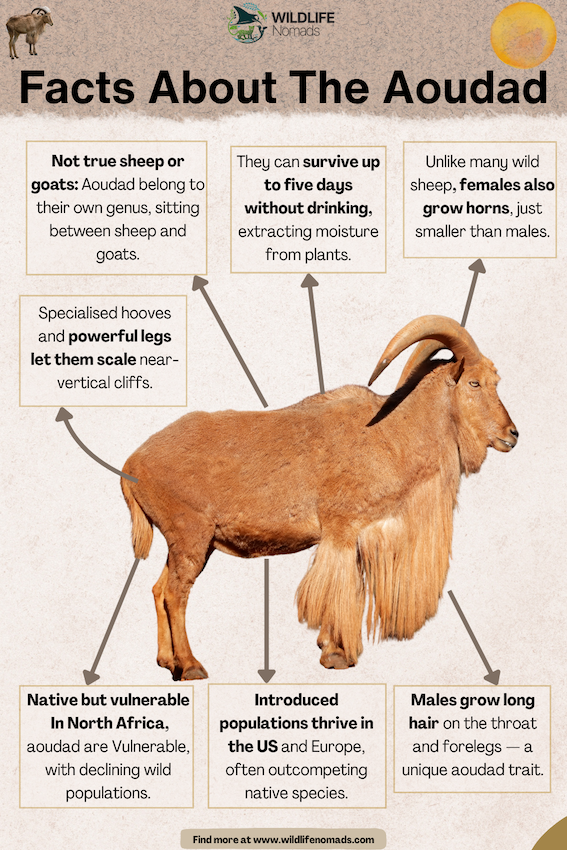
The aoudad displays a fascinating taxonomic puzzle that confused scientists for decades. These animals belong to their own unique genus, Ammotragus, within the subfamily Caprinae. This subfamily includes both sheep and goats, but aoudad occupy a distinct evolutionary position between the two groups.
Males and females both possess characteristics of sheep and goats simultaneously. They have the scent glands typically found in goats. However, their general anatomy and appearance more closely resemble sheep. Genetic studies reveal they’re more closely related to the sheep genus Ovis than the goat genus Capra. This makes them truly one-of-a-kind among wild sheep species.
The scientific name Ammotragus lervia comes from Greek and Latin roots. “Ammotragus” combines the Greek words for “sand” and “goat.” This name perfectly captures their desert habitat and their intermediate position between sheep and goats. Their unique evolutionary history makes them particularly interesting for studying mammalian adaptation and speciation.
2. They’re Native to North African Desert Mountains
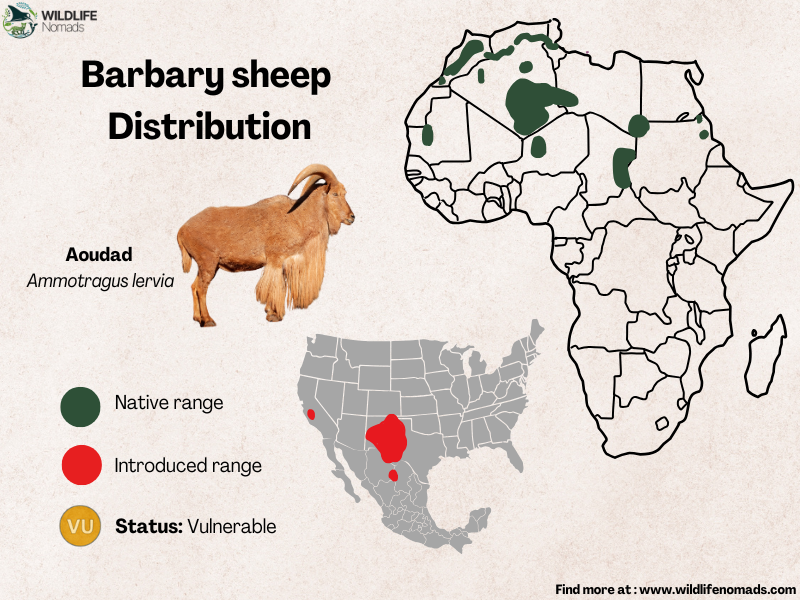
The aoudad has a wide native habitat range across North Africa’s most rugged terrain. Historically, Barbary sheep populations roamed from Morocco on the Atlantic coast all the way to the Red Sea. They inhabited the desert mountains of Algeria, Tunisia, Morocco, Libya, Egypt, Chad, Mali, Mauritania, Niger, and Sudan, often alongside other iconic desert specialists such as oryx, which share similar adaptations to heat, drought, and scarce vegetation.
Unfortunately, their native populations face severe threats today. The IUCN currently classifies them as Vulnerable. Wild populations in their natural range have plummeted due to habitat loss and overhunting. Only an estimated 5,000 to 10,000 individuals remain across their entire African range. They’re probably extinct in Egypt, with scattered populations barely surviving elsewhere.
3. Aoudad Can Survive Five Days Without Drinking Water
The aoudad’s most impressive adaptation is its ability to survive extreme water scarcity. These desert-adapted animals can go approximately five days without drinking standing water. This remarkable ability allows them to thrive in environments where water sources are scarce or nonexistent.
They achieve this through multiple physiological adaptations. First, they extract moisture from the vegetation they consume, including grasses, shrubs, succulent plants, and even lichens. Second, they possess specialized kidneys that conserve water with incredible efficiency. Their bodies waste almost no moisture through excretion.
This water independence gives them a competitive advantage over native species like bighorn sheep and mule deer. During droughts, aoudad often outlast other animals competing for limited resources. Their ability to survive long periods without water makes them formidable colonizers of arid habitats worldwide.
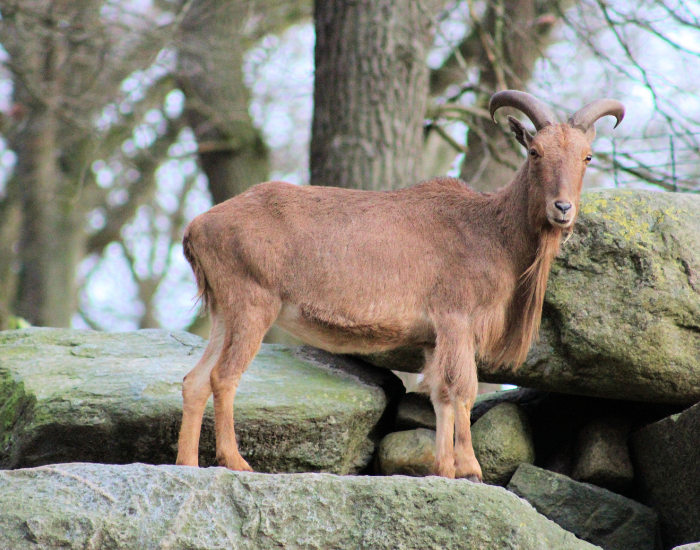
4. They Can Leap Seven Feet Vertically From a Standing Position
Despite their heavy build and substantial weight, aoudad possess incredible agility. These wild sheep can jump approximately 2 meters (6.6 feet) straight up from a standing position. This extraordinary jumping ability helps them navigate the extreme vertical terrain they inhabit.
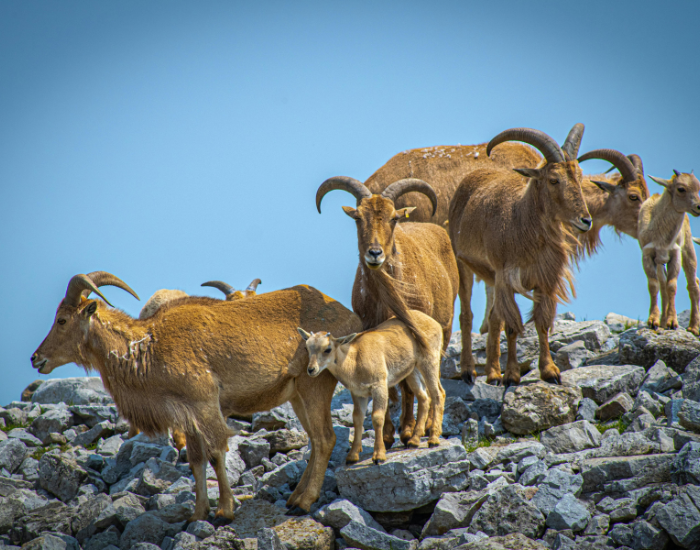
Their hooves are specially adapted for this lifestyle. They possess padded, concave hooves that provide superior grip on rocky surfaces and uneven terrain. Combined with powerful leg muscles, these adaptations allow them to traverse landscapes that would challenge most large mammals.
This jumping ability serves multiple purposes beyond simple movement. It helps them escape predators quickly by reaching inaccessible areas. It allows them to access food sources other herbivores cannot reach. Most importantly, it enables them to exploit the steep, rocky habitat where competition from other species is minimal.
5. Both Males and Females Have Impressive Horns
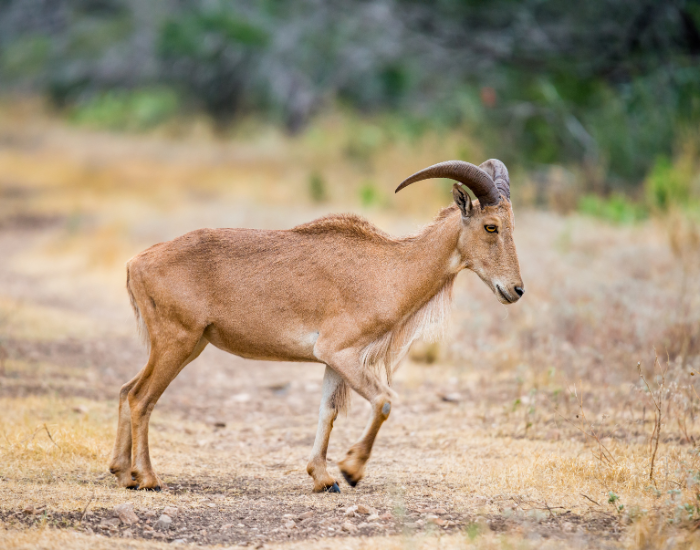
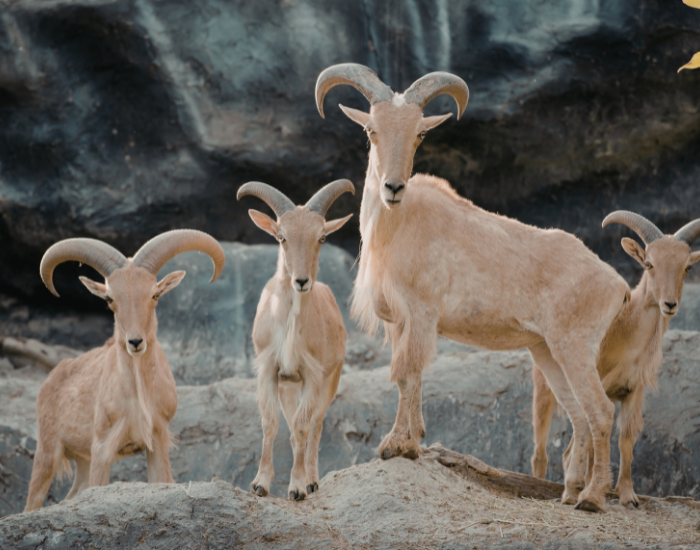
Unlike many wild sheep species where only males carry significant horns, both male and female aoudad possess large, impressive headgear. This characteristic makes them distinctive among wild sheep and contributes to their striking appearance.
Male horns are truly spectacular. They’re thick at the base and curve outward, then sweep backward and inward toward the neck. In mature rams, these horns can exceed 30 inches in length. The horns continue growing throughout the animal’s life, with older rams displaying the most impressive sets.
Female horns are substantial but noticeably different. They’re typically thinner and shorter than male horns, usually reaching 15 to 20 inches. However, they’re still formidable compared to many other female wild sheep species. The horns serve both sexes for defense against predators and for establishing dominance within their social groups.
Adult male aoudad are powerful animals. Rams can weigh up to 145 kg (320 lbs), making them relatively large sheep. Females are significantly smaller, typically weighing between 40 kg and 65 kg. This size difference, combined with the horn variation, makes sexing aoudad in the field relatively straightforward once you know what to look for.
6. They Have a Unique “Chaps” of Long Hair
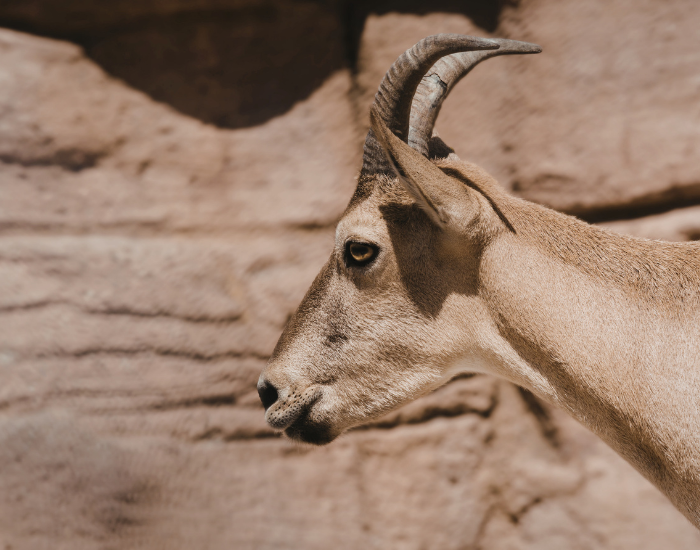
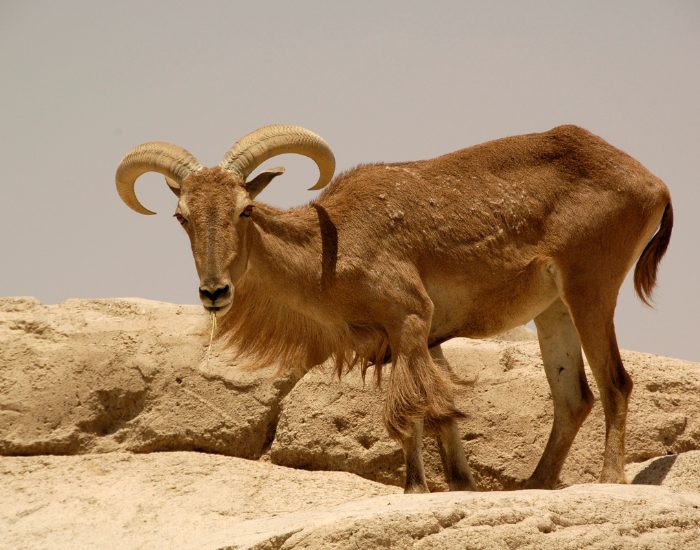
One of the most distinctive features of aoudad is the long, flowing fringe of hair that extends from their throat down to the upper part of their front legs. Wildlife biologists and hunters often call this characteristic feature “chaps,” referencing the leg coverings worn by cowboys.
This flowing hair is particularly prominent in mature males. It can grow quite long, creating a dramatic appearance when the animals move. The chaps blow in the wind as they stand on exposed ridges, making them look even more impressive and prehistoric. This feature helps differentiate them immediately from bighorn sheep and other wild sheep species.
The exact purpose of these chaps remains somewhat debated among researchers. They may serve as visual signals during breeding season, helping females assess male quality. They might provide some protection from thorny vegetation common in their habitat. Or they could simply be an evolutionary quirk that became fixed in the population.
Their coat color provides excellent camouflage. The tawny, sand-colored fur blends perfectly with rocky desert surroundings. This natural camouflage makes spotting them extremely difficult, even when you know they’re present. Many hunters spend hours glassing hillsides before locating animals that were there the entire time.
7. Aoudad Compete Directly With Native Bighorn Sheep
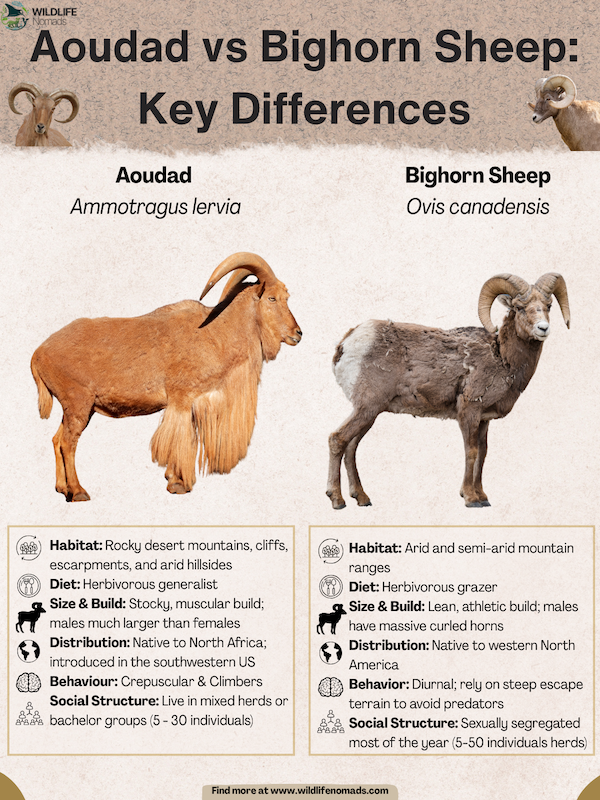
The introduction of Barbary sheep to the Southwestern United States created one of the most controversial wildlife management situations in modern conservation. These animals directly compete with native desert bighorn sheep for critical resources in ways that threaten bighorn survival.
The competition extends across multiple dimensions. First, both species prefer the same mountainous, rocky habitat. Because aoudad are larger and more aggressive, they often push bighorn sheep away from the best foraging areas and water sources. In desert environments where every resource is precious, this competition can be life-threatening for bighorn populations.
Second, dietary overlap creates food competition. Both species eat grasses, forbs, and shrubs. The aoudad’s ability to survive on lower-quality forage gives them an advantage during drought periods. They also consume a wider variety of plants, including species that bighorn rely on during difficult times.
Perhaps most concerning is the disease factor. Research has demonstrated that Barbary sheep can carry respiratory pathogens like Mycoplasma ovipneumoniae. While these pathogens cause only mild symptoms in aoudad, they can devastate bighorn populations, triggering massive die-offs.
8. Texas Now Hosts More Aoudad Than Their Entire Native Range
The story of how aoudad reached North America illustrates both human ambition and unintended consequences. The introduction began after World War II when private landowners and Texas Parks & Wildlife officials released them into West Texas in the late 1940s and early 1950s.
The goal seemed reasonable at the time. They wanted to establish a hardy game animal that could thrive in the “badlands” where desert bighorn sheep had been extirpated by overhunting and habitat loss. The first major release occurred in Palo Duro Canyon in 1957. Additional releases followed across West Texas and New Mexico.
The results exceeded everyone’s expectations. Today, approximately 75,000 free-range aoudad live in the United States. Most inhabit Texas, with significant populations also in New Mexico and California. This number exceeds the entire remaining population in their native African range by a factor of seven or more.
The population explosion occurred because conditions in West Texas proved ideal. The terrain resembles their native habitat. Predators are largely absent. Hunting pressure, while significant, doesn’t match the overhunting they face in Africa. Most importantly, they can breed year-round rather than being limited to a specific season.
Smaller introduced populations also exist in southeastern Spain and the Canary Islands. Some European countries including Croatia and the Czech Republic host small numbers. This global spread demonstrates their remarkable adaptability to diverse environments outside their native range.
9. They’re Crepuscular With Complex Social Structure
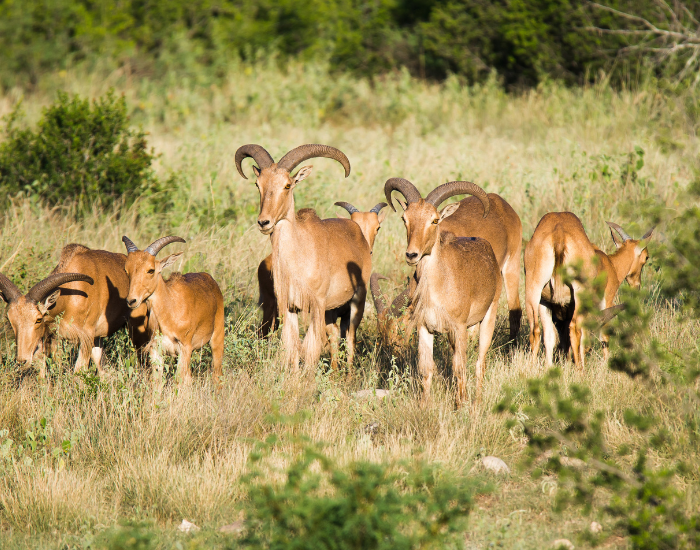
In the wild, aoudad display fascinating behavioral patterns that reflect their desert adaptations. These animals are crepuscular, meaning they’re most active during the cooler hours of dawn and dusk. They rest during the extreme heat of midday, often in the shade of overhangs or caves.
Their social structure is more complex than many people realize. They typically travel in family groups of 10 to 20 animals, though larger aggregations form around prime feeding areas. These groups provide safety through vigilance, multiple animals watching for predators while others feed.
The breeding system shows interesting dynamics. Females reach sexual maturity at approximately 18 months. They have a gestation period of about 160 days, often giving birth to single lambs though twins are not uncommon. Unlike many wild sheep, aoudad can breed year-round, though peak breeding occurs from September through November.
Newborns demonstrate remarkable abilities almost immediately. They can traverse rocky terrain within hours of birth. This precocial development is crucial for survival in their harsh environment where predators and environmental challenges pose constant threats.
10. Aoudad Hunting Is Called “The Poor Man’s Sheep Hunt”
Many hunters refer to aoudad hunting as “the poor man’s sheep hunt.” This nickname reflects both the cost comparison and the physical challenge involved. While less expensive than coveted bighorn sheep tags, the difficulty often equals or exceeds that of hunting native sheep species.
In Texas, because aoudad are classified as invasive species, they can be hunted year-round on private land with a valid hunting license. This differs dramatically from highly restricted bighorn hunts. Hunt packages typically range from $1,500 to $5,000 depending on trophy quality and accommodations. This creates significant economic value for West Texas landowners.
The meat quality generates mixed opinions. Young animals and females provide tender, flavorful meat similar to venison or lamb. Mature rams can be quite tough and gamey. Many hunters process older rams into sausage, jerky, or slow-cooked dishes. Proper field care and preparation significantly affect final meat quality.
The hunt economy supports land conservation in West Texas. Many ranches maintain large tracts of native habitat specifically for wildlife management. This creates a complex conservation question: Do the ecological costs of aoudad outweigh the habitat protection their hunting value provides?
FAQs About Aoudad
No, aoudad are native to North Africa, not Texas. They were introduced to West Texas in the 1950s as exotic game animals. Today, Texas hosts more aoudad than exist in their entire native African range.
Yes, ecologically speaking, aoudad are invasive species in North America. They compete with native bighorn sheep and mule deer for food and water. They can also transmit diseases devastating to bighorn populations.
Yes, aoudad meat is edible. Young animals and females provide tender, flavorful meat. Mature rams are tougher and often processed into sausage or jerky. The quality depends heavily on age, sex, and how the meat is handled and prepared.
Aoudad can survive approximately five days without drinking. They extract moisture from the vegetation they eat and possess specialized kidneys that conserve water extremely efficiently.
Yes, both male and female aoudad have horns. Female horns are thinner and shorter (15-20 inches) compared to male horns which can exceed 30 inches.
Aoudad can clear obstacles over 6.6 feet (2 meters) from a standing position. This jumping ability helps them navigate extremely steep, rocky terrain.
They eat grasses, forbs, shrubs, lichens, and even cacti. They’re dietary generalists that consume whatever vegetation is available. In Texas, they occasionally browse winter wheat crops near agricultural areas.
Between Survival and Conservation
Whether you’re considering hunting them or simply learning about wildlife, remember this important principle. The aoudad demands respect for its survival abilities, acknowledgment of its controversial status, and careful consideration of its impact on native ecosystems. In North Africa, they need protection from extinction. In North America, they require thoughtful management that balances multiple interests.