I haven’t seen an oryx in the wild yet — but I’m working on it. An upcoming trip to Egypt might change that, and honestly, I can’t think of a better landscape to finally meet one of nature’s most otherworldly antelopes. Because that’s what the oryx is: otherworldly. Like the saiga antelope or the takin, it belongs in that exclusive club of animals that look like they wandered off an Avatar set rather than out of the African savanna.
As a biologist, I find the oryx fascinating not just for how it looks, but for what it has survived. Hunting, habitat loss, and outright extinction in the wild for some species — yet here they are. Four species, each built for some of the harshest desert environments on Earth, and each with a conservation comeback story worth knowing. Here are 12 facts that explain why this animal deserves far more attention than it gets.
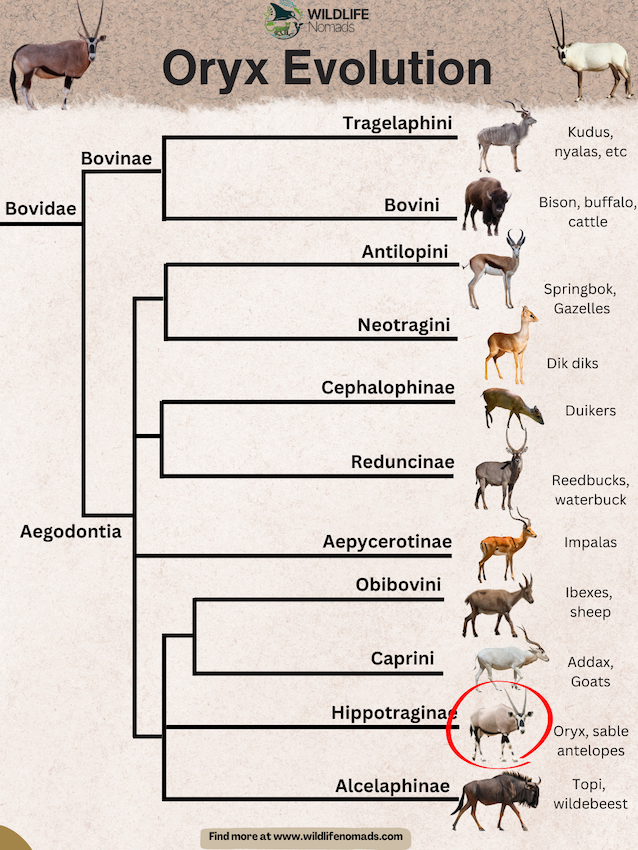
1. The Oryx Isn’t Just One Animal; It’s Four Distinct Species
Oryx belong to the genus Oryx, a group of large antelopes specially adapted for arid and semi-arid habitats. They’re not deer or goats, though sometimes confused as such. Instead, they are closer relatives of gazelles and other antelopes. A lesser-known relative, the fringe-eared oryx, once considered a subspecies, highlights the diversity within this lineage!
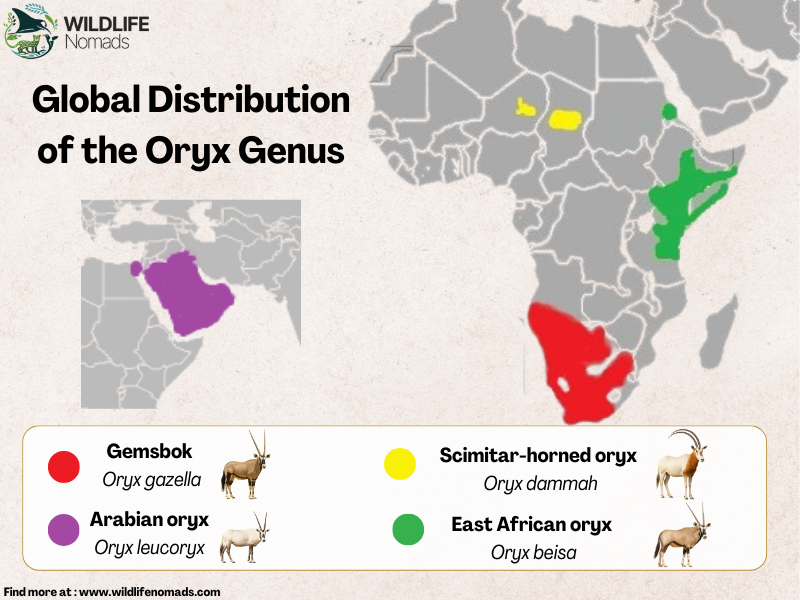
The four recognized species are
- Gemsbok (Oryx gazella) of southern Africa
- The East African oryx (Oryx beisa) of the Horn of Africa
- The Arabian oryx (Oryx leucoryx)
- The Scimitar-horned oryx (Oryx dammah) of North Africa.
Conservation status varies, the Arabian oryx was once declared Extinct in the Wild but has rebounded thanks to reintroduction, while the Scimitar-horned oryx remains classified as Extinct in the Wild though reintroduction efforts are underway.

2. Oryx Horns Are Iconic – Nature’s Perfect Desert Weapons
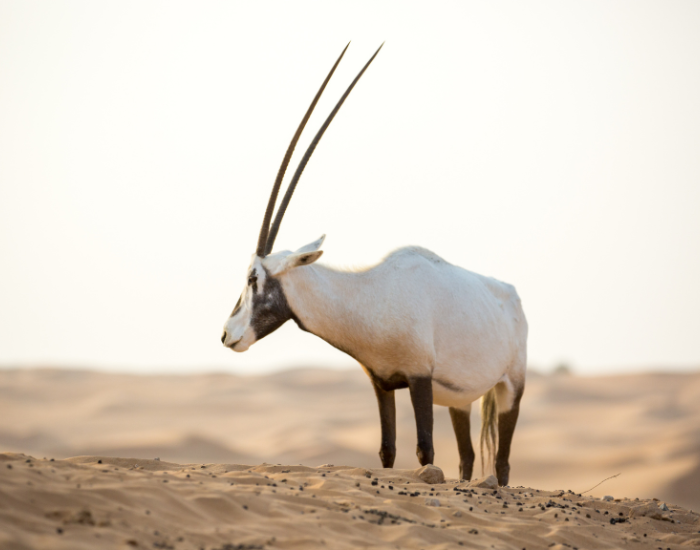
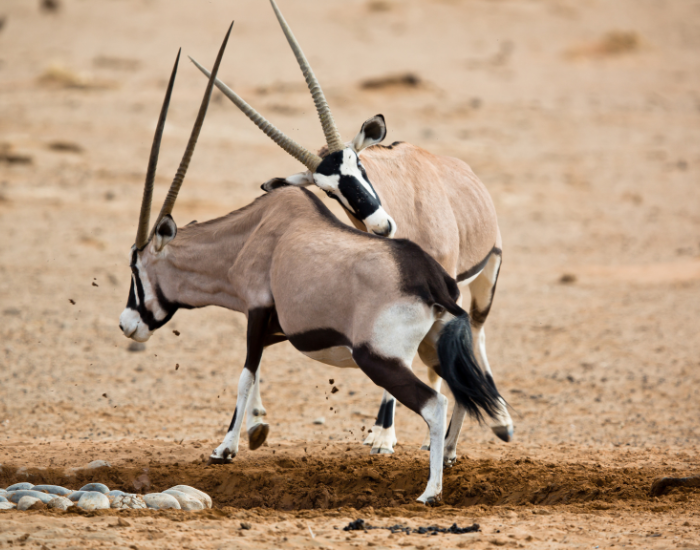
Both male and female oryx carry horns, making them instantly recognizable. These pointed horns can grow up to 120 cm, sometimes curving slightly forward or backward. In the scimitar-horned oryx, horns curve backwards in a dramatic arc. Herd members often clash horns to establish dominance, though fights are rarely fatal.
3. Oryx Weight and Height – Make Them Desert Giants
So how big are they? A full-grown oryx weight ranges from 150–240 kg (330–530 lbs). Their oryx height at the shoulder is about 1.1–1.2 meters (3.6–3.9 ft). This makes them similar in size to an elk, though sleeker and more heat-adapted.
4. Desert Life Specialists
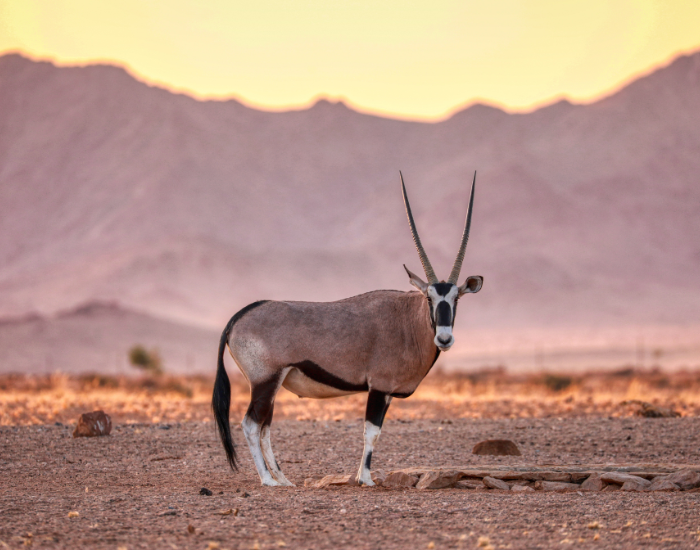
The oryx epitomizes desert life. They can survive in areas with extreme desert heat, going for long periods without drinking water. Instead, they rely on moisture-rich plants like wild melon, buffalo gourds, mesquite bean pods, and roots. They even adjust their body temperature, tolerating fluctuations that would harm most animals. This adaptation reduces the need for constant water.
5. Oryx Distribution and Native Range
Each oryx species has a distinct native range:
- Scimitar-horned oryx: once widespread in northern Africa, now reintroduced to Chad.
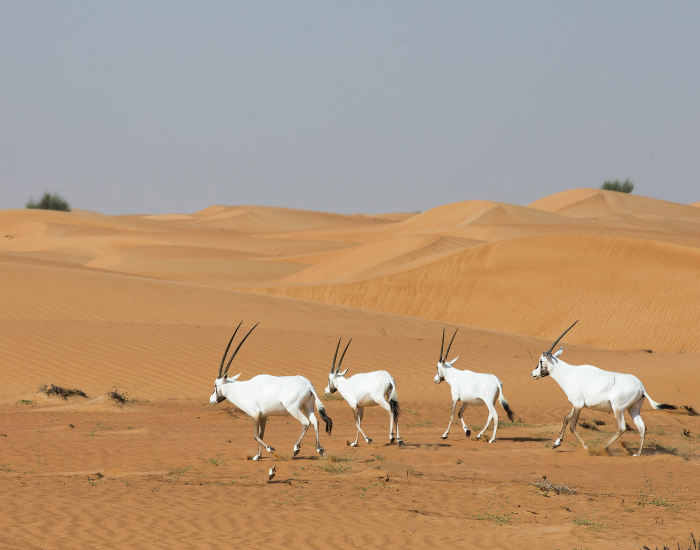
- Arabian oryx (Oryx leucoryx): native to the Arabian Peninsula, once extinct in the wild.
- Gemsbok (Oryx gazella): thrives in southern Africa, especially Namibia.
- Beisa oryx: inhabits eastern and southern Africa, including Ethiopia and Kenya.
Their ability to thrive in suitable habitats with scarce vegetation makes them one of the toughest antelopes alive.
6. The Arabian Oryx Comeback –
The Arabian oryx was declared extinct in the wild by the early 1970s due to hunting. Thanks to captive breeding programs in the U.S. (notably the Phoenix Zoo and San Diego Zoo) and reintroductions in Oman, Saudi Arabia, and Abu Dhabi, this oryx now roams free again. The International Union for Conservation of Nature (IUCN) upgraded it from “Extinct in the Wild” to “Vulnerable,” marking one of the most successful conservation stories in history.
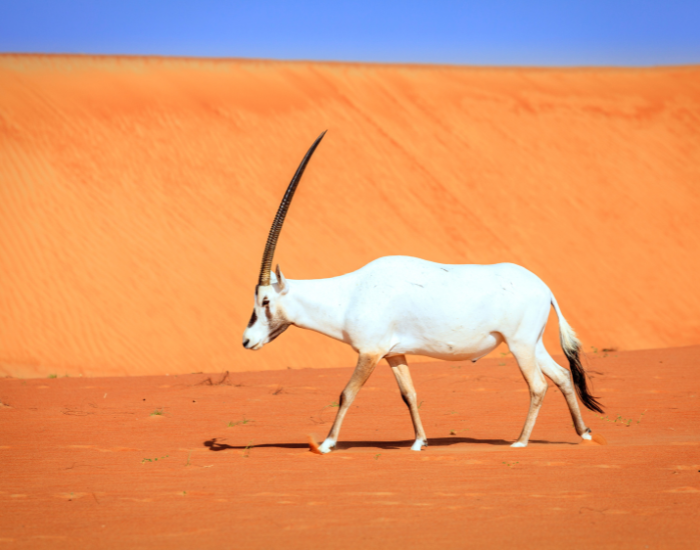
7. The Scimitar Horned Oryx – Surviving Extinction Through Human Intervention
The scimitar-horned oryx (Oryx dammah) once roamed the Sahel across North Africa. Overhunting, habitat loss, and desertification led to its extinction in the wild by the 2000s. Conservation groups like the Sahara Conservation Fund and Smithsonian Conservation Biology Institute have since reintroduced them into Chad, with hundreds now surviving again in their natural habitat.
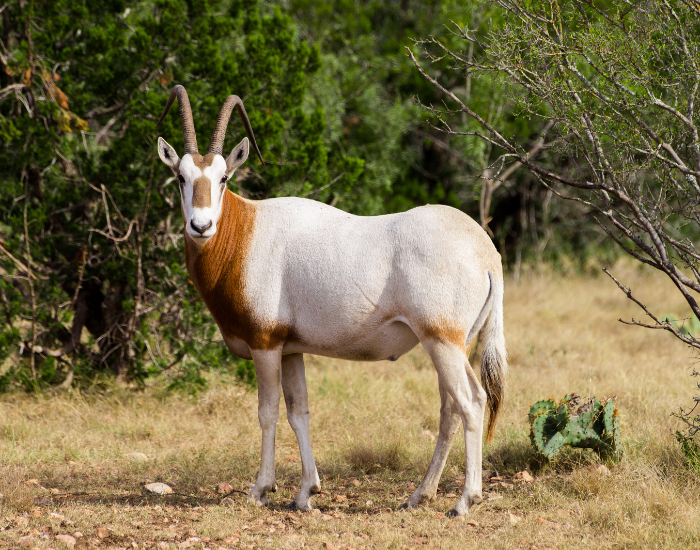
8. You Can Find Oryx in Texas – Yes There Are Wild Oryx Roaming Free in Texas
Thousands of oryx live outside their native ranges. In fact, the scimitar-horned oryx was introduced to private ranches in North America, especially Texas. At one point, more lived there than in Africa. While originally intended for trophy hunting, these populations provided a genetic safety net. Today, they contribute to global genetic diversity for reintroduction programs.
The irony is striking – while the scimitar-horned oryx disappeared from its native African range, it thrived on Texas ranches. Today, these Texas populations contribute animals to conservation programs worldwide and serve as a genetic insurance policy for the species.
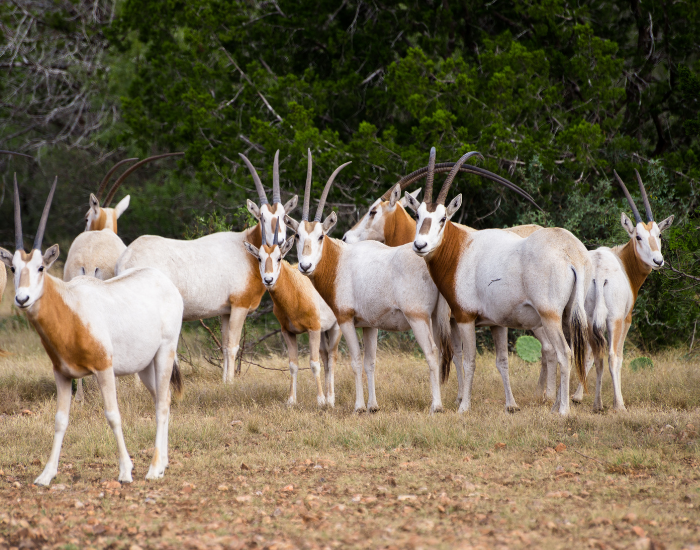
9. Oryx Social Structure May Have Matriarchal Leadership
Oryx are social animals that usually form herds of 10–40 individuals, though larger groups may gather after rains. Herds often contain both sexes, with bachelor groups of males also common. In Arabian and Scimitar-horned oryx, females frequently lead herd movements, while males focus on defending and establishing dominance through horn clashes. Calves are born singly and spend their first weeks hidden before joining the herd. They typically stay close to their mothers for up to a year, gradually gaining independence and sometimes dispersing to form or join new groups.
Dominance within herds is expressed through ritualized sparring and horn displays. These clashes look dramatic but rarely cause serious injury, serving mainly as communication and reinforcement of hierarchy.
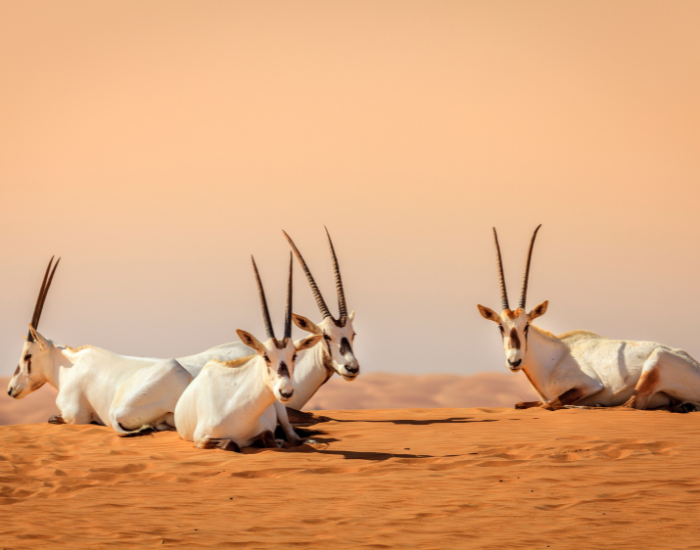
10. Diet and Desert Adaptations – Incredible Diverse
Oryx are grazers that eat desert grasses most of the year. In dry spells, they eat grasses only when available but will also consume shrubs, roots, and even juicy roots underground. Plants like wild melons and buffalo gourds provide hydration. This flexible diet enables survival in barren ecosystems where predators and livestock compete for food.
During particularly harsh droughts, oryx will even eat leaves from thorny acacia trees, using their dexterous lips to avoid the worst spines. Their ability to extract moisture from vegetation means they can go months without visiting water sources.
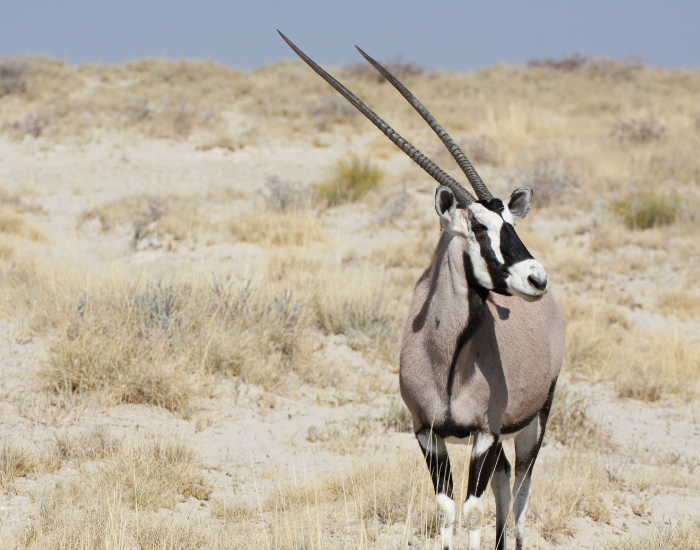
11. Predators and Ecosystem Role
In their natural habitats, oryx face threats from lions, hyenas, and even mountain lions (in Texas of course) in some regions. In modern conservation areas, managers sometimes conduct a natural predators cull to control balance, though controversial.
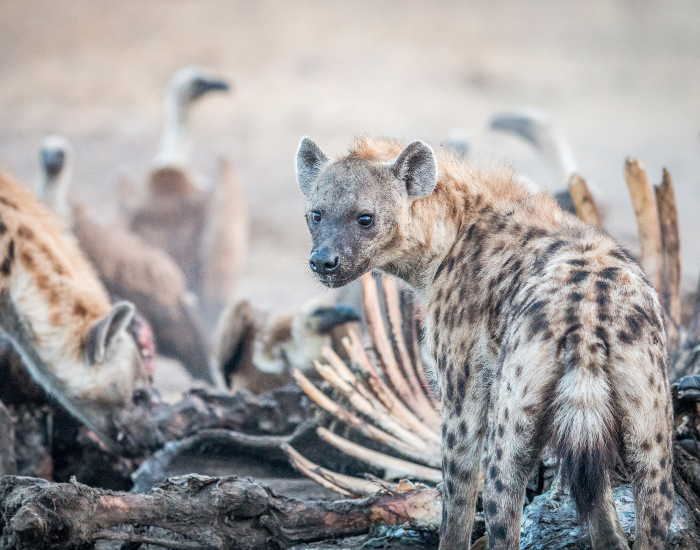
12. Oryx Are Built for Speed and Endurance
Despite their substantial build, oryx are surprisingly athletic. They can reach speeds of up to 37 mph (60 km/h) when escaping predators, and their endurance is legendary. These animals can travel 30 miles in a single day searching for food and water.
Their long, powerful legs are perfectly adapted for covering vast distances across desert terrain. The combination of speed and stamina makes them formidable prey for even large predators like lions and leopards.
Oryx have been observed outrunning vehicles across desert terrain, using their intimate knowledge of the landscape to their advantage. Their ability to maintain steady speeds over long distances reflects their evolution in wide-open desert environments where resources are scattered.
Conservation Status Today
So, are oryx endangered? It depends:
- Scimitar-horned oryx – Extinct in the wild, but reintroduced successfully.
- Arabian oryx – Vulnerable, but recovering.
- Gemsbok and Beisa oryx – Still stable in the wild.
Conservation efforts span protected areas, zoological societies, and managed reserves. Human care, from zoos to breeding centers, remains essential. With continued support, these large antelopes may thrive again across Africa and Arabia.
Not To Late… Share their Existence
The oryx animal is more than a desert survivor, it’s a symbol of resilience. With horns that curve backwards, adaptations for desert heat, and a story of extinction and recovery, the oryx embodies both fragility and strength. Conservation groups like the Smithsonian Conservation Biology Institute, Sahara Conservation Fund, and major zoos prove that even near-lost species can return.
The oryx reminds us that biodiversity matters, not just for science but for culture, ecology, and hope. Whether you encounter a white oryx in Abu Dhabi, a gemsbok in Namibia, or a reintroduced scimitar-horned oryx in Chad, remember: these desert icons nearly disappeared, but with awareness and action, their story continues!
Where to See Oryx in the Wild
Oryx are some of the most iconic antelopes of the African deserts — instantly recognizable by their long, straight horns and pale coats built to reflect heat. While their range once stretched across much of North and East Africa, today the best places to see oryx in the wild are in Namibia, Kenya, Tanzania, and parts of the Horn of Africa. Habitat loss and hunting have reduced numbers in some regions, but several protected reserves offer excellent viewing opportunities.
🇳🇦 Namibia (Best overall place to see gemsbok/or Oryx gazella)
If you want near-guaranteed sightings, Namibia is the world’s top destination. Oryx (gemsbok) are abundant in:
- Etosha National Park – Large herds roam the grasslands and salt pan edges.
- NamibRand Nature Reserve – Stunning desert landscapes with oryx in front of red dunes.
- Sossusvlei / Namib-Naukluft Park – One of the most photographed wildlife scenes in Africa; oryx appear at sunrise under the towering orange dunes.
Namibia is exceptional because the species thrives even outside national parks — you can often see oryx from the roadside.
Recommended Safari Tours in Namibia
🇰🇪 Kenya
Kenya is home to the fringe-eared oryx (Oryx beisa callotis), a beautiful subspecies with distinctive tufted ears. Top places to see them include:
- Tsavo East & Tsavo West National Parks – Vast, dry landscapes ideal for oryx.
- Amboseli Ecosystem (especially the drier areas around the park)
Recommended Safari Tours in Namibia
🇹🇿 Tanzania
Tanzania also hosts the fringe-eared oryx, especially in the southern savanna ecosystems:
- Ruaha National Park – One of the country’s best-kept secrets for predator–prey interactions.
- Tarangire National Park – Good chance of spotting oryx during the dry season near the open plains.
🇪🇹 Ethiopia
Ethiopia is the stronghold of the Beisa oryx (Oryx beisa). Top viewing locations include:
- Awash National Park
- Bale lowlands
- Kafta Sheraro National Park
References:
Aychew, M., & Girma, Z. (2024). Population size and structure of beisa oryx and gerenuk in Geralle National Park, southeastern Ethiopia. Ecology and evolution, 14(7), e70008. https://doi.org/10.1002/ece3.70008
Hetem, R. S., Strauss, W. M., Fick, L. G., Maloney, S. K., Meyer, L. C., Shobrak, M., Fuller, A., & Mitchell, D. (2010). Variation in the daily rhythm of body temperature of free-living Arabian oryx (Oryx leucoryx): does water limitation drive heterothermy?. Journal of comparative physiology. B, Biochemical, systemic, and environmental physiology, 180(7), 1111–1119. https://doi.org/10.1007/s00360-010-0480-z
Iyengar, A., Gilbert, T., Woodfine, T., Knowles, J. M., Diniz, F. M., Brenneman, R. A., Louis, E. E., Jr, & Maclean, N. (2007). Remnants of ancient genetic diversity preserved within captive groups of scimitar-horned oryx (Oryx dammah). Molecular ecology, 16(12), 2436–2449. https://doi.org/10.1111/j.1365-294X.2007.03291.x
Humble, E., Dobrynin, P., Senn, H., Chuven, J., Scott, A. F., Mohr, D. W., Dudchenko, O., Omer, A. D., Colaric, Z., Lieberman Aiden, E., Al Dhaheri, S. S., Wildt, D., Oliaji, S., Tamazian, G., Pukazhenthi, B., Ogden, R., & Koepfli, K. P. (2020). Chromosomal-level genome assembly of the scimitar-horned oryx: Insights into diversity and demography of a species extinct in the wild. Molecular ecology resources, 20(6), 1668–1681. https://doi.org/10.1111/1755-0998.13181
Spalton, J. A., Lawerence, M. W., & Brend, S. A. (1999). Arabian oryx reintroduction in Oman: successes and setbacks. Oryx, 33(2), 168–175. doi:10.1046/j.1365-3008.1999.00062.x