We are a species obsessed with the “other.” We spend billions scanning the stars for a signal from deep space. We flock to cinemas to lose ourselves in the bioluminescent jungles of Avatar, dreaming of what alien life might look like. We crave the strange, the bizarre, and the otherworldly.
However, you don’t need a warp drive to find an alien. Some of the most “extraterrestrial” beings on the planet are right here, hiding in plain sight. Just like the Sichuan takin, snow leopard, In this case, they’re galloping across the dusty Eurasian steppes of Central Asia.
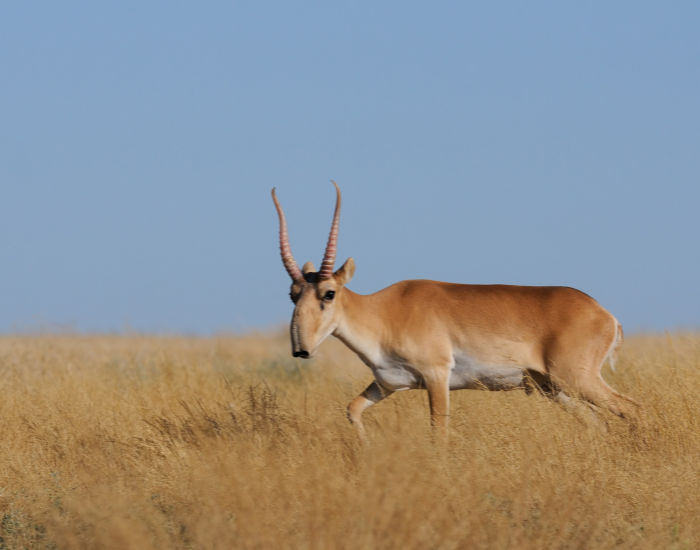
Meet the saiga antelope (Saiga tatarica).
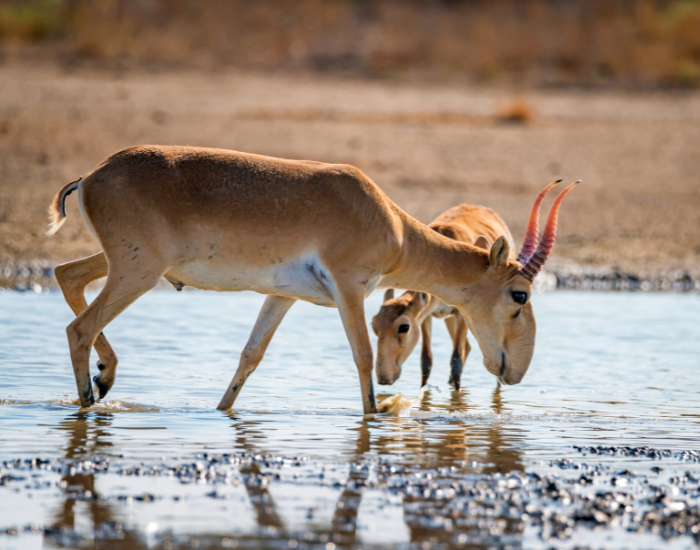
If you saw one for the first time, you’d be forgiven for thinking a Star Wars creature designer had finally gone too far. With a bulbous nose that looks like a miniature elephant trunk and a face that belongs in the Pleistocene, the saiga is a living relic. It watched the woolly mammoths go extinct and decided to stick around.
Today, let’s peel back the curtain on this incredible saiga animal. Here are 12 facts about the most fascinating “alien” you’ve never heard of.
1. It’s a Literal Living Fossil from the Ice Age
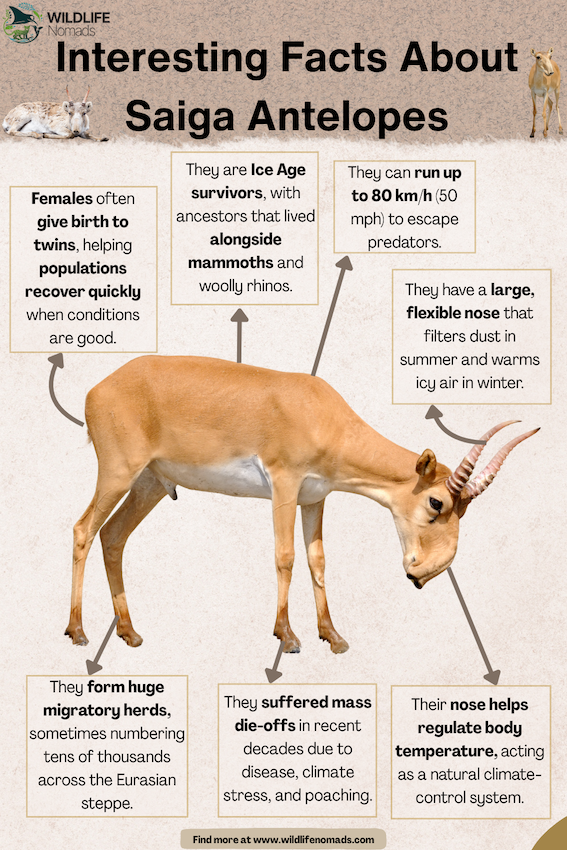
The saiga antelope isn’t just “old”; it’s prehistoric. These mammal species roamed the earth alongside saber-toothed cats and mammoths during the last Ice Age. While those giants vanished, the saiga endured, outlasting its peers by thousands of years.
When you look at a male saiga antelope, you aren’t just looking at a deer-like creature. You’re looking at a survivor of a world that no longer exists. Therefore, the saiga represents our last physical link to the mammoth steppe fauna of the Pleistocene era.
2. That Famous Bulbous Nose Has a Dual Purpose
The most striking and funny maybe, of all saiga antelope characteristics is undoubtedly the nose. This bulbous, fleshy, inflatable snout serves a dual purpose. In the blistering summers of the Eurasian steppes, it filters out the massive clouds of dust kicked up by large herds. In addition, during the harsh winters, it acts as an internal heater, warming up the freezing air before it reaches the animal’s lungs.
The saiga’s unique nose is an evolutionary masterpiece of climate control. Moreover, this distinctive feature helps the species adapt to the extreme temperature fluctuations of the semi deserts and grasslands of Central Kazakhstan.

3. The Great Population Rollercoaster: A Conservation Success Story
If you ask, “How many saiga antelopes are left?” the answer depends heavily on the year. The saiga population has experienced dramatic fluctuations over recent decades. Population size is heavily influenced by climatic variability, such as harsh winters and droughts, which can cause dramatic decreases.
In the early 1990s, there were nearly a million saiga antelopes roaming the Eurasian steppes. By the early 2000s, that number crashed by 95% due to saiga poaching and illegal wildlife trade, the fastest decline ever recorded for a mammal species. The global population plummeted to a critically low level. Then, just as they were recovering, a catastrophic disease outbreak in May 2015 caused by the bacterium Pasteurella multocida killed over 75% of the global adult saiga population in just three weeks.
However, there is hope. Thanks to massive saiga conservation efforts led by organizations like the Saiga Conservation Alliance and government initiatives in Central Kazakhstan, the population has rebounded dramatically. The Saiga Conservation Alliance has been working with the Convention on Migratory Species since 2006 to improve conservation efforts for the saiga antelope. Current estimates suggest the saiga population has surpassed 1.9 million as of recent counts (2024-2025), representing a remarkable conservation success story. The saiga antelope was reclassified from critically endangered to near threatened on the IUCN Red List, indicating a significant recovery.
4. Only the Males Wear the Crown: Saiga Horns
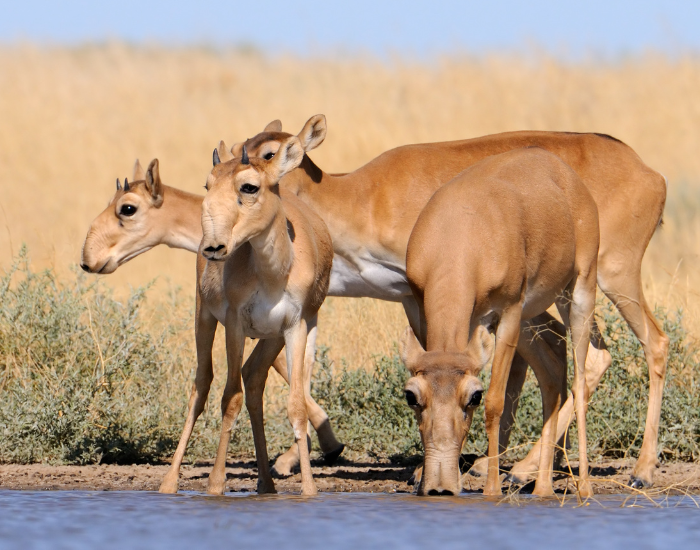
The male saiga antelope is the only one with horns. These slightly translucent, wax-colored, lyre-shaped horns are highly prized in Traditional Chinese Medicine. Unfortunately, this demand makes the male saiga a prime target for saiga poaching.
The saiga horn, known as Cornu Antelopis, has been used for over 2,000 years in Chinese medicine to treat fevers and “detoxify” the body. Because hunters targeted the males so heavily during the population decline, the sex ratios in herds once became dangerously skewed. There weren’t enough males to ensure successful reproduction, nearly collapsing the species’ ability to breed.
Conservation organizations now work closely with Traditional Chinese medicine practitioners to find sustainable alternatives. Therefore, protecting male saiga populations has become critical for the species’ long-term survival.

5. They Are the Sprinters of the Steppe
Don’t let the robust body and funny nose fool you. The saiga animal is incredibly fast. They can reach speeds of up to 80 km/h (50 mph). In the flat, treeless landscapes of Kazakhstan and Mongolia, speed is their primary defense against wolves and other predators.
In addition, their short tail and streamlined body help them maintain these impressive speeds across the open Eurasian steppes. This speed is essential for survival in their native habitat, where there are few physical barriers to hide behind.
6. A Diet of “Forbidden” Plants: Selective Grazers of Semi Deserts
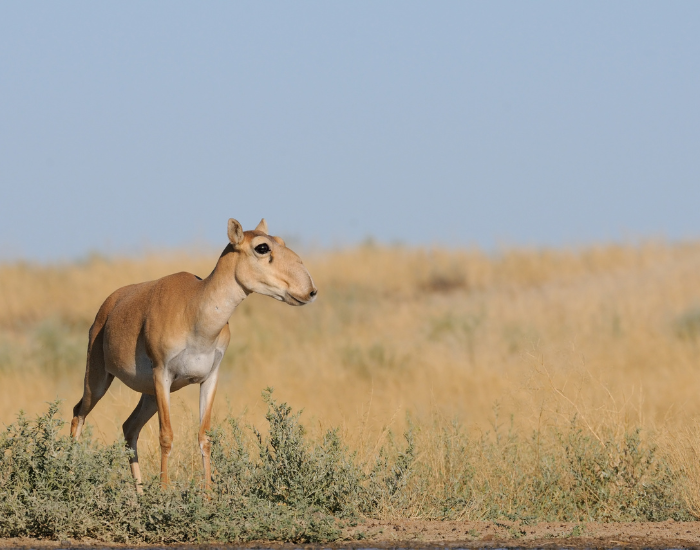
The saiga antelope is an unfussy eater. They graze on over a hundred different types of plants. Moreover, they consume several species that are actually poisonous to other animals and livestock. This unique saiga antelope trait allows them to thrive in harsh semi deserts where other herbivores would struggle to find a “safe” meal.
As selective grazers, saiga antelopes play a crucial role in maintaining the health of the grasslands. They help recycle nutrients and prevent overgrowth. Therefore, their presence supports the entire ecosystem of the Eurasian steppes.

7. The “Twin” Advantage: Rapid Reproduction Rates
One reason the saiga antelope has been able to bounce back from catastrophic disease outbreaks is their reproductive rate. While many large mammals have one offspring at a time, females reach sexual maturity quickly. Female saiga antelopes almost always give birth to twins during the mating season.
All the females in a herd typically give birth within a narrow window in early June. This synchronized breeding strategy, combined with their high birth rate, is nature’s way of ensuring the species survives the “boom and bust” cycles of their extreme environment. In addition, newborn saigas can run within hours of birth, helping them avoid predators.

8. They Are Record-Breaking Travelers: Understanding Migratory Routes
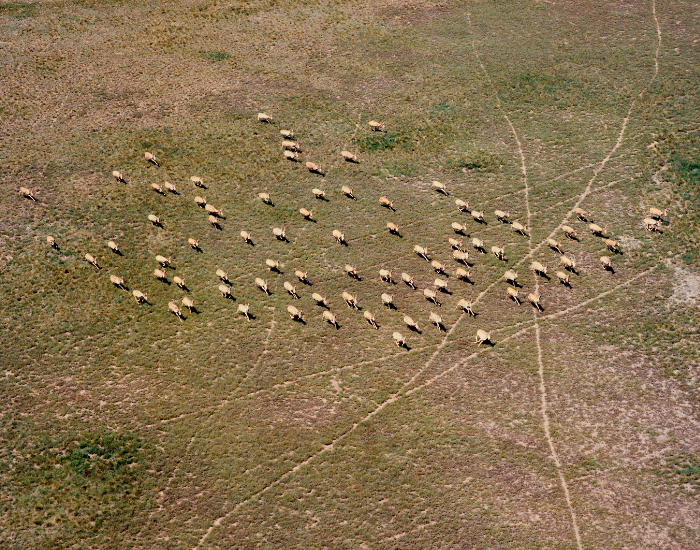
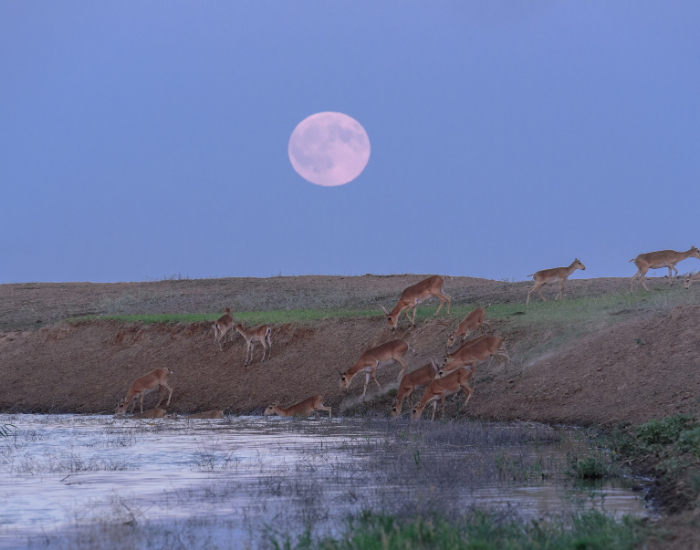
The saiga antelope range is vast. The saiga’s range extends across part of Eurosia like Russia, Central Asia, including Kazakhstan, Russia again, Uzbekistan (the Ustyurt population), and Western Mongolia (Mongolian saiga subspecies), making conservation across these territories crucial for the species’ survival. Saiga live in extreme climates, such as steppes and semi-arid deserts, and have adapted to survive in these harsh environments. These are highly migratory species, traveling up to 1,000 kilometers (over 600 miles) between their summer and winter feeding grounds. They are nomadic by nature, moving constantly to find fresh water and better grazing.

Saiga herds often cross international borders between Kazakhstan, Russia, Uzbekistan (the Ustyurt population), and Western Mongolia (Mongolian saiga subspecies). Their migratory routes have been used for millennia. However, habitat loss and physical barriers such as railways and pipelines now threaten these ancient pathways by blocking the seasonal migration routes of saiga. Therefore, protecting these corridors has become a priority for conservation organizations. Conservation organizations report positive impacts from their work, but acknowledge that more efforts are needed across the saiga’s entire range.
9. The Mystery “Time Bomb” Disease: Catastrophic Disease Outbreaks
What disease killed the saiga antelope so suddenly in May 2015? Scientists discovered it was a bacteria called Pasteurella multocida. The crazy part? This bacteria lives harmlessly in the saiga’s throat all the time.
Researchers believe that an unusually warm spike in temperature and humidity triggered the bacteria to turn “hyper-virulent,” causing mass blood poisoning. It was a stark reminder of how climate change and global warming can affect wildlife in unpredictable ways.
The catastrophic disease outbreak killed entire herds within days. However, the species’ rapid reproduction helped them recover. In addition, scientists now monitor weather patterns more closely to predict potential future outbreaks.
10. They Sleep in “Dust Baths”: Adapting to Harsh Winters and Cold Winters
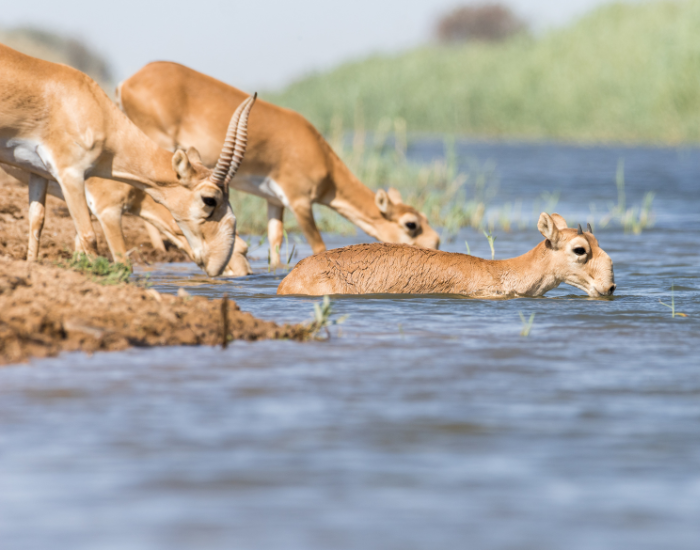
Before bed, saigas don’t just lie down. They dig small, circular depressions in the earth to serve as beds. This behavior, combined with their large herds, helps them stay low and protected from the biting winds of the steppe at night.
During cold winters, these depressions provide shelter from the harsh elements. In addition, huddling together in large herds helps conserve body heat. Therefore, their social behavior is crucial for survival in the extreme climate of the Eurasian steppes.
11. Cultural Icons and Traditional Medicine: The Double-Edged Sword
The saiga horn has deep cultural significance. It has been used for over 2,000 years in Traditional Chinese Medicine. The hunting of saiga rapidly accelerated during the 1990s due to the lucrative trade in saiga horn for Chinese medicine. While this historical connection runs deep, it remains the primary driver of illegal wildlife trade today. The trade of saiga horns is illegal under CITES, but demand continues to drive poaching and illegal markets.
Conservationists now work with TCM practitioners and Chinese medicine communities to find sustainable alternatives. Organizations like the Saiga Conservation Alliance and the Altyn Dala Conservation Initiative promote synthetic substitutes. The Saiga Conservation Alliance addresses both the supply and demand for saiga products to combat illegal wildlife trade. Therefore, education and sustainable use practices have become essential components of anti poaching efforts.
Moreover, in rural communities and rural economies across Central Asia, the saiga has traditionally provided meat for local consumption. Saiga poaching provided a crucial source of food and income for local communities, especially after the collapse of the Soviet Union’s rural economies. The collapse of the Soviet Union in the early 1990s led to increased hunting of saiga for food and trade due to widespread unemployment and poverty.

12. From “Critically Endangered” to “Near Threatened”: A Remarkable Conservation Success
In a rare piece of good news for the planet, the International Union for Conservation of Nature (IUCN) recently reclassified the saiga antelope from “Critically Endangered” to “Near Threatened.” This represents one of the greatest conservation success stories of our time.
This achievement shows that when governments—like those in Central Kazakhstan and Russia—and groups like the Saiga Conservation Alliance work together, we can actually pull a species back from the very edge of the abyss. The remarkable conservation success involved:
- Strengthened anti poaching efforts and law enforcement
- Community engagement in rural communities
- Habitat protection across the saiga’s range
- International cooperation between conservation organizations
- Research into disease management and climate change impacts
However, the species still faces significant threats. Habitat loss, climate change, and continued illegal wildlife trade remain concerns. Therefore, ongoing conservation efforts are essential to ensure the saiga antelope continues to thrive.
FAQs About the Saiga Antelope
A saiga is a medium-sized antelope native to the Eurasian steppes, famous for its oversized, bulbous nose. The species includes the Saiga tatarica and the Mongolian saiga subspecies.
The majority live in Central Kazakhstan, with smaller populations in Western Mongolia, Russia (Russian saiga), and the Ustyurt population between Kazakhstan and Uzbekistan. Their native habitat consists of semi deserts and open grasslands.
Yes! Though they look like CGI creations, they are 100% real. These mammal species have existed since the Ice Age and represent one of the last surviving Pleistocene animals.
Current estimates suggest the saiga population has surpassed 1.9 million, a massive jump from the 48,000 recorded in 2005. This represents a remarkable conservation success story.
While recently reclassified to “Near Threatened” by the International Union for Conservation of Nature, saigas face ongoing threats. Saiga poaching for horns used in Traditional Chinese Medicine, habitat loss, catastrophic disease outbreaks, and climate change continue to threaten populations.
Saiga Day is an annual celebration in regions where saiga antelope live, especially in Kazakhstan and surrounding areas. The event highlights the birth of saiga calves each spring, which is seen as a symbol of life and hope for the species’ future. Communities take pride in protecting these young saiga calves, and Saiga Day activities often focus on conservation efforts and raising awareness about the importance of safeguarding both the calves and their habitat.
We Should Care About Saiga Conservation
We often look at “strange” animals as curiosities. However, the saiga antelope is a key player in its ecosystem. As selective grazers, they help maintain the health of the grasslands by recycling nutrients and preventing overgrowth.
But more than that, they represent our history. They are the last of the Ice Age mammoth steppe fauna. To lose the saiga would be to lose one of our last physical connections to the deep past.
The remarkable conservation success of bringing the global population from near extinction to over 1.9 million animals demonstrates what’s possible. When conservation organizations, governments, and local communities work together, we can achieve extraordinary results.
Yet, the journey is far from over. Habitat loss, climate change, and illegal poaching continue to threaten the future of the saiga. Ongoing conservation is essential to safeguard this unique species and the delicate ecosystems it calls home. The saiga’s recovery is a powerful reminder of what’s possible when we commit to protecting our planet’s most vulnerable wildlife.