
The first rattlesnake I ever moved by hand was coiled under a loading dock behind the zoo. I worked the reptile and amphibian section for years, and a keeper there taught me how to handle a rattlesnake safely: hook, bucket, calm hands. We found them near the grounds constantly, and we relocated them again and again, season after season. That work taught me what no textbook could. A rattlesnake is not a villain. It is one of the most precisely engineered ambush predators on Earth.
In this guide I’ll walk through 15 types of rattlesnakes, with biology, behavior, range, and stories from my own fieldwork. Rattlesnakes are venomous pit vipers found only in the Americas, from southern Canada to South America. There are roughly 30 to 50 rattlesnake species, and they live in remarkably diverse habitats. Some stretch eight feet; others fit in your palm. We’ll cover desert ambushers, the forest-dwelling timber rattlesnake, and a critically endangered island snake that lost its rattle entirely. By the end, you’ll read a rattle for what it really is, a warning, not a threat.
What Are Rattlesnakes, Really?
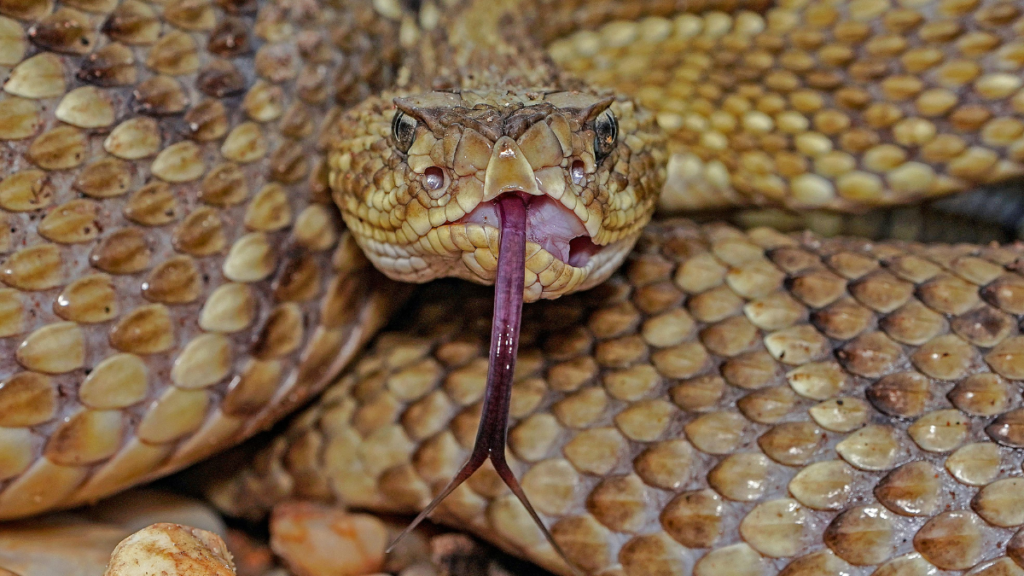
They belong to the pit vipers, a group of venomous snakes named for the heat-sensitive pits between their eyes and nostrils. Like all reptiles, they are ectothermic, so their body heat tracks the environment. Those pits detect prey by warmth alone. As a result, they can hunt in complete darkness, sensing a mouse’s body heat against the cool desert night.
Their biology is a toolkit for ambush. Large venom glands sit behind the upper jaw, each connected by a venom duct to a hinged, hollow fang. When they strike, it can inject venom in well under a second. The venom does double duty: it stops prey and begins digestion before the meal is even swallowed.
The senses go deeper still. A rattlesnake flicks its forked tongue to collect scent particles, then locates prey by “tasting” the air. Its vertical pupils sharpen depth perception, and excellent low-light vision rounds out the picture. Interestingly, the brain blends heat signals with the optic nerve impulses it receives, building a single thermal map of the world. Overlapping scales armor the body, and a patterned skin offers camouflage against predators.
Then there’s the famous tail. A rattle is built from interlocking segments of keratin, the same material as your fingernails. Each time a snake sheds, it adds a new rattle segment, so older snakes often carry more rattle segments and a louder buzz. A fresh rattle on a young snake is barely audible. Their rattle is a warning device, full stop. The snake uses its rattle to warn potential predators away, not to attack. When you hear that dry rattle buzz, the animal is asking for space, not picking a fight.
How Rattlesnakes Hunt and Help
Rattlesnakes are ambush predators. They coil near a game trail, hold still for hours, and let the meal come to them. Prey makes up a varied menu: small mammals top the list, but they also eat birds, lizards, and other reptiles. A big eastern diamondback can take a full-grown rabbit; a tiny pygmy snake settles for frogs.
This appetite matters far beyond the snake. By controlling small mammal populations, rattlesnakes keep ecosystems balanced and curb the rodents that spread disease. One study found that a single timber rattlesnake removes thousands of ticks a year by eating the rodents that carry them. Researchers have linked healthy rattlesnake numbers to lower tick loads, because fewer rodents means fewer tick hosts. Keeping rodent populations in check is quiet, unglamorous, and genuinely valuable work.
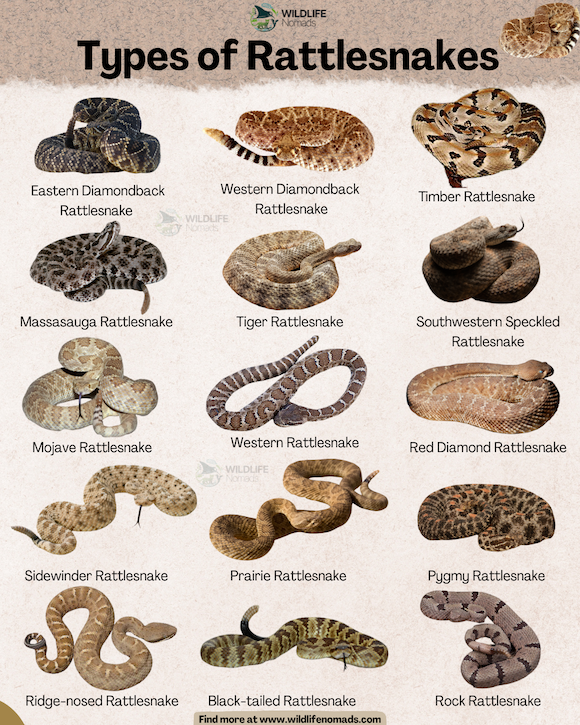
15 Types of Rattlesnakes
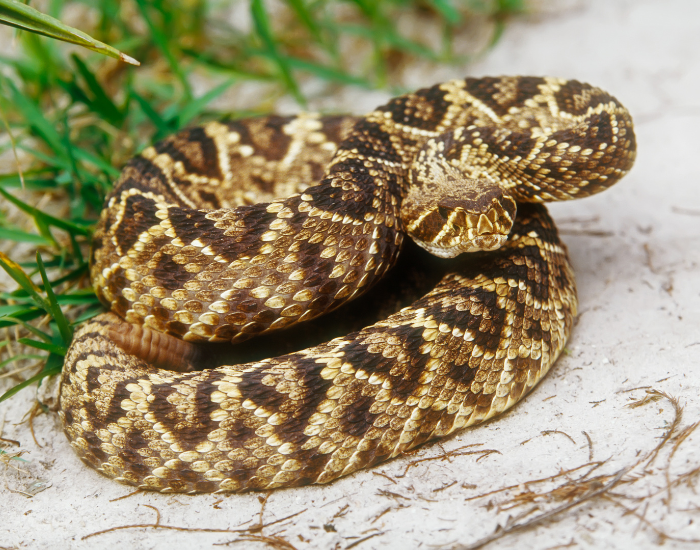
1. Eastern Diamondback Rattlesnake (Crotalus adamanteus)
The eastern diamondback is the largest rattlesnake on the planet. Adults commonly run three to six feet, and record animals have approached eight. Its diamond-patterned back is unmistakable across the longleaf pine flatwoods of the southeastern United States.
I met my first wild one in a Florida palmetto thicket. It never struck — it simply lifted its head, buzzed once, and held its ground. Habitat loss has hit this species hard, and several states now treat its decline as a serious conservation concern.
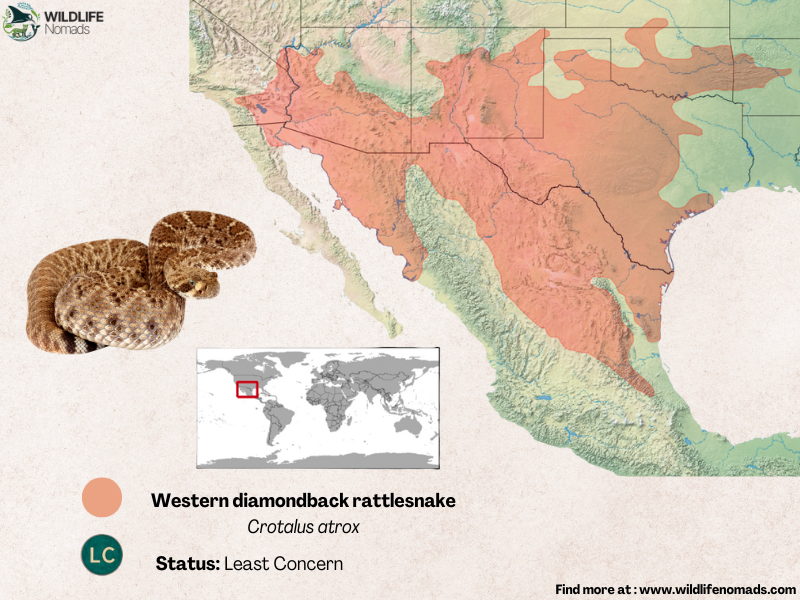
2. Western Diamondback Rattlesnake (Crotalus atrox)
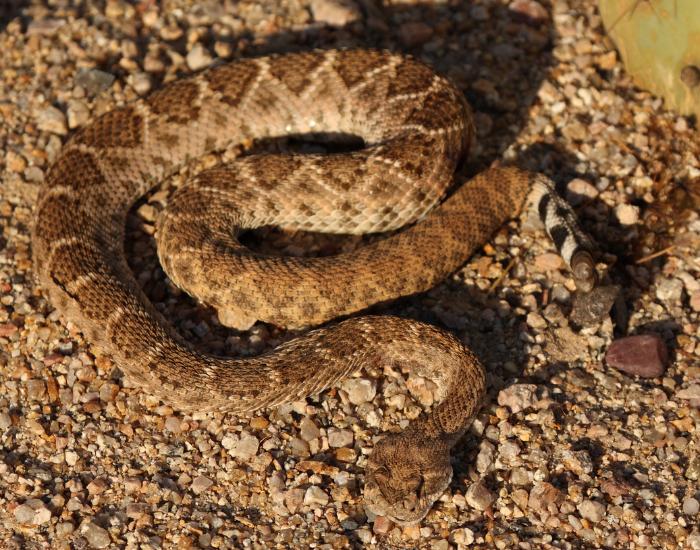
The western diamond backed rattlesnake is the workhorse of the American Southwest. It thrives in deserts, grasslands, and rocky canyons from Texas to southern California and deep into Mexico. This is one of the most common species behind serious rattlesnake bites, mostly because it lives where people do.
It’s a bold animal. By contrast with shier snakes, a cornered western diamondback stands tall, inflates, and rattles hard. That confidence makes it easy to find — and easy to respect from a distance.

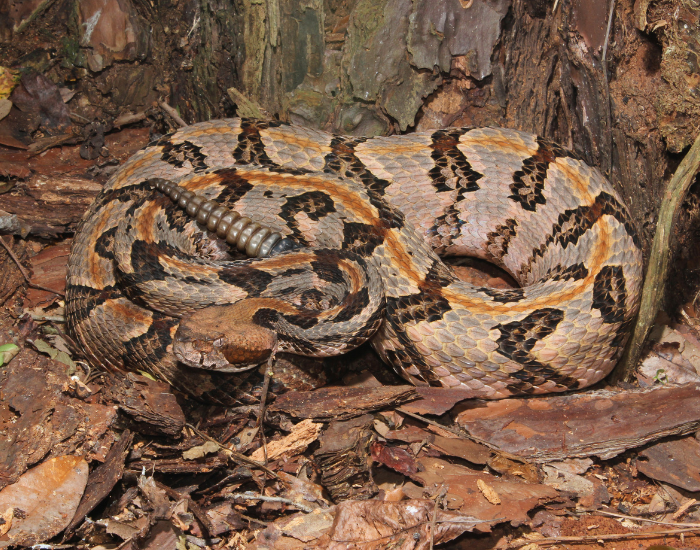
3. Timber Rattlesnake (Crotalus horridus)
The timber rattlesnake is the great snake of the eastern United States. Found across the eastern United States, the timber rattlesnake ranges from southern New Hampshire to northern Florida and west to Texas. It prefers mountainous or hilly forests, rocky outcrops, and lowland swamps. Timber rattlesnakes commonly reach four to five feet, and exceptional individuals push close to six.
Timber rattlesnakes are now threatened or endangered in several U.S. states, especially across the Northeast. The timber rattlesnake reproduces slowly and dens communally, so losing one site can erase a local population. Vehicle collisions and habitat loss compound the pressure. The timber rattlesnake is, to me, the clearest case for why their conservation matters.
4. Mojave Rattlesnake (Crotalus scutulatus)
The Mojave rattlesnake carries some of the most potent venom of any rattlesnake. It blends a neurotoxic and tissue-damaging cocktail, which is why this species earns extra caution across its desert range from southeastern California to west Texas.
Its greenish cast and clean tail bands set it apart from the western diamondback nearby. The two look similar to a nervous eye, which is exactly why field identification skills save lives.
5. Western Rattlesnake (Crotalus oreganus)
The western rattlesnake is a shape-shifter of a species, with several recognized subspecies spread from British Columbia down through coastal southern California. It occupies grasslands, forests, and rocky hillsides, adapting its diet to whatever small mammals dominate locally.
This snake reminds me that “rattlesnake” is not one animal but a sprawling family. A northern western rattlesnake brumating in Canada and a southern one hunting in California lead very different lives.
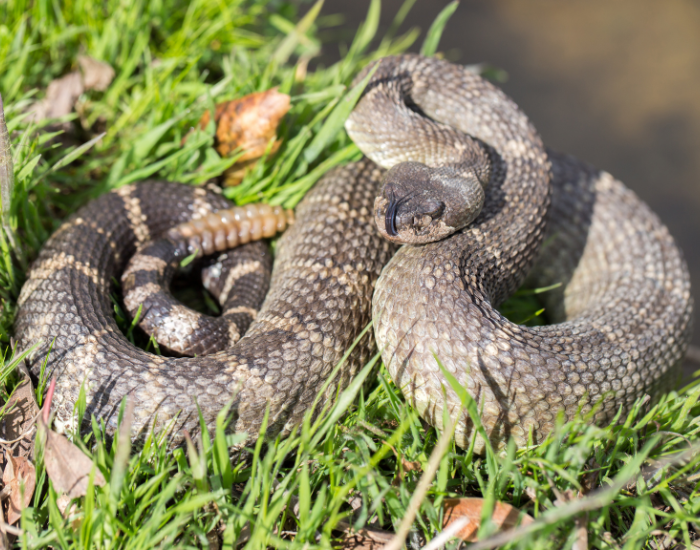
6. Red Diamond Rattlesnake (Crotalus ruber)
The red diamond rattlesnake wears a soft brick-red coat that makes it one of the most beautiful rattlers I’ve handled. It lives in southern California and runs the length of the Baja California peninsula. Despite its size, this is a famously mild-mannered snake.
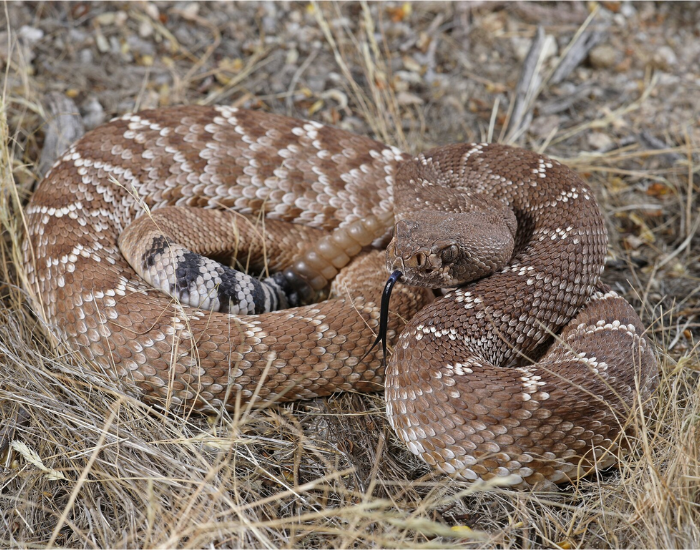
7. Sidewinder (Crotalus cerastes)
The sidewinder solved a desert engineering problem with style. It throws its body sideways in looping arcs, keeping most of its length off the scorching sand. The horn-like scales over its eyes shade them from glare.
Tracking sidewinders at dawn is pure detective work. You read the J-shaped tracks across a dune, follow them to a shrub, and find the snake buried in cool sand with only its eyes showing. Few species feel so perfectly matched to their home.
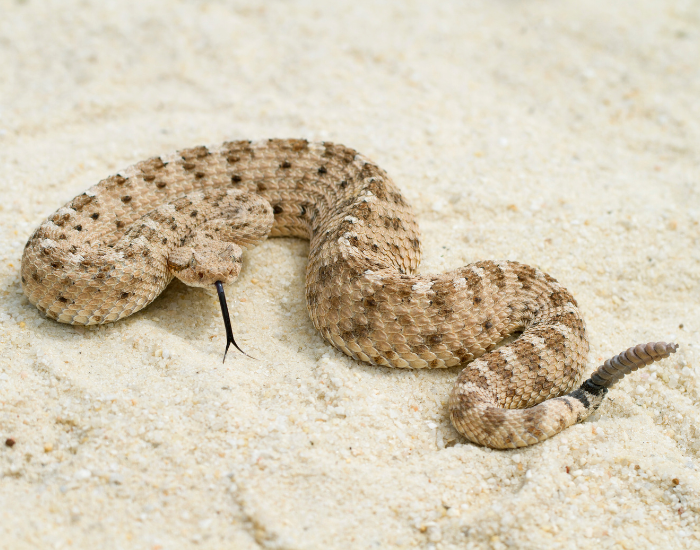
8. Prairie Rattlesnake (Crotalus viridis)
The prairie rattlesnake rules the Great Plains, ranging from Canada to Mexico and from sea level up into the foothills. It dens communally in rocky outcrops and under logs or in mammal burrows, sometimes by the hundreds.
These snakes are essential to grassland health. By controlling rodent populations across vast ranches, prairie rattlesnakes quietly protect both crops and stored grain from explosive mouse booms.
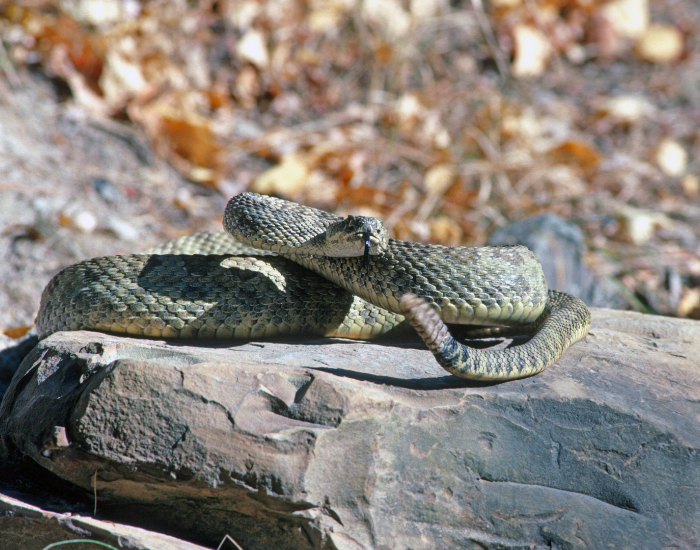
9. Massasauga (Sistrurus catenatus)
The massasauga is a small, shy wetland rattlesnake of the upper Midwest and into southern Canada. Its rattle is high and buzzy, more insect than warning klaxon. Massasauga rattlesnakes are listed as threatened across much of their range.
Wetland drainage is the core problem. As marshes vanish, so do the snakes, which is why several recovery programs now focus on protecting the patchy habitat they have left.
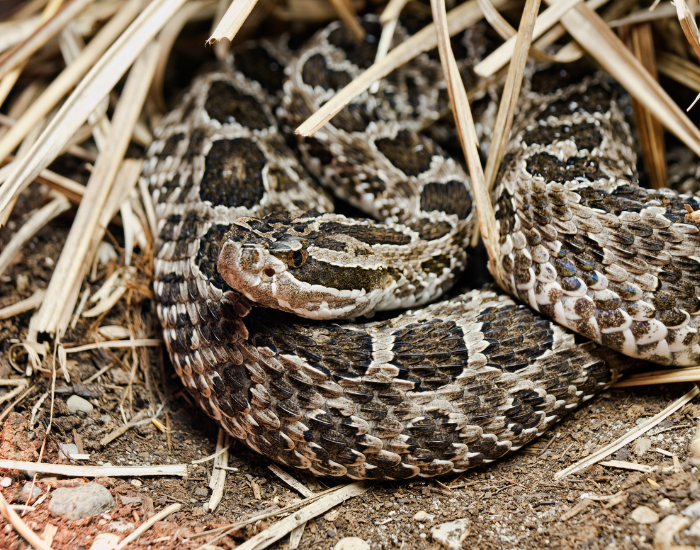
10. Pygmy Rattlesnake (Sistrurus miliarius)
The pygmy rattlesnake is a pocket-sized predator of the southeastern United States, often under two feet long. Its rattle is so tiny you can stand a few feet away and barely hear it.
Don’t underestimate it. A pygmy bite rarely threatens a healthy adult, but it hurts and can do real local tissue damage. I treat every small rattlesnake with the same respect I give a big one.

11. Ridge-nosed Rattlesnake (Crotalus willardi)
The ridge-nosed rattlesnake is a high-elevation jewel of the “sky island” mountains of Arizona and northern Mexico. Arizona, in fact, hosts the highest diversity of rattlesnake species of any state, more than a dozen call it home. A raised ridge of scales along the snout gives this species its name.
Rattlesnakes can live from sea level to over 11,000 feet, and this little mountaineer proves how far the family has spread.
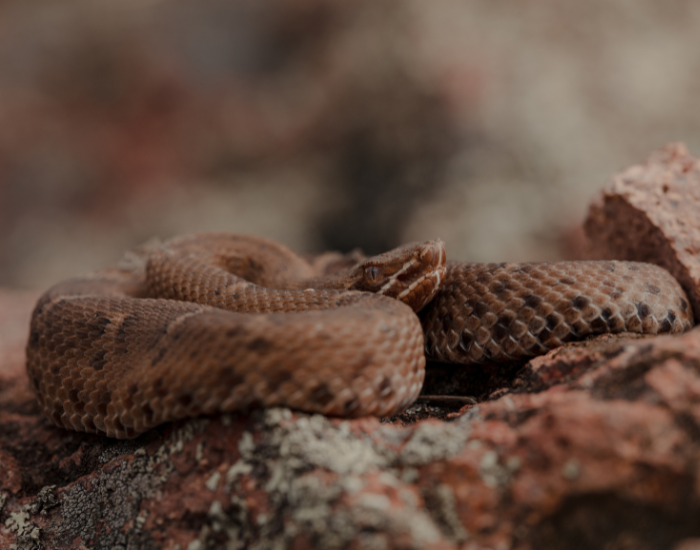
12. Black-tailed Rattlesnake (Crotalus molossus)
The black-tailed rattlesnake is a strikingly handsome snake with a velvety dark tail and a gold or olive body. It haunts rocky canyons across the Southwest and into Mexico. Among rattlesnakes, this is one of the calmest I’ve encountered.
Its color varies wildly by region, from dark brown highland forms to pale desert ones. That variation makes the black-tail a favorite among the herpetologists I’ve worked beside.
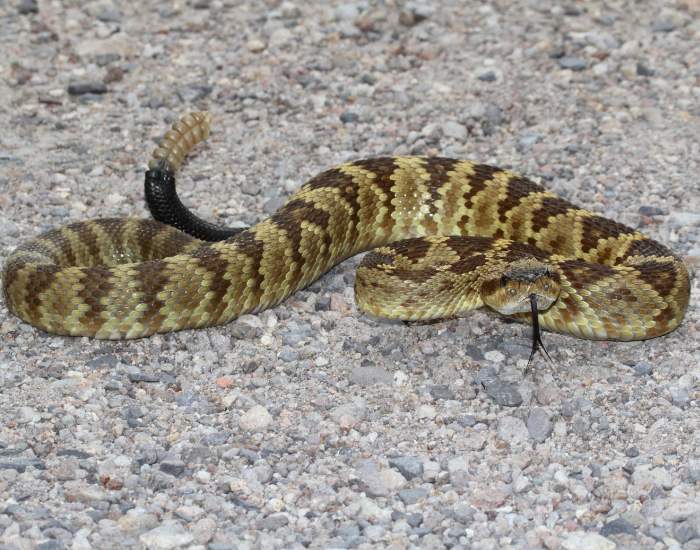
13. Rock Rattlesnake (Crotalus lepidus)
The rock rattlesnake is a small, banded species that lives up to its name, slipping through limestone outcrops and talus slopes. Its color tracks the local rock so closely that camouflage borders on invisibility.
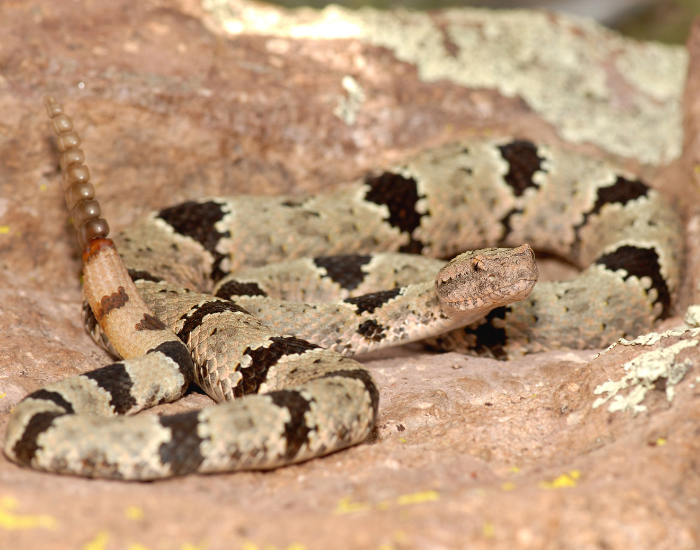
14. Santa Catalina Rattlesnake (Crotalus catalinensis)
The Santa Catalina rattlesnake breaks the family’s most famous rule: it has no working rattle. On its tiny island in the Gulf of California, off Baja California, the rattle became a liability for a snake that hunts birds in trees. Each shed simply drops the button, so no rattle ever forms.
This species is critically endangered. Feral cats and human collection have pushed it to the brink, and conservation efforts remain thin. Seeing a silent rattlesnake glide through brush is eerie, and a sharp lesson in how fast evolution edits its own work.
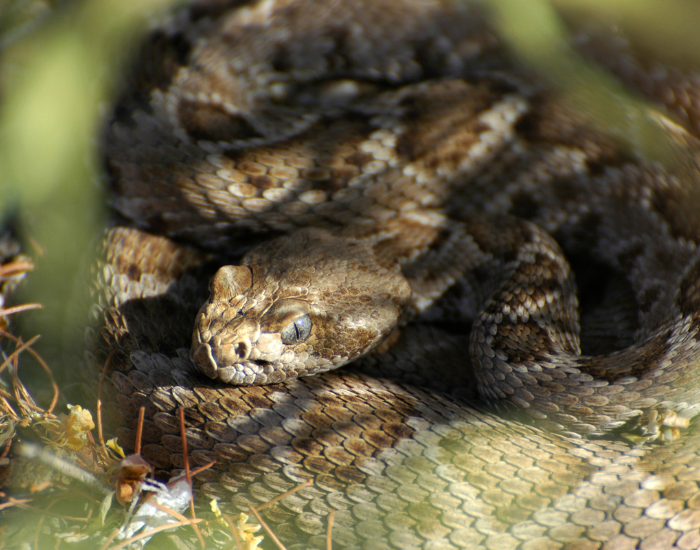
15. South American Rattlesnake (Crotalus durissus)
The South American rattlesnake, or neotropical rattlesnake, is the genus’s great southern traveler. It ranges across South America from Colombia to Argentina, the only rattlesnake to colonize the continent in force. Its venom can carry strong neurotoxic effects.
This snake anchors the family’s full sweep. From the eastern diamondback in Florida to this rattler on a Brazilian savanna, rattlesnakes occupy nearly every warm corner of the western hemisphere.
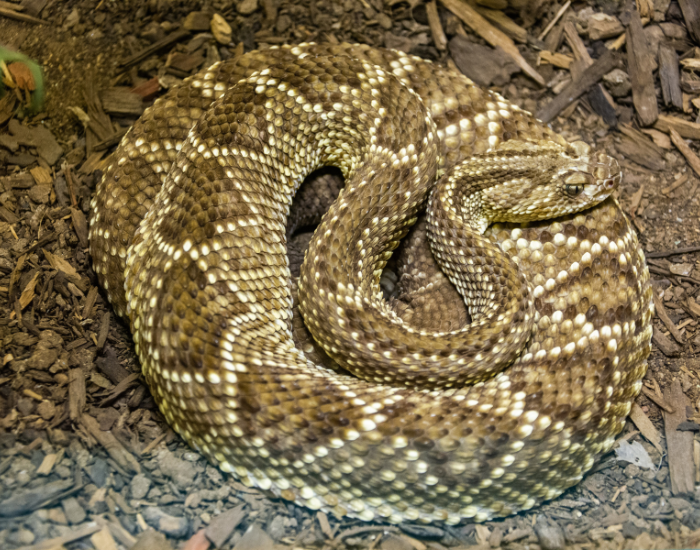
Reproduction: Live Birth, Not Eggs
Here’s a fact that surprises people. Unlike many reptiles, rattlesnakes do not lay eggs. They are ovoviviparous, meaning eggs develop and hatch inside the female, who then gives birth to live young.
Mating season runs from spring to late summer. After the breeding season, females may carry developing young for months. A single litter holds three to thirteen young, and females typically reproduce only every two to three years. That slow pace is why population recovery takes so long.
Newborn rattlesnakes are independent almost immediately. Baby rattlesnakes arrive with venom, fangs, and a single “button” where the rattle will grow. Young rattlesnakes get no parental care, they hunt, hide, and survive on instinct from the first day.
Where Rattlesnakes Live, and the Winter Sleep
Rattlesnakes inhabit diverse habitats across the Americas, from blistering deserts to cool eastern forests, swamps, prairies, and mountain slopes. Look at the example for the Western Diamond Rattlesnake below. TheTimber rattlesnakes prefer mountainous or hilly forests and swamps, while desert species hunt open sand for prey. Habitat for rattlesnakes simply needs cover, prey, and a safe place to overwinter. They shelter in rocky outcrops, under logs, and inside abandoned burrows.
When cold arrives, rattlesnakes enter brumation, a reptilian dormant state much like hibernation. Many den together through winter, sharing body heat in the same rock crevices their ancestors used. Where does a rattlesnake live in January? Often packed into a communal den, barely moving until spring.
The Real Threats Rattlesnakes Face
The biggest dangers to rattlesnakes are human-made. Rattlesnake round-ups — events that collect and kill snakes by the thousands — drive measurable population declines. Many rattlesnakes also die from vehicle collisions while crossing warm roads at dusk.
Several species are now considered endangered or threatened, including the Santa Catalina rattlesnake, the timber rattlesnake, and many massasauga populations. Conservation efforts led by groups like the San Diego Zoo focus on habitat protection, public education, and captive breeding. The San Diego Zoo and its partners have also studied venom and reproduction in rattlesnakes for decades. I’ve watched San Diego Zoo outreach change how a whole community treats its local snakes.
FAQ
First, a rattlesnake’s rattle is made of keratin, the same material as your fingernails. Second, they hunt in complete darkness using heat-sensitive pits. Third, they give birth to live young instead of laying eggs. Fourth, the Santa Catalina rattlesnake evolved away its rattle entirely. Fifth, rattlesnakes can strike up to about half their body length.
King snakes are a major predator of rattlesnakes, and they’re immune to rattlesnake venom. They overpower and eat rattlers outright. Hawks, eagles, roadrunners, and coyotes also prey on rattlesnakes, so even a venomous snake spends much of its life avoiding being eaten.
yes — the vast majority of people survive. Rattlesnakes and other venomous snakes cause roughly 7,000 to 8,000 bites a year in the U.S., and less than 1% result in death. With antivenom started within about two hours, recovery rates exceed 99%. A rattlesnake bite is a medical emergency, but it is seldom fatal with prompt care.
Most rattlesnake bites occur when a person approaches, handles, or tries to kill the snake. Studies suggest the majority of victims — by some counts around 72% — are male, often young adults. The safest response to a rattlesnake is simple: freeze, then back away slowly. Give the animal space and never provoke it.
Can You Name That Rattlesnake? 🐍
A 15-photo identification challenge — every option is a rattlesnake, so look closely at pattern, color and tail. Go back and change any answer before you score.
Which rattlesnake is this?
A Snake Worth Knowing
Strip away the myth and a rattlesnake becomes what it always was, a patient predator that warns before it ever strikes, and quietly protects us from a tide of rodents. These 15 rattlesnake species span a continent and a half, yet they share that same honest signal: give me space, and we’ll both be fine.
So the next time a dry buzz stops you on a trail, freeze, step back, and look. You’re watching one of evolution’s finest pieces of work. If this guide helped, drop a comment with your own snake encounter.
References:
Allf, B. C., Durst, P. A. P., & Pfennig, D. W. (2016). Behavioral plasticity and the origins of novelty: The evolution of the rattlesnake rattle. The American Naturalist, 188(4), 475–483. https://doi.org/10.1086/688017
Forrester, J. A., Weiser, T. G., & Forrester, J. D. (2021). Epidemiology of fatal snakebites in the United States 1989–2018. The American Journal of Emergency Medicine, 45, 309–316. https://pubmed.ncbi.nlm.nih.gov/33046301/
Gerardo, C. J., et al. (2025). Long-term clinical outcomes of rattlesnake envenomation in Arizona following treatment with Crotalidae polyvalent immune Fab vs F(ab’)₂: A retrospective observational study. PMC. https://pmc.ncbi.nlm.nih.gov/articles/PMC12197915/
Greene, H. W. (2009). Evolutionary morphology of the rattlesnake style. BMC Evolutionary Biology, 9, 35. https://doi.org/10.1186/1471-2148-9-35
Greene, H. W., & McDiarmid, R. W. (2023). Rattlesnake toxicity. StatPearls. https://www.ncbi.nlm.nih.gov/books/NBK431065/
Davis, M. A., et al. (2016). Microevolutionary change in mimicry: Potential erosion of rattling behaviour among nonvenomous snakes on islands lacking rattlesnakes. Ethology Ecology & Evolution, 33(2). https://doi.org/10.1080/03949370.2020.1837962