Most People Get Florida Snakes Completely Wrong
Florida hosts roughly 50 native snake species and subspecies. That’s more than any state east of the Mississippi. After my articles on lizards, Black Snakes Florida, and Burmese Pythons, readers of the blog kept asking the same question. Which snakes actually belong here?
This guide answers it. I’ll walk you through 15 species. Some of them I’ve personally photographed, some others mentioned by biologists friends. You’ll learn how to identify them, where they live, and why most are harmless. By the end, you’ll know which deserve respect, which deserve a quick photo, and which deserve to be left alone. Most importantly, you’ll see how these reptiles knit Florida’s wild fabric together.
What Counts as a Native Florida Snake?
Native means evolved here, not introduced. Burmese pythons get the headlines, but they’re invaders. The species below are the real residents, snakes shaped by Florida’s lightning storms, hurricanes, and pine fires across thousands of years. I’ve split them into non-venomous racers, constrictors, water snakes, small leaf-litter dwellers, and the six venomous species every Floridian should learn cold.

1. Eastern Indigo Snake (Drymarchon couperi)
Quick Stats | Diet: Rattlesnakes, rodents, frogs | Size: 6–8+ feet | Status: Federally Threatened (Rare)
The eastern indigo is North America’s longest native snake. Wild adults can measure over seven feet. The record length sits near 8 feet 7 inches, and their scales shimmer iridescent blue-black in sunlight, hence the name.
These gentle giants eat almost anything: rats, frogs, lizards, birds, and even other snakes including rattlesnakes. They’re federally threatened because they need huge home ranges of unfragmented pine flatwoods. I once tracked a radio-collared male across 1,500 acres of Big Cypress in three weeks. Indigo snakes are calm adults, never aggressive, and play a keystone role controlling small mammals and venomous prey alike.

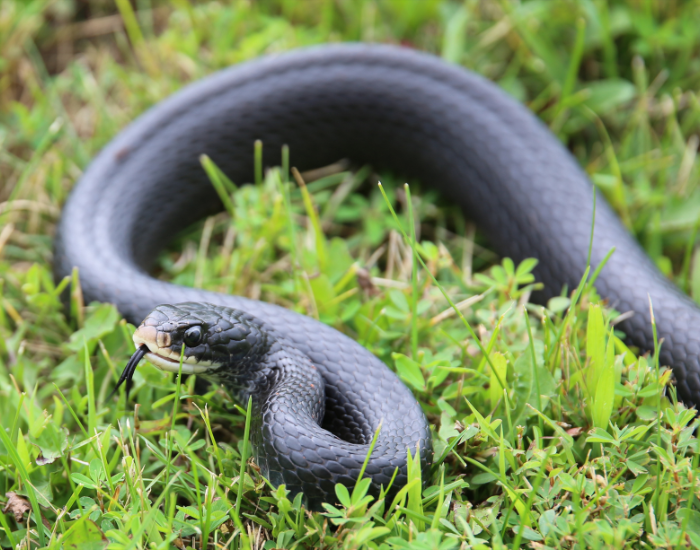
2. Southern Black Racer (Coluber constrictor priapus)
If a slim, jet-black snake just rocketed across your driveway, you met a southern black racer. Coluber constrictor is one of the most commonly seen snakes in florida. Adults reach four to six feet, with a white chin and dark, alert eyes.
Racers are diurnal hunters that chase down lizards, frogs, small mammals, and insects. Despite the name Coluber constrictor, racers don’t actually constrict, racers pin prey and swallow it alive. Black racers are non-venomous, harmless, and faster than your dog. Of all native non-venomous racers in the Southeast, black racers dominate Florida pastures and edges. Juveniles look totally different: gray with reddish-brown blotches, often mistaken for other snakes entirely.
3. Central Ratsnake (Pantherophis alleghaniensis)
Florida’s rat snakes are chameleons of our snake fauna. In the panhandle they look gray with dark brown blotches. In the peninsula the central ratsnake turns yellow with four longitudinal stripes. While in the Florida keys they shift orange. All sit under the same shifting species complex, recently consolidated as Pantherophis alleghaniensis.
These powerful constrictors climb trees, raid bird nests, and clean barns of rats with ruthless efficiency. Adults commonly hit five feet. Juveniles look totally different—gray with bold dark spots—and people often misidentify them as other snakes. I once watched a six-foot yellow rat snake unhinge its jaw on a starling fledgling thirty feet up a longleaf pine. Of all our rat snakes, the central ratsnake is arguably the most beneficial reptile a homeowner can host.
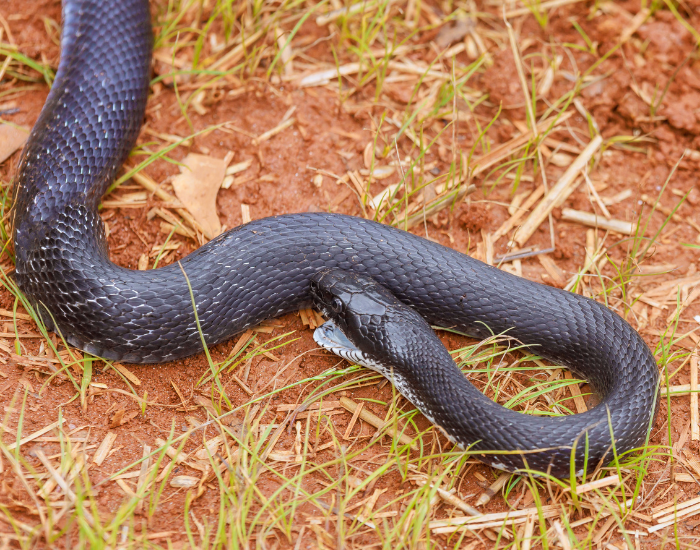
4. Corn Snake (Pantherophis guttatus)
The corn snake (or red rat snake) is the most beautiful native snake I’ve ever held. Their bodies glow orange-red with maroon saddles outlined in black. A spear-shaped mark on the head identifies them instantly.
Corn snakes are non venomous rodent specialists. Their diet centers on rats, mice, and the occasional lizard or bird. Females lay 10 to 30 eggs in rotting logs each summer. I’ve found corn snakes in barns, abandoned citrus groves, and once curled inside a pickup truck’s air filter. Despite being beloved as pets worldwide, they remain a vital wild predator across nearly every Florida habitat except saltwater marsh.
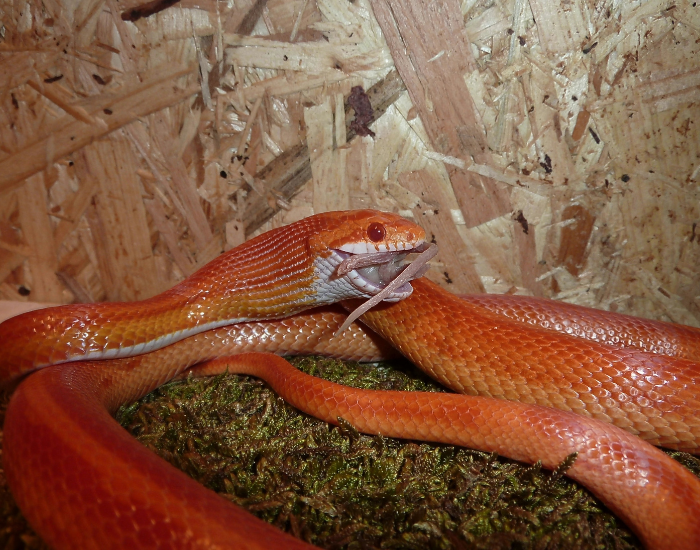
5. Florida Pine Snake (Pituophis melanoleucus mugitus)
Pine snakes are the heavyweights of Florida’s sandhills. Adults reach six feet, with thick tan or cream bodies and dark brown blotches. Pine snakes are state-listed as threatened.
These muscular constrictors spend most of their lives underground in gopher tortoise burrows. Pine snakes feed on pocket gophers, rats, and other small mammals. When cornered, pine snakes inflate their bodies, hiss like a steam kettle, and rattle their tail in dry leaf litter. The bluff is theatrical and effective.

6. Eastern Garter Snake (Thamnophis sirtalis sirtalis)
Eastern garter snakes are suburban survivors. Garter snakes thrive in residential areas, drainage ditches, and any moist habitats with frogs around. Three pale yellow stripes run the length of their dark brown or black bodies.
Garter snakes are non venomous, though they release a foul musk if grabbed. Their diet includes earthworms, slugs, salamanders, fish, and tadpoles. Females give live birth to up to 30 juveniles. I keep a brush pile in my own yard specifically because garter snakes overwinter there. They’re small snakes, harmless, and ecologically priceless. Of all garter snakes in the eastern U.S., Florida’s populations push the southernmost edge of the range.
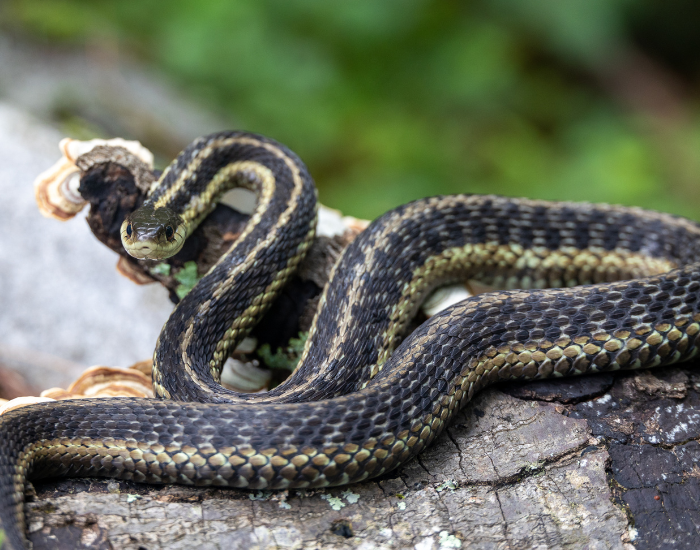
7. Florida Brown Snake (Storeria victa)
Florida brown snakes are easy to miss. Adults rarely exceed 10 inches and live secretly under leaf litter, mulch, and flowerpots. They sport a tan or dark brown body with two rows of small black spots and a light band across the neck.
These florida brownsnakes feed almost exclusively on slugs, snails, and earthworms. They’re harmless and beneficial to gardeners. People kill them constantly out of fear, a tragedy, given their size. If you spot one of these brown snakes in your garden, leave it. The slugs eating your hostas will thank you. Among brown snakes nationwide, Storeria victa is one of the smallest and most secretive.
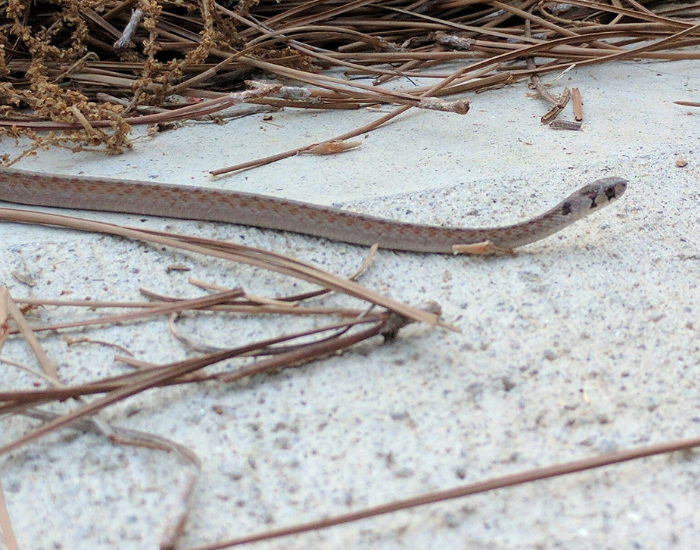
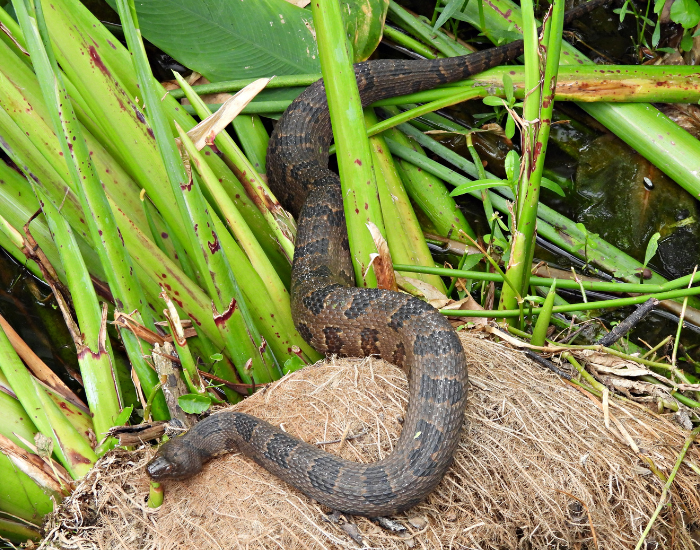
8. Brown Water Snake (Nerodia taxispilota)
The brown water snake is heavy-bodied, dark brown, and patterned with squarish darker blotches. Adults reach four to five feet. People constantly mistake brown water snakes for cottonmouths and kill them on sight.
Brown water snakes drape across cypress branches above slow rivers. They drop into the water when startled, sometimes into kayaks. Their diet is almost exclusively catfish, and they’re completely non venomous. The head shape is rounder than a cottonmouth’s, and the pupils are round, not slit. Learn the difference before you swing a paddle. Of all brown water snakes I’ve handled, none has ever managed a serious bite.
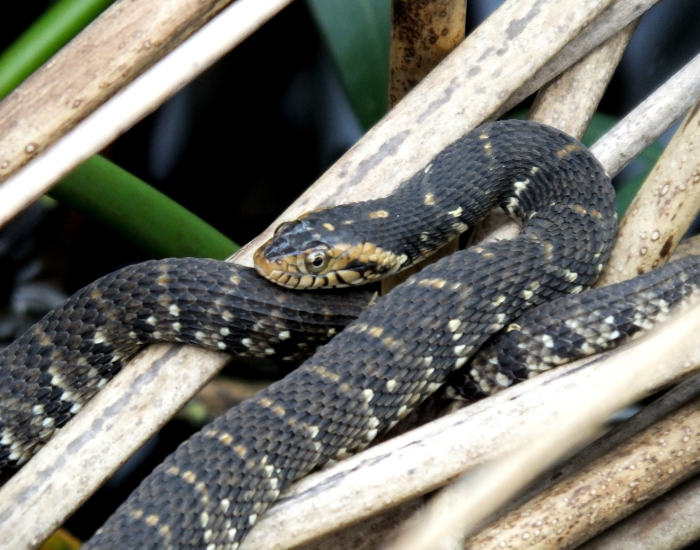
9. Banded Water Snake (Nerodia fasciata)
Banded water snakes are the cottonmouth lookalikes everyone fears. Their dark crossbands on tan or yellow bodies make casual observers panic. They thrive across nearly every Florida wetland.
These water snakes are aggressive when cornered, they’ll strike repeatedly and musk you, but they have no venom. Their bite leaves clean punctures and that’s all. Females give live birth to 20 or more juveniles. The trick to telling water snakes from cottonmouths is the head: water snakes tend to have narrow heads, not the boxy white-mouthed wedge of a moccasin. Another key trait is that water snakes have visible labial scales (vertical black lines on the “lips”) and round pupils, whereas Cottonmouths have a dark mask through the eye and vertical “cat-eye” pupils
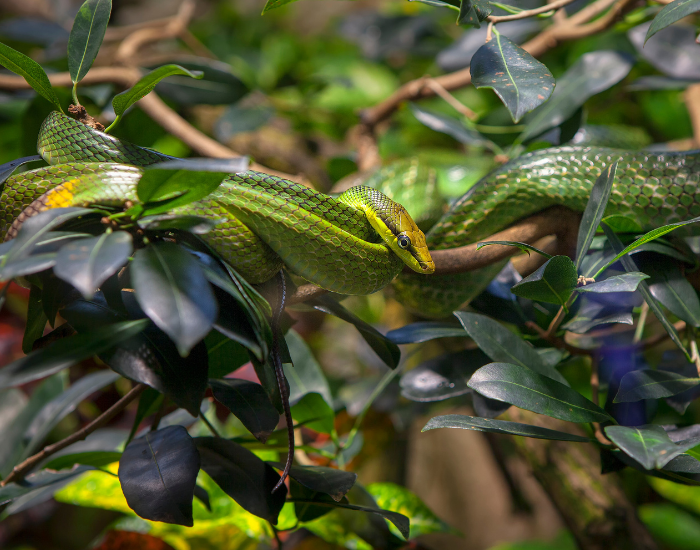
10. Rough Green Snake (Opheodrys aestivus)
Rough green snakes (do not get confused with smooth green snakes which are not found in Florida) are slender, brilliant green, and almost weightless. They glide through shrubs and oak branches hunting caterpillars and spiders. Adult bodies rarely exceed 30 inches.
Their green camouflage is stunning, but the snake turns blue after death, a quirk that confuses anyone finding a road-killed individual. Green snakes decline rapidly with pesticide use. If you have native shrubs and avoid spraying, you may host these green ghosts without ever knowing it.
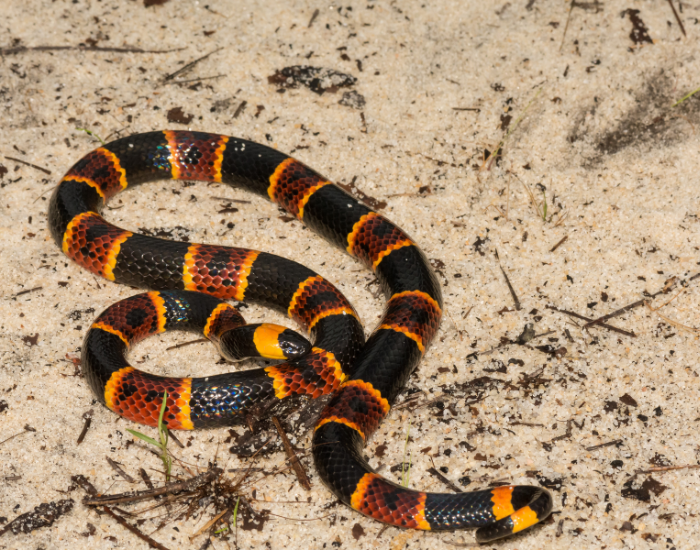
11. Eastern Coral Snake (Micrurus fulvius) — Venomous
Quick Stats | Diet: Snakes and lizards | Size: 18–30 inches | Venom: Neurotoxic (High) | Status: Secretive
Coral snakes are Florida’s only elapid, cousins of cobras and mambas. Their bands run red, yellow, black, yellow, red, with a black head. Memorize: “red touches yellow, kill a fellow.” That rhyme separates them from harmless mimics like the scarlet kingsnake.
Coral snake venom is a potent neurotoxin. Bites are rare because coral snakes spend most of their time under leaf litter and rocks. They eat other snakes and lizards. If bitten, get to a hospital immediately. Antivenom is limited but lifesaving.
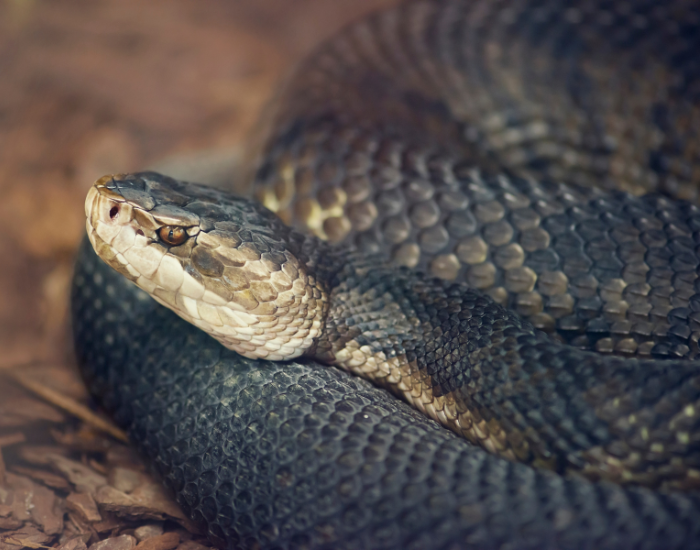
12. Florida Cottonmouth (Agkistrodon conanti) — Venomous
Quick Stats | Diet: Fish, frogs, small mammals | Size: 3–5 feet | Venom: Hemotoxic (Serious) | Status: Common
The Florida cottonmouth, recently split from its northern cousin, is the most misunderstood snake in the state. Adults are dark brown to nearly black, with a thick body and a distinctive white mouth gape when threatened.
Cottonmouths are venomous pit vipers, frequently confused with non venomous water snakes. Studies show they rarely bite unless stepped on or grabbed. Their venom is hemotoxic, painful, and serious without treatment. Keep your distance, watch where you step, and you’ll never have a problem. Killing them is a last resort, not a first response.
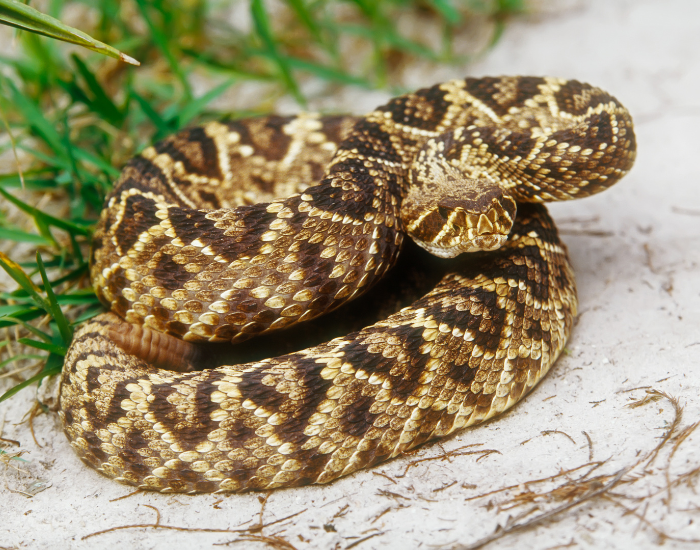
13. Eastern Diamondback Rattlesnake (Crotalus adamanteus) — Venomous
The eastern diamondback (do not get confused with the western diamond rattlesnake) is the heaviest of all venomous snakes in North America. The record length pushes 8 feet, though most adults run 4 to 6. Their dark diamond pattern is unmistakable.
Diamondbacks are dangerous but not aggressive. They’ll buzz a warning rattle long before striking. They rely on gopher tortoise burrows for shelter and pine flatwoods for hunting rabbits and rats. Populations are crashing from rattlesnake roundups, road mortality, and habitat loss. Calm respect, and they tolerate you. According to some sources, this species may be functionally extinct in parts of its historic range.
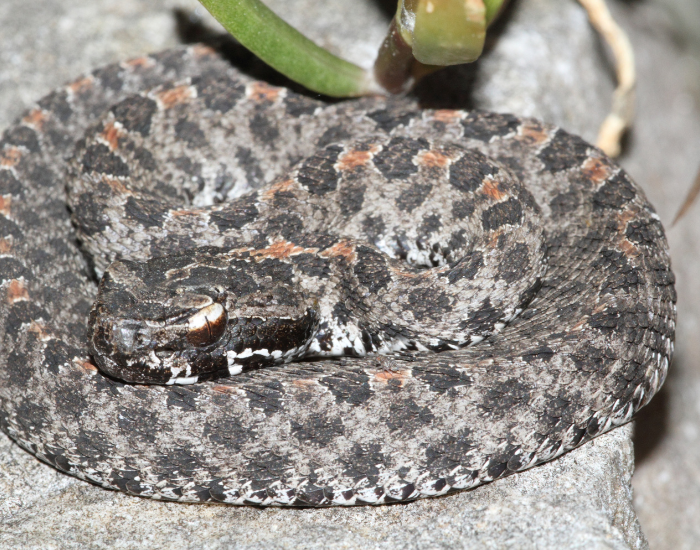
14. Dusky Pygmy Rattlesnake (Sistrurus miliarius barbouri) — Venomous
Pygmy rattlesnakes are tiny, gray with small black spots, and easy to step on. Adults rarely top 24 inches. Their rattle sounds like an insect buzz, almost inaudible past a few feet.
These venomous snakes hunt small frogs, lizards, and rodents from leaf litter ambush points. Bites are painful but almost never fatal (altough if bitten, always look for medical attention). I’ve heard of colleagues who took bites to the boot during snake removals. Pygmies thrive in pine flatwoods and bottomland hardwoods statewide. They’re one of the most encountered venomous snakes in Florida, simply because they don’t move when you walk by. Watch your feet.
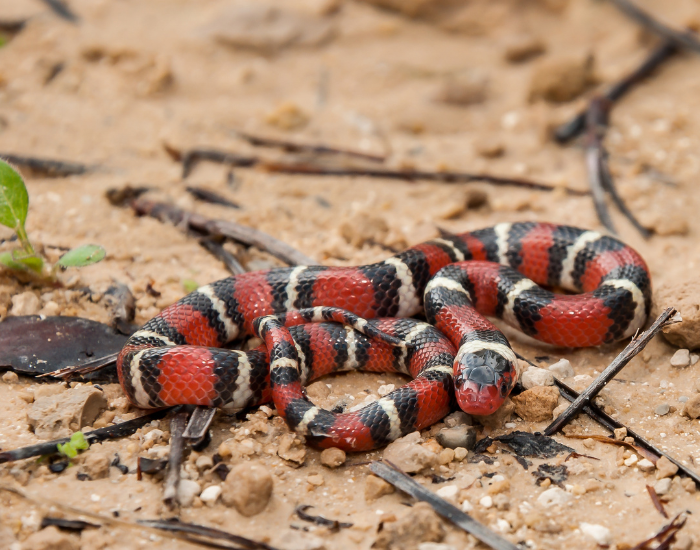
15. Scarlet Kingsnake (Lampropeltis elapsoides)
The scarlet kingsnake is the coral snake’s harmless mimic. Their red, black, and yellow bands fool predators, but red touches black, friend of Jack. They’re small, secretive, and ridiculously beautiful.
Scarlet kingsnakes feed on lizards, smaller snakes, and skinks. They spend daylight hours under bark and pine logs. Despite their non-venomous status, many get killed by people who confuse them with coral snakes. Learn the rhyme. Save the species.
What Eats These Snakes?
Florida snakes feed an astonishing range of predators. Hawks, owls, and eagles snatch adults straight off open ground. Wading birds spear juveniles in shallow water. Bobcats, otters, and even larger snakes round out the menu. Knowing what hunts them shifts your whole perception of how snakes survive, or don’t.
FAQ
The southern black racer tops the list of commonly seen snakes in florida, especially in residential areas and open fields. Other species you’ll encounter often include rat snakes, banded water snakes, garter snakes, and florida brown snakes under leaf litter. Most are non-venomous racers or harmless small snakes that quietly benefit your yard by eating rodents and slugs.
The eastern diamondback rattlesnake is Florida’s deadliest snake based on venom yield and body size. Adult diamondbacks deliver more venom per bite than any other native species. That said, fatalities are extremely rare—fewer than one death per year statewide. The eastern coral snake is more potent drop-for-drop, but bites are uncommon because coral snakes are reclusive and rarely cornered.
Snakes have no external ears, but they detect low-frequency airborne sound through their inner ear and jawbones. They sense yelling more as vibration than as sharp sound. Recent studies confirm snakes can perceive human voices, though they respond more strongly to ground vibrations from footsteps. So yes—they “hear” you, just not the way your dog does.
The Florida brown snake (Storeria victa) is a tiny, harmless species under 10 inches. They have a tan or dark brown body, small black spots, and a light band across the neck. They eat slugs and earthworms. Many species in Florida share brown coloration, but florida brownsnakes are the smallest and most often confused for juveniles of other snakes.
Living Safely Alongside Florida’s Natives
Florida’s native snakes are not the villains of folklore. They are quiet, complex, and ecologically essential, keeping rodent populations in check, feeding raptors, and threading the food web of every habitat I’ve ever worked. Most florida snakes you’ll meet are harmless, beneficial, and worth a long second look.
If you found this guide useful, leave a comment with your most memorable snake sighting. I read every one. While you’re here, take a tour through my deeper dives on black snakes of florida, the ongoing impact of invasive species in florida and the Burmese python story. Curious what these reptiles actually eat? Read my pieces on Florida lizards, voles, amphibians, and green frogs. Or look up at the predators hunting them: birds of prey, owls, and eagles. Then walk slowly, watch the leaf litter, and look up.
References:
Burbrink, F. T., & Guiher, T. J. (2015). Considering gene flow when using coalescent methods to delimit lineages of North American pitvipers of the genus Agkistrodon. Zoological Journal of the Linnean Society, 173(2), 505–526. https://doi.org/10.1111/zoj.12211
Beaird, D., & Lee, V. R. (2026). Coral Snake Toxicity. In StatPearls. StatPearls Publishing.
Goetz, S. M., Piccolomini, S., Hoffman, M., Bogan, J., Holding, M. L., Mendonça, M. T., & Steen, D. A. (2019). Serum-based inhibition of pitviper venom by eastern indigo snakes (Drymarchon couperi). Biology open, 8(3), bio040964. https://doi.org/10.1242/bio.040964
Hyslop, N. L., Stevenson, D. J., Macey, J. N., Carlile, L. D., Jenkins, C. L., Hostetler, J. A., & Oli, M. K. (2012). Survival and population growth of a long-lived threatened snake species, Drymarchon couperi (Eastern Indigo Snake). Population Ecology, 54(1), 145–156. https://doi.org/10.1007/s10144-011-0292-3
Means, D. B. (2017). Diamonds in the Rough: Natural History of the Eastern Diamondback Rattlesnake. Tall Timbers Press. https://talltimbers.org/product/diamonds-in-the-rough/
Stevenson, D. J., Bolt, M. R., Smith, D. J., Enge, K. M., Hyslop, N. L., Norton, T. M., & Dyer, K. J. (2010). Prey records for the eastern indigo snake (Drymarchon couperi). Southeastern Naturalist, 9(1), 1–18. https://doi.org/10.1656/058.009.0101
Steen, D. A., Smith, L. L., Conner, L. M., Brock, J. C., & Hoss, S. K. (2007). Habitat use of sympatric rattlesnake species within the Red Hills region of Georgia and Florida. Journal of Wildlife Management, 71(8), 2730–2733. https://doi.org/10.2193/2005-754
Engeman, R. M., Jacobson, E., Avery, M. L., & Meshaka, W. E. (2011). The aggressive invasion of exotic reptiles in Florida with a focus on prominent species. Current Zoology, 57(5), 599–612. https://doi.org/10.1093/czoolo/57.5.599
Willson, J. D., & Dorcas, M. E. (2003). Effects of habitat disturbance on stream salamanders: Implications for buffer zones and watershed management. Conservation Biology, 17(3), 763–771. https://doi.org/10.1046/j.1523-1739.2003.02069.x