The World of Florida Lizards
If you’ve spent time in the Florida outdoors, you’ve probably noticed a flash of movement across a wall, sidewalk, or palm tree. Those tiny lizards are more than just background creatures, they are some of the most fascinating residents of the Sunshine State. As someone who has studied animals and reptiles, I was struck by how Florida’s climate, ecosystems, and human history have created a hotspot for both native lizards and invasive species.
Most lizards of Florida include a variety of shapes, colors, and behaviors. Some are as small as your pinky finger, while others, like the green iguana, can grow longer than a child is tall. There are lizards native to Florida that evolved here over millennia, but also exotic lizards introduced through the pet trade or accidental releases. Understanding these different species of lizards in Florida is important not just for curiosity, but for conservation too.
Native Lizards of Florida
1. The Green Anole – (Anolis carolinensis)
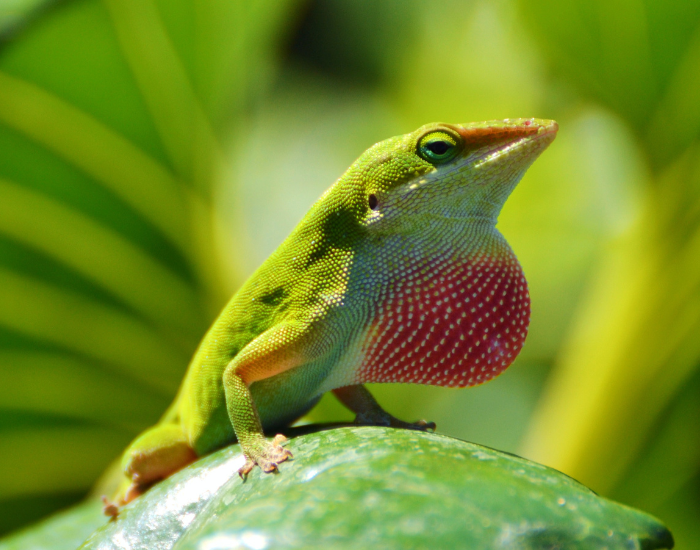
The green anole (Anolis carolinensis) is the most iconic native lizard in Florida and other states, like Texas. Known for its ability to change from bright green to brown, this species is often confused with the invasive brown anole. I still remember my first time spotting one on a garden fence, its pink dewlap flashing boldly as it bobbed its head, a reminder that even the smallest reptile can put on a spectacular show to attract females. These anoles are small lizards in Florida, but they play an outsized role in controlling insects.
2. The Florida Scrub Lizard – (Sceloporus woodi)
The Florida scrub lizard is another native reptile, found only in the dry uplands of central Florida. Its survival is closely tied to scrub ecosystems, making it particularly vulnerable as housing and agriculture expand. Standing in a patch of sandy scrub once, I realized how fragile these habitats are — and how easily we can lose species that depend on them.
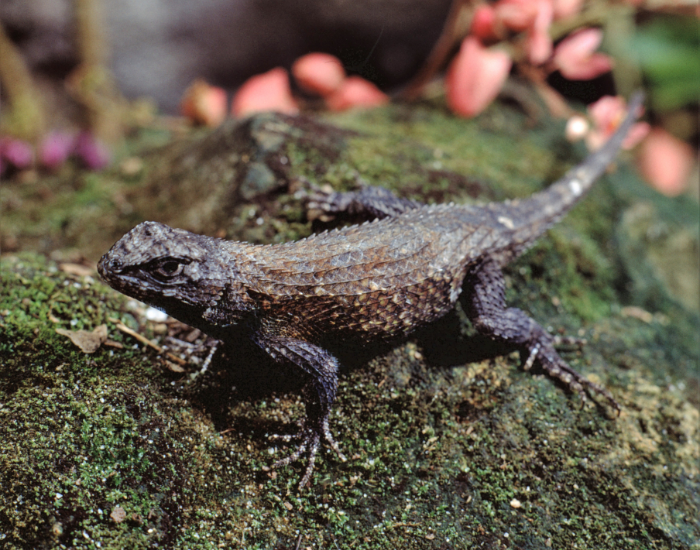
3. Southeastern Five-Lined Skink (Plestiodon inexpectatus)
Florida is also home to several skinks, including the southeastern five-lined skink, famous for its electric blue tail. Juveniles flash this color to distract predators, and when threatened, they can shed a detached tail that wriggles on the ground while the lizard escapes.
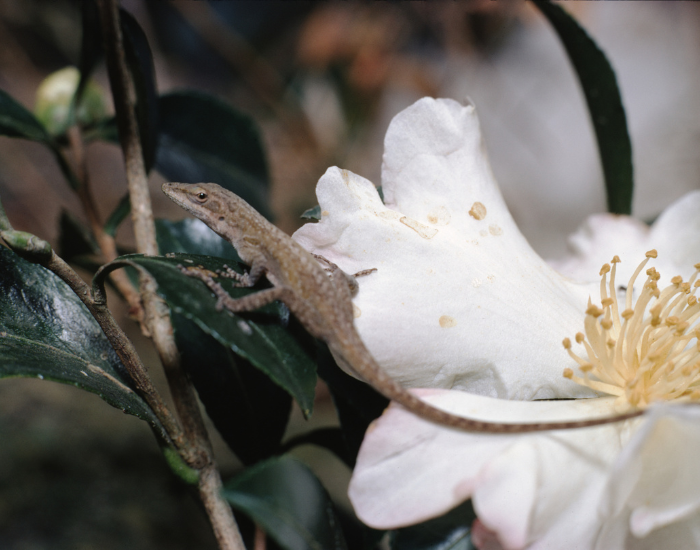
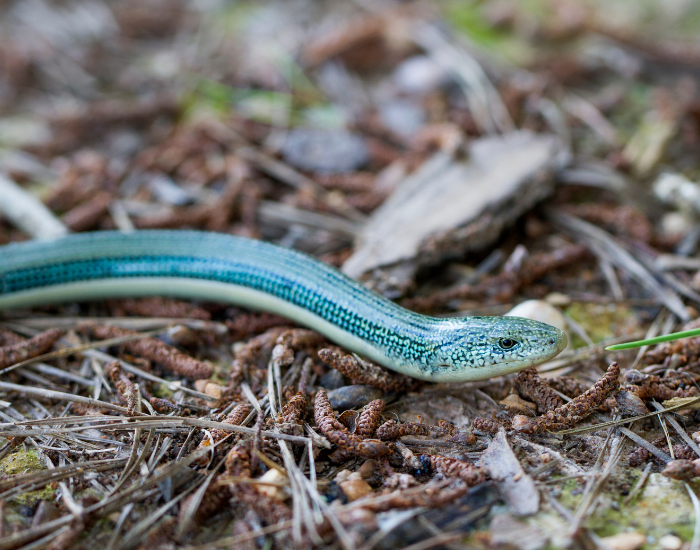
4. Eastern Glass Lizard (Ophisaurus ventralis)
Another surprising native is the eastern glass lizard, a legless lizard species that looks like a snake but is very much a lizard. Spotting one in the wild can be startling until you notice the key differences: eyelids, external ears, and a more fragile body.
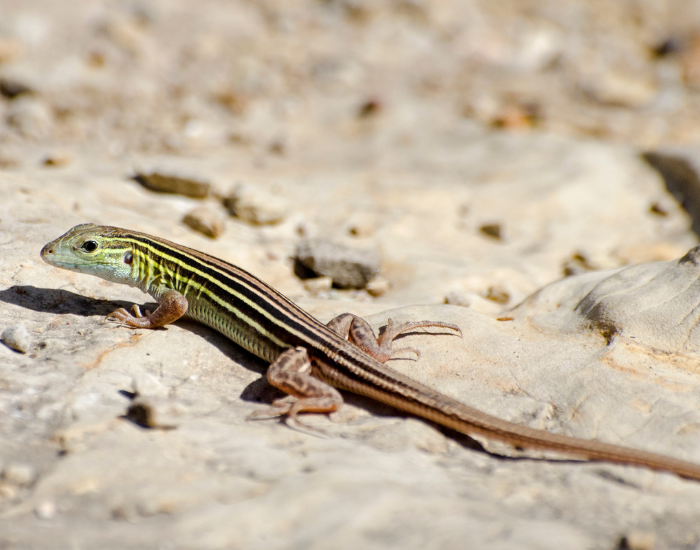
5. Six-lined Racerunner (Aspidoscelis sexlineata)
This sleek, ground-dwelling lizard is built for speed, often darting across sandy soils and open fields in a blur. Its name comes from the six pale stripes running down its dark body, a pattern that helps it blend into grass and scrub while it sprints to escape predators.
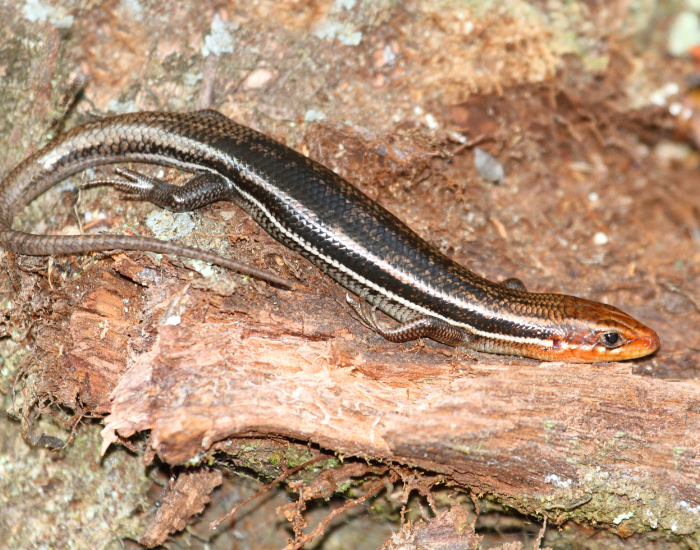
6. Common Five-lined Skink (Plestiodon fasciatus)
One of Florida’s most recognizable lizards, the common five-lined skink is often seen basking on logs or darting into leaf litter. Juveniles sport a striking blue tail, while adults develop darker bodies with faint striping, making them well-camouflaged in forest habitats.
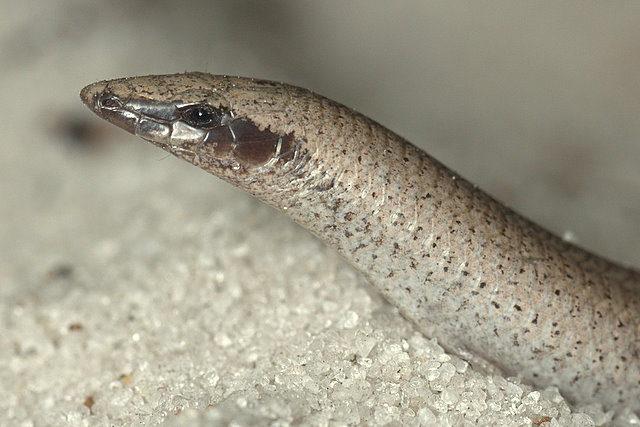
7. Florida Sand Skink (Plestiodon reynoldsi)
Endemic to central Florida, the Florida sand skink is a small, secretive lizard found only in the state’s sandy scrub and ridge habitats. Its tiny, reduced limbs and countersunk jaw make it look almost worm-like, perfectly adapted for “swimming” just below the surface of loose sand. This rare species spends most of its life hidden underground, feeding on ants, termites, and small invertebrates, and is listed as Threatened due to habitat loss from development and citrus farming.
8. Broad-headed Skink (Plestiodon laticeps)
The broad-headed skink is the largest skink in Florida, and males in breeding season are hard to miss with their bright orange-red heads. These lizards are excellent climbers, often found high up in trees hunting insects, a behavior that sets them apart from many of Florida’s other ground-dwelling skinks.

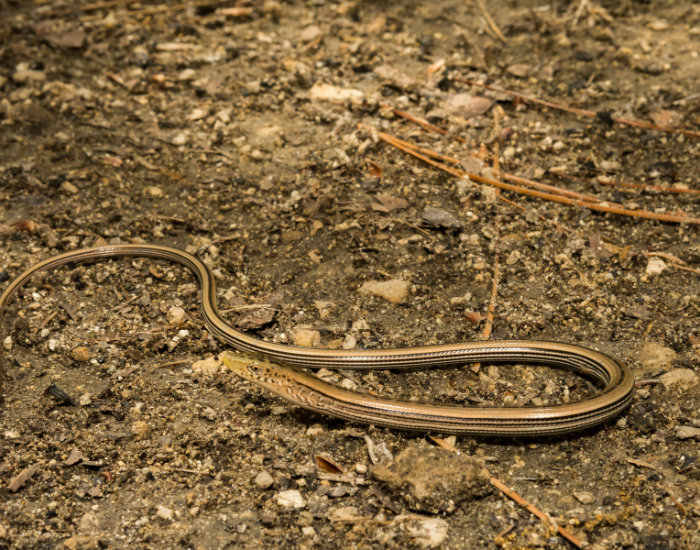
9. Slender Glass Lizard (Ophisaurus attenuatus)
Despite looking like a snake, the slender glass lizard is actually a legless lizard. It can break off part of its tail if attacked, which shatters like glass and writhes to distract predators. Found in grasslands and sandy soils, it feeds on insects and small invertebrates, playing a unique role in Florida’s ecosystems.
Invasive Lizards in Florida
Florida is almost as famous for its invasive reptiles as it is for its beaches. The non native species thrive thanks to the warm climate and abundance of food. Unfortunately, they often outcompete or prey on native wildlife.
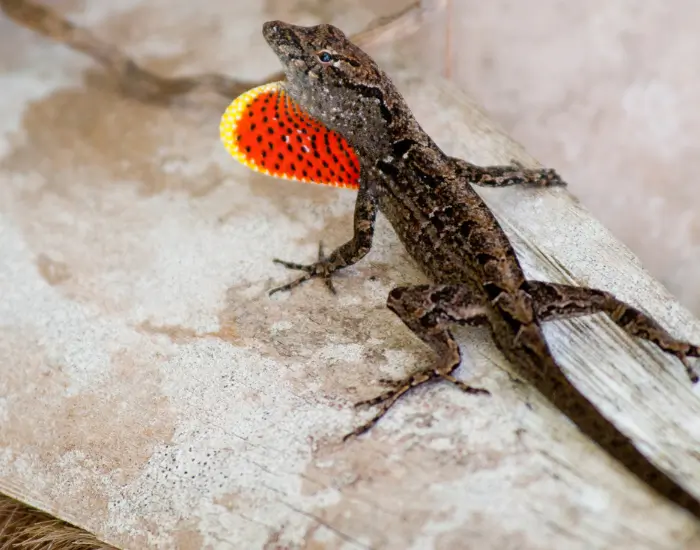
10. Brown Anole (Anolis sagrei)
The brown anole is the most widespread invasive lizard. Originally from Cuba and the Bahamas, it has spread across Florida so thoroughly that many people think it’s native. Unlike green anoles, brown anoles tend to stay closer to the ground. I’ve watched them take over backyards, pushing green anoles up into the trees.
11. Northern Curly-Tailed Lizard (Leiocephalus carinatus)
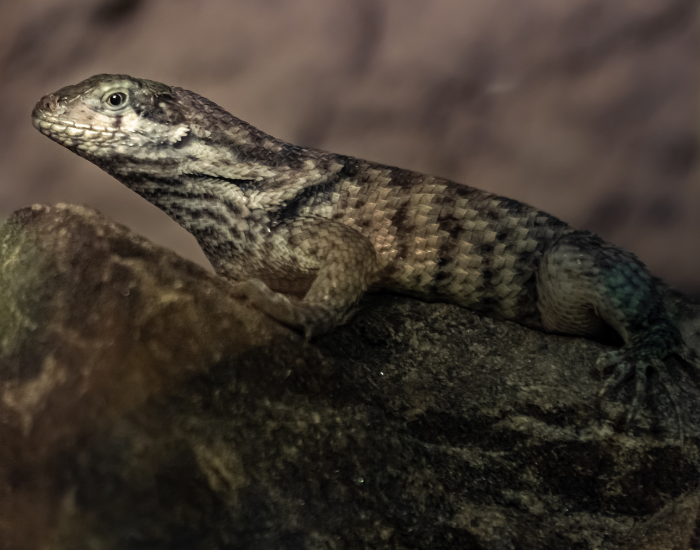
The northern curly-tailed lizard, which struts through parking lots and sidewalks, and the black spiny-tailed iguana, with a large head, and generally a much larger invader that competes with native reptiles for prey and nesting spots.
12. Green Iguana (Iguana iguana)
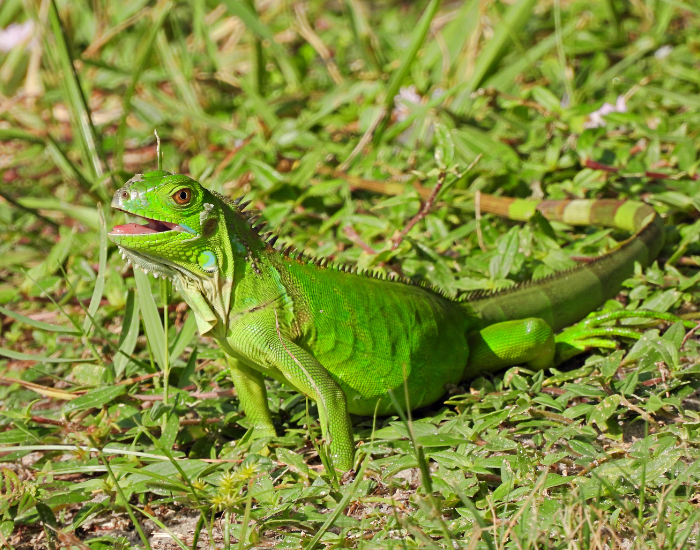
Then there are the green iguanas or common iguana, common in Miami and along canals, where they feed on plants, dig burrows, and sometimes even fall out of trees during cold snaps.
13. Black Spiny-Tailed Iguana (Ctenosaura similis)
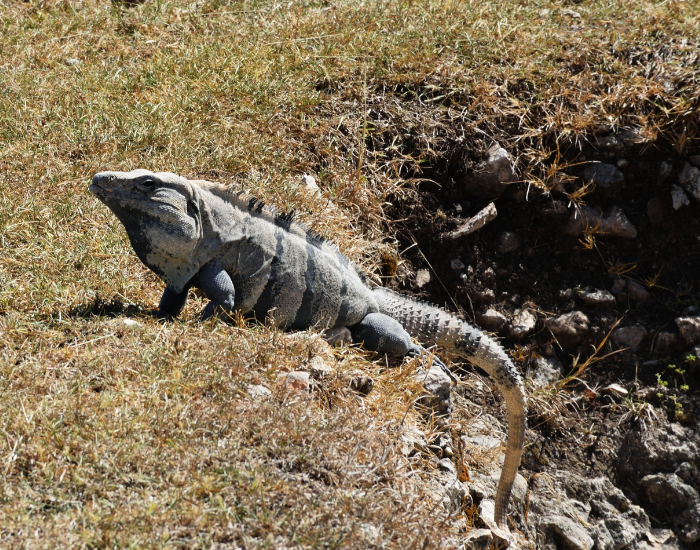
It is native to Central America but thriving in Florida. Larger, more aggressive, and even more destructive than the green iguana. Competes directly with native wildlife for food and nesting spots.
14. House Gecko
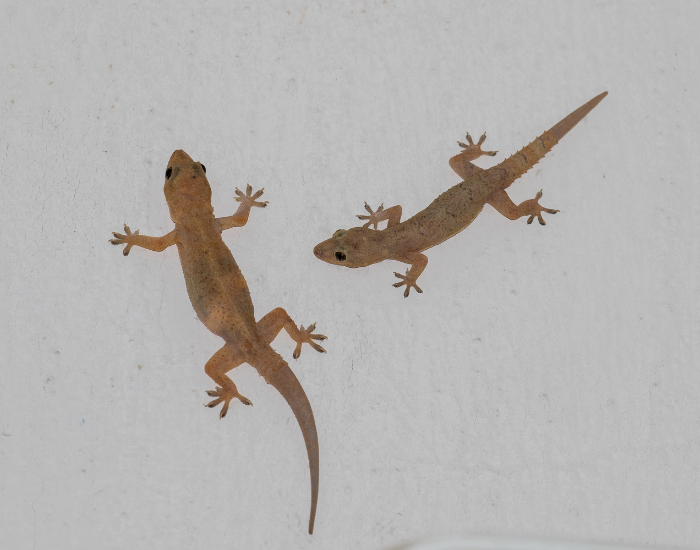
And we can’t forget the house gecko, a small, non native lizard that has adapted perfectly to urban life. Step outside on a warm night in southern Florida and you’ll likely see one clinging to a wall, waiting to snap up insects drawn to porch lights. They’re harmless to humans, but like many geckos, they add to the complex mix of types of lizards in Florida.
Other Lizards You Might Encounter
Not all invasive species are as notorious as iguanas. The brown basilisk, also known as the “Jesus Christ lizard” for its ability to run across water, is another Florida resident.
There are also smaller lizards, often overlooked in discussions, but essential in the chain of life. They become prey for birds, snakes, and larger reptiles. Watching this balance play out is part of what makes exploring Florida’s ecosystems so rewarding.
Watch the following video to understand more about invasive reptiles in Florida:
Behavior and Adaptations
Florida lizards are endlessly fascinating once you start observing them. Anoles communicate with head-bobs and color displays, sometimes performing complex dances. Many species shed tails to escape predators, while others rely on camouflage among leaves or bark.
Their diets vary: some species eat insects, spiders, and crickets, while larger iguanas consume plants, flowers, and fruit. In turn, these reptiles become prey for snakes, birds, and mammals. I once watched an egret catch a lizard in one swift strike, a vivid reminder of how even common lizards of Florida are key links in the food web.

Are Florida Lizards Poisonous?
This is a frequent question, and the answer is simple: there are no poison lizards in Florida that pose a threat to humans. The small lizards you see in your backyard are harmless, whether they are green anoles, brown anoles, or house geckos. Even the larger iguanas are not poisonous, though their claws and bites can scratch if handled carelessly.
So, whether you’re asking “Are brown anole lizards poisonous?” or “Are backyard lizards poisonous?”, the answer is reassuring: Florida lizards are safe. The biggest concern is not to people, but to native species of lizards in Florida that are being displaced by invasives.
Conservation and Human Impact
Conserving Florida’s lizards means protecting both their habitats and the delicate balance between native and invasive species. Organizations like the Florida Museum and the Florida Fish and Wildlife Conservation Commission are conducting research and community education programs to monitor populations.
As citizens, we can help too. Avoid releasing pets into the wild, reduce pesticide use in yards, and support conservation initiatives. Florida’s lizards may be small, but they reflect the health of entire ecosystems. Losing them would mean more than losing a backyard curiosity — it would mean unraveling the threads of ecological balance.
FAQs About Lizards of Florida
The brown anole is now the most common lizard in Florida.
Yes — species like the green anole, Florida scrub lizard, and skinks are native.
Yes, tiny lizards in Florida are harmless insect-eaters.
The black spiny-tailed iguana is one of the most aggressive invasive species.
Yes. House geckos and brown anoles often enter homes, but they are harmless.
Appreciating the Lizards of Florida
After years of encountering reptiles worldwide, I’ve come to see Florida as one of the richest living classrooms for reptile diversity. From the bold green anole to the quiet glass lizard hidden in the grass, every encounter offers a new story.
When you see a lizard dart across a sidewalk, pause and take a closer look. Ask yourself: is it native or invasive? Tiny or giant? Camouflaged or bold? Each species has its own role in Florida’s ecosystems, and together, they remind us of the complex, beautiful, and sometimes fragile web of life we’re part of.