The Gecko in My Shower
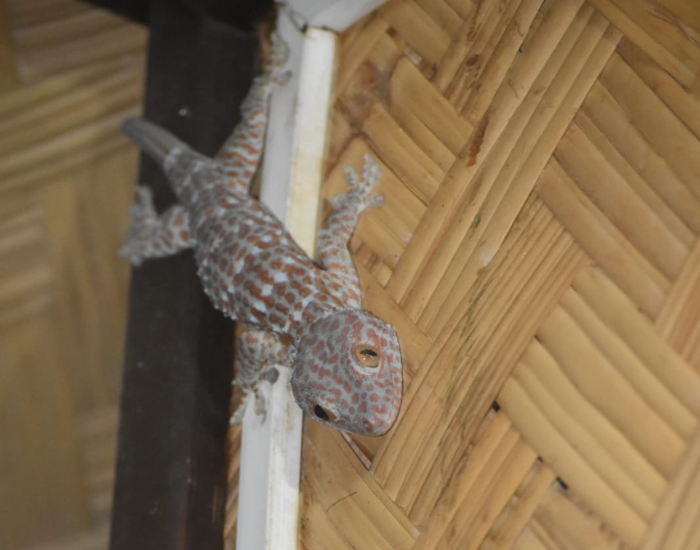
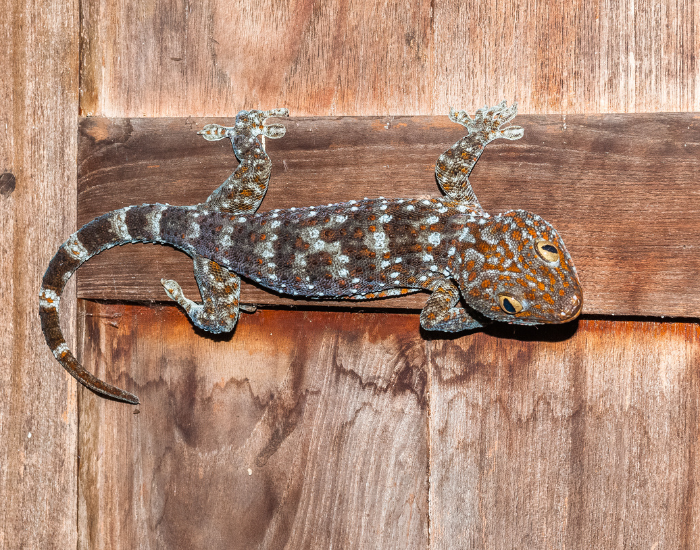
I’ve had my fair share of surprises in the field travelling as a biologist. But one of the most memorable came while staying in a bamboo hut on Gili Trawangan, Indonesia. Mid-shower, I looked up and found myself face-to-face with a Tokay Gecko clinging to the bathroom wall. Its size startled me, easily over 12 inches, and its skin was a mosaic of bright blues and orange-red spots.
Months later, I encountered another one in El Nido, Philippines, perched near the ceiling of a guesthouse. Hearing its unmistakable call, “to-kay, to-kay”, echo through the humid night was unforgettable. These encounters fueled my fascination with these charismatic reptiles, which are as important to ecosystems as they are striking to look at.
Let’s dive into 10 incredible facts about the Tokay Gecko and its relatives, from tropical house geckos to the Turkish gecko.

1. A Giant Among Geckos
Most geckos are small, like the Mediterranean gecko or the common house gecko, measuring only a few inches. But Tokay Geckos are giants, growing up to 35 cm (14 inches), making them one of the largest species in the suborder Gekkota.
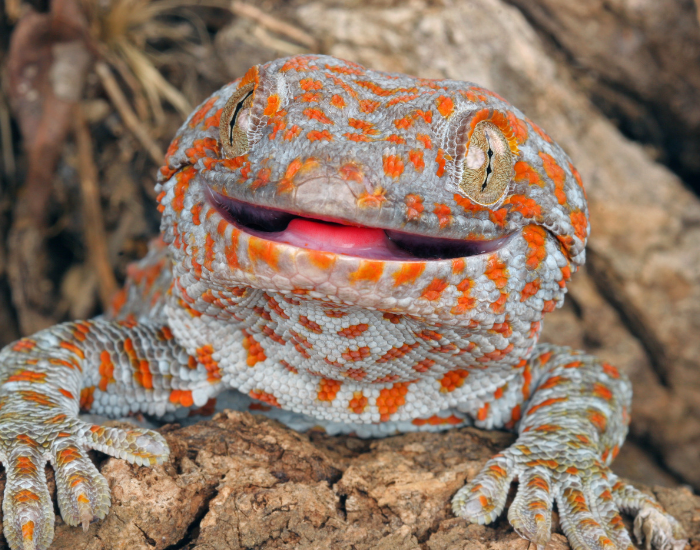
They’re instantly recognizable by their bulky large heads, muscular bodies, and brightly colored scales patterned with orange, red, and blue spots. By comparison, a crested gecko or leopard gecko looks positively petite. Other species of geckos display a wide range of sizes and unique adaptations, highlighting the remarkable diversity within this group.
2. They Have Incredible Climbing Abilities
Tokays can climb where most animals can’t. Their toes are covered in adhesive pads made of microscopic hairs that allow them to cling to smooth and vertical surfaces, from tree bark to glass windows. The underside of their feet is covered with specialized structures that enable them to adhere to various surfaces.
I’ve seen them run across walls and ceilings in Southeast Asian guesthouses, a reminder that these arboreal, nocturnal reptiles are perfectly adapted to life above ground. They can even climb smooth surfaces like glass, an ability unmatched by most reptiles.
3. Their Call Inspired Their Name
The name “Tokay” comes from their call: a loud, repeated “to-kay, to-kay.” While some geckos communicate with softer chirping sounds, the Tokay’s call is much louder and more distinctive. Unlike tropical house geckos that make softer chirps, Tokays announce their presence. Males call to defend territory and attract females, and in some Southeast Asia cultures, the number of calls is considered lucky.
4. Fierce Bite, But No Venom
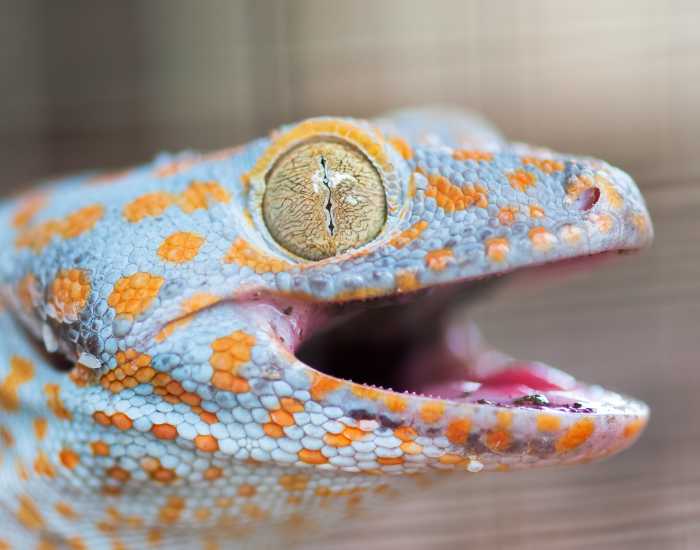
Many people ask: Are Tokay Geckos venomous? The answer is no. But their bite strength is legendary. Their jaws are powerful enough to break skin, and once they latch on, they rarely let go quickly.
This has earned them a reputation for being aggressive, unlike the more docile crested gecko or leopard gecko kept as pets.
5. Opportunistic Hunters
Most geckos feed on insects, and Tokays are no different, but they’re not picky. Their main meals include:
- Insect prey like cockroaches and crickets
- Amphibians such as frogs
- Snakes, birds, and even small mammals
In their native habitat of Southeast Asia, they play an important role in controlling pests. As predators, they balance ecosystems while also serving as food for larger snakes and birds of prey. The Tokay gecko is a skilled predator, actively hunting a variety of prey and using its agility to evade its own predators.
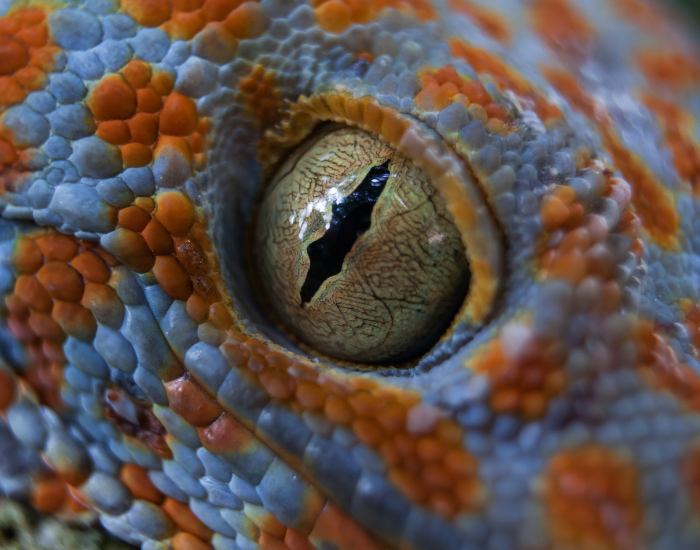
Tokays use their tongues and Jacobson’s organ to sense chemical signals in the air, helping them detect and track prey in the dark. The Jacobson’s organ, separate from the nose, works with the tongue to analyze scents, allowing Tokays to locate prey and sense their environment more effectively.
6. Native to Southeast Asia but Spreading Globally
Their native habitat are tropical forests of Southeast Asia, from India through Myanmar, Thailand, Vietnam, Malaysia, Indonesia, and the Philippines. Tokay geckos have a wide-ranging distribution, inhabiting diverse environments across Southeast Asia and beyond. They thrive in humid forests but also colonize villages, cities, and even high-rise apartments.
Through the pet trade, they’ve spread beyond their natural range. Turkish geckos, tropical house geckos, and Tokays are now found in other regions, including the U.S.
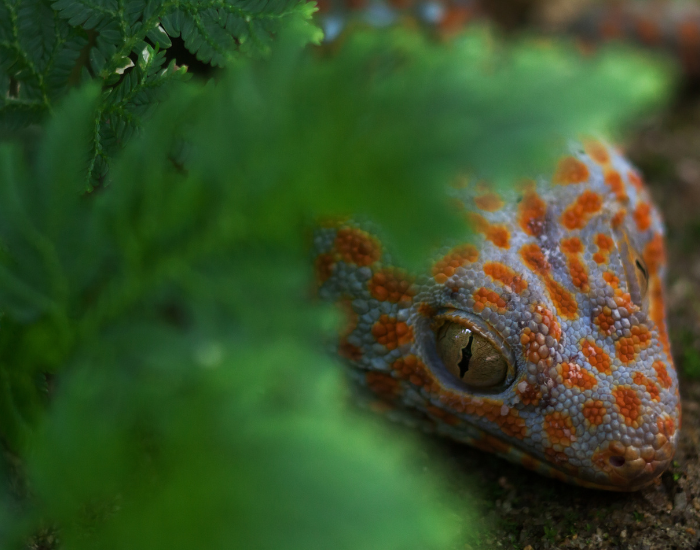
7. In Florida: Invasive or Not?
Reports of the tokay gecko invasive Florida populations have raised concern. While gecko Florida species like the Mediterranean gecko and tropical house gecko are common, Tokays are more controversial.
Their size, strong bite, and predatory habits mean they could outcompete native reptiles. In Florida, biologists monitor their spread, much like they track other invasive species such as iguanas and Burmese pythons.
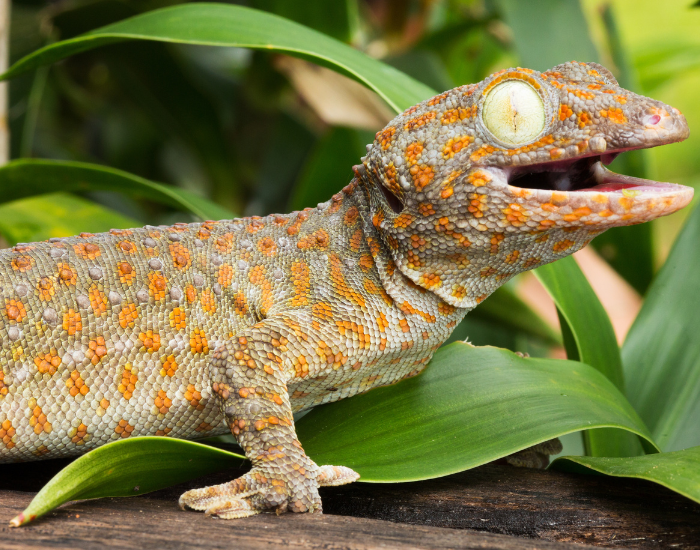
8. Related Geckos Around the World
Tokays are just one star in the suborder Gekkota. This diverse group includes:
- Crested geckos and leopard geckos — favorites in the pet world.
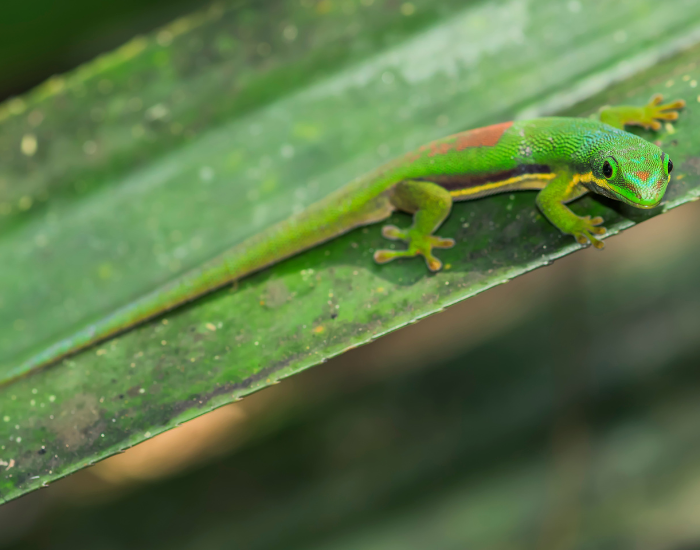
- Day geckos — stunningly colorful species active in daylight. Among them, the gold dust day gecko stands out as a smaller, vibrant species with distinctive gold speckles and striking coloration.
- Madagascar day geckos — another group of colorful, diurnal geckos.
- Mediterranean geckos and common house geckos — hardy lizards thriving in urban areas worldwide.
With many species still being described, geckos showcase an incredible range of adaptations, from desert survival to rainforest climbing.
9. Courtship, Mating, and Eggs
Male Tokays use their booming call to attract mates. Males are typically slightly larger than females, and after mating, the female lays hard-shelled eggs in crevices or on walls. These eggs remain firmly attached until they hatch after 60–90 days.
Hatchlings are independent from the start. They shed their skin frequently while growing, and even as juveniles, their patterns mirror the vibrant adults. Like most geckos, Tokays can also shed their tail to escape predators, regrowing it over time.
10. Interesting Behaviors
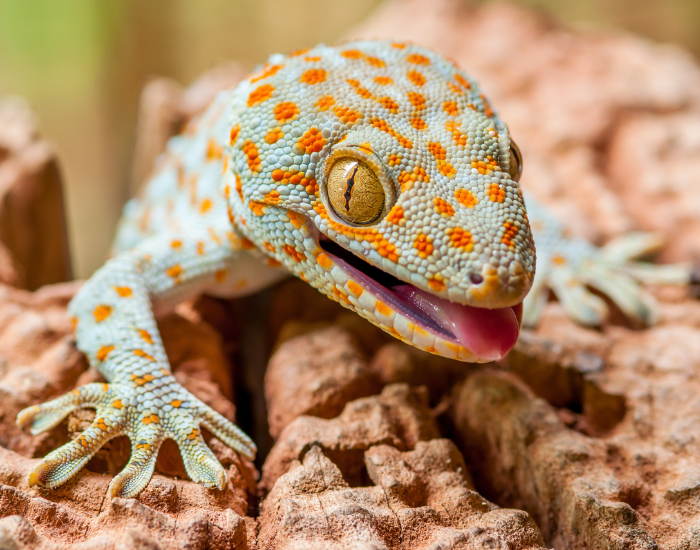
The Tokay Gecko is a master of adaptation, displaying a range of fascinating behaviors that help it thrive in its native habitat. Like many species in the suborder Gekkota, most geckos, including the Tokay, are nocturnal, coming alive after dark to hunt for insect prey. Their large, sensitive eyes and acute hearing make them expert night-time hunters, able to detect the faintest movement of crickets, cockroaches, and other insects.
One of the Tokay Gecko’s most impressive abilities is its skill at climbing smooth and vertical surfaces. Thanks to specialized adhesive pads and microscopic setae on their toes, these reptiles can scale glass, tree bark, and even ceilings with ease, an ability that few other animals can match.
In the wild, Tokay Geckos are typically solitary, only seeking out others during the long period of the mating season. Females lay hard-shelled eggs, usually two to four at a time, securing them in hidden crevices or on sheltered surfaces. After a period of incubation, the young hatch and begin their journey, shedding their skin frequently as they grow.
Conservation and Human Interaction
In some regions, Tokays are a threatened species due to overcollection for the pet trade and use in traditional medicine. In Madagascar, their day gecko relatives face similar pressures.
For humans, Tokays are both admired and feared. In villages, they’re valued as pest controllers.
Their booming calls can be a nuisance, and their aggressive bite makes handling risky.
In captivity, Tokays require large enclosures, heat, humidity, and live prey. They’re not beginner-friendly pets, unlike leopard geckos or crested geckos, but they are striking and long-lived with the right care.
FAQs About Tokay Geckos
They’re defensive and known for biting when threatened.
No. They’re not venomous but have strong jaws.
Strong enough to break skin, painful, but not deadly.
Yes, all geckos are lizards in the order Squamata.
Florida hosts Mediterranean geckos, tropical house geckos, Turkish geckos, and reports of tokay gecko invasive Florida.
A Lovely Encounter
From my Bali shower guest to the rooftops of the Philippines, Tokays leave a lasting impression. They are vibrant, loud, and tough survivors, symbols of the adaptability of geckos worldwide.
Yet they also highlight broader issues: the risks of the pet trade, the spread of invasive species, and the need to conserve native habitats. Protecting Tokay Geckos means balancing admiration for their beauty with responsibility for their future.