
Meet a Special Reptile: The Brown Anoles
In the place where I grew, I was surrounded by anoles, yes, literally. They were so common that most people hardly noticed them, or worse, saw them as pests. Yet, I’ve learned that even the most overlooked creatures tell fascinating ecological stories.
The brown anole (Anolis sagrei), sometimes called the Cuban brown anole, is one of those species. Originally from the Caribbean islands like Cuba, the Bahamas, and the Cayman Islands, these anole lizards are now thriving as invasive species across the southeastern United States, especially Florida. Florida is home to several species of anole lizards, including the bark anole, another introduced species often confused with brown anoles. The bark anole is smaller, has mottled patterns, and is typically found near coastal areas in southern Florida, making it distinguishable from other anoles.
They’ve spread as a colonizing species through the plant trade, the pet industry, and even soil shipments containing hidden eggs.
Despite being controversial, truth is, brown anoles are survivors. Let’s dive into 12 engaging facts that reveal their biology, behavior, and impact.
1. Brown Anoles Are Expert Colonizers
Brown anoles are one of the most successful introduced anolis lizards in the world. Their spread began when stowaway eggs in leaf litter or plants traveled with humans. From there, they flourished in southern Florida, southern Georgia, Texas, and even parts of California. Brown anoles were first documented in the Florida Keys in the late 1800s, likely arriving as accidental introductions via cargo from the Caribbean.
2. Distinctive Looks With Black Markings
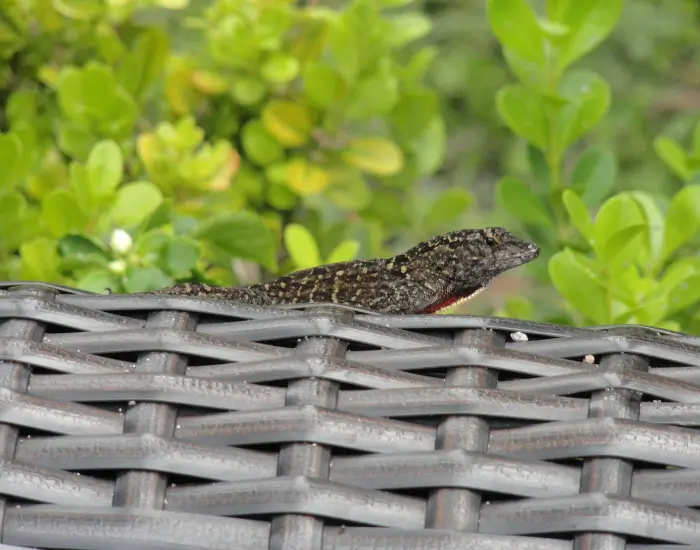
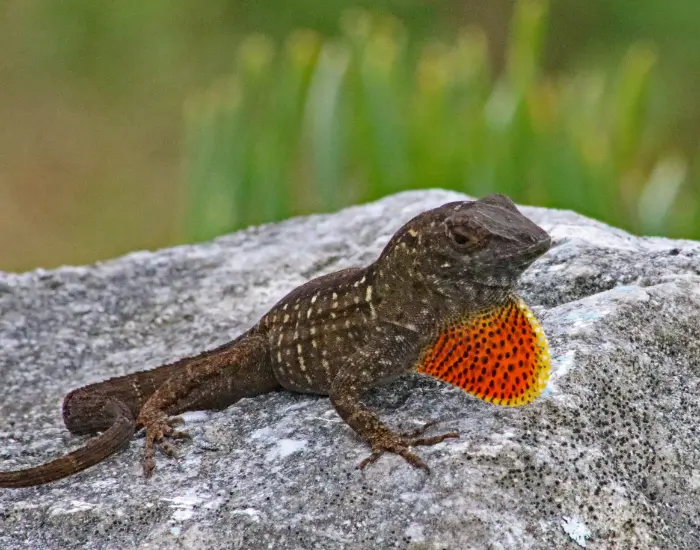
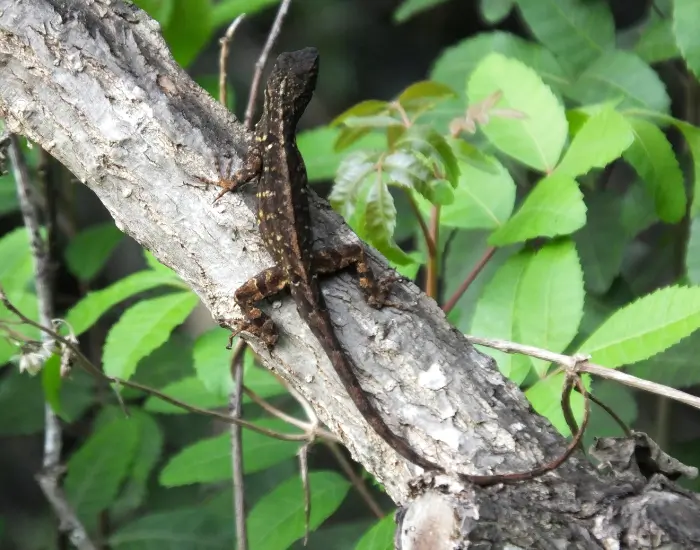
These anole reptiles grow between 5–9 inches, with adult males being larger and more robust than adult females. Mature females tend to have subtler patterning and lack the prominent dewlap seen in adult males. Their skin varies from light gray to chocolate brown, often marked with black patterns and a ridge along the tail tip. Unlike the native green anole (Anolis carolinensis), they don’t dramatically shift color.
3. The Famous Dewlap Display
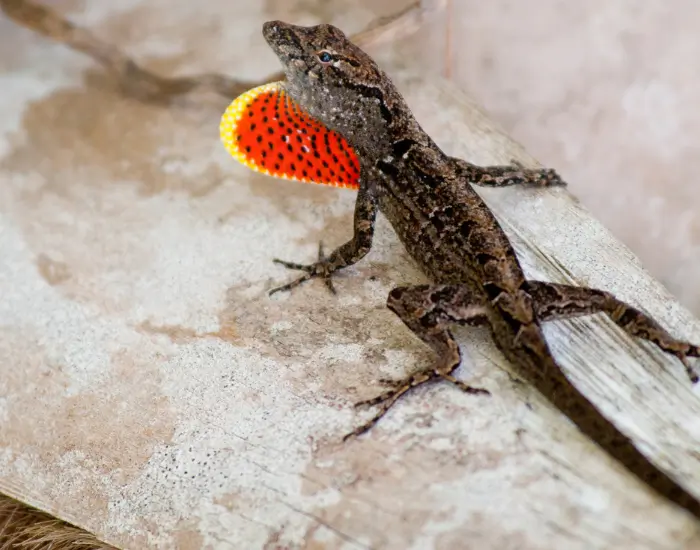
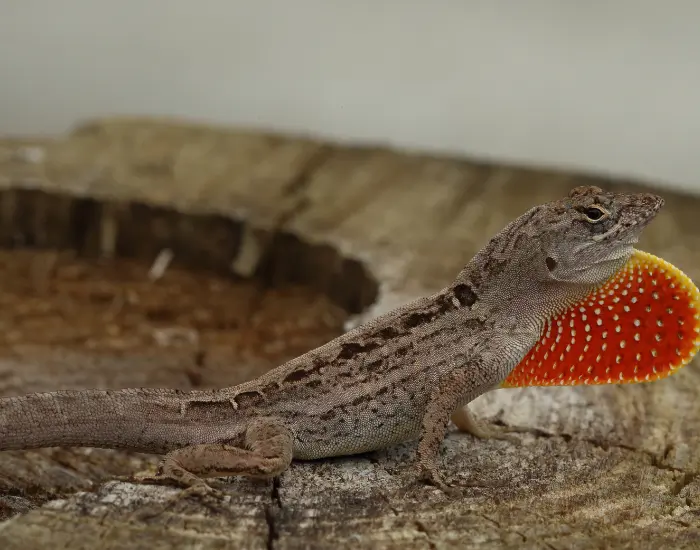
If you’ve ever watched one, you’ve probably seen its bright orange or even pink dewlap flashing. This expandable throat fan is used by male anoles to mark territory, attract mates, or warn rivals. The display is usually paired with push-ups or head-bobs, an unmistakable performance.
4. Native Range vs Introduced Range
Their native range covers Cuba, the Bahamas, and nearby islands. But today, they are firmly established as brown anoles Florida populations, spreading through urban gardens, fences, and even rooftops. They’re now considered one of the most common species of lizard in the region.
5. Brown vs Green Anoles
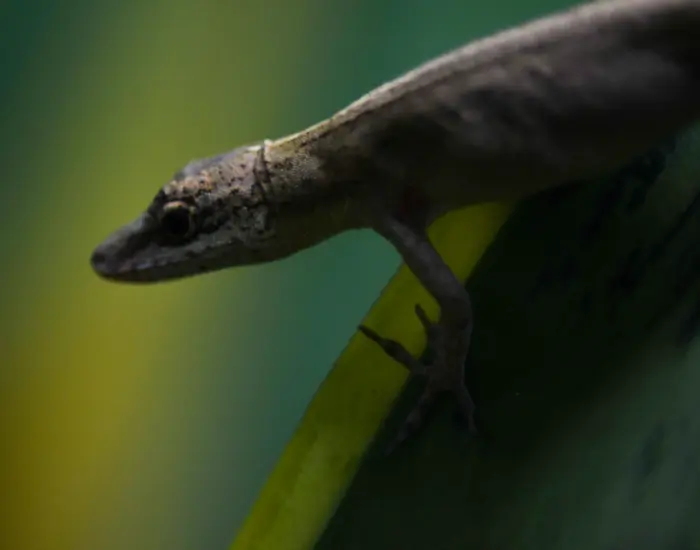
Many people ask: What’s the difference between a green anole and a brown anole?
- Green anoles are the only native anoles in the U.S.
- Brown anoles introduced to Florida push green anoles higher into tree canopies.
- Brown anoles stay closer to the ground, claiming shrubs, fences, and walls.
This rivalry highlights distinct differences in how species divide habitats. Most anoles found in Florida today are either brown anoles or green anoles, making them the dominant anole species in the region.

6. What Do Brown Anoles Eat?
Brown anoles feed on a wide variety of prey, including insects, spiders, and other lizards such as skinks and geckos. They have also been observed eating their own molted skin as part of their opportunistic feeding behavior. Their diet includes:
- Insects and spiders
- Other lizards (such as skinks, geckos, and even curly-tailed lizards), as well as juvenile anoles
- Occasionally small vertebrates like frogs
In Florida gardens, they’re efficient pest-controllers, though sometimes at the expense of native wildlife.
7. Females Lay Eggs in Leaf Litter
During the mating season, which typically occurs during the warmer months, female brown anoles deposit eggs in soil or leaf litter. The female anole selects suitable sites in leaf litter for oviposition. Each adult female lays one or two eggs per clutch, but she produces many clutches throughout the year. In warm regions like South Florida, they can reproduce almost year-round.
8. Rapid Growth and Sexual Maturity
Baby brown anoles hatch fully independent. Juvenile anoles grow quickly, often reaching sexual maturity within a year. This rapid turnover explains why brown anole populations can skyrocket in invaded regions.
9. Male-Male Competition Is Fierce
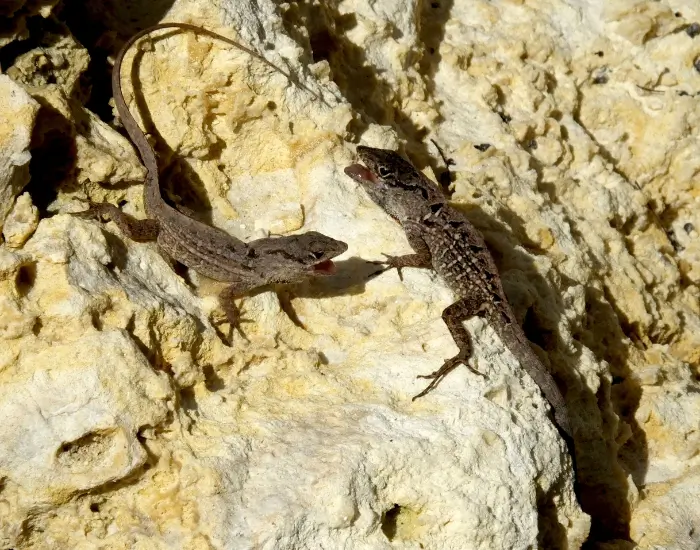
Male anoles constantly fight for dominance. They display their dewlap color, perform push-ups, and chase rivals. Male mating success depends on territory quality and display strength. The winners secure better spots for basking and access to females.
Male brown anoles use visual signals to ensure they are competing with and attracting members of their own species.

10. Predator-Prey Dynamics
Though they hunt small lizards and insects, brown anoles are also prey themselves. Birds, snakes, and other reptiles feed on them. Some scientists even note asymmetrical intraguild predation, where larger lizards prey on smaller ones. Their defenses include:
- Camouflage in dense vegetation
- Dropping detached tails to escape
- Quick sprinting bursts when threatened
11. Anoles as a Model for Evolutionary Biology
Anoles are a textbook case of adaptive radiation. Florida is also home to several large species of invasive reptiles, such as the Burmese python, which have significant ecological impacts alongside smaller invaders like the brown anole. Researchers use them to study evolutionary biology, observing how different anole species evolve distinct differences in body shape, habitat use, and behavior. Brown anoles, as a colonizing species, provide real-time lessons in how invasives adapt.
12. Are Brown Anoles Dangerous to Humans?
No – brown anole lizards are not venomous or poisonous. Their bites are harmless, at worst a tiny nip. Far from being dangerous, they actually help reduce insect numbers. While some homeowners see them as pests, they’re better thought of as tiny, scaly pest-control agents.
Classification and Taxonomy: Where Brown Anoles Fit in the Reptile World
The brown anole (Anolis sagrei), also known as the Cuban brown anole, is a fascinating member of the lizard family Dactyloidae. As part of the diverse genus Anolis, which includes over 390 recognized anole species, brown anoles are closely related to other anole lizards found throughout the Americas and the Caribbean. Their closest U.S. relative is the native green anole (Anolis carolinensis), but there are distinct differences between these two species, most notably in dewlap color, body size, and tail length.
Brown anoles stand out with their unique black markings and robust build, while green anoles are known for their ability to shift from bright green to brown. Understanding where the brown anole fits in the broader classification of anole lizards helps scientists track their spread, study their behavior, and develop strategies to manage their impact as an invasive brown anole. By recognizing the subtle and not-so-subtle differences between brown anoles and other anoles, researchers can better protect native species and maintain ecological balance.
Management and Control: Can We Curb the Invasion?
Controlling the spread of invasive brown anoles is a top priority for protecting native lizard populations, especially the green anole. As these invasive species outcompete native species for food and habitat, their unchecked growth can lead to a decline in native lizard numbers. Effective management strategies include manual removal of brown anoles, modifying habitats to favor native lizards, and exploring safe biological control options.
Organizations like the Texas Invasive Species Institute recommend preventing the sale and release of invasive brown anoles as pets, as well as educating the public about the risks of introducing non-native species. Regular monitoring and tracking of brown anole populations help identify hotspots where intervention is most needed. By combining these efforts, communities can help slow the spread of invasive brown anoles and give native species a fighting chance.
Conservation Efforts: Protecting Florida’s Native Lizards
Safeguarding Florida’s native lizards, particularly the green anole, requires dedicated conservation efforts in the face of invasive brown anole expansion. The native green anole plays a vital role in local ecosystems, and its decline could disrupt the natural balance. Conservationists recommend creating wildlife-friendly gardens and landscapes that feature dense vegetation, native plants, and natural shelters, conditions that support native lizard survival and reproduction.
The University of Florida suggests that homeowners and land managers use native plant species and design habitats that mimic the natural environment of native lizards. Public education is also key: by raising awareness about the importance of native green anoles and the threats posed by invasive species, communities can help prevent further introductions and support ongoing conservation work. Protecting native lizard populations ensures the health and diversity of Florida’s unique ecosystems.
Research and Monitoring: Tracking the Brown Anole’s Spread
Ongoing research and careful monitoring are essential for understanding and managing the spread of invasive brown anoles. Scientists study the behavior, habitat preferences, and population dynamics of these adaptable lizards to identify where they are most likely to thrive and how they impact native species. Resources like the Animal Diversity Web provide valuable data on brown anole distribution, ecology, and interactions with other species.
By tracking the movement and growth of brown anole populations, researchers can pinpoint new areas of invasion and respond quickly with targeted management strategies. This research not only helps protect native ecosystems but also deepens our understanding of how invasive species adapt and succeed in new environments. Continued monitoring is crucial for developing effective solutions and preserving biodiversity in regions affected by invasive brown anoles.
FAQs About Brown Anoles
Yes. They are considered an invasive brown anole population, competing with and displacing native green anoles.
They can nip if handled, but their bite is harmless to humans.
No. They are not venomous or poisonous, and they don’t pose a danger to people or pets.
Mostly insects, spiders, and other small invertebrates. They’ll also eat juvenile anoles and occasionally small vertebrates like frogs.
Native to Cuba and the Caribbean, now common in Florida, southern Georgia, and parts of Texas and California.
A Global Invader
The brown anole is both charming and disruptive. It’s a Cuban lizard turned global invader, a garden regular in peninsular Florida, and a reminder of how quickly ecosystems change when species move beyond their native range.
To me, they represent the paradox of wildlife: adaptability and beauty on one hand, ecological disruption on the other. The next time you see one basking on a wall or scurrying across a garden path, pause to appreciate it. Behind that little reptile is a story of invasion, competition, and survival.