Understanding the Red Rat Snake
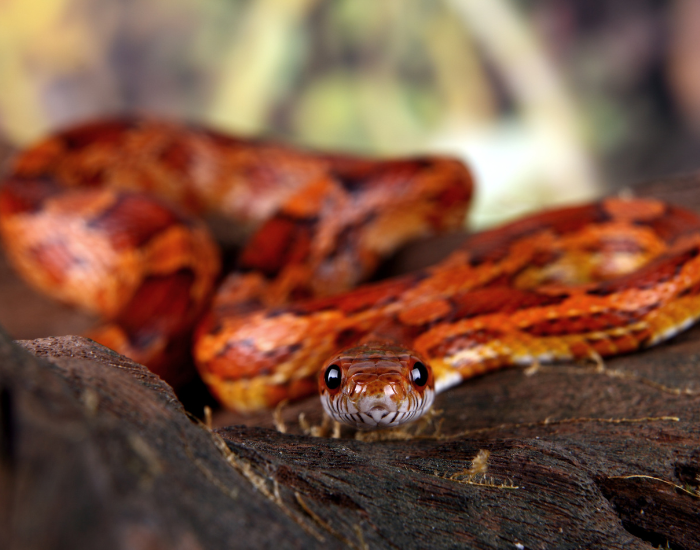
This blog was inspired by a friend who once came across a red rat snake, he almost mistook it for something venomous. He told me it was draped through a patch of palm fronds and got scared cause its red coloration – you know – we usually associate red with risk. As a biologist, I have learnt to stop, observe, and look twice before making assumptions about snakes, and that’s exactly what I told him for next time he encounters a snake of this kind. This calm, beautifully patterned reptile turned out to be one of Florida’s most beneficial hunters: the red rat snake, also widely known as the corn snake (Pantherophis guttatus).
Despite their flashy colors, these snakes are non venomous and harmless to humans. They’re actually pest-control allies, keeping rodent populations down in barns, fields, and neighborhoods. Like many snakes, they’re often misunderstood, feared, or killed simply because of their appearance.

1. Corn Snake or Red Rat Snake? (Spoiler: They’re the Same)
A common question is: is a red rat snake the same as a corn snake? The answer is yes. These two names describe the same species. A common misconception is that corn snakes feed on corn. They do not. The name likely traces back to two ideas. Some historians believe early American farmers found corn snakes hunting rodents in corn cribs and grain stores. Others point to the snake’s belly scales, which feature alternating black and white marks resembling kernels of Indian corn, or maize.
They’re also sometimes called chicken snakes in the Southeast because they raid chicken coops, not for chickens themselves, but for the mice and rats that gather nearby.
2. Life in the Sunshine State: Native to Florida & the Keys
If you’re spotting red snakes in Florida, there’s a good chance it’s this one. Red rat snakes are commonly found throughout the state, from mainland Florida to the Florida Keys.
In fact, there’s even a Lower Keys population that is smaller and more isolated, thriving in rockland hammocks, pine rocklands, and mangroves. They’ve adapted remarkably well to disturbed habitats, including farms and suburban neighborhoods.
Released or escaped pets have created small breeding populations on Grand Cayman, parts of the lesser antilles, and a few of the virgin islands. Some experts list these populations as a special concern because they prey on native lizards and frogs.
This is a delicate situation. While not destructive on the scale of the burmese python, an introduced corn snake population can still alter island ecosystems.

3. Dressed to Impress: How to Spot One
Adult corn snakes are instantly recognizable:
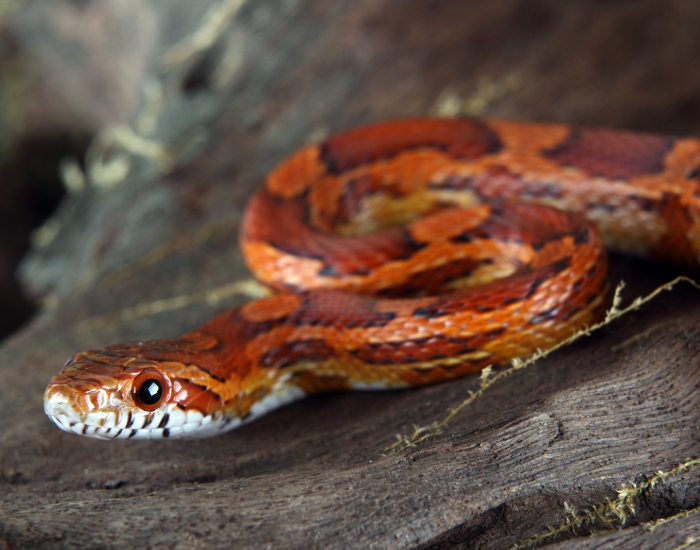
- Body color: orangish-brown with large red blotches edged in black bordered orange.
- Head: a spear- or V-shaped marking, often extending down the neck.
- Belly: bold distinctive rows of white and black, checkerboard-like.
- Size: most adults measure 30–48 inches, though some reach 6 feet in length.
These markings are what sometimes cause confusion with venomous snakes like copperheads or coral snakes. But remember: the red rat snake is non venomous and harmless.
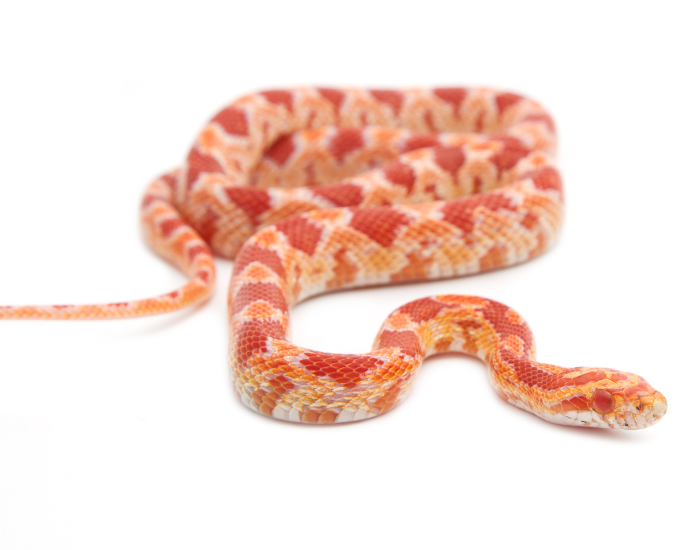
Selective breeding has turned the corn snake into a living canvas. Captive corn snakes today come in hundreds of color variations called morphs. Breeders produce reverse okeetees, snow morphs, lavenders, anerythristics, and the much-discussed turbo corn snakes. The pet trade has also developed jungle corn snakes, which are corn snake hybrids crossed with California kingsnakes.
4. Primarily Nocturnal but Excellent Climbers
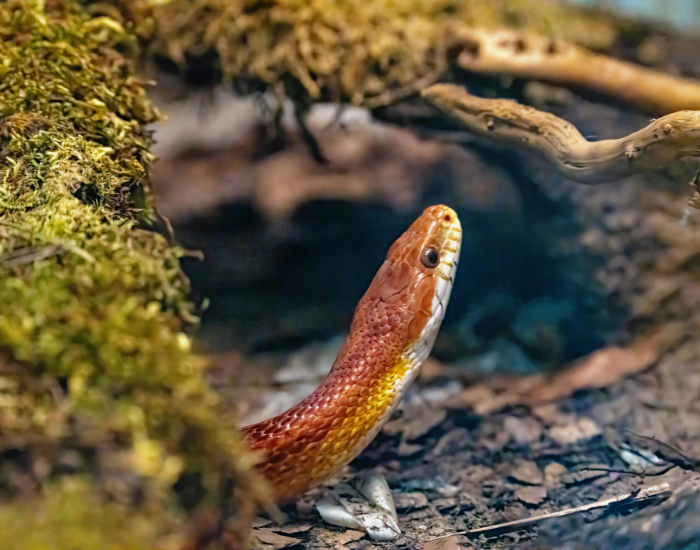
Red rat snakes are primarily nocturnal, hunting by night, though in quiet areas you might see them basking during the day.
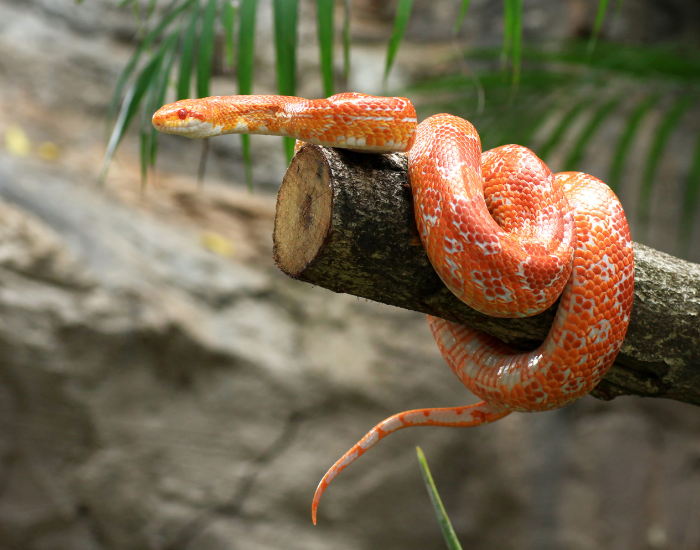
They are also extremely good climbers. I once spotted one high in a tree, coiled in branches while waiting for prey. They use this climbing ability to raid bird nests, hunt squirrels, and escape predators. Their slender bodies and muscle strength let them move easily along beams, rafters, and vines.

5. What’s on the Menu: From Mice to Bird Eggs
What do red rat snakes eat? Their diet is diverse:
- Small mammals (especially rats, voles, and mice)
- Bird eggs and sometimes hatchlings
- Lizards and frogs
- The occasional larger prey item if they can overpower it
Juveniles rely more on small prey like tiny lizards and frogs, while adults focus on rodents. By keeping rodent populations in check, they’re a farmer’s best friend, just as gopher snakes.
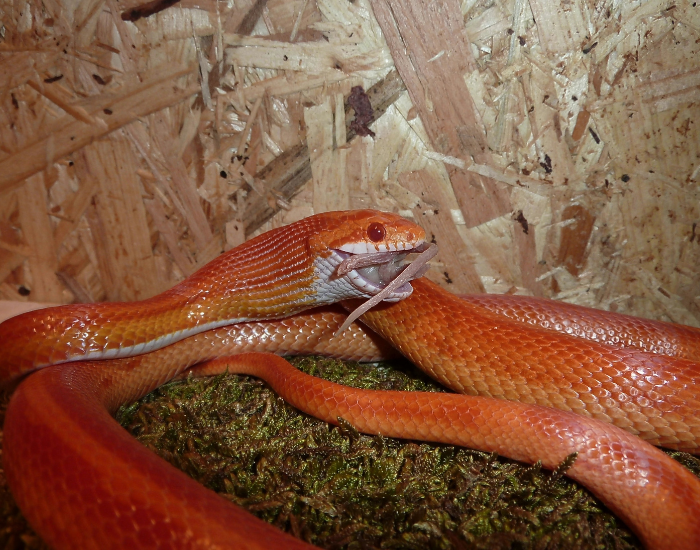
Like other constrictors, they subdue their prey by wrapping coils around it and suffocating it before swallowing whole.
6. Defensive Behavior Without Venom
When threatened, red rat snakes display a variety of defensive behaviors:
- Tail vibration (mimicking rattlesnakes)
- Musk release, a foul odor to deter predators
- Bluff strikes without real bites
Even if they do bite, it’s a harmless nip, no venom, no serious injury. Their first instinct is usually to escape, not fight.
7. Reproduction and Development -The Circle of Snake Life
Corn snake breeding follows a clear seasonal pattern. Females typically lay 10 to 30 eggs in late spring or early summer, after a courtship that includes pheromone trails and gentle mating coils. They prefer warm, humid sites for egg deposition: rotting stumps, decaying vegetation, compost piles, and animal burrows.
- Incubation: 60–65 days
- Hatchlings: 10–15 inches long and completely independent
- Growth: hatchlings shed frequently as they mature
Hatchlings emerge after about 60 to 65 days, fully independent and ready to hunt small prey. Unlike mammals, parental care is absent in corn snakes. The young are born with the same striking patterns as adults, though their colors deepen over time. This breeding strategy is highly efficient, which helps explain why corn snakes thrive across such varied habitats and recover quickly from local population dips.
8. How Big Do They Get (and How Long Do They Live)?
- Average length: 3–4 feet
- Maximum: up to 6 feet (182 cm)
- Wild lifespan: 6–8 years
- Captivity lifespan: 20+ years with proper care
Institutions like the Smithsonian’s National Zoo and the Florida Museum keep red rat snakes for education, highlighting their natural history and role in ecosystems.
9. From Backyards to Pet Shops: Why They’re Popular
Corn snakes are one of the most common pet snakes worldwide, thanks to their:
- Docile temperament
- Manageable size
- Wide range of color morphs bred in captivity
Captive breeding has also reduced pressure on wild populations. Still, always choose pets from ethical breeders, not wild-caught individuals.
10. Misunderstood but Mighty: Conservation and Human Fear
Although not endangered, red rat snakes face threats like:
- Habitat destruction from development
- Roadkill in both rural and suburban areas
- Misidentification and persecution
In the natural environment, corn snakes deal with predators ranging from hawks and owls to foxes and opossums. Birds of prey and eagles are particularly successful hunters of small snakes. Larger snakes, including kingsnakes, also feed on adult corn snakes when they overlap in range.
Beyond natural predators, corn snakes face habitat loss as suburban development replaces forest openings and fields. Vehicle strikes kill many adults each year on rural roads. In florida, they also compete with invasive species, including the burmese python in florida, which has reshaped local food webs. The disruption from invasive species of florida threatens many native reptiles. Despite these pressures, corn snakes remain stable across most of their range, listed only as a species of special concern in a few isolated zones.

FAQs About Red Rat Snakes
No. They’re completely non venomous and harmless to humans.
Yes. Both names describe Pantherophis guttatus.
Yes, they’re commonly found throughout Florida and the Florida Keys.
No. They may bite defensively, but it’s harmless.
Most often it’s the red rat snake, though other species like scarlet snakes and coral snakes also occur.
Not at all. Their usual response is to flee.
What Science Is Teaching Us About Corn Snakes
Even though corn snakes (Pantherophis guttatus) feel familiar to many of us—whether as backyard visitors or pets—science shows they still have surprises up their sleeves!
One recent peer-reviewed study explored how juvenile corn snakes grow under different conditions. The researchers found that when these young snakes could thermoregulate freely and were fed frequently, they shed their skin more quickly and showed brighter skin color patterns, suggesting health and environmental resilience. This makes shedding interval and skin reflectance promising “vital signs” of a snake’s condition.
Another intriguing study examined how temperature and food intake together impact metabolism in juvenile corn snakes. It reveals that their growth and energy use dramatically shift depending on both the heat available and how much they eat, highlighting just how finely tuned their physiology is to real-world environments

Beautiful and Harmless
The red rat snake in Florida is living proof that not every brightly colored snake is dangerous. Far from it: these adaptable hunters are allies, keeping rodent numbers low while enriching the state’s biodiversity.
As someone who has spent years studying snakes in the field, I’ve learned the value of looking beyond fear. The next time you spot a red snake in Florida, consider that it might just be this helpful constrictor, quietly working to keep ecosystems in balance.
References:
Burbrink, F. T. (2002). Phylogeographic analysis of the cornsnake (Elaphe guttata) complex as inferred from maximum likelihood and Bayesian analyses. Molecular Phylogenetics and Evolution, 25(3), 465–476. https://doi.org/10.1016/S1055-7903(02)00306-8
Pyron, R. A., & Burbrink, F. T. (2009). Systematics of the common kingsnake (Lampropeltis getula; Serpentes: Colubridae) and the burden of heritage in taxonomy. Zootaxa, 2241(1), 22–32. https://doi.org/10.11646/zootaxa.2241.1.2
Reed, R. N., & Rodda, G. H. (2009). Giant constrictors: Biological and management profiles and an establishment risk assessment for nine large species of pythons, anacondas, and the boa constrictor (Open-File Report 2009-1202). U.S. Geological Survey. https://pubs.usgs.gov/of/2009/1202/
Saviola, A. J., Chiszar, D., Busch, C., & Mackessy, S. P. (2013). Molecular basis for prey relocation in viperid snakes. BMC Biology, 11(1), 20. https://doi.org/10.1186/1741-7007-11-20
Bonnet, X., Naulleau, G., & Shine, R. (2002). The dangers of leaving home: Dispersal and mortality in snakes. Biological Conservation, 89(1), 39–50. https://doi.org/10.1016/S0006-3207(98)00140-2
Willson, J. D., & Dorcas, M. E. (2003). Effects of habitat disturbance on stream salamanders: Implications for buffer zones and watershed management. Conservation Biology, 17(3), 763–771. https://doi.org/10.1046/j.1523-1739.2003.02069.x