Encountering Black Snakes in Florida
When walking in Florida, it’s common to come across dark shapes sliding quickly through dry leaves or across sandy soils. At first glance, these snakes can be mistaken for rattlesnakes or other reptiles, which is why learning to identify them is so important. For snake enthusiasts and anyone exploring the eastern United States, black snakes are a familiar sight, and understanding which species you’re seeing can help you appreciate their role in the ecosystem while avoiding unnecessary fear.
Black snakes in Florida are a diverse group, from the sleek southern black racer to the enormous eastern indigo snake. Each species has its own story, some raiding chicken coops, others thriving in wetlands, and a few facing serious conservation threats.
Let’s dive in.
If you are from Florida this blog article may interest you as well:
- Unique lizards of Florida, from color-changing anoles to massive iguanas.
- Florida bobcats, stealthy hunters with spotted coats and big personalities.
- Sharks of Florida, from hammerheads to bull sharks cruising just offshore.
- Birds of Florida, including spoonbills, burrowing owls, and dozens of other iconic species.
Why Black Snakes Matter in Florida’s Ecosystems
Snakes are often misunderstood. In Florida, where encounters are common, black snakes play critical ecological roles:
- Pest control: By feeding on rodents, lizards, and small mammals, they reduce populations that otherwise damage crops and spread disease.
- Prey and predator balance: Black snakes are food for hawks, owls, and larger mammals, but they also keep populations of amphibians, reptiles, and even other snakes in check.
- Indicator species: Healthy snake populations signal that wetlands, forests, and grasslands are functioning as they should.
During fieldwork in northern Florida, I once watched an eastern indigo swallow another snake whole. It was shocking, but it reminded me of nature’s brutal efficiency, these snakes keep balance in ways we humans rarely notice.
Types of Black Snakes in Florida
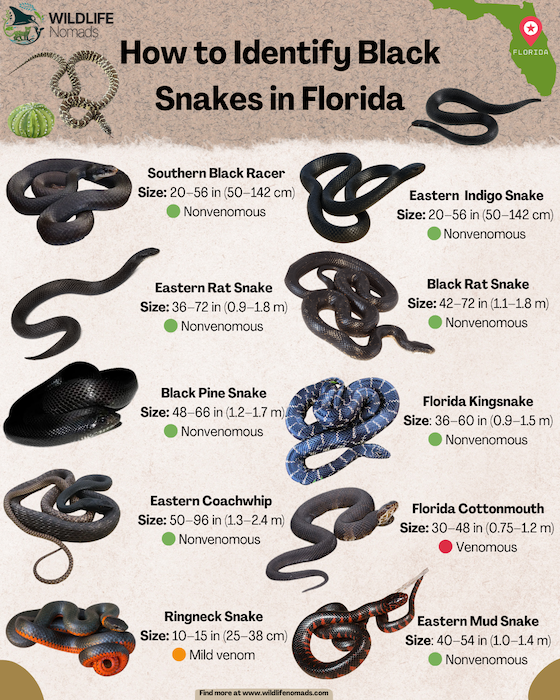
Florida hosts an impressive variety of snakes, but when people talk about “black snakes,” they’re usually referring to a handful of species. Let’s break down the most common types of black snakes in Florida.
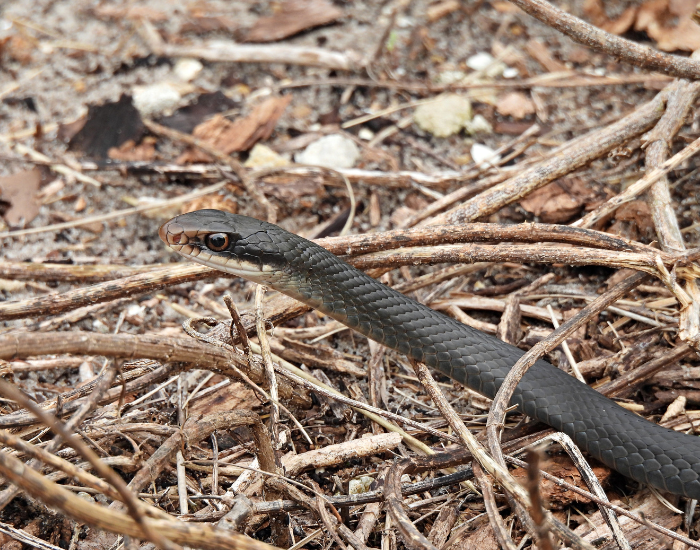
1. Southern Black Racer (Coluber constrictor priapus)
- Look: Sleek, slender body with a jet black back and a distinctive white chin.
- Behavior: Extremely fast; will often dash away. When cornered, it may vibrate its tail in dry leaves, sounding like a rattlesnake.
- Venom: Non venomous but may bite if grabbed.
- Habitat: Commonly found in sandy soils, yards, gardens, and across Florida.
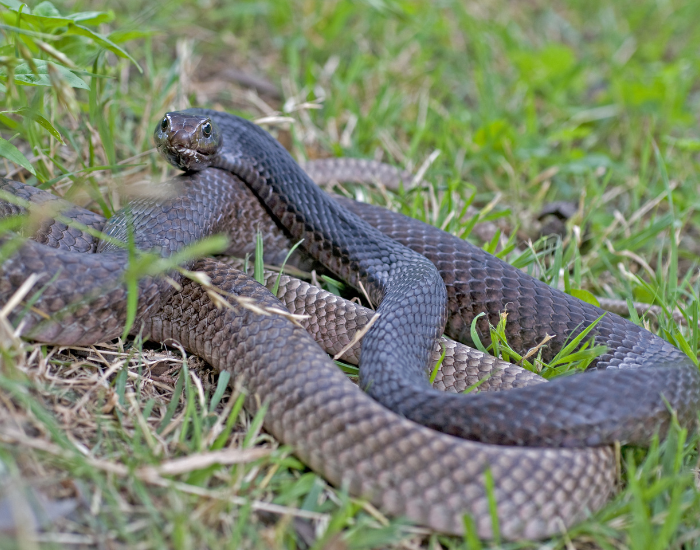
The most common black snake in Florida, often seen darting across driveways and backyards.
2. Eastern Indigo Snake (Drymarchon couperi)
- Look: Glossy, smooth scales that appear dark blue-black. Can exceed 8 feet long, making it the largest native snake in North America.
- Behavior: Docile, non-aggressive, and known for eating other snakes, including venomous rattlesnakes.
- Venom: Non venomous.
- Habitat: Found in wetland habitats, pine flatwoods, and gopher tortoise burrows.
- A federally threatened species due to habitat loss and the pet trade; protected by law. We have a full article with interesting facts about the eastern indigo snake here

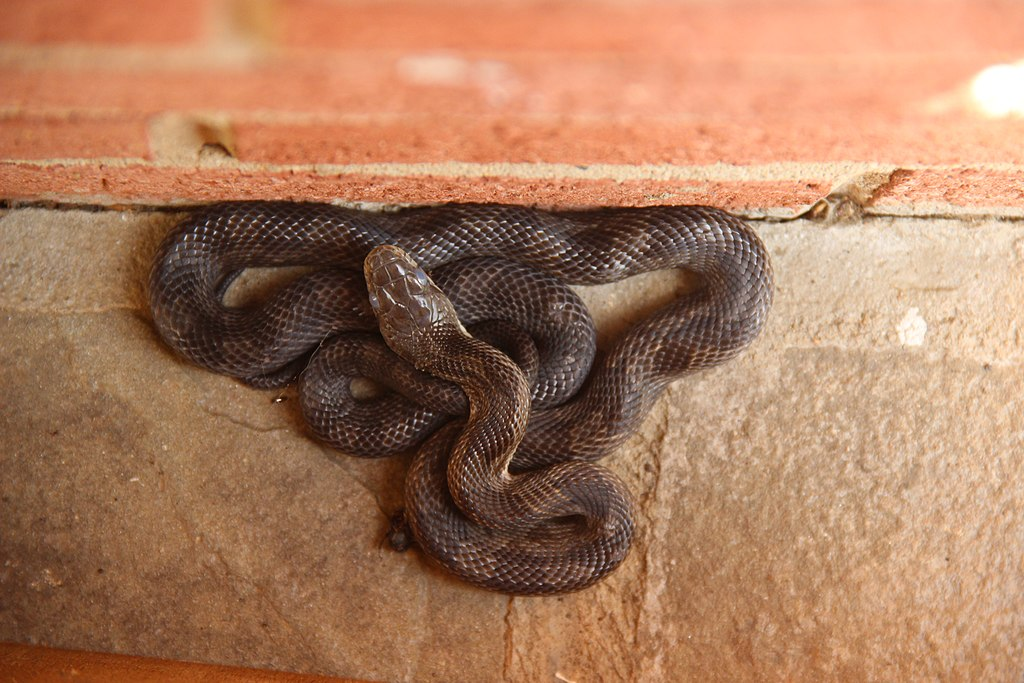
3. Eastern Rat Snake (Pantherophis alleghaniensis)
- Look: Adults are often black with faint patterns; juveniles are more blotched. Sometimes called a chicken snake.
- Behavior: Excellent climber; often found raiding chicken coops and bird nests. Known to hiss loudly when threatened.
- Venom: Non venomous.
- Habitat: Common across the southeastern United States, including Florida; seen in barns, woodlands, and near homes.
Helpful for rodent control, though easily mistaken for venomous snakes.
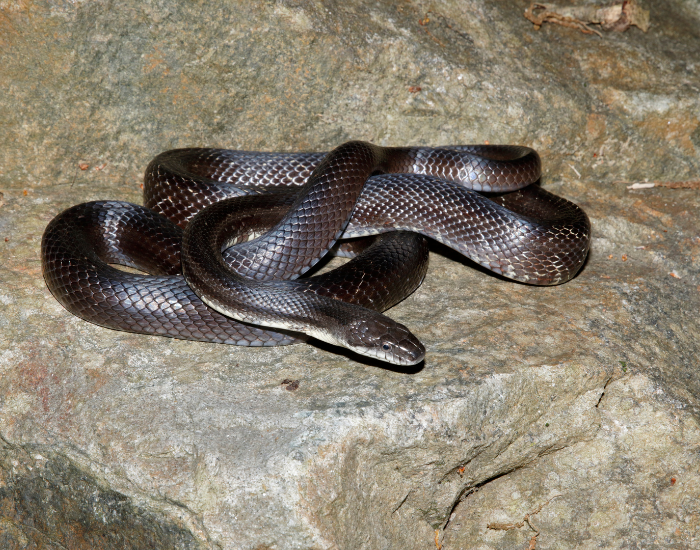
4. Black Rat Snake (Pantherophis obsoletus)
- Look: Similar to the Eastern Rat Snake, long, dark body with lighter belly scales.
- Behavior: Often climbs trees or barns in search of rodents and bird eggs.
- Venom: Non venomous.
- Habitat: Farms, woodlands, and the eastern United States; in Florida, often just another name for the Eastern Rat Snake.
Can grow more than 7 feet long and plays an important role in controlling rodents.
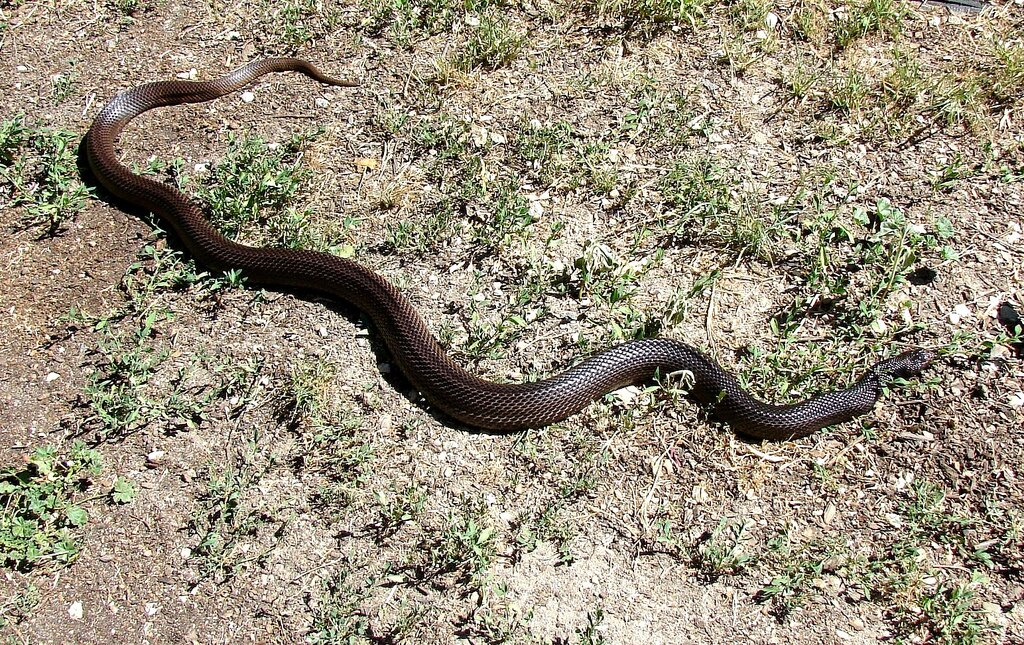
5. Black Pine Snake (Pituophis melanoleucus lodingi)
- Look: Heavy-bodied, dark gray to nearly black, sometimes with faint blotches.
- Behavior: Very secretive; spends much of its time underground.
- Venom: Non venomous.
- Habitat: Prefers dry uplands and pine forests with sandy soils. Rare in Florida.
Protected in parts of its range due to declining populations.
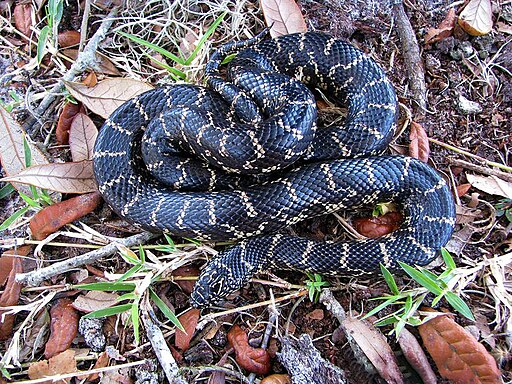
6. Florida Kingsnake (Lampropeltis getula floridana)
- Look: Patterned snake, though some appear nearly all black. Smooth, glossy scales.
- Behavior: Known for eating other snakes, including venomous cottonmouths and rattlesnakes.
- Venom: Non venomous.
- Habitat: Found in fields, woodlands, and near wetlands.
Harmless to humans, highly beneficial in keeping venomous snake numbers down.
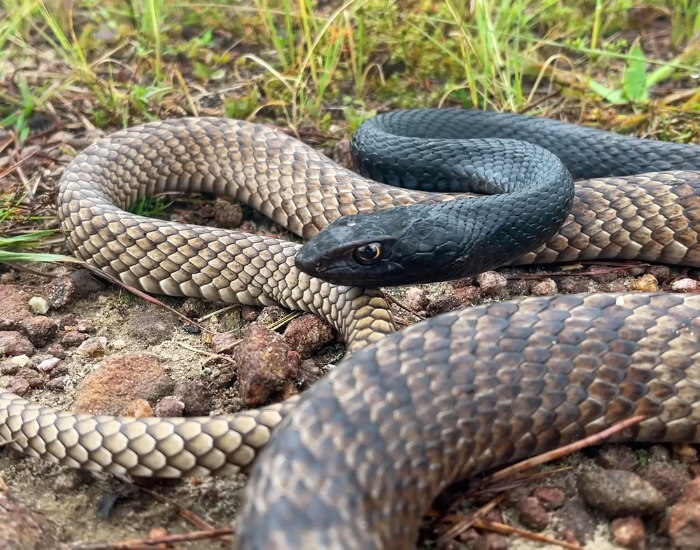
7. Eastern Coachwhip (Masticophis flagellum)
- Look: Very long and slender; dark brown to jet black near the head, fading to lighter tan toward the tail.
- Behavior: Among the fastest snakes in North America; active during the day, hunting lizards, frogs, and small mammals.
- Venom: Non venomous.
- Habitat: Open scrub, grasslands, and sandy habitats.
Intimidating due to size and speed, but completely harmless.
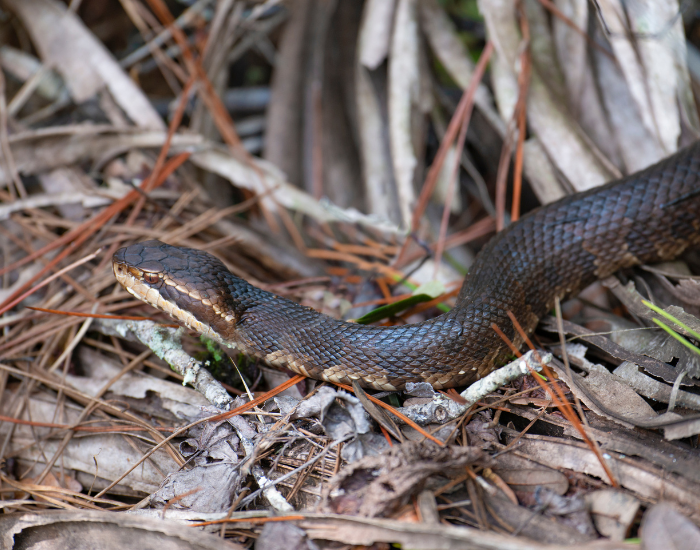
8. Florida Cottonmouth (Agkistrodon piscivorus conanti) – Venomous
- Look: Thick, heavy-bodied with a triangular head. Often dark or black in older individuals. Shows the famous white “cotton” mouth lining when threatened.
- Behavior: Semi-aquatic, often seen swimming in rivers, swamps, or wetlands.
- Venom: Venomous pit viper; bite can be dangerous to humans.
- Habitat: Found near water across Florida.
The only truly venomous black snake in Florida; easily confused with harmless water snakes or black racers.
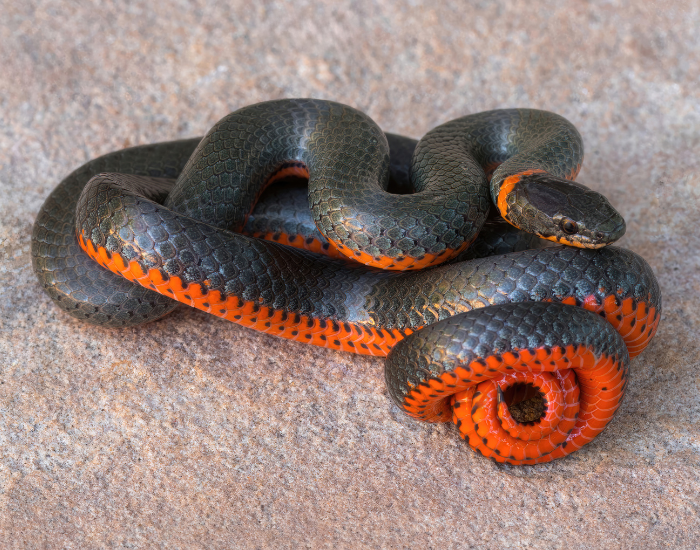
9. Ringneck Snake (Diadophis punctatus)
- Look: Small, slender, dark gray to black body with a bright orange or yellow ring around the neck.
- Behavior: Shy and secretive, hides under logs, stones, or leaf litter.
- Venom: Non venomous to humans; mild venom only affects tiny prey.
- Habitat: Woodlands, gardens, and moist habitats.
Often overlooked due to their size; completely harmless.
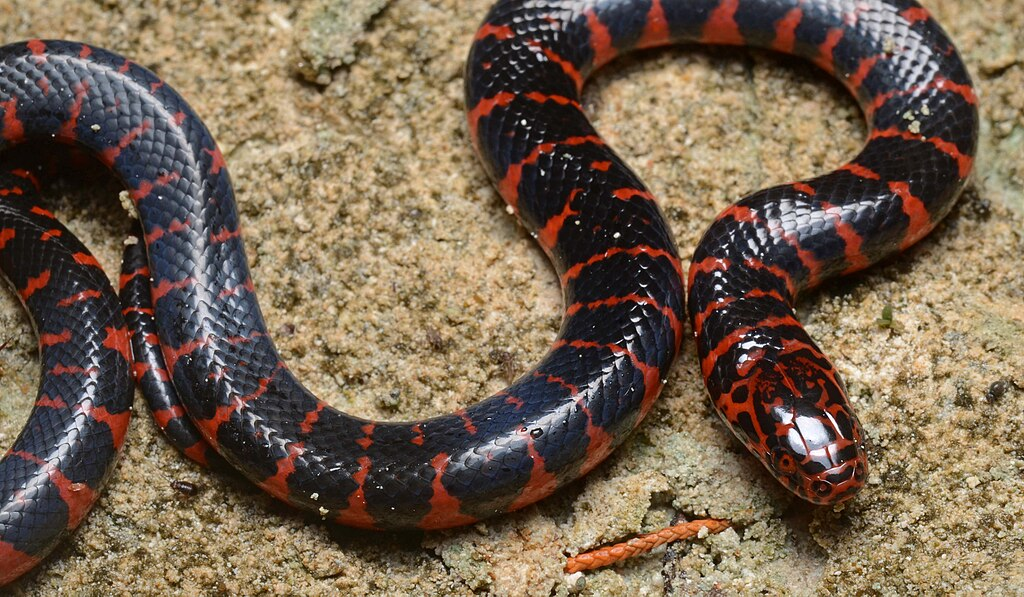
10. Eastern Mud Snake (Farancia abacura)
- Look: Glossy black on top with striking red or orange belly bands.
- Behavior: Aquatic and nocturnal; feeds mostly on amphibians like salamanders. Rarely bites.
- Venom: Non venomous.
- Habitat: Swamps, marshes, and wetland habitats.
Beautiful and harmless, though rarely seen by the public.
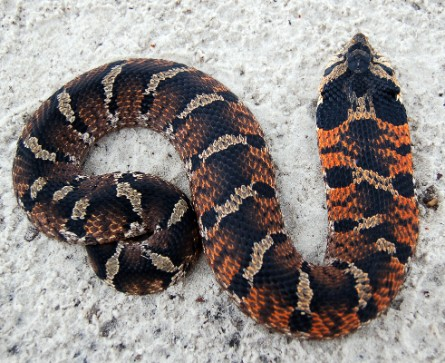
11. Eastern Hognose Snake (Heterodon platirhinos)
- Look: Highly variable; some individuals are jet black. Distinct upturned “hog” nose.
- Behavior: Famous for dramatic displays: flattens head like a cobra, hisses loudly, or plays dead when cornered.
- Venom: Non venomous to humans.
- Habitat: Sandy soils, dry leaves, fields, and woodlands.
Startling in appearance but harmless, more of an actor than a threat.
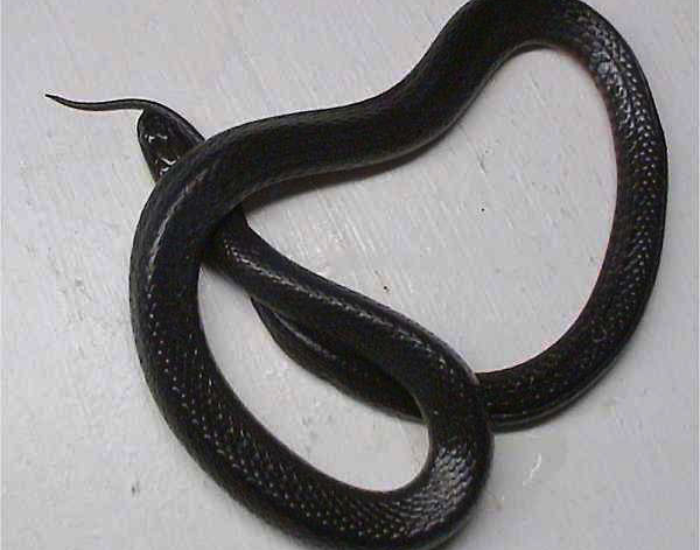
12. Black Swampsnake (Liodytes pygaea)
- Look: Small, glossy black above with a bright red or orange-red belly. Usually under 18 inches long.
- Behavior: Highly aquatic and secretive; rarely seen on land. Feeds primarily on small fish, tadpoles, sirens, and leeches.
- Venom: Non venomous.
- Habitat: Heavily vegetated swamps, cypress strands, marshes, and slow-moving wetlands across peninsular Florida. One of Florida’s least-seen native black snakes due to its aquatic, nocturnal lifestyle.
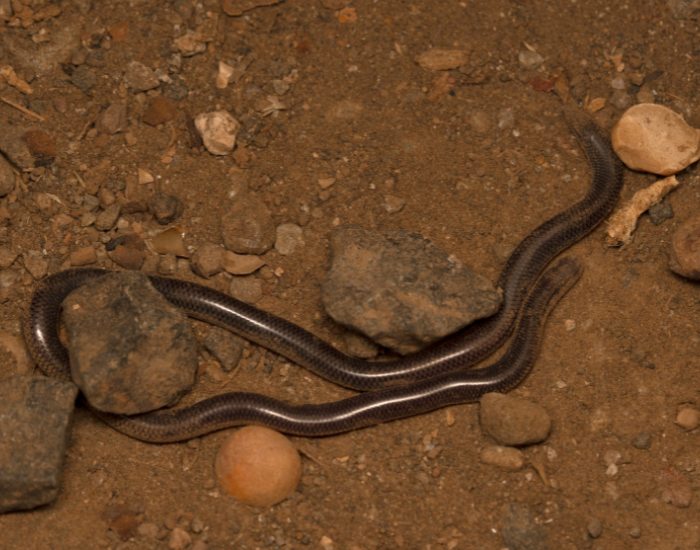
13. Brahminy Blind Snake (Indotyphlops braminus)
- Look: Tiny (4–6 inches), shiny dark brown to almost black, with a body that resembles an earthworm. Often called the “flowerpot snake.”
- Behavior: Burrowing and parthenogenetic; all individuals are female and reproduce without males. Feeds on ant and termite eggs and larvae.
- Venom: Non venomous and harmless.
- Habitat: Gardens, leaf litter, potted plants, and disturbed urban habitats. Introduced to Florida via the horticulture trade and now widely established. Often discovered when homeowners dig in flower beds or repot plants.
Behavior and Diet of Black Snakes
All types of black snakes in Florida are carnivores, and while their diets overlap, each species has its specialties:
- Black racers: Hunt by sight, often during the day. They’ll chase down lizards, frogs, rodents, and small birds.
- Eastern rat snakes: Skilled climbers, famous for raiding bird nests and chicken coops.
- Eastern indigo snakes: Opportunistic feeders, everything from amphibians to rattlesnakes.
- Kingsnakes: Immune to pit viper venom, allowing them to prey on copperheads and rattlers.
Although mammals and reptiles make up most of their diet, some species won’t hesitate to hunt around ponds and wetlands. I’ve seen racers strike at frogs on the water’s edge and even catch small fish, proving how adaptable these animals can be when food is scarce.
Safety Precautions: Are Black Snakes Harmful?
- Are black snakes poisonous? Most black snakes in Florida are non-venomous — species like the Southern Black Racer, Eastern Indigo Snake, Rat Snakes, Kingsnakes, Coachwhips, Ringneck Snakes, Mud Snakes, and Hognose Snakes are all harmless to humans. Exception: The Florida Cottonmouth (Agkistrodon piscivorus conanti), also called a “Water Moccasin,” can be very dark or almost black, especially as adults. This is a venomous pit viper and the only truly dangerous “black snake” you might encounter in Florida.
If you encounter one:
- Keep your distance.
- Observe rather than interact.
- If in your yard, let it pass, it’s likely just hunting rodents.
Conservation of Florida’s Black Snakes
While common species like the black racer are thriving, others like the eastern indigo are at risk.
Major threats include:
- Habitat loss from development.
- Persecution by humans due to fear.
- Illegal collection for the pet trade.
“One of the lesser-known threats is the pet trade. The indigo snake, with its glossy scales and calm demeanor, is especially targeted. Collecting snakes from the wild not only harms populations directly but also disrupts local ecosystems that depend on them.”
Conservation programs, such as reintroduction projects in northern Florida, aim to restore indigo populations. According to the U.S. Fish & Wildlife Service, partnerships with landowners and zoos have helped stabilize numbers, but more work is needed.
FAQs About Black Snakes in Florida
Are any black snakes in Florida poisonous?
No. While they may mimic rattlesnakes by vibrating their tails, none of Florida’s black snakes are venomous.
Is a black snake harmful to humans?
Not in a venomous sense. They may bite if handled, but they’re more helpful than harmful.
Are black racer snakes good to have around?
Yes. They control populations of rodents, lizards, and even invasive species like Cuban anoles.
What kind of snake is totally black?
The eastern indigo and the black racer are the most fully black species in Florida.
What should I do if I see a black snake?
Stay calm, give it space, and let it go about its business.
Appreciating Florida’s Black Snakes
From the quick, slender black racer to the majestic eastern indigo, black snakes in Florida embody the state’s biodiversity. They’re pest controllers, ecosystem stabilizers, and, for those willing to look closer, truly fascinating creatures.
As someone who’s spent years traveling and studying wildlife, I’ve come to see black snakes not as threats, but as essential neighbors. Next time you see one sliding through your yard or crossing a trail, pause. At first glance, it may just look like a dark streak against the ground—but on closer inspection, you’ll find a story of survival, adaptation, and ecological importance.
Protecting these species means protecting Florida’s ecosystems. By valuing snakes for the role they play, we ensure that future generations can marvel at the flash of a racer or the calm power of an indigo.
References:
Bauder, J. M., Stevenson, D. J., Sutherland, C. S., & Jenkins, C. L. (2017). Occupancy of potential overwintering habitat on protected lands by two imperiled snake species. Copeia, 105(3), 482–492. https://doi.org/10.1670/15-064
Hyslop, N. L., Stevenson, D. J., Macey, J. N., Carlile, L. D., Jenkins, C. L., Hostetler, J. A., & Oli, M. K. (2012). Survival and population growth of a long-lived threatened snake species, Drymarchon couperi (eastern indigo snake). Population Ecology, 54(1), 145–156. https://doi.org/10.1007/s10144-011-0292-3
Plummer, M. V., & Mills, N. E. (2000). Spatial ecology and survivorship of resident and translocated hognose snakes (Heterodon platirhinos). Journal of Herpetology, 34(4), 565–575. https://doi.org/10.2307/1565272
Steen, D. A., McClure, C. J. W., Brock, J. C., Rudolph, D. C., Pierce, J. B., Lee, J. R., Humphries, W. J., Gregory, B. B., Sutton, W. B., Smith, L. L., Baxley, D. L., Stevenson, D. J., & Guyer, C. (2014). Snake co-occurrence patterns are best explained by habitat and hypothesized effects of interspecific interactions. Journal of Animal Ecology, 83(1), 286–295. https://doi.org/10.1111/1365-2656.12121
Stevenson, D. J., Dyer, K. J., & Willis-Stevenson, B. A. (2003). Survey and monitoring of the eastern indigo snake in Georgia. Southeastern Naturalist, 2(3), 393–408. https://doi.org/10.1656/1528-7092(2003)002[0393:SAMOTE]2.0.CO;2