

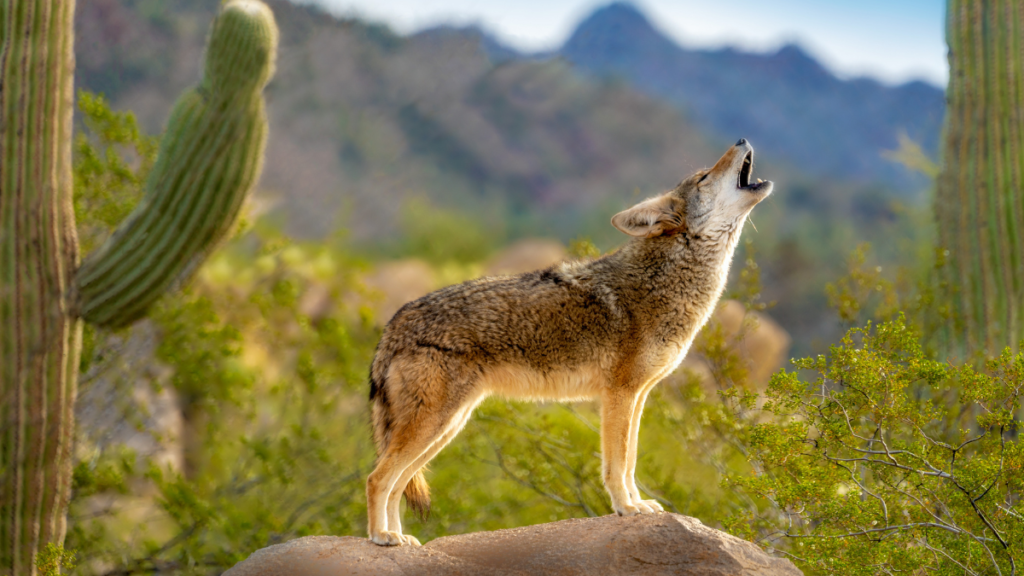
The first time I really saw coyotes, not just heard them yip across a canyon, I was a student in Baja California. I’d joined a California condor conservation program, and our truck was grinding up into the Sierra San Pedro Mártir toward the biological station. Three coyotes trotted across the road like they owned it. Until that morning, coyotes had been a sound to me. Suddenly they had faces, gaits, and personalities.
Years later, working a month in Canada, I watched coyotes slip through semi-urban edges around Banff. Same animal, totally different vibe. That contrast is the whole point of this guide. People assume every coyote looks alike. In truth, scientists recognize 19 coyote subspecies, and learning the differences changes how you read the landscape. Below I’ll walk through all 19 coyote subspecies, their biology, behavior, range, and the field marks that help you identify them by region. And fi you wonder how coyotes compare in size with other animals, do not forget to visit our interactive tool!
How Coyotes Are Classified Across North America
As of 2026, 19 coyote subspecies are recognized within the coyote species. They range from Alaska and western Canada all the way south through Mexico into Central America, reaching El Salvador and Honduras. Coyotes show clear size and fur color variation based on their environment, which is the foundation of subspecies classification. Modern coyotes even differ from Pleistocene coyotes, which were stockier, heavier-jawed animals built for Ice Age megafauna.
Here’s the pattern that holds almost everywhere. Northern coyotes often have denser, darker fur to survive hard winters. Desert coyotes carry lighter, smaller, and thinner fur to dump heat. Eastern coyotes are larger than western coyotes, partly thanks to wolf ancestry. Western coyotes are typically 18 to 30 pounds, lean and quick. Once you internalize that geography, you can guess a coyote’s subspecies before you read a single range map.
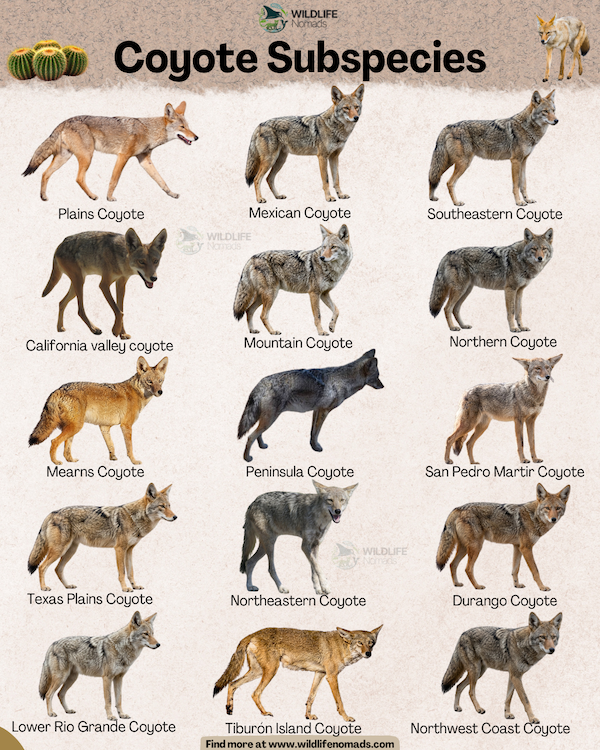
A quick checklist of all 19 coyote subspecies, grouped roughly north to south:
- Plains coyote (latrans)
- Mountain coyote (lestes)
- Northern coyote (incolatus)
- Mearns coyote (mearnsi)
- California Valley coyote (ochropus)
- Peninsula coyote (peninsulae)
- San Pedro Mártir coyote (clepticus)
- Texas Plains coyote (texensis)
- Northeastern coyote (thamnos)
- Northwest Coast coyote (umpquensis)
- Southeastern coyote (frustror)
- Lower Rio Grande coyote (microdon)
- Durango coyote (impavidus)
- Tiburón Island coyote (jamesi)
- Mexican coyote (cagottis)
- Colima coyote (vigilis)
- Belize coyote (goldmani)
- Honduras coyote (hondurensis)
- Salvador coyote (dickeyi)
Now let’s meet each one.
1. Plains Coyote (Canis latrans latrans)
The Plains coyote is the nominate subspecies and the mental image most people hold. It’s a larger subspecies ranging across the U.S. and Canadian Great Plains, from Alberta down through the Dakotas and Kansas. Pale grayish-buff fur blends into prairie grass beautifully.
These coyotes built their reputation as opportunistic feeders following bison herds, then cattle. They eat cottontail rabbits, rodents, and birds, and they’ll trail larger prey when winter bites. The Plains coyote is also the population most famous for forming mutualistic hunting relationships with badgers, the coyote runs ground squirrels above while the badger digs from below.
2. Mountain Coyote (Canis latrans lestes)
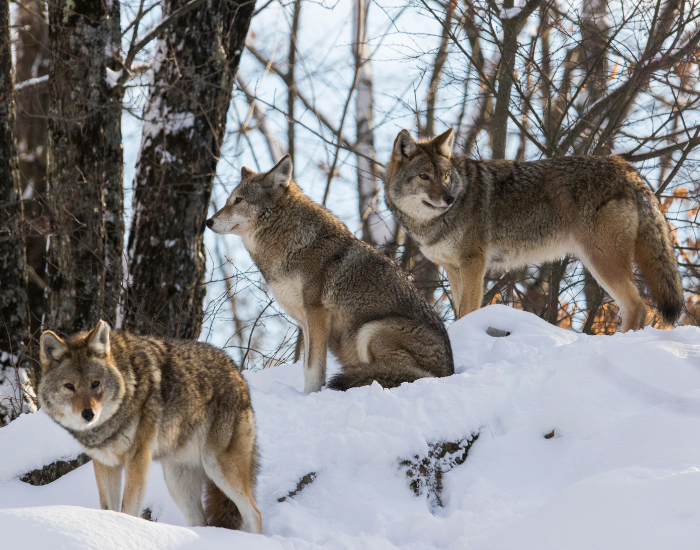
The Mountain coyote is typically large and light-colored, ranging through the western mountains from the Rockies up into Alberta and British Columbia. This is the coyote I watched around Banff, long-legged, plush-coated, picking through semi-urban areas at the forest edge.
In the eastern Sierra Nevada, these coyotes compete with cougars over mule deer, scavenging cougar kills whenever they can. They also kill bobcats on occasion, especially smaller individuals. But the mountain coyote answers to bigger predators too: after wolves returned to Yellowstone, the local coyote population declined by 39% as gray wolves reclaimed the top spot.
3. Northern Coyote (Canis latrans incolatus)
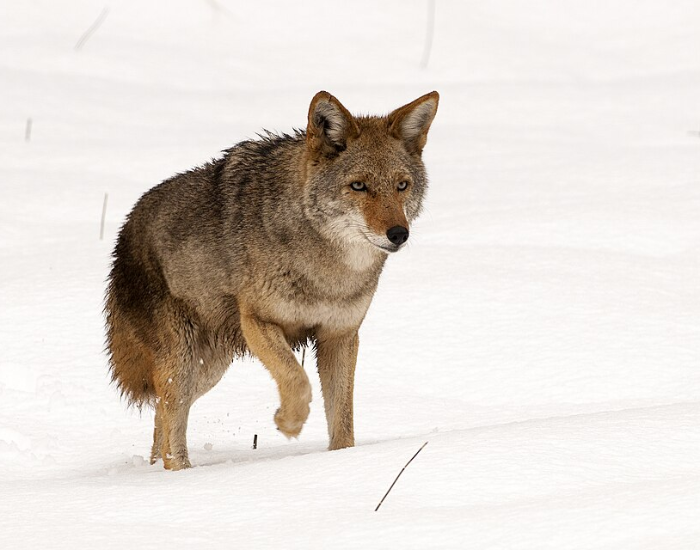
The Northern coyote inhabits Alaska and western Canada and wears the thickest coat of any subspecies. Dense, dark fur and a robust build help it endure brutal northern winters. These coyotes typically walk 5–16 kilometers per day hunting hares and rodents.
Interestingly, coyotes from Alaska show almost no wolf ancestry, despite living shoulder-to-shoulder with gray wolves. Genomic work confirms the northern coyote stayed genetically “pure” while eastern populations hybridized heavily. It’s a clean natural experiment in why geography shapes a genome.
4. Mearns Coyote (Canis latrans mearnsi)
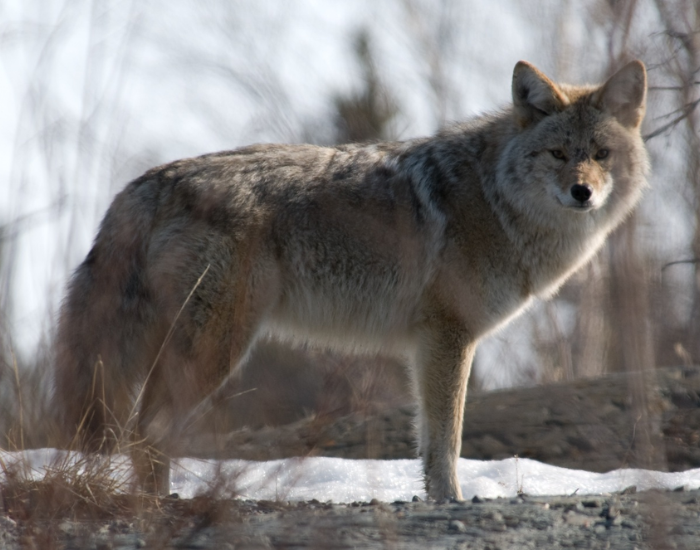
Mearns coyotes are smaller and lighter-colored, found across the southwest U.S. and northern Mexico. This is a classic desert coyote: lighter, smaller, and thinner fur to survive the heat of the Sonoran and Mojave. Rich rusty tones on the legs and a vivid bushy tail set it apart.
These coyotes survive on a varied diet of rodents, reptiles, insects, and cactus fruit. In lean months they lean hard on small prey and scavenged dead animals. They embody coyote adaptability, thriving where water is scarce and food abundance swings wildly by season.
5. California Valley Coyote (Canis latrans ochropus)
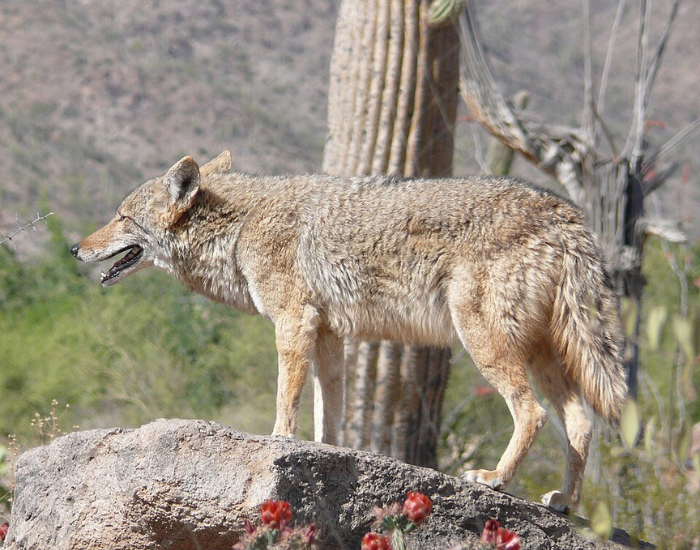
The California Valley coyote roams the valleys and coastal ranges of California. Medium-sized and richly colored, it’s the coyote most Californians actually encounter. Urban coyotes in Los Angeles and the Bay Area largely belong to this subspecies.
These animals have become poster children for urban adaptation. They den in crawl spaces and storm drains, exploit food scraps in suburban neighborhoods, and learn trash-day schedules. When residents leave pet food outdoors, these coyotes return nightly. Pet food left outdoors is, frankly, an open invitation.
6. Peninsula Coyote (Canis latrans peninsulae)
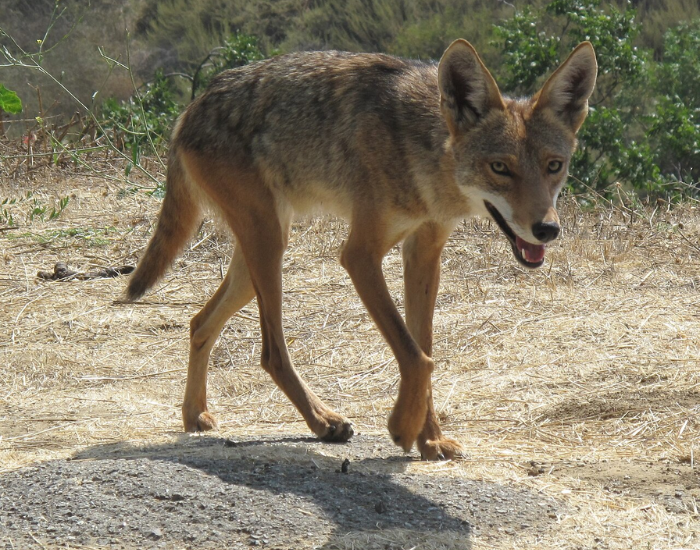
The Peninsula coyote occupies the Baja California peninsula, a long, arid finger of land that breeds lean, pale animals. Limited resources keep this subspecies small-bodied compared with northern coyotes.
I crossed paths with these coyotes repeatedly during my time in Baja. They worked the arroyos at dawn, ribs faintly visible, utterly unbothered by our trucks. Living in such a dry landscape, they show the species’ relative dependence on whatever protein the desert offers — lizards, rodents, carrion, and the occasional cactus fruit.
7. San Pedro Mártir Coyote (Canis latrans clepticus)
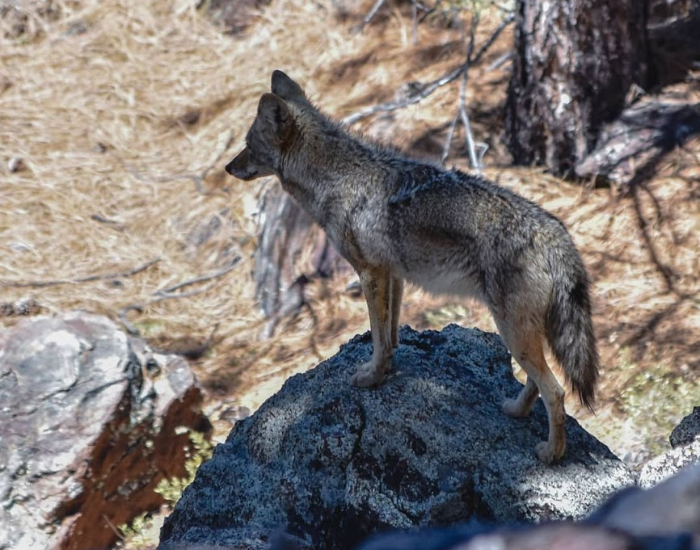
The San Pedro Mártir coyote ranges through northern Baja California and into southern California. It’s named for the Sierra San Pedro Mártir — the exact mountains where I first saw coyotes in the wild during that condor program. So this subspecies will always be personal for me.
These coyotes thread the line between montane and desert habitats, so their coats vary more than most. The ones I saw on the climb to the biological station were grayer and slightly larger than the peninsula coyotes farther south. Same animal, subtly retooled by elevation.
8. Texas Plains Coyote (Canis latrans texensis)
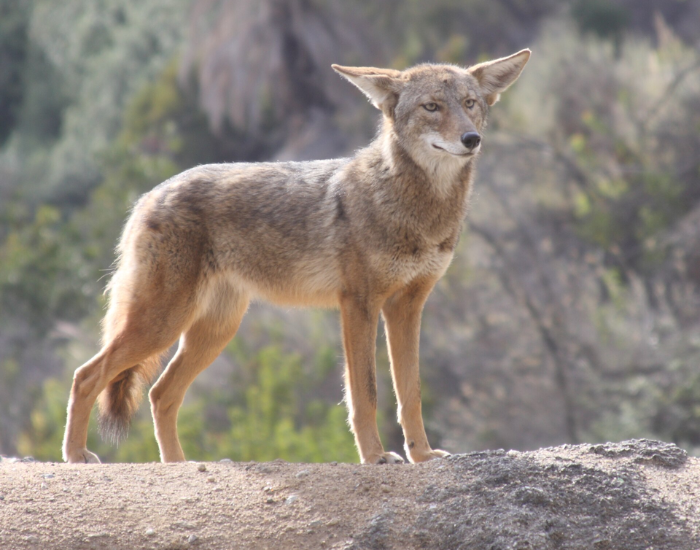
The Texas Plains coyote covers Texas, New Mexico, and northeastern Mexico. Medium-sized with fulvous, sandy coloring, it’s perfectly camouflaged for scrubland and ranch country. These coyotes are deeply woven into Texas folklore and, unfortunately, into predator-control history.
Across the southern plains, coyotes were actively killed for bounties for over a century. Yet the population rebounded everywhere. That resilience is the Texas coyote’s signature, persecution simply scattered them into new territory rather than thinning them out.
9. Northeastern Coyote (Canis latrans thamnos)
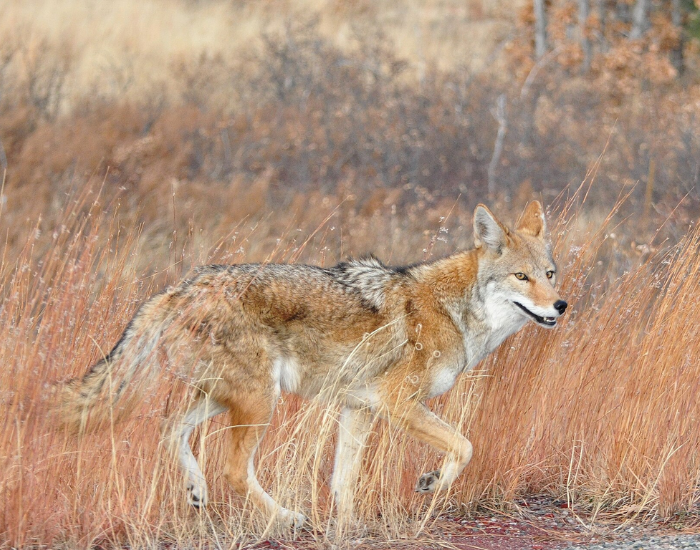
The Northeastern coyote — the old “brush wolf” — ranges through the north-central U.S. and southeastern Canada. Northeastern coyotes are larger and more varied in color than western kin, from blonde to nearly black. This subspecies sits at the heart of the eastern hybridization story.
Coyotes hybridize with wolves, especially in eastern North America, and the thamnos line carries the genetic legacy. Genomic studies show these large coyotes absorbed DNA from eastern wolves and gray wolves as they spread. Eastern coyotes weigh roughly 21% more than male western coyotes, a size boost linked to that wolf and dog admixture. Adult coyotes here can tackle larger prey — even adult deer in deep snow — precisely because of that extra muscle, and they carry pointed ears on a broader head than their western cousins.
10. Northwest Coast Coyote (Canis latrans umpquensis)
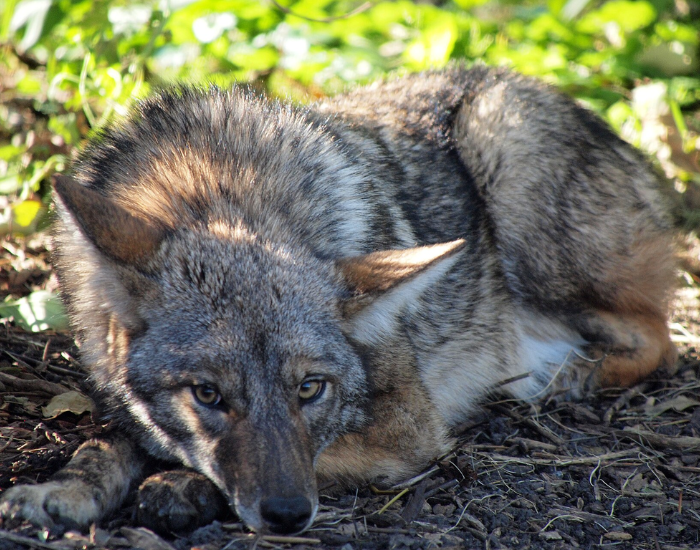
The Northwest Coast coyote lives along the rainy Pacific Northwest, from Oregon’s Umpqua region up the coast. Damp forests produce a darker, denser-furred coyote than the desert subspecies. Rich brown and rust tones dominate.
These coyotes feast on a varied diet of salmon scraps, rodents, berries, and other wildlife along river corridors. In temperate rainforest, where cover is thick, they hunt more solitarily than open-country coyotes. The habitat literally reshapes their behavior.
11. Southeastern Coyote (Canis latrans frustror)
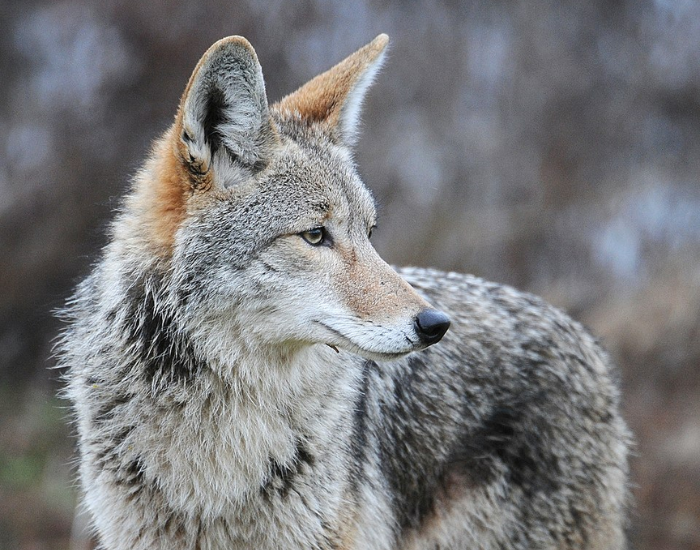
The Southeastern coyote occupies the south-central U.S., centered on Oklahoma, Arkansas, and Missouri. It’s a robust, brightly colored subspecies that expanded eastward dramatically over the last century.
As coyotes colonized the Southeast, they met remnant red wolves and interbred. Coyotes in North Carolina resemble red wolves but are smaller, which complicates red wolf recovery enormously. Telling these coyotes from red wolves in the field demands genetics, not just a glance, a real headache for conservation teams.
12. Lower Rio Grande Coyote (Canis latrans microdon)
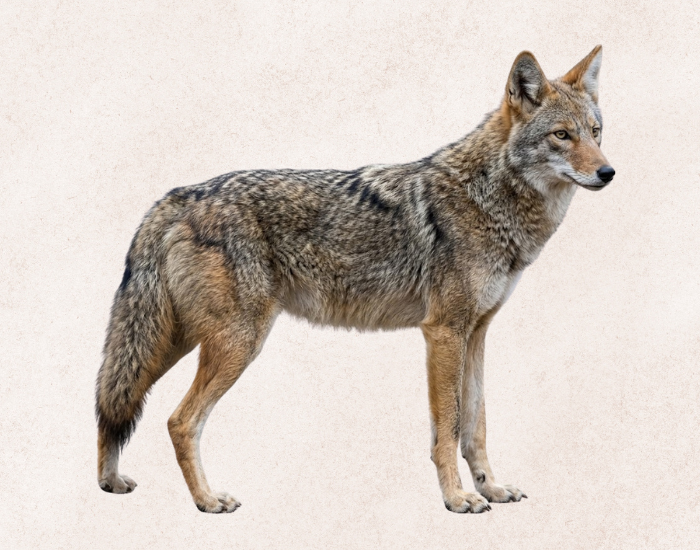
The Lower Rio Grande coyote, true to its name (microdon means “small tooth”), is a smaller subspecies of the lower Rio Grande Valley in Texas and Tamaulipas. Pale, lean, and built for brushland thornscrub.
These coyotes live in dense mesquite and prickly-pear country, hunting cottontail rabbits, voles, and birds. Their smaller teeth and slighter build reflect a diet skewed toward small animals rather than larger prey. It’s a neat example of how form follows menu.
13. Durango Coyote (Canis latrans impavidus)
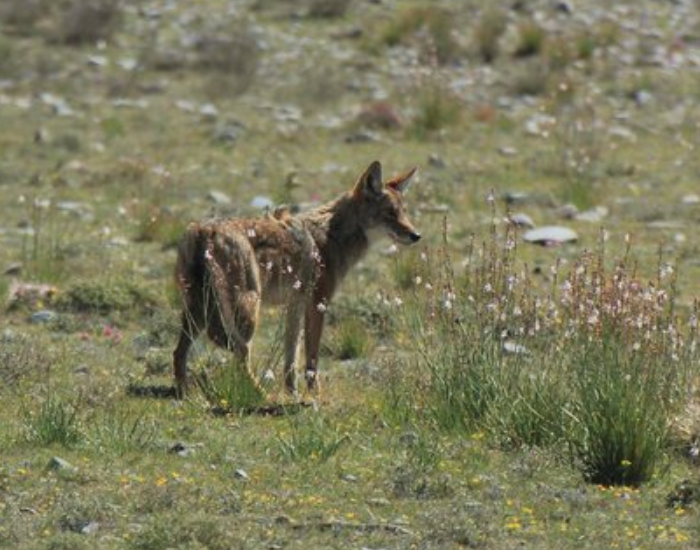
The Durango coyote ranges through northwestern Mexico, including Durango and Sinaloa. Medium-sized and richly colored, it bridges desert and subtropical habitats along the Sierra Madre Occidental.
Less studied than U.S. subspecies, these coyotes still show the family’s hallmark flexibility. They’re opportunistic feeders across farmland and foothills, scavenging dead animals and hunting whatever rodents the season provides. Coyote behavior here mirrors the desert subspecies to the north.
14. Tiburón Island Coyote (Canis latrans jamesi)
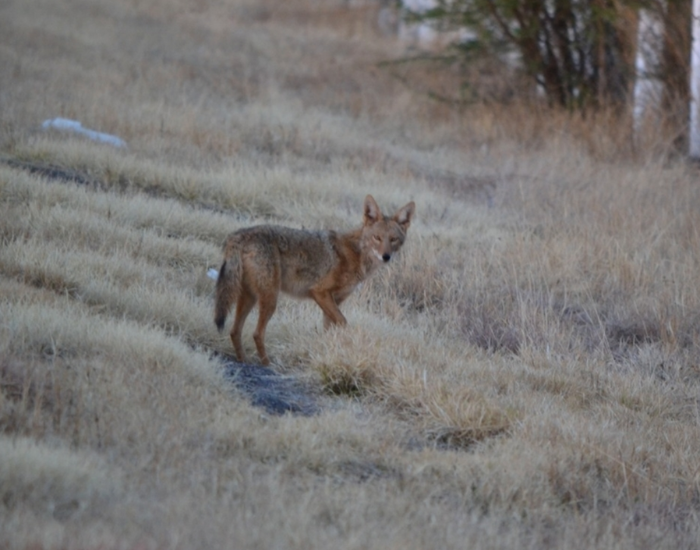
The Tiburón Island coyote is an island endemic, restricted to Tiburón Island in the Gulf of California. Isolation has nudged it toward a distinct, lean form, a living lesson in how islands sculpt their residents.
With limited prey, these coyotes depend heavily on coastal scavenging, reptiles, and seabird colonies. Their varied diet is dictated entirely by island scarcity. Few biologists ever see them, which makes jamesi one of the most intriguing coyote subspecies on the list.
15. Mexican Coyote (Canis latrans cagottis)
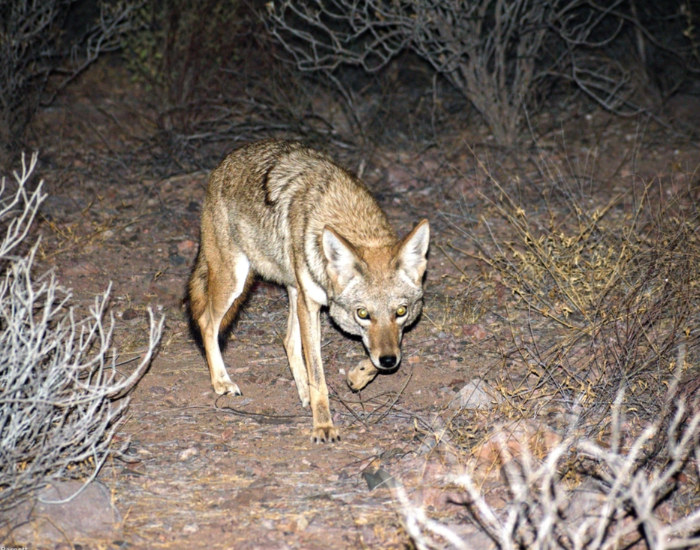
Mexican coyotes are smaller and found in warmer climates, ranging across central and southern Mexico, including Oaxaca and Veracruz. Warm-country biology means a lighter build and shorter coat than their northern relatives.
These coyotes have coexisted with people since long before European colonization, the word “coyote” itself comes from the Nahuatl coyotl. Indigenous cultures wove them into mythology as clever tricksters, not as a cowardly and untrustworthy animal. That cultural depth is part of why I love studying coyotes in Mexico.
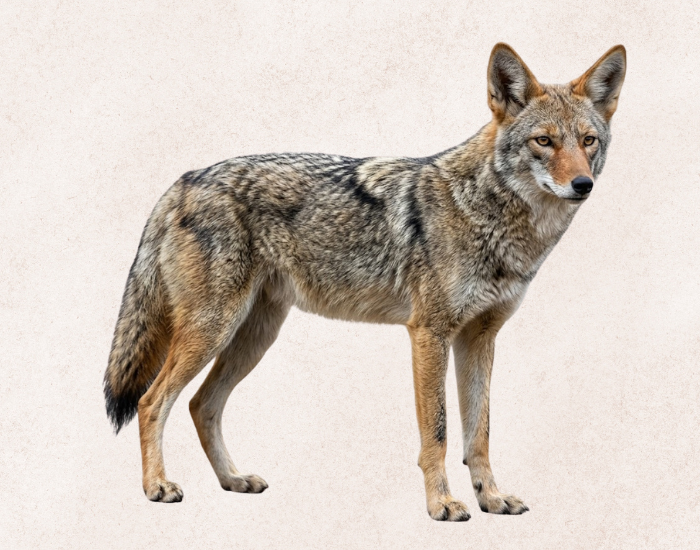
16. Colima Coyote (Canis latrans vigilis)
The Colima coyote inhabits the warm Pacific coast of southwestern Mexico, around Colima, Jalisco, and Guerrero. It’s among the smaller, paler subspecies, well suited to lowland tropical dry forest and coastal plains.
Living near dense human settlement, these coyotes behave much like urban coyotes farther north. They exploit agricultural fields, scavenge food scraps, and slip through villages after dark. Their willingness to live alongside people keeps the population stable despite habitat loss.
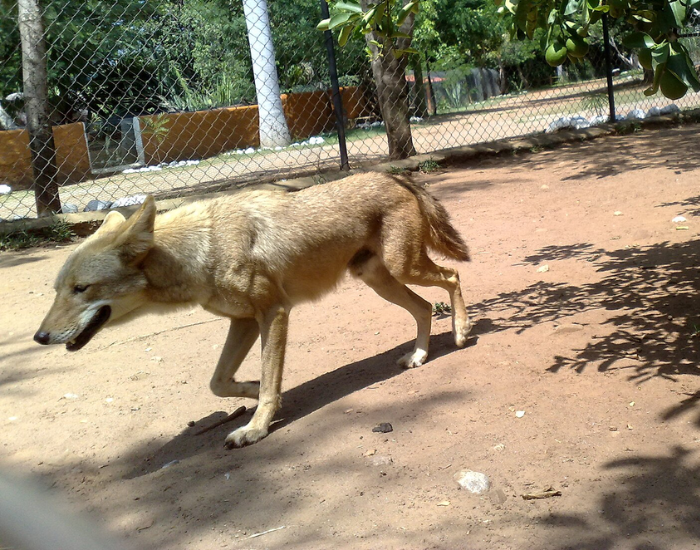
17. Belize Coyote (Canis latrans goldmani)
The Belize coyote pushes into the tropics across southern Mexico, Belize, and Guatemala. This subspecies represents the leading edge of an extraordinary southward expansion that accelerated as forests were cleared for agriculture.
These coyotes only reached the region recently in evolutionary terms, riding deforestation into former jungle. They’ve added tropical fruits and small animals to an already varied diet. The Belize coyote shows the coyote population doing what it does best, colonizing disturbed ground.
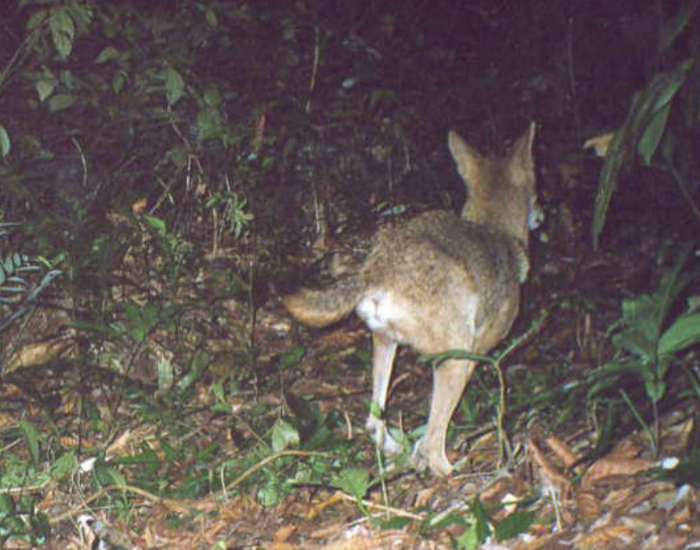
18. Honduras Coyote (Canis latrans hondurensis)
The Honduras coyote carries the coyote species deep into Central America. Slender, short-coated, and heat-adapted, it inhabits the dry forests and farmland of Honduras and neighboring countries.
This is range expansion in real time. Until the twentieth century, coyotes were absent here entirely; today they’re established residents. These coyotes function as opportunistic mesopredators, filling a niche left open as larger carnivores declined. It’s evolution and ecology unfolding within a human lifetime.
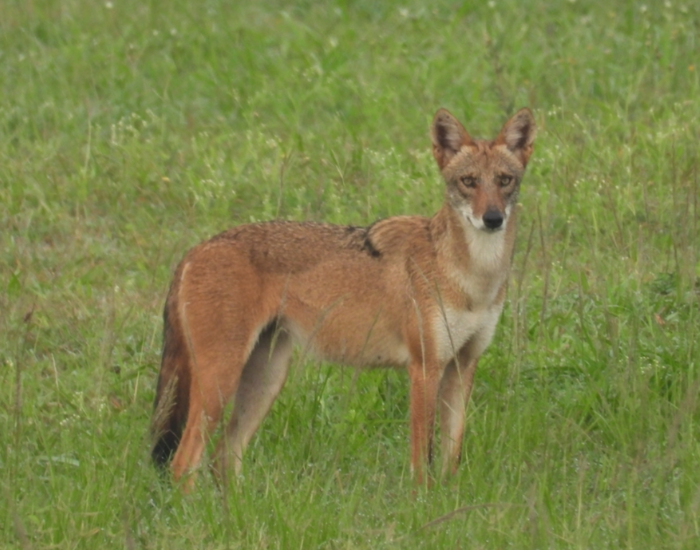
19. Salvador Coyote (Canis latrans dickeyi)
The Salvador coyote is the southernmost subspecies, marking the current edge of the coyote’s range in El Salvador and adjacent Central America. Compact, pale, and tropical, it’s the final frontier of Canis latrans.
These coyotes complete a continent-spanning story: from the thick-furred Northern coyote of Alaska to this lean tropical traveler near the equator. That coyotes range from Canada to Central America, occupying every habitat between, is one of the great success stories in modern mammalogy. The Salvador coyote is its leading edge.
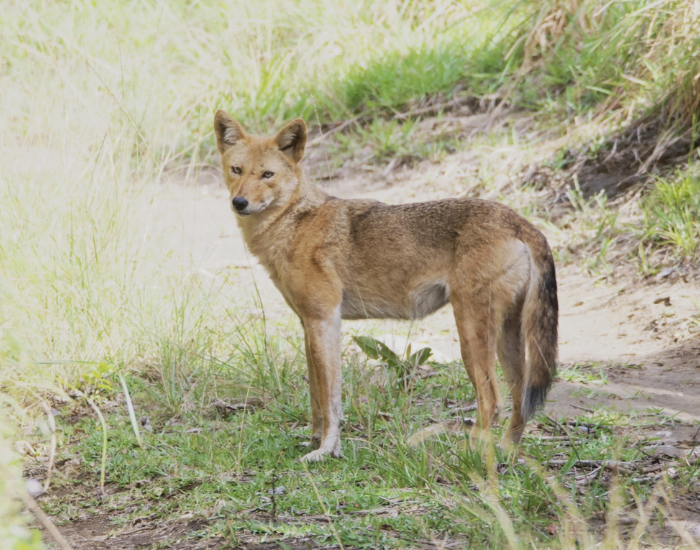
What Makes a Coyote a Coyote
Before we split hairs between coyote subspecies, let’s agree on the baseline animal. The coyote, Canis latrans, is a medium-sized North American canid. The scientific name coyote carries — Canis latrans, meaning “barking dog” — fits perfectly once you’ve heard a group yip echo at dusk.
Coyote taxonomy places this animal firmly in genus Canis, alongside wolves and domestic dogs. The genus and species of coyote — Canis latrans — sits beside Canis lupus (gray wolves) and Canis rufus (red wolves). All can interbreed, which matters enormously later. Early naturalists nicknamed the animal coyote the “prairie wolf,” “brush wolf,” and even the American jackal.
Coyotes are wildly adaptable. They eat a varied diet, raise young in family groups, and have spread across nearly every habitat on the continent. Coyotes primarily eat meat, which makes up about 90% of their diet, but they happily scavenge dead animals and garbage when easy calories appear. An adult needs about 600 grams of food daily and will walk 5–16 kilometers to find it. That flexibility is exactly why these animals thrive where bigger predators have vanished.
A few behavioral basics tie all coyote subspecies together. Coyotes are monogamous and mate for life, forming strong pair bonds that anchor each family group. Pups are born tiny — coyote pups weigh just 200 to 500 grams at birth — and parents raise them cooperatively, with plenty of rough play behavior. Coyotes mark territories with scent marking, using raised-leg urination at the edges of their range. The famous urban study in the Chicago metropolitan area showed individual coyotes living for years inside the city, threading suburban neighborhoods undetected.
Frequently Asked Questions
A coyote isn’t a hybrid — it’s its own species, Canis latrans, descended from ancient fox-like progenitors and early North American canids. However, coyotes readily hybridize with wolves and domestic dogs. Eastern coyotes in particular carry coyote, wolf, and dog DNA, which is why those individuals run larger than western coyotes.
Coyotes are generally shy and avoid people. They’re social animals that live solitarily, in pairs, or in small family packs, and most aggression is directed at prey or rival coyotes, not humans. Coyote attacks on people are extremely rare. Problems almost always trace back to coyotes being fed — directly, or by pet food left outdoors and accessible garbage.
Sometimes. Coyotes can form temporary nonfamily packs for hunting larger prey, and family groups travel together while raising young, with young coyotes tagging along to learn. At heart, though, they’re flexible social animals that often behave as solitary animals when food is scattered. Their famous nighttime chorus — the group howls and group yip howls — makes two or three coyotes sound like a dozen. Many coyotes you hear are actually lone coyotes or a single pair, not a big pack, and a few lone coyotes can carry a whole canyon.
Loud noises, bright lights, and assertive “hazing” — shouting, waving arms, banging pots — reliably push coyotes away. The real fix is removing attractants. Secure trash, never leave pet food outdoors, and the coyotes lose their reason to linger near homes. Removing food does far more than any single scare tactic.
The Takeaway
Nineteen coyote subspecies, one astonishingly adaptable animal, that’s the real headline. Once you connect coat color, body size, and behavior to geography, every coyote you meet becomes a clue about the landscape it came from. The pale desert coyote and the dark, wolf-tinged eastern coyote are the same species writing very different chapters.
Next time you hear that dusk chorus, step outside and actually watch. Notice the tail, the ears, the color. If you want to go deeper, read my pieces on apex predators and how they shape ecosystems and the grizzly bear to see how coyotes fit the larger predator puzzle.
Can You Name These Coyote Subspecies?
Ten coyotes, ten regions. Tap an answer, then move through with Next.
Which coyote subspecies is this?
Nice work!
References:
Bekoff, M. (1977). Canis latrans. Mammalian Species, (79), 1–9. https://doi.org/10.2307/3503817
Berger, K. M., & Gese, E. M. (2007). Does interference competition with wolves limit the distribution and abundance of coyotes? Journal of Animal Ecology, 76(6), 1075–1085. https://doi.org/10.1111/j.1365-2656.2007.01287.x
Heppenheimer, E., Brzeski, K. E., Hinton, J. W., Chamberlain, M. J., Robinson, J., Wayne, R. K., & vonHoldt, B. M. (2023). Tracing eastern wolf origins from whole-genome data in context of extensive hybridization. Molecular Biology and Evolution, 40(4), msad055. https://doi.org/10.1093/molbev/msad055
Minta, S. C., Minta, K. A., & Lott, D. F. (1992). Hunting associations between badgers (Taxidea taxus) and coyotes (Canis latrans). Journal of Mammalogy, 73(4), 814–820. https://doi.org/10.2307/1382201
vonHoldt, B. M., Cahill, J. A., Fan, Z., Gronau, I., Robinson, J., Pollinger, J. P., Shapiro, B., Wall, J., & Wayne, R. K. (2016). Whole-genome sequence analysis shows that two endemic species of North American wolf are admixtures of the coyote and gray wolf. Science Advances, 2(7), e1501714. https://doi.org/10.1126/sciadv.1501714
Wilson, P. J., & Rutledge, L. Y. (2021). Considering Pleistocene North American wolves and coyotes in the eastern Canis origin story. Ecology and Evolution, 11(13), 9137–9147. https://doi.org/10.1002/ece3.7757




.jpg)


