Last summer, the Wildlife Nomads team was sipping coffee in a Banff lodge when an old guide leaned across the table and said, “If you love wolves and bears, you haven’t seen anything yet, go to Yellowstone; where the bears outnumber the cell signal.” I scribbled it on a napkin. Six weeks later we crossed the north entrance, and I understood. Yellowstone fauna isn’t a checklist. It’s a living textbook on predator-prey dynamics, keystone species, and continental-scale migration.
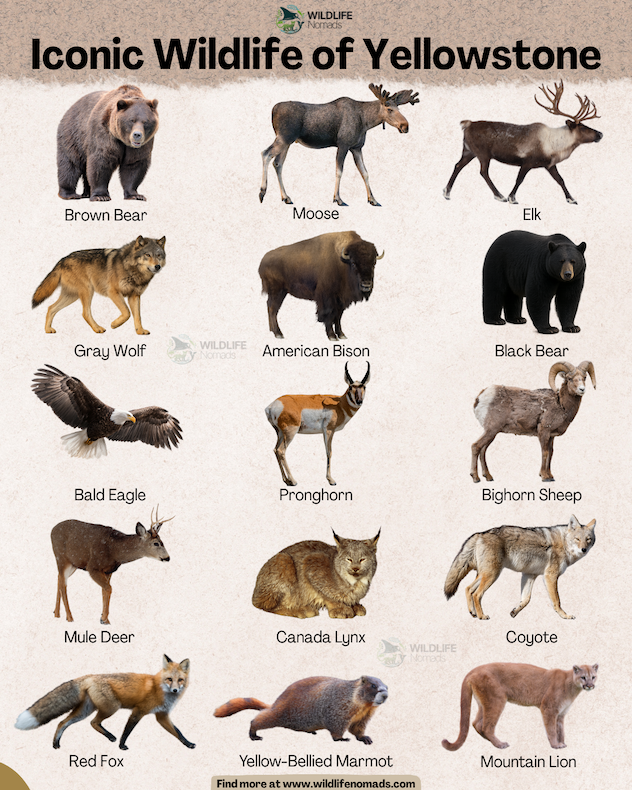
As a biologist, I’ve rarely seen wildlife concentrated like this. Bison herds rumbled across the road. Wolves trotted ridge lines. Grizzly bears flipped logs in the meadows. This guide pulls together the top 15 animals every traveler should know before visiting Yellowstone National Park, the species that built the park’s reputation and still define the greater yellowstone ecosystem. Bring binoculars. Bring patience. Carry bear spray. Some of the wildlife in Yellowstone National Park does not want to meet you.
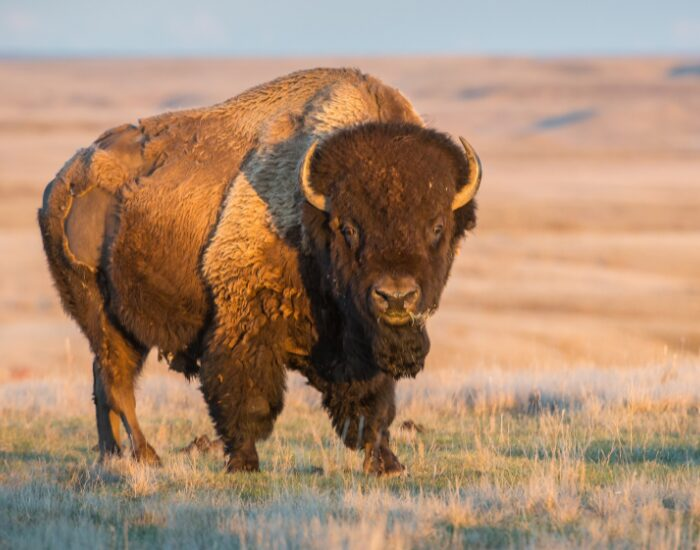
1. American Bison: The Living Icon
There’s no better introduction to yellowstone’s wildlife than a bison standing in the middle of the road. The yellowstone bison population, about 5,500 strong, represents the only place in the Western United States where these animals have lived continuously since prehistoric times. When bulls begin sparring during the mating season in early August, the sound carries across Hayden Valley like distant thunder. Park rangers warn that more visitors are injured by bison than by bears and wolves combined. Keep a safe distance. These wild animals look slow. A charging bull sprints at 35 mph.
Bison live across the park year-round. In winter, large herds push toward lower country and even cross the park boundary near Gardiner, drawing tourists and controversy as Montana ranchers worry about brucellosis transmission to cattle.
2. Gray Wolves: A Yellowstone Comeback Story
Gray wolves were reintroduced here in 1995, and the science of that recovery still fuels textbooks. Watching a wolf pack chase prey in Slough Creek changed how I think about the diverse wildlife of this place. Today around 100 wolves in roughly ten wolf packs roam the park. Most biologists agree: the return of wolves rebalanced the entire ecosystem. They thinned overgrazing elk herds, willow regrew along streambanks, and beavers returned.
Drive the northern range at first light. If you see ravens circling, you’ve likely found a wolf kills site. The Lamar Valley remains the easiest place on Earth to see wild canids. For more, see our deep dive on red wolves.

3. Grizzly Bears: The Soul of Yellowstone’s Wildlife
Grizzlies are the soul of yellowstone’s wildlife. The greater yellowstone ecosystem holds about 1,000 grizzly bears, one of the last strongholds for these large animals in North America.
In early spring, grizzly bears emerge from dens and patrol high country hunting winter-killed prey. By early June they pivot to roots, biscuitroot, and the occasional newborn ungulate. Always carry bear spray, hike on designated trails, keep a safe distance from bears, and never feed wildlife. Human food teaches bears the wrong lessons and gets them killed.
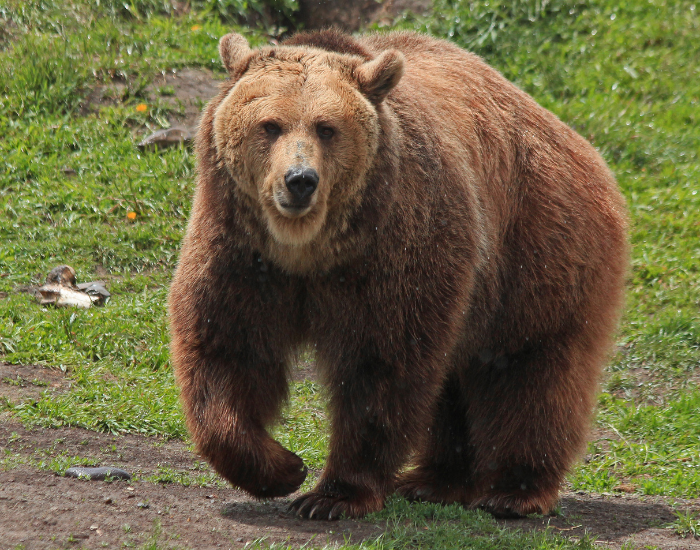
4. Black Bears: The Smaller, Climbing Cousin
Black bears are the smaller, more arboreal cousins of grizzly bears. Yellowstone National Park supports several hundred black bears, often spotted around Mammoth Hot Springs and the Tower-Roosevelt area. Despite the name, many black bears here are cinnamon, blonde, or chocolate-brown, confusing for first-time park visitors trying to identify a distant bear.
Black bears prefer forested terrain, while grizzly bears favor open meadows. I’ve watched a black bear sow shepherd cubs up a tree at the first whiff of trouble. That tree-climbing skill is the easiest field mark to separate the two species. Want a broader primer? See our guide to different species of bear.

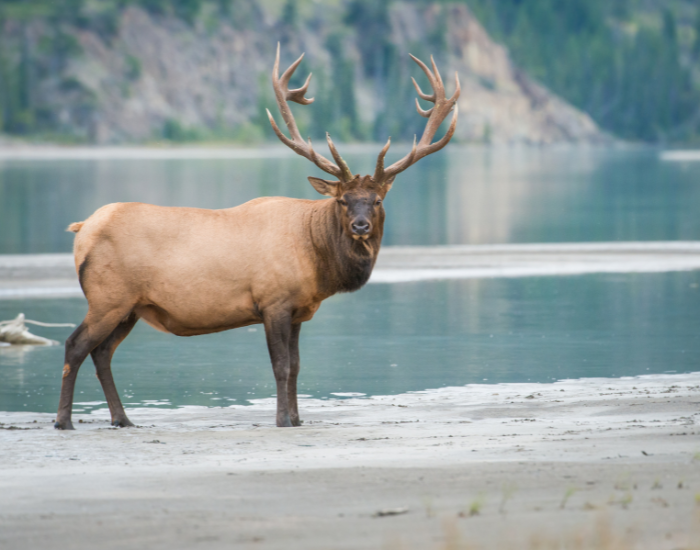
5. Elk: The Most Abundant Large Mammal
Elk are the most abundant large mammals here. The high country alone holds thousands. In autumn, mature male bulls begin bugling, that high, eerie whistle that ricochets between the pines.
Elk are the favorite prey of wolves, and their behavior shapes wolf hunting patterns, calving sites, and even tree growth along streambanks. They’re a textbook case of trophic cascade — kill the predator, lose the willow, lose the songbirds. Read our elk facts for a deeper look at this keystone ungulate.
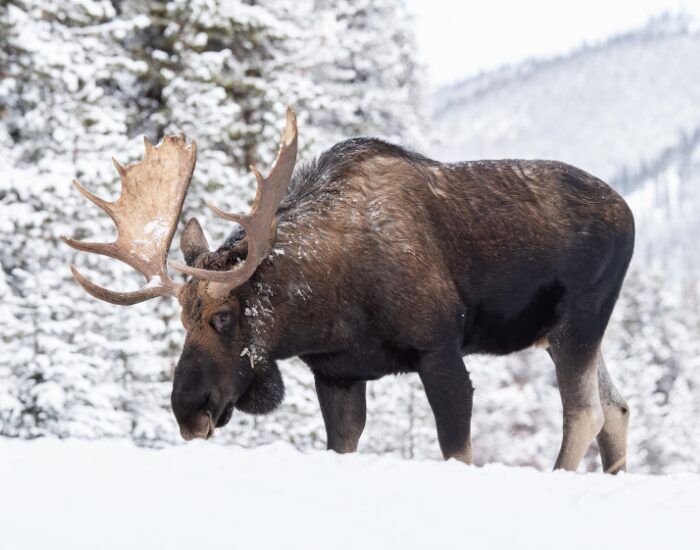
6. Moose: The Reclusive Giants
Moose are the largest members of the deer family, but they’re surprisingly rare in Yellowstone National Park today. Decades of fires and changing willow habitat reduced their numbers from thousands to a few hundred. Look for them in marshy zones near Yellowstone Lake and toward the southern Grand Teton national parks. I had one moose stare me down in waist-high willow at dusk in Canada, a humbling reminder that this animal is taller than my truck and faster than I am.
7. Mountain Lions: The Phantom Cats
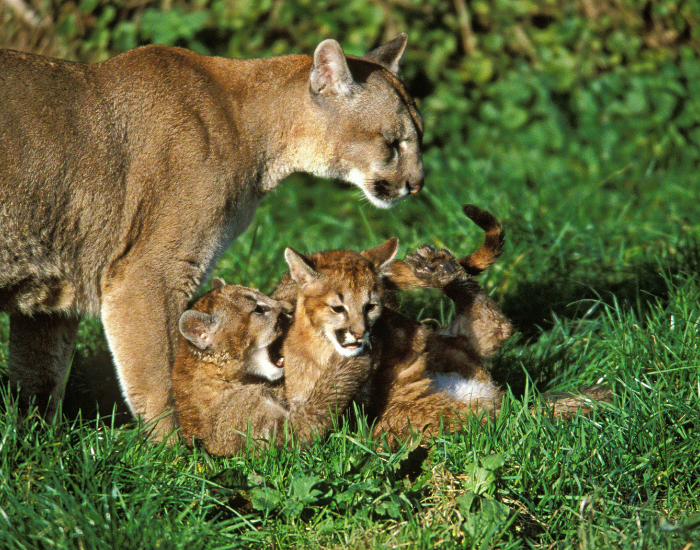
Mountain lions, also called cougars, are the most elusive cats in the yellowstone region. Estimates put their number around 30 inside Yellowstone National Park, yet most biologists who work here have never seen one in the field. They patrol cliff bands and timbered ridges, hunting mule deer and elk.
8. Pronghorn Antelope: The Speedster
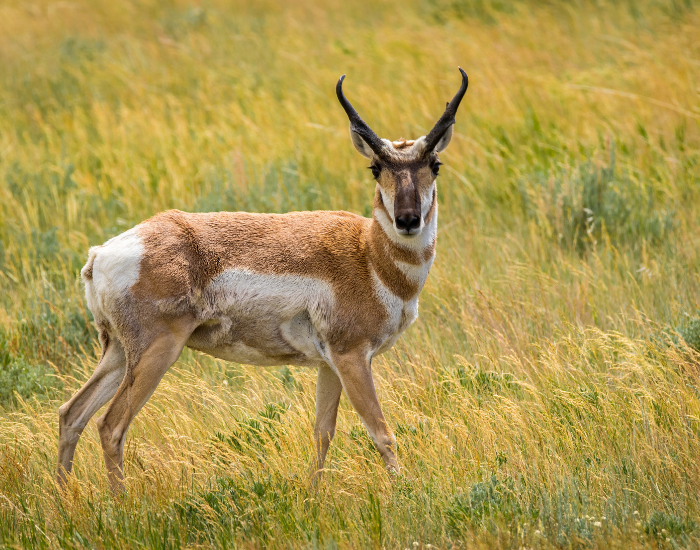
Pronghorn antelope are not true antelope. They’re the only living member of their family and the fastest land animal in North America, sprinting at 55 mph, faster than any predator left in the Western United States. Watch for them on the dry sagebrush flats near the north entrance. Their evolution is a ghost story: they’re built to outrun an American cheetah that went extinct 12,000 years ago.
9. Bighorn Sheep: Cliff Specialists
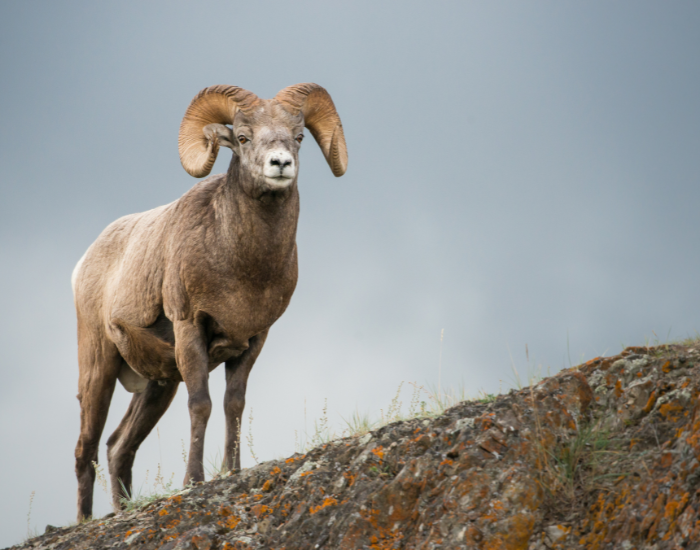
Bighorn sheep cling to cliffs above the Yellowstone River and the Lamar Valley. Rams clash horns in the November rut with a sound like cracking timber. Yellowstone hosts a small native herd of bighorn sheep, under 350 animals.
They share alpine real estate with mountain goats, but here’s a critical distinction: mountain goats are non native species, introduced outside the park boundary in the 1940s and slowly migrating in. Park managers monitor whether goats threaten native sheep through resource competition and disease.
10. Mule Deer and the Deer Family
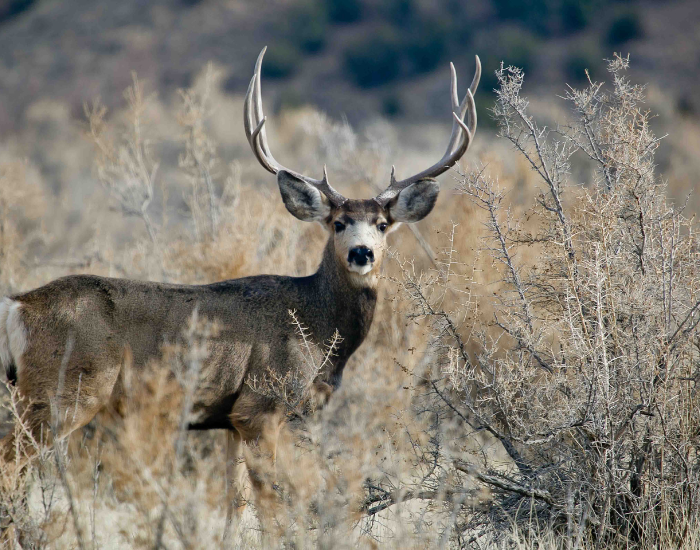
The deer family is well represented across the park. Mule deer are the most common, recognizable by their oversized ears and stiff-legged “stotting” bounce. You’ll also encounter whitetail deer at lower elevations and a dark-coated subspecies sometimes called blacktail deer.
Reptile species share these meadows with the deer, and small mammals scurry beneath the sagebrush. But the cervids dominate the visual landscape for most wildlife-watchers.
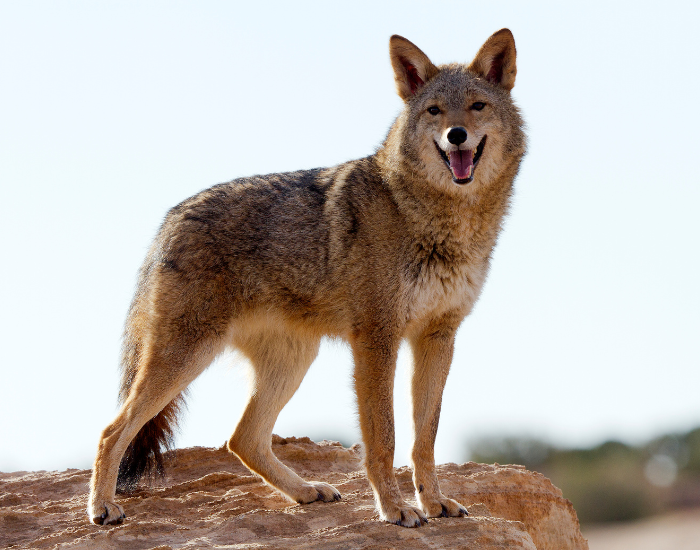
11. Coyotes: The Survivors
Coyotes thrive in the shadow of bears and wolves. After wolf reintroduction their populations dropped by half, outcompeted by their bigger cousins. Today the survivors hunt rodents in meadows throughout the park, from Lamar Valley to Hayden Valley. I’ve watched a coyote pounce vole-style through deep snow, head cocked, listening for prey beneath the crust. Smaller and more adaptable, they’re the wildlife you’ll most reliably see on a quick park visit.
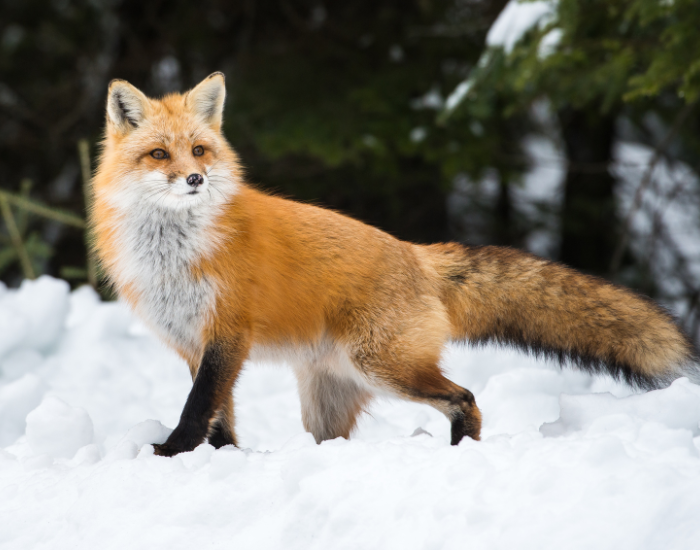
12. Red Foxes: The Mountain Phantom
Red foxes here are often the high-elevation Rocky Mountain subspecies, with thick winter coats and dark legs. I spotted my first park fox at first light hunting voles in fresh snow. Foxes are mostly solitary, mostly crepuscular, and almost always on the move. They share habitat with bears, wolves, and other predators, holding their own through stealth and speed. To learn more about wild canids, browse our types of foxes guide.
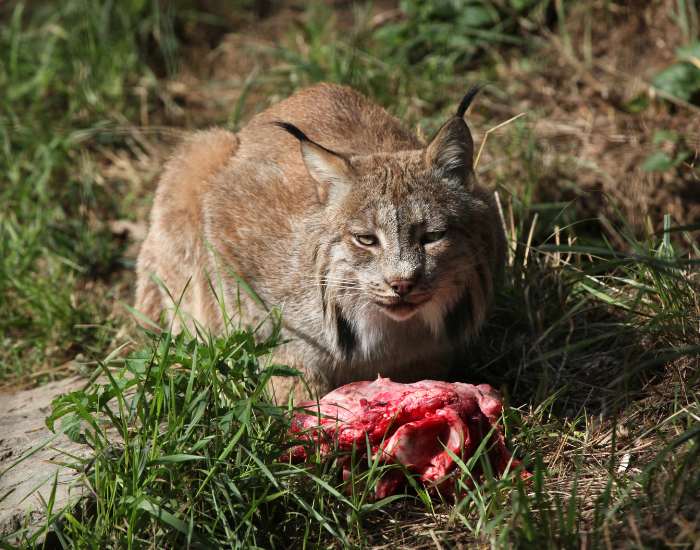
13. Canada Lynx: The Ghost of the Subalpine
The Canada lynx is among the rarest of yellowstone’s wildlife. They prefer dense subalpine forest with deep snow and snowshoe hare populations, and sightings are so rare that decades go by between confirmed records. I’ve never seen one in the the wild, only their tufted, oversized prints in fresh snow. Bobcats are slightly more common at lower elevations. Both are bucket-list cats for wildlife enthusiasts. For relatives, see our piece on the Florida bobcat.
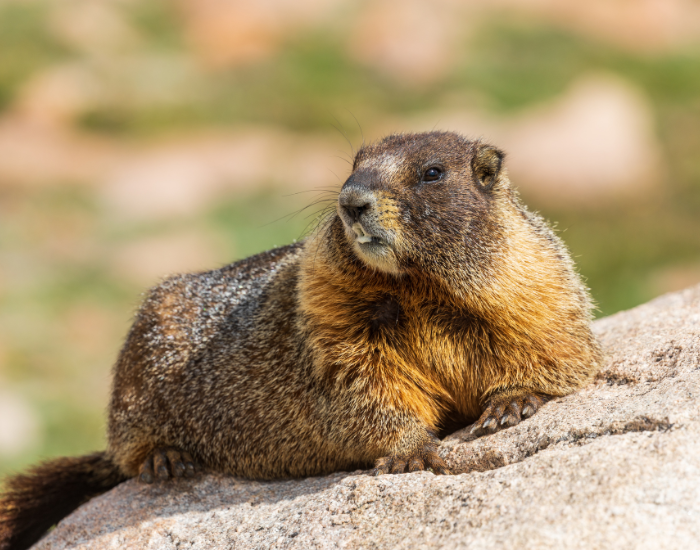
14. Yellow-Bellied Marmot: The Comic Relief
The yellow bellied marmot is the comic relief of yellowstone’s wildlife. They live in rocky alpine zones near geyser basins and along the road to Mammoth Hot Springs. Marmots whistle, sunbathe, and defend their colonies with theatrical flair. I once watched a marmot scold a fox for ten full minutes from a boulder! The kind of small mammals encounter that makes a long hike worth it. Their mountain neighbors include the pika, and the beaver as ecosystem engineer.
15. Bald Eagle: King of Yellowstone Skies
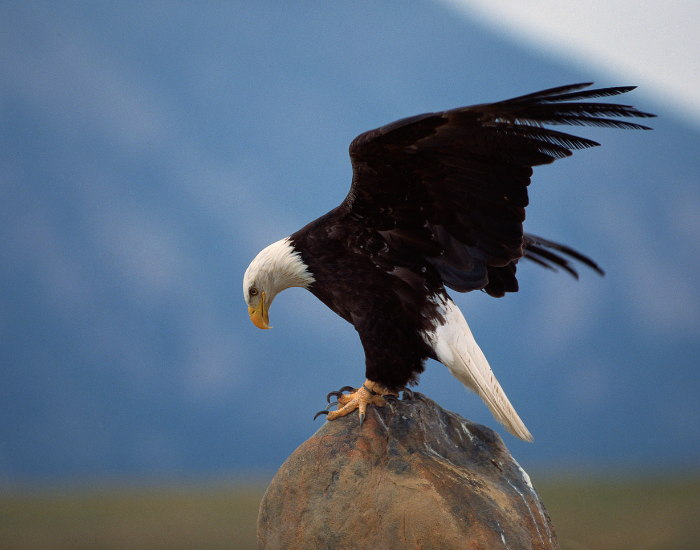
Bald eagles soar over Yellowstone Lake at early morning light, hunting native fish, especially the iconic Yellowstone cutthroat trout, a keystone species in its own right. The park’s open water and old-growth lodgepole pines provide ideal nesting platforms for this iconic park wildlife throughout the park. I’ve watched a pair tag-team a Trumpeter Swan carcass on Slough Creek ice. Birds of prey define the skies here, alongside ospreys, golden eagles, and sandhill cranes that drop into the marshes during spring. For more, read our pieces on types of eagles and types of waterfowls.
Frequently Asked Questions About Yellowstone Wildlife
No. Yellowstone wildlife follows seasonal patterns. Bison, elk, and pronghorn move between summer and winter range, but they are not leaving in unusual numbers. Most wildlife stays inside the broader ecosystem year-round.
No. Geological monitoring at the geyser basins shows no eruption-precursor signals. Viral videos of running bison typically capture normal migration along well-known corridors, not flight.
Some behavior is shifting because of climate change, earlier denning emergence, altered feeding patterns, and changes in wolf–prey dynamics. This is adaptive, not “weird.” Visitors may notice these subtle changes if they observe carefully across seasons.
Early morning and dusk in late spring and early fall. The Lamar Valley and Hayden Valley offer the densest viewing in this corner of the Western United States. Carry bear spray, stay on designated trails, and keep a safe distance: 100 yards from bears and wolves, 25 yards from other large animals. Never approach wildlife on foot.
The Call of the Wild
Yellowstone fauna is a living archive of what North America looked like before fences, freeways, and feedlots. Every grizzly track, every wolf howl, every bison rumble is a thread in a story that almost ended a century ago. Spend a week in Yellowstone National Park and you’ll understand why the world copied the model.
Pack binoculars. Pack patience. Don’t approach wildlife in the park, don’t feed wildlife, and never carry human food into the backcountry without bear-proof storage. Then go find wildlife on its own terms. Drop your sightings in the comments, I read every one, and if Banff is next on your list, our team has a full guide ready. The wildlife of yellowstone national park rewards anyone willing to slow down and look.
Find a Wildlife Tour in Yellowstone!
Here is a list of 3 wildlife tours in Yellowstone National park. As a biologist, I only recommend tours that follow strict ethical guidelines to ensure we don’t disturb wildlife. These are the three tours/ partners I trust most based on their conservation records:
This website is reader-supported. When you buy experiences through links listed on this site, we may earn an affiliate commission.
References:
Gould, M. J., Clapp, J. G., Haroldson, M. A., Costello, C. M., Nowak, J. J., Martin, H. W., Ebinger, M. R., Bjornlie, D. D., Thompson, D. J., Dellinger, J. A., Mumma, M. A., Lukacs, P. M., & van Manen, F. T. (2024). A unified approach to long-term population monitoring of grizzly bears in the Greater Yellowstone Ecosystem. Global Ecology and Conservation, 54, Article e03133. https://doi.org/10.1016/j.gecco.2024.e03133
Ripple, W. J., Beschta, R. L., Wolf, C., Painter, L. E., & Wirsing, A. J. (2025). The strength of the Yellowstone trophic cascade after wolf reintroduction. Global Ecology and Conservation, 58, Article e03428. https://doi.org/10.1016/j.gecco.2025.e03428
Middleton, A. D., Kauffman, M. J., McWhirter, D. E., et al. (2013). Animal migration amid shifting patterns of phenology and predation: Lessons from a Yellowstone elk herd. Ecology, 94(6), 1245–1256. https://doi.org/10.1890/11-2298.1
Painter, L. E., Beschta, R. L., Larsen, E. J., & Ripple, W. J. (2018). Aspen recruitment in the Yellowstone region linked to reduced herbivory after large carnivore restoration. Ecosphere, 9(8), e02376. https://doi.org/10.1002/ecs2.2376
Newsome, T. M., Greenville, A. C., Ćirović, D., Dickman, C. R., Johnson, C. N., Krofel, M., Letnic, M., Ripple, W. J., Ritchie, E. G., Stoyanov, S., & Wirsing, A. J. (2017). Top predators constrain mesopredator distributions. Nature Communications, 8, Article 15469. https://doi.org/10.1038/ncomms15469