
When I first spotted a colony of prairie dogs as a child, I had no idea these creatures shared a special ecological role with another remarkable mammal: the American pika. Both species serve as ecosystem engineers (just like badgers, beavers and the black footed ferret) transforming their environments in ways that benefit countless other organisms.
Today, as a biologist, my fascination has evolved into a mission. The American pika (Ochotona princeps) isn’t just another mountain mammal. This small lagomorph serves as a critical bio-indicator for climate change in alpine ecosystems across North America.
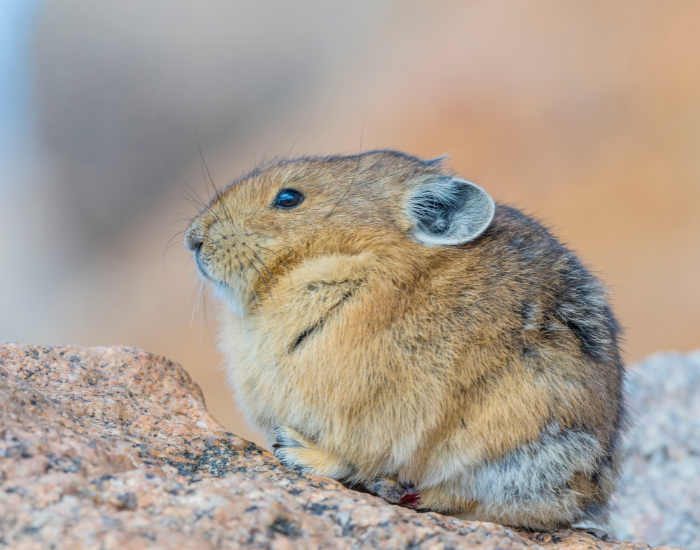
The American Pika: A High-Altitude Specialist
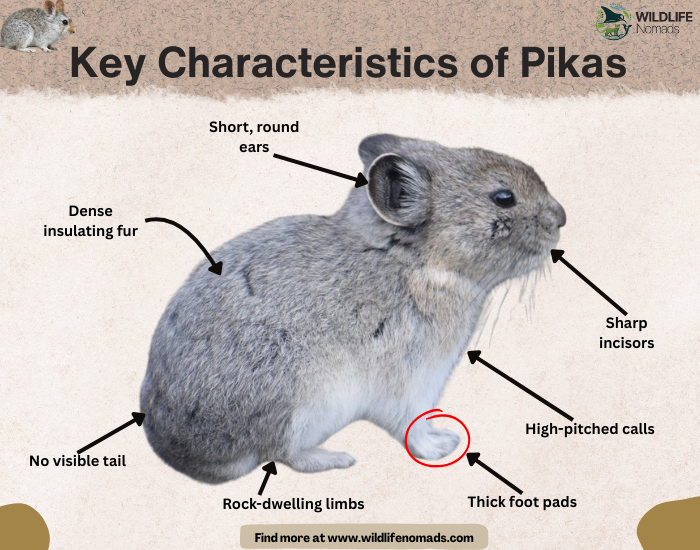
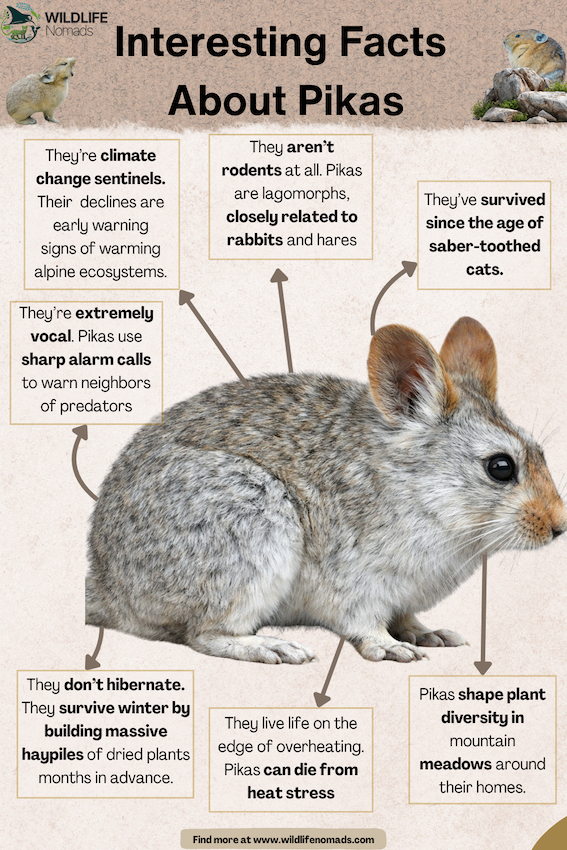
At first glance, you might mistake a pika for a rodent. However, these round-eared animals are actually lagomorphs, making them closely related to rabbits and hares. Unlike guinea pigs or other small mammals, American pika populations have evolved specifically for the harsh conditions of alpine environments.
Metabolic Challenges in the Rockies
One striking adaptation defines the pika’s existence: their high resting body temperature of approximately 104°F. This biological feature helps them survive brutal Colorado winters when temperatures plummet below zero. However, this same adaptation creates a dangerous vulnerability.
During summer months, if ambient temperatures rise above 78°F for extended periods, pikas can overheat and die. Therefore, they cannot hibernate. Instead, they must remain active year-round, making temperature regulation a constant life-or-death challenge.
Where Pikas Live: Rocky Mountain Habitats
Pika populations in North America depend entirely on talus fields, slopes of broken rock and rock piles at cliff bases. These rocky areas provide essential “cool rooms” where pikas escape midday heat during summer.
Prime Viewing Locations in Colorado
If you want to see mountain pika in their natural habitat, head toward the tree line in these locations:
Rocky Mountain National Park offers exceptional opportunities. Trail Ridge Road provides high-elevation access with minimal hiking. Rock Cut and the Emerald Lake Overlook are prime territories where many pikas establish colonies.
Indian Peaks Wilderness contains important research sites. Niwot Ridge serves as a long-term alpine ecosystems study area where scientists monitor pika populations.
Estes Park provides accessible viewing at Lumpy Ridge. Here, you can observe transition zones where pikas coexist with rabbits and hares.
Additional sites include Lake Helene, Rainbow Curve, and Flattop Mountain Trail. Each location offers unique opportunities to observe these vocal animals in their rocky habitat.
Ecosystem Engineers of Mountain Meadows
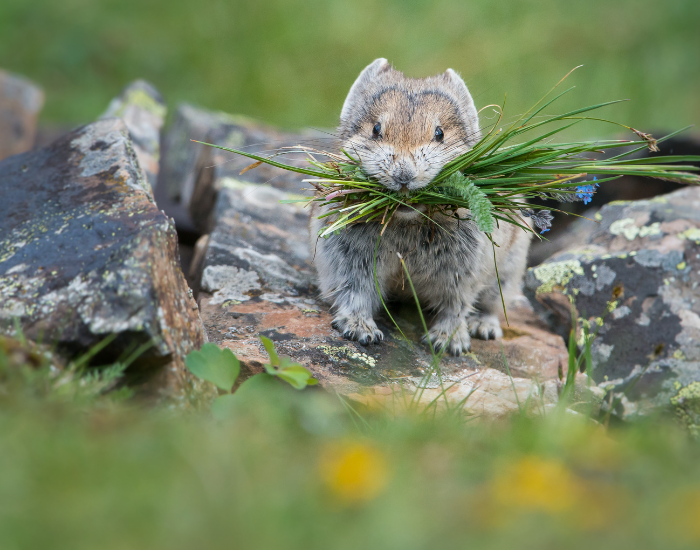
Pikas play a crucial role in tundra communities through their distinctive behavior: creating haypiles. During the summer long months, a single pika makes hundreds of trips from talus fields to nearby mountain meadows.
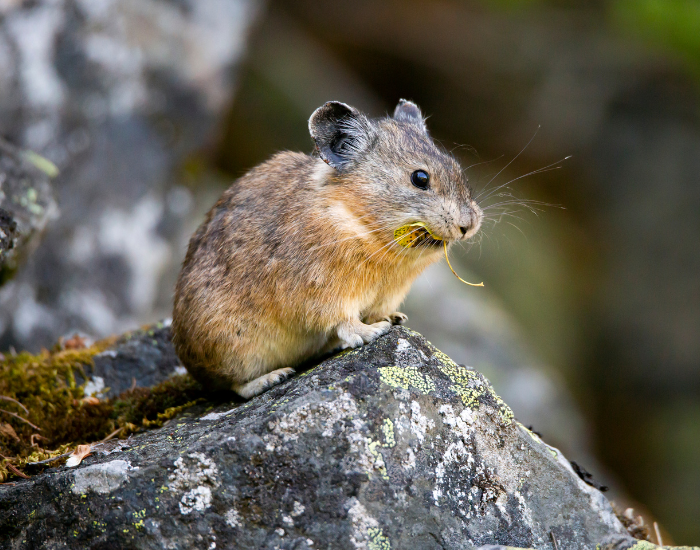
They harvest grasses, flowers, and vegetation, laying these materials on rocks to dry in the sun. This careful process prevents molding once the winter food cache is stored deep within their rocky habitat. The haypile serves as their primary food source throughout winter months when fresh vegetation is unavailable.
Gardening the Alpine
Through selective harvesting, pikas actually influence plant diversity in surrounding alpine ecosystems. The volume of biomass one individual can move is remarkable. By choosing certain species over others, these animals aren’t just consuming the landscape, they’re actively shaping it.
Climate Change: The Upslope Squeeze
Rising temperatures are rewriting the story of how pikas coexist with their environment. The most concerning trend is the “upslope squeeze.” As warming temperatures make lower elevations uninhabitable, pika populations must move higher up mountains. However, mountains are cones. The higher you go, the less habitat remains. Eventually, they run out of mountain.
Juvenile Pikas at Risk
Recent alpine research by scientists like Chris Ray reveals that juvenile pikas face the greatest peril. While adults retreat deep into rock cut areas to find shade, juveniles must spend more time on the surface. They need to forage and establish territories before winter arrives.
If temperatures are too high for safe foraging, juveniles cannot gain necessary weight to survive the coming winter. This creates a population bottleneck that threatens long-term survival.
The Snow Insulation Problem
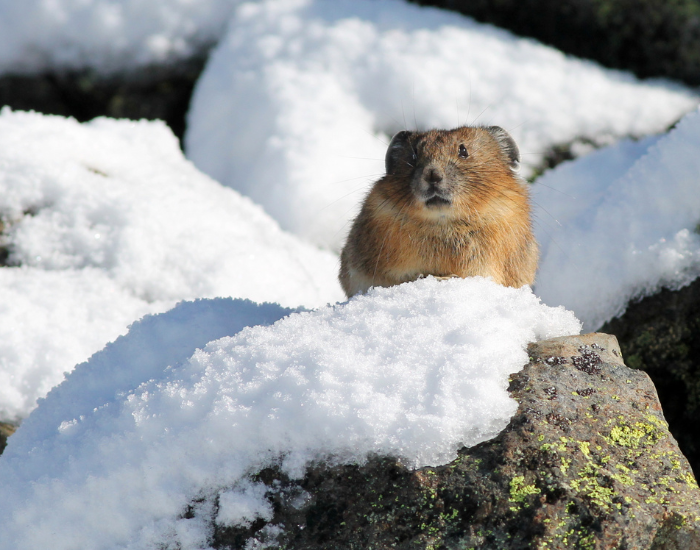
Paradoxically, reduced snowfall harms pikas despite making surface movement easier. A thick snow layer acts as thermal insulation for talus fields. Without adequate snow cover, sub-surface temperatures where pikas live can drop dangerously low.
This creates a deadly pincer: heat stress during summer and cold stress during winter. Both extremes push populations toward local extinction.
Conservation Efforts: Protecting Alpine Habitat
The Peril Project and similar initiatives in Colorado’s Indian Peaks Wilderness work to map these changes. By analyzing current study data, biologists identify “climate refugia”—pockets of habitat naturally buffered against rising heat.
Research Methods in the Field
Studying mountain pika populations requires patience. Fieldwork involves sitting motionless on trails near Emerald Lake or other locations, waiting for glimpses of grey fur. Researchers monitor several key indicators:
Haypiles reveal information about winter food stores. The size and plant diversity of these caches indicate population health and foraging success.
Scat pellets provide valuable data. Like other lagomorphs, pikas produce distinct pellets that can be DNA-tested to assess population genetics and health.
Vocalizations help map colony density. These vocal animals use distinctive calls to communicate territory boundaries and warn of predators like ermine or hawks.
Understanding Pikas: Common Questions
Yes. American pika belongs to the order Lagomorpha, which includes rabbits and hares. Unlike rodents, lagomorphs possess two pairs of upper incisors rather than one. In the Rocky Mountains, pikas share their range with mountain cottontails and various hares, though pikas remain the smallest and most specialized for arctic-like conditions.
Absolutely. Colorado pika populations represent some of the most robust in North America. These animals serve as iconic symbols of the state’s high country and alpine ecosystems.
No. Beyond being wild animals protected in national parks, pikas have extremely specific thermoregulation needs. They cannot survive in typical home environments. These animals belong on their rock piles in the mountains.
Pikas are herbivores with no aggressive tendencies toward humans. Their only defense mechanism is a loud alarm call warning other pikas of approaching predators. These tiny, industrious mammals pose zero threat to people.
Unlike many alpine mammals, pikas don’t hibernate. Instead, they rely on carefully prepared haypiles stored in their talus habitat. Throughout winter food remains accessible deep within the rock piles, where temperatures stay relatively stable thanks to snow insulation.
The Lagomorph Connection
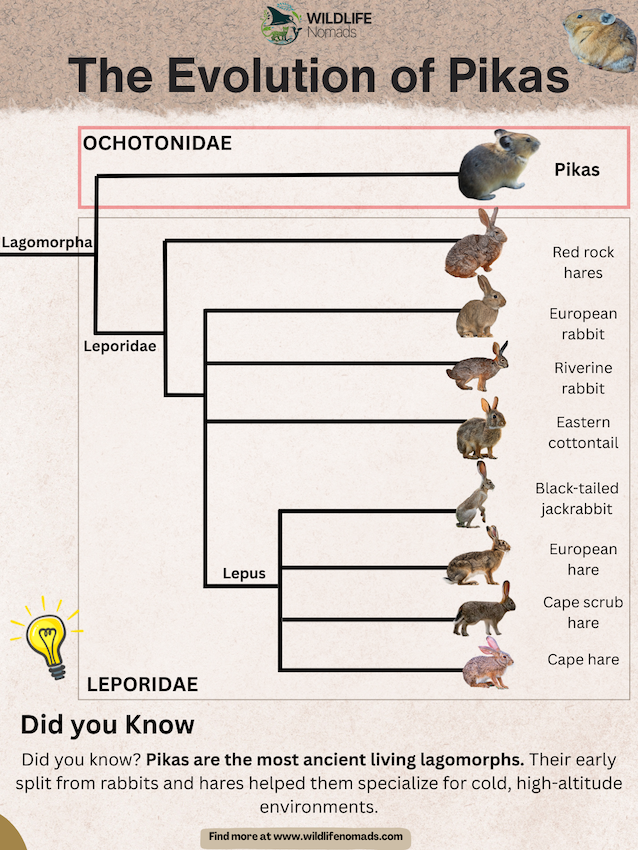
The relationship between pikas and other lagomorphs like rabbits and hares reveals important evolutionary adaptations. While rabbits thrive at lower elevations and hares adapt to various habitats, pikas remain specialists of broken rock environments above the tree line.
This specialization makes them particularly vulnerable as climate change eliminates suitable habitat at lower elevations while expanding suitable zones shrink at higher elevations.
A Global Family: Pika Species Around the World
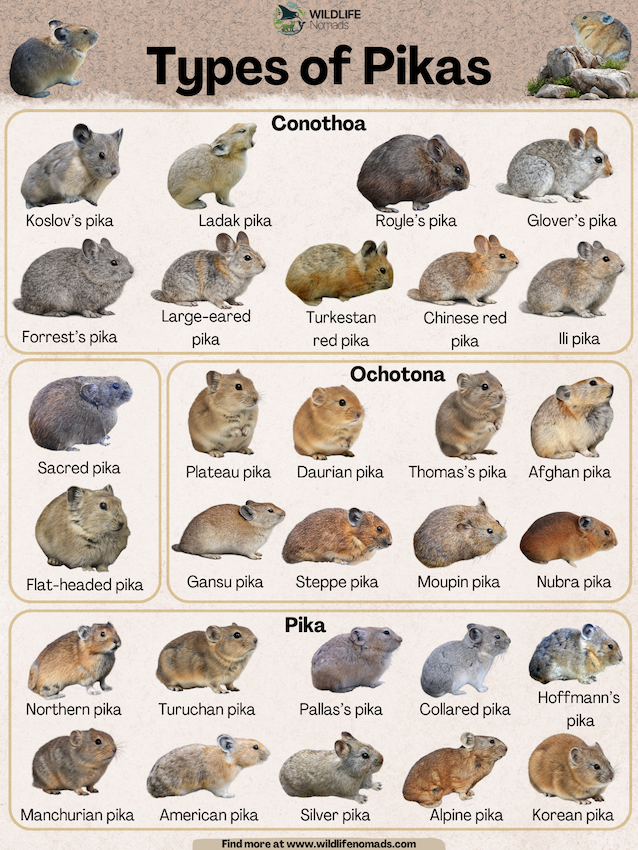
While the American pika captures attention in North America, this remarkable lagomorph belongs to a much larger global family. Scientists currently recognize approximately 30 species of pika worldwide, all belonging to the genus Ochotona. These species represent roughly one-third of all lagomorph diversity on Earth.
Distribution Across Continents
Only two pika species inhabit North America: the American pika and the collared pika (Ochotona collaris). The collared pika lives in Alaska, northern British Columbia, the Yukon, and western Northwest Territories. It derives its name from the distinctive grayish collar patch on its neck and shoulders.
The vast majority of pika species, approximately 28 species, live in Asia, particularly Central Asia. China serves as the global center of pika diversity, hosting 23 to 24 species. Many of these species inhabit the Tibetan Plateau, where they’ve adapted to extreme high-altitude conditions.
Notable Asian Species
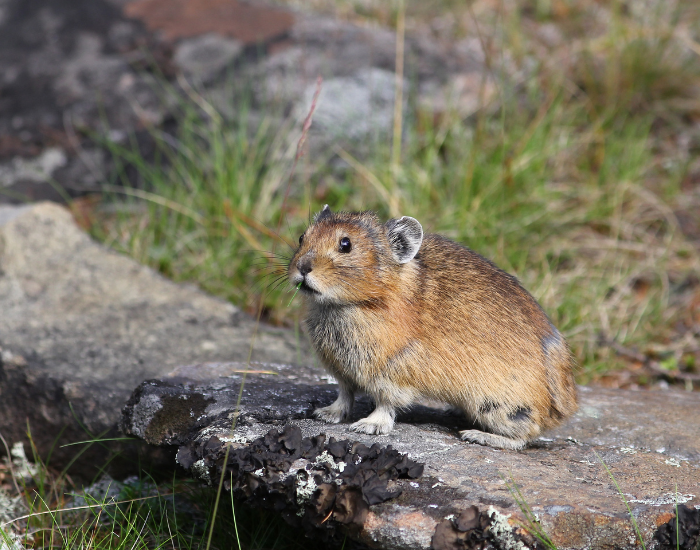
The northern pika (Ochotona hyperborea) claims the distinction of having the largest geographic range. This species extends from Russia’s Ural Mountains to the east coast of Russia and Japan’s northern Hokkaido Island. Interestingly, northern pikas occupy both talus habitats and coniferous forests, where they burrow under fallen logs.
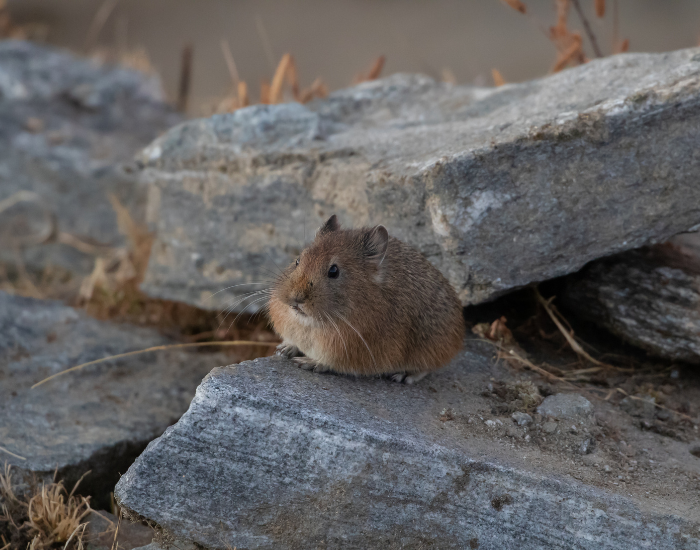
The Himalayan pika lives at extreme elevations. One species, Ochotona macrotis, has been recorded at elevations exceeding 6,130 meters (20,113 feet) on Himalayan slopes, making it one of the highest-dwelling mammals on Earth.
Other notable species include the black-lipped pika, steppe pika, plateau pika, and Ili pika. Each species has evolved specific adaptations for their particular habitat, whether rocky talus fields or grassy meadows.
Two Distinct Lifestyles
Pika species divide into two ecological groups based on habitat preference. Rock-dwelling species like the American pika and collared pika inhabit talus fields and rocky slopes. These species tend to be long-lived (up to seven years) and maintain stable, low-density populations.
In contrast, burrowing species construct elaborate tunnel systems in meadows, steppes, and grasslands. These species, found exclusively in Asia, include the Gansu pika, Daurian pika, and steppe pika. Burrowing pikas typically live only one year and experience dramatic population fluctuations, sometimes reaching densities 30 times higher than their rock-dwelling cousins.
A few species, like Pallas’s pika and Afghan pika, occupy both habitat types and represent intermediate forms between these two lifestyles.
Conservation Concerns Worldwide
While the American pika faces climate threats in North America, several Asian species face even more urgent conservation challenges. The critically endangered Ili pika, discovered in China’s Tianshan Mountains in 1983, has seen its population decline by more than 70 percent. Fewer than 1,000 individuals may remain.
This global diversity underscores an important point: when we protect American pika habitat in the Rocky Mountains, we’re preserving part of an ancient lagomorph lineage that has survived since the Oligocene epoch, approximately 37 million years ago. Pikas separated from rabbits and hares during this period and have maintained their unique characteristics ever since.
Threats Beyond Temperature
While warming temperatures present the primary threat, other factors compound the peril. Habitat fragmentation reduces genetic diversity as isolated colonies cannot interbreed. Vegetation changes affect winter food quality, and altered precipitation patterns impact both summer foraging and winter snow insulation.
Sentinels of Change
The American pika serves as much more than a charismatic alpine mammal. Each declining colony signals fundamental shifts in our alpine world. These vocal animals, industriously preparing haypiles and calling from rock piles, represent the heartbeat of North America’s high mountains.
Small animals often receive less attention than charismatic megafauna. However, the American pika’s fate indicates the health of entire alpine ecosystems. Their survival depends on our willingness to address climate change and preserve alpine habitat.
As temperatures continue rising and habitat continues shrinking, the question isn’t whether pikas will adapt. The question is whether we will act quickly enough to preserve the alpine world they, and we, depend upon.