
Lately, I’ve found myself drawn to species that seem almost fictional. From the bizarre saiga antelope of the Eurasian steppe to the golden Sichuan takin and the elusive okapi, these creatures challenge our assumptions about nature.
However, you don’t have to travel to the Congo or the Himalayas to find a biological enigma. Right here in North America, we have the pronghorn antelope (Antilocapra americana).
I remember seeing them as a kid in zoos, standing somewhat stiffly, their massive eyes tracking every movement. At the time, I thought, “Cool, an American deer.” But as I moved into field biology, I realized how wrong I was.
The pronghorn is a prehistoric survivor that has outlived its predators and evolutionary peers. It isn’t a true antelope, it isn’t a deer, and it certainly isn’t a goat. Pronghorns are indigenous to North America, while true antelopes are found in Africa, the Middle East, and Asia. It is a one-of-a-kind speedster, often called the “speed goat” or the “ghost of the plains.”
Therefore, let’s explore 15 fascinating facts about this American icon.
15 Wild Facts About Pronghorn Antelope
1. Pronghorn Are Not True Antelope
The biggest taxonomic headache: What is the difference between a pronghorn and an antelope?
If you ask locals in Wyoming or Grand Teton National Park, they’ll call them “antelope.” Even the famous song Home on the Range mentions where the “antelope play.” However, scientifically speaking, they aren’t closely related to the true antelope found in Africa or Asia.
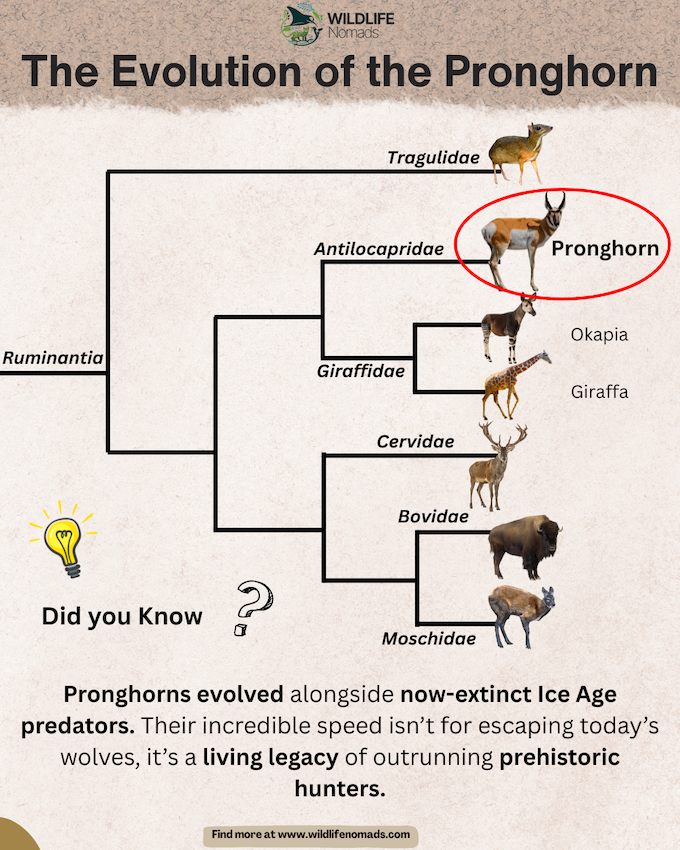
True antelope (like the bongo or saiga) belong to the family Bovidae. Our friend the pronghorn is the sole surviving member of the family Antilocapridae. During the Pleistocene, this family was diverse, with various species roaming the continent. Today, the American pronghorn is the only one left.
Pronghorn vs. Antelope: The Main Differences
| Feature | Pronghorn (Antilocapra americana) | True Antelope (Bovidae) |
|---|---|---|
| Horns | Branching (pronged) with outer layer shed annually | Unbranched and permanent |
| Location | Only in North America | Africa, Asia, and parts of Europe |
| Evolution | Closest living relative is the giraffe | Related to cattle, goats, and sheep |
In addition, if you’re wondering “Is a pronghorn a deer?” the answer is no. They sit in their own evolutionary branch, practically a living fossil.
2. The Second Fastest Land Mammal in the World
The first thing you notice when watching a pronghorn herd in the American West is their twitchiness. They are built for one thing: explosive, sustained speed.
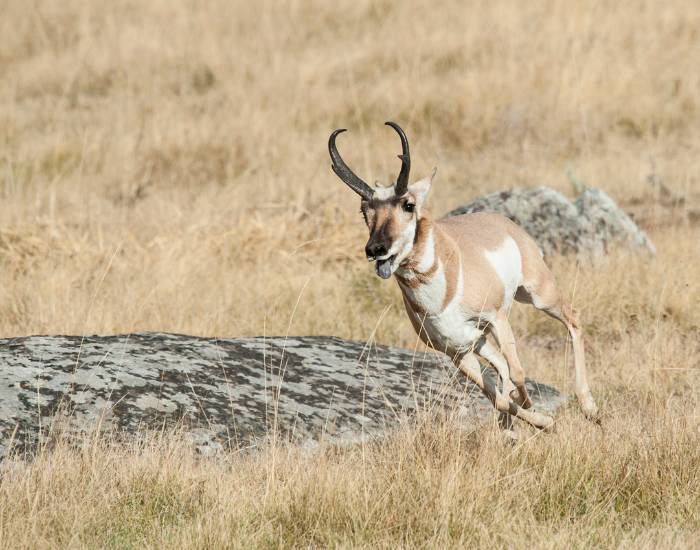
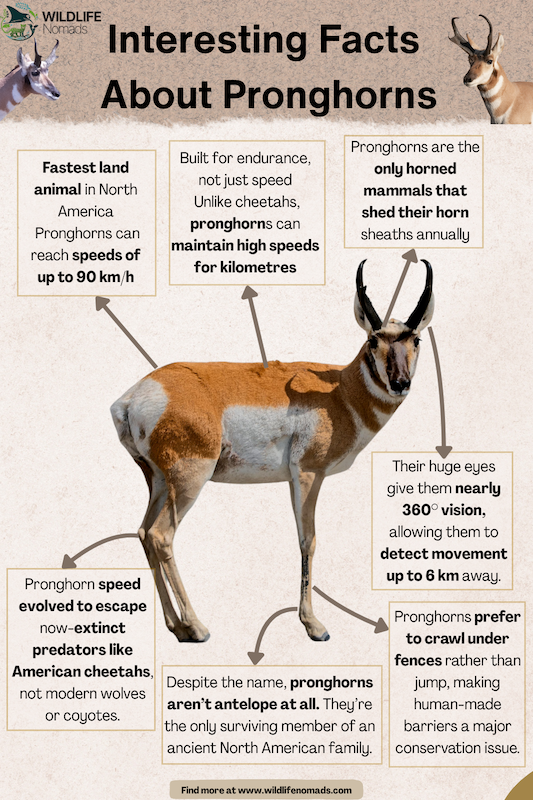
The pronghorn is the second fastest land mammal in the world, clocking in at top speeds of 60 mph. While the cheetah is technically faster in a short burst, the pronghorn is the undisputed king of long distances. They can maintain a pace of 30–40 mph for miles. Specifically, researchers have clocked them maintaining 35 mph for up to 4 miles.
Nothing alive today, not a wolf, not a cougar, not a coyote, can catch a healthy adult pronghorn in a fair race. This represents a biological “ghost” of a trait. Thousands of years ago, they shared North America with the American cheetah (Miracinonyx). The cheetah went extinct, but the pronghorn kept the speed.
They are still running from a predator that hasn’t existed for 10,000 years. That’s a hauntingly beautiful example of pronghorn antelope adaptations.
3. Males Have Unique Pronged Horns
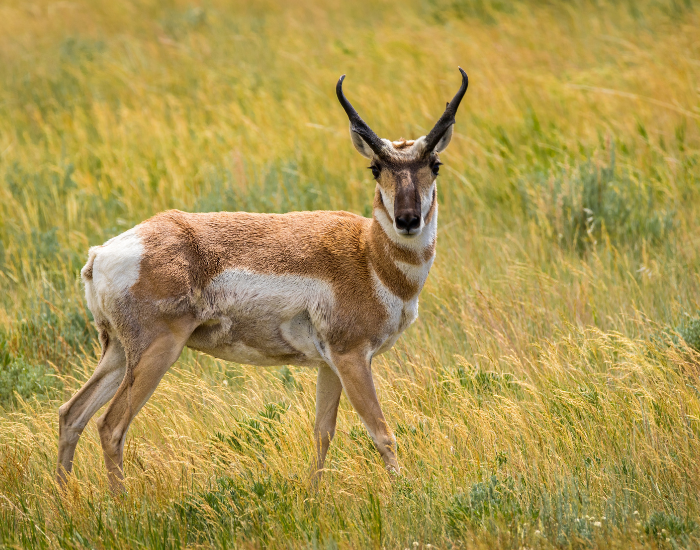
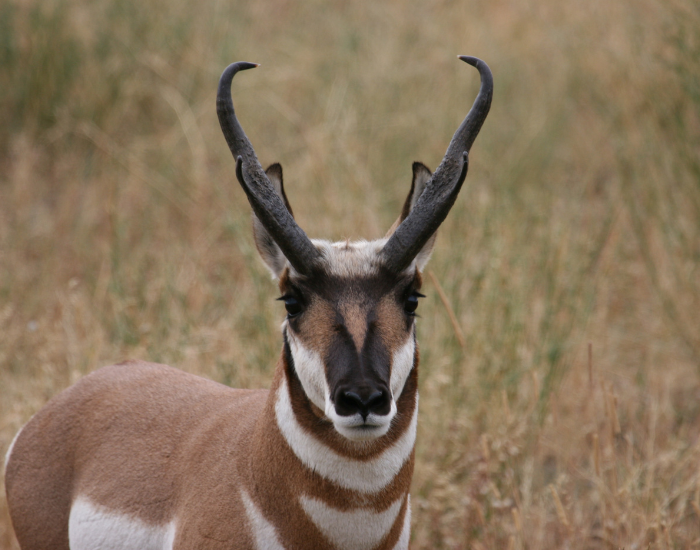
Unlike deer who have antlers made of solid bone, or cattle who have permanent horns, the pronghorn does something weird. They have a permanent bony core covered by a keratinous outer layer (sheath).
Males (called bucks): Males horns are larger, more pronounced, and feature the signature forward-facing “prong” that gives the species its name. Both male and female pronghorn grow horns, but males horns are longer and more prominent than those of females.
Females (does): Usually have smaller horns or no horns at all. Female pronghorn typically grow horns less than 4 inches long.
The Shed: Every year, usually in late summer or mid-September, they shed that outer sheath and grow a new one. This makes them unique among horned animals.
4. Pronghorn Have Excellent Vision
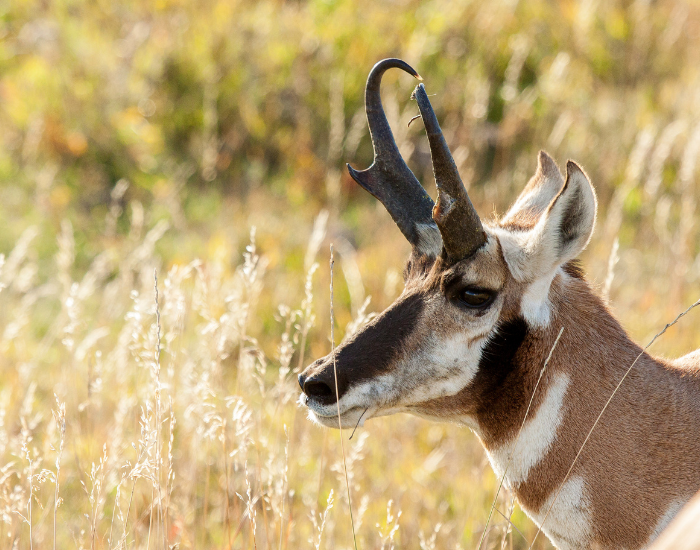
If you’ve ever tried to sneak up on a pronghorn for a photograph (a task I’ve failed at many times), you know they have excellent vision. Their eyes are about the size of an elephant’s and are set on the sides of their head. This gives them a nearly 300-degree field of view.
In fact, they can spot movement up to four miles away. To a pronghorn, you aren’t a sneaky biologist; you’re a slow-moving blur on the horizon.
This excellent vision helps them detect predators from long distances across the open grasslands and sagebrush where they live.
5. They’re Built for Speed: Anatomy of a Speed Goat
To understand pronghorn behavior and survival, you have to look at the “hardware.”
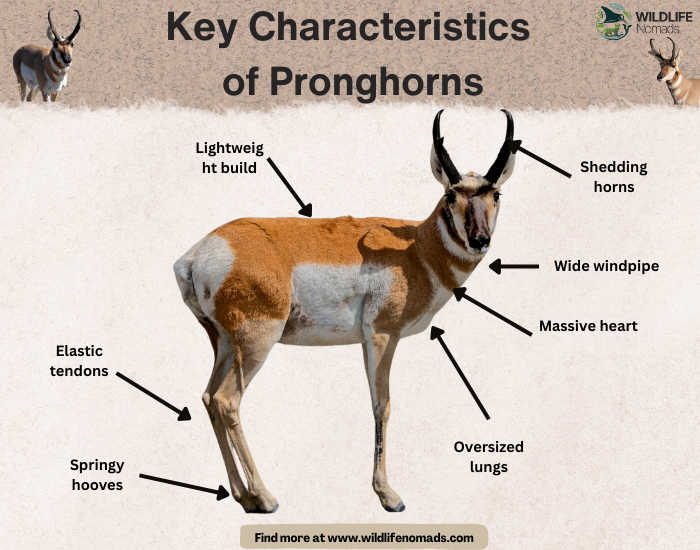
Air-filled hairs: Their coat is hollow, providing incredible insulation against the biting winter winds of the plains.
Pointed toes: Their hooves are cushioned to absorb the shock of hitting the ground at 55 mph.
Large heart and lungs: To fuel those high speeds, they have an oversized windpipe and a heart that is twice the size of a similar-sized deer. This allows them to run at high speeds without tiring.
Their entire body evolved for one purpose: outrunning predators across long distances.
6. Five Subspecies Roam the West Today
While most of us are used to seeing the classic American antelope on the plains, there are actually five recognized subspecies of Antilocapra americana, each adapted to its specific corner of the Western Hemisphere:
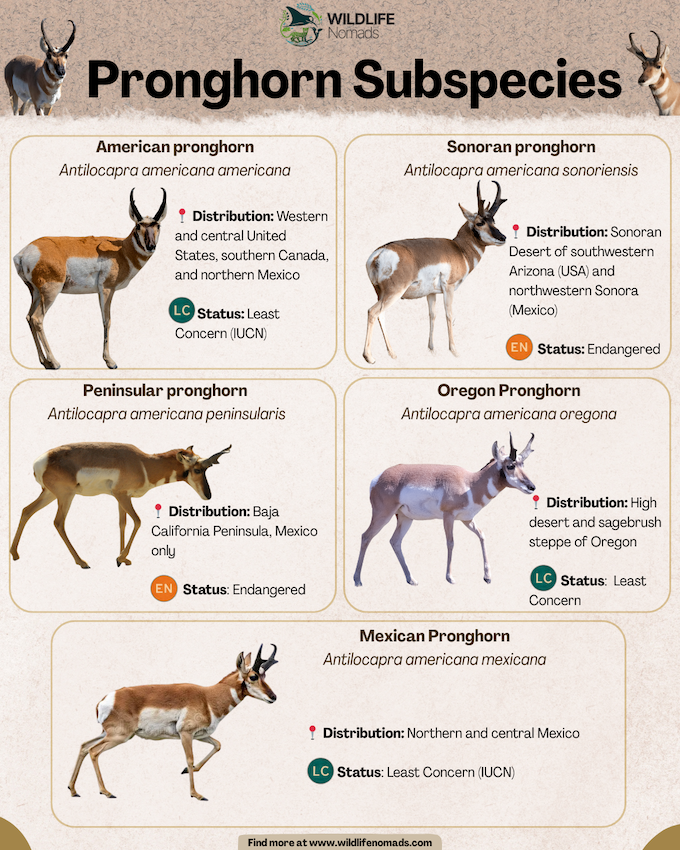
- American Pronghorn (A. a. americana): The most widespread subspecies, these make up the massive pronghorn populations found throughout the Great Plains and the continental United States.
- Mexican Pronghorn (A. a. mexicana): Found primarily in Northern Mexico and the southwestern U.S., these populations are a key focus for trans-border conservation efforts.
- Oregon Pronghorn (A. a. oregona): Occupying the high desert regions of the Pacific Northwest, this subspecies is specifically adapted to the sagebrush-heavy landscapes of Oregon.
- Peninsular Pronghorn (A. a. peninsularis): Critically endangered and restricted to the Baja California peninsula, this group has faced devastating pronghorn numbers crashes due to severe drought and habitat loss.
- Sonoran Pronghorn (A. a. sonoriensis): A desert-specialist living in the harsh environments near the Arizona-Mexico border. The Wildlife Service has implemented intensive recovery programs to prevent this rare subspecies from going extinct.
The International Union for Conservation of Nature (IUCN) currently lists the pronghorn species as a whole under the “Least Concern” status, but don’t let that fool you—protecting the genetic diversity of these five unique subspecies is vital for the animal’s long-term survival.
7. Pronghorn Live Only in North America
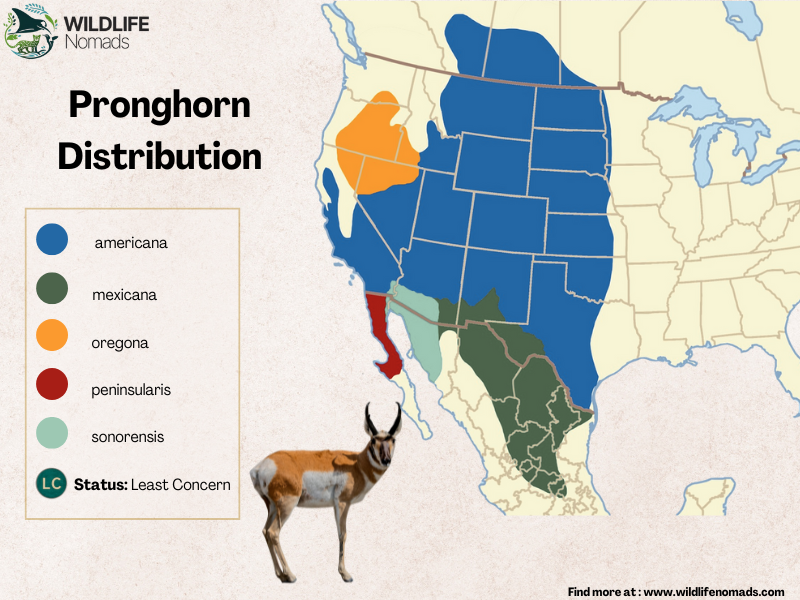
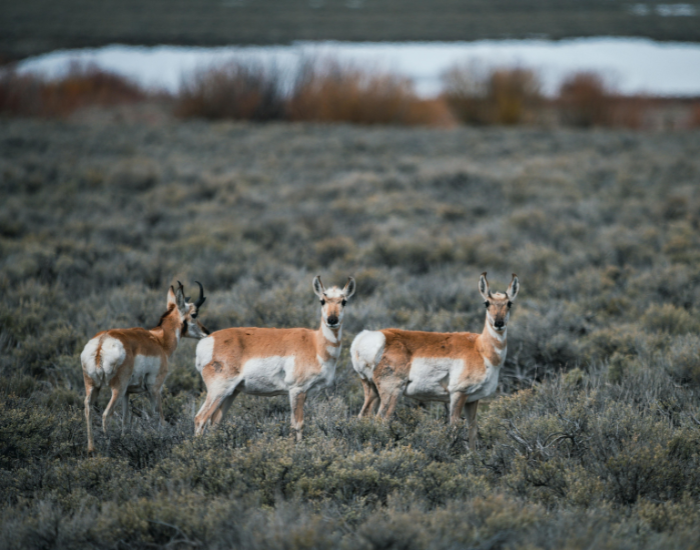
So, where does a pronghorn live? Their native range is strictly North America. You’ll find them in the continental United States, southern Canada, and small, fragmented populations in northern Mexico.
Preferred Ecosystems: They thrive in wide-open spaces including grasslands, sagebrush flats (their favorite habitat), and high-desert scrub.
If you’re looking to see them in the wild, the largest pronghorn populations are most dense in Wyoming, Montana, and South Dakota. In fact, Wyoming actually has more pronghorn than people!
8. Pronghorn Don’t Eat Much Grass
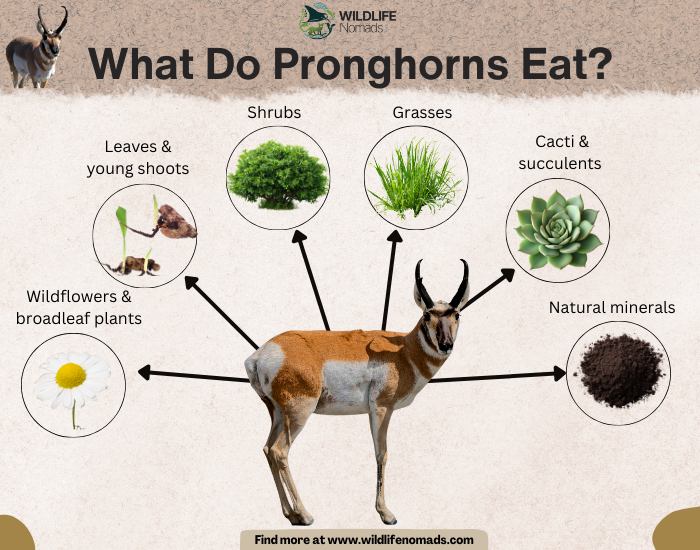
What is a pronghorn’s favorite food? When discussing the diet pronghorn, it’s important to note that they are selective feeders, preferring forbs, shrubs (especially sagebrush), and some grasses. Despite living alongside cattle, they don’t actually eat much grass. They are “selectors.”
Forbs and sagebrush: They love flowering plants and shrubs. In winter, sagebrush makes up a huge portion of their diet. In fact, sagebrush can comprise up to 70% of their winter food intake. Pronghorns rarely drink water as they obtain most of their moisture from the plants they consume.
Regurgitated food: The way pronghorn digest their food is unique. Like other ungulates, they have a four-chambered stomach and a special adaptation that allows them to digest food twice. They eat quickly, then find a safe spot to rest and regurgitate their food, called cud, to chew it again and better absorb nutrients.
This adaptation allows them to extract every possible nutrient from tough, desert vegetation that would starve many animals.
9. Social Structure Changes with Seasons
The social life of a pronghorn changes dramatically with the seasons.
Late summer breeding season: You’ll see dominant bucks defending harems of females. They use scent glands on their necks to mark territory and intimidate rivals. Male pronghorn can be quite territorial during this time.
Winter: They congregate into large herds, sometimes numbering in the hundreds. This represents a survival strategy—more eyes to spot predators. Pronghorns are social animals that form mixed-sex herds in winter, which break up in spring into smaller groups for breeding.
Spring birthing: Females typically give birth to young called fawns (usually twins) in late spring or early summer. These little ones have a “hide” strategy for the first few days, staying perfectly still in the grass while the mother grazes nearby.
10. The Longest Land Migration in North America
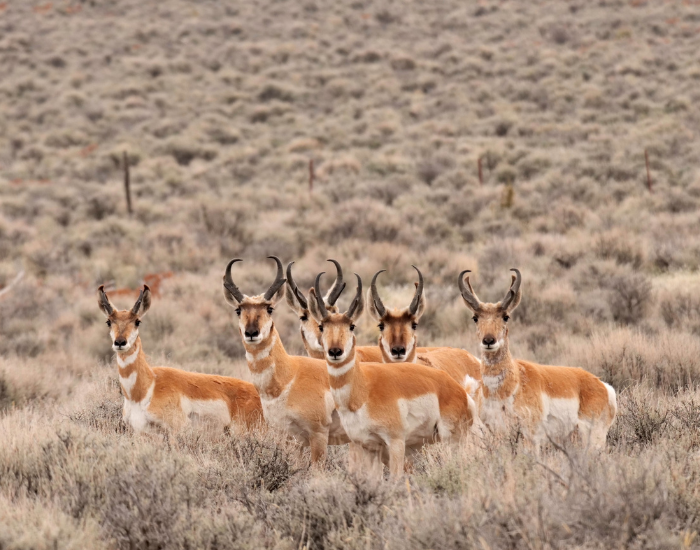
A specific pronghorn herd travels over 150 miles between Grand Teton National Park and the Upper Green River Basin in Wyoming. One of the longest land migrations on earth.
It’s a grueling journey through fences, highways, and deep snow, a true testament to their resilience. This migration rivals the famous Serengeti great migration in the African Savanna in distance and difficulty.
Therefore, protecting migration corridors has become a major conservation priority for wildlife managers.
11. Pronghorn Can’t Jump Fences
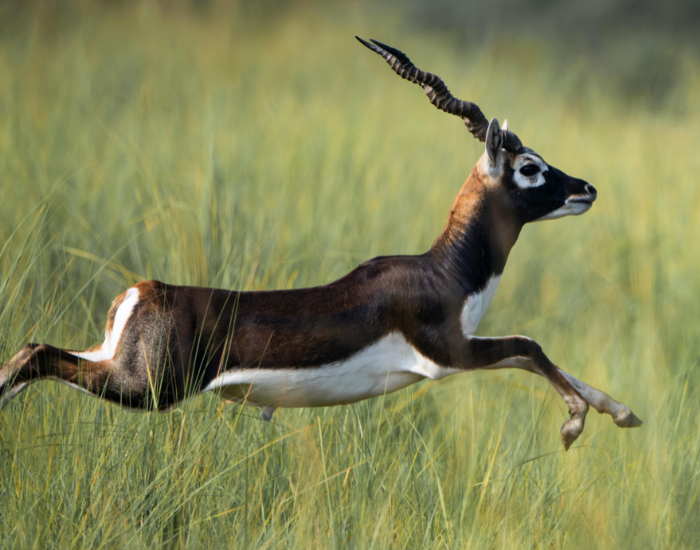
Here’s a surprising fact: pronghorn evolved on open plains and never learned to jump. A standard barbed-wire fence is an impassable wall to them. They try to crawl under it, often getting injured in the process.
Modern conservation efforts involve “pronghorn-friendly” fencing that allows them to slip underneath safely. The U.S. Fish and Wildlife Service and various state agencies work tirelessly on “barrier removal” to help pronghorn populations thrive.
This represents one of the biggest threats to pronghorn today, especially along migration routes.
12. White Rump Patch Serves as Warning Signal
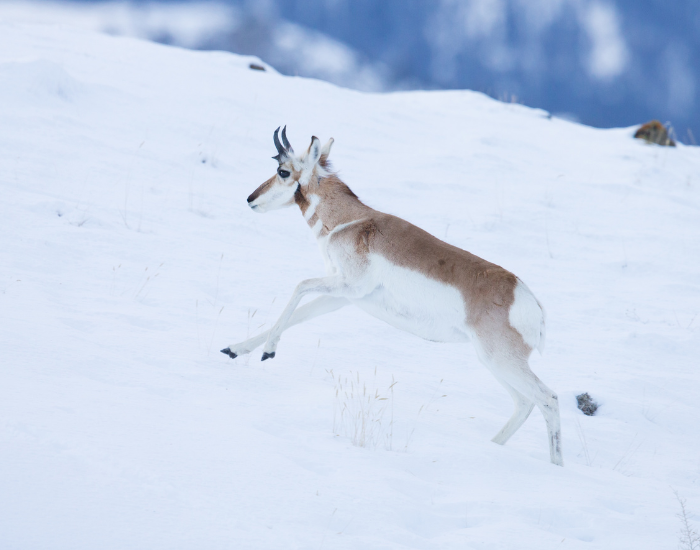
The pronghorn has distinctive white markings on its rump. This feature plays a crucial role in a behavior known as ‘rump stands,’ where the pronghorn raises and flares the white hairs on its rump when alarmed. This action not only makes the white patch visible from up to two miles away but also releases an alarm odor from glands located on the rump.
Pronghorn communicate danger to each other by performing rump stands, raising the white hairs on their rumps, which become more visible and emit a scent that warns the herd. When one pronghorn detects danger and signals with a rump stand, the entire herd can respond instantly.
In addition, their white markings help with identification at long distances across the open plains.
13. Conservation Success Story
While we aren’t at the “emergency” level we were in the early 1900s (when pronghorn numbers dropped to around 13,000), pronghorn populations still face threats.
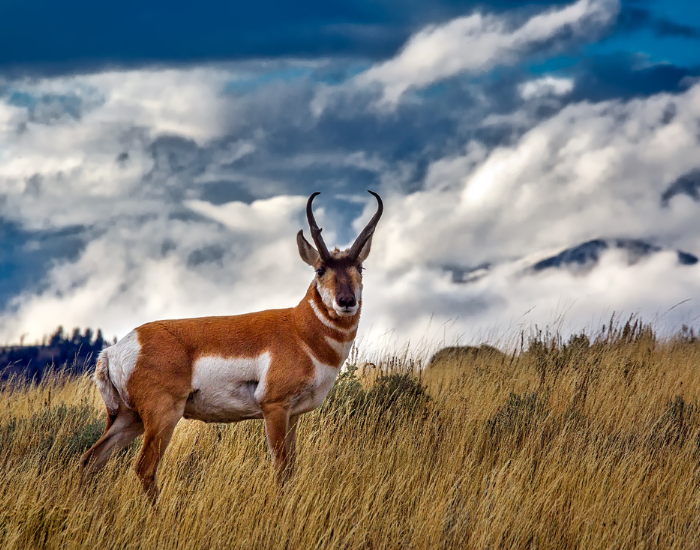
However, through dedicated conservation efforts, pronghorn populations have rebounded to nearly one million animals across North America. This represents one of wildlife conservation’s greatest success stories.
The American West now hosts healthy pronghorn herds in national parks like Grand Teton, Yellowstone, and many state wildlife management areas.
Organizations like the National Park Service and state wildlife agencies continue monitoring pronghorn populations to ensure their long-term survival.
14. Newborn Fawns Are Incredible Survivors
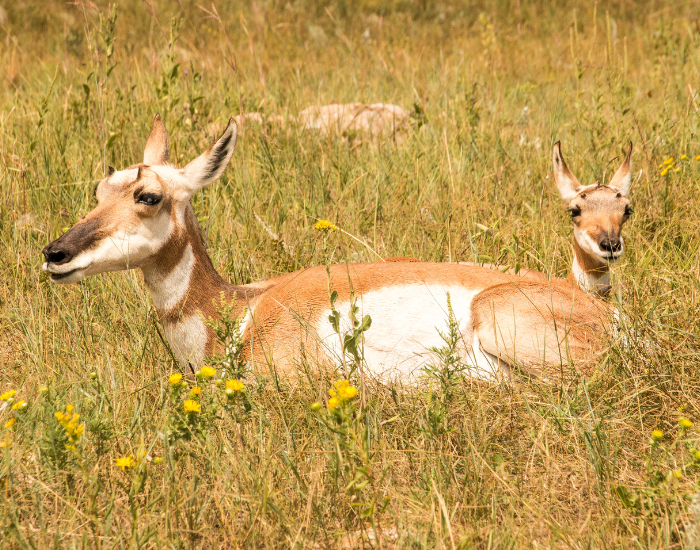
Female pronghorn typically give birth to two fawns in late spring. These babies are remarkably precocious. Within days, they can outrun a human. Within weeks, they can reach speeds of 30 mph.
For the first few days, however, fawns rely on camouflage. Their spotted coats blend perfectly with the grasses and sagebrush. They lie motionless while predators pass by, relying on their mother to return for nursing.
This strategy protects them from coyotes, their main predator during the vulnerable early weeks.
15. The Name Comes From Their Unique Horns
The scientific name Antilocapra americana translates roughly to “American antelope-goat.” However, the common name “pronghorn” comes directly from their unique horns.
Unlike any other horned animal, male pronghorn have a distinctive forward-facing prong that branches off the main horn. This prong gives the species its name and makes males easily distinguishable from females.
In the American West, locals often call them “speed goats” due to their incredible running ability and goat-like appearance.

FAQs about Pronghorns
Both names are used for the same animal in Wyoming! It is the pronghorn, but locals almost exclusively call them antelope. Wyoming has the largest pronghorn population in North America.
No. While they are both ungulates (hoofed mammals), pronghorn and deer belong to entirely different families. Pronghorn are more closely related to giraffes than to deer.
In the American West, no. If you drive through Wyoming or Montana, you’ll likely see hundreds. However, specific subspecies like the Sonoran pronghorn are very rare and protected.
No. Despite their incredible speed, pronghorn cannot jump fences. They evolved on open plains and instead crawl under obstacles. This makes modern fences a significant threat.
Coyotes prey on fawns. However, healthy adult pronghorn have few predators due to their incredible speed. Mountain lions occasionally hunt them, but rarely succeed.
You can see pronghorns at the San Diego Zoo and the San Diego Zoo Safari Park. Both are key locations involved in pronghorn conservation, habitat preservation, and public education about this unique species.
The Verdict from the Field
The pronghorn antelope reminds us that you don’t need to visit an alien planet to find something extraordinary. They are a biological masterpiece of speed, vision, and endurance. They are the survivors of an ancient world, still racing across the American West at high speeds.
Next time you’re driving through the continental United States and see a flash of white rump hairs disappearing into the sagebrush, take a second to appreciate the pronghorn. You’re looking at a 10-million-year-old success story.