
From all animals from Africa, and specially from all big cats, there’s something about cheetahs that has always put me in awe. Maybe it’s the way their entire body seems built for motion, like every muscle, every bone, every spot has a purpose. Or maybe it’s the contradiction they carry so effortlessly: unmatched speed paired with an unexpectedly fragile hold on survival.
Most of us grow up knowing one fact, that the cheetah is the fastest land animal on Earth. But the deeper you look, the more you realise that speed is only the beginning of their story. Behind those long limbs and tear-streaked eyes is an animal shaped by millions of years of fine-tuned evolution, now navigating a world changing faster than it can run. The modern cheetah (Acinonyx jubatus) is the result of an evolutionary journey, distinct from its extinct relatives and adapted for life on open plains.
What draws me to cheetahs isn’t just their athleticism; it’s the vulnerability woven into their lives. Lightweight bodies, narrow genetic diversity, shrinking habitats, this is a relatively big cat that doesn’t roar, doesn’t dominate, and doesn’t always win. Yet somehow, it endures.
Forget the big-cat stereotypes. The cheetah stands alone, sleek, specialised, and surprisingly delicate. And the more you learn, the more remarkable it becomes. Get ready to discover some fascinating cheetah facts as we explore their world.
1. The Cheetah is the Ultimate Speed Machine – And Not Just for Running
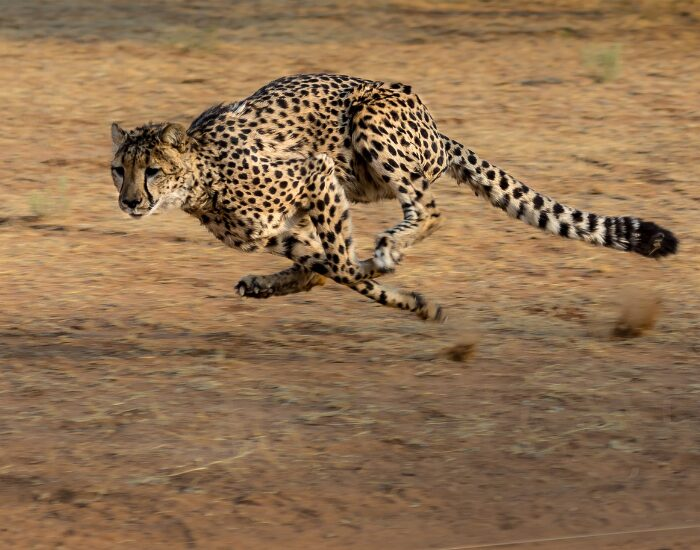
The cheetah is the fastest land animal on Earth. These cats reach speeds of 70 to 75 mph (112-120 km/h) in short bursts. However, the real surprise is how they achieve this incredible velocity.
The Cheetah’s Spine Functions as a Spring: Unlike other large cats, the cheetah’s spine is highly flexible and spring-like. This structure enhances speed and agility during running, allowing for a double-suspension gallop. In a single stride, a cheetah can cover up to 25 feet (7.6 meters).
Semi-Retractable Claws Provide Traction: This is a key difference between the cheetah and the leopard. A cheetah has semi-retractable claws that are blunt and always partially exposed. These specialized claws provide incredible traction for sharp turns and acceleration.
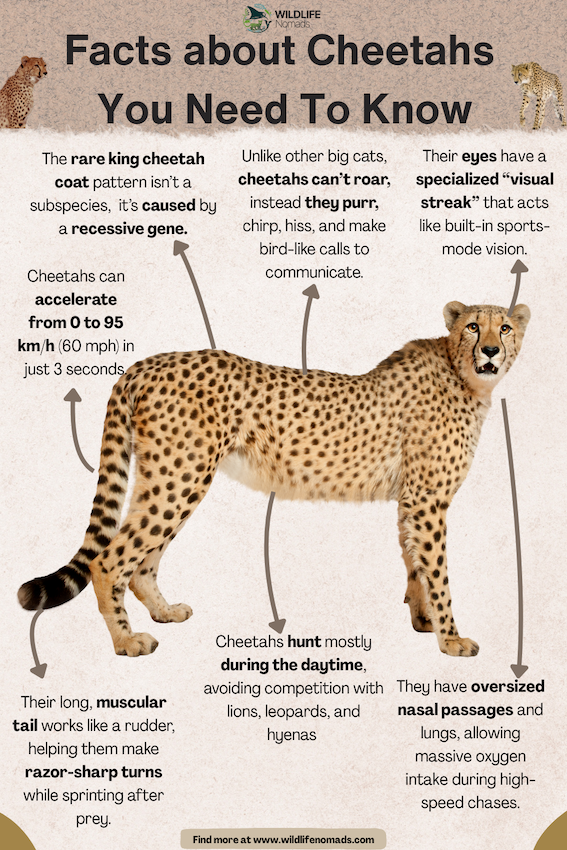
The Cheetah’s Tail Acts as a Rudder: The cheetah’s tail acts as a rudder, helping with quick turns during high-speed chases. The heavy, flat tail, which can reach up to 2.8 feet long, aids balance and steering, allowing the cheetah to make incredibly fast direction changes while pursuing prey species like Thomson’s gazelles.
The cheetah can accelerate from zero to 60 mph in just three seconds. In addition, their oversized heart and lungs handle the incredible strain of high-speed sprints. This is a testament to millions of years of evolution as the fastest land mammal.
2. Where the Cheetah is Found Today – A Critical Look at Distribution
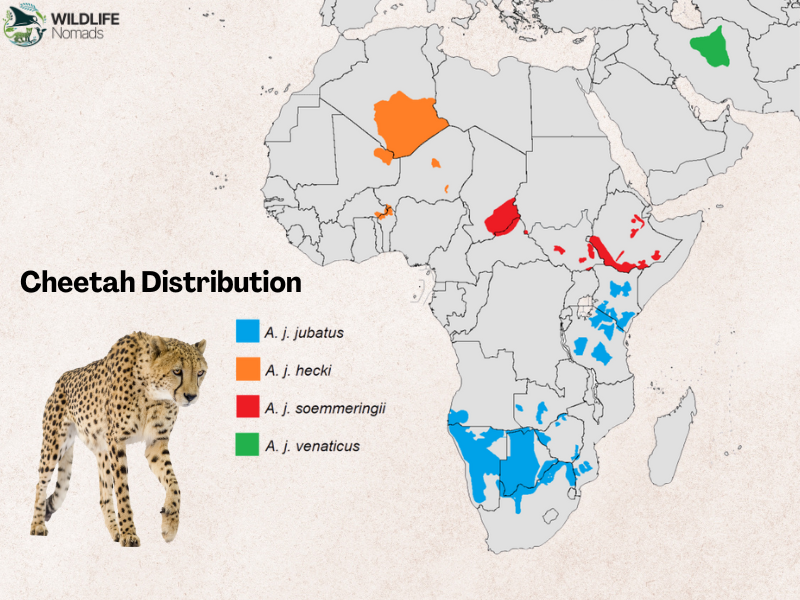
The cheetah once roamed across vast parts of Africa, the Middle East, and Asia. Historically, cheetahs range extended from sub-Saharan Africa through North Africa, the Arabian Peninsula, and into South and Central Asia. However, their range has dramatically shrunk. Today, the largest cheetah populations are found in specific regions.
Eastern and Southern Africa: Countries like South Africa, Namibia, Botswana, Kenya, and Tanzania hold the most significant numbers. Namibia hosts the world’s largest cheetah population. These African countries provide the open savannas and grasslands where wild cheetahs still roam. In addition to eastern and southern Africa, cheetahs were once widespread in North Africa and the Arabian Peninsula, where they inhabited arid and desert landscapes.
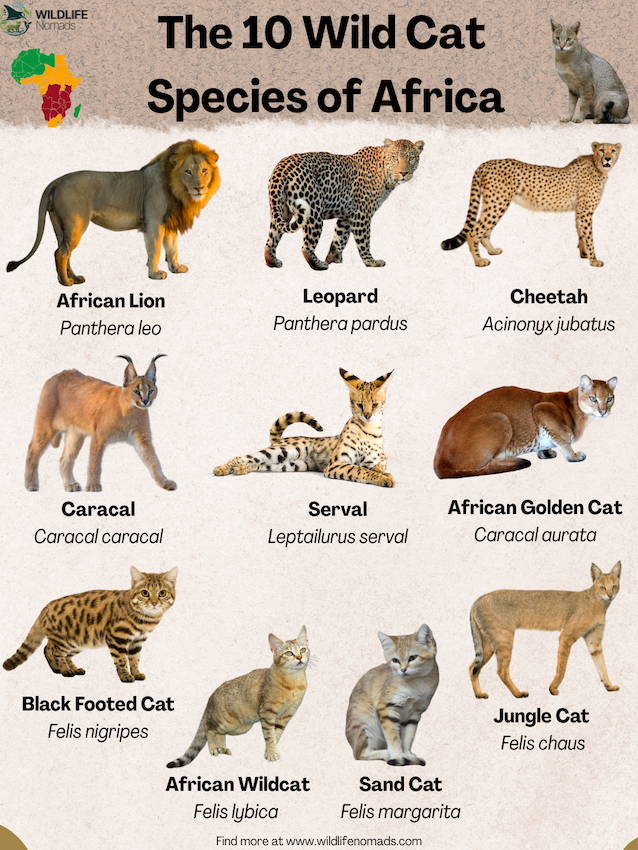
The cheetah is part of Africa’s wild cats (which include lions, servals, black footed cats and caracals). Eastern Africa holds approximately 2,300 cheetahs (32% of the global population). Meanwhile, southern Africa supports around 4,300 cheetahs (61% of the total).
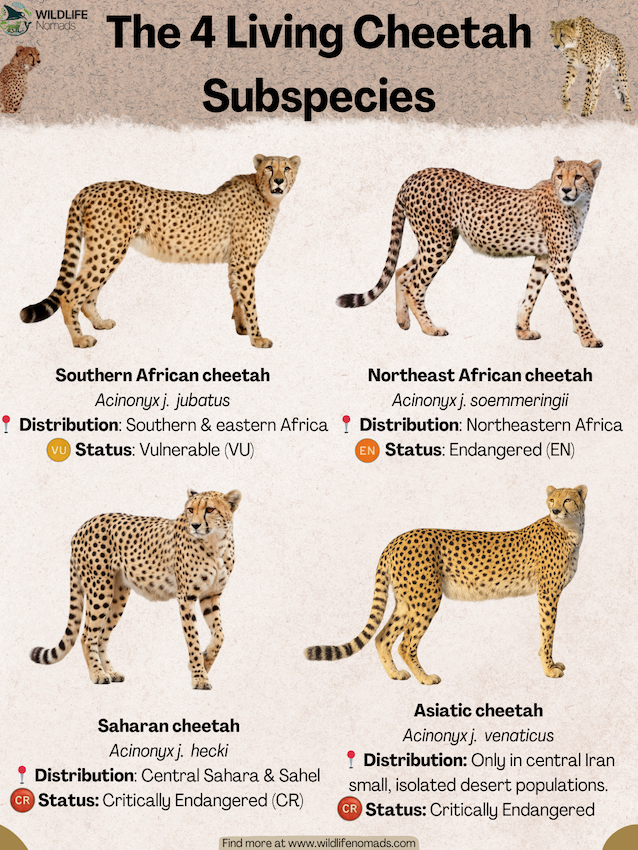
The Asiatic Cheetah: This is the most critically endangered subspecies. A tiny population remains in central Iran. Recent surveys documented only 26 individual Asiatic cheetahs. This subspecies is often considered a ghost on the brink of extinction.
Cheetahs require huge territories of high-quality habitat to thrive. Only 9% of their original global range remains today.
3. Cheetahs Are Not Leopards or Jaguars – the Big Cats Family
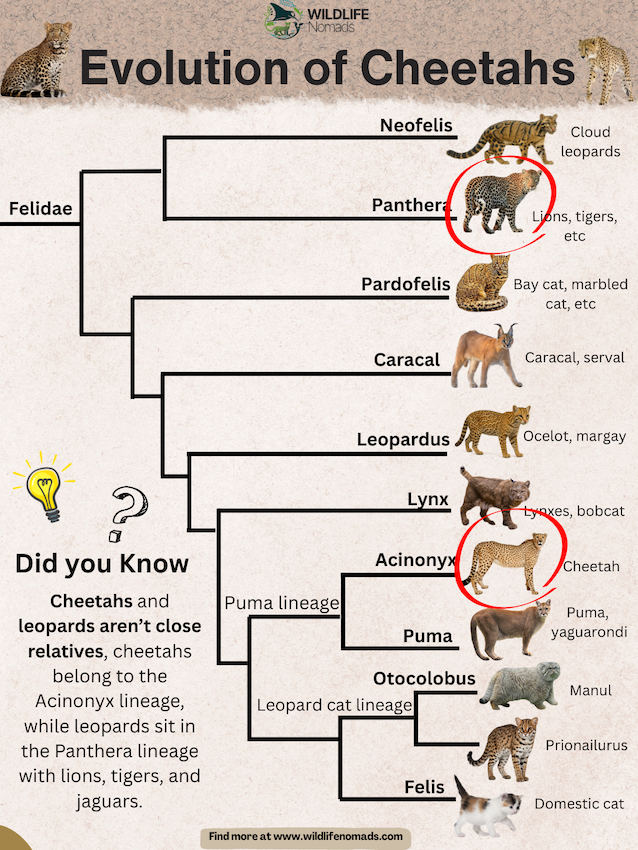
This is one of the most common questions people ask. Is a cheetah a kind of leopard? No. While all three belong to the Felidae family, the cheetah is distinct and unique.
The cheetah is the only member of the genus Acinonyx. All other large cats, lions, tigers, leopards, and jaguars, belong to the genus Panthera. Compared to other species within the Felidae family, cheetahs stand out due to their specialized adaptations for speed and their unique evolutionary lineage.
Evolution Set Cheetahs Apart: The cheetah’s evolutionary path diverged millions of years ago. They share a common ancestor with pumas and jaguarundis. These three species form the Puma lineage, which separated from other felids approximately 6.7 million years ago. Therefore, the cheetah evolved differently from leopards.
Visual Differences from Leopards: While cheetahs and leopards may look similar at first glance, several features distinguish them. Cheetahs have solid round spots on their coat. In contrast, leopards display rosette patterns with darker edges and lighter centers.
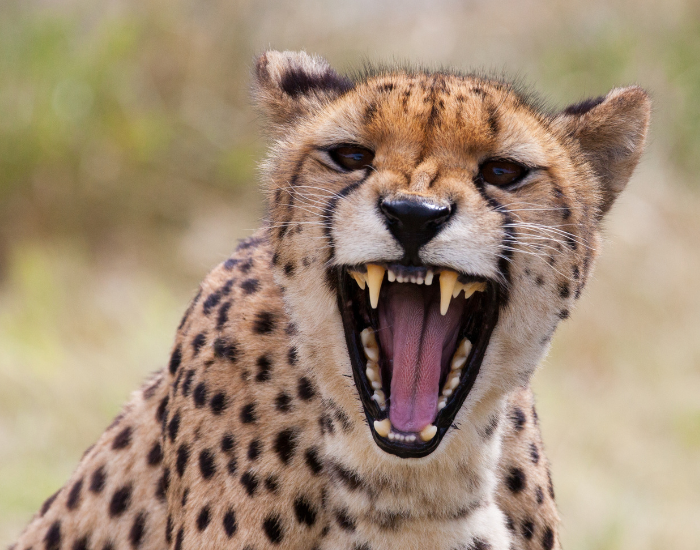
Cheetahs also have distinctive black tear marks running from each eye down to the muzzle. Leopards lack these tear stains entirely. Furthermore, cheetahs have a much lighter, slender build. The cheetah’s anatomy is optimized for speed rather than strength.
The cheetah is classified as one of Africa’s wild cats. However, it belongs to a unique category among large cats. Is the cheetah and leopard the same? Absolutely not. The cheetah represents a unique evolutionary path within the cat family.

4. Cheetahs Live with a Genetic Bottleneck
The cheetah faces extremely low genetic variation. Roughly 10,000 years ago, the cheetah population experienced a severe genetic bottleneck. Nearly all individuals perished. Only a small, highly inbred founder population survived.
This has led to high infant mortality, vulnerability to disease, and poor breeding success. Research shows many male cheetahs have low sperm count. This biological handicap makes population recovery difficult.
The cheetah is not just fighting habitat loss. It’s fighting its own genetic history. Conservation strategies must include genetic management to help cheetah populations build resilience.
5. The Challenge of Cheetah Cubs Survival
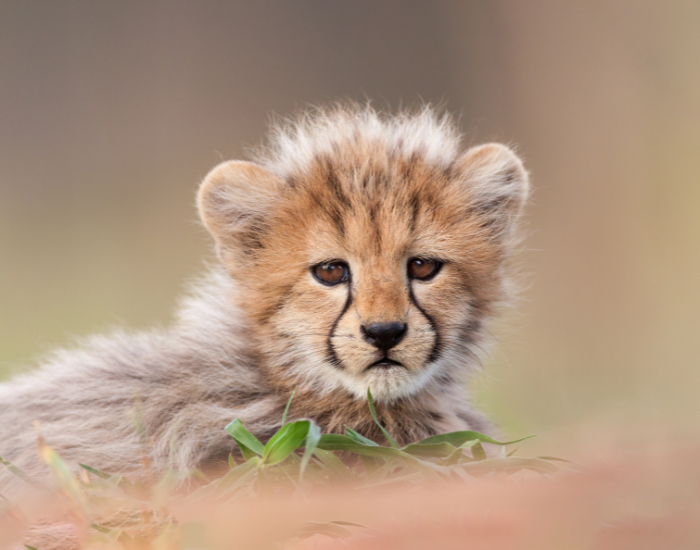
The journey of cheetah cubs is heartbreakingly difficult. While a female cheetah may have an average litter size of three to five cubs, up to 90% do not survive to adulthood. High cub mortality is a major concern, with most losses caused by predation from lions, hyenas, and leopards, as well as other environmental risks.
Predation is the Primary Threat: Cheetah cubs are tiny, defenseless, and tempting targets. Larger predators like lions, hyenas, and leopards kill many young cubs. Female cheetahs often have to leave their cubs concealed while hunting. Most cubs are born during the wet season when food is more abundant, which can improve the chances of survival for the cubs born at this time.
Solitary Mothers Raise Cubs Alone: Female cheetahs raise their litters alone without help from males. The mother moves the cubs frequently to avoid detection by other predators.
The cubs stay with their mother for 18 to 24 months, learning crucial survival skills. Young females eventually leave to establish their own territories. Female siblings typically disperse and lead solitary lives, with overlapping territories but little social interaction except during breeding or when raising their own litters. Meanwhile, young males often form coalitions with their brothers.
6. The Quick Meal and the Threat of Kleptoparasitism
The cheetah’s hunting strategy is all about speed and surprise. They primarily eat small to medium-sized antelopes like impala, springbok, and Thomson’s gazelles. Cheetahs sometimes hunt larger prey, such as wildebeest calves, and occasionally game birds.
Once they make a successful kill, the cheetah is exhausted. They need about 20-30 minutes to recover before eating. This is their most vulnerable time.
What is a cheetah’s biggest enemy? Other apex predators. It’s the threat of kleptoparasitism (food theft) from other, stronger carnivores. Lions and hyenas often steal cheetah kills, with a cheetah losing up to 50% of its meals to competitors.
This vulnerability explains why cheetahs hunt during daylight hours. They avoid peak activity times for nocturnal predators.
7. A Misunderstood Nocturnal Life
While lions and leopards are primarily active at night, cheetahs live a largely diurnal life. They’re most active during the day. This clever adaptation helps them avoid their main competitors.
They choose to hunt in the early morning or late afternoon when light is good. However, modern research shows that wild cheetahs in areas with high human activity are becoming more nocturnal. This change happens in a bid for survival and safety.
This behavioral change can put them at a disadvantage. Their eyes are not as well-adapted for the dark as other nocturnal predators with a better sense of sight.

8. The Mystery of the King Cheetah
Among the recognized cheetah subspecies, there is a rare and striking coat variation known as the king cheetah.
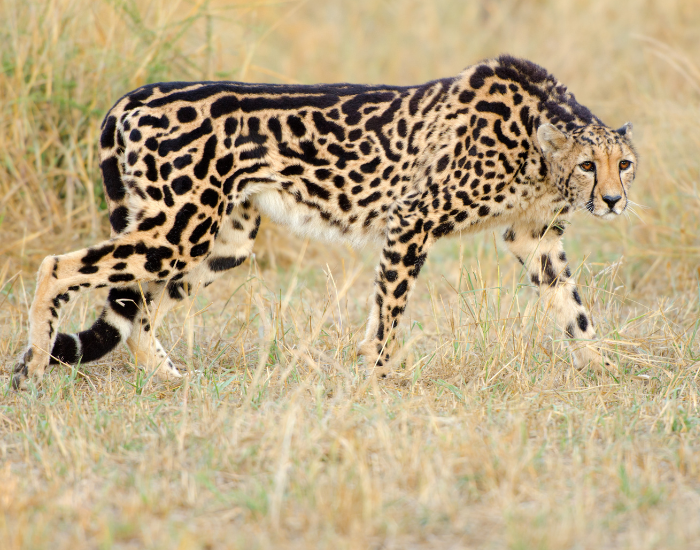
A king cheetah is not a separate cheetah sub species, but rather a rare genetic variant within the cheetah sub. It’s an individual cheetah with a recessive gene mutation. Instead of typical small, solid spots, the king cheetah features large, blotchy, fused spots. Three thick, dark stripes run down its back.
They are incredibly rare in the wild. Most are found in southern Africa, primarily in Zimbabwe and South Africa. The king cheetah is a beautiful reminder of subtle genetic variation that still exists, and highlights the importance of recognizing different cheetah sub species for effective conservation efforts.
9. Chita Animal vs. Cheetah Animal – Clearing Up the Name Confusion
This is one of the most common questions that pops up in searches. Is it chita or cheetah?
The correct and universally accepted English term is cheetah. The name cheetah comes from the Hindi word cītā, which derives from the Sanskrit word citra meaning “spotted” or “bright.”
The spelling “chita animal” is simply an Anglicization or phonetic interpretation of the original Indian term. However, in English and scientific contexts, “cheetah” is the standard spelling. Whether you search for “chita animal” or “animal cheetah,” you’re looking for the same magnificent creature—the fastest land mammal.
10. Cheetahs Tend to Climb Trees – But They’re Not Great At It
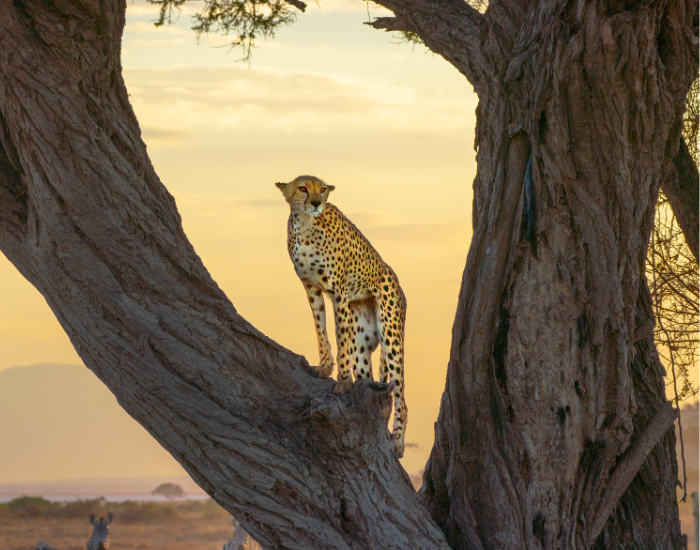
Lions and leopards drag their kills high into trees. The cheetah generally cannot do this. However, cheetahs tend to climb low-hanging, sturdy branches occasionally for a better vantage point.
Their claws are simply not designed for climbing. Remember, their semi-retractable, blunt claws are great for traction on the run. They’re terrible for gripping bark. This is another key difference between the cheetah and leopard.
This is another reason why they’re so vulnerable to losing their food. Their strength is in the chase, not the vertical escape.
11. The Surprising Social Life of Male Cheetahs
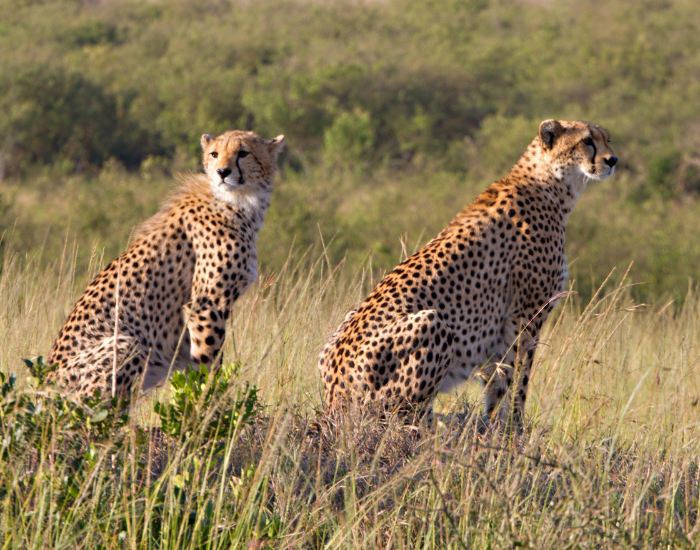
While female cheetahs are largely solitary except when raising cubs, male cheetahs often form coalitions. These are typically groups of two to four males who stick together for life. Some coalitions are composed of unrelated males, not just brothers, showing that biological relatedness is not always necessary for coalition formation.
Territorial Defense: A coalition is much more effective at defending male territories against other groups of male cheetahs. These territories are crucial for access to females and reproductive success. Adult males in coalitions have better survival rates than solitary males.
Hunting Advantages: The presence of others increases their ability to hold onto meals against hyenas or other predators.
This male bond is quite unique among solitary cat species. It shows that even the fastest animal understands the importance of teamwork.
13. Cheetah Subspecies – Diversity in Spots
Cheetahs are not a one-size-fits-all species. Across eastern and southern Africa, and even into the arid landscapes of Iran, several cheetah subspecies have evolved, each with their own unique adaptations and appearances. The Southern African cheetah, found in countries like Namibia and South Africa, is the most numerous, sporting a rich golden coat with bold, dark spots. In contrast, the Northwest African cheetah, which roams the Sahara, has a paler coat and smaller, more widely spaced spots, an adaptation to the harsh desert sun.
Perhaps the most visually striking is the King cheetah, a rare genetic variant found in southern Africa. King cheetahs are instantly recognizable by their large, blotchy spots and three dramatic dark stripes running down their back. While not a separate subspecies, King cheetahs are a testament to the incredible animals’ genetic diversity.
Recognizing the differences between cheetah subspecies is crucial for conservation. Each group faces unique challenges in their specific habitats, and protecting this diversity ensures the survival of cheetahs as a whole.
14. The Secret Language of Cheetahs – Communication in the Wild
Cheetahs may be known for their speed, but their social lives are just as fascinating. Unlike many other big cats, cheetahs rely on a rich tapestry of communication to interact with each other. Their vocal repertoire includes chirps, which mothers use to call their cheetah cubs, and stutter-barks, which help locate one another in tall grass. Purrs signal contentment, while hisses and growls warn off rivals or signal distress.
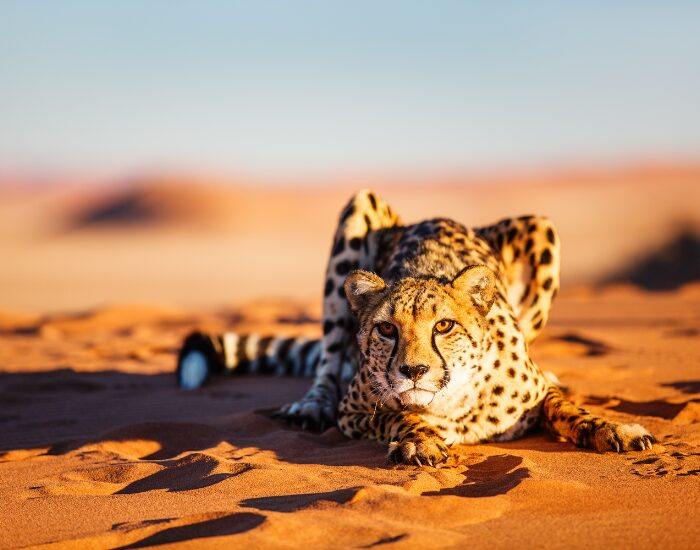
But cheetahs don’t just talk, they use body language, too. A raised tail can signal excitement or curiosity, while flattened ears and an arched back warn other cheetahs to keep their distance. Scent marking is another vital form of communication: by leaving their scent on trees, rocks, and even the ground, cheetahs mark their territory and send messages to unrelated cheetahs about their presence.
15. Cheetahs’ Role in the Ecosystem – Nature’s Balancing Act
Cheetahs are essential players in the ecosystems of eastern and southern Africa. By preying on species like gazelles and impalas, cheetahs help regulate prey populations, ensuring that no single species overwhelms the landscape. This natural balance supports healthy grasslands and a diverse array of other wildlife.
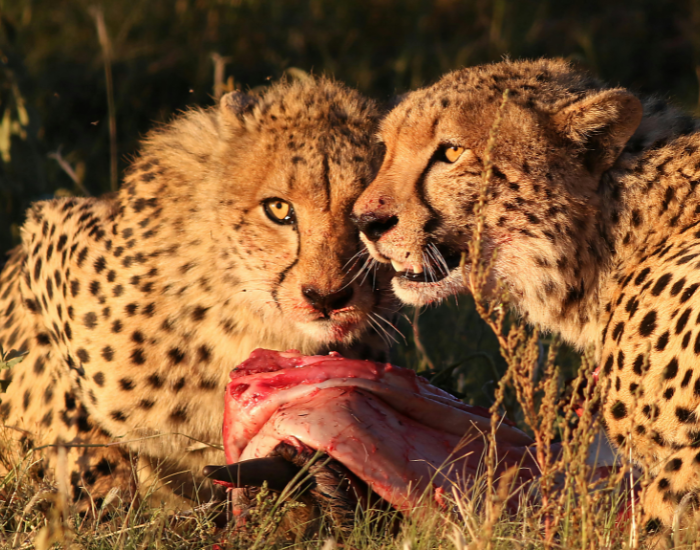
Cheetahs also influence the behavior of other predators. Their presence can affect where and when animals like hyenas and lions hunt, creating a dynamic web of interactions. Even after a cheetah kill, other predators and scavengers benefit, as leftovers provide food for a host of species.
Beyond hunting, cheetahs contribute to their environment in subtle ways. Their droppings help disperse seeds and nutrients, supporting plant growth and ecosystem health. Protecting cheetahs means preserving the intricate balance of nature that supports so many incredible animals.
16. Cheetahs in Captivity – Life Beyond the Wild
While wild cheetahs roam the savannas and deserts of Africa and Iran, many also live in captivity around the world. From ancient Egypt, where cheetahs were kept as royal hunting companions, to modern zoos and wildlife sanctuaries, humans have long been fascinated by these incredible animals.
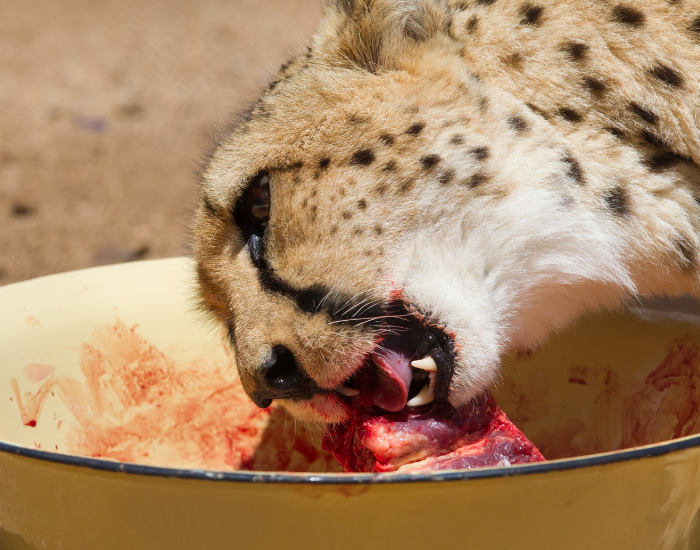
Captive cheetahs require specialized care to thrive. Their enclosures must mimic the open spaces of their natural cheetah habitat, giving them room to run and exercise. Diet is carefully managed to match what cheetahs eat in the wild, and enrichment activities are essential to keep their agile minds and bodies healthy.
Studying cheetahs in captivity has provided valuable insights into their health, genetics, and behavior, knowledge that supports conservation efforts for wild cheetahs. While life in captivity can never fully replace the freedom of the wild, it plays a crucial role in education, research, and the survival of this endangered species.
17. A Race Against Extinction – The Conservation Crisis
The cheetah faces an uncertain future. They are currently listed as Vulnerable on the IUCN Red List. However, the Asiatic cheetah population is Critically Endangered.
How many cheetahs are left? There are fewer than 7,100 wild cheetahs remaining globally. This is a terrifying figure for a species that requires such large territory. Monitoring adult cheetahs is crucial for understanding population stability and ensuring effective conservation efforts, as adult cheetahs play a key role in maintaining healthy population dynamics.
The Cheetah Conservation Fund (CCF) is the most well-known organization working on the ground. Their strategies include research, education, and habitat preservation. In Namibia, the CCF pioneered providing livestock-guarding dogs to local communities. Farmers are much less likely to kill cheetahs if their livelihood is protected.
Most cheetahs (77%) live outside protected areas in African countries. This makes conservation challenging but necessary. The conservation story is about people living alongside these spectacular creatures.
Frequently Asked Questions
No land animal is faster than the cheetah. However, the peregrine falcon is the fastest animal on Earth, reaching speeds over 200 mph in a dive.
A fully grown adult cheetah typically weighs between 46 and 143 pounds (21-72 kg). They stand about 28-36 inches (70-90 cm) at the shoulder. The size of a cheetah is smaller and more slender than a leopard.
A baby cheetah is simply called a cheetah cub. Cheetah cubs are born with a silvery-gray mantle of fur on their backs for camouflage.
The gestation period for a cheetah is about 90 to 95 days. After this period, the average female gives birth to a litter of cubs, usually ranging from three to five.
The Race for Survival
The cheetah is a marvel of evolutionary engineering. It’s a creature so perfectly built for speed that it sacrifices the brute strength of larger cats. From the tiny cheetah cub struggling against immense odds to the male cheetahs forming protective coalitions, life is a delicate balance.
However, there is hope. Through science, education, and innovative solutions, we can turn the tide. If we secure enough cheetah habitat and reduce human-wildlife conflict, these magnificent cats can survive.
The cheetah belongs among Africa’s wild cats. They’re different from leopards in evolution, appearance, and behavior. While they may look similar to leopards at first glance, they’re entirely unique. The cheetah evolved along a different path, optimizing for speed rather than strength. Their survival depends on us recognizing that uniqueness and protecting it.
Ready To See a Cheetah in the Wild?
Here is a list of our recommended tours with trusted partners so you can spot a cheetah and many other animals in the wild:
This blog is reader-supported. When you buy experiences through links listed on this site, we may earn an affiliate commission.