
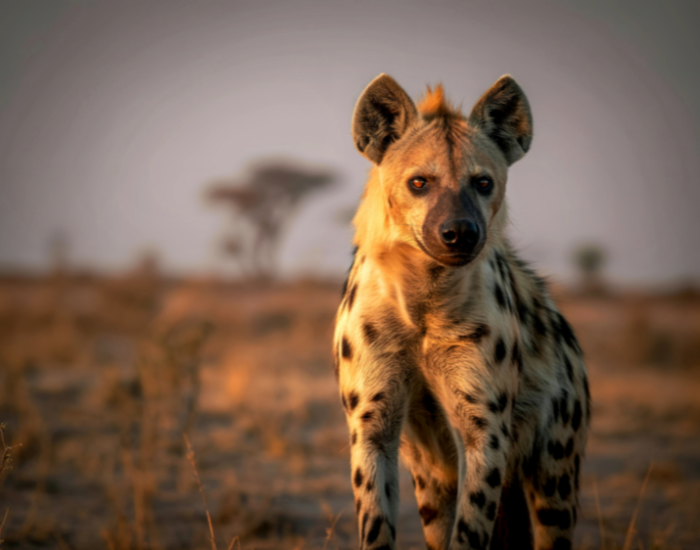
If you’ve watched The Lion King, you likely have a specific image of a hyena. You probably see a cackling, dim-witted scavenger lurking in a bone graveyard. However, Hollywood did the hyena dirty.
In reality, hyenas are highly evolved carnivores found across Africa south of the Sahara, thriving in open savanna, grasslands, and even arid regions. From the bone-crushing power of the spotted hyena, to the termite-eating aardwolf, these animals show remarkable adaptability. Species like the striped hyena occupy deserts and scrublands, often overlapping with iconic predators and Africa’s wildcats, including the serval and sand cat. They are devoted mothers and the social engineers of the animal kingdom.
In this guide, we dive into the world of the family Hyaenidae, a distinct carnivore lineage separate from both cats and dogs. Although they share landscapes with lions, leopards, and other wild hunters, hyenas follow their own evolutionary path. We’ll answer the burning question, are hyenas dogs?, and explore 12 fascinating facts about hyena size, behavior, and why these misunderstood predators deserve far more respect.
1. The Identity Crisis: Are Hyenas Cats or Dogs?
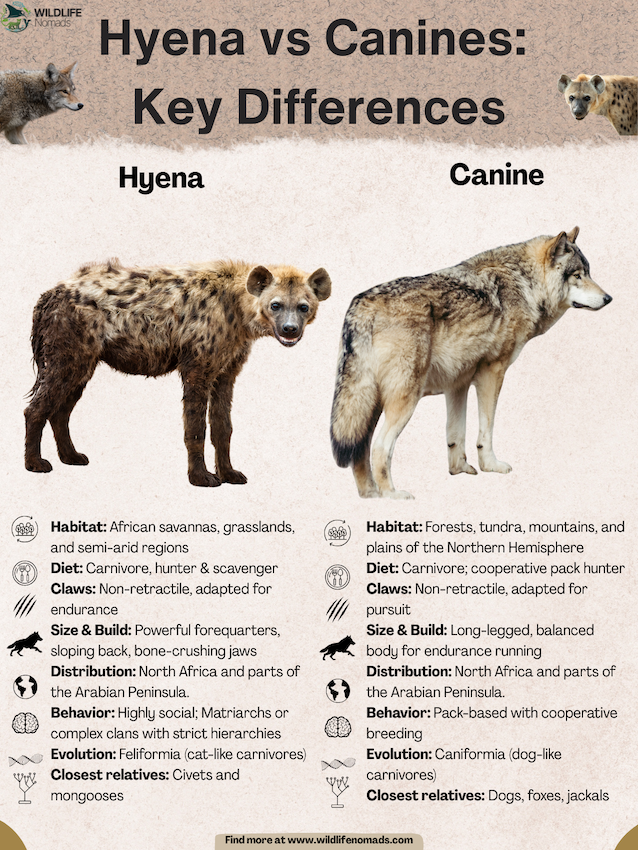
People often ask: are hyenas dogs? Or, more specifically, are they canines? At first glance, it is an easy mistake. They have long snouts, non retractable claws, and a dog like hunting style.
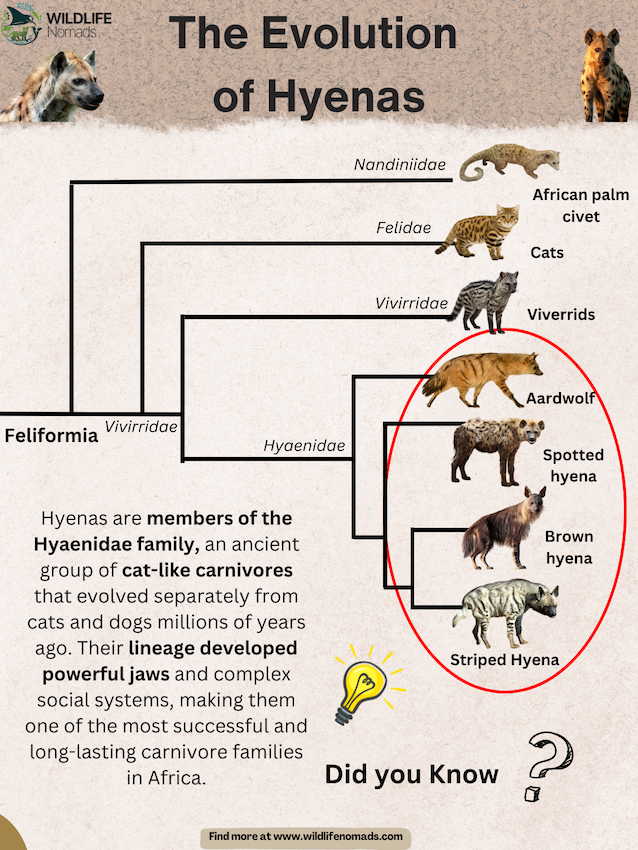
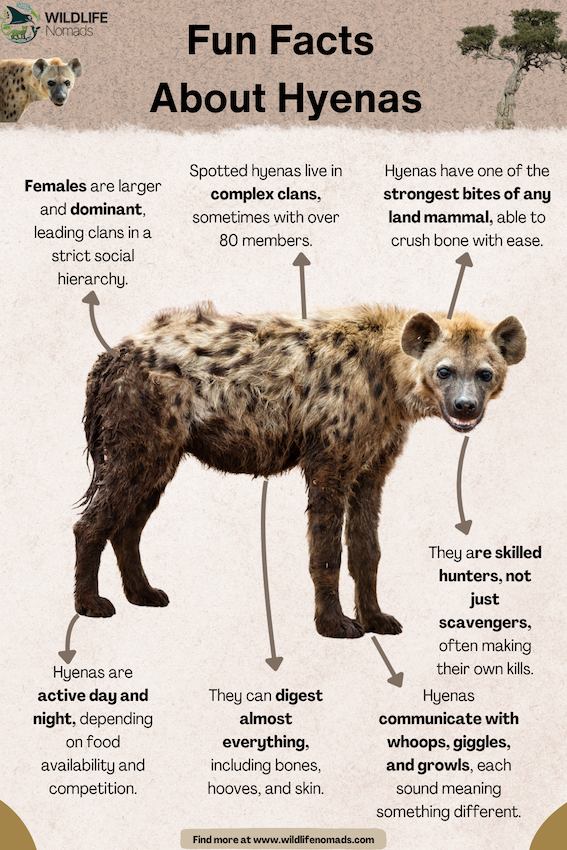
However, DNA and skeletal structure reveal a different story. Hyenas are actually cat like carnivores. They belong to the suborder feliformia, which includes cats, genets, binturongs, mongooses, and the african palm civet. Hyenas belong to their own family, Hyaenidae, which is a separate family from both cats and dogs.
Dogs belong to the suborder Caniformia. While hyenas aren’t felines, they share a recent common ancestor with cat families. They are more closely related to cats than to a Golden Retriever. This is a classic case of convergent evolution.
Hyenas cannot interbreed with dogs due to genetic differences and incompatible reproductive anatomies.
2. There Are Only Four Living Species
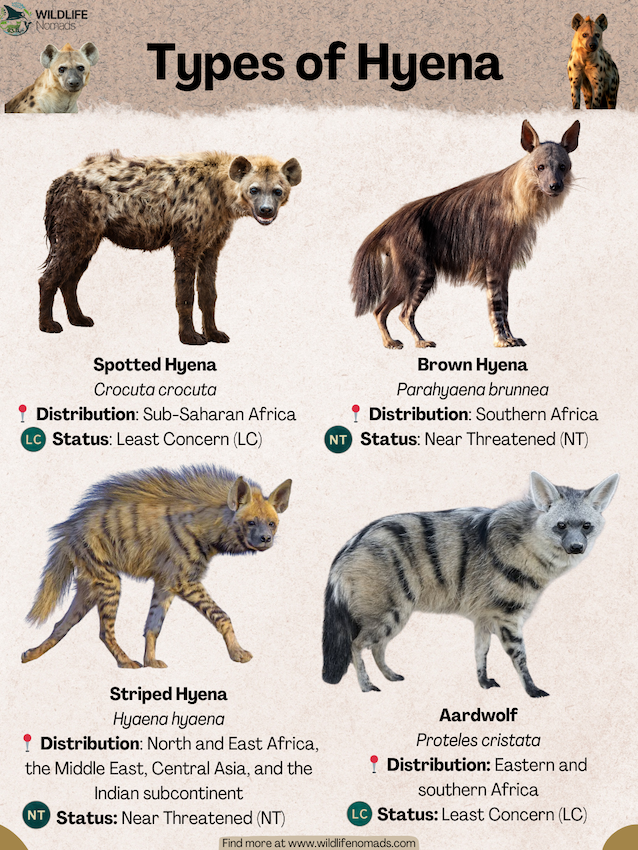
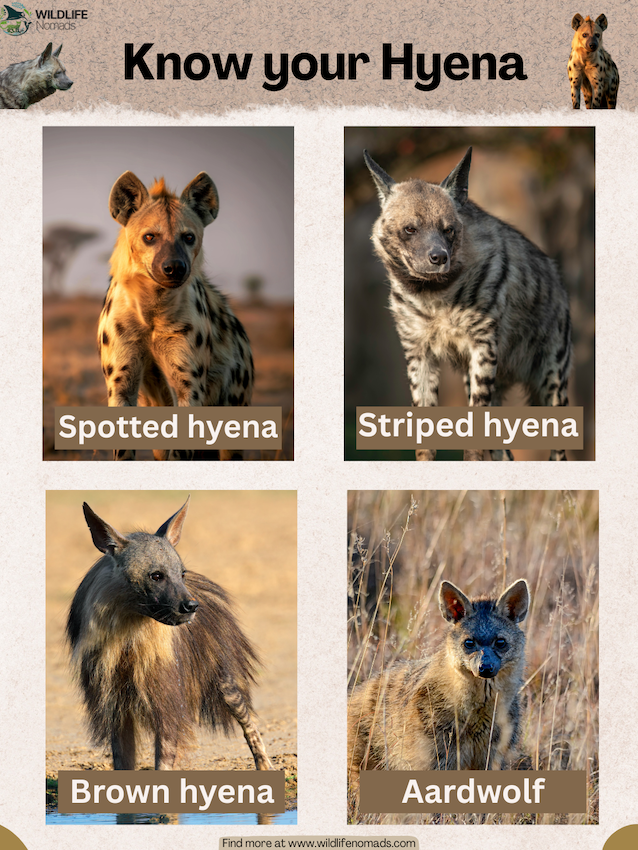
When we say “hyena,” we usually mean the spotted hyenas (Crocuta crocuta), but there is a surprising diversity among hyena species within the Hyaenidae family. There are only four living species remaining today:
- Spotted Hyena: These are the largest and loudest. They are the famous “laughing hyena.”
- Brown Hyena: Found in the Kalahari, they have shaggy coats and live in small groups.
- Striped Hyena: These inhabit northern Africa, the Middle East, and India.
- Aardwolf: This species looks like a small striped hyena but eats termites.
These are the only four extant hyena species. In the past, ancient hyena species included both dog like hyenas, which were nimble and wolf-like, and bone crushing hyenas, which were robust scavengers.
3. Female Spotted Hyenas Call the Shots
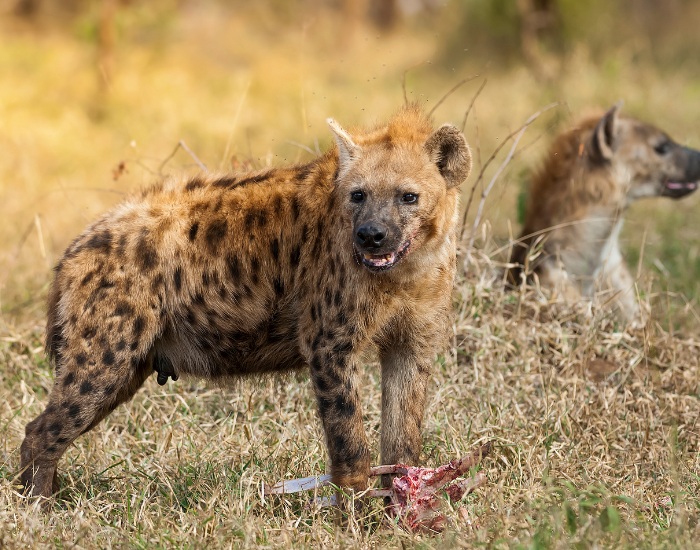
In the world of the spotted hyena, females run the world. They live in a matriarchal society organized into “clans.” These clan members can include up to 80 individuals.
Female spotted hyenas are a bit larger and more aggressive than males, reflecting their female dominance in the matriarchal social structure where females are larger and dominate males. This is due to their unique hormonal makeup. Even the lowest-ranking female holds a higher status than the highest-ranking male. Females stay in their natal groups, while males often leave to join a new clan.
4. The “Laugh” Signals Social Stress
We have all heard that high-pitched giggle. But a hyena does not laugh because a joke is funny. Research shows the “laugh” is actually a sign of frustration or fear.
Hyenas use this sound during feeding frenzies or when other predators chase them. The pitch tells other members about the hyena’s age and social status. This complex body language helps the clan stay organized during a hunt.
5. They Possess Bone Crushing Jaws
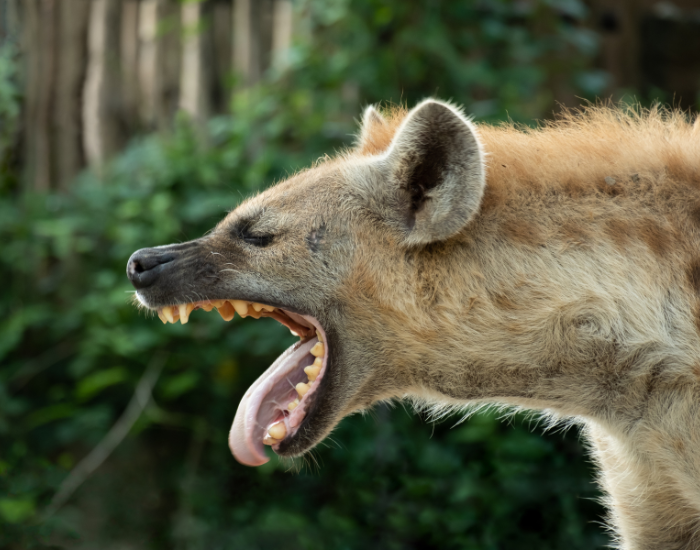
When it comes to hyena size and power, their skulls are built like tanks. A spotted hyena has strong jaws that exert 1,100 PSI. This is stronger than a lion!
These powerful jaws allow them to be bone crushing hyenas. While other carnivores leave the skeleton behind, hyenas eat the whole body parts. They consume the marrow that other animals cannot reach. This makes them highly efficient predators in eastern and southern africa.
6. Skilled Hunters, Not Just Scavengers
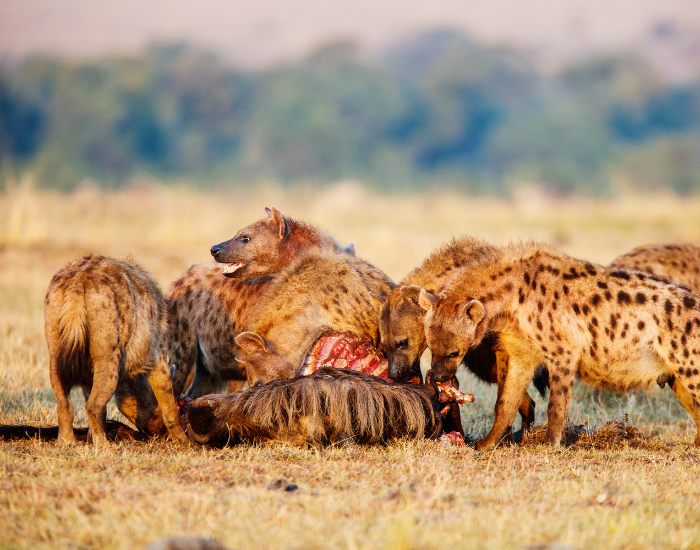
A common myth is that hyenas only rob graves or eat leftovers. In reality, spotted hyenas are skilled hunters. They provide up to 95% of their own food through direct kills.
Hyenas are skilled predators, using teamwork and endurance to hunt large prey such as wildebeest and zebras.
They are endurance runners. A hyena can chase prey at 37 mph for long distances. They literally wear their target down. When hunting alone or in small groups, hyenas can also hunt smaller prey such as gazelles like the springbok, impalas, and rabbits. Often, lions actually follow hyenas to steal their kills, not the other way around.
The hunting success of spotted hyenas can vary, with estimates suggesting they obtain 50% to 90% of their diet from direct kills.
7. Unique Anatomy and Reproduction
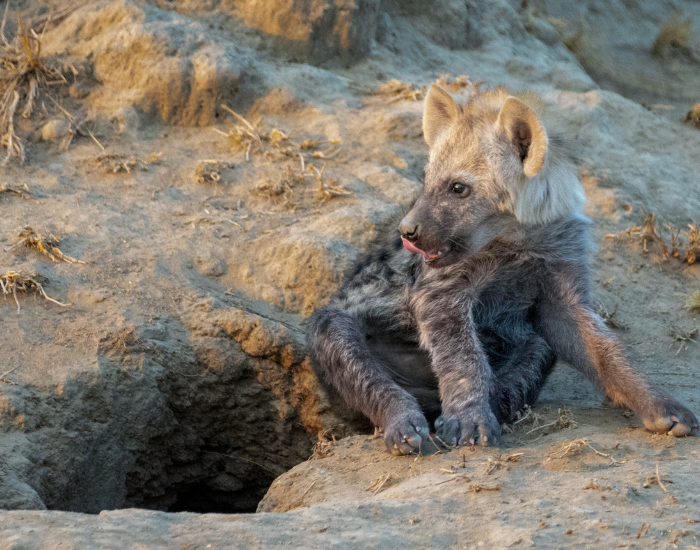
The female spotted hyenas have a very unusual reproductive system. They possess a pseudo-penis used for urination, mating, and birth.
Hyenas have a hemochorial placenta, which is unusual among carnivores and shares similarities with primates.
This makes the birth process difficult for hyena cubs. However, it ensures that mating requires total cooperation. A male cannot force himself on a female. This reinforces the female-led social structure of the clan. Hyenas also have well-developed anal glands, which play a key role in scent marking and social communication.
8. Hyena Size and Physical Traits
Hyenas have a distinct silhouette. Their front legs are longer than their hind legs. This gives them a sloping back and relatively short torsos. This anatomy is energy-efficient for traveling long distances.
| Feature | Spotted Hyena | Striped/Brown Hyena |
| Weight | 40–86 kg | 40–55 kg |
| Height | 70–90 cm | 60–80 cm |
| Social | Large Clans | Solitary / Small Groups |
9. Intelligence of the Family Hyaenidae
Hyenas are not “dumb” scavengers. They are highly intelligent and perform well on cooperation tests. In studies, hyenas work together to solve puzzles faster than some primates. They can recognize the voices of all their clan members.
10. The Ancient Rivalry With Lions
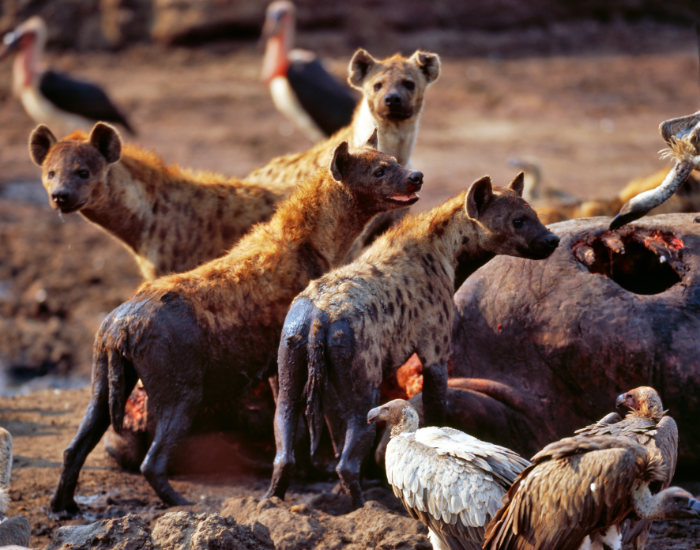
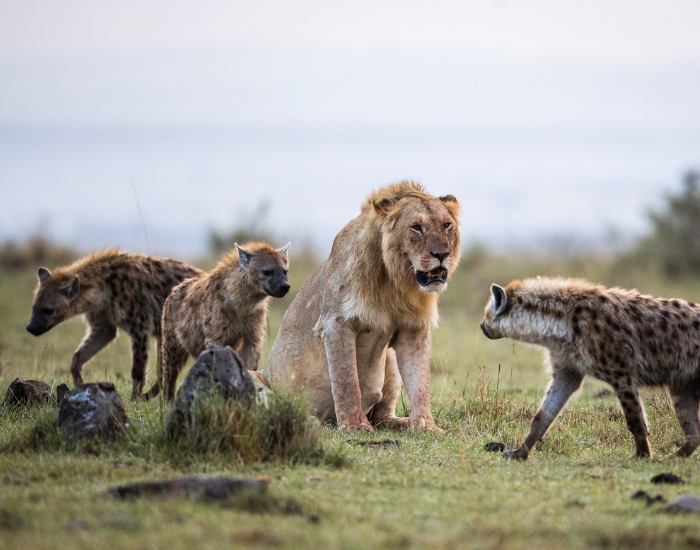
The “war” between lions and hyenas is legendary in popular culture. Both hyenas and lions are apex competitors that hunt the same large prey.
Lions often kill hyenas to eliminate competition. Conversely, a large hyena clan can chase a pride of lions off a kill. This rivalry is a fundamental part of mammalian evolution on the savanna.
Hyenas also influence the foraging patterns of smaller carnivores by driving them away from kills.
11. Vital Roles in the Ecosystem
Hyenas are the “janitors” of the wild. By eating carcasses, they prevent the spread of diseases. Their acidic stomachs process bacteria that would kill other members of the ecosystem. Their “white droppings” return calcium to the soil, helping the environment thrive.

12. Conservation and Human Wildlife Conflict
The IUCN lists the spotted hyena as “Least Concern.” However, the striped and brown hyena are “Near Threatened.” The biggest threat is human wildlife conflict.
Farmers often poison or shoot them to protect livestock. Habitat loss in southern africa also pushes them into protected areas. We must change the “vermin” narrative to save these misunderstood carnivores.
Hyena vs. Canines: Key Differences
- Suborder: Hyenas are Feliformia; Dogs are Caniformia.
- Claws: Both have non retractable claws, unlike most cats.
- Grooming: Hyenas groom themselves like cats share grooming habits.
- Evolution: Hyenas are more closely related to the african palm civet than to wolves.
Reimagining the Hyena
Next time you see a hyena, remember they are amazing and unique animals, not just movie villains; they are essential predators. They maintain the health of the African savanna. By learning the facts, we can protect the future of the family hyaenidae.
FAQ: Common Hyena Questions
They are cat like. Biologically, they sit within the suborder feliformia.
It is a form of communication. It usually signals stress, frustration, or status during a hunt.
Attacks are rare. However, human wildlife conflict occurs when hyenas enter villages for livestock.
Yes, other cultures in Africa and the Middle East have many myths about hyenas, often portraying them as brave or magical. Other hyenas, such as the striped hyena, are frequently referenced in Middle Eastern literature and folklore, typically as symbols of treachery and stupidity. Arab folklore also tells of how hyenas can mesmerize victims with their eyes or sometimes with their pheromones.
Find a Safari to see Hyenas in the Wild
Here is a list of our recommended Safari tours with trusted partners so you can spot a cheetah and many other animals in the wild:
This blog is reader-supported. When you buy experiences through links listed on this site, we may earn an affiliate commission.