The first time I saw a wild boar sounder up close, I was crouched in a wallow on the edge of a Queensland sugarcane paddock at 4 a.m. A massive sow led nine piglets through the mist, snouts to the ground, working the soil like a tilling crew. I had come to Australia to study native wildlife. Instead, I kept running into Sus scrofa — the wild boar — and the ecological wreckage it leaves behind.
That morning rewired my thinking. Wild pigs are everywhere I work now, from European oak forests to North African scrubland to the rainforest fringes of Borneo. They are clever, beautiful, and devastating. As a biologist, I find the sheer adaptability of these animals to be one of the most compelling case studies in modern ecology.
Here are ten things you probably didn’t know about the wild boar, straight from my field notebooks.
1. The Wild Boar and the Domestic Pig Are Literally the Same Species
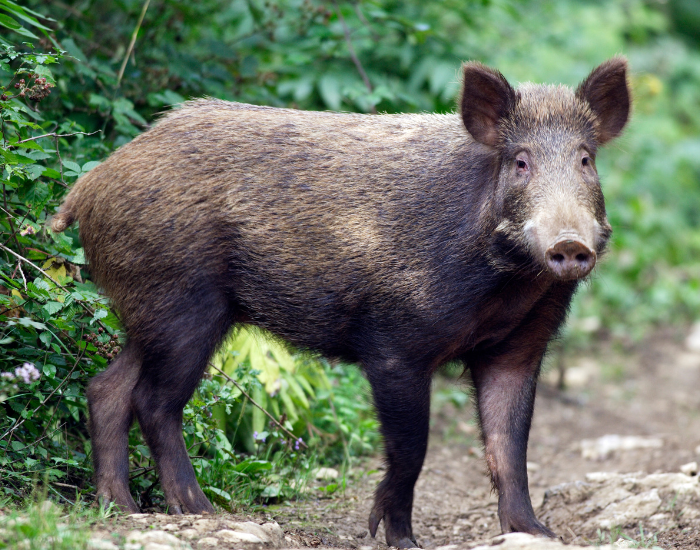
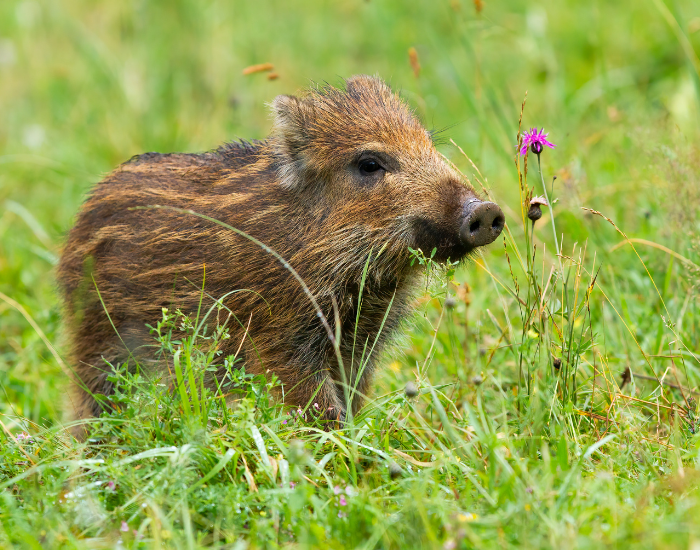
Yes, a wild boar is a pig. Both belong to Sus scrofa, the same biological species. Domestic pigs were bred from the eurasian wild boar around 9,000 years ago in two separate domestication events, one in Anatolia, one in China. When domestic pigs escape and breed in the wild, they revert to a boar-like phenotype within a few generations: longer snouts, coarser bristles, tusks, and that familiar dorsal stripe in the piglets.
This is why biologists in North America use the terms “feral swine,” “feral pigs,” and “wild pigs” interchangeably with “wild boar.” The genetics are nearly identical. The behaviour is identical. The feral swine damage is identical.
2. Sus Scrofa Has the Largest Range of Any Wild Land Mammal Except Humans
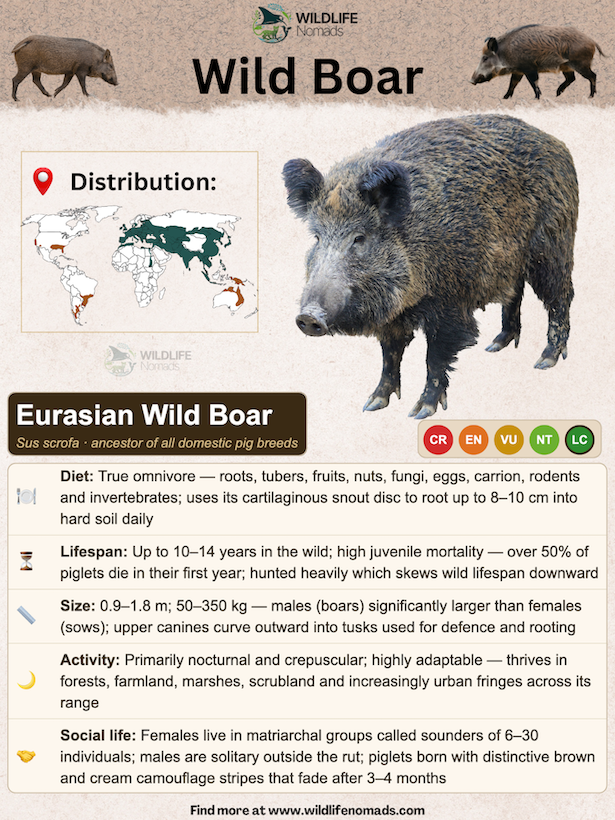
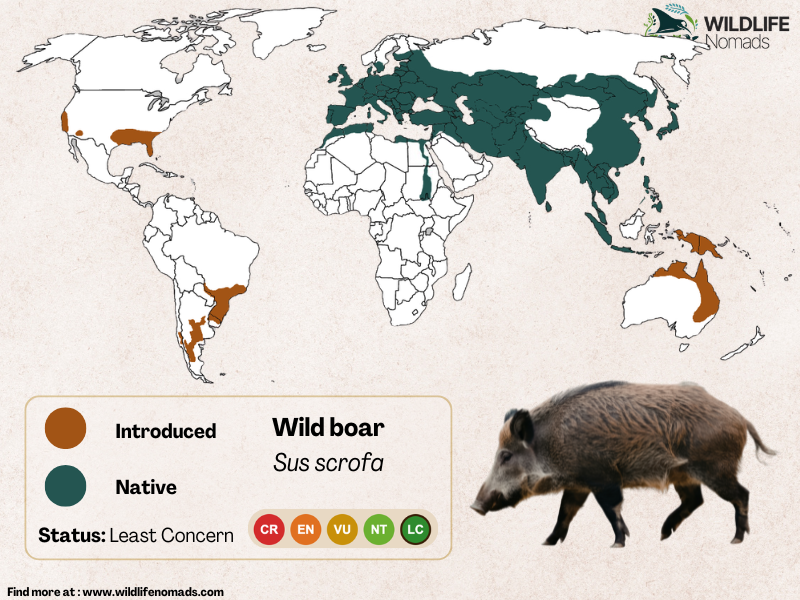
Few people realize this. The native range of Sus scrofa stretches from Portugal across Europe, through Central Asia, down into India and Southeast Asia, and across north africa. Add the introduced wild pig populations — Australia, the Americas, New Zealand — and the species now occupies six continents. Only humans cover more ground. The habitat varies greatly. The animal itself barely changes.
3. There Are at Least 16 Recognized Subspecies
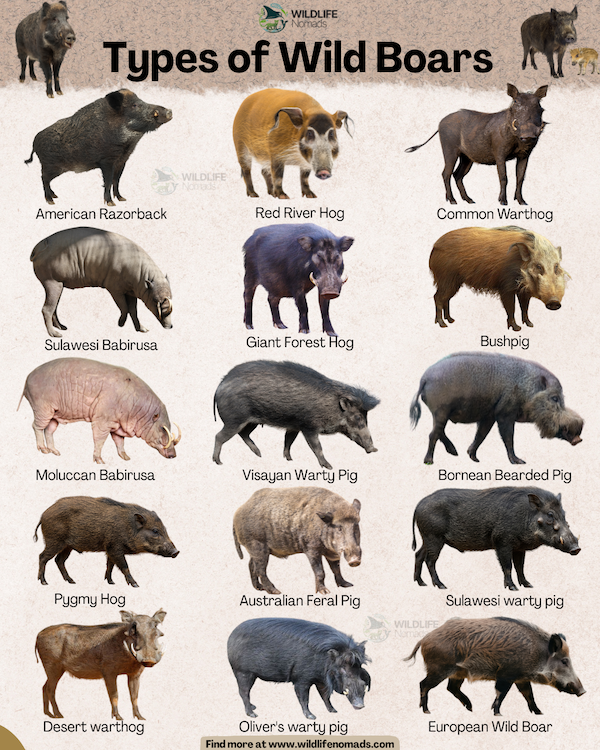
Taxonomists still argue about the exact number, but most agree on between 14 and 18 subspecies. The russian wild boar (Sus scrofa ussuricus) is the largest, adult males in Primorsky Krai can top 300 kg. By contrast, the small Indian boar of Sri Lanka rarely exceeds 90 kg. The American piney woods rooter of the southeastern US descends from stock released by spanish and other european explorers in the 1500s, later cross-bred with Eurasian Wild Boar imported for sport.
These regional differences matter for management. A north african boar behaves differently in agricultural areas than a russian wild boar pushing into northern development zones in Siberia.
4. They Are Shockingly Intelligent — and Highly Social
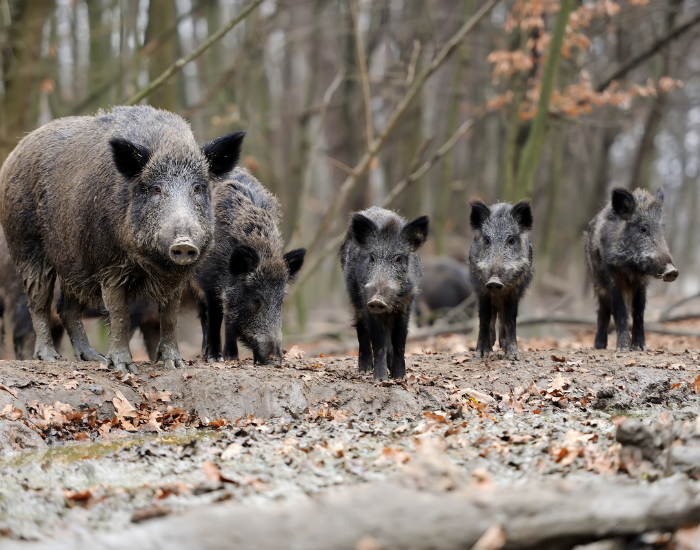
Wild boars are not stupid pigs. They are problem-solving social animals that live in matriarchal groups called sounders. An entire sounder usually consists of related adult sows, their piglets, and yearlings. Large males are typically solitary outside the breeding season.
Researchers in Berlin have documented urban boars memorizing rubbish-collection schedules. Their cognitive abilities rival those of dogs and some primates, which is exactly why feral swine control is so difficult.
5. A Wild Boar Is One of the Most Powerful Animals of Its Size
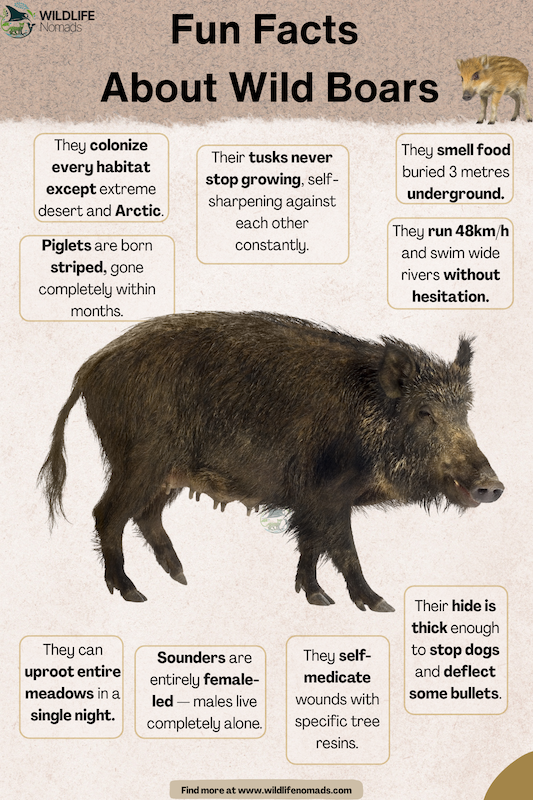
People ask me, “How powerful is a wild boar?” The answer is: more powerful than you would believe. An adult male can sprint at 40 km/h, swim across rivers a kilometre wide, and lift soil with its rostrum like a small bulldozer. Tusks in mature boars grow continuously and are sharpened by the lower canines grinding against the upper. A defensive charge can shatter a dog’s ribs in a single hit.
For more on Europe’s most formidable fauna, see my earlier post on the animals of europe.

6. Yes, They Can Be Aggressive, But Usually Aren’t
Is a boar aggressive? Typically, no. Wild boars prefer to flee. However, a cornered animal, a sow with piglets, or a wounded boar will charge without hesitation. Documented killing of humans by wild boars is rare but consistent — Europe records a handful of fatal incidents per year, mostly involving hunters or motorists. Female wild pigs are responsible for most defensive incidents because they are protecting young.
If you are ever charged, the boar will probably will stop within five metres, snorted, and turned. That said, biologists advise never approaching a sounder without an exit route. In this field, respect for the animal’s power is not optional.
7. They Are Among the Worst Invasive Species on Earth
This is where my work intersects with conservation policy. The IUCN lists Sus scrofa among the world’s worst examples invasive species. In Australia alone, feral pig populations exceed 24 million animals. The USDA’s animal and plant health inspection service estimates feral swine damage at more than $2.5 billion per year, hammering the agricultural sector hardest in Texas, Oklahoma, and the Carolinas.
The “are wild boars invasive” question is essentially settled outside their native range: yes, profoundly. Are wild hogs invasive in the southern United States? Same answer. They outcompete other wildlife, trample native flora, and disrupt nutrient cycling through extensive rooting. Range expansion of wild hogs invasive populations now adds new counties to the USDA map every year. If you want the wider context, my piece on invasive species explains why this pattern repeats with cats in Florida, cane toads in Queensland, and many other species worldwide.

8. They Carry Diseases That Threaten Livestock and People
Wild pig populations are reservoirs for at least 30 pathogens. African swine fever, swine brucellosis, leptospirosis, and pseudorabies are the headline acts. Foreign animal diseases that enter through feral swine populations can devastate domestic livestock and domestic swine herds. Some, like brucellosis, can infect humans through butchering contaminated meat, a real human health risk that I respect every time I handle a carcass.
Limiting disease transmission is now a major focus of wildlife services agencies. In the US, the wisconsin department of natural resources and similar bodies in british columbia coordinate ongoing research on serology and movement ecology. Disease transmission risk is one reason hunting license rules are tightening across the continent.
9. They Have Few Natural Predators Where They’ve Been Introduced
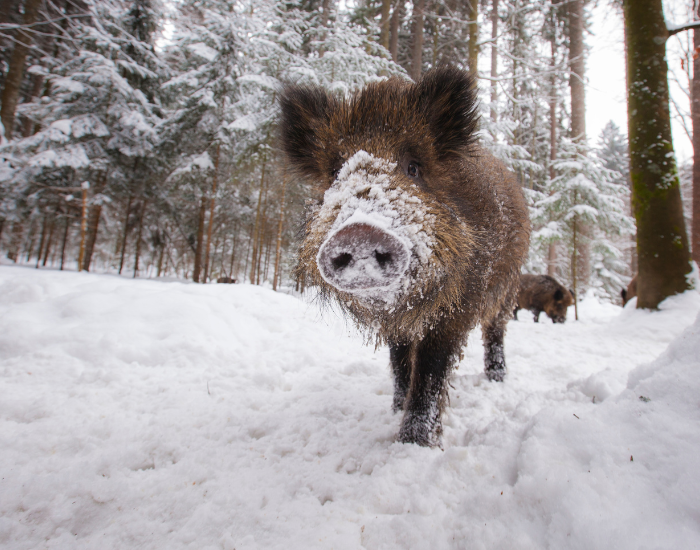
In their native range, wild boars face natural predators: wolves, brown bears, lynx, tigers, and leopards. A healthy ecosystem keeps the wild boar infestation problem in check. Even tropical predators like jaguars take piglets and yearlings where their ranges overlap with introduced pigs in South America. Indonesian komodo dragons regularly ambush juveniles in the same way.
In Australia and the southern United States, however, there is no native predator capable of regulating an entire sounder. This absence is the single biggest limiting factor on wild pig populations being controlled by ecology rather than by humans.
10. Managing Them Is Brutally Hard, and Hunting Alone Doesn’t Work
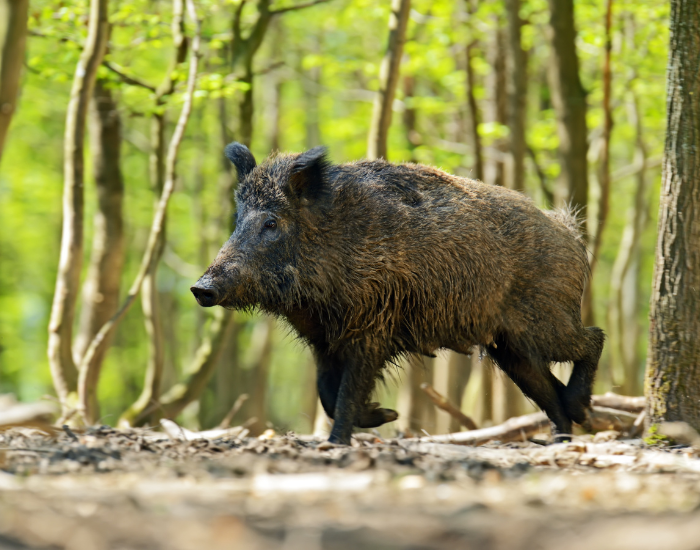
Land managers have tried everything: aerial gunning, corral traps, judas pigs, recreational hunting, fertility control, and poisoning. Lethal techniques applied to an entire sounder simultaneously are by far the most effective management method. Recreational hunters help, but their annual take rarely exceeds 30 percent of recruitment, well below the 70 percent needed to shrink established breeding populations.
I have spoken with local farmers running trap programmes in northern Queensland and consulted on hunting pigs in remote agricultural areas elsewhere. The honest truth is that we are not winning. Limiting population growth requires sustained, coordinated effort across local regulations, livestock loss compensation, and protected lands, and a willingness to accept that complete eradication is rarely realistic for an animal this smart.
Frequently Asked Questions
Yes — a wild boar and a domestic pig are the same biological species, Sus scrofa. Domestic pigs were bred from wild boars roughly 9,000 years ago. When domestic animals escape and form feral pig populations, their offspring quickly look and behave like wild boars again. The wild hog you see in Texas is genetically almost identical to the boar I tracked in Poland.
No. Islamic dietary law forbids the consumption of pigs and pork in any form, including wild boar, because both belong to the same species. Some Muslim-majority countries still permit recreational hunting of boars to protect agricultural crops and reduce crop damage, but the meat is not eaten by observant Muslims. The boar is treated as a game animal for population control rather than a food source.
Wild boars are not naturally aggressive toward humans and prefer to retreat. They become dangerous when cornered, wounded, or protecting piglets. Most encounters in the field end with the boar fleeing before you even see it. Treat any sow with young as a serious risk and back away slowly.
Wild hogs invasive populations in the US exploded after escaped domestic pigs interbred with released eurasian wild boar stock used for sport hunting. Feral hogs now cover 35-plus states, damage water sources, native species, and crops, and act as one of the most aggressive examples of animal invasive species ever recorded. Are boars invasive in North America? Without question.
The Global Footprint of Sus Scrofa
The wild boar is a paradox: a beautiful, intelligent, ecologically vital species in its homeland and a destructive force everywhere else. Its global spread is a textbook lesson in why we must think carefully before moving any species — pythons into Florida, rabbits into Australia, tilapia into native axolotl ecosystem in Mexico, into ecosystems that never evolved to absorb them. Wildlife conservation now depends as much on what we don’t release as what we protect.
Next time you see rooting marks on a hiking trail or a sounder slipping through dawn fog, stop and watch. You are looking at one of the most successful mammals ever to walk the planet. Then go read about the invasive species reshaping our wild places, and tell me in the comments where you have spotted wild pigs on your own travels.
References:
Ballari, S. A., & Barrios-García, M. N. (2014). A review of wild boar Sus scrofa diet and factors affecting food selection in native and introduced ranges. Mammal Review, 44(2), 124–134. https://doi.org/10.1111/mam.12015
Bevins, S. N., Pedersen, K., Lutman, M. W., Gidlewski, T., & Deliberto, T. J. (2014). Consequences associated with the recent range expansion of nonnative feral swine. BioScience, 64(4), 291–299. https://doi.org/10.1093/biosci/biu015
Hampton, J. O., Spencer, P. B. S., Alpers, D. L., Twigg, L. E., Woolnough, A. P., Doust, J., Higgs, T., & Pluske, J. (2004). Molecular techniques, wildlife management and the importance of genetic population structure and dispersal: A case study with feral pigs. Journal of Applied Ecology, 41(4), 735–743. https://doi.org/10.1111/j.0021-8901.2004.00936.x
Keuling, O., Stier, N., & Roth, M. (2008). Annual and seasonal space use of different age classes of female wild boar Sus scrofa L. European Journal of Wildlife Research, 54(3), 403–412. https://doi.org/10.1007/s10344-007-0157-4
Massei, G., Kindberg, J., Licoppe, A., Gačić, D., Šprem, N., Kamler, J., Baubet, E., Hohmann, U., Monaco, A., Ozoliņš, J., Cellina, S., Podgórski, T., Fonseca, C., Markov, N., Pokorny, B., Rosell, C., & Náhlik, A. (2015). Wild boar populations up, numbers of hunters down? A review of trends and implications for Europe. Pest Management Science, 71(4), 492–500. https://doi.org/10.1002/ps.3965
Meng, X. J., Lindsay, D. S., & Sriranganathan, N. (2009). Wild boars as sources for infectious diseases in livestock and humans. Philosophical transactions of the Royal Society of London. Series B, Biological sciences, 364(1530), 2697–2707. https://doi.org/10.1098/rstb.2009.0086
Snow, N. P., Jarzyna, M. A., & VerCauteren, K. C. (2017). Interpreting and predicting the spread of invasive wild pigs. Journal of Applied Ecology, 54(6), 2022–2032. https://doi.org/10.1111/1365-2664.12866
Pimentel, D., Zuniga, R., & Morrison, D. (2005). Update on the environmental and economic costs associated with alien-invasive species in the United States. Ecological Economics, 52(3), 273–288. https://doi.org/10.1016/j.ecolecon.2004.10.002