
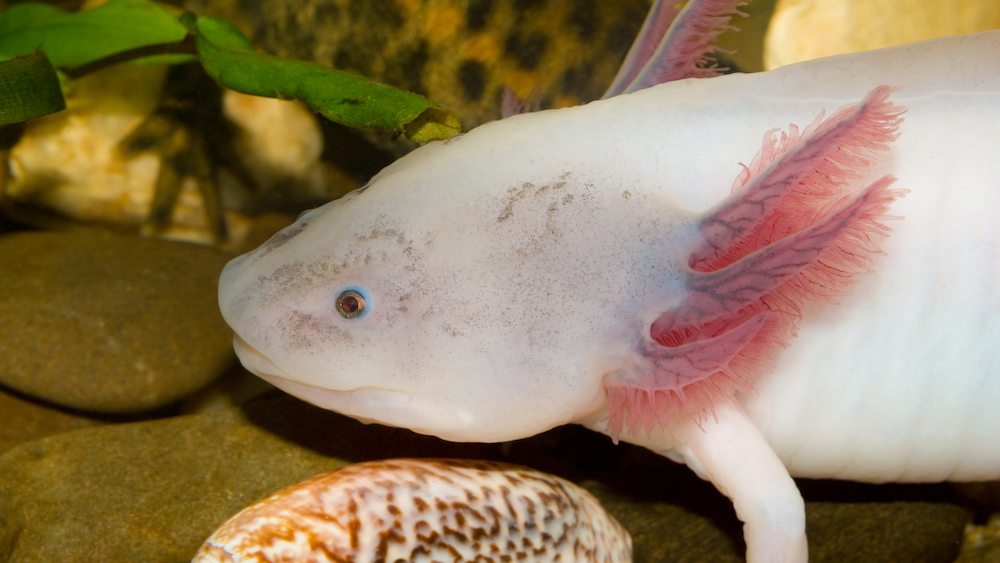
Growing up in Mexico, the axolotl wasn’t just a textbook species, it was everywhere. Street art across Mexico City. Stuffed plush versions sold at every market in the Mexican Central Valley. Cartoons, school murals, even peso coins. As kids we knew the shape of an axolotl before we knew the word “amphibian.”
Then I became a biologist, and the picture changed. The axolotl is one of the most critically endangered species in the world. Wild axolotl numbers in Lake Xochimilco have collapsed in my lifetime. The axolotl’s habitat is exclusively in the freshwater ecosystems of Lake Xochimilco and the now-defunct Lake Chalco in Mexico.
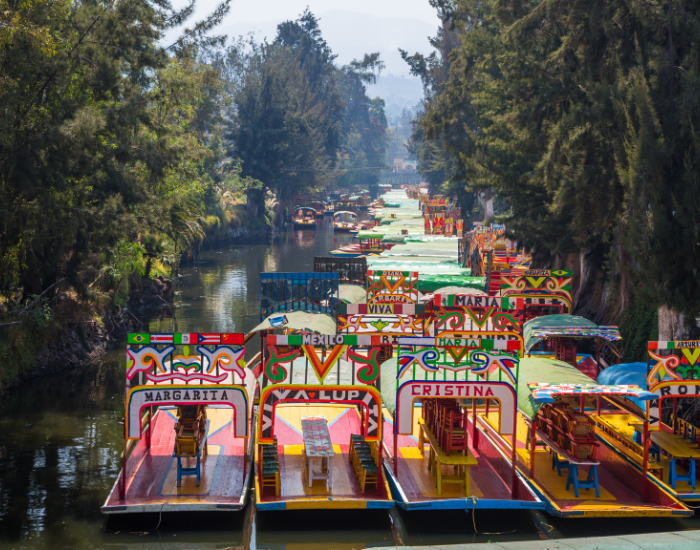
Last year a couple of friends from Belgium came to visit and asked to see Xochimilco. I was honestly unsure. The Xochimilco canals are supposed to be a sanctuary. For many tourists they’re a party destination: boats blasting music, beer cans floating between the chinampas. That’s not the kind of axolotl tourism I want to support, and Mexico City’s economy around the canals should be built on conservation, not drinking.
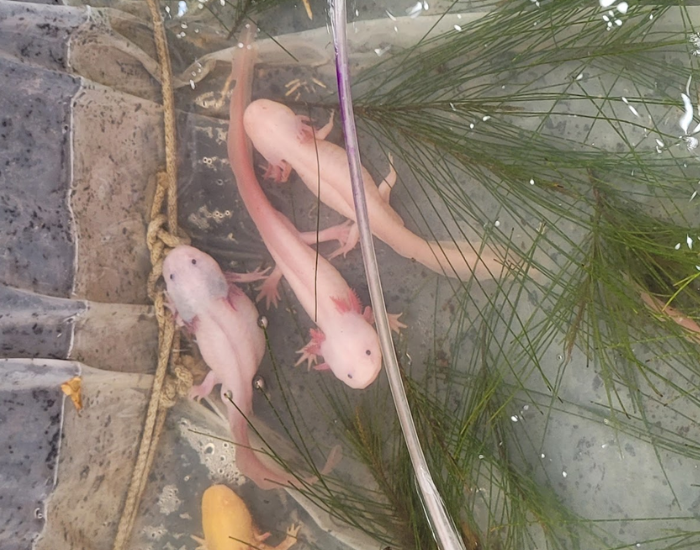
We went anyway and visited the small UNAM breeding program tucked inside the canals. The facility was precarious; a few tanks, hand-built filters, biologists running on grants and goodwill. But the breeding was working. The animals were calm, almost unaware of how fragile their wild population is. The Mexican axolotl is as iconic to Mexican culture as the jaguar or the spider monkey, and we’re losing it. Here are 12 facts you should know about why the axolotl is endangered.
1. The Axolotl Is a Salamander, Not a Fish
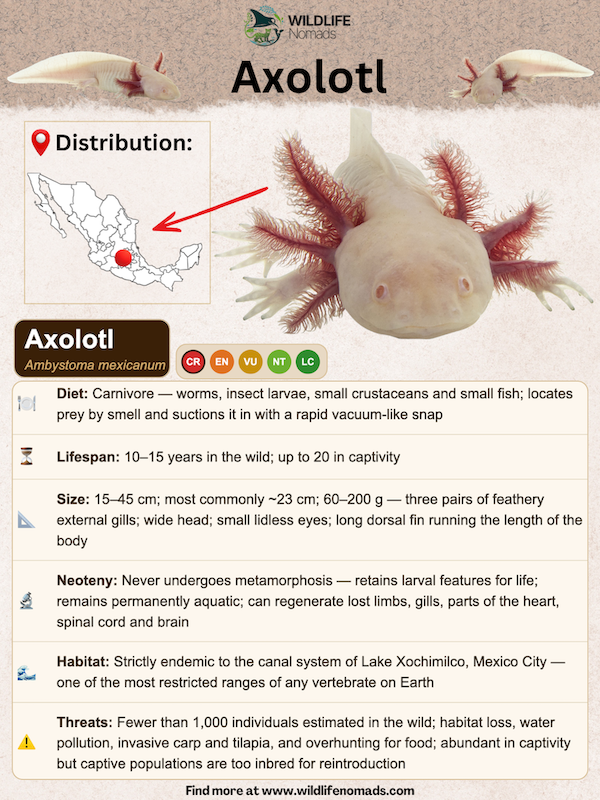
Despite the nickname “Mexican walking fish,” the axolotl belongs firmly inside the salamander family. Its genus, Ambystoma, holds the mole salamanders, including the tiger salamander and other Ambystoma species across North America.
Where most amphibians begin life in water and crawl out as adults, axolotls stay aquatic for life. That single quirk explains nearly everything strange about the species.
2. Axolotls Never Grow Up: They’re Permanently Juvenile
Most amphibians go through metamorphosis. Frogs lose tails. Salamanders lose gills and develop functional lungs. Axolotls don’t.
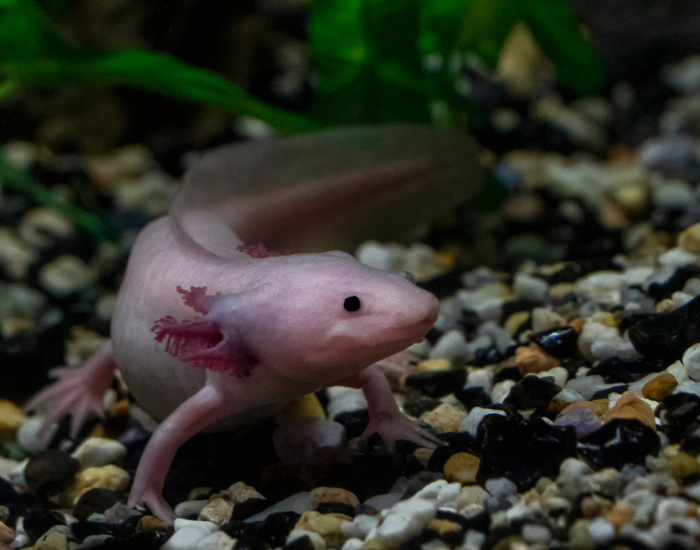
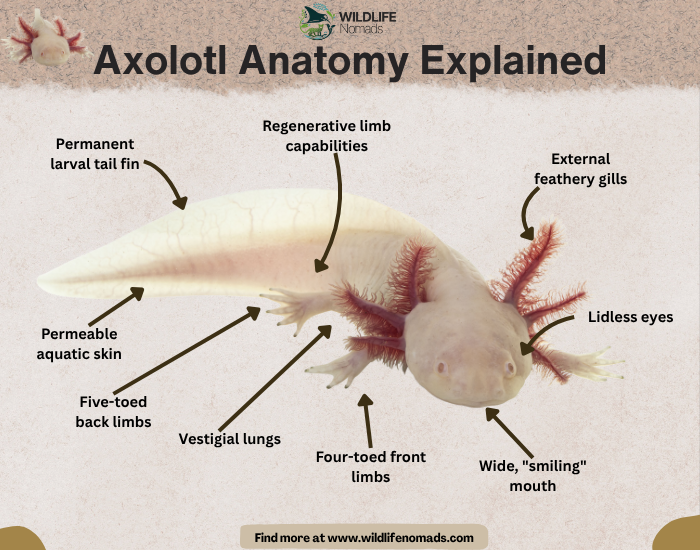
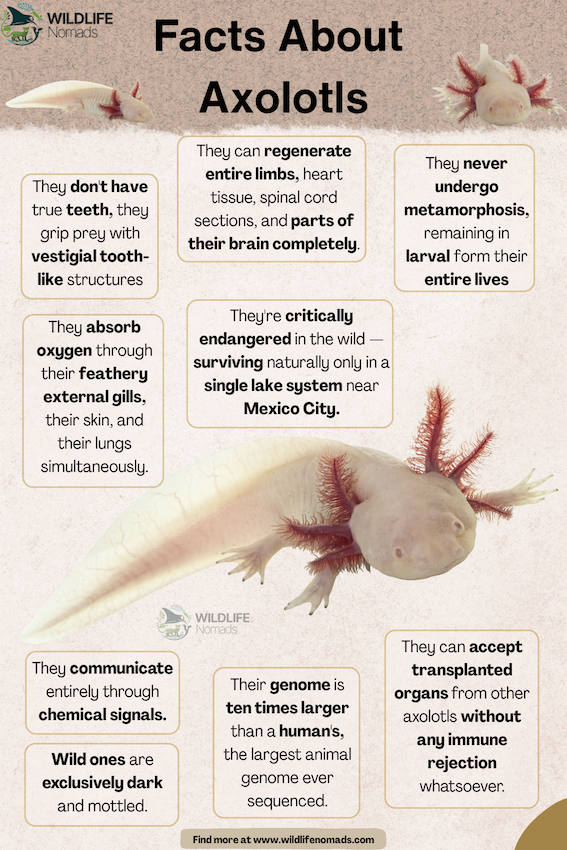
This trait is called neoteny. Axolotls reach sexual maturity while stuck in the juvenile stage. They keep their feathery external gills, dorsal fin, and webbed feet for life. The mechanism is hormonal, axolotls produce very little of the thyroid hormones that trigger metamorphosis in other species. In a lab, an injection can force the change. In the wild, it almost never happens.
That’s why they look like baby salamanders forever. It’s also why they have a cute smile that has done more for axolotl PR than any conservation campaign ever could.
3. Their Only Native Habitat Is a Tiny Patch of Mexico City
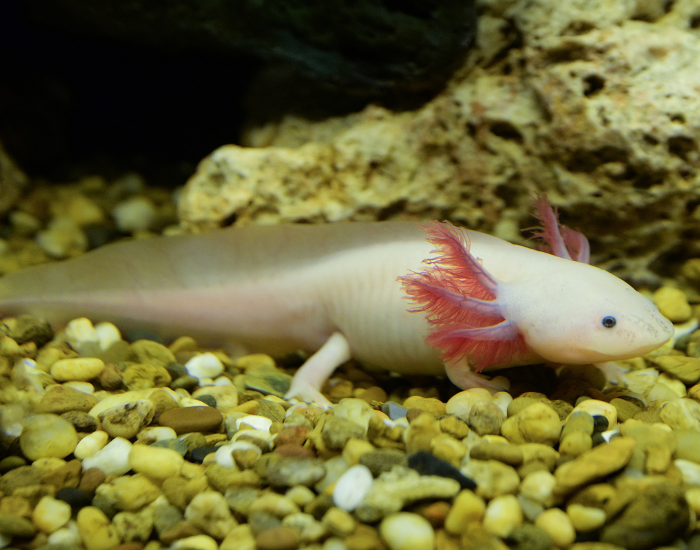
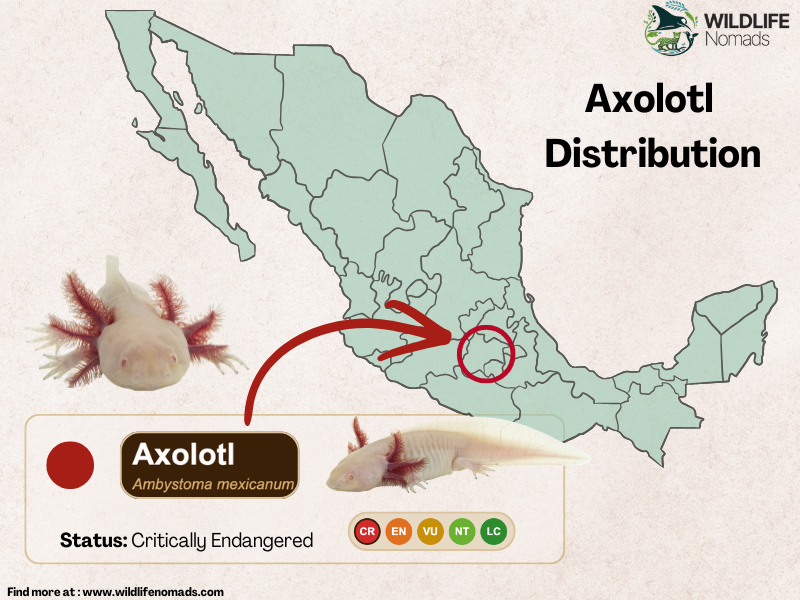
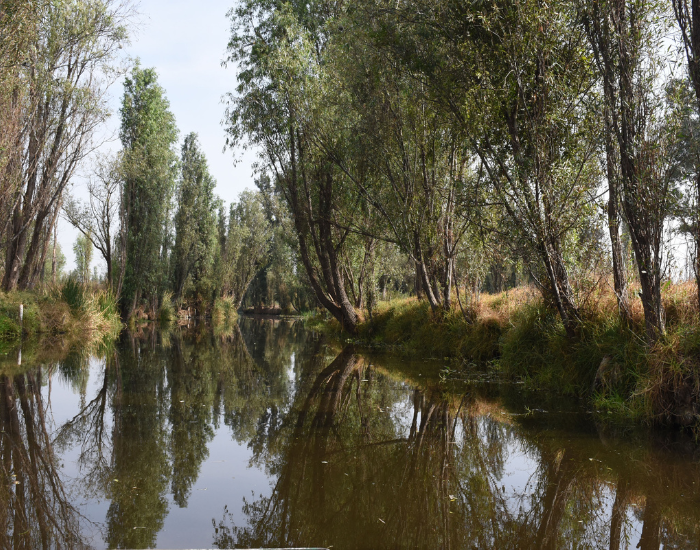
Wild axolotls live in exactly one place on Earth: the freshwater canals of Lake Xochimilco, in southern Mexico City.
The Valley of Mexico once held several lakes: a connected system that included Lake Chalco, Texcoco, and Xochimilco. Most were drained centuries ago to build what is now Mexico City. Today, the species’ entire native habitat covers a few square kilometers of canals, floating islands (chinampas), and lake floor sediment in the Mexican Central Valley.
That’s it. No backup population. No second range. The wild axolotl lives or dies with Xochimilco.
4. Wild Axolotl Numbers Have Collapsed in 25 Years
In 1998, surveys estimated 6,000 axolotls per square kilometer in Xochimilco. By 2014, that number had dropped to 36 per square kilometer. Today, fewer than 1,000 wild axolotls remain across the canals.
UNAM researchers warn the last wild population could vanish within the next year without sustained intervention. That’s why axolotls are endangered in the wild, and why every breeding season counts.
5. Habitat Degradation Is the Single Biggest Threat
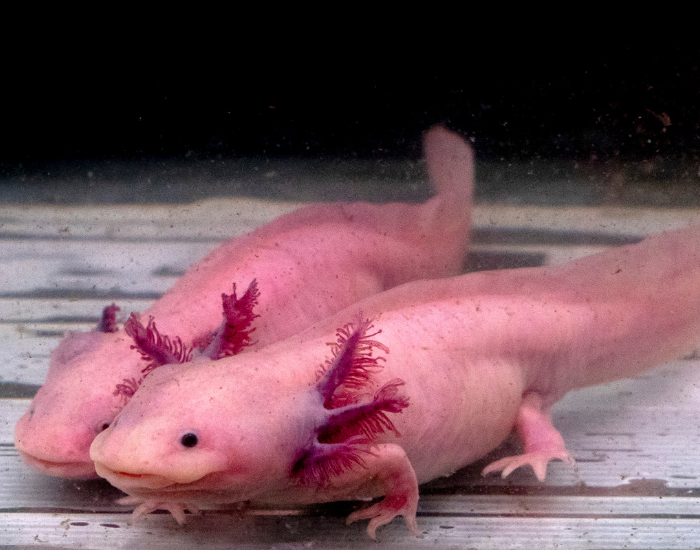
The axolotl’s habitat has been hit from every direction. Urban runoff. Untreated sewage. Agricultural pesticides. Rising water temperatures from climate change. Most of Xochimilco is now a degraded ecosystem barely able to support its native species.
Habitat degradation is the single biggest reason wild axolotls are disappearing, even before invasive species and the pet trade enter the picture. Restore the canals and you give the species a chance. Leave them as they are and no breeding program will save them.
6. Invasive Species Eat Axolotl Eggs and Compete for Food
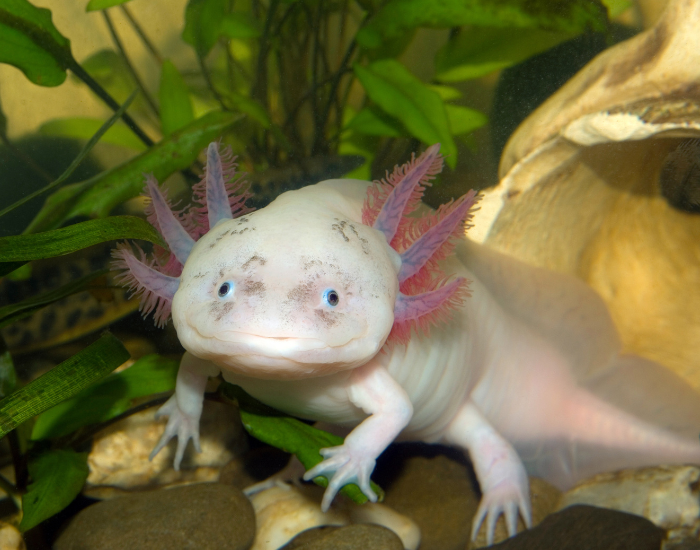
In the 20th century, common carp and tilapia (two common invasive species) were introduced into the canals to support local fishermen. Both are aggressive, fast-breeding fish that prey on juvenile axolotls and outcompete them for mosquito larvae and small fish.
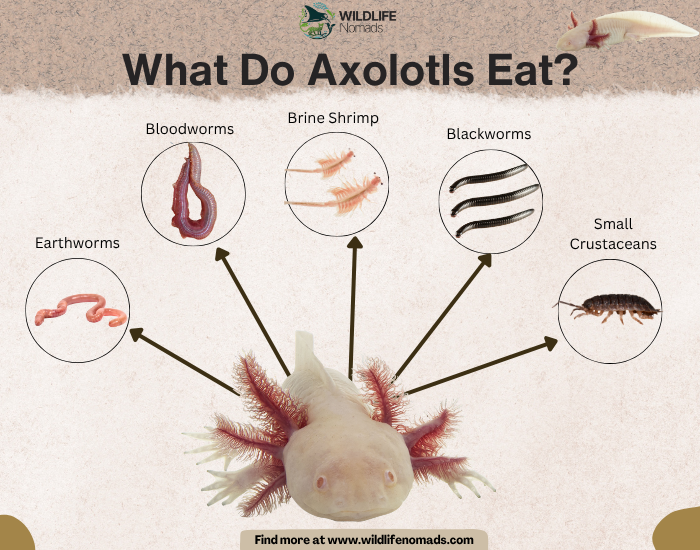
Axolotls eat insects, worms, and small fish, but they’re slow, soft-bodied, and easy targets in a tank full of carp. Invasive species are now considered one of the top three drivers of the axolotl population decline in Xochimilco.
7. They Have an Almost Unmatched Ability to Regenerate
The axolotl’s most famous superpower: they can regrow limbs, regenerate the spinal cord and tail, and repair parts of their heart and brain, without scarring. Adult axolotls can regenerate limbs again and again throughout their lives.
Their regenerative abilities have made them the most-studied lab animal in regenerative biology after the mouse. The axolotl genome was fully sequenced in 2018. At roughly 32 billion base pairs, it’s about ten times the size of the human genome.
Scientists are now using it to study stem cells, tissue regeneration, and the genetic switches that let axolotls do what other amphibians cannot. The medical applications, wound healing, organ repair, spinal cord recovery, are why this species matters far beyond Mexico.
8. They’ve Been Sacred in Mexican Culture for Centuries
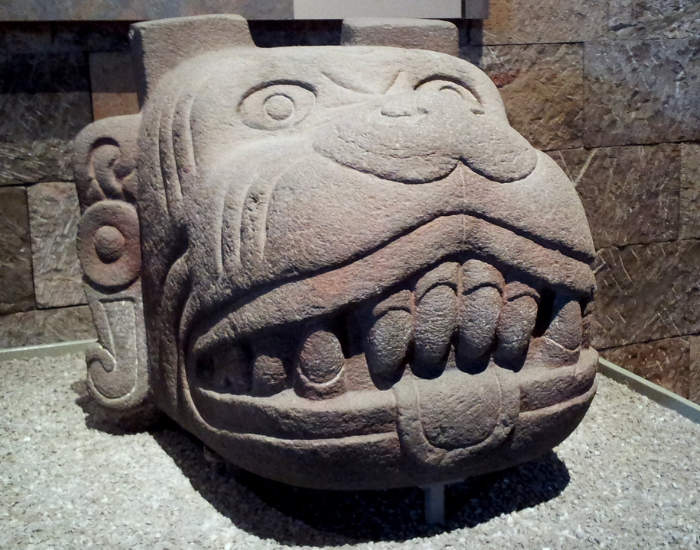
The Aztecs called them “axolotl”: a name tied directly to Xolotl, the Aztec god of fire, lightning, and transformation. Legend says Xolotl turned himself into an axolotl to escape sacrifice.
The word still appears in Nahuatl place names, modern Mexican slang, and street art across Mexico City. Axolotls are the unofficial water monster of the Mexican Central Valley, and a cultural symbol arguably as recognizable as any of the other animals of Mexico. Younger generations have rediscovered them through video games and memes, which, weirdly, has helped conservation funding more than any policy ever did.
9. The Pet Trade Is Both a Threat and a Lifeline
Axolotls are popular exotic animals. Pet shops, online pet stores, and pet owners worldwide keep millions of captive axolotls, far more than exist in the wild population.
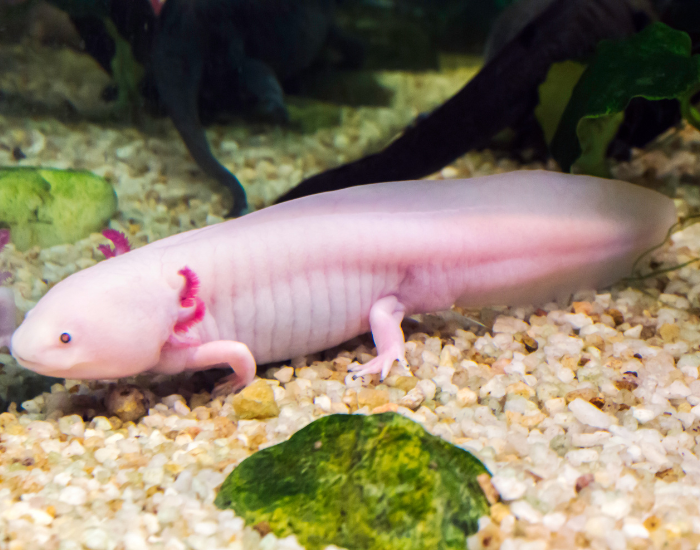
The pet trade has historically pulled animals from the wild, accelerating decline. But it has also created a global captive gene pool that helps preserve genetic diversity for the species long-term. If you’re considering one, please buy only from a reputable captive-breeding source. A wild-caught axolotl is one fewer in Xochimilco. Most pet axolotls today are pale pink (leucistic) or albino, colors that are extremely rare in wild populations.
10. Their Physical Features Are Unlike Any Other Salamander Species
Adult axolotls have a broad, flat head, three pairs of feathery gills protruding from the sides, a long dorsal fin running from head to tail, and webbed feet. Most wild axolotls are dark brown or olive with subtle mottling.
They can grow up to 30 cm long and weigh up to 250 grams, large for a neotenic amphibian, small for the average adult salamander species. Their external gills are the most distinctive feature: feathery, blood-rich, and easily damaged, which is one reason they don’t tolerate tank mates. If you are curious how the axolotl compares in size to other animals, have a look at our new interactive tool
11. Conservation Efforts Are Mostly Local… and Mostly Underfunded
Real conservation efforts on the ground in Xochimilco are run by UNAM biologists working with chinamperos, traditional farmers who maintain pesticide-free zones around the canals. The AdoptAxolotl campaign funds these refuges and the small breeding program I visited with my Belgian friends.
The Mexican government has expanded protected zones, but enforcement is thin and party tourism still dominates much of the canal network. Globally, captive breeding in zoos and labs maintains a backup population. But reintroducing captive axolotls to the wild is hard, the natural habitat needs to be restored first, and that’s the slow part. The IUCN currently lists Ambystoma mexicanum as Critically Endangered (IUCN Red List).
12. They’re a Warning Sign for Every Other Endangered Species in the Region
When a species this iconic, celebrated by the Aztecs, studied by every regenerative biology lab on Earth, beloved by younger generations, collapses to fewer than 1,000 wild individuals, it’s a signal.
The food chain in Xochimilco is breaking. Other amphibians, birds, and aquatic insects that depend on the same wetlands are following. The axolotl’s decline is not just about one charismatic animal. It’s about how we treat the last remaining wetlands of one of the most populated cities on Earth.
How You Can Help Save Wild Axolotls
- Donate to AdoptAxolotl. UNAM’s program directly funds breeding and refuge work in the canals.
- Visit Xochimilco respectfully. Skip the party boats. Book a tour with chinamperos who practice eco-friendly farming. Try this responsible axolotl experience.
- Buy captive-bred only. If you want a pet axolotl, buy from a reputable breeder. Never wild-caught, never from sketchy pet shops.
- Support clean water policies in Mexico City. Habitat degradation is the root cause. Without clean canals, no captive breeding program will save them.
- Raise awareness. Most pet owners don’t realize their fish-tank companion is critically endangered in the wild. Share the story.
FAQ
No. Axolotls should not share a tank with fish. Most fish nip at their feathery gills, cause chronic stress, or carry parasites the axolotl cannot fight off. In Xochimilco, common carp and tilapia have devastated wild populations for the same reasons.
Not really. Axolotls breathe primarily through gills and skin, both of which require water. They can survive a few minutes out of water during transport. Extended time on land collapses their gills and dries the skin, leading to suffocation.
They have small, non-functional lungs and can take occasional gulps of air at the surface. They cannot breathe out of water for any meaningful period. Unlike most adult salamanders, axolotls never undergo metamorphosis to develop functional lungs and remain entirely dependent on aquatic respiration.
As of 2026, fewer than 1,000 wild axolotls are believed to remain in Lake Xochimilco. UNAM warns the species could disappear from its native habitat within the next year without sustained conservation efforts. Captive populations in labs and pet stores are far larger but genetically narrow.
How Well Do You Know the Axolotl? 🦎
Ten questions on axolotl neoteny, regeneration science, native habitat, and conservation threats. Can you score 10/10?
Multiple Choice
References:
Contreras, V., Martínez-Meyer, E., Valiente, E., & Zambrano, L. (2009). Recent decline and potential distribution in the last remnant area of the microendemic Mexican axolotl (Ambystoma mexicanum). Biological Conservation, 142(12), 2881–2885. https://doi.org/10.1016/j.biocon.2009.07.008
Nowoshilow, S., Schloissnig, S., Fei, J. F., Dahl, A., Pang, A. W. C., Pippel, M., Tanaka, E. M. (2018). The axolotl genome and the evolution of key tissue formation regulators. Nature, 554(7690), 50–55. https://doi.org/10.1038/nature25458
Recuero, E., Cruzado-Cortes, J., Parra-Olea, G., & Zamudio, K. R. (2010). Urban aquatic habitats and conservation of highly endangered species: The case of Ambystoma mexicanum (Caudata, Ambystomatidae). Annales Zoologici Fennici, 47(4), 223–238. https://doi.org/10.5735/086.047.0401
Valiente, E., Tovar, A., González, H., Eslava-Sandoval, D., & Zambrano, L. (2010). Creating refuges for the axolotl (Ambystoma mexicanum). Ecological Restoration, 28(3), 257–259. https://doi.org/10.3368/er.28.3.257
Voss, S. R., Epperlein, H. H., & Tanaka, E. M. (2009). Ambystoma mexicanum, the axolotl: A versatile amphibian model for regeneration, development, and evolution studies. Cold Spring Harbor Protocols, 2009(8), pdb.emo128. https://doi.org/10.1101/pdb.emo128
Zambrano, L., Vega, E., Herrera, L. G., Prado, E., & Reynoso, V. H. (2007). A population matrix model and population viability analysis to predict the fate of endangered species in highly managed water systems. Animal Conservation, 10(3), 297–303. https://doi.org/10.1111/j.1469-1795.2007.00105.x