The first time I encountered a Portuguese man o’ war, I was walking along a beach in eastern Australia, dodging dozens of them washed up on the sand. After two decades chasing wildlife around the world, I thought I’d seen every weird creature the natural world had to offer, but staring down at those brilliant blue-purple balloons with their deceptively toxic tentacles changed my perspective completely. It’s a stark reminder that you don’t always need a research vessel to find the world’s strangest organisms, sometimes they wash up right at your feet.
I’ve recently written about cute animals and the weirdest fish in the world, but this list goes broader. These are the world’s weirdest animals as judged by a working biologist, creatures from across the animal kingdom that look engineered by committee. Some I’ve tracked in the field on expeditions around the world. Others I’ve met through camera traps or papers. All belong on any honest list of strangest animals and bizarre creatures. It’s open to debate — tell me in the comments which weird animal I missed.

1. The Naked Mole Rat: A Sausage With Rodent-Like Teeth
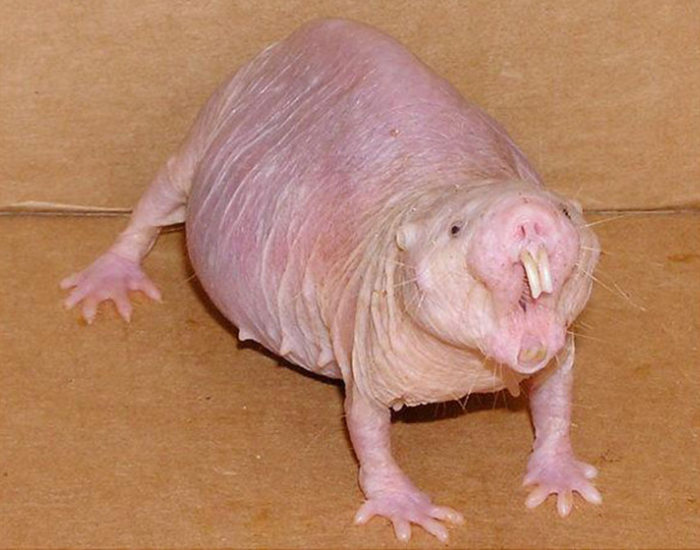
The naked mole rat is one of the strangest animals in the animal kingdom. These wrinkled East African burrowers live in eusocial colonies — like ants — with a single breeding queen. They’re cold-blooded for a mammal, nearly blind, and almost immune to cancer.
Its rodent like teeth move independently, like chopsticks, drilling through soil. Conservation status: least concern, though the global wildlife trade is shifting attitudes about which unusual animals deserve protection. Naked mole rats are closely related to other African mole-rats.
2. Pink Fairy Armadillo: Argentina’s Cotton-Candy Burrower
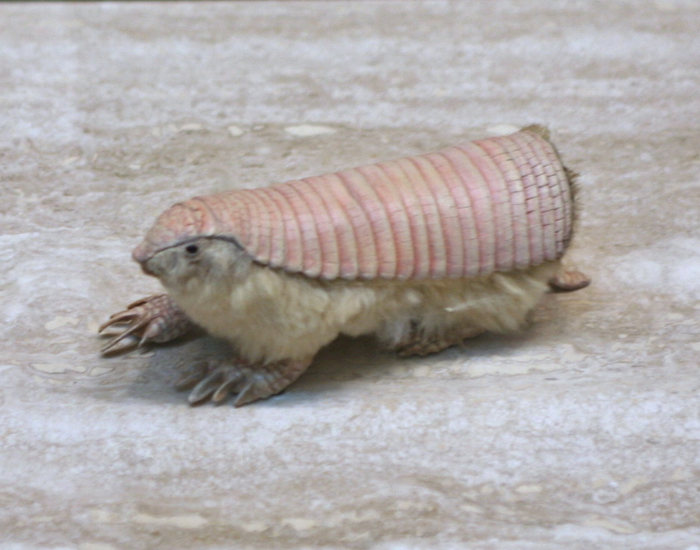
If you’ve never seen a pink fairy armadillo, prepare yourself. This is the world’s smallest armadillo — roughly hand-sized — with soft fur, a translucent shell, and a pink colouring so vivid it looks Photoshopped. The animal’s body suits life in the sandy plains of central Argentina, in South America, where it spends almost its entire existence underground.
Biologists can search for this weird animal on many trips and never see one. Few biologists have. Conservation status: data deficient. Habitat loss and pesticides are shrinking its range. Pink fairy armadillos are closely related to other armadillos but unmistakable on sight.
3. Aye-Aye: The World’s Largest Nocturnal Primate
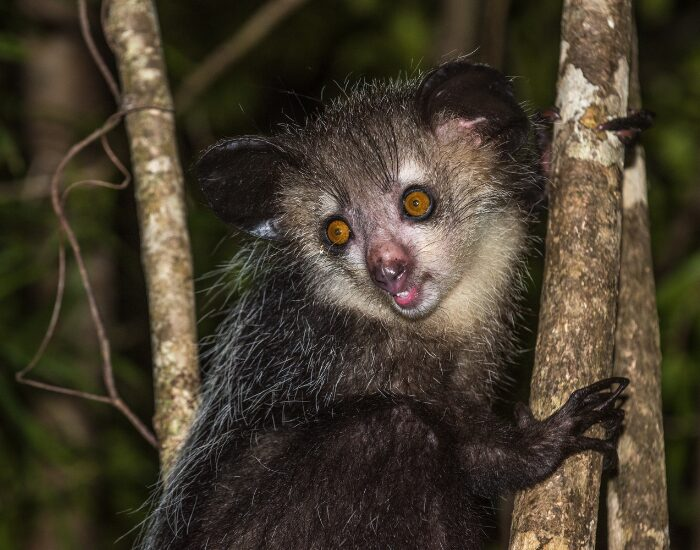
The aye-aye is the world’s largest nocturnal primate and one of the most unsettling creatures I’ve seen. With huge eyes, bat-like ears, and an incredibly long middle finger used for tapping bark to find grubs, this Madagascan lemur is both beautiful and grotesque.
If you ever try to find them, locals in Madagascar will warn you that seeing this weird animal is considered an omen — a superstition that contributes to their endangered conservation status. Aye-ayes are closely related to other lemurs but evolved on their own branch — proof that isolated tropical forests produce the world’s weirdest animals. Like many nocturnal animals, they’re hard to study.
4. Japanese Spider Crab: The Living Submarine
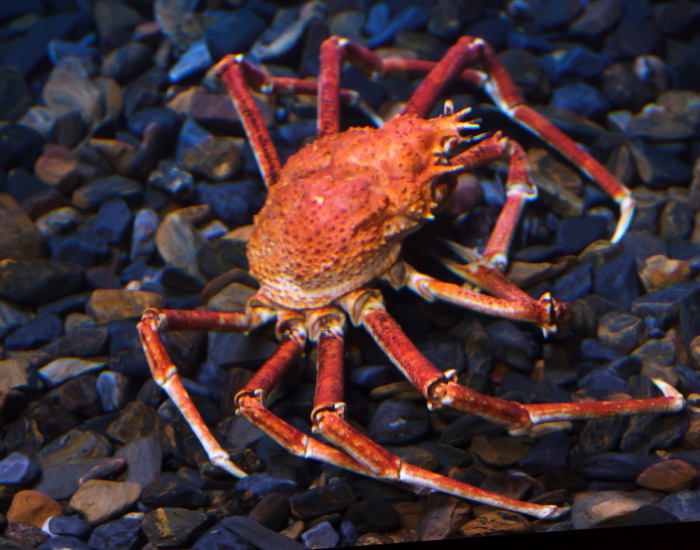
The Japanese spider crab is the world’s largest arthropod by leg span… up to 12 feet across. I’ve stood next to a preserved specimen in a Tokyo aquarium and felt genuinely uneasy. Imagine a creature that looks like a chandelier made of legs, perfectly adapted to walk the deep sea floor of the Pacific oceans off Japan.
This weird animal scavenges across the ocean floor and can live for a century. Its conservation status is stable, but Japanese fisheries pull thousands every year, locals consider the Japanese spider crab a tasty meal. Few strangest animals I’ve encountered made me as instinctively cautious. Dive deeper into different types of crabs in this article.
5. Star-Nosed Mole: An Animal With a Hand on Its Face
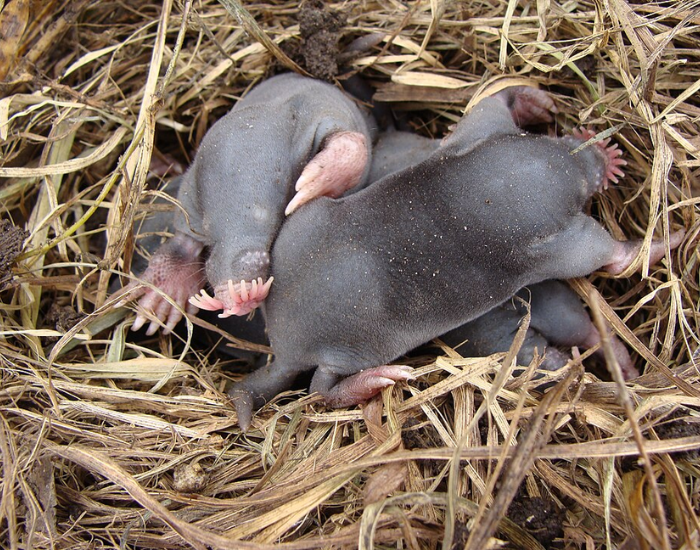
The star-nosed mole sports 22 fleshy, finger-like appendages around its snout, the most sensitive touch organ known in any mammal. The star-nosed mole is also the only mammal known to smell underwater, by blowing tiny bubbles and re-inhaling them.
To watch this weird animal forage is like watching a hand made of nostrils explore the world. The star-nosed mole uses a keen sense of touch to identify prey in under a quarter of a second. Conservation status: least concern. Few unique animals in North America are weirder.
6. Pacific Barreleye Fish: The Fish With a See-Through Skull
The Pacific barreleye fish is one of the reasons I started writing about weird animals. Its head is transparent, and its tubular eyes sit inside its skull, rotating to look upward through the dome. I’ve written a longer profile on barreleye fish facts, but every time I describe this weird animal to a non-biologist, I get the same response: “That can’t be real.”
The Pacific barreleye fish lives along the sea floor of the Pacific oceans, where almost no light reaches. Conservation status: data deficient. Few weird critters illustrate the alien strangeness of the ocean floor as elegantly, as I cover in my piece on deep sea animals. It’s closely related to other deep-sea opisthoproctids.

7. Glass Frogs: The Amphibian You Can See Through
Glass frogs are exactly what they sound like. From above, they look like ordinary green tree frogs. Flip one of these amphibians over and you can see its beating heart, liver, and digestive tract through translucent skin. There are over 150 species in the amphibian family Centrolenidae, scattered across the tropical forests of Central and South America.
A professor I had found glass frogs along streambeds in Costa Rica during night surveys, and he told me that photographing this weird animal is a small biological miracle. Females lay eggs on leaves overhanging streams; in some species the male guards them. The conservation status of several glass frogs is now vulnerable species, mostly due to deforestation across Central and South America. Glass frogs prove that funny looking animals often hide remarkable biology.

8. Amazon River Dolphin: The Pink Ghost of the Freshwater Rivers
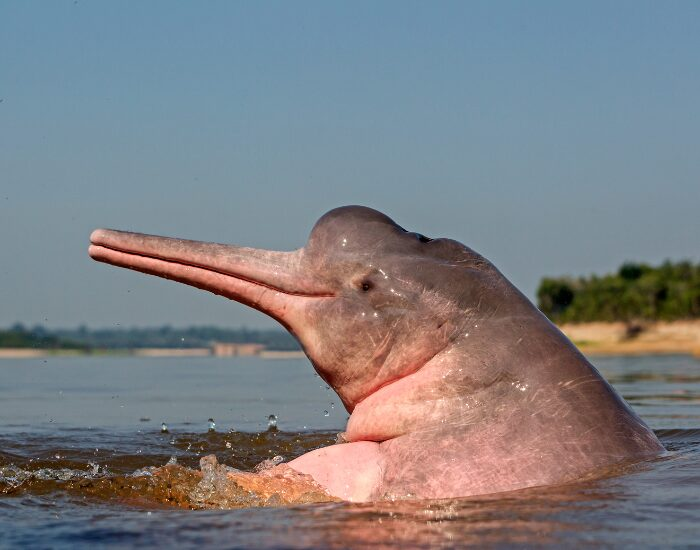
Pink river dolphins, or boto, are the world’s largest freshwater cetacean, and yes, the pink colouring is real. Older males develop a deeper pink as scar tissue accumulates from fights.
Unlike marine dolphins, the Amazon river dolphin has a flexible neck, allowing it to navigate flooded forests during the wet season. Its conservation status is now endangered, largely from mercury pollution and net entanglement. Among the unusual animals of South America, this is the one I most want people to care about.
9. Portuguese Man O’ War: Not One Animal, But Many
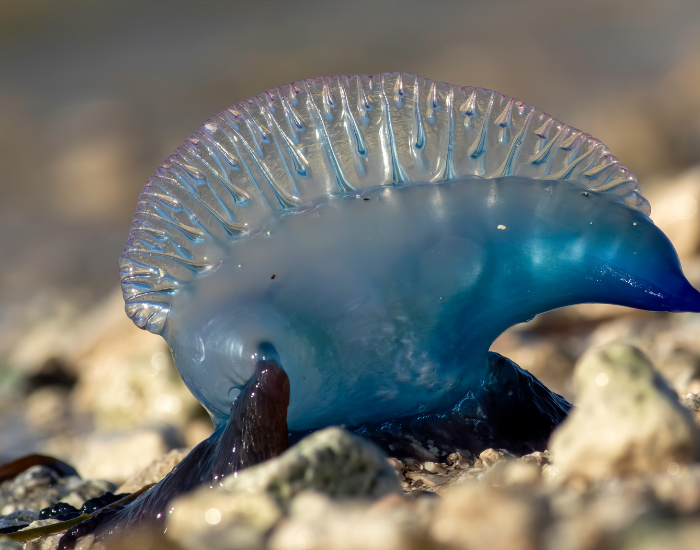
The Portuguese man o war drifts across the Atlantic and Pacific oceans like a blue-purple balloon trailing 30-foot tentacles. Here’s what earns it a spot on any list of the world’s weirdest animals: it isn’t a single organism. It’s a colony of four specialized polyps — each unable to survive alone — functioning together as one creature.
I’ve examined washed-up specimens in southeast Asia, and off eastern Australia. Even hours after stranding, the tentacles release toxic chemicals that can still sting. Their conservation status is least concern. Like sea cucumbers and other oddly cooperative invertebrates, the Portuguese man o’ war challenges the definition of an animal.
10. Red-Lipped Batfish: Nature’s Pinup Model
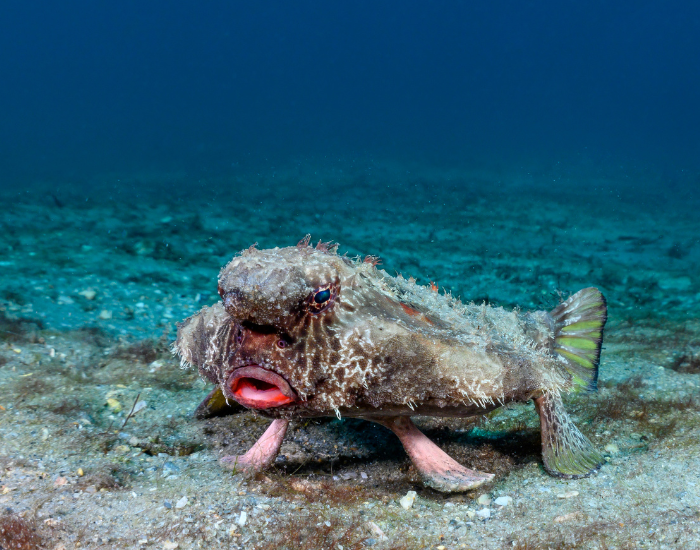
If you commissioned an animation studio to design a weird animal, you might end up with the red-lipped batfish. The red-lipped batfish has bright red “lipstick,” walks across the ocean floor on modified pectoral fins, and lives only around the Galápagos.
The red lipped batfish probably uses those red lips for species recognition or mate attraction. The red-lipped batfish is a poor swimmer, its body suits crawling. Conservation status: least concern. Of all the funny animals species I’ve seen, this weird animal wins on pure visual comedy.
11. Kakapo: The Flightless, Owl-Like Parrot of New Zealand
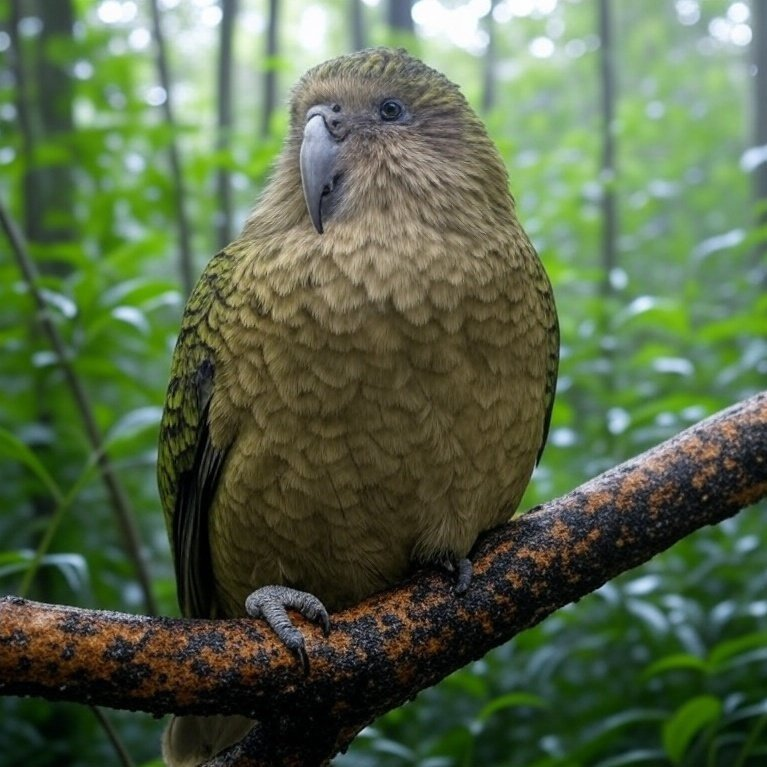
The kakapo, also known as the owl parrot, is the world’s heaviest parrot, the only flightless one, and a nocturnal bird that smells faintly of honey. It’s also one of the most critically endangered species on Earth. Females lay eggs on the forest floor, a workable strategy in a land with no mammalian predators, before humans arrived. They walk on powerful hind legs and climb with their beaks.
I friend visited Codfish Island in New Zealand as part of a conservation exchange and helped with a population count. He told me that holding this weird animal remains one of the privileges of his career. The kakapo’s conservation status is still critical, but the recovery program is among the most successful around the world. Few crazy animals deserve our attention more.
12. Sea Pigs: The Vacuum Cleaners of the Deep Sea Floor
Sea pigs aren’t pigs. They are closely related to sea cucumbers — same phylum — and walk across the sea floor on tube-feet that look like stubby legs. They live thousands of meters down in cold, lightless mud, hoovering up organic detritus that drifts from above.
I’ve never collected sea pigs — that requires submersible work — but you can see footage from the abyssal plain that looks like science fiction. Hundreds of sea pigs, all facing the same direction, lumbering across the ocean floor in synchronized hunger. Their conservation status is data deficient. Some of the weirdest animals around the world live in places we’ve barely begun to map.
13. Blue Dragon: The Ocean’s Tiny, Stinging Thief
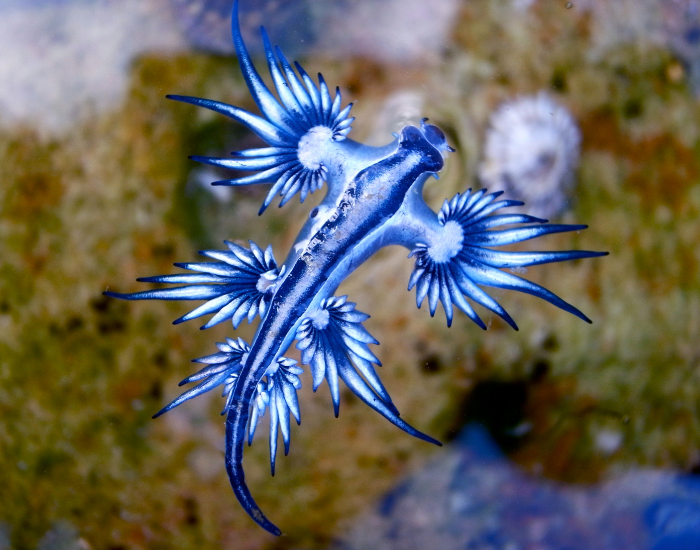
Don’t let its striking, celestial beauty fool you. Glaucus atlanticus, commonly known as the blue dragon, is a pelagic nudibranch (sea slug) that grows no longer than an inch. This tiny creature spends its life floating upside down on the surface tension of the open ocean, using ocean currents and winds to drift. Its dark blue underbelly faces up to blend with the water, while its silvery back faces down to blend with the sky, a brilliant evolutionary trick called countershading.
The connection isn’t a coincidence: the blue dragon actively hunts those highly venomous siphonophores. Not only is it immune to their intense toxins, but it actually swallows the Man O’ War’s stinging cells (nematocysts), stores them in its own finger-like cerata, and concentrates them. This makes the tiny blue dragon very venomous to touch.
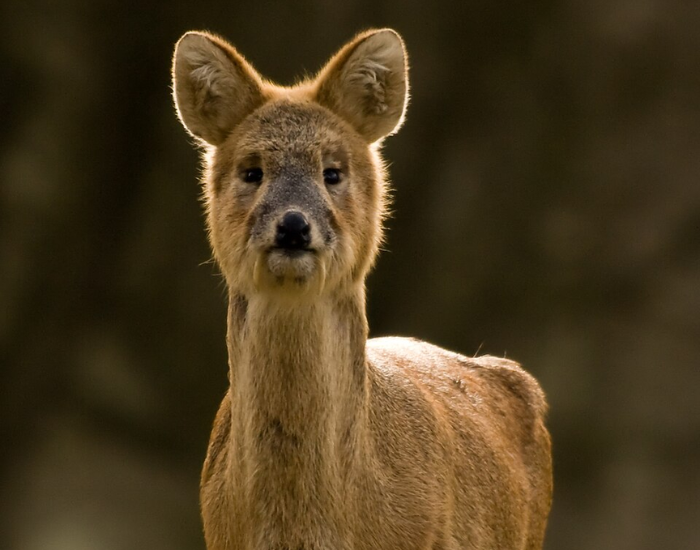
14. Chinese Water Deer: The Vampire Deer of East Asia
The Chinese water deer is a type of deer known as the “vampire deer” of eastern China and Korea, a small ungulate with a fox like appearance and prominent, downward-pointing tusks instead of antlers. Males use the tusks during fights, slashing rather than locking horns. The cute-face-plus-fangs combo of this weird animal is jarring.
You can observe introduced populations in the United Kingdom. The Chinese water deer prefers wetlands and aquatic plants and can swim long distances between river islands on strong hind legs. Its conservation status is vulnerable in the native range. Of all the weirdest animals with surprising male anatomy, this one is my favorite.
15. Saiga Antelope: The Alien-Faced Survivor of Central Asia
Look at a saiga antelope, and you’ll think someone Photoshopped a vacuum hose onto a goat. The bulbous, downward-pointing nose filters dust in summer and warms freezing air in winter. Saigas once roamed the steppes of Central Asia in vast herds, using speed to escape predators across open ground.
The saiga’s conservation status is critically endangered, though protection programs have driven a comeback. This weird animal may be the most perfectly adapted to a single brutal environment, and it’s pretty weird that something so iconic was almost lost in living memory.

FAQs about Weird Animals
Many of them are. Of the 15 species on this list, at least six carry a conservation status of endangered, critically endangered, or vulnerable. Specialized adaptations often mean narrow habitat tolerances, which makes these animals especially vulnerable to habitat loss, climate change, and the global wildlife trade. Conservation status changes constantly around the world, so always check the IUCN Red List for current information.
It depends on the species and jurisdiction. Most animals on this list — pink river dolphins, kakapos, aye-ayes — are illegal to own under CITES regulations. Some weird critters can be legally kept in certain countries with permits, but I strongly discourage it. Wild animals belong in the wild.
Subjective and open to debate. Personally, I’d nominate the aye-aye, based purely on the unsettling combination of huge eyes, rodent-like teeth, and percussive foraging. It’s one of the world’s weirdest animals on every level. Tell me yours in the comments.
Why Nature Embraces the Bizarre
What unites every weird animal on this list isn’t ugliness — it’s evolutionary creativity. Each of these unusual animals tells a story about habitat, selective pressure, or a fluke of biology that no designer would invent. If you enjoyed this, try my posts on cute animals and the weirdest fish in the world. For the science behind these creatures, my piece on animal adaptations goes deeper. Drop a comment with the weird animal I missed — I’m always collecting candidates for the next list of weird creatures from around the world.
References:
Catania K. C. (2011). The sense of touch in the star-nosed mole: from mechanoreceptors to the brain. Philosophical transactions of the Royal Society of London. Series B, Biological sciences, 366(1581), 3016–3025. https://doi.org/10.1098/rstb.2011.0128
Kock, R. A., Orynbayev, M., Robinson, S., Zuther, S., Singh, N. J., Beauvais, W., et al. (2018). Saigas on the brink: Multidisciplinary analysis of the factors influencing mass mortality events. Science Advances, 4(1), eaao2314. https://doi.org/10.1126/sciadv.aao2314
Partridge, J. C., Douglas, R. H., Marshall, N. J., Chung, W. S., Jordan, T. M., & Wagner, H. J. (2014). Reflecting optics in the diverticular eye of a deep-sea barreleye (Rhynchohyalus natalensis). Proceedings of the Royal Society B, 281(1782), 20133223. https://doi.org/10.1098/rspb.2013.3223
Robison, B. H., & Reisenbichler, K. R. (2008). Macropinna microstoma and the paradox of its tubular eyes. Copeia, 2008(4), 780–784. https://doi.org/10.1643/CG-07-082
Yang, W., Hu, Y., & Cui, S. (2024). Fighting with Aging: The Secret for Keeping Health and Longevity of Naked Mole Rats. Aging and disease, 16(1), 137–145. https://doi.org/10.14336/AD.2024.0109