
I’ve written about the wildlife of several South America countries on this site, including the animals of Brazil, the Animals of Peru, and the Animals of Colombia. The animals in Argentina sit in a league of their own. The country stretches from the subtropical thunder of Iguazú to the windswept steppe of Patagonia and the rich estuaries of the Pampas, a span that produces some of the most varied wildlife in South America.
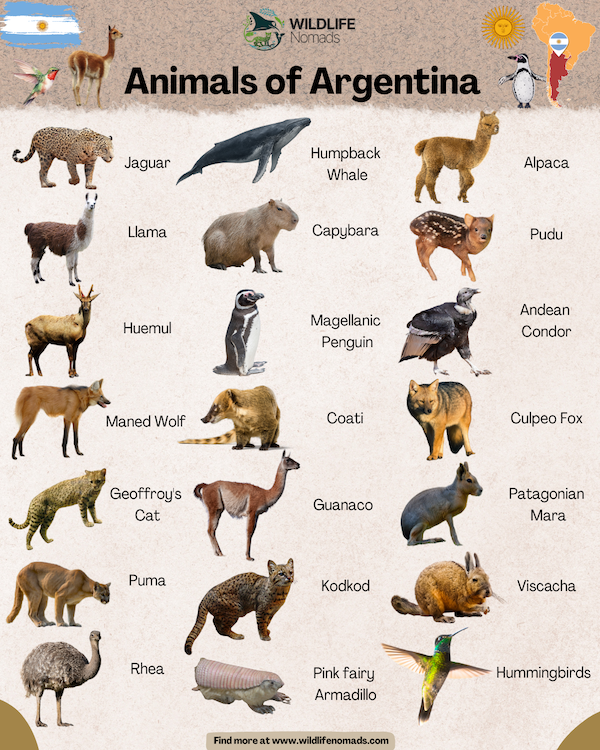
Below are the 12 species I’d put at the top of any field list, plus the parks where you can actually find them.
Why Argentina’s Wildlife Deserves More Attention
Argentina is famous for football, tango, Patagonia, and steak. Few first-time visitors arrive expecting a biodiversity heavyweight. Yet the country holds 15 continental ecoregions — from Andes mountains and high-altitude deserts to subtropical rainforests — and shelters roughly 395 mammal species and over 1,000 bird species (Pereyra-Lago et al., 2022).
Several wildlife species here are endangered, which makes the national park system and conservation programs essential. Whether you’re tracking pumas in the mountains or watching whales breach off the Atlantic Coast, the experience rivals anything in the Amazon or Galápagos.
1. Puma (Puma concolor)
One of Argentina’s apex predators, the elusive puma (or cougar) hunts across the Andes mountains, the Patagonian steppe, and the open shrublands of the south. It plays a central role in balancing prey populations like guanacos and deer, in central Patagonia, guanacos make up roughly 75% of the food biomass pumas consume.
Pumas have been hunted historically for pelts and over livestock conflicts. Hunting pressure dropped their numbers across much of South America, but they’re still seen reliably around El Chaltén in Argentina and across the border in nearby Torres del Paine, Chile.

2. Andean Condor (Vultur gryphus)
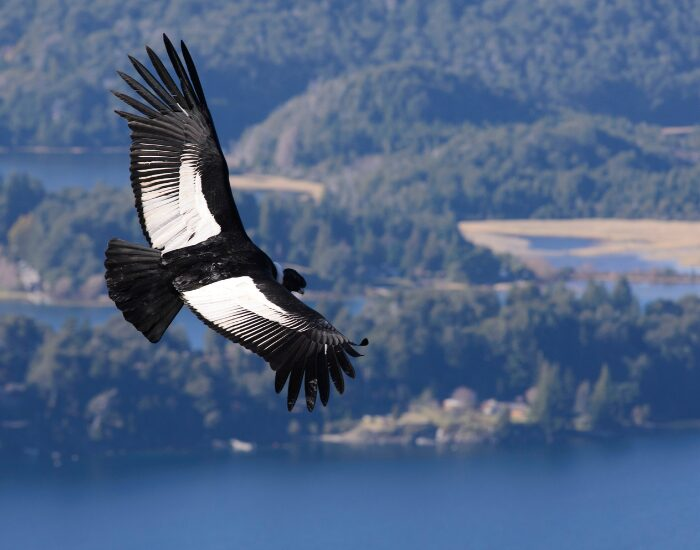
With a wingspan over three meters, the Andean condor is a type of vulture and one of the largest flying birds on Earth. These scavengers soar over the Andes mountains from northwest Argentina down through Patagonia and into Chile, feeding on carcasses and reducing disease spread among other animals.
The species is now classified as Vulnerable. Pesticide-laced carcasses and lead poisoning from hunting ammunition are the leading drivers of decline.
3. Guanaco (Lama guanicoe)
A cousin of the llama, the alpaca, and the vicuna, the guanaco is the defining ungulate of the Patagonian steppe. You’ll see herds grazing in large numbers in national parks like Los Glaciares. They’re the main food source for pumas, and they pull moisture from plants when surface water disappears.

4. Magellanic Penguin (Spheniscus magellanicus)
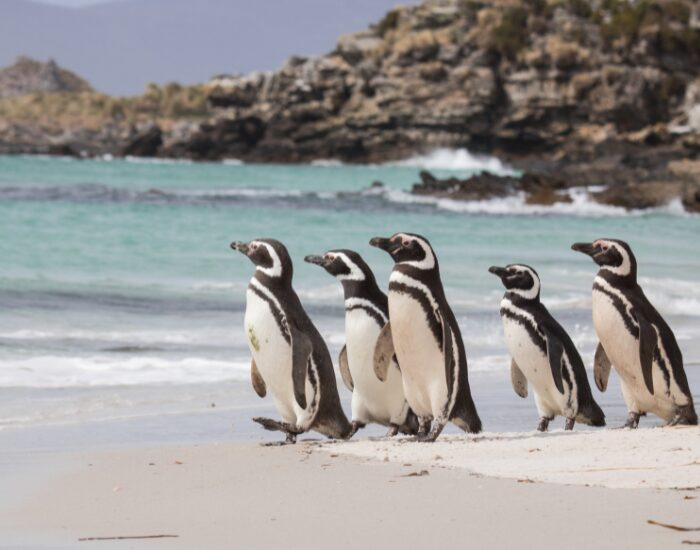
These charismatic seabirds gather during the breeding season from October to March. Major penguin colonies sit along the Atlantic Coast at Punta Tombo, Peninsula Valdes, and Tierra del Fuego. Punta Tombo is the the largest continental breeding colony of these penguins on Earth, though breeding pairs have fallen from about 314,000 in 1987 to roughly 139,000 in 2016, driven by petroleum pollution, prey shifts, and warming seas.
Adult penguins spend most of the non-breeding year feeding on small fish and squid far offshore. Chicks also depend on parents feeding them anchovies daily until they fledge.
5. Jaguar (Panthera onca)
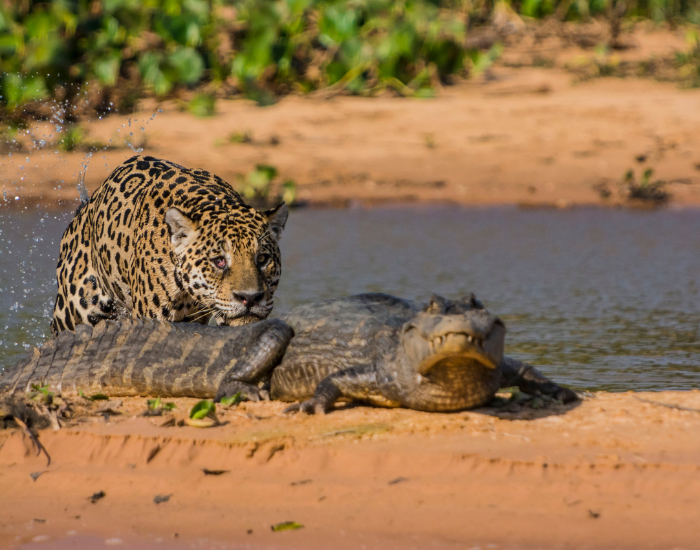
Once widespread, jaguars in Argentina are now critically endangered, with roughly 200 – 300 left in the wild. The Iberá rewilding project in Corrientes Province has reintroduced jaguars to the wetlands after a 70-year local extinction. Wild-born cubs have been documented on camera traps since 2021, hunting capybaras and caimans on their own.
6. Capybara (Hydrochoerus hydrochaeris)
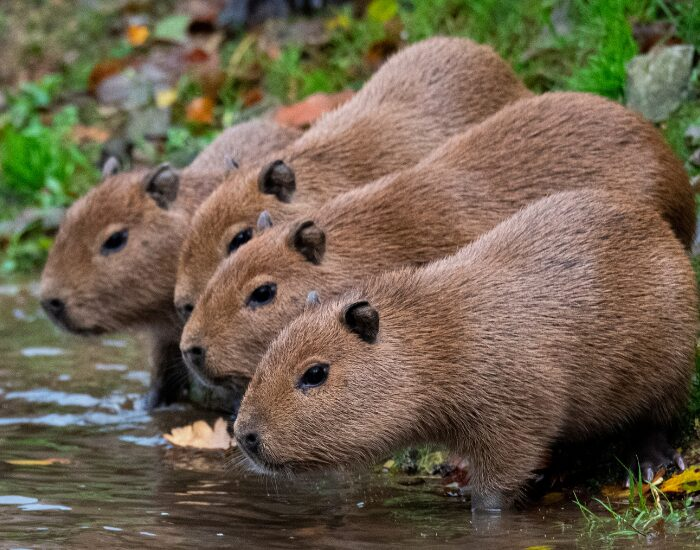
The world’s largest rodent is a semi-aquatic mammal often spotted lounging near rivers and marshes in the Pampas and Iberá. You’ll usually see them in large groups, sometimes with birds perched on their backs picking off insects.
7. Maned Wolf (Chrysocyon brachyurus)
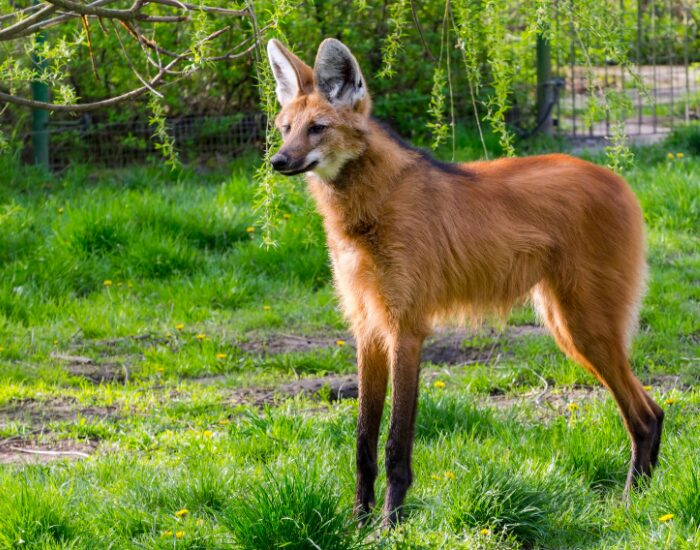
Looking like a fox on stilts, this long-legged canid is a solitary species found in northeastern Argentina’s grasslands of Corrientes and Formosa. Despite the name, it doesn’t hunt in packs. Recent surveys show its range in Argentina is roughly 61% larger than 2008 estimates suggested, partly thanks to better detection.
8. Huemul Deer (Hippocamelus bisulcus)
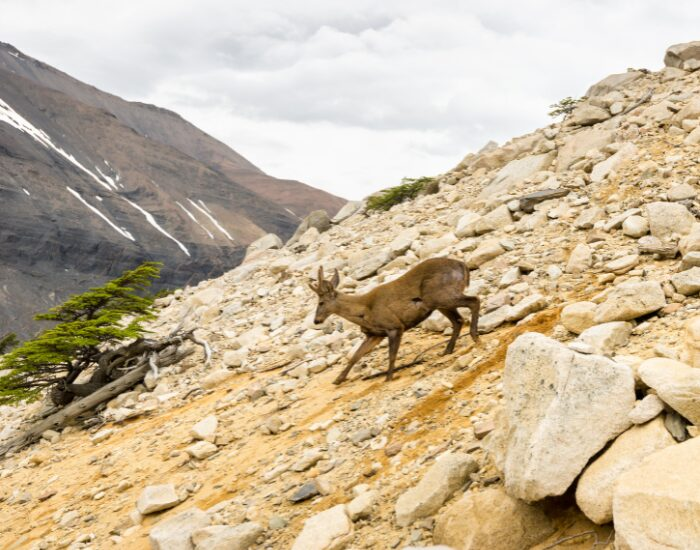
Endangered and shy, the huemul deer is a rare national symbol found in remote Andean valleys of Patagonia. Roughly 350–500 individuals remain in Argentina, with another 1,000 across the border in Chile. Habitat fragmentation, livestock, and disease continue to threaten the species.
9. Patagonian Mara (Dolichotis patagonum)
With a rabbit-like face and deer-like legs, the Patagonian mara is a unique rodent that lives in monogamous pairs and uses communal dens. It thrives in the open grasslands and shrublands of central Argentina, feeding on grasses, seeds, and herbs.

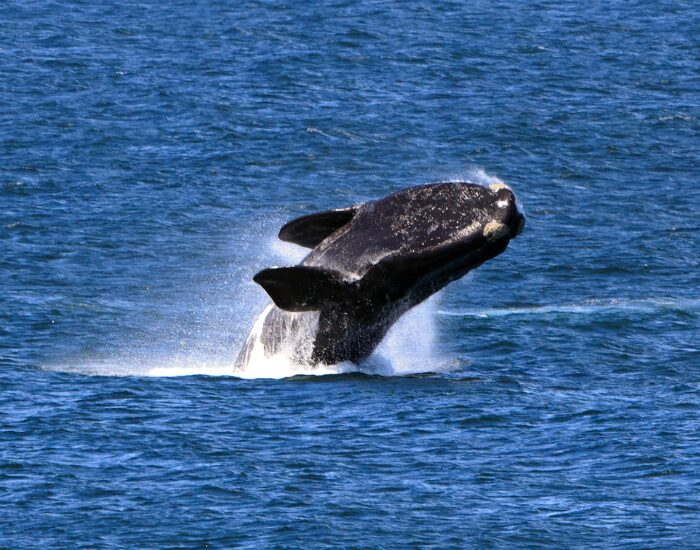
10. Southern Right Whale (Eubalaena australis)
These whales were hunted to the edge of extinction. The right whale now returns each breeding season to give birth along Argentina’s Atlantic Coast. The population has rebounded from a few hundred in the early 2000s to over 1,700 individuals in 2019, and current 2026 population models estimate the wider Western South Atlantic population at well over 4,000–5,000 individuals. The best place to visit them is on a whale-watching trip from Puerto Madryn between May and December.
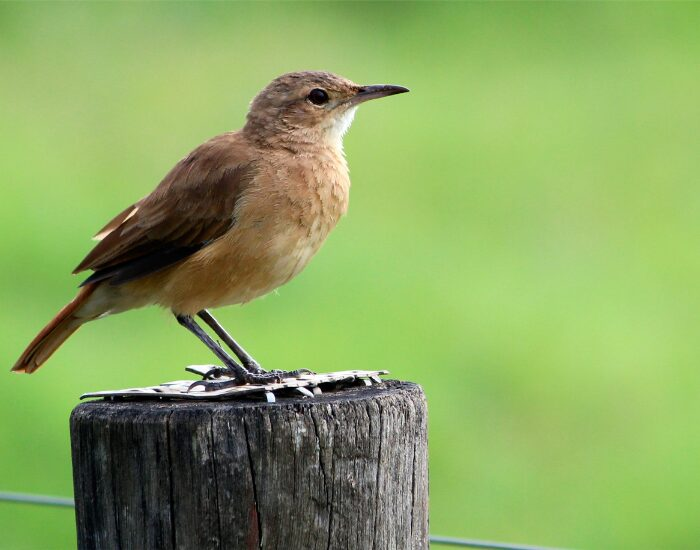
11. Rufous Hornero (Furnarius rufus)
Argentina’s national bird, the rufous hornero, is known for its work ethic and adaptability. It builds iconic mud-oven nests across the country, from the rooftops of Buenos Aires to rural fence posts. The species feeds mainly on insects pulled from leaf litter and grassy areas.
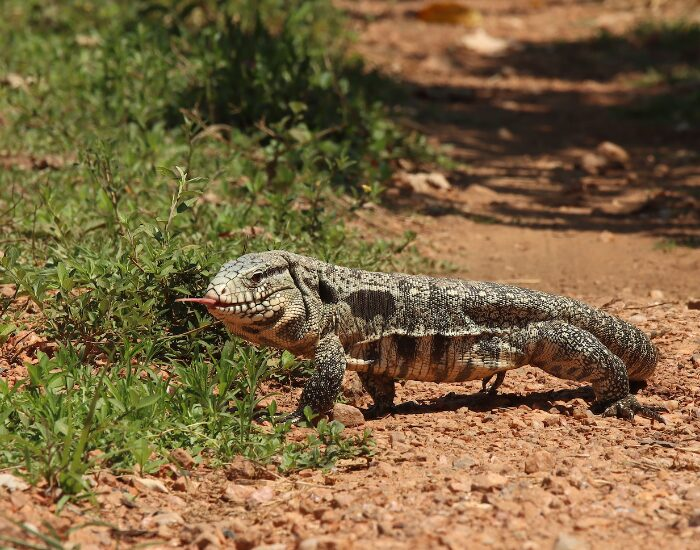
12. Argentine Black and White Tegu (Salvator merianae)
This large, intelligent lizard is common in northern Argentina’s forests. It’s known for running on two legs, seasonal hibernation, and partial endothermy. Unfortunately, the tegu is a frequent target of the pet trade.
Where to See the Animals in Argentina
Buenos Aires is the usual jumping-off point, and the reserves on its outskirts already offer solid birding. From there, the wildlife shifts dramatically by region.
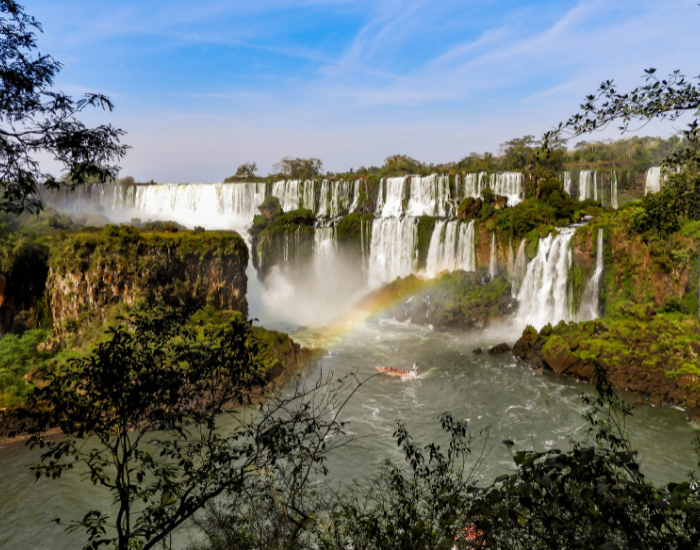
Iguazú National Park: More Than Just Waterfalls
The falls get the headlines, but the surrounding subtropical forest is packed with creatures: jaguars (if you’re very lucky), tapirs, toucans, howler monkeys, and an orchestra of insects. The orchestra of birds here — including more than a dozen toucan and parrot species — is a paradise on its own. Nearby, the Yacutinga Private Nature Reserve in Misiones Province hosts up to 320 bird species, including toucans and hummingbirds — easily one of the best birding stops in South America.
Patagonia’s Wild Frontier
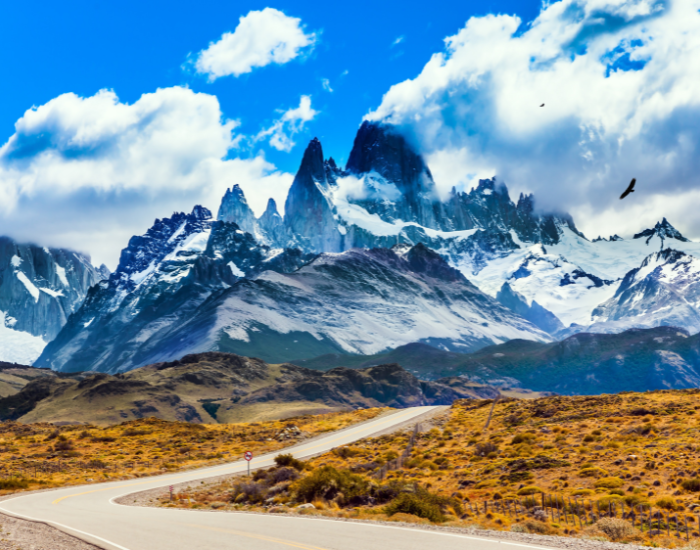
Patagonian wildlife is what draws most field biologists south. The wind howls across open grasslands that hold guanacos, condors, pumas, maras, and rare deer like the huemul. Whether you’re hiking near Fitz Roy or driving the steppe road toward Chile, sightings come with the scenery.
Snow-capped peaks of the southern Andes mountains form the backdrop for nearly every encounter, and Charles Darwin described many of these landscapes and creatures during the Beagle voyage in the 1830s.
Marine Life of Peninsula Valdés: Whales, Sea Lions & Orcas
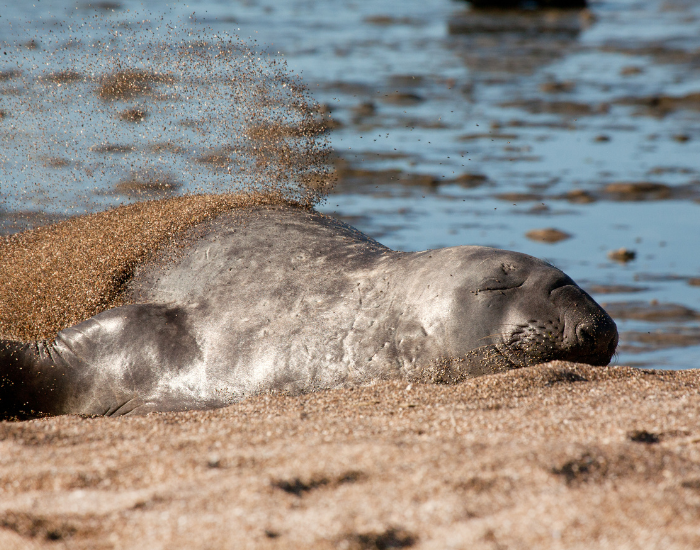
Peninsula Valdes is one of the most important wildlife destinations in South America. Each year, southern right whales arrive to breed offshore between May and December. Elephant seals and sea lions crowd the beaches, with pup numbers peaking in January and February.
Orcas patrol the shoreline year round, but the spectacular intentional-stranding hunts, when killer whales beach themselves to grab sea lion pups, are most reliable between September and November at Punta Norte.
Iberá Wetlands and Tierra del Fuego
The Iberá marshes hold capybaras, caimans, marsh deer, and the recently reintroduced jaguar. Geoffroy’s cat and other small carnivores hunt small mammals like guinea pigs across the grassy areas. Down south, Tierra del Fuego adds foxes, beavers, albatrosses, and the elusive Southern River Otter (Lontra provocax), an endangered species found in both marine and freshwater habitats and now critically threatened in the Argentine portion of the island.

Mammals of Argentina: From Mountain Lions to Marsh Rodents
The country is home to roughly 395 mammal species across 12 orders — opossums, armadillos, rodents, bats, deer, capybaras, tapirs, peccaries, and a long list of carnivores including otters, foxes, and wild cats. You’ll find pumas stalking the Patagonian steppe, herds of guanacos grazing in the wind, and the world’s smallest deer (the pudu) in the Patagonian beech forests. The Pampas region, in particular, is dominated by the Pampas deer and greater rhea, both adapted to a feeding lifestyle on coarse grasses.
Foxes are widespread. The South American gray fox, the culpeo, and the red fox all turn up across different ecoregions. Smaller “false foxes” like the chilla feed on rodents, insects, and fruit. Most of these South American mammals share natural predators with the puma and rely on rivers and seasonal wetlands for food and water. Tapirs in the northern forests are closely related to horses and rhinos.
Birdwatching Paradise: Over 1,000 Reasons to Look Up
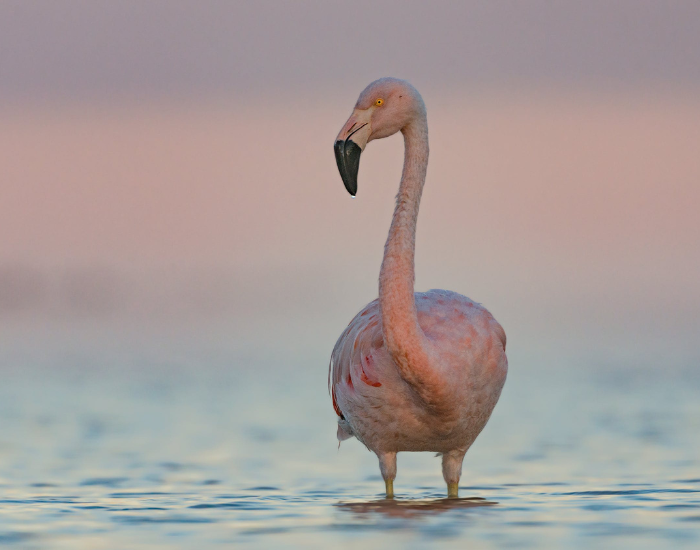
With more than 1,000 bird species recorded, Argentina is a bucket-list destination for birdwatchers. The country has a wide variety of small birds, making it a paradise for anyone interested in both large and tiny species. From the Andean condor and vibrant Chilean flamingos to penguins along the shore and the mud-nest-building rufous hornero, the skies and shores are always worth scanning.
Riverside birds like kingfishers and herons fill the riparian zones of the Paraná and Iguazú rivers, where they spend hours feeding on fish and frogs. Birders in Chile and along the Andes mountains often add another two dozen birds to their Argentine list in a single trip. Songbirds and ground-nesting birds dominate the Pampas.
Reptiles, Snakes, and Amphibians in Northern Argentina
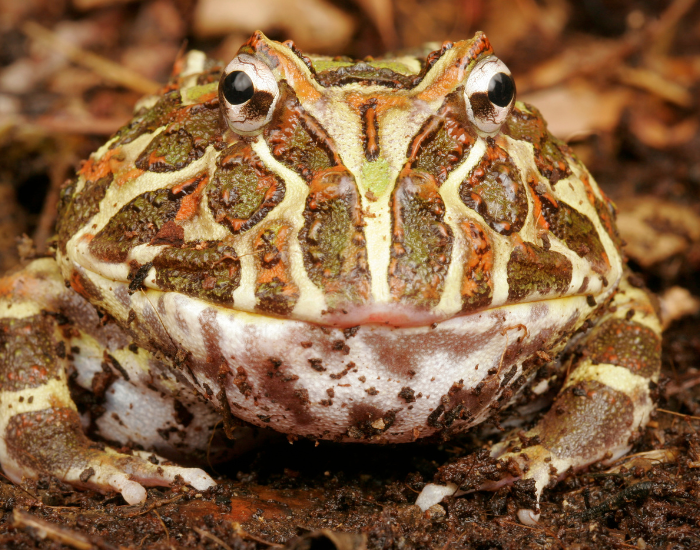
Warm, humid climates in the north make it a hotspot for snakes, frogs, and lizards. Here you’ll find the infamous Argentine horned frog, boa constrictors, the yarará pit viper, and a variety of turtles and toads. Snakes play a critical role in controlling rodent populations. Many of these animals prefer sandy soils for burrowing and nesting. Their natural predators — birds and small mammals — keep the system in balance.
Protecting the Wild Heart of Argentina
Argentina’s wild animals are a living legacy. Supporting conservation in nature reserves, visiting protected areas, and learning about the country’s other wildlife all matter. The varied terrain — from windswept steppe to lush rainforest and the snow-capped mountains of the south — holds big cats, small mammals, birds, and reptiles found nowhere else on the planet.
National parks and reserves safeguard those habitats. Whether you’re hoping to spot the world’s smallest deer (the pudu), the Andean condor in the mountains, or southern right whales off the Valdes Peninsula, responsible tourism keeps the system funded and the local fauna protected.
FAQ: Animals of Argentina
It depends on what you want to see. For southern right whales and Magellanic penguins, visit between September and December — both species are most active near shore then, and the penguins are usually feeding chicks at the colony. For pumas in Patagonia, the cooler months from April to September give better sightings. Orcas can be spotted at Peninsula Valdes throughout the year, but the spectacular hunting season runs from September to November.
Yes. Argentina has several venomous snakes, including the yarará pit viper, the coral snake, and the cascabel rattlesnake. Most live in the warm north. Snake bites are uncommon if you stick to trails and watch where you step. These snakes mostly feed on rodents and small birds.
Yes, though sightings are rare. Iberá Park in Corrientes hosts a small reintroduced population, and the northern Chaco and Misiones forests hold the largest wild groups. Tour operators in Iberá now run dedicated jaguar-tracking trips and use camera traps to monitor hunting patterns.
The right whale is the largest creature in Argentine waters, reaching 18 meters. On land, the South American tapir is the biggest native land mammal in the north, while the guanaco dominates the Patagonian steppe.
References:
Orozco, M. M., Caruso, N., Natalini, M. B., Iaconis, K., Tittarelli, M., Juarez, C. P. Soler, L. (2023). Updating the distribution range of the maned wolf Chrysocyon brachyurus in Argentina. Oryx, 57(2), 248–251. https://doi.org/10.1017/S0030605322001272
Crespo, E. A., Pedraza, S. N., Dans, S. L., Svendsen, G. M., Degrati, M., & Coscarella, M. A. (2019). The southwestern Atlantic southern right whale, Eubalaena australis, population is growing but at a decelerated rate. Marine Mammal Science, 35(1), 93–107. https://doi.org/10.1111/mms.12526
Gownaris, N. J., & Boersma, P. D. (2019). Sex-biased survival contributes to population decline in a long-lived seabird, the Magellanic Penguin. Ecological Applications, 29(1), e01826. https://doi.org/10.1002/eap.1826
Pereira, J. A., Mirol, P. M., Di Bitetti, M. S., & Novaro, A. J. (2020). The last 25 years of research on terrestrial carnivore conservation in Argentina. Mastozoología Neotropical, 27(SI), 67–77. https://www.researchgate.net/publication/343277130
Plaza, P. I., & Lambertucci, S. A. (2019). Pesticides: The most threat to the conservation of the Andean condor (Vultur gryphus). Biological Conservation, 242, 108418. https://doi.org/10.1016/j.biocon.2020.108418
Rowntree, V. J., Uhart, M. M., Sironi, M., Chirife, A., Di Martino, M., La Sala, L., Musmeci, L., Mohamed, N., Andrejuk, J., McAloose, D., Sala, J. E., Carribero, A., Rally, H., Franco, M., Adler, F. R., Brownell Jr, R. L., Seger, J., & Rowles, T. (2013). Unexplained recurring high mortality of southern right whale Eubalaena australis calves at Península Valdés, Argentina. Marine Ecology Progress Series, 493, 275–289. https://doi.org/10.3354/meps10506
This website is reader-supported. When you book a wildlife experiences through links listed on this site, we may earn an affiliate commission.