Jackie had just gotten back from Peru when she sat down with me to go through her photos. She was scrolling through hundreds of shots from Machu Picchu, Cusco, and the highlands further south. “Look at this one,” she said, turning her phone toward me. A tall animal with long ears on a mountain trail. “Llama,” she said. Fair enough. Then another photo, a shorter, fluffier animal grazing near a stone wall. “And this is a small llama. Or an alpaca? I’m honestly not sure.” I laughed and told her the easiest way to tell them apart is size. Llamas tower over alpacas. Once you see them side by side, the difference is hard to miss.
Four species of South American camelids, all in one trip, and Jackie had photographed every single one without realizing it. That conversation kicked off the next chapter in our camelid series. The alpaca might be the most misunderstood of the bunch. Most humans picture a cute, fluffy animal from a meme. The reality involves ancient DNA, hybrid origins, and fleece worth more per ounce than merino wool. Here are twelve weird facts about alpacas that reveal what this remarkable alpacas actually are.

1. Alpacas Are Not Mini Llamas: Here’s How to Tell Them Apart
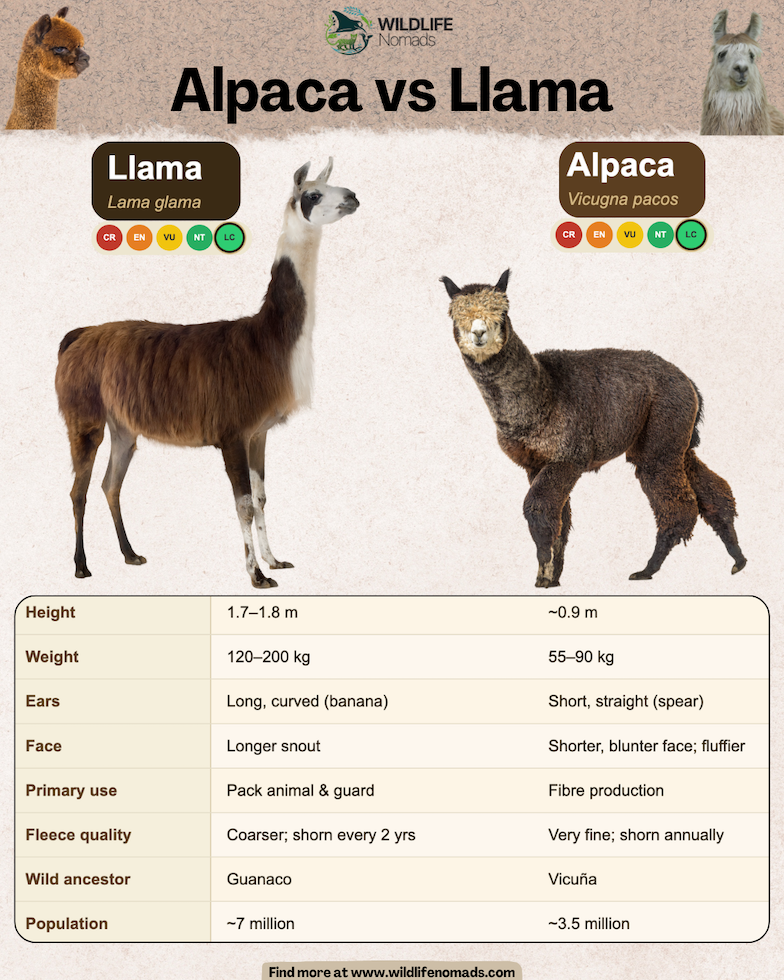
This is the single most common mix-up I hear. People see alpacas and llamas side by side and assume alpacas are just smaller llamas. The difference goes far deeper than size. Llamas stand about 120 cm at the shoulder and weigh around 113 kg. Alpacas are noticeably smaller animals, reaching only 81 to 99 cm tall. Most alpacas weigh between 45 and 90 kg. Both have long necks, but alpacas carry a shorter, more compact frame. The easiest way to tell the two animals apart? Look at the ears.
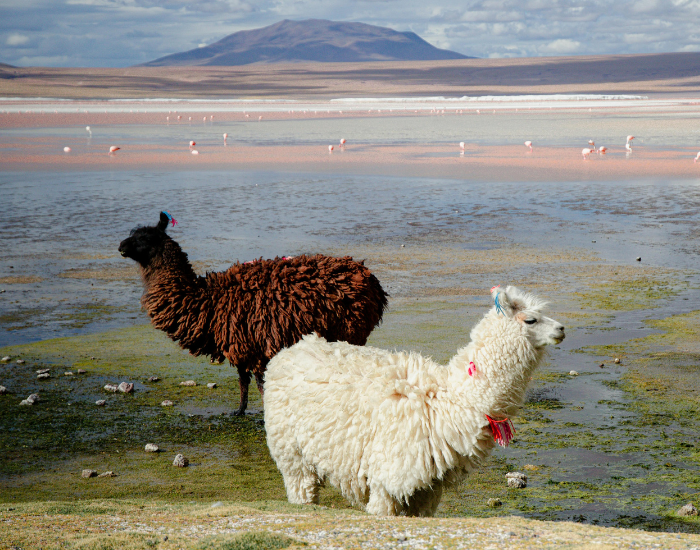
Llamas have long, banana shaped ears that curve inward. Alpacas have short, pointed ears that stand straight up like small heads of a spear. Their faces differ too. Llamas have elongated snouts. Alpacas have blunt, compact faces with small heads and softer features. Despite their long necks and similar silhouettes, llamas and alpacas differ in nearly every measurable trait.
The difference in purpose matters just as much. Llamas evolved as pack animals, bred over millennia to carry heavy loads across mountain passes. Alpacas were primarily raised and bred for their fiber, that luxurious fleece that covers nearly their entire body. Alpacas and llamas share a common ancestor in the camel family, but they diverged down very different paths. Understanding what’s the difference between alpacas and llamas starts with recognizing that these two species were bred for entirely different roles.
2. There Are Two Breeds: and They Look Nothing Alike
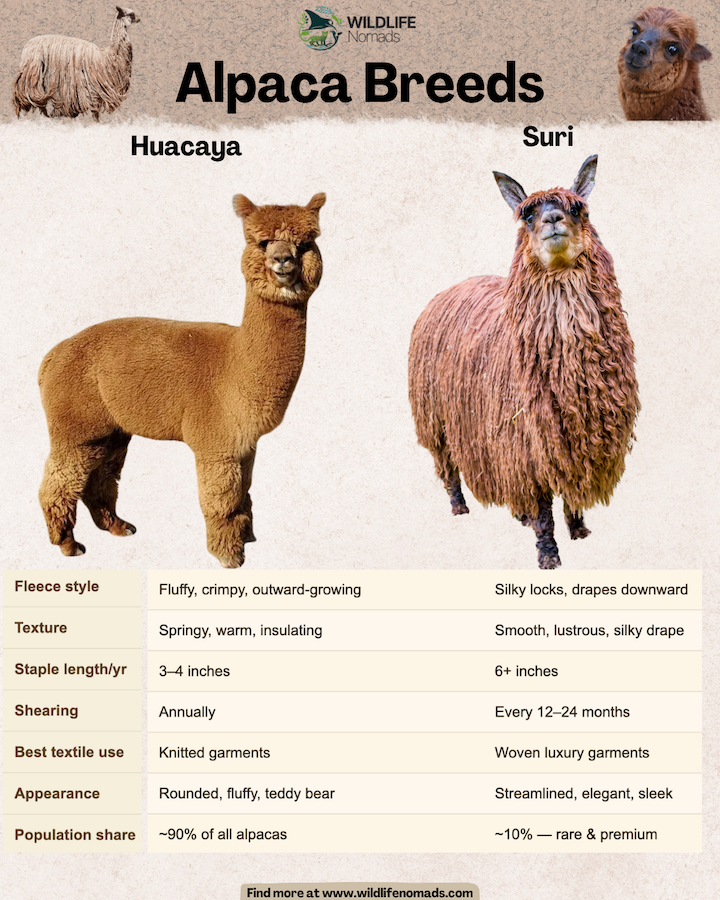
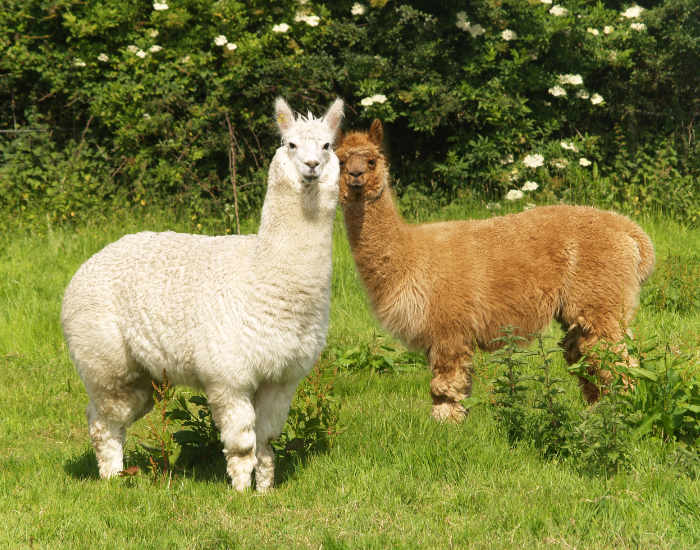
Most people don’t realize that alpacas come in two distinct breeds: the Huacaya and the Suri. About 90% of all alpacas worldwide are Huacaya. Breeders have selectively bred Huacaya for centuries to maximize fleece density. These are the fluffy teddy bear alpacas you recognize from photos — their fleece grows in dense, crimpy bundles that make them look like walking cotton balls. Suri alpacas look completely different. Their fiber grows in long, silky locks that drape down the body like dreadlocks.
The fiber quality differs between the two breeds as well. Huacaya fleece has a natural crimp similar to sheep wool. Suri fleece is straighter, with a distinctive luster that catches the light. Both breeds produce fiber that is highly prized in the textile world, but Suri fleece commands premium prices because of its rarity. Alpacas of either breed can appear in over 22 natural colors, from white and fawn to chocolate, black, and silver gray, more natural colors than any other fiber-producing livestock on the planet.
3. Alpaca Fleece Rivals Cashmere (and Beats Wool in Almost Every Way)
Here’s a fact that surprises most people: alpaca fiber is warmer than sheep wool, softer than cashmere, and completely hypoallergenic. Unlike sheep, alpacas produce fleece with no lanolin. That means the fiber doesn’t trigger allergic reactions. It’s also naturally water-repellent and even fire resistant. Alpacas are typically sheared once a year, usually in spring. A single alpaca can produce 2 to 5 kg of fleece per shearing. The fiber quality varies across the body, the finest fiber comes from the blanket area along the back and sides.
For thousands of years, alpaca fiber was reserved for Inca royalty. Today, it’s used in everything from high-end sweaters to blankets, scarves, and socks. The global demand for alpaca fiber still exceeds supply. Alpaca fleece sells for roughly ten times the price of virgin sheep wool. That fiber quality is precisely why these animals were domesticated in the first place — and why alpaca owners around the world keep expanding their herds. The Alpaca Owners Association in North America alone tracks tens of thousands of registered animals.
4. Alpacas Descend from Wild Vicuñas, Not Llamas
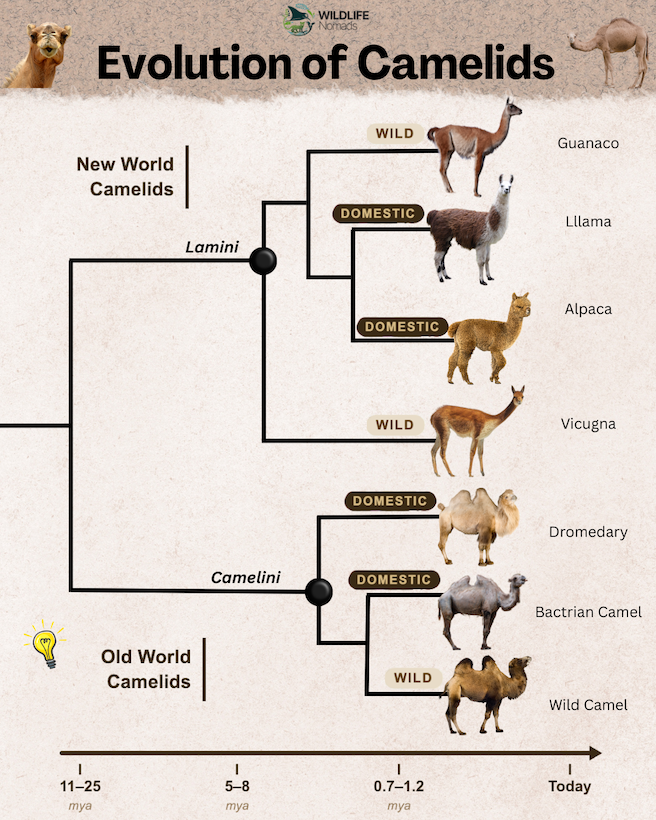
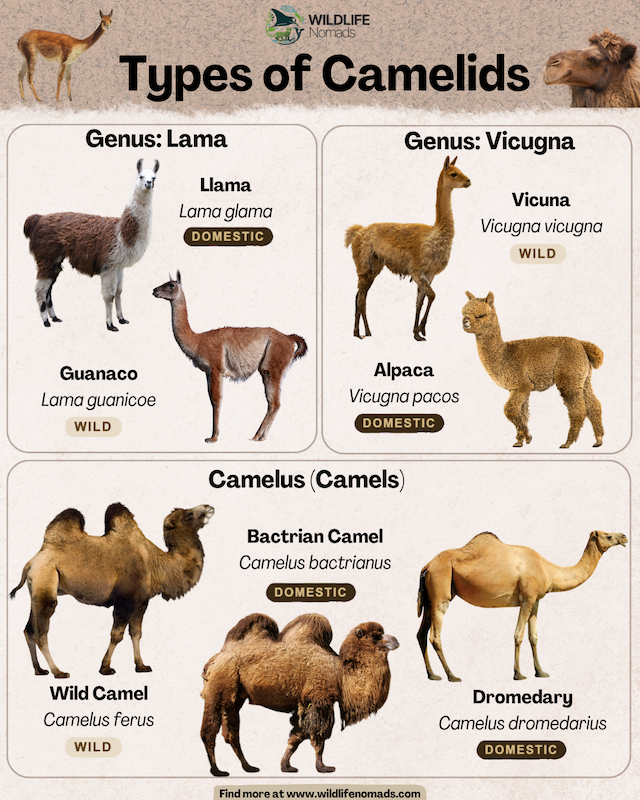
This is where the evolutionary story gets fascinating. For decades, scientists classified alpacas as Lama pacos, grouping them with llamas under the genus Lama. Everyone assumed alpacas were domesticated from guanacos, just like llamas. Then in 2001, a study published DNA evidence that rewrote the entire classification. Alpacas actually descend from the vicuña, not the guanaco. The scientific name changed to Vicugna pacos.
The full picture is even more complex. A 2025 study revealed that the alpaca species is a homoploid hybrid — meaning alpacas originated from crossbreeding between the vicuña (Vicugna vicugna) and the ancestor of the guanaco (Lama guanicoe) during the mid-Holocene, roughly 6,300 years ago. These two wild species can still produce fertile offspring when they crossbreed, which is how the hybridization happened naturally.
Four species of South American camelids exist today: two wild (the vicuña and the guanaco) and two domesticated (the alpaca and the llama). All four belong to the camelid family, which also includes camels from Africa and Asia.
5. They Were Domesticated Over 6,000 Years Ago in the Andes
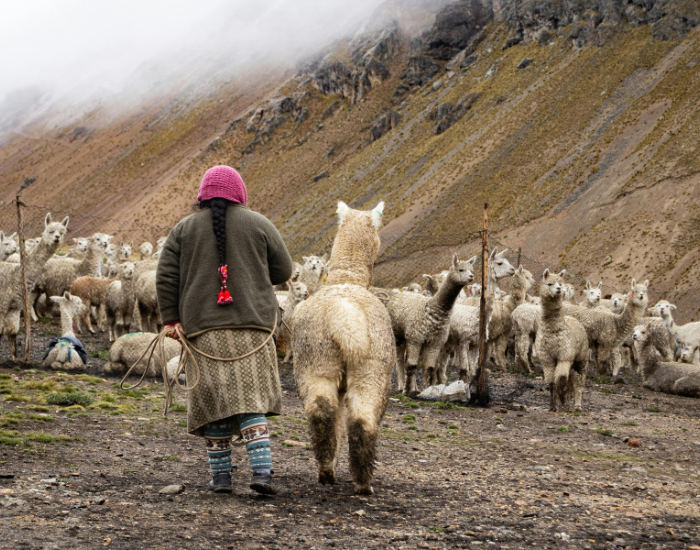
Alpacas rank among the oldest domesticated livestock species on Earth. People in the central Andes mountains began domesticating wild camelids between 6,000 and 7,000 years ago. That timeline puts alpaca domestication roughly in the same era as cattle and sheep. The Inca Empire later bred alpacas and llamas intensively, selecting alpacas for fiber quality, color, and temperament.
Alpaca fleece became so valuable that it functioned as currency. Inca nobility wore garments made exclusively from the finest alpaca and vicuña fiber, commoners were restricted to llama wool.
Then the Spanish conquest devastated alpaca populations. Colonizers brought sheep and cattle as replacement livestock, pushing llamas and alpacas into the highest, most remote Andean pastures. An estimated 90% of the alpaca population died during this period. The animals that survived were the ones living at the harshest altitudes, which is why modern alpacas are so incredibly well-adapted to extreme cold and thin air. Jackie told me she felt breathless at 3,800 meters near Cusco.
6. Females Control the Herd
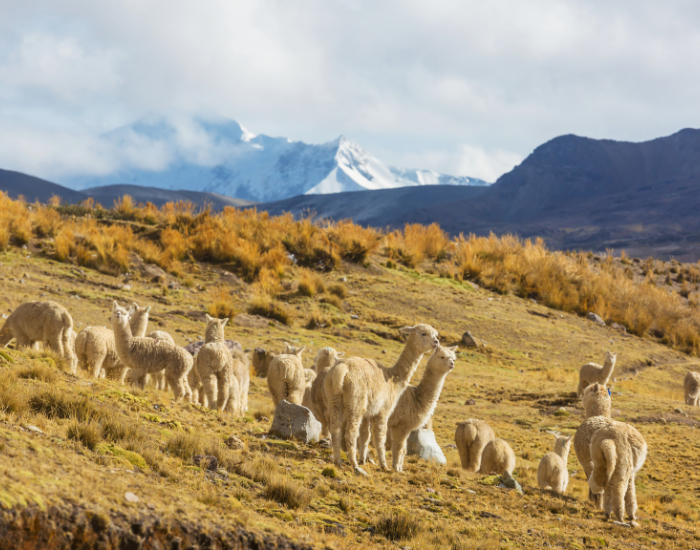
Alpaca herd dynamics revolve around females. Female alpacas choose their grazing spots. They decide when to move. They determine the social hierarchy among other alpacas through subtle body language — posturing, ear positioning, and occasional neck wrestling. Males play a limited role in herd life outside of breeding season. In a typical herd, one or two males live alongside a larger group of females and their young. Males that aren’t breeding often form bachelor herds on the periphery.
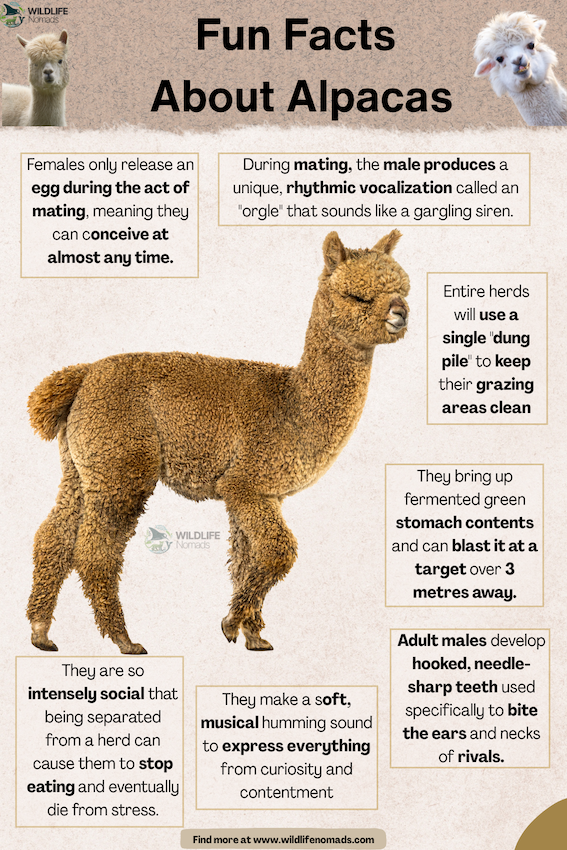
Female alpacas don’t have an estrous cycle like most livestock. They’re induced ovulators, meaning ovulation happens in response to mating rather than on a schedule. Females can breed as early as 12 to 15 months old, though most breeders wait until the female reaches a healthy body weight. Males aren’t typically ready for breeding until 30 to 36 months. During mating, males vocalize with a distinctive humming called an “orgle.” Females that are already pregnant will spit at approaching males to reject them. Breeding programs today carefully track lineage.
7. Alpacas Spit — But It’s Not What You Think
Yes, alpacas spit. But here’s what most people don’t understand: alpacas rarely spit at humans. When alpacas spit, they’re almost always communicating with other alpacas. Spitting is how these docile animals establish dominance, defend food sources, or reject an unwanted male. A female protecting her cria from other alpacas will spit without hesitation.
The spit itself ranges from a dry puff of air to a full gastric launch of partially digested stomach contents. Stomach acid and fermented grass. Alpacas that accidentally spit on humans usually look as disgusted as their target, they’ll walk around with their mouth open, lip curled, trying to clear the taste. Among other animals in the camelid family, llamas and alpacas both spit, but llamas do it more readily and more aggressively.
Alpacas tend to use spitting as a last resort. These are generally gentle, docile animals that prefer to flee rather than fight. Their body language gives plenty of warning before a spit — pinned ears, raised chin, and a gurgling sound from the throat.
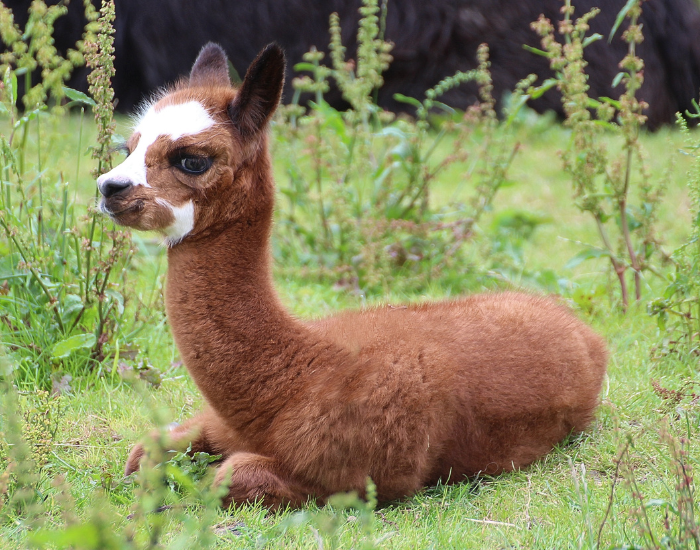
8. A Baby Alpaca Is Called a Cria, and It Stands Within an Hour
The gestation period for alpacas averages about 11.5 months, roughly 350 days, though some females carry for over 380 days. Females almost always deliver a single offspring. Twins are extremely rare in alpacas and seldom survive. A baby alpaca is called a cria, from the Spanish word for “baby.” A newborn cria weighs between 6 and 8 kg at birth and can stand on wobbly legs within 30 to 90 minutes.
Females time their births strategically. Most alpacas give birth during daylight hours, typically between mid-morning and early afternoon. This gives the cria several hours to dry off, nurse, and bond with its mother before nighttime temperatures drop, critical when you live at 4,000 meters elevation.
A cria stays close to its mother for about six months before weaning. During that time, the mother produces milk while also maintaining her own body weight for the next breeding cycle. Females can breed again roughly two weeks after giving birth. In managed herds, breeders usually wait at least a month. The survival rate of cria depends heavily on the experience of the mother and the conditions at birth.
9. They’re Pseudo-Ruminants with Three Stomach Compartments
Alpacas chew their cud like cattle, but they’re not true ruminants (like buffalos or deer). They’re pseudo ruminants, their stomach has three compartments instead of the four found in cows and sheep. The first two compartments (C1 and C2) handle fermentation, breaking down tough grasses and hay through microbial action. The third compartment absorbs nutrients. This digestive system makes alpacas remarkably efficient. They extract more nutrition from low-quality forage than most livestock can.
In the wild Andean highlands, alpacas survive on sparse, tough grasses. Domesticated alpacas eat grass hay as their primary food, supplemented with mineral supplements and fresh water. Unlike llamas and alpacas bred for pack work, fiber alpacas need carefully managed food intake. They consume far less food relative to their body weight than sheep or cattle, roughly 1.5% of body weight per day. That efficiency made them ideal livestock for high-altitude communities where food was scarce. Alpacas also have a split upper lip that lets them nibble vegetation without pulling it up by the roots, which prevents overgrazing.
10. Alpacas Double as Guard Animals
This fact catches people off guard. Alpacas, those soft, fluffy animals that look like they’d lose a fight with a strong breeze, actually serve as guard animals for smaller livestock. Farmers across North America, Australia, and Europe keep alpacas alongside sheep, goats, and poultry specifically for predator deterrence. When foxes, coyotes, or stray dog approaches the herd, alpacas sound a high-pitched alarm call. Then they charge. A group of agitated alpacas will chase predators, stomp with their front feet, and even kick. Their large eyes provide nearly 360-degree vision, making them excellent sentinels.
That said, alpacas work best as guard animals in groups. A single alpaca may become stressed and ineffective. Llamas are generally considered stronger individual guard animals because of their larger size and more aggressive temperament. That size difference between llamas and alpacas matters when facing larger predators. But for flock protection in numbers, alpacas get the job done. Many sheep farmers report significantly fewer losses to predators after introducing alpacas to their herds. These companion animals bond closely with the livestock they protect.
11. They Thrive at Altitudes That Would Flatten Most Animals
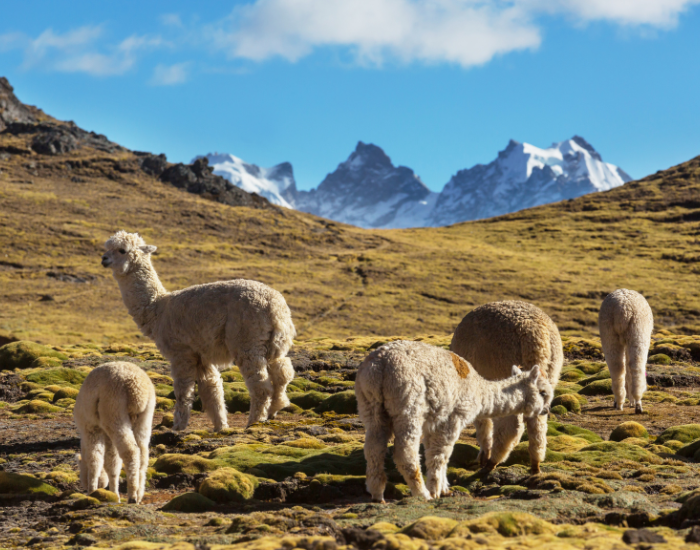
Where does an alpaca live in the wild? The answer is extreme. Alpacas inhabit the Andean Altiplano at elevations between 3,500 and 5,000 meters above sea level. That’s higher than most ski resorts in the world. At those altitudes, oxygen levels drop significantly. Temperatures swing from scorching sun during the day to well below freezing at night. Most mammals would struggle. Alpacas thrive.
Their secret lies in their blood. Alpacas have more red blood cells per unit volume than most mammals. Their hemoglobin binds oxygen more efficiently, allowing them to function normally in thin air. Their dense fleece insulates against extreme cold while reflecting UV radiation at high altitude. Even their padded feet are adaptive, soft, leathery pads grip rocky terrain without eroding fragile alpine soil the way hooves do.
12. Alpacas Have Quietly Conquered the World
For most of their history, alpacas lived exclusively in the Andean region of South America. That changed in the 1980s when countries like the United States, Australia, New Zealand, and several European nations began importing breeding stock. Today, llamas and alpacas live on farms and ranches across six continents. The global alpaca population now exceeds four million animals, though Peru still holds the vast majority. North America alone has over 250,000 registered alpacas. Australia has built a thriving alpaca industry focused on fiber production and breeding.
What drove this global expansion? The fiber market played a huge role. As demand for sustainable, hypoallergenic textiles grew, alpaca fleece became a premium commodity. Alpacas and llamas also gained popularity as companion animals, therapy animals, and even agritourism attractions. Males weighing less than many other livestock species and females with calm temperaments make alpacas manageable for small-acreage farms.

FAQs about Alpacas
The biggest difference between alpacas and llamas is size and purpose. Llamas are much larger — about 120 cm tall and can weigh 113 kg — and were bred as pack animals to carry heavy loads. Alpacas and llamas also differ in ear shape: alpacas have short pointed ears instead of the long banana sized ears llamas have. Alpacas were primarily raised for their fiber. Both are domesticated South American camelids, but alpacas descend from the wild vicuña while llamas descend from the wild guanaco.
Alpacas typically live between 15 and 20 years. Their lifespan depends on nutrition, veterinary care, and environmental conditions. Females remain productive breeders for most of their lives, and both males and females continue producing fleece well into old age.
Alpacas are gentle, docile animals that tolerate humans well but aren’t naturally cuddly. They’re curious and social with other alpacas. While they generally don’t enjoy being picked up or hugged, well-socialized alpacas accept handling calmly. They make excellent companion animals and therapy animals because of their quiet, non-threatening demeanor.
These Aren’t Just Fluffy Memes
Alpacas are far more than cute faces on a greeting card. They’re hybrid-origin camelids with 6,000 years of shared history alongside humans, blood adapted for thin air, and fleece that outperforms almost every other natural fiber on Earth. The next time you see an alpaca, look past the fluff. You’re looking at one of the most underestimated animals alive.
If you missed the first installment of our South American camelid series, start with our deep dive into llamas. And keep an eye out, the vicuña article is coming next.
References:
Barreta, J., Iñiguez, V., Saavedra, V., Romero, F., Callisaya, A. M., Echalar, J., & Kadwell, M. (2021). Ancient DNA reveals the lost domestication history of South American camelids in Northern Chile and across the Andes. eLife, 10, e63390. https://doi.org/10.7554/eLife.63390
Fan, R., Gu, Z., Guang, X., Marin, J. C., Varas, V., González, B. A., & Li, Y. (2020). Genomic analysis of the domestication and post-Spanish conquest evolution of the llama and alpaca. Genome Biology, 21(1), 159. https://doi.org/10.1186/s13059-020-02080-6
Kapustka, J., & Budzyńska, M. (2022). Reproductive Losses and Their Causes in Alpacas-A Survey-Based Study. Animals : an open access journal from MDPI, 12(21), 3030. https://doi.org/10.3390/ani12213030
Kadwell, M., Fernandez, M., Stanley, H. F., Baldi, R., Wheeler, J. C., Rosadio, R., & Bruford, M. W. (2001). Genetic analysis reveals the wild ancestors of the llama and the alpaca. Proceedings of the Royal Society of London. Series B: Biological Sciences, 268(1485), 2575–2584. https://doi.org/10.1098/rspb.2001.1774
Matthews, P. T., Barwick, J., Doughty, A. K., Doyle, E. K., Morton, C. L., & Brown, W. Y. (2020). Alpaca Field Behaviour When Cohabitating with Lambing Ewes. Animals : an open access journal from MDPI, 10(9), 1605. https://doi.org/10.3390/ani10091605
McGregor, B. A. (2006). Production, attributes and relative value of alpaca fleeces in southern Australia and implications for industry development. Small Ruminant Research, 61(2-3), 93–111. https://doi.org/10.1016/j.smallrumres.2005.07.001
Morón-Zambrano, J. A., et al. (2025). Hybrid origin of alpaca (Vicugna pacos) during domestication of camelids in the mid-Holocene. PubMed. https://pubmed.ncbi.nlm.nih.gov/41168972/