

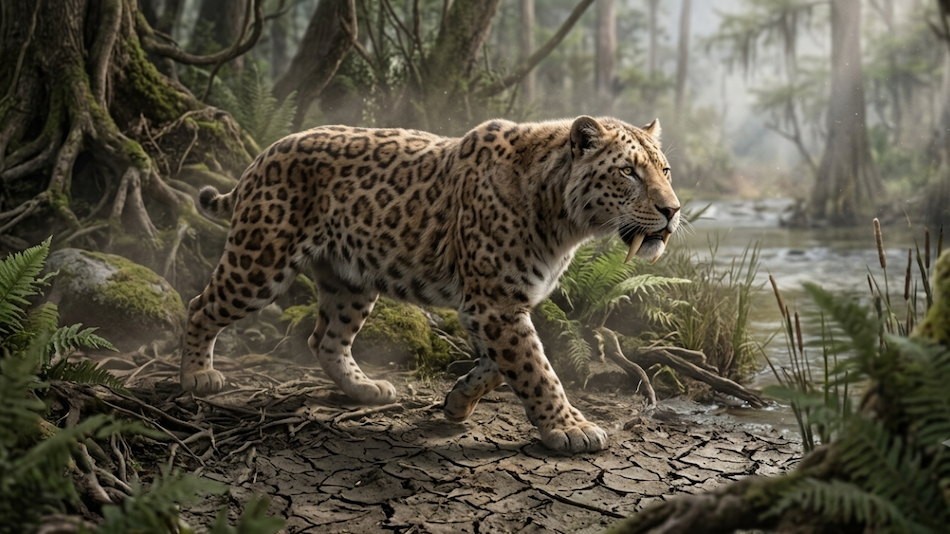
Years ago I realized something odd about myself. I kept chasing animals that no longer exist. I got hooked on the dodo bird, then the prehistoric ground sloth, and I couldn’t stop. The reason is simple. Extinct animals teach me how to read the living ones I track in the field today.
The saber tooth tiger pulled me in hardest of all. Most of us first met it as Diego, the soft-hearted cat from Ice Age. That cartoon did something real science struggles to do. It made a long-dead predator feel close, warm, almost like a friend. My job here is to keep that closeness while telling you the truth.
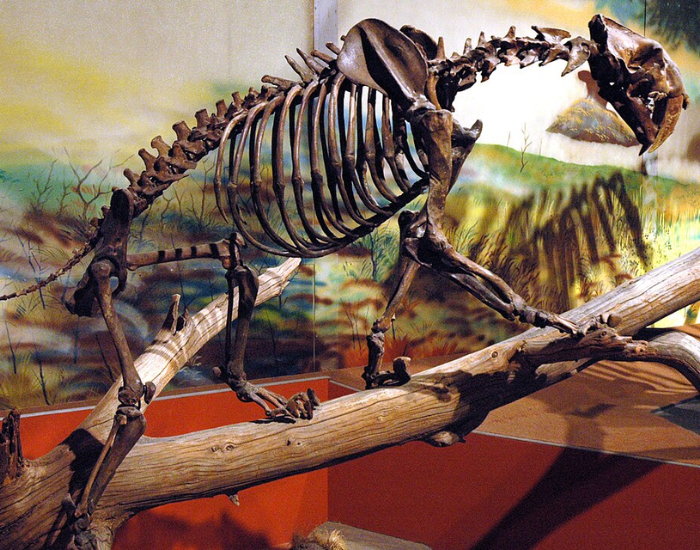
That closeness turned physical for me at the Natural History Museum in Mexico City. I stood in front of a mounted Smilodon skeleton, and the cartoon image fell apart. The legs were short and stocky, not lean. The chest was absurdly broad, built for muscle. And those canines curved down past the lower jaw like a pair of blades. Standing there, I started noticing the exact features I had only read about, and the animal suddenly made sense.
So here are 12 facts about the saber tooth tiger, properly called Smilodon. Some changed how I see the big cats I still follow across grasslands and forests. By the end you will know its real size, its strange teeth, and why it vanished.

1. It Was Never Actually a Tiger
Let’s clear this up first. The saber tooth tiger was not a tiger at all. Modern tigers belong to the subfamily Pantherinae. Smilodon belonged to a separate group, the saber-toothed cats, or Machairodontinae.
These two branches sit far apart on the cat family tree. A saber-toothed cat and a tiger are only distantly related. So “saber-toothed tiger” is historically inaccurate, even though we all still say it. I use the phrase too, because that is what people search for.
The name stuck for human reasons, not scientific ones. Early naturalists found enormous fanged skulls and reached for the scariest big cat they knew. Cultural associations did the rest, and “saber-toothed tiger” became the household label.
2. Smilodon Means “Knife Tooth”
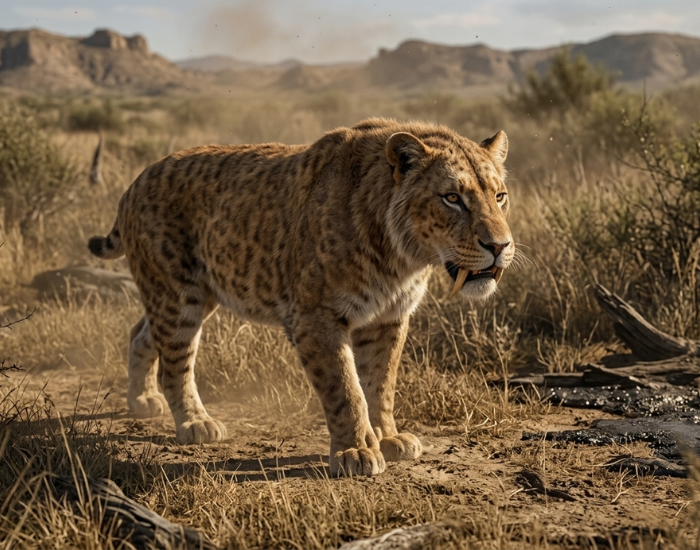
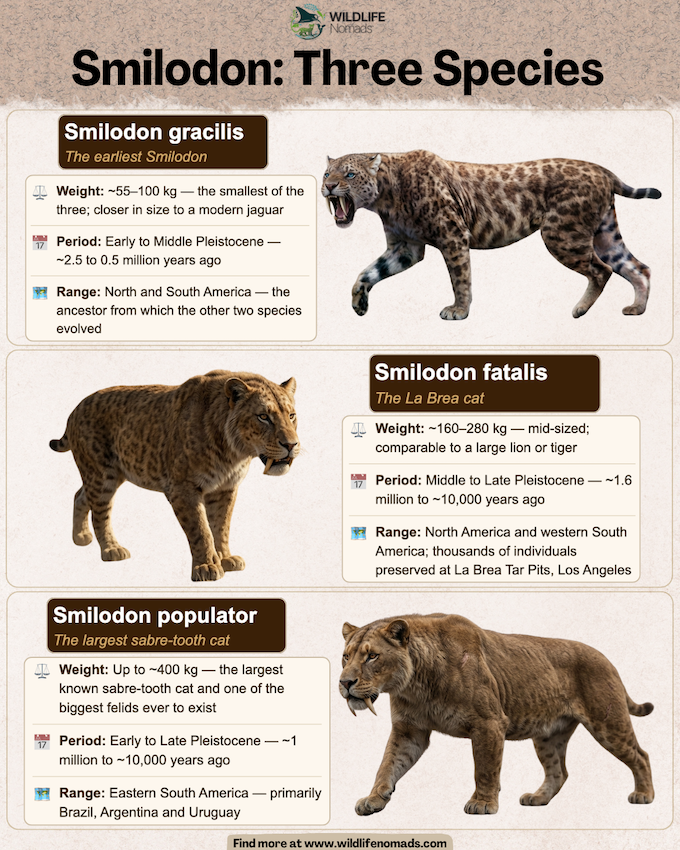
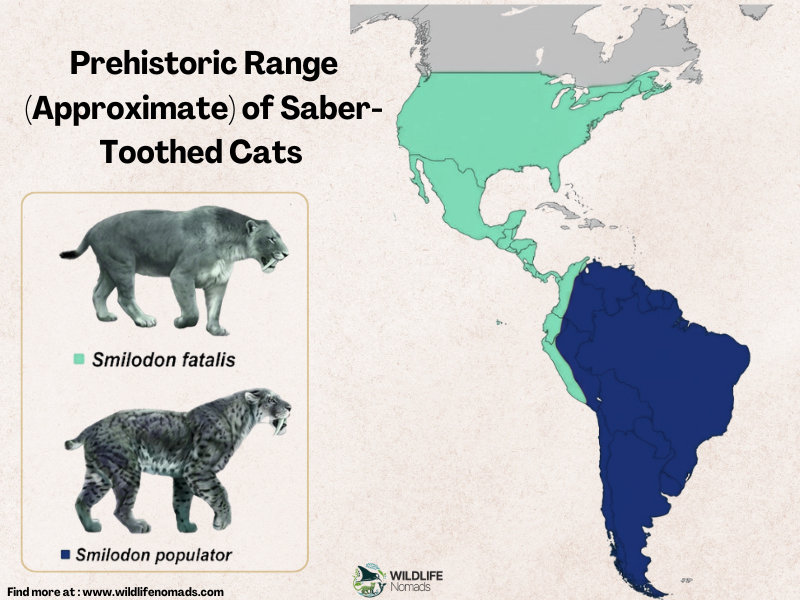
The genus name Smilodon translates roughly to “knife tooth,” and it earned every letter. Paleontologists recognize three species across the Americas. The smallest was Smilodon gracilis, the most famous was Smilodon fatalis, and the giant was Smilodon populator.
Each species filled a slightly different niche. S. fatalis roamed North America and into the western half of South America. S. populator lived across eastern South America, and it was a monster by any standard.
3. It Was Built Like a Wrestler, Not a Sprinter
Forget the lean, long-legged silhouette of a cheetah. Smilodon was short-limbed, heavy, and ferociously muscular through the chest and front legs. This cat was built to overpower, not to chase.
The size still stuns me. Smilodon fatalis weighed roughly 160 to 280 kilograms, heavier than most modern lions. Smilodon populator pushed past 350 kilograms, and some estimates reach 400. That outweighs the largest Siberian tigers alive today.
Compared to modern cats, the proportions look almost cartoonish. Short tail, bulldog chest, bear-like forelimbs. If you saw one walk past, “big cats” would not be the first phrase in your head. “Living tank” might be.
4. Those Canines Were a Liability As Much As a Weapon
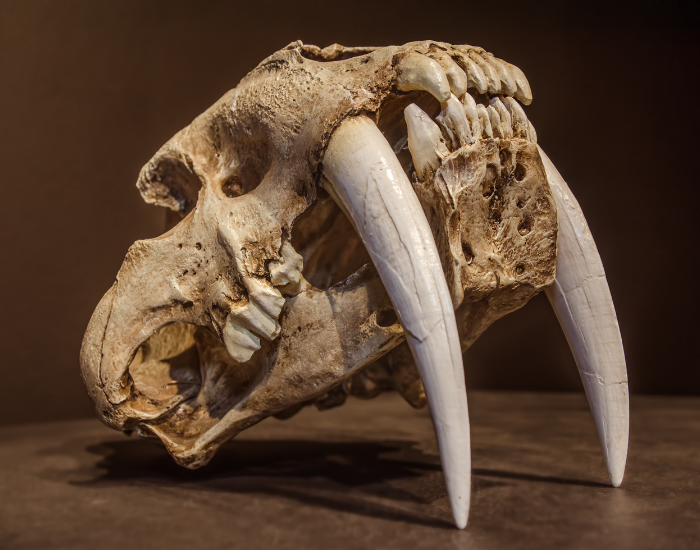
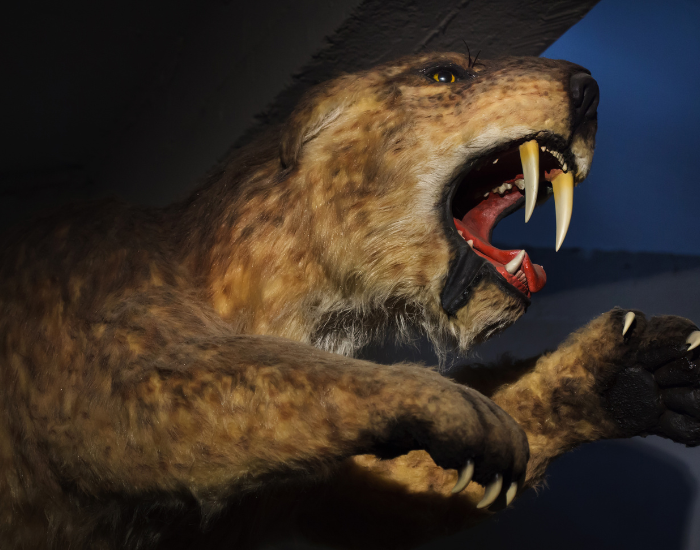
Now the teeth. The elongated canine teeth of the saber tooth cat reached about 18 centimeters, or seven inches, along the curve (for Smilodon fatalis, , the giant Smilodon populator had upper canines reaching up to 28 cm (11 inches)). The upper canines did the killing, and they were flat, blade-like, and surprisingly fragile.
That fragility matters. You cannot ram seven-inch canines into a thrashing animal and hope for the best. The teeth would snap. Wear patterns on recovered teeth confirm these cats avoided crunching heavy bone, unlike a hyena.
Instead the saber-toothed cat needed total control before the bite. It held the prey still, found the throat, and delivered one precise, deep slice. Elegant, in a terrifying way.
5. It Hunted by Ambush, Not by the Chase
Everything about the skeleton screams ambush predator. Smilodon was an apex predator that relied on surprise, not stamina. Those short legs were never going to win a footrace across open ground.
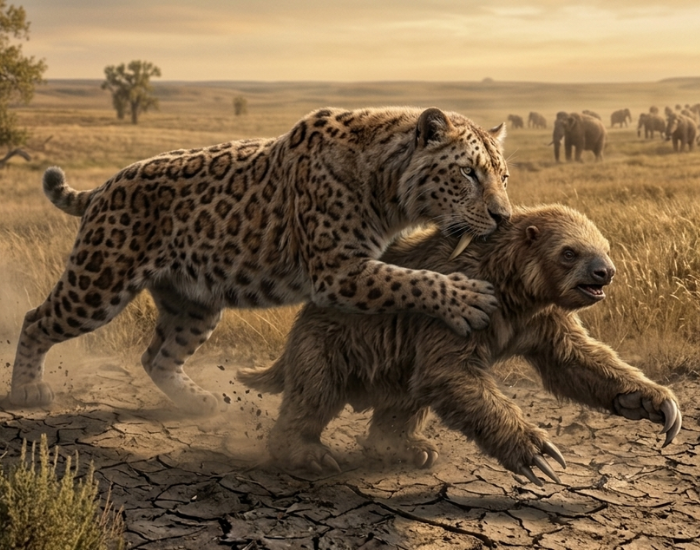
Picture the attack. The cat explodes from cover, hits a large herbivore, and uses raw strength to grapple it down. Only once the animal stops struggling do the canines come into play. The bite is the finish, not the opening move.
I think about this constantly when I watch modern ambush hunters. A leopard hauling prey into a tree works on the same logic Smilodon perfected over a million years. Control first, kill second.
6. Its Forelimbs Were Freakishly Strong
Here is the fact that genuinely changed my mental image of the animal. A 2010 radiograph study found that Smilodon had exceptionally thick, dense arm bones compared to lions. The forelimb strength was off the charts.
That power was the whole strategy. Strong arms pinned struggling prey so the delicate teeth could work safely. The bones tell the story even when the soft tissue is long gone.
This is why I love fossils. A single set of arm bones rewrote how scientists picture an entire hunt.
7. It May Have Hunted in Packs
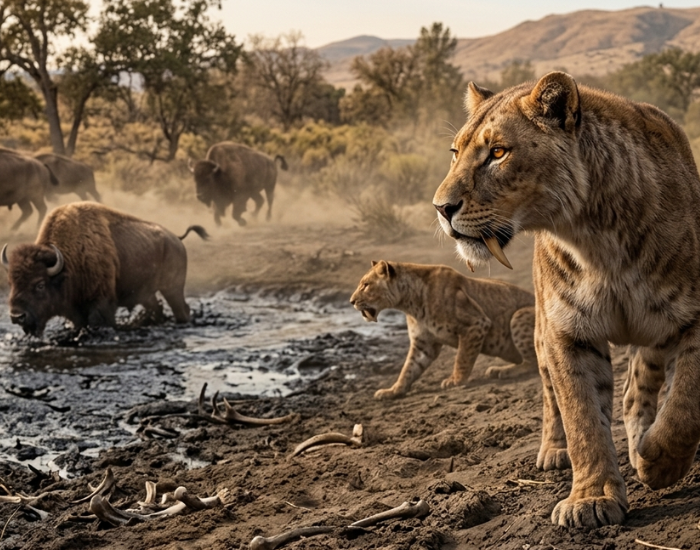
For a long time we pictured saber-toothed cats as lone killers. The fossil record nudges back. At the La Brea tar pits, saber tooth tiger remains pile up in striking numbers, often alongside trapped prey.
A clever 2009 study tested this. Researchers compared the tar-seep death assemblage to modern playback experiments, where recorded distress calls draw predators. Social cats like lions swarm such calls. The Smilodon numbers matched a social, not solitary, pattern.
So a real social structure is plausible. A pack of these cats grappling a single bison is a far scarier picture than one lone hunter. It also makes them feel oddly familiar, almost lion-like.
8. It Ruled Both American Continents
The geographic range was vast. Smilodon roamed North and South America for hundreds of thousands of years. S. fatalis fossils turn up across the Americas, from the United States down into Peru.
The northern edge surprised me. The most northerly Smilodon remains come from Medicine Hat, in Alberta, Canada. So yes, saber-toothed cats once stalked what is now Canadian prairie.
These cats favored landscapes with cover. They preferred mosaic habitats, mixing grasslands with closed forests. Dense brush and tree lines gave them the ambush hiding spots their whole hunting style demanded.
9. The La Brea Tar Pits Are a Smilodon Goldmine
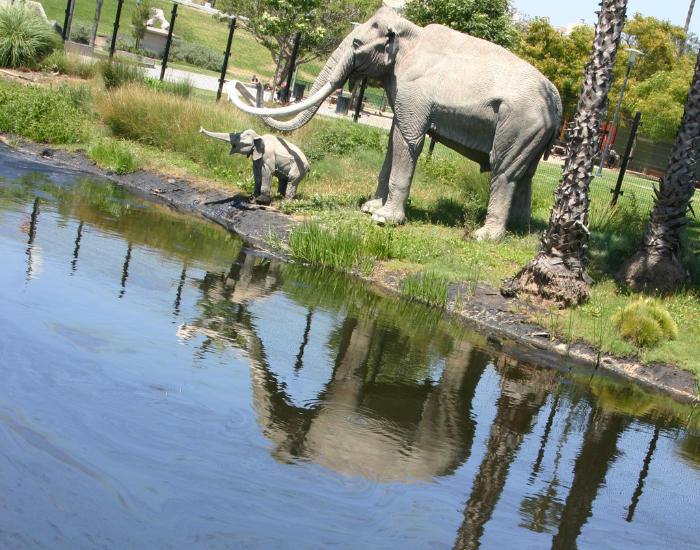
If you want to meet a saber tooth tiger, go to Los Angeles. The Rancho La Brea tar pits have yielded thousands of Smilodon specimens, more than any other site on Earth. It is the richest saber-toothed cat archive we have.
The trap was brutal but generous to science. A herbivore got stuck in the asphalt, its distress drew predators, and the predators got stuck too. Layer by layer, the seeps preserved an entire Ice Age food web.
Walking that collection, you stop seeing isolated bones. You start seeing whole populations of cats, frozen mid-tragedy.
10. It Lived Deep in the Ice Age
Time period matters for context. Smilodon lived during the Pleistocene epoch, the stretch of geologic time running from about 2.5 million years ago to 10,000 years ago. That is the heart of the last great Ice Age animals era.
So the saber tooth cat shared its world with mammoths, giant ground sloths, and dire wolves. It is genuinely ancient, yet it overlapped with early humans. That overlap turns out to matter a great deal.

11. It Shared the Land With Fierce Rivals
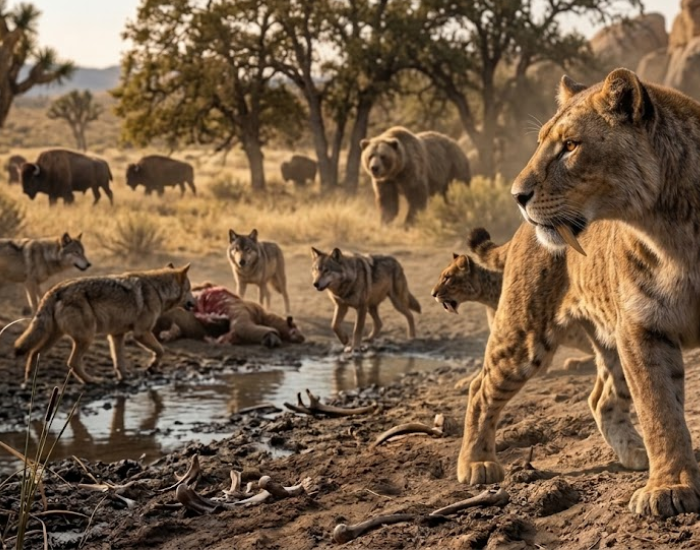
Smilodon never had its world to itself. In North America it coexisted with dire wolves, short-faced bears, and the enormous American lion. Competition for large prey was relentless.
Its menu reflected its build. Smilodon targeted big, slow-moving herbivores like bison, young mammoths, and ground sloths. By thinning those megaherbivores, the cat helped regulate entire ecosystems, the same role apex predators play today.
I find this comforting, in a strange way. Remove the saber-toothed cats and the whole Pleistocene web wobbles. They mattered, just as living predators still do.
12. Its Extinction Is a Detective Story
Smilodon became extinct roughly 10,000 years ago, at the close of the Ice Age. The popular theory blames starvation, the idea that desperate cats gnawed bones as prey ran out. The evidence pushes back.
Tooth-wear studies found no sign of bone-crunching desperation right before the end. These cats were still eating well. So the cause was bigger than one bad season.
The likely answer braids several threads. Large herbivores declined, and Smilodon had specialized hard on exactly that big prey. The Younger Dryas cooling (in northern hemispheres) and climage change, event shrank habitable space. Competition with newly arrived Homo sapiens added the final pressure. Over-specialization, in a fast-changing world, is a dangerous bet.
Frequently Asked Questions
No. The saber tooth cat is extinct, and the last Smilodon died out around 10,000 years ago. No saber-toothed cat survives anywhere on Earth. Any modern “sighting” is a misidentification, usually a large cat with prominent canines.
Yes, absolutely. Smilodon fatalis fossils are found across the United States, and the La Brea tar pits in California hold thousands of specimens. These cats ranged from coast to coast during the Pleistocene.
Only as fossils. The best place to see saber tooth cats remains is the La Brea Tar Pits Museum in Los Angeles. Major natural history museums across the Americas also display Smilodon skulls and skeletons
There has never been a verified living sighting in recorded history. The species vanished about 10,000 years ago, long before written records. Every claimed encounter since is folklore or a mistaken modern animal.
Imagine a lion-sized cat with a bulkier, more muscular body and shorter legs. It had a short tail, a powerful chest, and two enormous upper canines. Its fur color is unknown, though a plain or lightly spotted coat would have suited ambush hunting in cover.
Extinction came from several forces at once. Large prey declined, the climate cooled during the Younger Dryas, and competition with early humans grew. A cat that specialized in big game could not adapt fast enough.
Saber-Tooth Cat: Fact or Fiction? 🦴
Ten statements about Smilodon, the “saber-toothed tiger” — some true, some myths from the movies. Can you tell them apart?
Fact or Fiction?
Why These Vanished Cats Still Matter
Study a saber tooth tiger long enough and it stops feeling like a monster. It becomes a finely tuned predator that solved real problems with strength, patience, and a single perfect bite. Diego was closer to the truth than the textbooks let on.
That is the gift extinct animals give us. They sharpen how we see the living. Next time you read about modern tigers, notice what they share with Smilodon and what sets them apart. And if you ever stand at the La Brea pits, stay a while. Then tell me in the comments which fact surprised you most.
References:
Carbone, C., Maddox, T., Funston, P. J., Mills, M. G. L., Grether, G. F., & Van Valkenburgh, B. (2009). Parallels between playbacks and Pleistocene tar seeps suggest sociality in an extinct sabretooth cat, Smilodon. Biology Letters, 5(1), 81–85. https://doi.org/10.1098/rsbl.2008.0526
DeSantis, L. R. G., Schubert, B. W., Scott, J. R., & Ungar, P. S. (2012). Implications of diet for the extinction of saber-toothed cats and American lions. PLoS ONE, 7(12), e52453. https://doi.org/10.1371/journal.pone.0052453
DeSantis, L. R. G., Crites, J. M., Feranec, R. S., Fox-Dobbs, K., Farrell, A. B., Harris, J. M., Takeuchi, G. T., & Cerling, T. E. (2019). Causes and consequences of Pleistocene megafaunal extinctions as revealed from Rancho La Brea mammals. Current Biology, 29(15), 2488–2495. https://doi.org/10.1016/j.cub.2019.06.059
McHenry, C. R., Wroe, S., Clausen, P. D., Moreno, K., & Cunningham, E. (2007). Supermodeled sabercat, predatory behavior in Smilodon fatalis revealed by high-resolution 3D computer simulation. Proceedings of the National Academy of Sciences, 104(41), 16010–16015. https://doi.org/10.1073/pnas.0706086104
Meachen-Samuels, J. A., & Van Valkenburgh, B. (2010). Radiographs reveal exceptional forelimb strength in the sabertooth cat, Smilodon fatalis. PLoS ONE, 5(7), e11412. https://doi.org/10.1371/journal.pone.0011412
Wroe, S., McHenry, C., & Thomason, J. (2005). Bite club: Comparative bite force in big biting mammals and the prediction of predatory behaviour in fossil taxa. Proceedings of the Royal Society B, 272(1563), 619–625. https://doi.org/10.1098/rspb.2004.2986




_2_(15256732527).jpg)