
In 2026, I finally walked through the doors of the Natural History Museum in London for the first time, a pilgrimage that’s on the bucket list of just about every biologist. Nothing quite prepares you for the main hall, where the skeleton of a massive blue whale hangs suspended overhead. But as breathtaking as the whale was, it wasn’t the only thing I’d come to see. I’d traveled with a mental checklist of Ice Age animals I’d dreamed about since I was a kid: the saber-tooth cat, the American cave lion, and (right at the top of the list) the giant ground sloth.
And when I finally stood beside it, I understood why. Imagine walking through the scrublands of the American Southwest about 15,000 years ago. You’d expect to see some familiar sights, but then you’d look up, and I mean way up, to see a creature the size of a modern elephant standing on its hind legs, reaching into the canopy with a giant claw. This wasn’t a monster from a fever dream. It was the ground sloth.
While we often think of sloths as the sleepy, moss-covered mascots of the Amazonian canopy, their ancestors were a completely different breed. Ground sloths are a diverse group of extinct sloths in the mammalian superorder Xenarthra. They were titans of the Ice Age, ranging from the Andes Mountains to the Rocky Mountains. The earliest unambiguous fossil evidence of ground sloths comes from the early Oligocene, over 35 million years ago. Ground sloths dispersed across both North and South America, and fossil and genetic evidence shows they are closely related to other members of Xenarthra, such as anteaters and armadillos. Today, we’re diving deep into the natural history of these extinct giant ground sloths to understand how they lived and why they disappeared.
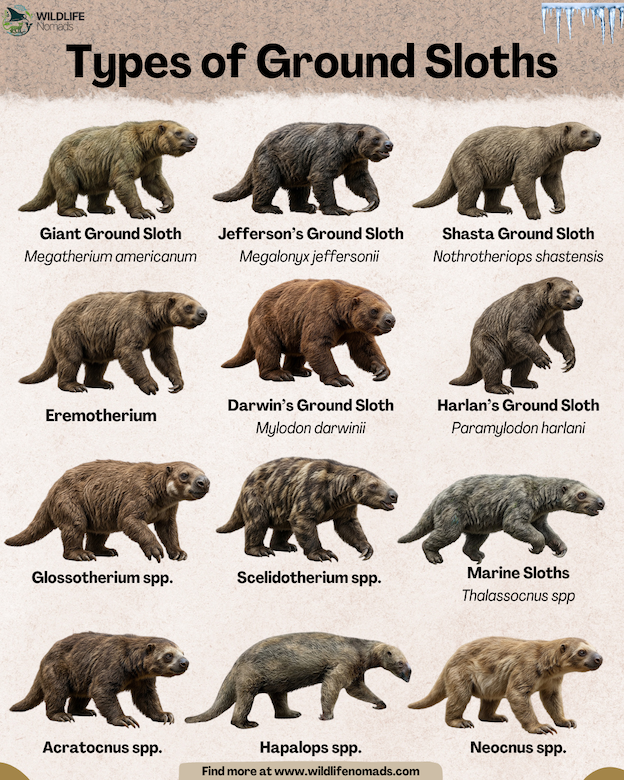
1. They Weren’t Just “Big Sloths”: They Were a Different League
When people ask, “what is a ground sloth?”, the easiest answer is to look at their closest living relatives: the living tree sloths. However, the comparison ends there. Ground sloths varied widely in size and habit. While modern tree sloths weigh about 10 pounds, the giant ground sloth known as Megatherium could weigh up to four tons.
In the world of vertebrate paleontology, they are categorized them into several families. These animals weren’t just “slow.” They were heavy-duty tanks of the New World. As mentioned before, they belong to the same family as armadillos and anteaters, forming a unique branch of mammals that evolved in South America when it was an island continent.
2. Megatherium: The “Great Beast” of the South
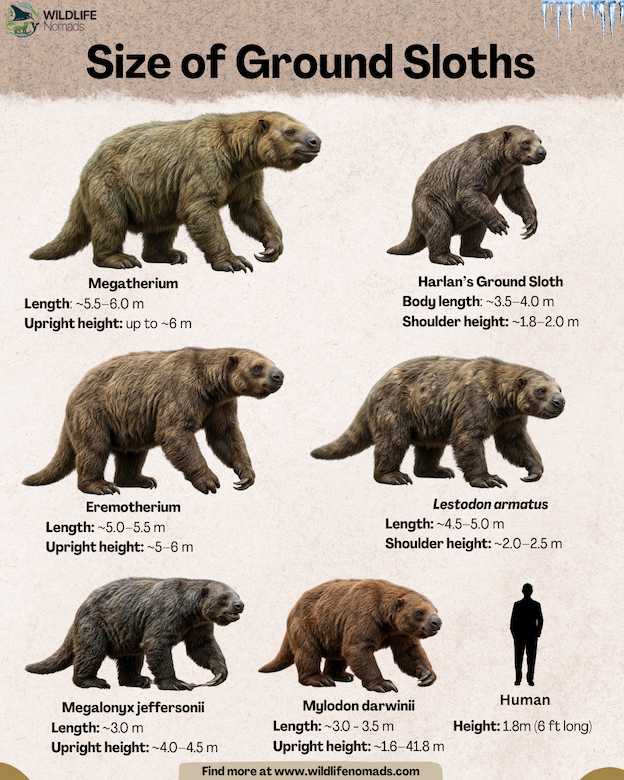
The scientific name for the most famous giant ground sloth is Megatherium americanum. This was the heaviest, the heavyweight champion sort of speaking. Found primarily in South America, this extinct species was one of the largest land mammals to ever exist.
Ground sloth size: Roughly 20 feet from nose to tail.
Ground sloth size compared to human: If you stood next to a Megatherium on its hind legs, you wouldn’t even reach its knee.
The “Great Claw”: Their name actually comes from the Greek for “Great Beast,” and their claws (some over a foot long) were used to strip plant material from trees that no other herbivore could reach.

3. The President and the Sloth: Jefferson’s Discovery
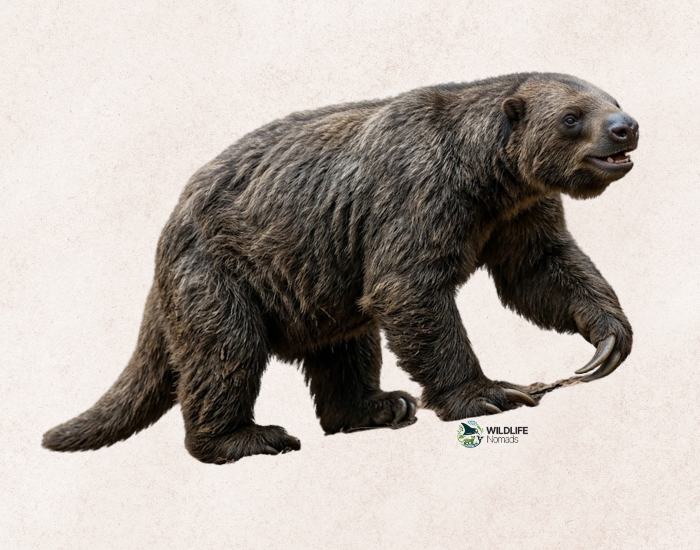
Did you know a U.S. President helped put the prehistoric sloth on the map? In the late 1700s, Thomas Jefferson was sent a box of limb bones and claws found in a cave in Virginia.
Initially, Jefferson thought they belonged to a giant lion. He even told Meriwether Lewis to keep an eye out for living ones during the Lewis and Clark expedition! He called it Megalonyx, or “great claw.” Later, scientists realized it was an extinct sloth. Today, we formally call it Jefferson’s ground sloth. The species name is Megalonyx jeffersonii. Jefferson’s letter and his 1797 paper, in which he named the first genus of fossil animal, marked the beginning of vertebrate paleontology in North America.
In these works, Jefferson argued against the theory of New World degeneracy by showing that North American animals like Jefferson’s ground sloth were not inferior to their Old World counterparts. The discovery and scientific significance of Megalonyx was later reported in Scientific American, highlighting its importance in early American paleontology. Fossils of Jefferson’s ground sloth have been found in several states east of the Mississippi, demonstrating its wide distribution.
It turns out President Thomas Jefferson was essentially one of America’s first amateur paleontologists.
4. The Shasta Ground Sloth: The Desert Specialist
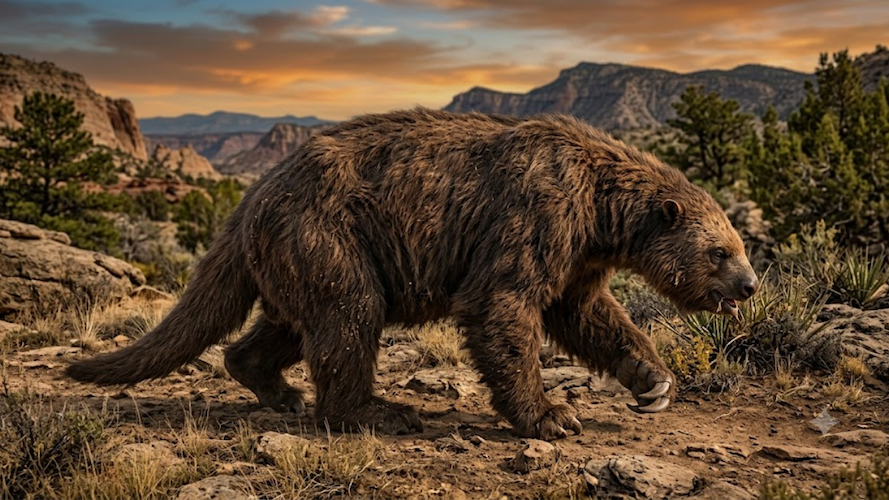
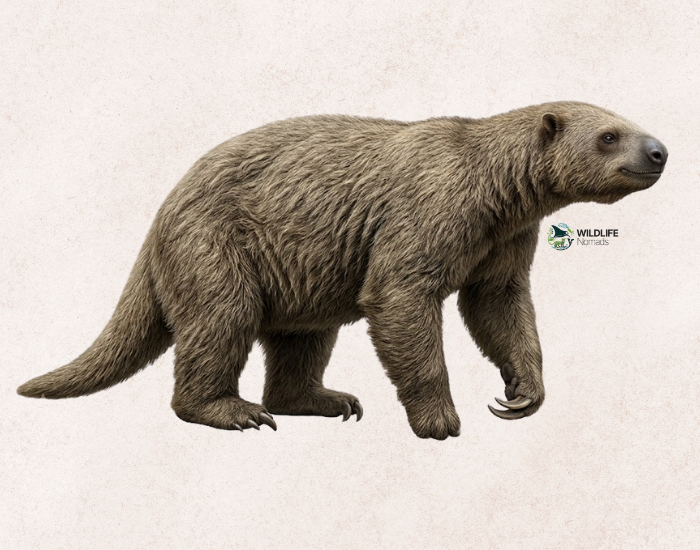
While Megatherium ruled the south, the Shasta ground sloth (Nothrotheriops shastensis) dominated the West Coast and the Southwestern United States, including New Mexico and Arizona.
The evolutionary divergence between two species of sloths, those adapted to life in the trees and those adapted to life on the ground, led to a wide range of body forms and ecological roles.
These were smaller (about the size of a grizzly bear) and are famous for the Rampart Cave discoveries. Because the cave was so dry, the ground sloth fossil record there included something better than bones: coprolite (fossilized dung). By studying this, scientists have been able to pinpoint exactly what these extinct species ate, mostly desert plants like Mormon tea and saltbush. Some ground sloths, including certain Shasta ground sloth populations, evolved longer snouts, which may have enhanced their sense of smell and allowed them to specialize in feeding on particular desert plants.
5. A Tongue Built for the Canopy
One of the most fascinating characteristics of the ground sloth was its long prehensile tongue. Similar to a giraffe, they used this muscular tongue to wrap around branches and pull plant material into their lower jaws.
Their upper and lower jaws were lined with ever-growing peg-like teeth. They didn’t have incisors, which made them look a bit goofy, but they were highly efficient at grinding down tough vegetation.
6. Did They Really Climb Trees?
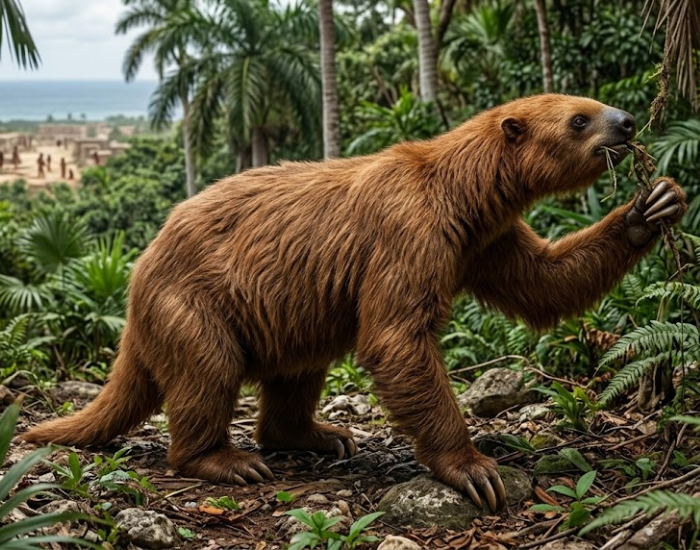
This is a point of critical thinking in the community. While the giant ground sloth was far too heavy to climb, some other ground sloths, specifically the smaller ones found in the Caribbean, might have been semi-arboreal.
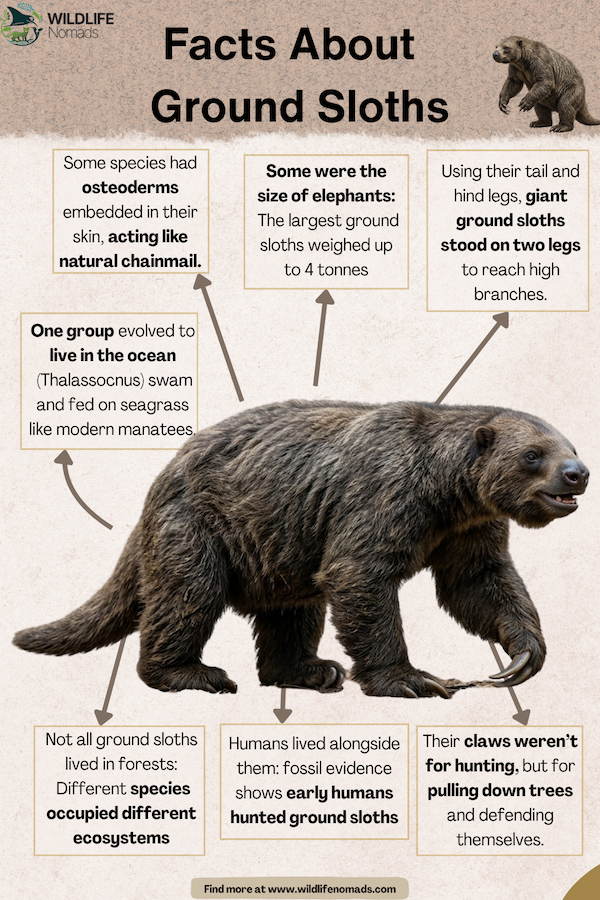
However, for the extinct giant ground types, their hind legs and massive tails formed a “tripod.” This allowed them to stand upright to reach high branches, making them the ultimate high-reach foragers of the Ice Age.

7. The Mystery of the “Sea Sloth”
Not all ground sloths stayed on land. In the Andes Mountains and along the coast of Peru, scientists found Thalassocnus, a prehistoric sloth that lived in the ocean. Over different ages, their limb bones became denser (like a manatee’s or Dugong’s) to help them dive and eat seagrass. This is a prime example of how species adapt to their environment.
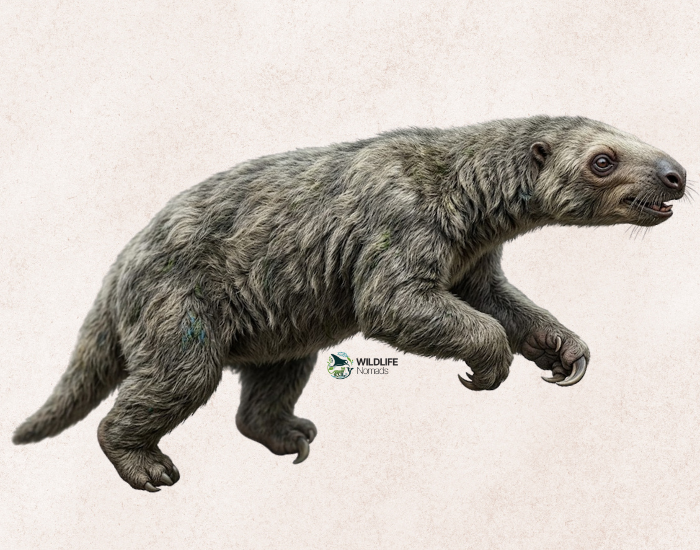
8. Predators: Who Hunted a Giant?
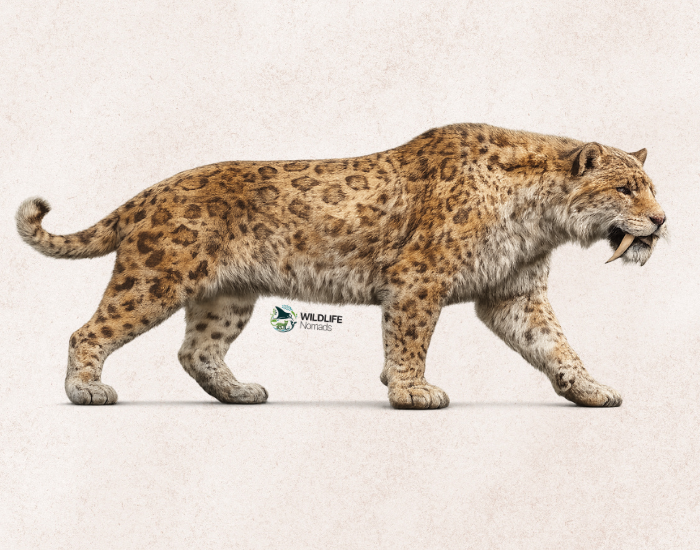
You’d think being the size of a house would make you safe, but the Pleistocene was a dangerous time. Ground sloth predators included the saber-toothed cat (Smilodon) and the short-faced bear.
However, a healthy adult ground sloth was likely not easy prey. Their skin had “osteoderms”, tiny limb bones embedded in the hide like chainmail armor. Between their armor and those claws, a ground sloth was a formidable opponent.
9. When Was the Last Ground Sloth Alive?
The timeline for ground sloth extinction is a hot topic. In North America, most went extinct around 11,000 years ago. However, on islands like Cuba and Hispaniola, small extinct sloth species survived until about 4,000 years ago. This means humans were building the pyramids in Egypt while prehistoric sloths were still hanging out in the Caribbean.
10. The Ultimate Question: Why Did They Go Extinct?
So, what killed the giant ground sloth? It wasn’t just one thing. It was a “perfect storm”:
Climate Change: As the Ice Age ended, the lush landscapes they relied on shifted.
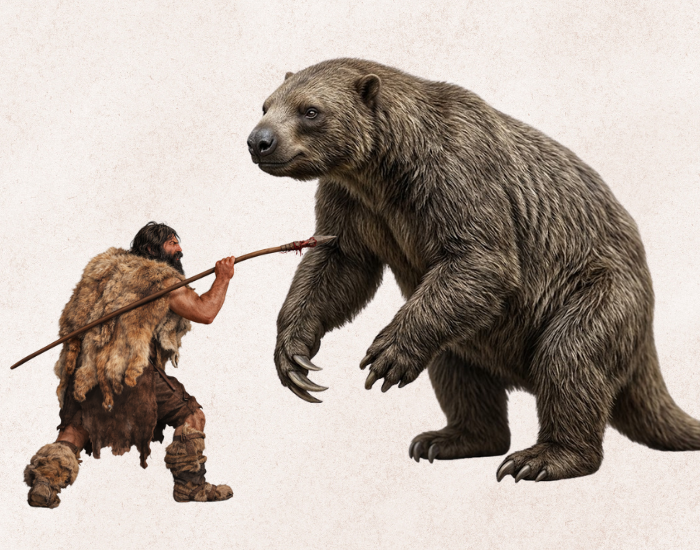
Human Impact: Fossil evidence increasingly shows that early humans hunted these animals. In New Mexico, “ghost tracks” show human footprints stepping inside the tracks of a giant ground sloth, suggesting a hunt or a confrontation.
Slow Reproduction: Like modern tree sloths, they likely had few offspring and long gestation periods, making it hard for the population to recover.
Ground Sloth Size Comparison Table
| Sloth Species | Estimated Weight | Geographic Range | Key Feature |
| Megatherium | 4,000 kg – 6,500 kg | South America | Size of an elephant |
| Jefferson’s Sloth | 1,000 kg | North America | Found by Thomas Jefferson |
| Shasta Sloth | 250 kg | SW United States | Desert specialist |
| Modern Tree Sloth | 5 kg | Central/South America | Arboreal, very slow |
FAQ: Your Ground Sloth Questions Answered
The ground sloth size depended on the species. The largest (Megatherium) was about 20 feet long, while the Shasta ground sloth was closer to 9 feet.
They were herbivores, so they weren’t hunters. However, with those claws and their massive size, they were likely very dangerous if cornered. Think of them like modern grizzly bears or rhinos, mostly peaceful, but don’t poke them.
No. Their fossil structure shows they were built for power, not speed. They walked on the outsides of their feet because their claws were so long, resulting in a slow, rolling gait.
Yes. Fossil record data and archaeological sites confirm that early humans lived alongside and hunted various species of extinct sloth.
The Legacy of the Sloth
The extinction of the ground sloth marked the end of an era. They were the architects of their ecosystems, dispersing seeds that many plants still rely on today (like the avocado!).
While we can’t see a Megatherium in the wild today, we can see their legacy in the living tree sloths that still haunt the jungles of Central America. These animals remind us that the world was once a place of giants, and that even the most massive creatures are vulnerable to the shifts of climate and time.
What do you think? Would you have wanted to see a bear-sized sloth in your backyard, or are you happy they stayed in the Late Pleistocene?
Ground Sloth Challenge 🦥
Twelve questions on the Ice Age giants — first a fact-or-fiction round, then multiple choice. How many can you get?
References:
Amson, E., de Muizon, C., Laurin, M., Argot, C., & de Buffrénil, V. (2014).
Gradual adaptation of bone structure to aquatic lifestyle in extinct sloths
from Peru. Proceedings of the Royal Society B: Biological Sciences, 281(1782), https://doi.org/10.1098/rspb.2014.0192
Bennett, M. R., Bustos, D., Pigati, J. S., Springer, K. B., Urban, T. M.,
Holliday, V. T., Reynolds, S. C., Budka, M., Honke, J. S., Hudson, A. M.,
Fenerty, B., Connelly, C., Martinez, P. J., Santucci, V. L., & Odess, D. (2021).
Evidence of humans in North America during the Last Glacial Maximum. Science,
373(6562), 1528–1531. https://doi.org/10.1126/science.abg7586
Bustos, D., Jakeway, J., Urban, T. M., Holliday, V. T., Fenerty, B., Raichlen,
D. A., Budka, M., Reynolds, S. C., Allen, B. D., Love, D. W., Santucci, V. L.,
Odess, D., Willey, P., McDonald, H. G., & Bennett, M. R. (2018). Footprints
preserve terminal Pleistocene hunt? Human–sloth interactions in North America.
Science Advances, 4(4), eaar7621. https://doi.org/10.1126/sciadv.aar7621
Delsuc, F., Kuch, M., Gibb, G. C., Karpinski, E., Hackenberger, D., Szpak, P.,
Martínez, J. G., Mead, J. I., McDonald, H. G., MacPhee, R. D. E., Billet, G.,
Hautier, L., & Poinar, H. N. (2019). Ancient mitogenomes reveal the evolutionary
history and biogeography of sloths. Current Biology, 29(12), 2031–2042.e6.
https://doi.org/10.1016/j.cub.2019.05.043
Poinar, H. N., Hofreiter, M., Spaulding, W. G., Martin, P. S., Stankiewicz,
B. A., Bland, H., Evershed, R. P., Possnert, G., & Pääbo, S. (1998). Molecular
coproscopy: Dung and diet of the extinct ground sloth Nothrotheriops shastensis.
Science, 281(5375), 402–406. https://doi.org/10.1126/science.281.5375.402