When I worked at the zoo years ago, my daily commute took me past the Galapagos tortoises and into the reptile department. My mind was usually on the crocodiles and poison dart frogs. However, I always stopped at the giant anteater exhibit, literally every single time.
There is something deeply prehistoric about them. Much like the saiga antelope or the aardvark, the anteater looks like a creature time forgot. Watching that massive, shaggy animal vacuum the grass with a snout built like a biological hose was a daily reminder of how extraordinary evolution can get.
Anteaters aren’t just weird-looking mammals. They are highly specialized masterpieces of nature. Here are 10 anteater facts that prove exactly that.

The Four Species of Anteaters
Before we dive into the fascinating facts, we need to sort out some taxonomy. “Anteater” isn’t one animal, there are four living species today. All four belong to the suborder Vermilingua (literally “worm tongue”) and sit within the superorder Xenarthra, making them close relatives of sloths and armadillos.
The four anteater species are:
- Giant Anteater (Myrmecophaga tridactyla) — the largest and most well-known species
- Silky Anteater (Cyclopes didactylus) — the smallest, entirely arboreal
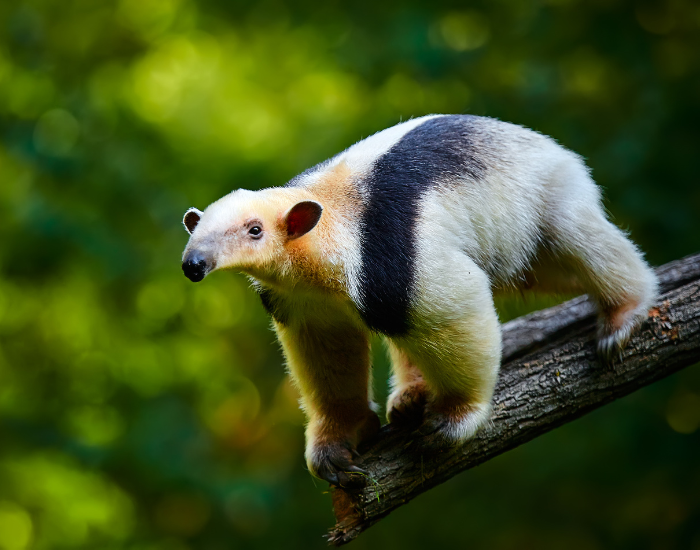
- Northern Tamandua (Tamandua mexicana) — semi-arboreal, found in Central America
- Southern Tamandua (Tamandua tetradactyla) — the “collared anteater,” widespread in South America
These solitary mammals are widespread geographically, with a central American range extending from southern Mexico through Central America and into various south American populations. They occupy tropical and dry forests, open grasslands, and savanna habitat. Their dense fur can be dark brown, black, or gray, with some species showing distinctive markings. In addition, they demonstrate one of the most impressive dietary specializations in the mammal world.

1. Anteaters Have No Teeth — But They Are Not Defenceless
Do anteaters have teeth? The answer is a hard no. Anteaters are the only mammals that have absolutely no teeth at all, not even vestigial ones. Instead of chewing, they use hardened palates to crush ants and termites before swallowing.
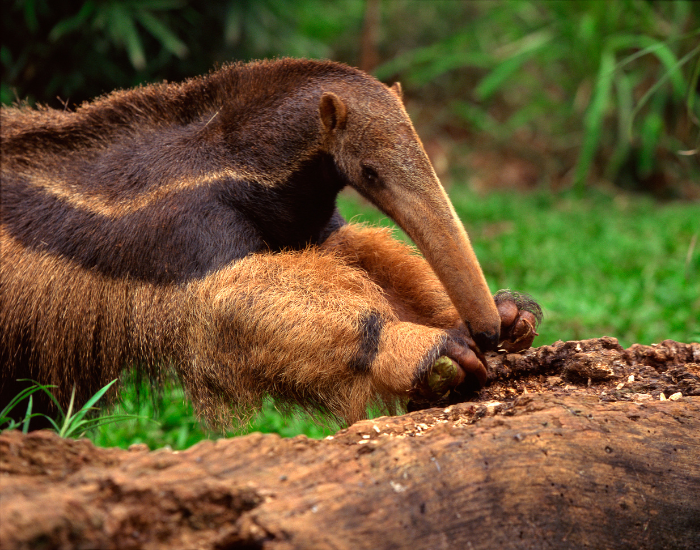
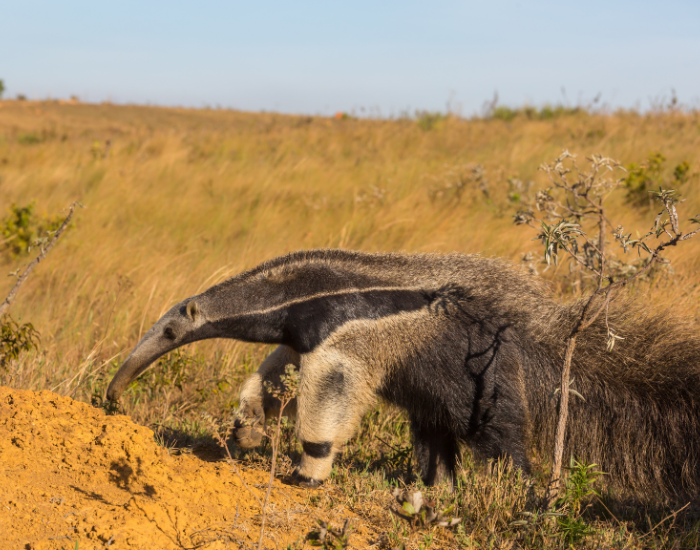
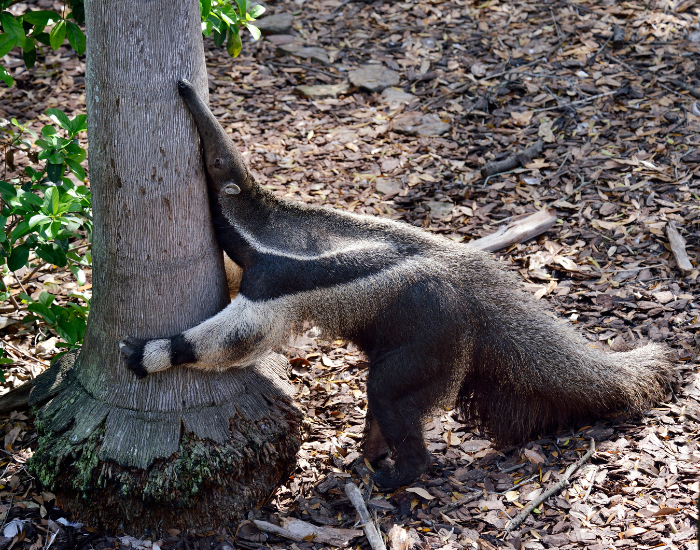
However, don’t let the lack of a bite fool you. Giant anteaters carry claws up to 10 cm (4 inches) long on their front legs. Even jaguars and pumas (cougars) think twice before attacking an adult. When cornered, a giant anteater rears up on its hind legs and uses those claws with lethal force. There are documented cases of giant anteaters killing their attackers in self-defence. In addition to defense, giant anteaters use their sharp claws to tear open insect nests, such as termite mounds and anthills, allowing them to access their primary food sources.
2. The Tongue Reaches Up to 60 cm And Moves 150 Times Per Minute
The anteater’s tongue is a specialized feeding adaptation and one of the most impressive tools in the animal kingdom. This long tongue can extend up to 60 cm (roughly 2 feet) outside the mouth. The giant anteater’s tongue is covered in sticky saliva produced by enlarged salivary glands, and it is also lined with tiny hooks called filiform papillae that help capture and hold ants and termites during feeding.
When an anteater finds a termite mound or ant nest, it flicks its long tongue in and out up to 150 times per minute. This high-speed system, combined with the sticky saliva and tiny hooks, lets it consume thousands of small insects before the colony’s soldier caste mounts a defence. Each feeding visit to a mound lasts only about a minute. Therefore, the anteater rapidly moves on, often visiting up to 200 nests per day.
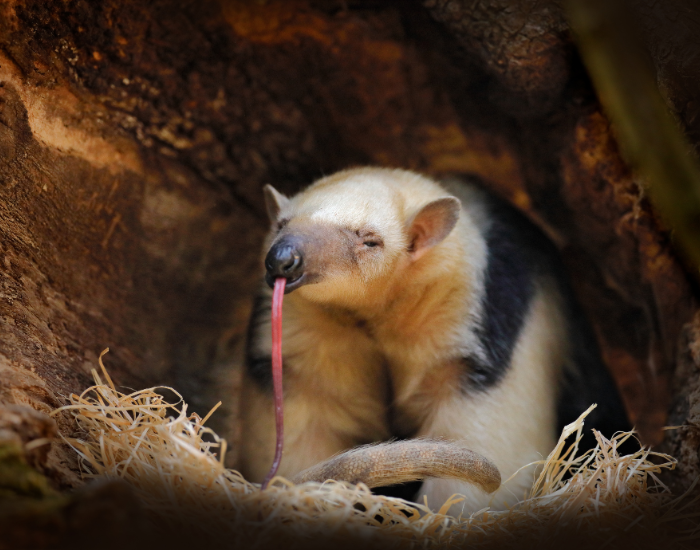
3. The Tongue Is Anchored to the Sternum, Not the Throat
The suborder name Vermilingua (“worm tongue”) is no accident. The tongue of an anteater is not attached to the back of the throat the way a human tongue is. Instead, it anchors to the sternum, the breastbone.
The entire skull of a giant anteater is essentially a housing unit for this massive, specialised muscle. The long snout is a key adaptation, allowing the anteater to efficiently forage for ants and termites within mounds or anthills. Giant anteaters have a long, distinctive snout with a 2-foot-long tongue and no teeth, perfectly suited for reaching deep into insect nests and extracting prey. The snout is long and narrow, with a tiny circular mouth at the tip. This is one of the most extreme examples of feeding specialisation found in any living mammal.

4. Their Sense of Smell Is 40 Times More Powerful Than Ours
Giant anteaters have notoriously poor eyesight. To compensate, they rely almost entirely on their sense of smell. Research confirms their olfactory ability is roughly 40 times more sensitive than a human’s.
This powerful nose allows them to detect the difference between a soldier termite (bitter, aggressive) and a worker termite from outside the mound. It is a critical survival skill for generally solitary animals foraging in dense tropical and dry forests where visibility is near zero. In addition, while giant anteaters are usually solitary mammals, they do come together to mate and raise their young, and use scent to navigate their large home ranges and locate mates.
5. The Silky Anteater Is a Canopy Master in Disguise
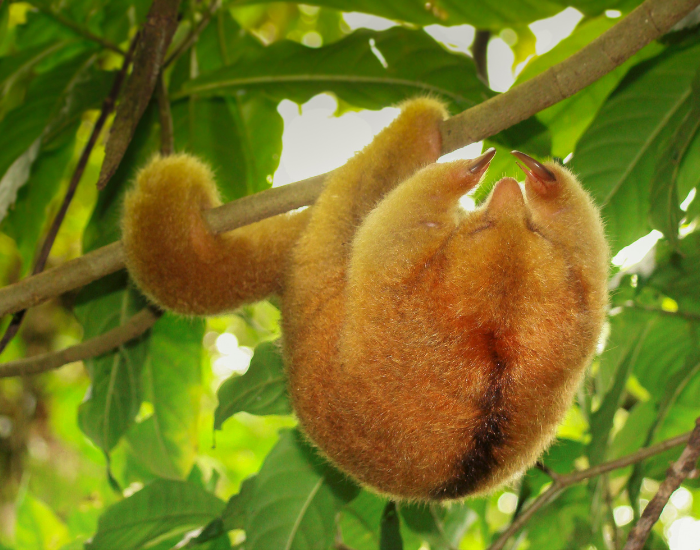
While the giant anteater gets all the attention, the silky anteater (Cyclopes didactylus) is the one that genuinely stops me in my tracks. It is the smallest of the four species, roughly the size of a squirrel, and lives an entirely arboreal life. Silky anteaters are exclusively arboreal and nocturnal, living high in the rainforest canopy.
Unlike their ground-dwelling cousins, silky anteaters are covered in dense fur, which helps with camouflage and insulation. They have prehensile tails that function as a fifth limb, highly adaptable for grasping and climbing. They spend their lives high in the canopy of South and Central America, perfectly camouflaged to resemble the fluffy seed pods of the silk-cotton tree. This is a completely different ecological niche from the open grasslands where giant anteaters are generally found.
6. Tamanduas Are the Versatile “Middle Children”
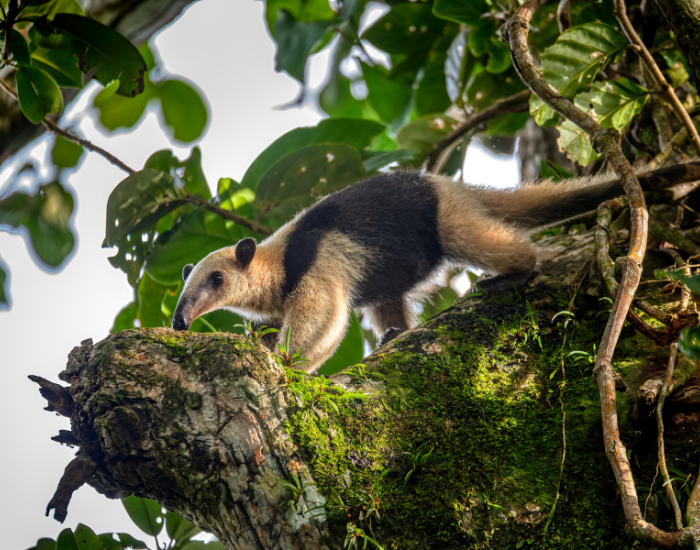
The northern tamandua (Tamandua mexicana) and southern tamandua are equally comfortable in the trees and on the ground. You can identify a tamandua by the distinctive dark “vest” of fur across its torso, which is why the southern species is sometimes called the collared anteater.
Tamanduas have long tongues adapted for extracting insects from narrow crevices, similar to their giant anteater relatives. In addition to ants and termites, tamanduas can also consume bees, honey, and occasionally fruits.
From an evolutionary perspective, tamanduas demonstrate how a common ancestor split into specialised roles. One lineage went fully terrestrial (giant anteater), one went fully arboreal (silky anteater), and the tamanduas occupy both. For example, they feed on smaller insect species than giant anteaters, which reduces direct competition when ranges overlap.
7. They Walk on Their Knuckles to Protect Their Claws
Because their large claws are essential tools for ripping into termite mounds, anteaters never walk on their palms. Instead, they tuck the claws inward and walk on their knuckles, similar to gorillas and chimpanzees.
This knuckle-walking gait gives them a shuffling, deliberate stride. If you ever spot tracks in northern Argentina or the Brazilian Cerrado where hind-leg prints look roughly human-shaped but the front prints appear curled inward, you are looking at a giant anteater trail. The giant anteater’s bushy tail is covered with long hairs, which can reach up to 16 inches in length, adding to its distinctive appearance. It is a deliberate trade-off: they sacrifice speed to keep their digging tools razor-sharp.
8. They Have the Lowest Body Temperature of Any Placental Mammal
Giant anteaters hold a remarkable physiological record. Their resting body temperature is just 32.7°C (90.9°F), the lowest ever recorded for a placental mammal. This is a direct consequence of a diet low in caloric value.
Ants and termites are rich in protein but energy-poor. To survive on up to 30,000 insects a day, giant anteaters run a very slow metabolism. They sleep up to 15 hours daily and use their dense, long-haired bushy tail like a blanket to regulate heat while resting. Every adaptation points toward energy conservation.

9. Baby Anteaters Are Living Camouflage
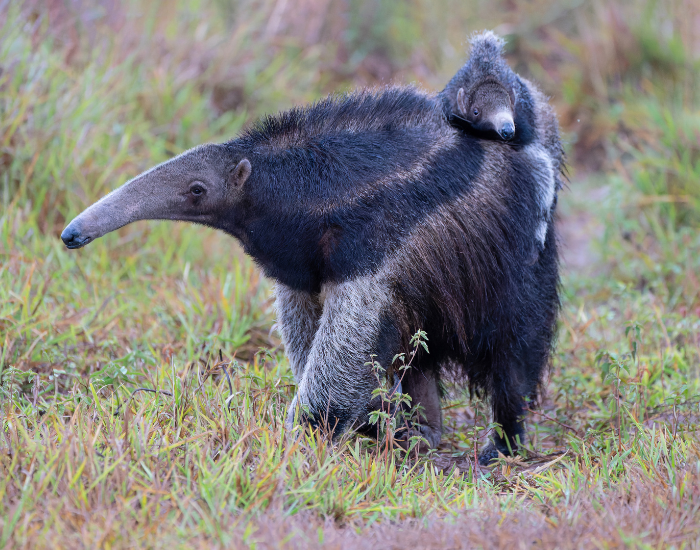
An adult female giant anteater gives birth to a single baby while in a standing position, propped up by her strong tail. Giant anteaters almost always give birth to a single offspring after a gestation of around 190 days. The pup spends the first year of life hitching a ride on its mother’s back, which helps it blend in with its surroundings. For the first six to nine months of life, that baby rides on its mother’s back constantly.
The most striking detail? The baby’s body markings align almost perfectly with the mother’s shoulder stripes. From above, the youngster becomes nearly invisible — a clever piece of natural camouflage against harpy eagles and jaguars. Giant anteater pups are usually weaned at about nine months of age and leave their mother when they are full grown, at about two years of age. However, giant anteater pups have a 50 percent mortality rate in the first three months of life due to susceptibility to pneumonia and other health-related problems.
10. Roadkill Is Now One of Their Biggest Killers
Giant anteaters have survived since the Pleistocene. However, they now face major threats far more dangerous than predators, including habitat loss, hunting, and vehicle collisions. Habitat loss from agricultural expansion in South America, particularly in the Brazilian Cerrado and Pantanal, is the biggest long-term driver of decline. Burning sugar cane fields is a common practice that removes the plant’s outer leaves and makes cutting the cane stalks easier, but this destroys anteater habitat. In Brazil, conservationists are working to phase out burning sugar cane to protect giant anteater habitats.
Significant factors contributing to their decline include their dietary specificity, low reproductive rate, large body size, and human encroachment. Giant anteaters are classified as Vulnerable by the IUCN due to high levels of habitat loss and degradation. They have disappeared from much of their habitat, especially in Central America.
Conservation Efforts for Giant Anteaters
Conservation organisations are responding on multiple fronts. Key efforts include:
- Protected Areas: Expanding protections across the Cerrado and Pantanal biomes in Brazil, which host the largest remaining populations.
- Wildlife Underpasses: Installing road-crossing structures to reduce roadkill mortality one of the most immediate threats to the species.
- Anteaters & Highways Project: A targeted research and mitigation programme that maps high-risk road corridors and works with local authorities to address them.
- Captive Breeding: Institutions such as Reid Park Zoo and the San Diego Zoo run Species Survival Plan (SSP) programmes to maintain genetically healthy backup populations.
For further reading, the IUCN Red List entry for Myrmecophaga tridactyla provides the most current population assessments and threat analyses.

FAQ: Common Questions About Anteaters
Ants and termites make up the bulk of their diet. However, they are opportunistic. In the wild, they occasionally consume soft-bodied beetle larvae and even fruit. In captivity, zoos often supplement their diet with a specialised insectivore mix.
In the wild, giant anteaters typically live around 14–15 years. Under expert human care in accredited zoos, individuals have lived beyond 26 years.
Generally, no. They are solitary animals that prefer to flee from threats. However, if cornered, their front claws can inflict lethal wounds. There are documented fatalities involving captive giant anteaters. Always give them space in the wild.
The best places to observe wild giant anteaters include the Pantanal wetlands and the Cerrado savanna of Brazil, Llanos grasslands in Venezuela and Colombia, and the Gran Chaco region of Paraguay and Bolivia. In the US, the San Diego Zoo has a well-regarded conservation and breeding programme.
Despite looking similar, anteaters and aardvarks are not closely related. Anteaters belong to the superorder Xenarthra (with sloths and armadillos). Aardvarks are the sole member of a completely separate order, Tubulidentata. Their similarities are a remarkable case of convergent evolution.
Why We Should Care
Anteaters are more than a curiosity. They are keystone species that regulate insect populations across entire ecosystems. Every giant anteater that disappears from a grassland leaves behind a cascade of ecological consequences, from overgrown termite mounds to disrupted soil structure.
Whether it is the tiny silky anteater threading through the canopy or the large, shuffling giant I used to watch at the zoo, these animals deserve our attention and our protection. Nature doesn’t always follow a standard blueprint, and that is precisely what makes it worth fighting for.
Where to See Anteaters in the Wild?
Here is a list of 6 wildlife safari tours where you can see Anteaters in the wild. As a biologist, I only recommend tours that follow strict ethical guidelines to ensure we don’t disturb wildlife. These are the three tours/ partners I trust most based on their conservation records:
This blog is reader-supported. When you buy experiences through links listed on this site, we may earn an affiliate commission.
References:
Miranda, F., Bertassoni, A., & Abba, A. M. (2014). Myrmecophaga tridactyla. The IUCN Red List of Threatened Species 2014 https://www.iucnredlist.org/species/14224/210444314
Davit-Béal, T., Tucker, A. S., & Sire, J. Y. (2009). Loss of teeth and enamel in tetrapods: fossil record, genetic data and morphological adaptations. Journal of anatomy, 214(4), 477–501. https://doi.org/10.1111/j.1469-7580.2009.01060.x
Shaw, J., Machado-Neto, J., & Carter, T. S. (1987). Behavior of free-living giant anteaters (Myrmecophaga tridactyla). Biotropica, 19(3), 255–259. https://doi.org/10.2307/2388344
McNab, B. K. (1984). Physiological convergence amongst ant-eating and termite-eating mammals. Journal of Zoology, 203(4), 485–510. https://doi.org/10.1111/j.1469-7998.1984.tb02345.x
Bertassoni, A., Mourão, G., & Bianchi, R. C. (2020). Space use by giant anteaters (Myrmecophaga tridactyla) in a protected area within human-modified landscape. Ecology and evolution, 10(15), 7981–7994. https://doi.org/10.1002/ece3.5911
Giroux, A., Ortega, Z., Attias, N., Léonard, A., Desbiez, A. L. J., Valle, D., et al. (2025). Giant anteaters on the move: native habitat selection and behavioral responses to land use change. Movement Ecology, 13, Article 10. https://doi.org/10.1186/s40462-025-00616-8
Giroux, A., Ortega, Z., Bertassoni, A., Desbiez, A. L. J., Kluyber, D., Massocato, G. F., … Oliveira-Santos, L. G. R. (2021). The role of environmental temperature on movement patterns of giant anteaters. Integrative Zoology. doi:10.1111/1749-4877.12539