
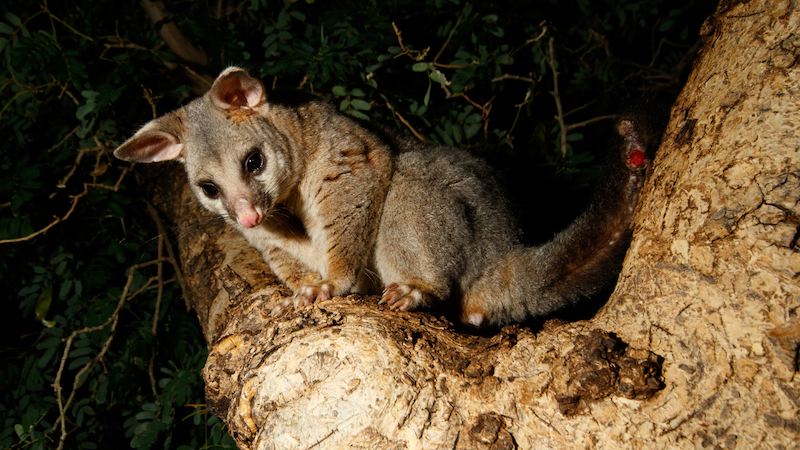
A noise woke me at 3 am at Norah Head. Something was jumping on our awning, then onto the roof of our roof tent. We keep a lamp inside the tent, so I switched it on and shone it up.
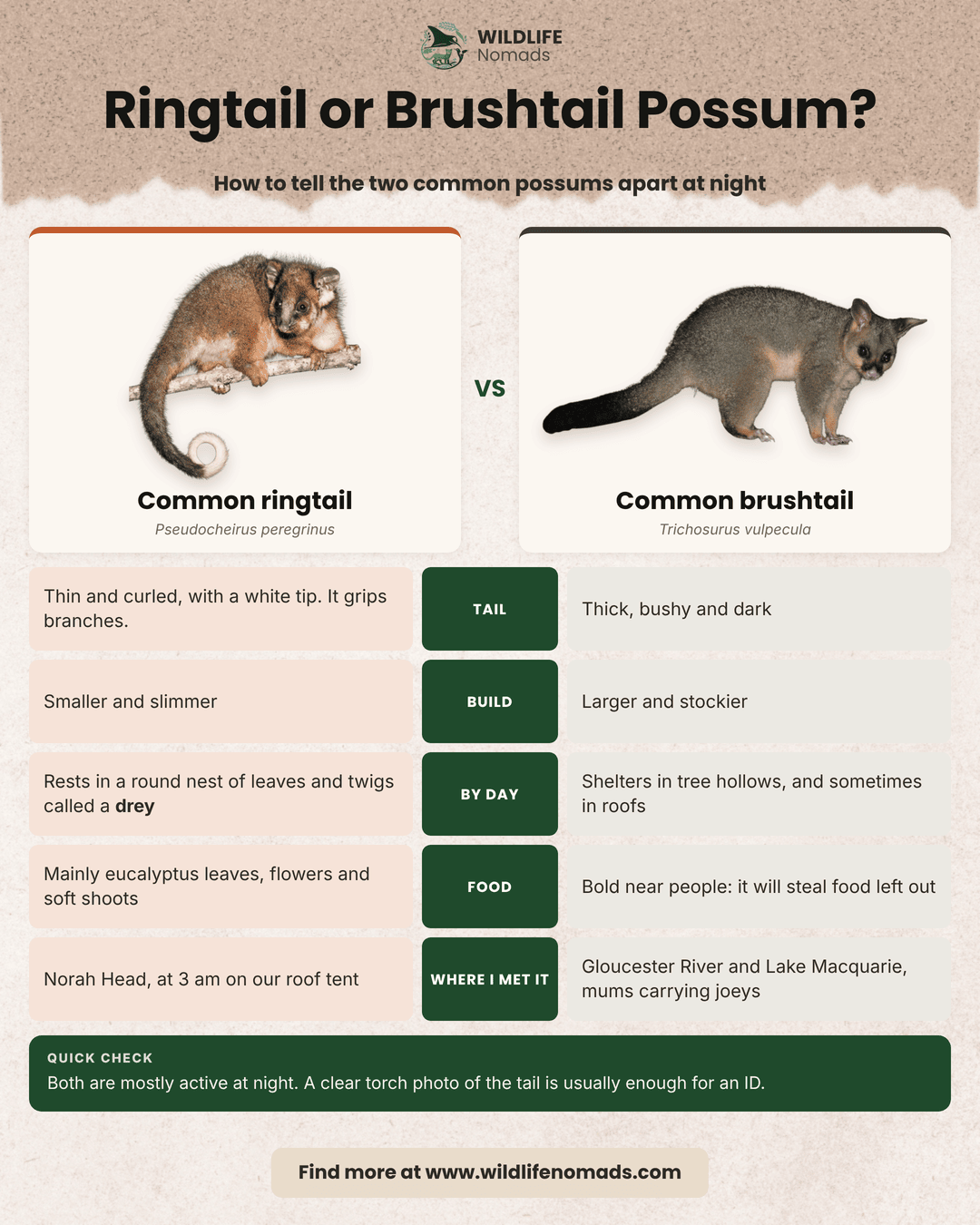
Jackie’s first guess was a rat. I knew straight away it was a possum, and the long, curled tail settled it. It was a common ringtail possum, out looking for food.
That night sums up most of the nocturnal animals in Australia I have met on our lap. I rarely went looking for them. Instead, they came to me, right to the edge of camp. Here is who visited, how I identified each one, and which night animals are still on my list.
Why the Night Animals Came to Camp
As I write this, we are camped at Green Patch in Booderee National Park, on Jervis Bay. Our site backs straight onto the bush, and the visitors never really stop. By day, crimson rosellas, king parrots, rainbow lorikeets and currawongs drop in. After dark, the possums arrive, then a bandicoot, then a swamp wallaby.
The reason is not very romantic. When you cook outside, crumbs fall, and these animals know it. Many campground animals are used to people and to the scraps we leave behind.
The contrast surprised me. One evening we walked a trail at about 8 pm, just before full darkness. We saw almost nothing, apart from a few birds. Back at camp, the night was busier than the track had been. I looked at this pattern with real numbers in my caravan parks vs national parks comparison.
The Nocturnal Animals That Visited Our Camp
All of these are marsupials or native rodents, except the flying fox and the frogs. Each one taught me something different about watching wildlife at night.
Common ringtail possum
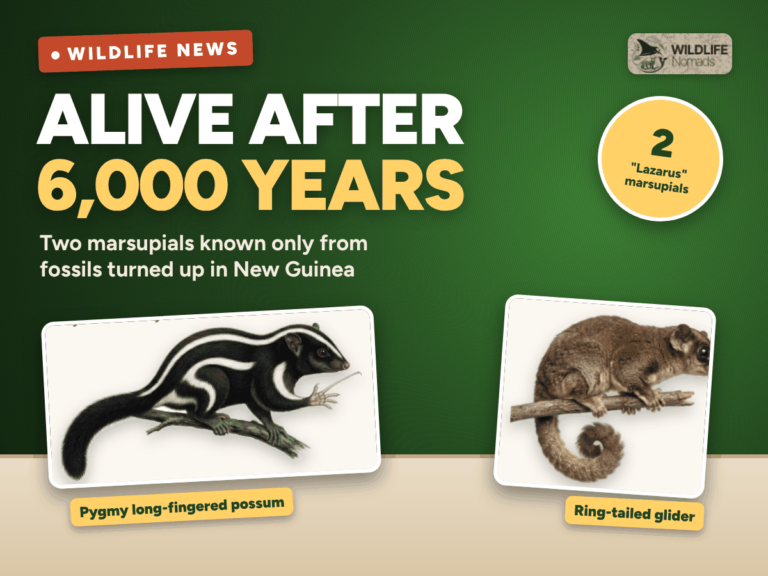
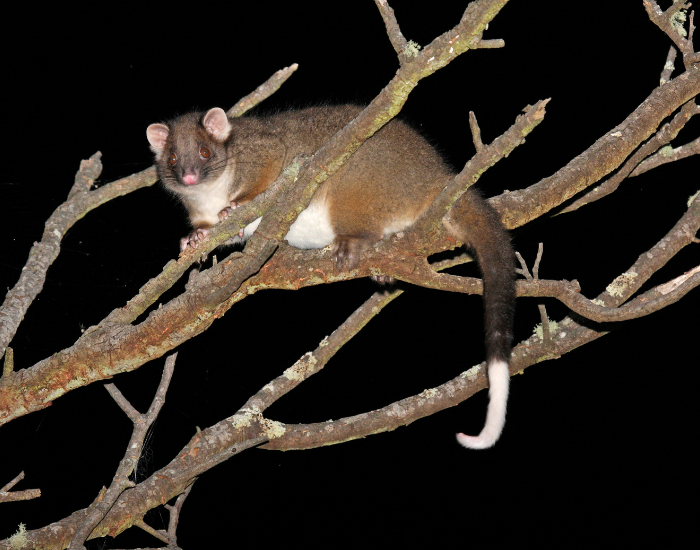
The Norah Head ringtail was my first of the lap, although I already knew the species well. In Sydney, ringtails lived around my home and at many of my field sites. They are small, mostly leaf-eating possums with a long, curled tail that grips branches as they climb.
Ringtails feed mainly on eucalyptus leaves, flowers and soft shoots. They also build round nests called dreys from leaves and twigs. I cover them, and their relatives, in my guide to the types of possums in Australia.
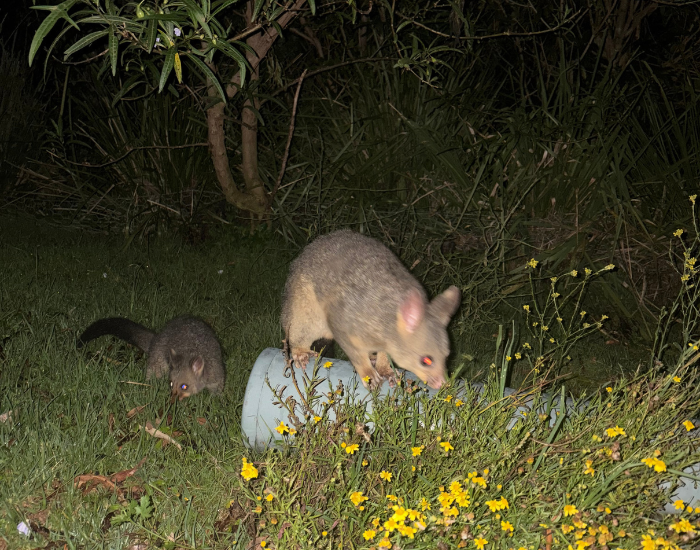
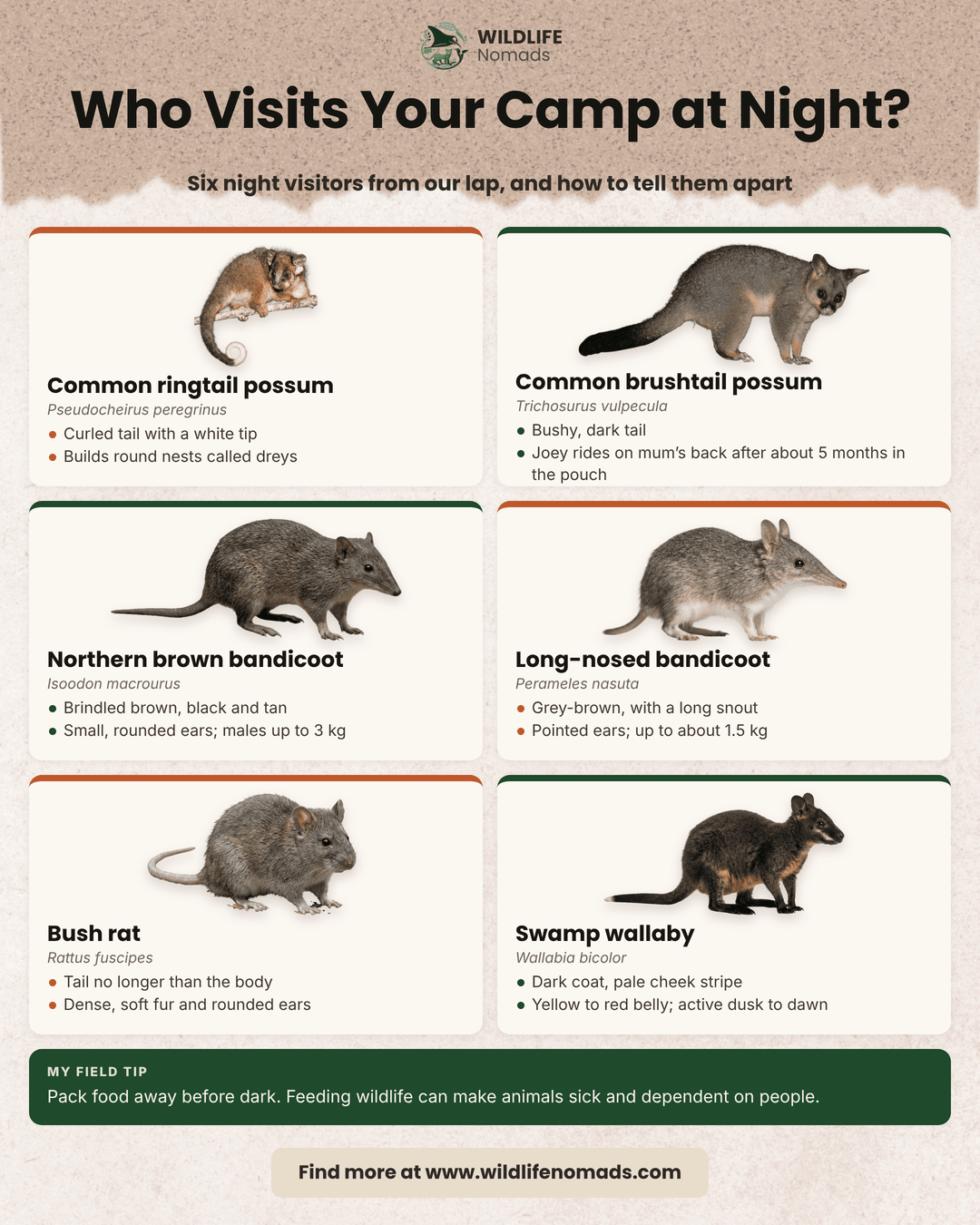
Here is a quick field tip. A slim possum with a white-tipped tail is a ringtail. A heavier possum with a bushy, dark tail is a brushtail.
Common brushtail possum
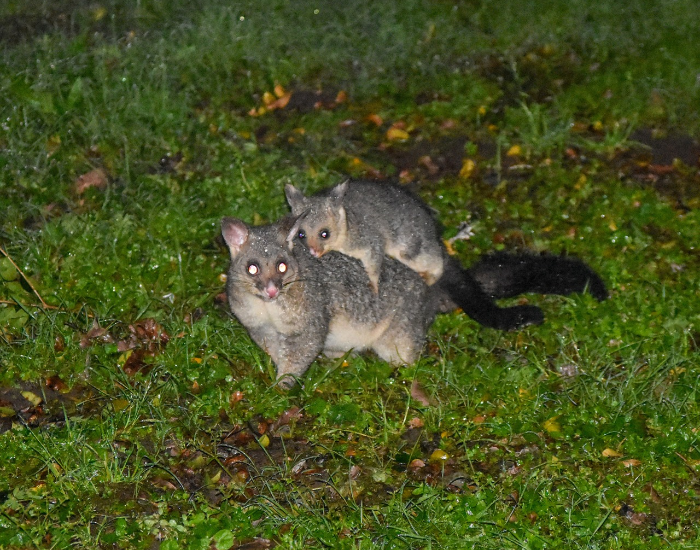
Brushtails are the bold ones. They show little fear of people, and although they are not aggressive, they are very invasive. Leave food out, and a brushtail will probably steal it. These days I keep everything packed away.
Twice I have watched a mother carrying her joey, once at Gloucester River and once at Lake Macquarie. She climbed and jumped with the baby still clinging to her back. A brushtail joey spends about five months in the pouch. After that, it rides on its mother’s back until it becomes independent at eight to nine months.
Northern brown bandicoot
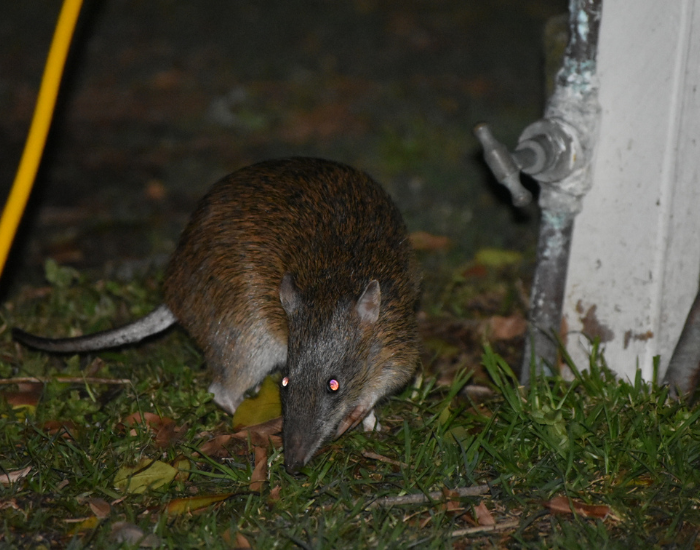
At Norah Head, a bandicoot came to our camp at around 8 or 9 pm. It looked big next to other bandicoots I had seen, and very brown. It also ate scraps from our dishes two nights in a row.
Northern brown bandicoots (Isoodon macrourus) are heavier than long-nosed bandicoots. Males can reach about 3 kg, while long-nosed bandicoots weigh up to about 1.5 kg. Their coat is brindled brown, black and tan, and their ears are small and rounded. In NSW they are common north of the Hawkesbury River, which fits Norah Head.
Still, size and colour were not enough for me. I uploaded my photos to iNaturalist, and several naturalists agreed on northern brown. I also asked AI tools, but the community ID is what I trust most.
Bandicoots forage for insects, worms, spiders and underground fungi. As they dig, they leave small cone-shaped holes. Look for those holes on grass in the morning, and you will know a bandicoot fed there overnight.
Long-nosed bandicoot
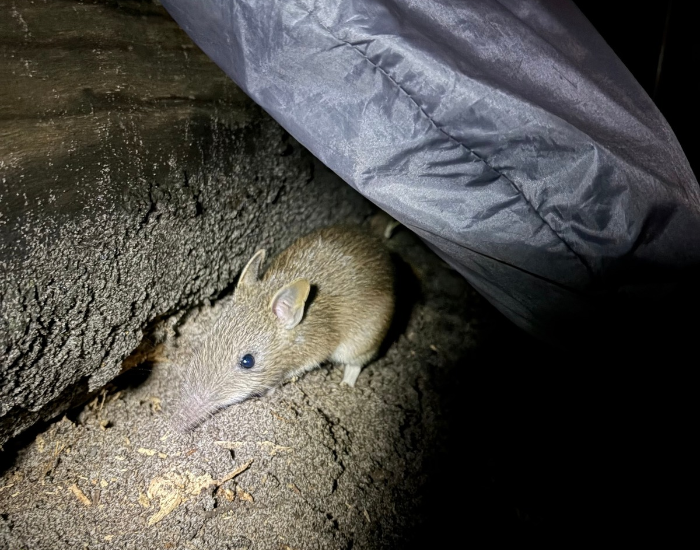
At Jervis Bay I logged a long-nosed bandicoot (Perameles nasuta). Compared with the northern brown, it is greyer, with a longer snout and pointed ears.
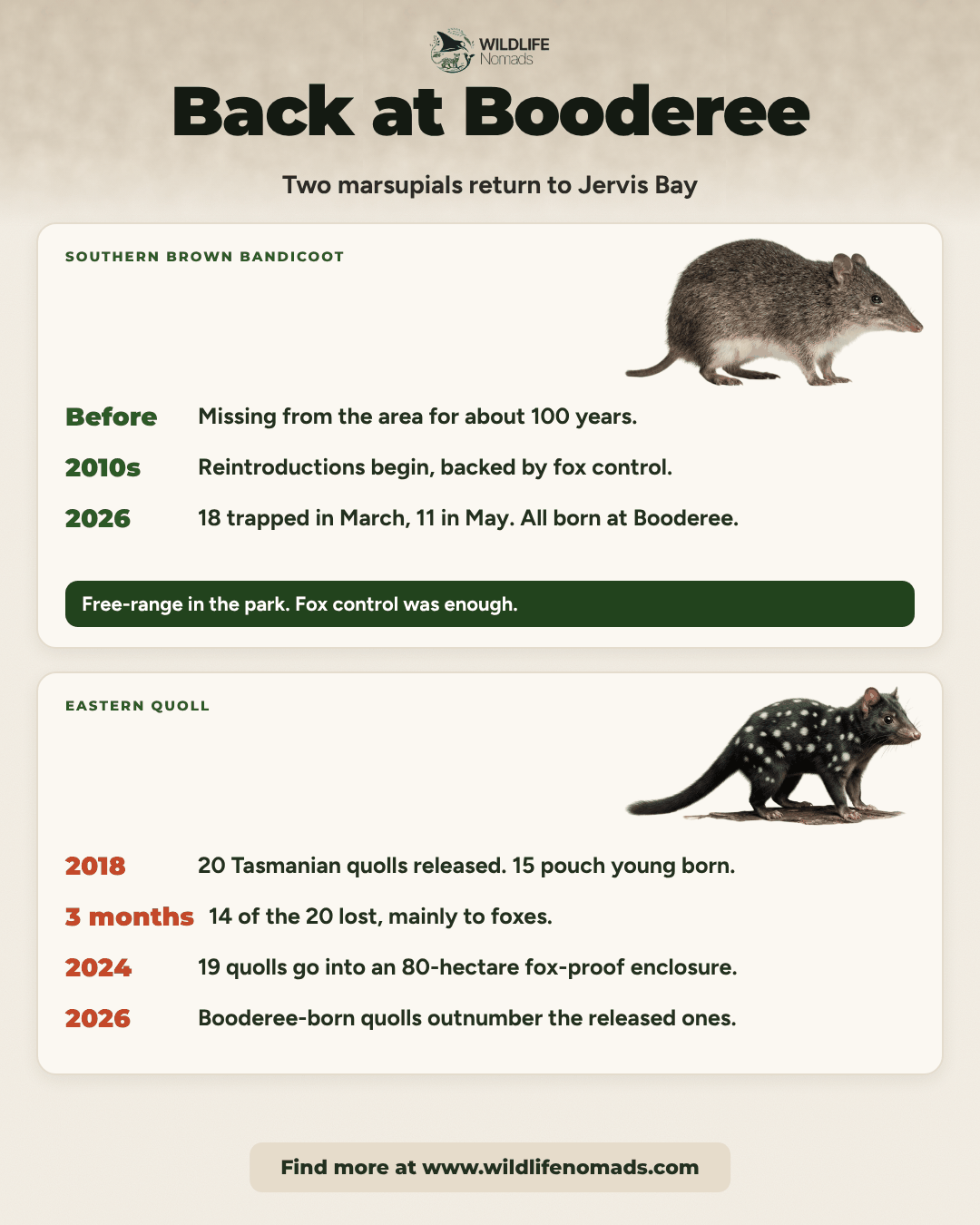
Booderee is a special place for bandicoots. Southern brown bandicoots vanished from the park for about a century, and they have since been brought back. So here, a bandicoot in your torch beam could be one of two species. That is a good reason to photograph the ears and snout before you guess.
The comeback goes further. Eastern quolls have also been returned to Booderee, which is why a quoll sits high on my list here.
Bush rat
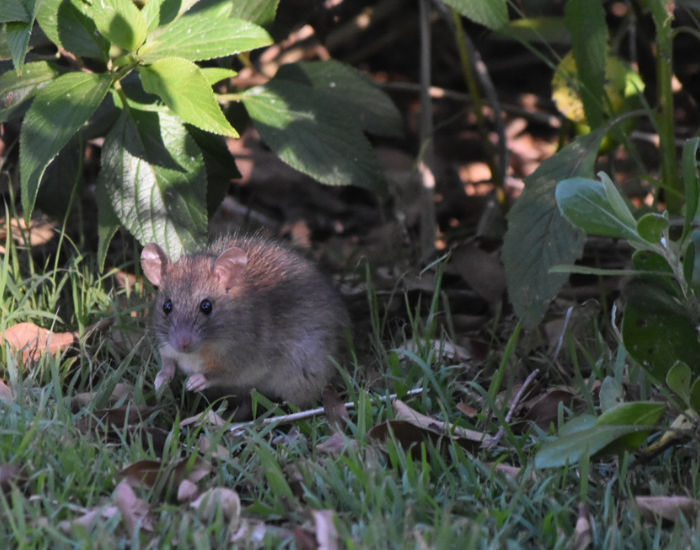
The bush rat was the trickiest ID of the lap. It was shy, it came out of the bush at night, and it lived in a national park. None of that proves anything, because introduced black rats turn up in parks too.
On iNaturalist, one person first suggested black rat. Others pointed to bush rat features, and that became the verdict. The Australian Museum’s tips helped me understand why. A bush rat’s tail is shorter than its body, or at most equal, and its fur is dense and soft. A black rat has a long, scaly tail, longer than its body, and big, thin ears.
Swamp wallaby
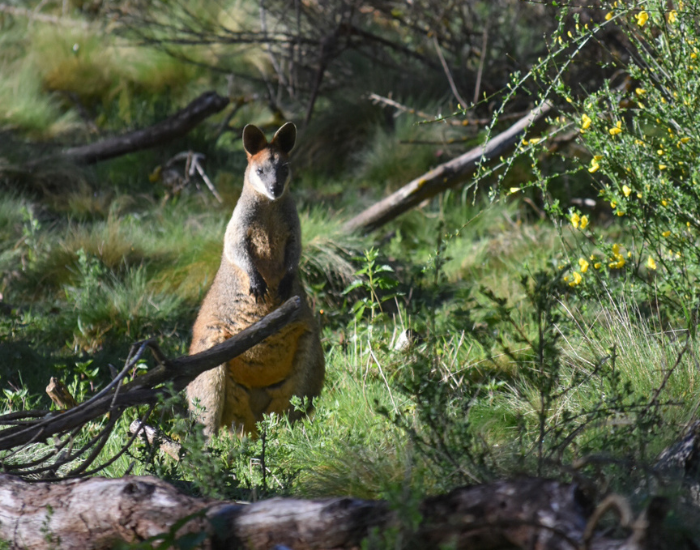
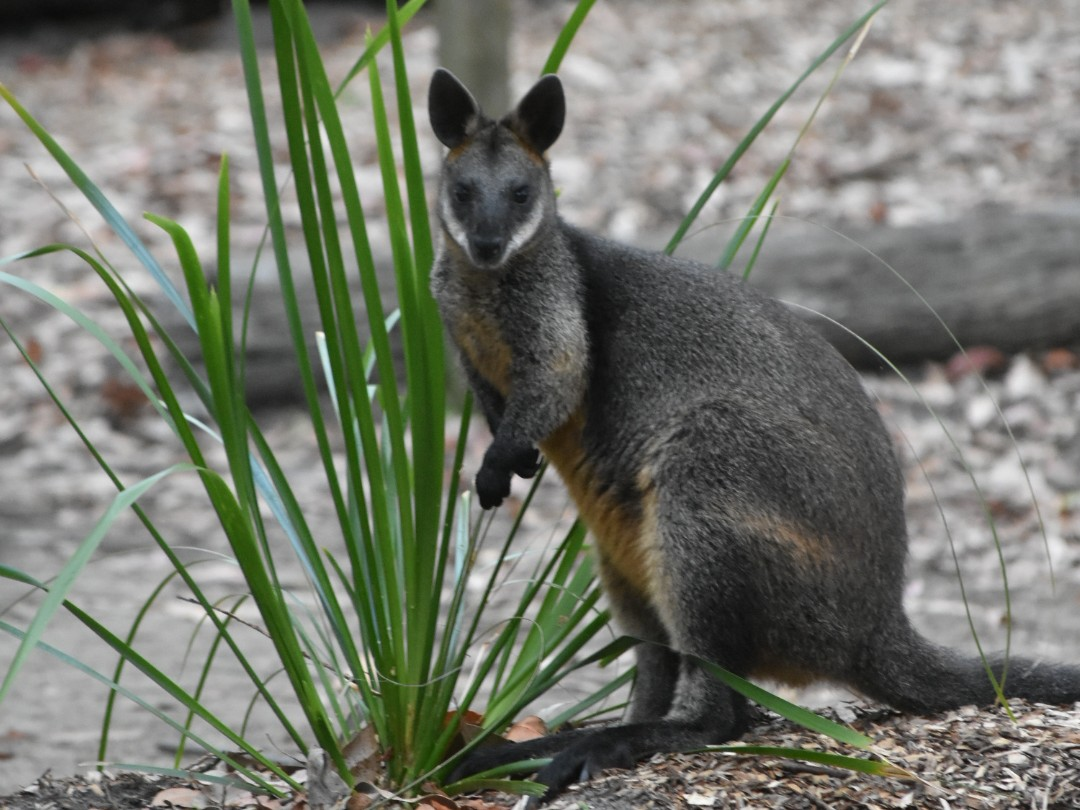
At Jervis Bay I heard the swamp wallaby long before I saw it. Something moved through the scrub beside camp, but the dark hid it completely. Only when I shone a light did I see it was a swamp wallaby. At Jervis Bay, a swamp wallaby also ate a capsicum I had left out.
Swamp wallabies (Wallabia bicolor) are dark, with a pale cheek stripe and a yellow to red belly. They are so different from other wallabies that they have their own genus. They eat ferns, heath and shrubs, and they are active from dusk until dawn. I have also seen them at Polblue, Gloucester River and Coombabah Lakelands. My wallaby facts post has more on the group.
Flying foxes
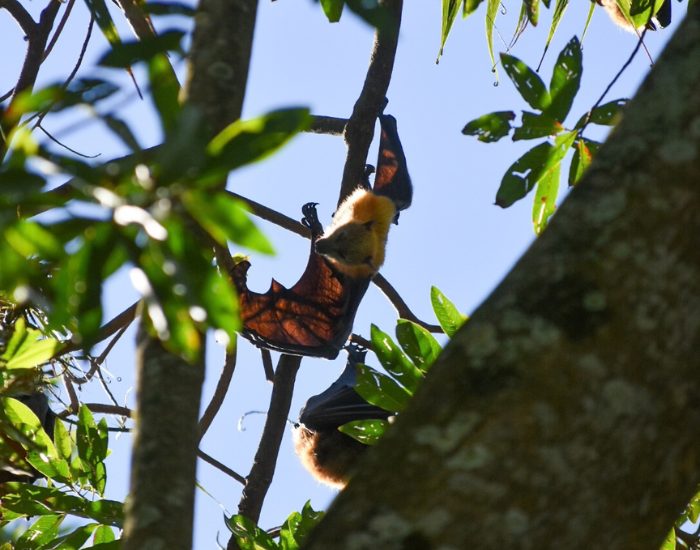
For a while, I lived with a flying fox as a neighbour. It came to a tree beside my house every night. Flying foxes feed on nectar, pollen and fruit after dark. As they go, they carry pollen and seeds between trees. There is more about them in my fruit bat facts.
Frogs
Frogs call around almost every camp. I have seen small ones and big ones at night, but they move too fast for a good photo. As a result, I have not identified a single one yet. Want to name frogs by sound? Record their calls with the Australian Museum’s FrogID app, and experts will identify the species.
How I Confirm What I See at Night
Night IDs are hard, even for a biologist. The light is poor, the animal moves, and your brain fills in gaps. That is how Jackie’s rat became a possum, and how a suggested black rat became a bush rat.
My method is simple. First, I photograph whatever shows the key features: the tail, the ears and the snout. Next, I note the place and time. Then I upload everything to iNaturalist and wait for other naturalists to agree. When they do, the record becomes Research Grade and is shared with GBIF for science.
Still on My List
I have not heard a single owl or frogmouth yet, and that hurts a little. The powerful owl is top of my list, followed by a tawny frogmouth sitting still on a branch.
I would also love to find gliders, a quoll and a wombat on a night walk. Then there is the platypus, which I have chased up and down rivers already. You can read about that in my platypus search at Barrington Tops. I am not giving up on any of them.
How to Watch Nocturnal Animals Without Harming Them
Camp is a great place to watch night animals, but it comes with a responsibility. I try to leave no scraps now, although it is hard when you cook outdoors. NSW National Parks asks people not to feed wildlife at all, and the reasons are serious.
Human food can make wild animals very sick, and some come to depend on handouts. Fed animals can also turn aggressive, damage tents and spread disease. Possums have even bitten people who held out food.
So here is what I do. I pack food away before dark and wipe up after cooking. After dinner, I sit quietly at the edge of camp and listen first. When something moves, I use a dim torch and keep the beam moving rather than holding it on the animal.
FAQs About Nocturnal Animals in Australia
Common night animals in eastern Australia include ringtail and brushtail possums, bandicoots, bush rats, swamp wallabies, flying foxes and frogs. With more luck, you may find owls, tawny frogmouths, gliders, wombats or quolls. Many of them visit campgrounds that back onto bushland.
Yes. Common ringtail possums and common brushtail possums are mostly active at night. By day, ringtails rest in round nests called dreys, while brushtails shelter in tree hollows or sometimes in roofs.
A native bush rat has a tail shorter than or equal to its body, dense soft fur and rounded ears. An introduced black rat has a long, scaly tail, longer than its body, and big, thin ears. A clear photo of the tail and ears helps most.
No. NSW National Parks asks people not to feed wildlife. Human food can make animals sick, make them depend on handouts and turn them aggressive. Pack food away before dark and clean up after cooking.
The northern brown bandicoot is heavier, with a brindled brown, black and tan coat and small rounded ears. The long-nosed bandicoot is greyer, with a longer snout and pointed ears. Location helps too, as northern browns in NSW are common north of the Hawkesbury River.
Sit Still After Dinner
The best night I have had on this lap did not need a trail, a guide or a plan. It needed a quiet camp, a lamp and a bit of patience. Most nocturnal animals in Australia are closer than you think, often just past the edge of your campsite.
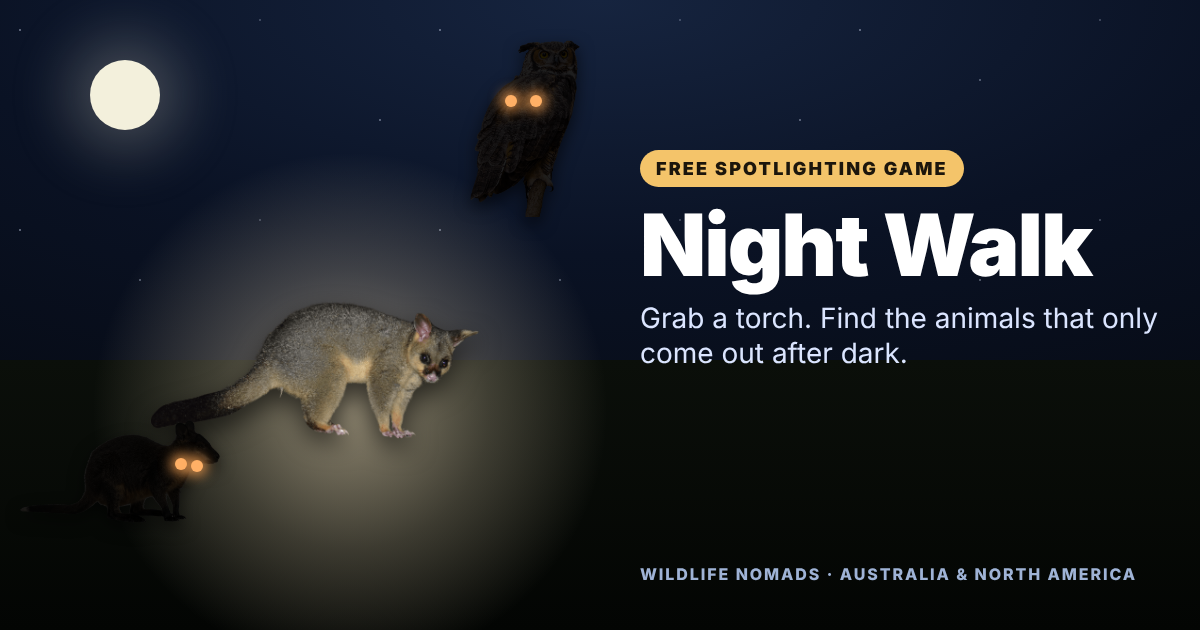
If you can’t get outside tonight, try Night Walk. It is my free spotlighting game, with several animals from this post. To follow where we camp next, see our lap around Australia. And if you love night animals beyond Australia, start with these 12 nocturnal animals.
References:
Banks, P. B., & Smith, H. M. (2015). The ecological impacts of commensal species: Black rats, Rattus rattus, at the urban–bushland interface. Wildlife Research, 42(2), 86–97. https://doi.org/10.1071/WR15048
Fleming, P. A., Anderson, H., Prendergast, A. S., Bretz, M. R., Valentine, L. E., & Hardy, G. E. St. J. (2014). Is the loss of Australian digging mammals contributing to a deterioration in ecosystem function? Mammal Review, 44(2), 94–108. https://doi.org/10.1111/mam.12014
Orams, M. B. (2002). Feeding wildlife as a tourism attraction: A review of issues and impacts. Tourism Management, 23(3), 281–293. https://doi.org/10.1016/S0261-5177(01)00080-2
Roberts, B. J., Catterall, C. P., Eby, P., & Kanowski, J. (2012). Long-distance and frequent movements of the flying-fox Pteropus poliocephalus: Implications for management. PLoS ONE, 7(8), e42532. https://doi.org/10.1371/journal.pone.0042532
Robinson, N. M., MacGregor, C. I., Hradsky, B. A., Dexter, N., & Lindenmayer, D. B. (2018). Bandicoots return to Booderee: Initial survival, dispersal, home range and habitat preferences of reintroduced southern brown bandicoots (eastern sub species; Isoodon obesulus obesulus). Wildlife Research, 45(2), 132–142. https://doi.org/10.1071/WR17040