On our first morning at Woody Head, a wonga pigeon walked past our car at 8 am. On our first evening at Evans Head, I mostly saw noisy miners and a car park. Both stops lasted three or four nights. Yet they felt like two different countries for wildlife.
That contrast started a question I kept asking on our Australia lap. Caravan parks vs national parks: where do you actually see more wildlife? I log every species at every stop in a spreadsheet. After 18 stops on the NSW coast, I finally have enough numbers to answer it honestly.
The short answer surprised me. The number of species was almost the same. The kind of species was not.
How I Counted
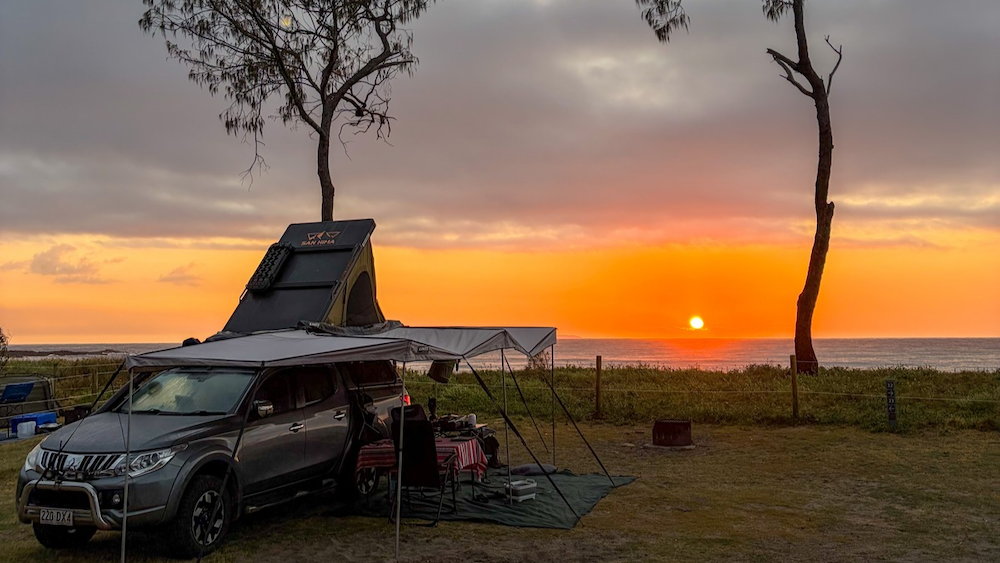
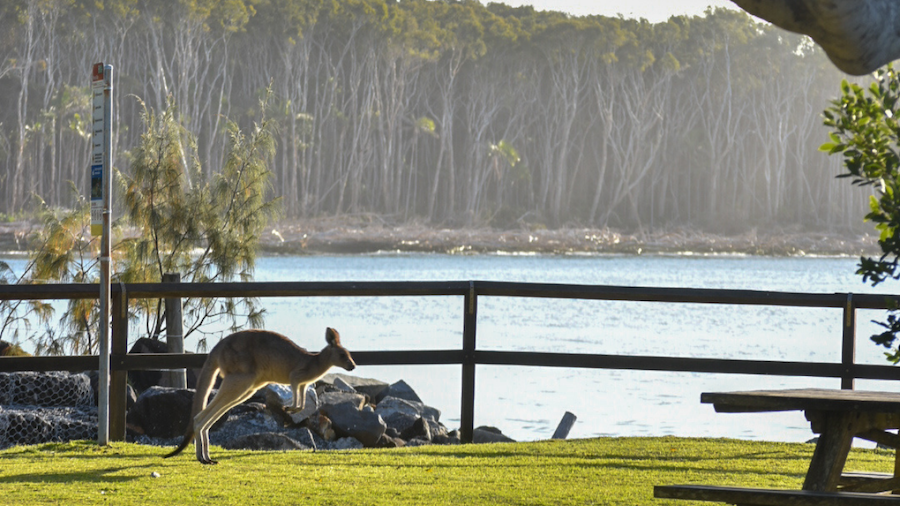
Jackie and I travel in a car with a roof tent. At every stop, I record each animal I can identify, plus notes on behaviour and the campground. I walk the nearby tracks, check the beach and rock pools, and look around camp at dawn and after dark.
Between late August and mid-November 2026, that gave me 18 stops along the NSW coast and ranges. Eleven were national park campgrounds and four were caravan or holiday parks. The rest were two house sits and an Airbnb tiny house. Together they hold about 127 different animals, mostly birds.
This is not a scientific survey. I didn’t use set transects or equal time at each stop, and some IDs stop at the group level. Still, it is a real field record kept the same way at every stop. That makes it useful for a fair comparison.
What the Numbers Show
| Type of stay | Stops | Nights | Average species per stop | Different species in total |
|---|---|---|---|---|
| National park campgrounds | 11 | 39 | 19.3 | 100 |
| Caravan and holiday parks | 4 | 12 | 18.8 | 56 |
| House sits | 2 | 17 | 23 | 37 |
| Airbnb | 1 | 3 | 12 | 12 |
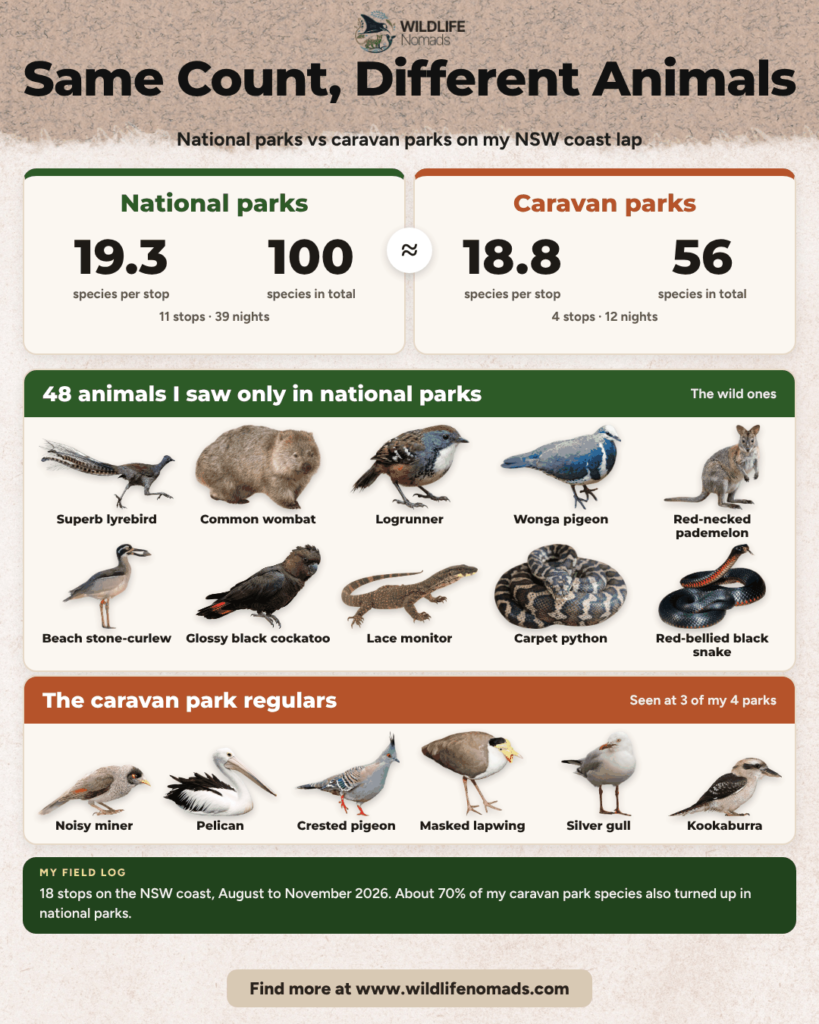
Per stop, it is basically a tie. National park campgrounds gave me about 19 species each. Caravan parks gave me almost exactly the same.
Effort matters here, though. Every caravan park stay lasted three nights. My national park stays ranged from one night at Trial Bay to a full week at Illaroo. If I compare only the shorter park stays of one to three nights, they average about 15 species. In other words, a caravan park was not a worse bet for raw numbers.
So if you only count species, caravan parks hold their own. But counting species hides the most interesting part.
The Real Difference: Which Animals You See
Across all my national park stops, I logged 100 different animals. Across the caravan parks, I logged 56. More importantly, 48 animals turned up only in the national parks.
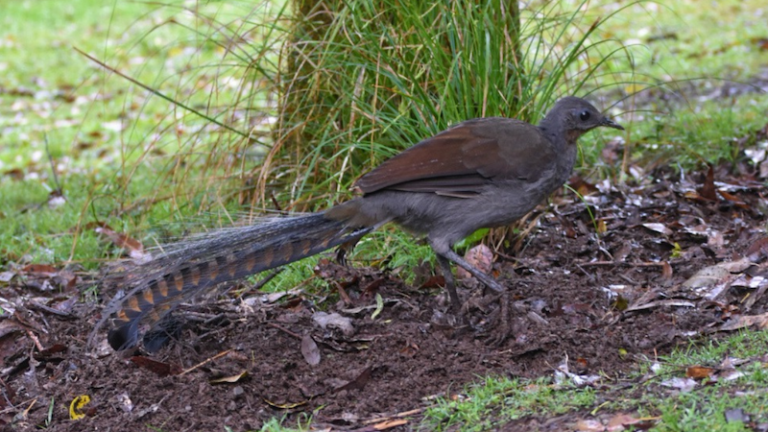
That list is where the magic sits. It includes the superb lyrebird at Gloucester River, the common wombat at Polblue and the Australian logrunner at Booti Booti. It also holds the wonga pigeon at Woody Head and the red-necked pademelon. Add the beach stone-curlew at Diamond Head and glossy black cockatoos at Trial Bay. Lace monitors, carpet pythons and a red-bellied black snake all came from national parks too.
The caravan parks told a different story. Six species appeared at three or more of my four caravan parks. They were the noisy miner, pelican, crested pigeon, masked lapwing, silver gull and kookaburra. These are wonderful animals, but you can see most of them in a town park. In fact, about 70% of my caravan park species also appeared at national park stops.
The caravan parks also gave me my only introduced mallards and European rabbits. Both are a reminder that mown lawns and lights favour animals that live comfortably beside people. If you are curious why that matters, I wrote about invasive species separately.
Why the noisy miner matters
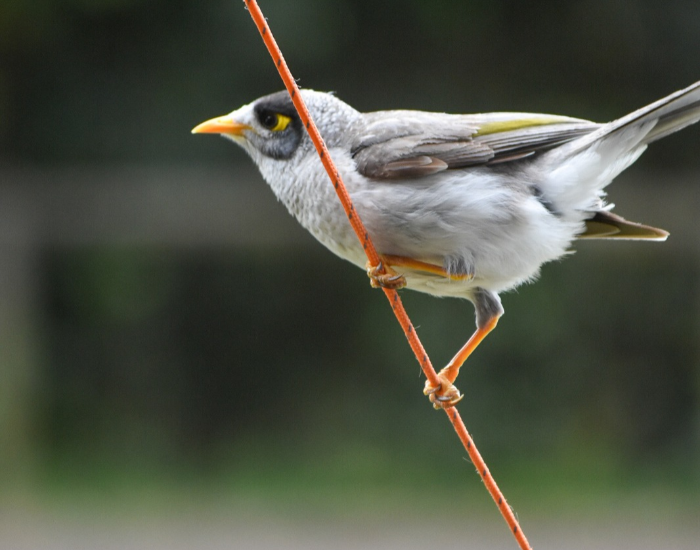
The noisy miner shows why “more of the same” is not just boring. This native honeyeater thrives in open, edge-rich places like lawns and parks. A major review found that it can reshape whole bird communities in eastern Australia.
It does this by chasing small birds out of its territory. One large study found that even low miner densities cut the richness and abundance of small birds by about half. That fits what I felt at busy, open sites. The miners were loud, and the little birds were missing.
The Surprise: Bellingen and Norah Head
Two caravan parks broke the pattern, and both taught me something useful.
Bellingen was probably the best stop of the whole leg. We planned only one night, then stayed three after the wind and rain at Pebbly Beach. The calm river beside the park brought azure kingfishers, Pacific black ducks and Macquarie turtles. On a short walk just outside the park, I also saw a wompoo fruit-dove and white-headed pigeons. It gave me 24 species in three nights, more than most national parks.
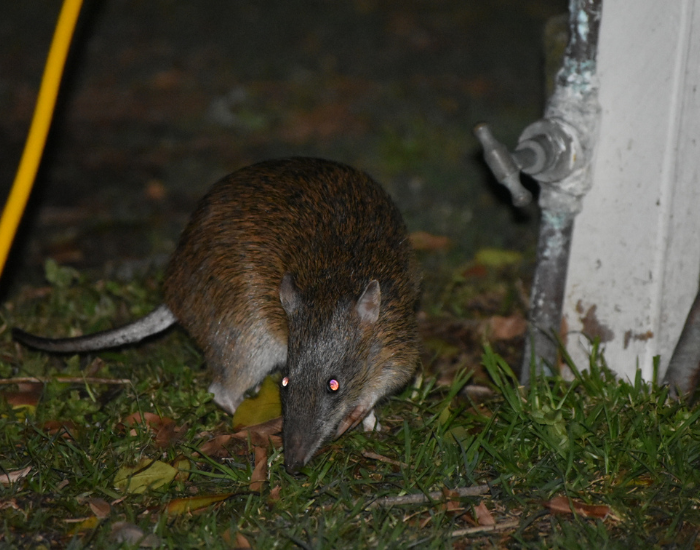
Norah Head started badly. The first night was hot, crowded and noisy, then strong winds hit. We moved to a site against the bush, and it changed everything. Over the next nights we had a ringtail possum and a bush rat. A northern brown bandicoot raided our dish scraps, and I saw my first olive-backed oriole.
The lesson is simple. A caravan park beside a river or real bush can be excellent. A caravan park surrounded by lawn and roads usually is not.
Your Site Matters More Than the Park
This might be the most practical finding of all. Within any park, the exact site changed what I saw.
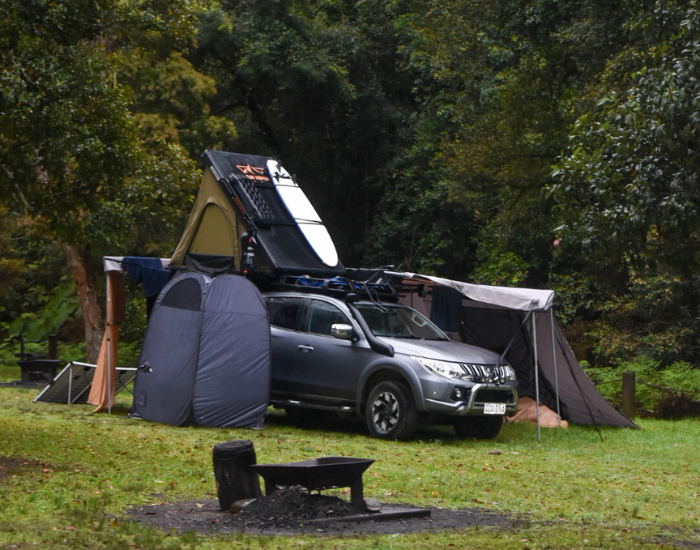
At Booti Booti, we chose site 60 with a wall of bush behind us. Golden whistlers, eastern yellow robins and a logrunner all moved through that edge. At Woody Head, a blue-faced honeyeater visited our car every day because we parked beside the bush.
Meanwhile, the busiest sites gave me the fewest surprises. At Woody Head, the campground filled with families for the public holiday weekend. At Evans Head, we arrived on a Friday night and saw less on day one. That blue-faced honeyeater was easy to spot. The shy forest birds were not.
Where My Data Falls Short
I want to be clear about the limits. I spent 39 nights in national parks and only 12 in caravan parks. More nights and more places naturally mean more species in total.
Seasons and weather also varied. Spring brought migrants like rainbow bee-eaters, and rain cut some walks short. The national parks I chose were often remote, while most caravan parks sat inside towns. So this compares typical campgrounds, not national parks against caravan parks in identical habitat.
Finally, I left out Sandon River, a one-night stop where I didn’t keep a full list. I also counted a few animals only to group level, like a wrasse and a sea turtle.
So, Which Should You Choose?
Honestly, it depends on you and what you are looking for. There is no wrong answer.
Personally, I prefer national parks. The animals feel wilder, and the nights are usually quieter. I would much rather wake up next to forest than next to a building. Remote spots like Polblue and Gloucester River gave me animals I had waited my whole life to see. The lyrebird on a fence there felt like watching a dinosaur.
National parks do ask more of you, though. Some campgrounds are harder to book or reach, often down long gravel roads. Many have drop toilets and no showers, so you carry your own water and food.
Caravan parks are the easy option. Everything is close at hand, from hot showers to a laundry. For me, that comfort slightly defeats the purpose of adventure travel. Still, it makes them perfect for families, retirees or anyone who just wants an easy stay.
They are also perfect for a reset. We booked one whenever we had gone too long without a proper hot shower. If you choose one, pick a park beside a river, wetland or bush. Then ask for a site at the back. You will still see plenty.
For wildlife, though, my answer stays the same. Some of the most iconic Australian animals still mean going deeper into national parks. That is where my wombat, lyrebird and logrunner were waiting.
Wherever you stay, the first two days matter most. At Trial Bay, I logged 17 species in a single night. Arrive early, walk the closest track at dawn and look around camp after dark.
FAQs About Caravan Parks vs National Parks
In my 18 stops on the NSW coast, the average number of species per stop was almost the same. National parks averaged about 19 species and caravan parks about 19 as well. However, national parks gave me far more uncommon species, like lyrebirds, wombats and logrunners.
At my caravan park stops, the regulars were noisy miners, pelicans, crested pigeons, masked lapwings, silver gulls and kookaburras. These animals tolerate people and open lawns well.
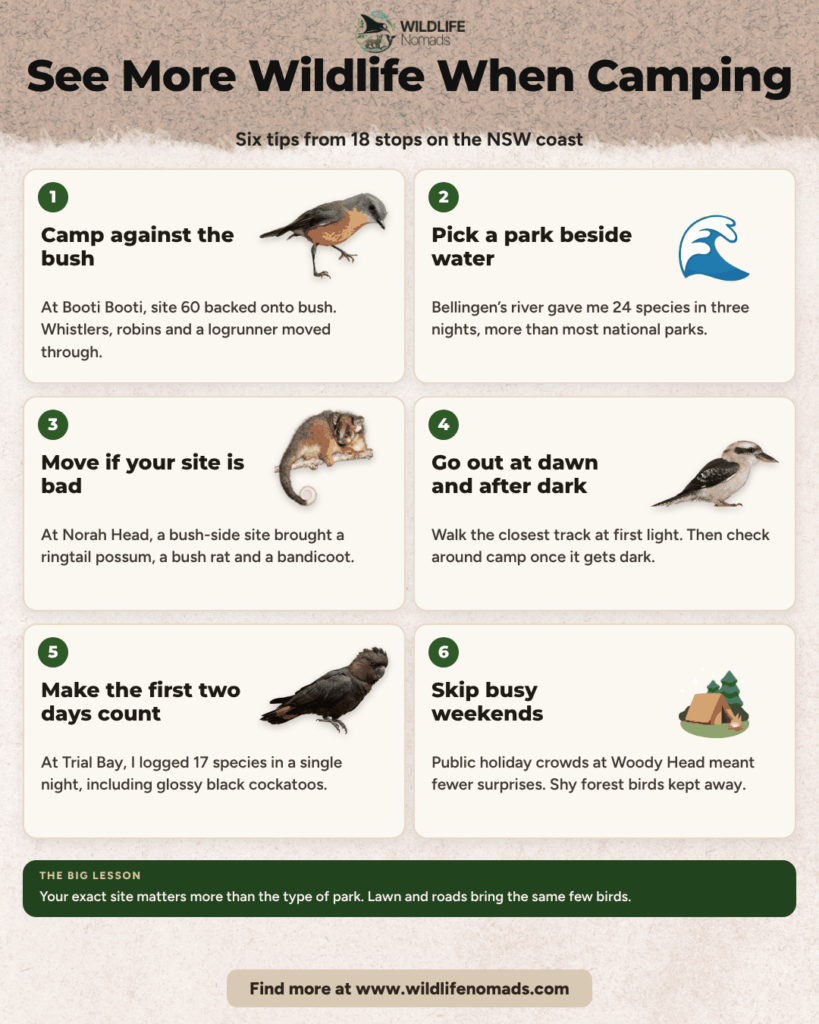
Choose a site next to bush, a river or a wetland, ideally at the back of the campground. Walk the nearest track at dawn, check around camp after dark, and avoid busy public holiday weekends if you can.
Noisy miners are native, but they aggressively chase smaller birds from their territories. Research in eastern Australia found that even low numbers of miners can halve the richness and abundance of small birds.
Go Find Your Own Lyrebird
Numbers aside, the best wildlife moments on this lap came from quiet, wild places. Caravan parks kept us clean and rested. National parks gave us the stories. Follow the next leg, from Sydney to Melbourne, on our Australia lap map.
References:
Maron, M., Grey, M. J., Catterall, C. P., Major, R. E., Oliver, D. L., Clarke, M. F., Loyn, R. H., Mac Nally, R., Davidson, I., & Thomson, J. R. (2013). Avifaunal disarray due to a single despotic species. Diversity and Distributions, 19(12), 1468–1479. https://doi.org/10.1111/ddi.12128
Thomson, J. R., Maron, M., Grey, M. J., Catterall, C. P., Major, R. E., Oliver, D. L., et al. (2015). Avifaunal disarray: quantifying models of the occurrence and ecological effects of a despotic bird species. Diversity and Distributions, 21(4), 451–464. https://doi.org/10.1111/ddi.12294