Wildlife Nomads


I unzipped the roof tent at dawn and counted twelve wallabies. Maybe fifteen. They had grazed around our car all night, almost invisible in the tall grass. The moment I climbed down, they exploded in every direction.
That sums up Polblue Campground. It sits high in Barrington Tops National Park, and it’s the first camp on this trip that felt truly wild. Back in Mexico, I grew up camping in unassigned spots with nobody around. Most coastal parks here mean numbered sites and caravans on every side. Polblue gave me birdsong, cold mountain air and space instead.
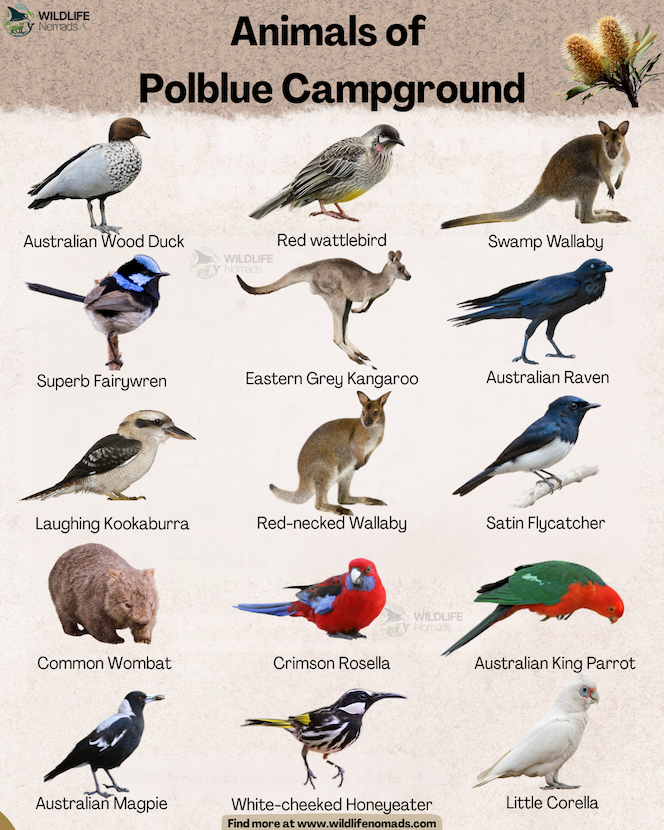
We came here straight after Diamond Head on our lap around Australia. Below are the 15 species we logged, plus what you need to know about water, firewood, rain and snow before you go.
What to Know Before Camping at Polblue Campground
Polblue sits on the Barrington Tops plateau at Polblue Camping Area Road, Moonan Brook NSW 2337. It’s roughly 70 km from Gloucester and 75 km from Scone. The unsealed Barrington Tops Forest Road gets you there, and we managed fine in our ute.
Polblue Campground at a glance
- Altitude: close to 1,500 m above sea level
- Sites: around 40 unmarked, unpowered sites for tents, camper trailers and caravans (although looks hard for a caravan, unless it is 4WD)
- Facilities: non-flush toilets, wood barbecues and picnic tables
- Water: none drinkable, so bring your own
- Firewood: none supplied, and collecting it in the park is prohibited
- Bins: none, so take every bit of rubbish home
- Mobile reception: very limited or none
- Pets: not allowed
Cold, wet and seriously high
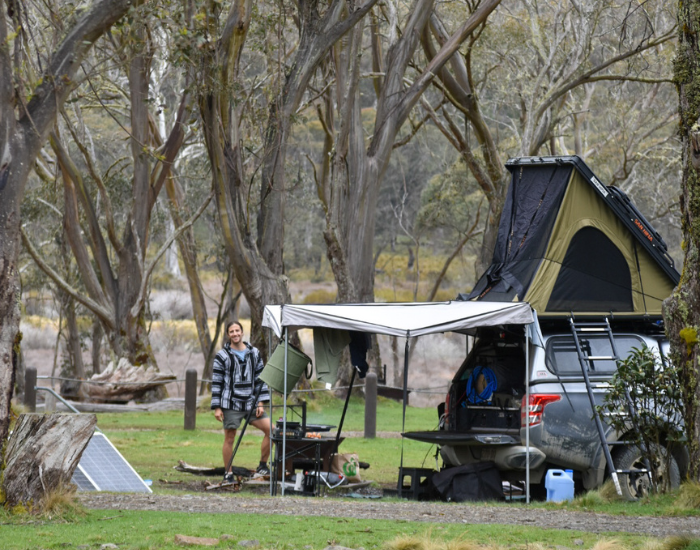
Barrington Coast tourism promotes Polblue as the highest campground in NSW. I can’t verify that ranking, but I can verify the cold. By Australian standards, this is genuine high country. Regular snow flurries arrive in winter, and a 2018 snowfall left 10 cm on the ground. Flurries can even appear outside deep winter, so pack warm clothes year round.
It rained every single day of our stay. On the first afternoon, small streams formed through camp, and we had to move sites. Ideally, visit during a dry spell and choose higher ground.
A campground built for space
This is a spacious campground centred around a grassy picnic area and a community shelter, set in subalpine woodland. It sits away from the main road, which makes it great for families with children. Hard-packed pathways connect most of the camp, and the ground is mostly flat. You may still cross grass to reach some facilities.
We found rainwater at the toilets, and after all that rain it never ran out. However, it was icy, and NPWS lists no drinking water here. Luckily, earlier campers had left split logs in a few fire pits, so we stayed warm. Don’t count on that. Bring your own wood from outside the park.
Polblue Swamp track and Polblue Falls
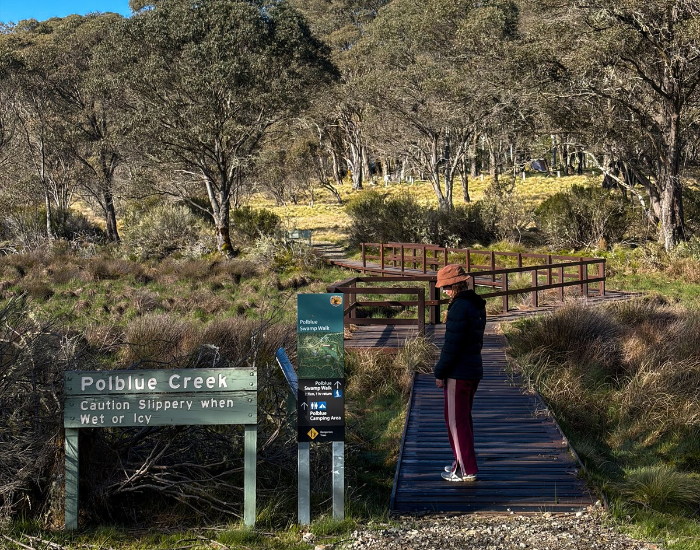
The Polblue Swamp track is a family-friendly 3 km loop starting right from camp. It winds past snow gums, black sally and towering mountain gums, with boardwalks over the high-altitude wetland. We walked it three times. Mornings between 6 and 10 am delivered far more birds than midday.
About 5 km further along, Tubrabucca Road leads past Horse Swamp Camping Area to the Polblue Falls picnic area. From there, a short walk winding along Polblue Creek reaches the head of Polblue Falls. It’s the largest accessible falls on the plateau, and only 400 m return. VisitNSW compares this high altitude waterfall in a snowfall event to the movie Narnia. Horse Swamp is the nearest campground if Polblue fills up.
The Barrington Tops wilderness also belongs to the World Heritage listed Gondwana Rainforests of Australia. Four-wheel drivers and mountain bikers love the nearby Barrington Trail. Before you travel, check NPWS alerts, because some areas may have limited public access.
15 Animals We Saw at Polblue Campground
Rain shaped our days, but the wildlife never stopped. Most sightings came from camp or the swamp loop, and one bird was completely new to me.
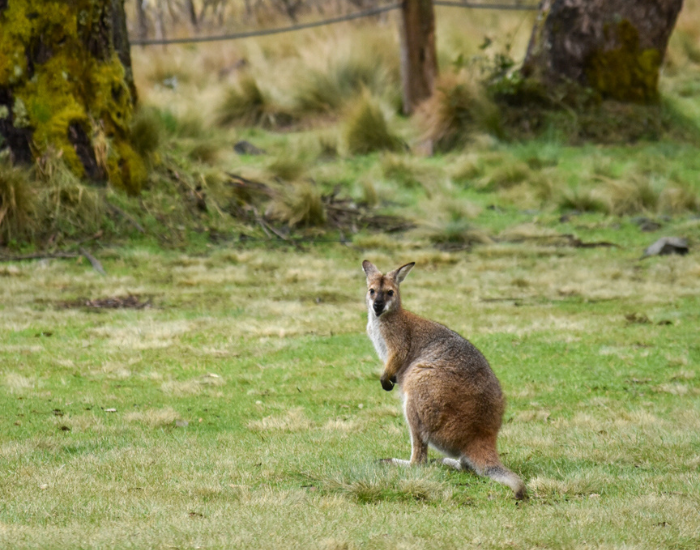
1. Red-necked Wallaby (Notamacropus rufogriseus)
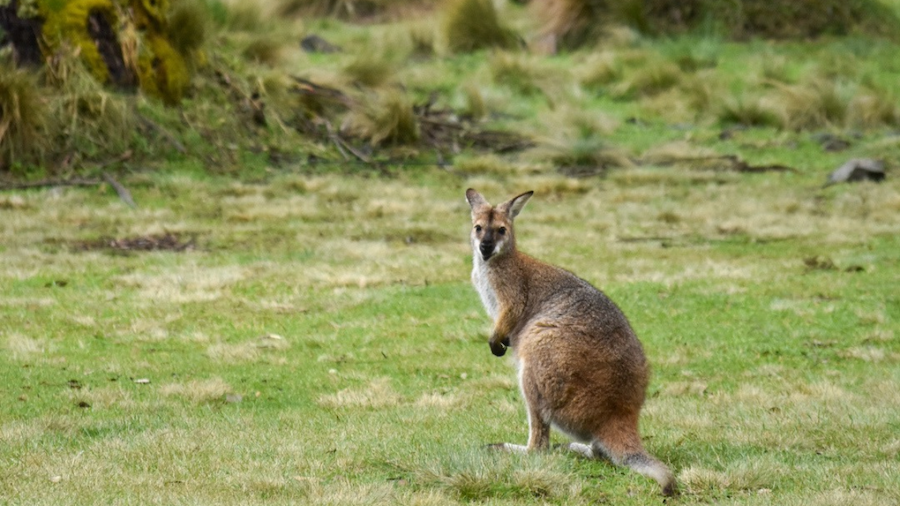
Wallabies ran this campground. At Woody Head and Diamond Head, kangaroo mobs surrounded our tent. Here, ten to fifteen red-necked wallabies grazed around us every morning. Their small size and the tall grass hid them until they bolted.
Look for the rusty nape and a pale stripe on the upper lip. Unlike kangaroos, they rarely form true mobs. They feed in loose, temporary groups and scatter the moment you approach.
2. Swamp Wallaby (Wallabia bicolor)
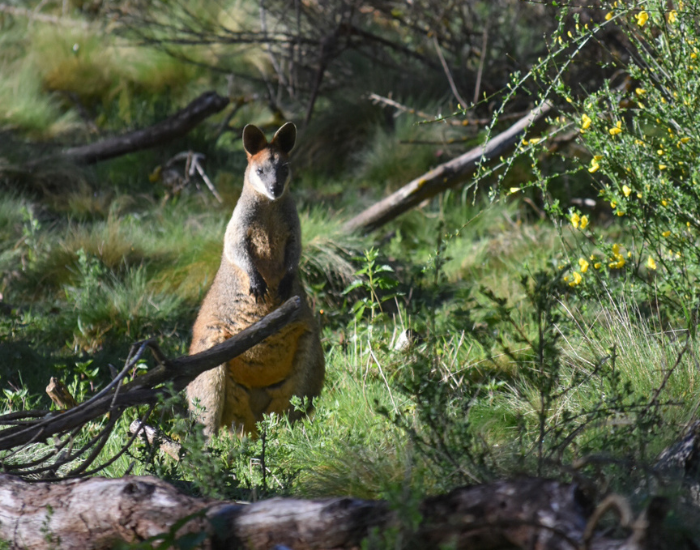
We found one swamp wallaby, much darker than its red-necked neighbours. It fled long before I got close. Swamp wallabies are the only living species in their genus, and they browse ferns and shrubs rather than grass.
Their reproduction is remarkable. Researchers discovered females can conceive a new embryo just before giving birth. As a result, many adult females stay pregnant for almost their entire lives.
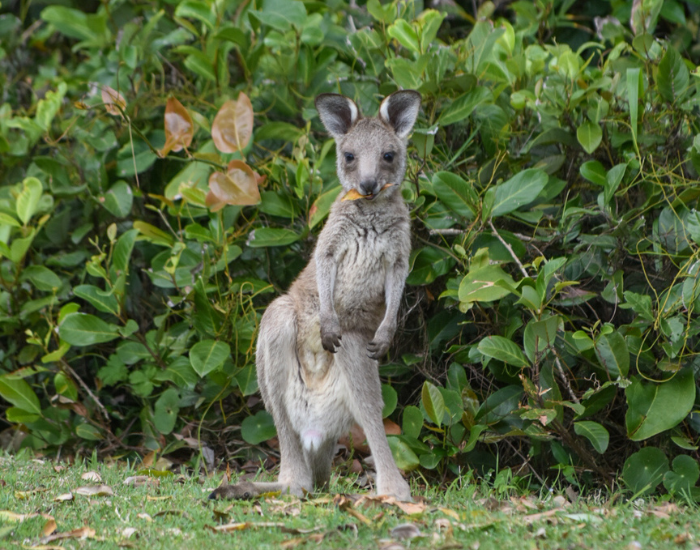
3. Eastern Grey Kangaroo (Macropus giganteus)
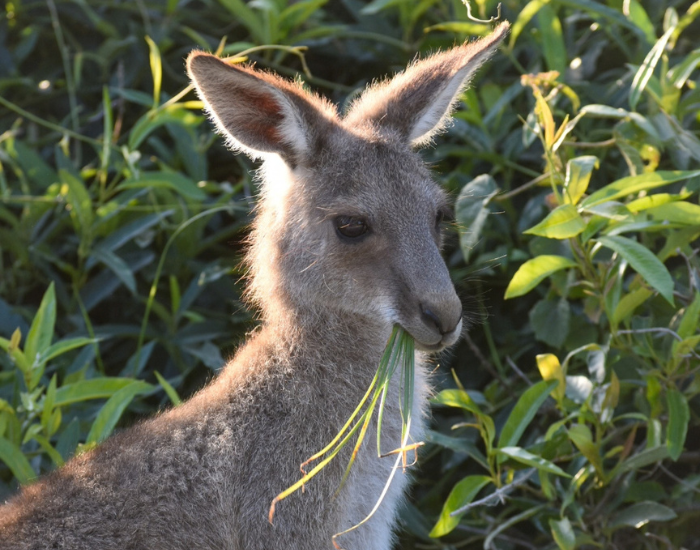
On our first day, a few bounded across the open grassland. Next morning, a whole mob lay resting in the swamp. Beside wallabies, they look huge and paler, with that classic dark tail tip.
Eastern greys graze mostly at dawn and dusk, then rest through the day. That matched the sleepy swamp mob perfectly. Not sure how to separate them? Read my guide to wallaby vs kangaroo differences.
4. Common Wombat (Vombatus ursinus)
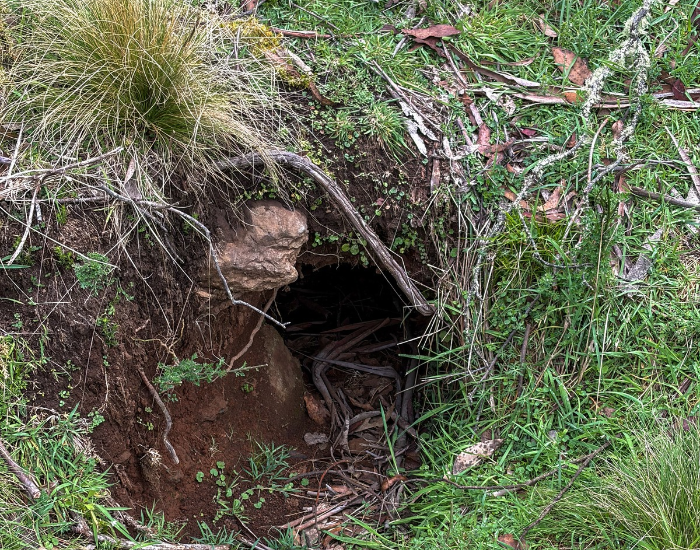
We never saw one at this campground, yet we include them cause wombats burrows were everywhere. Detouring around a swooping magpie led us to burrow after burrow along the swamp track. Fresh cube-shaped poo sat on logs and rocks nearby. Honestly, I didn’t expect wombats this far north, but their range follows the Great Dividing Range into northern NSW.
It reminded me of the whipbirds at Red Cliff: plenty of evidence, no animal. Those cubes form in the last 17 percent of the intestine, where stiff and soft wall sections contract unevenly. Wombats place them on raised spots as scent markers.
5. Crimson Rosella (Platycercus elegans)
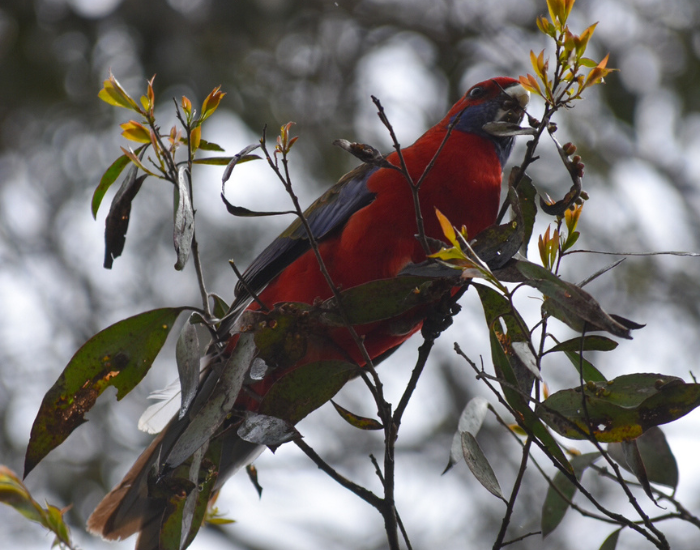
Polblue gave me more crimson rosellas than five years of living in Australia. Red dots flashed between trees all day, usually in pairs or groups of three or four. They called constantly as they moved.
Interestingly, this species shifts from crimson to yellow across its range, while keeping blue cheeks. One study even found eye pigments differ between colour forms, matching their plumage. Discover more in my guide to Australian parrots.
6. Australian King Parrot (Alisterus scapularis)
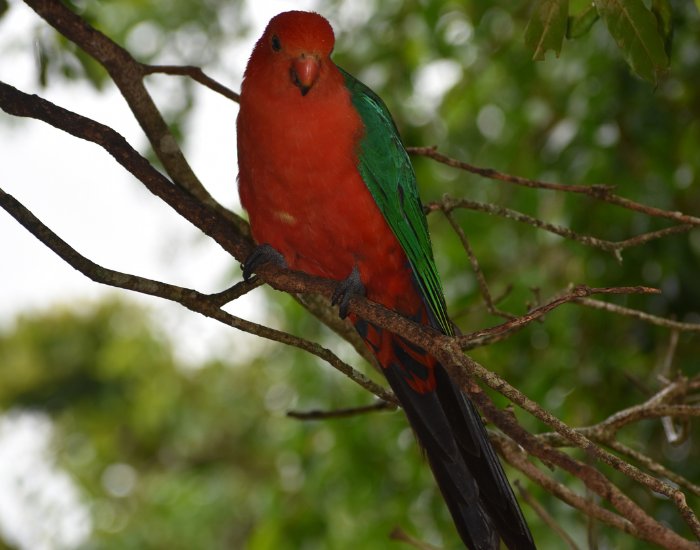
Only one king parrot appeared along the trail, and I first mistook it for another rosella. Then I noticed the deep green wings and no blue cheek patch. Males pair a scarlet head and chest with green upperparts, a combination nothing else here matches. Females have green heads.
7. Little Corella (Cacatua sanguinea)
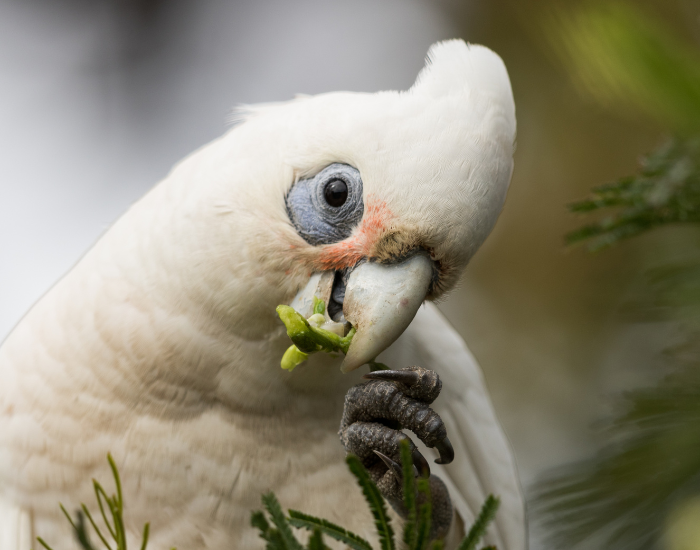
About 30 minutes before camp, we passed a flock feeding on the roadside. I hadn’t seen little corellas since I lived in Sydney. They resemble sulphur-crested cockatoos but lack the yellow crest. Look for bare blue-grey skin around the eye and a pinkish patch near the bill. Strictly speaking, we logged these on the drive in.
8. Laughing Kookaburra (Dacelo novaeguineae)
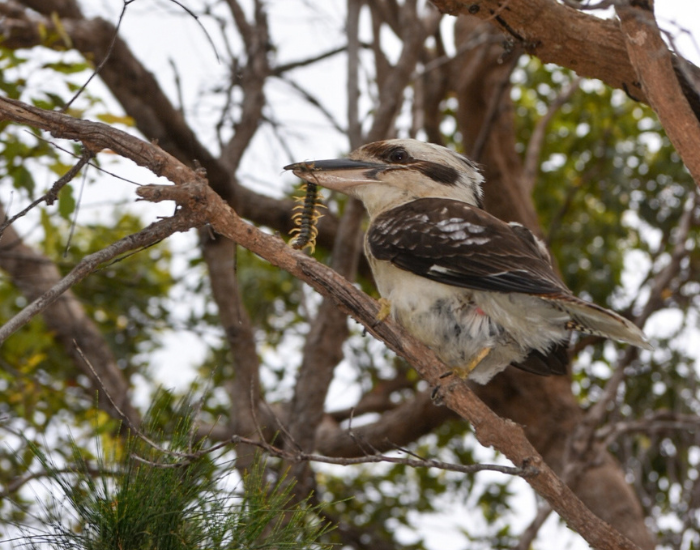
A few kookaburras dodged magpies around camp. After each downpour, they dropped to the ground to hunt. Rain drives worms and insects to the surface, turning wet grass into an easy buffet. One bird kept returning to the fire pit opposite ours.
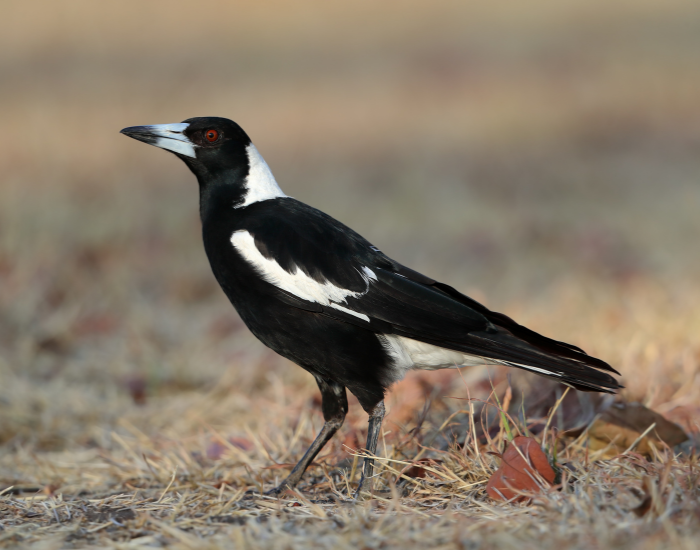
9. Australian Magpie (Gymnorhina tibicen)
The terror of every Australian. Magpies swooped me at least five times, and one of them got me three times. It nested beside the swamp track, so we eventually walked around it. Spring is breeding season, and these birds meant business.
Research shows swooping is brood defence, not territoriality. Testosterone actually drops during peak attack season. Only a small minority of magpies swoop people, almost all of them males.
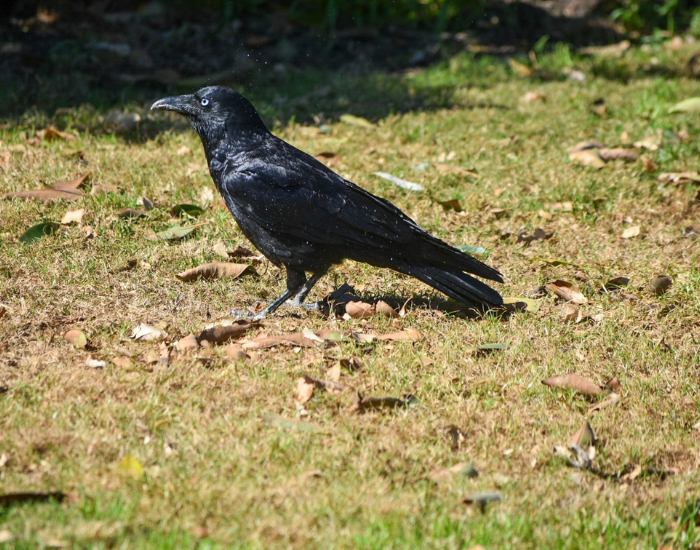
10. Australian Raven (Corvus coronoides)
Several ravens called from the snow gums, usually with a magpie on their tail. Magpies chase them because ravens raid nests. Adults have white eyes and shaggy throat feathers that puff out when they call. Listen for a long, wailing call that trails away at the end.
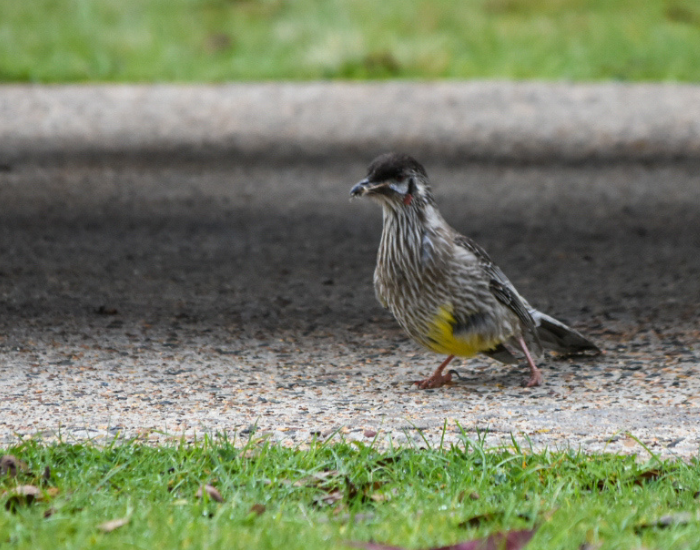
11. Red Wattlebird (Anthochaera carunculata)
At first I called it a yellow wattlebird. A second look revealed red wattles hanging below the cheeks, above a yellow belly patch. That settled it. Yellow wattlebirds live only in Tasmania anyway. These large, noisy honeyeaters defend flowering trees aggressively.
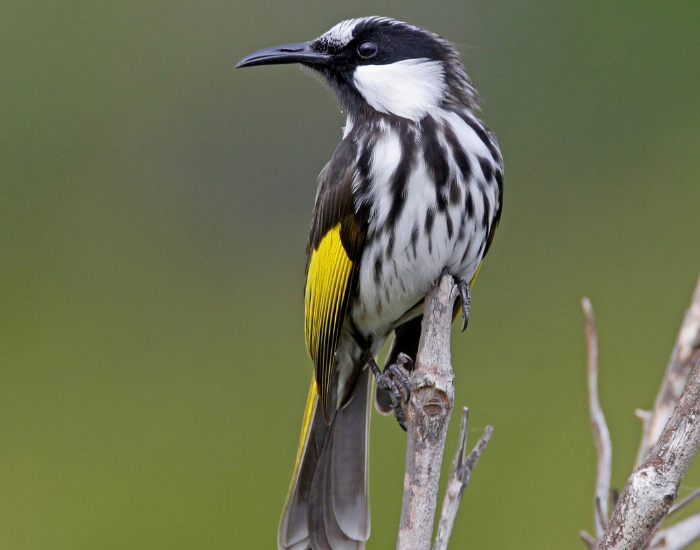
12. White-cheeked Honeyeater (Phylidonyris niger)
We saw a few on our early walk. Look for bold black-and-white streaking, a yellow wing panel and a big white cheek patch. The similar New Holland honeyeater has a white eye and smaller cheek mark. We became familiar in ID them after our stay at Illaroo where we first spotted these types of honeyeaters. This species has a dark eye. Again, mornings beat the middle of the day by a wide margin.
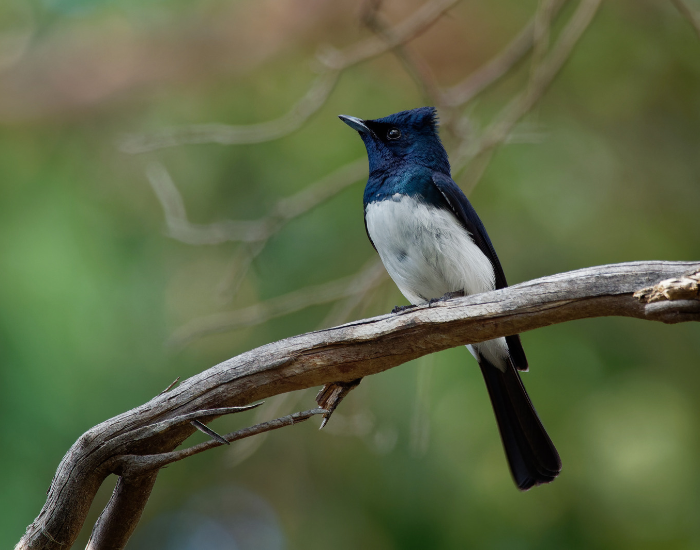
13. Satin Flycatcher (Myiagra cyanoleuca)
This was a brand new species for me. One perched right at the Polblue Creek end of the trail. Males shine glossy blue-black above, with a crisp line against a white belly. They quiver their tails almost constantly.
Satin flycatchers migrate. They breed in south-eastern forests through spring and summer, then winter in northern Australia and New Guinea. Our October sighting fits their arrival perfectly.
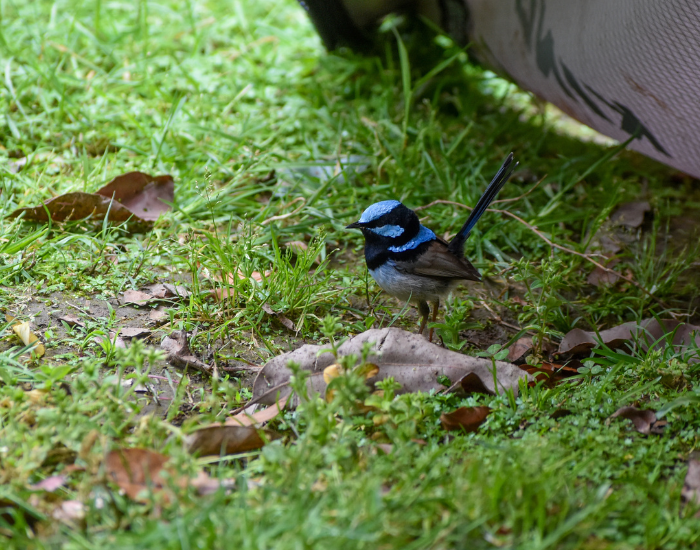
14. Superb Fairywren (Malurus cyaneus)
A lone female grew louder as we approached, suggesting a nest nearby. Female fairywrens even sing to their eggs. Embryos learn a “password” note and later use it in begging calls. That helps parents detect cuckoo chicks. More in my wren facts.
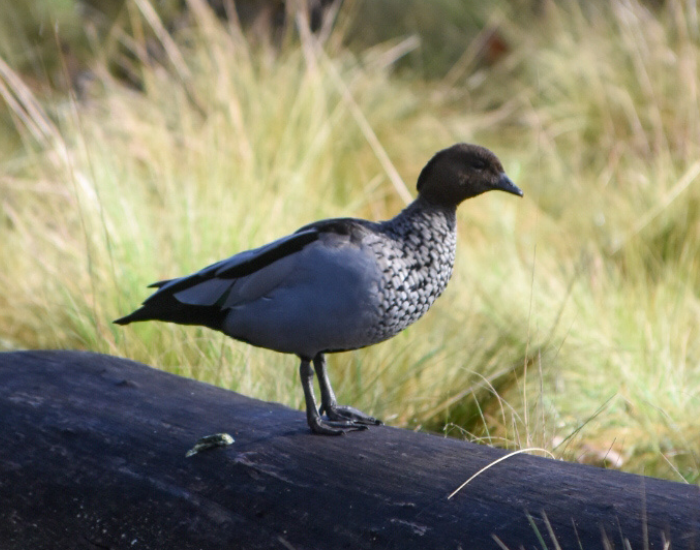
15. Australian Wood Duck (Chenonetta jubata)
Just a pair grazed on the campground grass, fewer than at our coastal stops. Wood ducks graze like small geese and nest in tree hollows. Soon after hatching, ducklings leap from the hollow to the ground below.
Polblue Campground FAQ
No. NPWS lists no water at the campground. We found rainwater tanks at the toilets, but treat it as non-drinkable. Bring all your drinking and cooking water.
Yes, in the fireplaces and wood barbecues provided. However, no firewood is supplied, and gathering firewood in Barrington Tops National Park is prohibited. Bring dry wood from outside the park. We also brought our own firepit.
Yes. Flurries occur regularly in winter, and temperatures can drop sharply even in spring. A 2018 snowfall left 10 cm at the campground. The road may close after heavy snow, so check alerts first. We saw several signs of ice roads.
No. Pets are not allowed in Barrington Tops National Park or other NSW national parks.
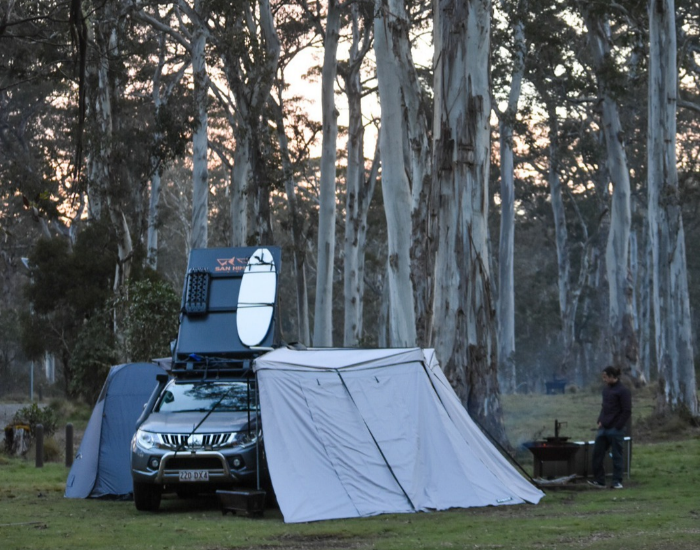
Reception is very limited or unavailable, and you need coverage to call Triple Zero. We carry Starlink for work and emergencies. Download maps and check the current cost and bookings on the NPWS site before leaving town.
Cold Nights, Wild Mornings
Polblue Campground traded beachfront convenience for something rarer: real quiet. Rain soaked us daily, yet wallabies, wombat burrows and a new flycatcher made every soggy morning worthwhile. If you’re planning a route through the best NSW national parks, give Barrington Tops at least three nights. Pack water, firewood, rain gear and binoculars, then walk the swamp loop early. Spotted a wombat where we only found burrows? Tell me in the comments, and follow our next stop on the Australia lap.
References:
Colombelli-Négrel, D., Hauber, M. E., Robertson, J., Sulloway, F. J., Hoi, H., Griggio, M., & Kleindorfer, S. (2012). Embryonic learning of vocal passwords in superb fairy-wrens reveals intruder cuckoo nestlings. Current Biology, 22(22), 2155-2160. https://doi.org/10.1016/j.cub.2012.09.025
Knott, B., Davies, W. I. L., Carvalho, L. S., Berg, M. L., Buchanan, K. L., Bowmaker, J. K., Bennett, A. T. D., & Hunt, D. M. (2017). Intraspecific geographic variation in rod and cone visual pigment sensitivity of a parrot, Platycercus elegans. Scientific Reports, 7, 41445. https://doi.org/10.1038/srep41445
Menzies, B. R., Hildebrandt, T. B., & Renfree, M. B. (2020). Unique reproductive strategy in the swamp wallaby. Proceedings of the National Academy of Sciences, 117(11), 5938-5942. https://doi.org/10.1073/pnas.1922133117
Yang, P. J., Lee, A. B., Chan, M., Kowalski, M., Qiu, K., Waid, C., Cervantes, G., Magondu, B., Biagioni, M., Vogelnest, L., Martin, A., Edwards, A., Carver, S., & Hu, D. L. (2021). Intestines of non-uniform stiffness mold the corners of wombat feces. Soft Matter, 17(3), 475-488. https://doi.org/10.1039/D0SM01230K