Did you ever find yourself scrolling through social media when suddenly you see a video of an adorable, chunky marsupial that looks like a cross between a bear and a badger, casually dropping perfectly cube-shaped droppings? Welcome to the wonderful world of wombats – Australia’s most underrated and fascinating native animals.
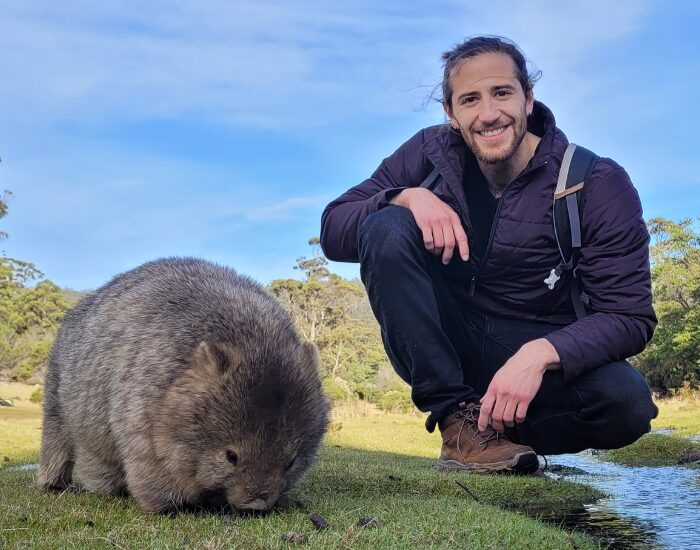
The first time I saw a wombat back in 2018, during a road trip through the Grampians National Park in Victoria while visiting my sister in Australia. We were exploring an open field with tall grass when a few chubby, brown shapes appeared along the roadside — my first wild wombats. They were even cuter in person: sturdy, calm, and completely unfazed by our quiet awe. Years later, I was lucky enough to encounter them again in Tasmania, especially on Maria Island — a true haven for wombats, where they roam freely across open fields and coastal tracks. It’s funny to think that my Australian partner, born and raised here, has never seen one in the wild. It just goes to show that spotting some of Australia’s most iconic animals isn’t as easy as people think.
What Exactly Are Wombats?
Before we explore our fascinating facts, let’s establish what makes wombats so special. These aren’t your average backyard critters – they’re short-legged, muscular marsupials native exclusively to Australia, belonging to the family Vombatidae. Think of them as nature’s bulldozers, perfectly designed for a life spent digging and burrowing.
Wombats are among the largest burrowing mammals in the world, which is pretty impressive when you consider their compact build. With their brown, tan, or grey fur, stubby tails, and surprisingly large skulls, these animals can measure up to 1.3 meters long and weigh as much as 36 kilograms. That’s roughly the size of a medium dog, but with the strength of a small bulldozer.

The Three Species of Wombats You Need to Know
Not all wombats are created equal. Australia is home to three distinct species of these remarkable marsupials, each with their own unique characteristics and conservation challenges:
1. The Common Wombat (Vombatus ursinus)
Also known as the bare-nosed wombat, this species is the most widespread and, thankfully, the most stable in terms of population. The common wombat prefers wetter forest environments and can be found across eastern Australia, including Victoria, New South Wales, and Tasmania.

2. The Southern Hairy-Nosed Wombat (Lasiorhinus latifrons)
Despite its name, this wombat animal doesn’t actually have hair on its nose – the “hairy-nosed” designation refers to the soft fur around its nostrils. These hardy creatures have adapted to Australia’s arid regions and can be found primarily in South Australia.

3. The Northern Hairy-Nosed Wombat (Lasiorhinus krefftii)
This is the rarest of all wombats and one of Australia’s most endangered animals. With fewer than 300 individuals remaining in the wild, this critically endangered species exists only in Epping Forest National Park in Queensland.

12 Mind-Blowing Facts About Wombats
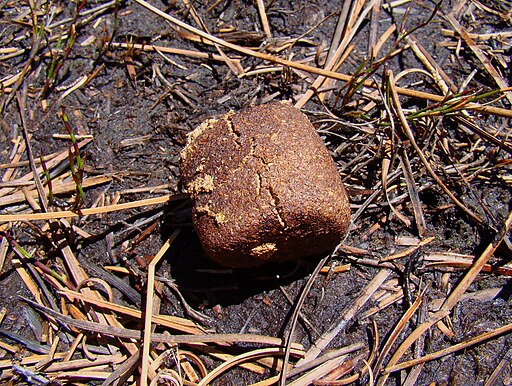
1. Wombats Produce Cube-Shaped Poop (And Scientists Finally Know Why!)
Perhaps the most famous fact about wombats is their ability to produce perfectly cube-shaped droppings. For years, this phenomenon puzzled scientists worldwide. How does any animal manage to create geometric perfection in their waste?
Research has finally solved this mystery. Wombats have an incredibly long digestive tract that processes food for 14 to 18 days. During this extended journey, their intestines have varying elasticity – some sections stretch more than others. As the waste moves through these differently elastic sections, it gets molded into the distinctive cubic shape we all know and love.
But here’s the really clever part: wombats use these cube-shaped droppings strategically. They produce 80-100 pieces nightly, stacking them on rocks, logs, and elevated surfaces to mark their territory. The cubic shape prevents the droppings from rolling away, ensuring their scent markers stay exactly where they want them. Talk about functional design!
2. They’re Surprisingly Fast Athletes
Don’t let their chunky appearance fool you – wombats are surprisingly athletic. While they typically waddle around at a leisurely pace (honestly, who wouldn’t with those adorable short legs?), they can reach impressive bursts of speed when necessary.
Field researchers have clocked wombats at speeds up to 40 kilometers per hour in short sprints, though this claim has been debated among wildlife experts. While some researchers question whether wombats can sustain such high speeds, field observations have confirmed they’re capable of remarkable bursts of acceleration when threatened or defending territory. Even at more conservative estimates, they’re still faster than the average human jogger – not bad for an animal that looks like a walking ottoman! Not in our list of the fastest land animals, but still quite impressive for their size.
This speed comes in handy when escaping predators (though, to be honest, there are hardly any in Australia) or, in some cases, chasing away threats from their territory. So if you ever encounter a wombat in the wild, don’t assume you can outrun it – these marsupials pack some serious speed when they need it.

3. Female Wombats Have Backwards-Facing Pouches
Here’s where wombats show their evolutionary brilliance. Unlike kangaroos, whose pouches face forward, female wombats have backward-facing pouches. This might seem counterintuitive until you consider their lifestyle.
Since wombats spend most of their time digging burrows and tunnels, a forward-facing pouch would constantly fill with dirt and debris. The backward-facing design protects their precious joeys from soil and rocks while mom goes about her excavation work. It’s like having a built-in baby carrier designed by nature’s best engineers.

4. They’re Ancient Creatures with a Fascinating Evolutionary History
Wombats aren’t newcomers to the Australian landscape. These marsupials diverged from other Australian marsupials between 25 and 40 million years ago. To put that in perspective, they were already well-established long before the first human ancestors appeared.
Even more fascinating? Some prehistoric wombat species were absolute giants. Take Phascolonus, for example – this ancient relative weighed up to 360 kilograms, making it roughly ten times larger than modern wombats. The largest known wombat species went extinct about 40,000 years ago, likely due to climate changes and human arrival in Australia.

5. Wombat’s Burrows can be Seen from Space
When it comes to construction, wombats put human engineers to shame. These wombat animals create extensive burrow systems that can stretch for up to 30 meters underground, with multiple chambers and entrances that can be seen from space! Their burrows aren’t just holes in the ground – they’re sophisticated tunnel networks designed for temperature control, safety, and comfort.
Using their rodent-like incisors and powerful claws, wombats can excavate tons of soil. Their burrows maintain a consistent temperature year-round, providing perfect shelter from Australia’s extreme weather conditions. These underground mansions can house multiple wombats and often become multi-generational family homes.

6. They Have Bulletproof Butts (Almost Literally)
One of the most unique defensive features of wombats is their incredibly thick, tough hide on their rump. This cartilaginous plate, made of tough connective tissue, serves as natural armor against predators.
When threatened, wombats dive headfirst into their burrows, leaving only their armored rear end exposed. This “bulletproof butt” strategy is surprisingly effective – predators find it nearly impossible to get a grip or inflict serious damage. It’s like having a built-in shield that follows you everywhere.

7. Wombats Are Ecological Engineers
Wombats play a crucial role in their ecosystems that extends far beyond their own survival. Their extensive burrow systems provide shelter for numerous other species, including echidnas, rabbits, lizards, and various bird species.
During bushfires, wombat burrows become literal lifesavers for other wildlife. The deep, cool tunnels offer protection from flames and smoke, essentially turning wombats into involuntary firefighters. Some researchers estimate that wombat burrows have saved countless animals during Australia’s devastating bushfire seasons.
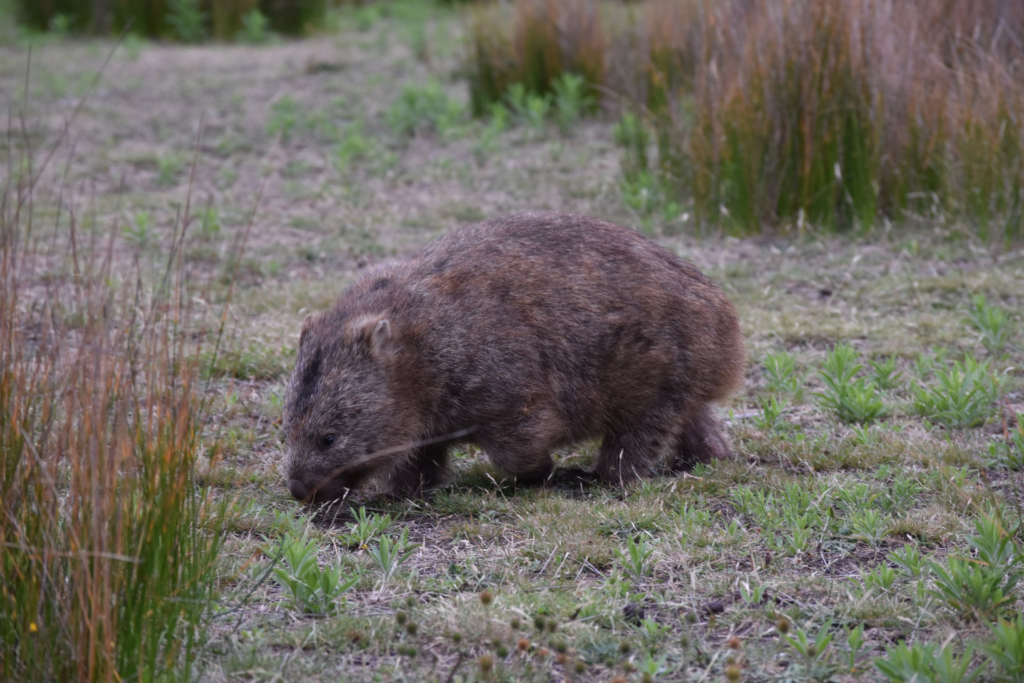
8. They Have Terrible Eyesight But Amazing Noses
Wombats are essentially the Mr. Magoo of the marsupial world – their eyesight is quite poor, especially during daylight hours. However, what they lack in vision, they more than make up for with their incredible sense of smell.
They rely heavily on scent for navigation, finding food, and identifying other wombats. Their sophisticated olfactory system allows them to detect subtle chemical signals in their environment, making them expert trackers despite their visual limitations.

9. A Group of Wombats Is Called a “Wisdom”
Here’s a delightful linguistic tidbit: a group of wombats is called a “wisdom.” This joins the ranks of other wonderfully quirky Australian animal collective nouns, though wombats are typically solitary creatures, so you’re unlikely to encounter a wisdom in the wild.
The name “wombat” itself has beautiful origins, coming from the Darug language of Sydney’s Traditional Owners. Early European settlers initially called them badgers, which is why you’ll find places in Australia named Badger Creek and Badger Corner – historical reminders of this naming confusion.
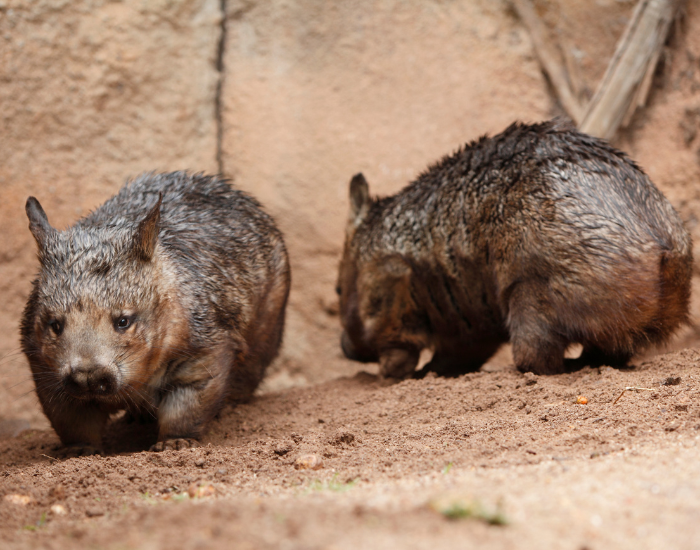
10. Wombats Can Live Surprisingly Long Lives
In the wild, wombats typically live 15-20 years, but in captivity, they can live even longer. The oldest recorded wombat was a common (bare-nosed) wombat named Patrick, who lived to be 32 years old before passing away in 2017. Some records suggest other wombats, including Wain in Japan and a hairy-nosed wombat named Carver, may have reached 34 years. That’s remarkably long for a marsupial of their size.
This longevity is partly due to their slow metabolism and efficient digestive system. Wombats are the marathon runners of the marsupial world – they’re built for endurance rather than speed, allowing them to survive in harsh Australian conditions where other animals might struggle.
Find more about the longest living animals in the world.
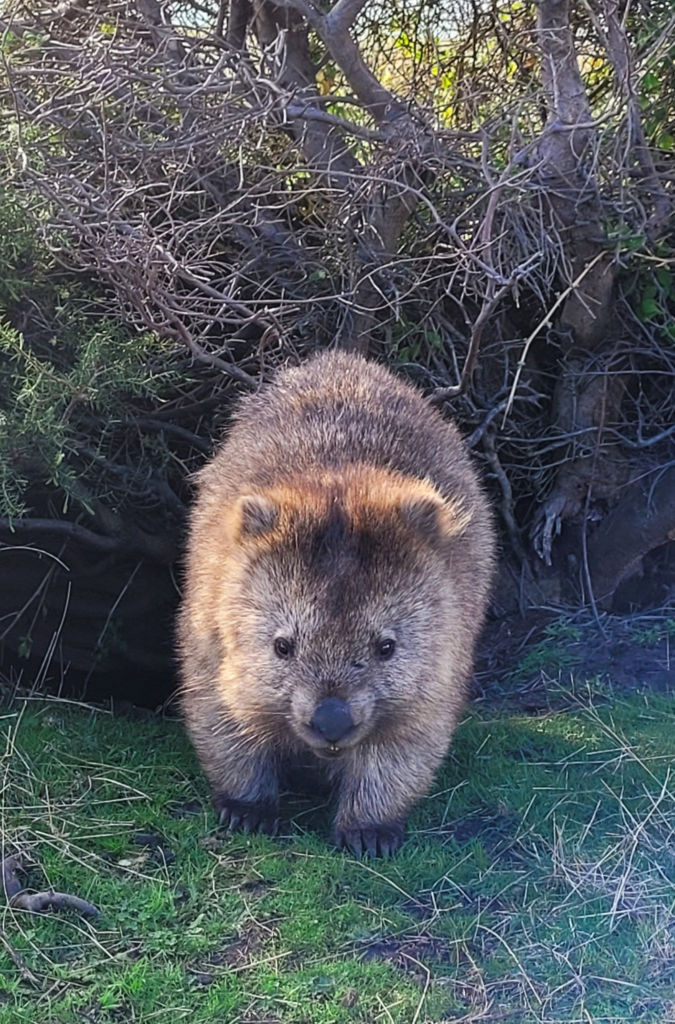
11. They’re Surprisingly Vocal When They Want to Be
While wombats are generally quiet animals, they have a surprisingly diverse vocal repertoire. During mating season, these usually silent creatures become quite chatty, producing an array of sounds including hisses, grunts, and even aggressive growls.
Males are particularly vocal when establishing territory or courting females. Some researchers describe their mating calls as surprisingly pig-like, which might not sound romantic to us, but apparently works well for attracting wombat partners.

12. Wombats Are Conservation Success Stories but, with Ongoing Challenges
The conservation status of wombats tells a tale of both success and urgent concern. Common wombats and southern hairy-nosed wombats have relatively stable populations, thanks to legal protection across all Australian states and dedicated conservation efforts.
However, the northern hairy-nosed wombat represents one of Australia’s greatest conservation challenges. With fewer than 300 individuals remaining, this species teeters on the brink of extinction. Threats include habitat loss, disease, wild dog predation, and competition from cattle and sheep for food resources.
The Australian government has implemented various conservation strategies, including the WomSAT citizen science project, which encourages the public to record wombat sightings and burrows. This data helps researchers track population trends and identify critical habitat areas.
2026 Conservation Update: “The Great Recovery”!!
The Northern Hairy-nosed Wombat population has reached a record high of over 400 individuals as of 2026, thanks to the establishment of a third colony at Powrunna State Forest.
13. They’re Herbivorous Grazers with Specialized Diets
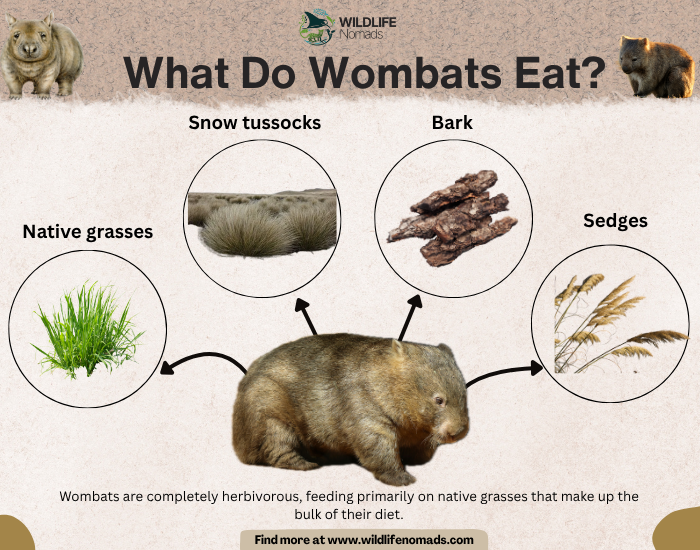
Wombats are completely herbivorous, feeding primarily on native grasses that make up the bulk of their diet. Their diet consists of grasses (including snow tussocks, wallaby grass, and kangaroo grass), sedges, herbs, roots, bark (especially the inner bark of certain trees), fungi like mushrooms, shrubs, leaves, and mosses.
What makes their diet particularly remarkable is how efficiently they process it. Since their diet is nutritionally poor, low in protein and high in fiber, wombats have an extremely low metabolic rate and spend only 3-8 hours per night grazing. They eat only about a third as much as a comparably sized kangaroo and a quarter as much as a similar-sized sheep. During droughts, wombats will dig up dead grass to access the roots beneath.
14. They’re Endemic to Australia – Found Nowhere Else on Earth
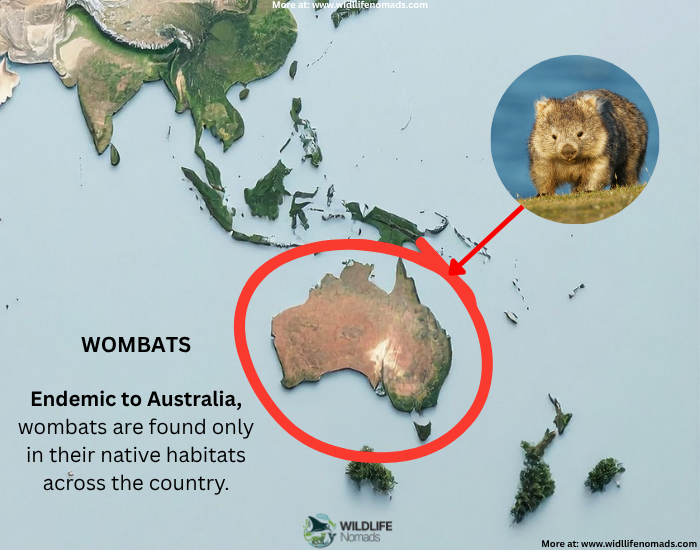
Wombats are exclusively Australian animals, making them one of the continent’s many unique endemic species. You won’t find wild wombat populations anywhere else in the world – not in the USA, Europe, Asia, or any other continent. They exist only in their native Australian habitats.
Their distribution across Australia varies by species. Common wombats inhabit the wetter forest environments of eastern Australia, including Victoria, New South Wales, and Tasmania. Southern hairy-nosed wombats have adapted to the arid regions of southern Australia, primarily in South Australia. The critically endangered northern hairy-nosed wombat has the most restricted range of all, existing only in Epping Forest National Park in Queensland.
This geographic isolation has allowed wombats to evolve their unique characteristics over millions of years without competition from similar species found on other continents. While some international zoos house wombats as part of conservation and education programs, Australia remains their only natural home – making them true icons of Australian wildlife alongside possums, quokkas, and platypuses.
Common FAQ about Wombats
Legal Issues: Wombats are protected native wildlife in Australia. Keeping them as pets is illegal and can result in substantial fines and legal consequences.
Practical Challenges: These wombat animals are designed for a specific lifestyle that’s impossible to replicate in domestic settings. They need to dig, they’re nocturnal, and they require specialized diets and veterinary care.
Safety Concerns: Despite their cuddly appearance, wombats are powerful, wild animals with strong claws and teeth. They can cause serious injuries and aren’t suited to life with humans.
Wombats aren’t naturally aggressive toward humans, but they’re not friendly pets either. In the wild, they typically avoid human contact and are more likely to retreat to their burrows than engage with people.
Wombats are exclusively Australian animals – you won’t find wild populations anywhere else in the world, including the USA. However, some American zoos house wombats as part of conservation and education programs.
despite their bear-like appearance, wombats are not related to bears at all. Wombats are marsupials, meaning they’re more closely related to kangaroos, koalas, and opossums than to any placental mammal like bears.

Why Wombats Matter More Than You Think
Wombats represent so much more than just cute, cube-pooping marsupials. They’re evolutionary marvels, ecological engineers, and conservation indicators all rolled into one adorable, chunky package. From their ancient lineage to their sophisticated burrow systems, wombats demonstrate nature’s incredible ability to adapt and thrive in challenging environments.
As we’ve discovered through these 12 fascinating facts, wombats challenge our assumptions about marsupials and continue to surprise researchers with their unique adaptations. From their backwards pouches to their geometric waste production, every aspect of wombat biology tells a story of evolutionary ingenuity.
The next time you see a wombat video online or encounter one of these magnificent creatures in the wild, remember that you’re looking at millions of years of evolutionary perfection. These aren’t just internet-famous animals – they’re living reminders of Australia’s incredible biodiversity and our responsibility to protect it.
Further Reading
Other Ecosystem Engineers:
- Prairie Dog: The Ecosystem Engineers of the Grasslands
- The Beaver Effect: How One Species Rebuilds Entire Landscapes
- Keystone Animals That Shape the Wild World Around Us
References:
Barboza, P. S., & Hume, I. D. (1992). Digestive tract morphology and digestion in the wombats (Marsupialia: Vombatidae). Journal of Comparative Physiology B, 162(6), 552–560. https://doi.org/10.1007/BF00264817
Favreau, F., Jarman, P. J., Goldizen, A. W., Dubot, A., Sourice, S., & Pays, O. (2010). Vigilance in a solitary marsupial, the common wombat (Vombatus ursinus). Australian Journal of Zoology, 57(6), 363–371. https://doi.org/10.1071/ZO09062
Horsup, A. B., Austin, J. J., Fewster, R. M., Hansen, B. D., Harper, D. E., Molyneux, J. A., White, L. C., & Taylor, A. C. (2021). Demographic trends and reproductive patterns in the northern hairy-nosed wombat (Lasiorhinus krefftii) at Epping Forest National Park (Scientific), central Queensland. Australian Mammalogy, 43(1), 72–84. https://doi.org/10.1071/AM20030
Linley, G. D., Geary, W. L., Jolly, C. J., Spencer, E. E., Ashman, K. R., Michael, D. R., Westaway, D. M., & Nimmo, D. G. (2024). Wombat burrows are hotspots for small vertebrates in a landscape subject to gigafire. Journal of Mammalogy, 105(4), 752–764. https://doi.org/10.1093/jmammal/gyae034
McMcPherson, N., & Ostendorf, B. (2025). Detection of rabbit and wombat warrens in broad-scale satellite imagery. Australian Mammalogy, 47, AM24017. https://doi.org/10.1071/AM24017
Old, J. M., Dege, A. M., Le Breton, N., Sheehan, K. H., & Yaghi, L. (2025). The marsupial nasal system: A review of its structure, function, and evolutionary significance, with a focus on wombats. Australian Mammalogy, 47, AM25023. https://doi.org/10.1071/AM25023
Old, J. M., Hunter, N. E., & Wolfenden, J. (2018). Who utilises bare-nosed wombat burrows? Australian Zoologist, 39(3), 409–413. https://doi.org/10.7882/AZ.2018.006