Wildlife Nomads


In 2017 I swapped Mexico for an exchange year at Uppsala University. I expected snow and long nights. I did not expect Swedish animals to change how I saw Europe’s wildlife.
That year I travelled a lot. I explored Stockholm, Malmö, Gothenburg and Uppsala, then went north to Kiruna, above the Arctic Circle. Up there I saw my first reindeer. Later, at the Klubban biological station on the west coast, my classmates and I counted birds for an ecology project.
We placed stuffed predators at different distances and filmed which birds still came to feed. Our result was not statistically significant. Still, those hours behind the cameras showed me how much life hides in plain sight here.
Sweden squeezes Arctic mountains, endless forest, lakes and farmland into one long country. As a result, it holds all four of Europe’s large predators plus some remarkable comeback stories. Below are 15 animals worth knowing, with the newest population figures I could verify.
Photo ID challenge Can you name these Swedish animals from a single photo? 12 questions at the end of this post. Read on, then test your eye ↓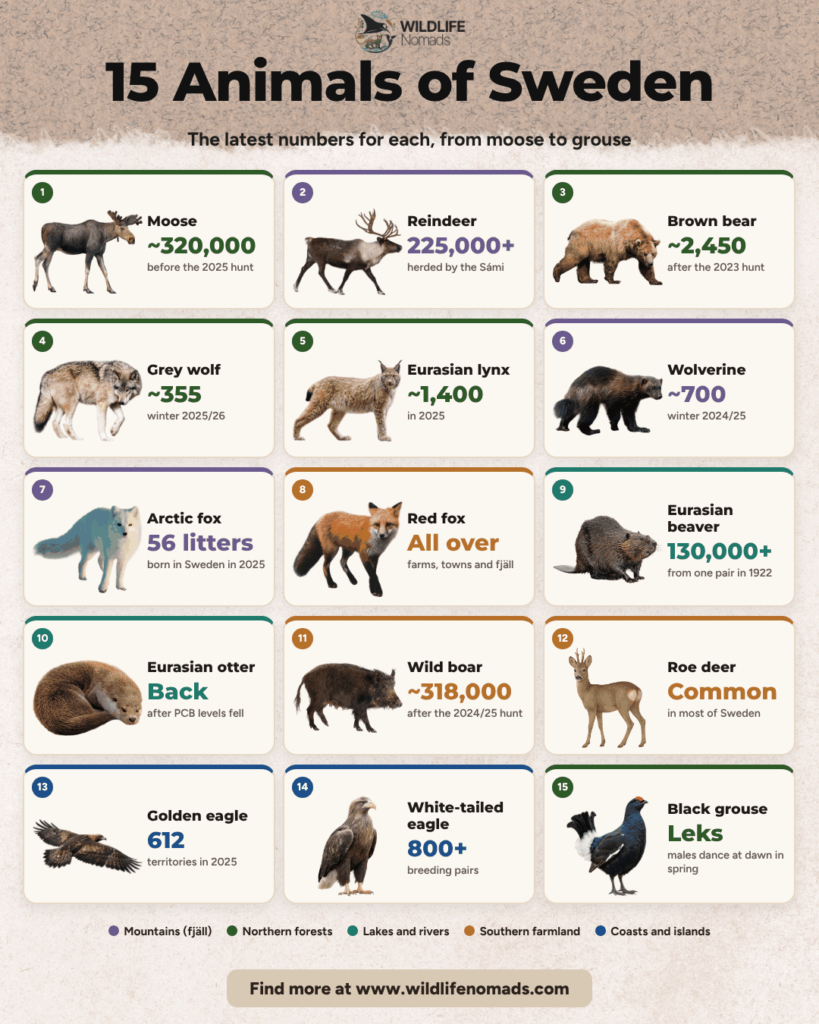
Where Swedish Animals Live
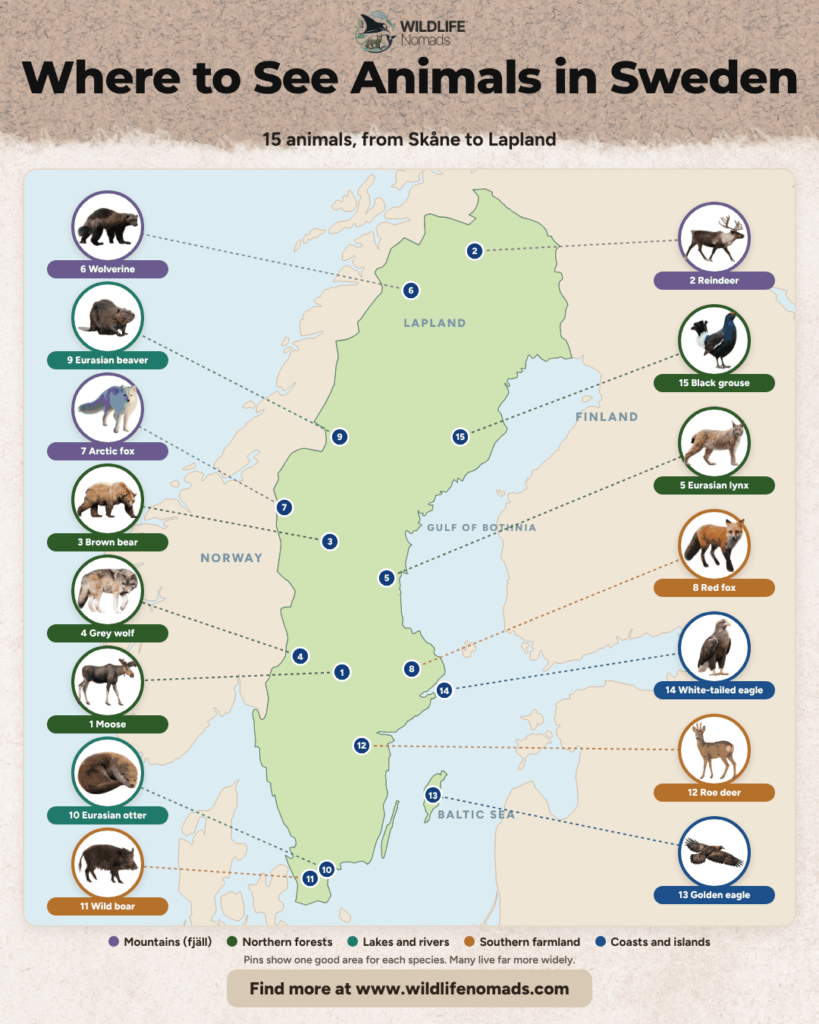
Sweden runs nearly 1,600 km from south to north. Southern Sweden is a patchwork of farms, beech woods and lakes. Further up, central Sweden disappears into boreal forests, where spruce and pine forests stretch for hundreds of kilometres. In the northern parts, trees thin out at the tree line and give way to open fjäll.
Each zone shapes the wildlife in Sweden. Wild boar thrive in the south, while moose and lynx roam the forested regions in between. Reindeer, wolverines and Arctic foxes need the cold north.
Better still, allemansrätten, the right of public access, lets anyone walk most of this land freely. That said, local knowledge helps. Ask rangers, hunters or hosts where animals have been seen lately.
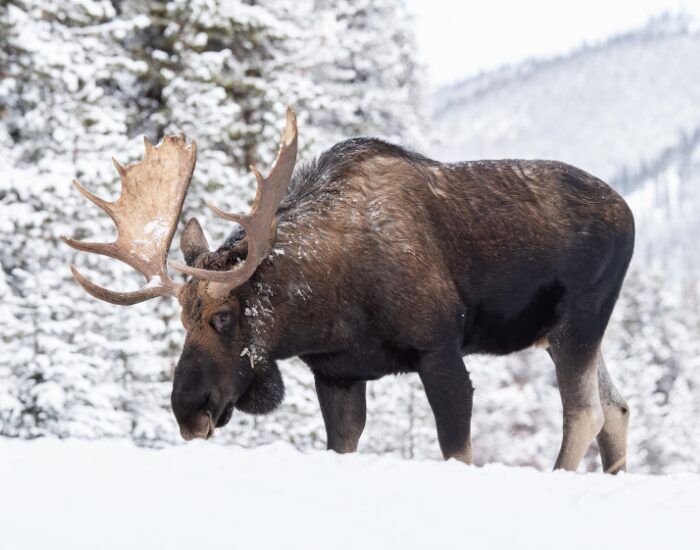
1. Moose (Alces alces)
The moose is the unofficial national animal of Sweden. Swedes call it älg, which confuses visitors. In North America, elk means a completely different deer, the wapiti.
Moose are the largest members of the deer family. Swedish bulls are smaller than the giants of Alaska, yet still taller than most people at the shoulder. Only bulls grow antlers, and they shed them every winter.
In autumn 2025, about 320,000 moose lived in Sweden before the hunt. Hunters took just over 62,000, leaving about 255,000 for winter. For a sighting, try early mornings and dusk along clear-cuts and forest edges.
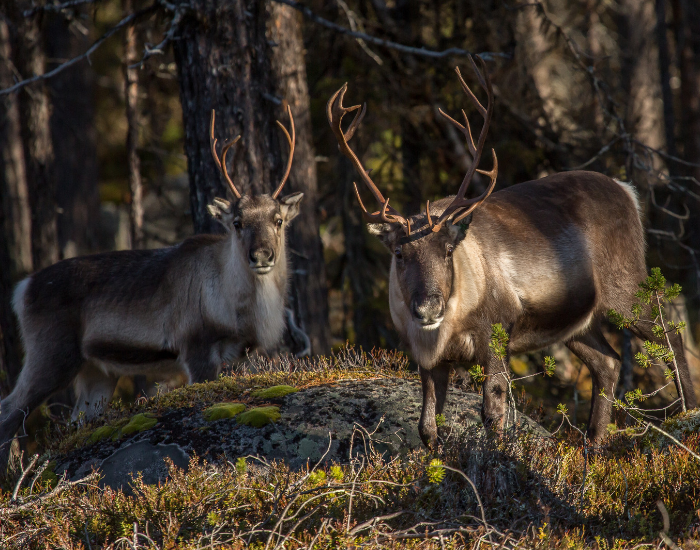
2. Reindeer (Rangifer tarandus)
My first reindeer near Kiruna looked completely unbothered by me. That calm makes sense, because every reindeer in Sweden has an owner. Unlike Norway, Sweden has no wild herds.
Reindeer herding is a Sámi right, organised through 51 herding communities. The winter herd ranges from about 225,000 to 280,000 animals, plus roughly 50,000 calves each summer. Herds move between mountain pastures near Norway and winter grazing in the forest.
Reindeer and North American caribou are the same species. Both sexes grow antlers, which no other deer does. You can follow their seasonal journeys on my caribou migration map.
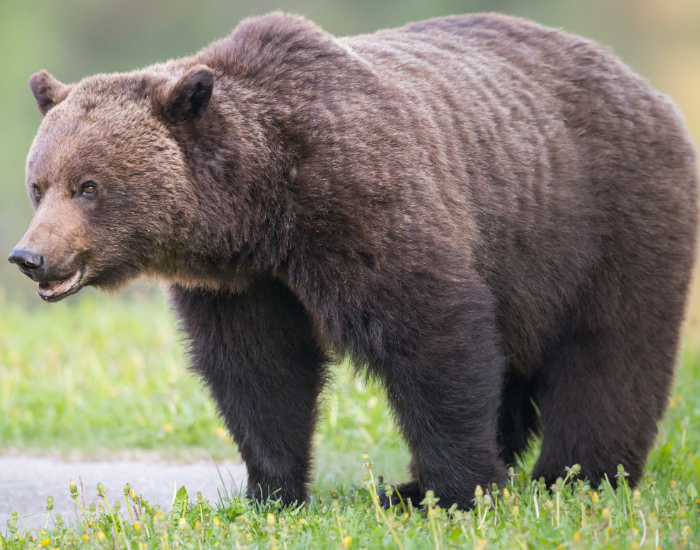
3. Brown Bear (Ursus arctos)
Swedish brown bears live mainly in northern and central Sweden. By 1930 only about 130 remained. Protection from 1927 turned things around, and Kindberg’s team estimated 3,298 bears in 2008.
Today numbers are falling again under licensed hunting. Naturvårdsverket counted about 2,800 bears in autumn 2022 and roughly 2,450 after the 2023 hunt. Licences covered 465 bears in 2025 and 394 in 2026. The Swedish Red List now classes the species as Near Threatened.
Bears here are shy and usually avoid humans. They hibernate for about half the year, and cubs are born in the den. Volunteers even help count them by collecting bear scat for DNA, a brilliant piece of citizen science.
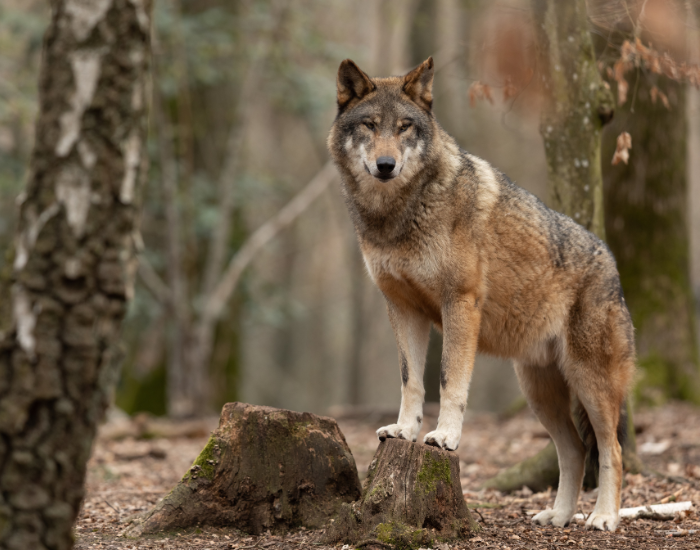
4. Grey Wolf (Canis lupus)
Wolves vanished from Sweden by the mid-20th century. Then a few dispersed from Finland and Russia and recolonised the country naturally. The latest winter inventory, for 2025/26, estimated about 355 wolves in Sweden. That matches the year before.
Most wolf territory lies in the forests of south-central Sweden. Wolves are largely kept out of the reindeer herding area, which limits gene flow from the east. As a result, inbreeding remains one of the population’s biggest problems.
A pack is usually a breeding pair and its young. Each pack marks its territory with scent marks and howls to warn other wolves away. Like wolves in Colorado, they generally avoid humans. Sweden’s last recorded fatal wolf attack happened in 1821.
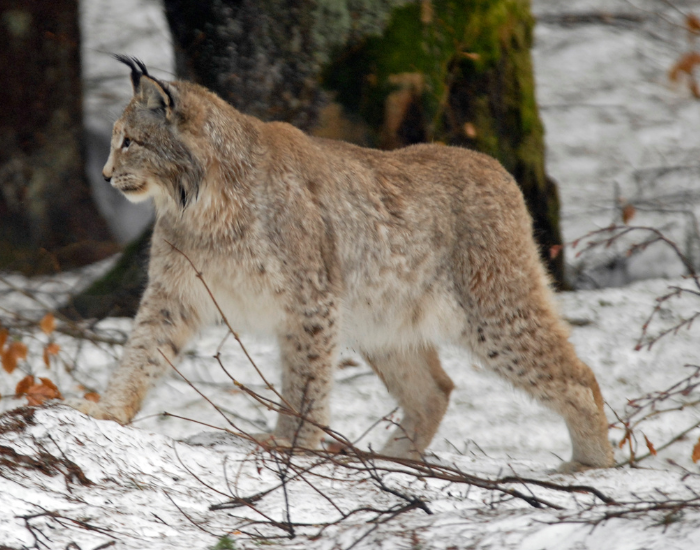
5. Eurasian Lynx (Lynx lynx)
The Eurasian lynx is Sweden’s only wild cat. It hunts mostly at night and around dawn, stalking roe deer in the south and reindeer in the north. Adults weigh about 15 to 30 kg.
Surveyors count lynx by tracking family groups, meaning a mother with her kittens. In 2025 they found 234 family groups in Sweden, which equals about 1,367 lynx.
Lynx are territorial animals that mark their ranges with urine and faeces. Male and female territories differ in size. Typically, a male’s range overlaps one or more females, while female territories overlap each other far less.
6. Wolverine (Gulo gulo)
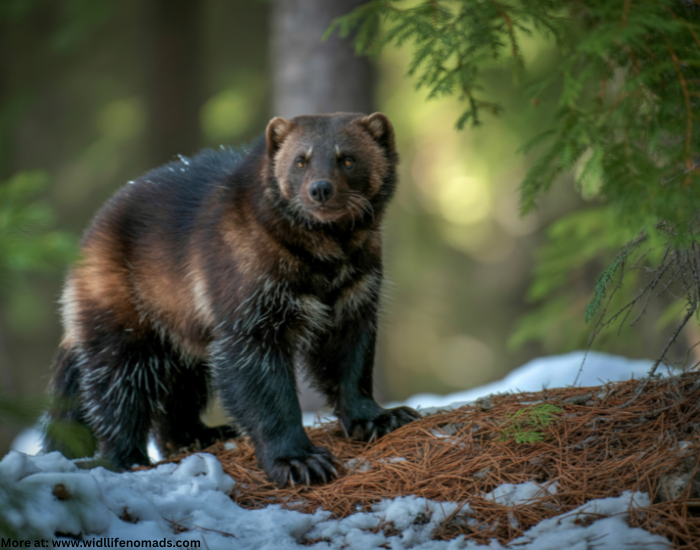
The wolverine looks like a small bear, yet it belongs to the weasel family alongside otters and pine martens. Broad feet and short legs carry it over deep snow for long distances.
It is a bold scavenger and an opportunistic hunter, often feeding on reindeer. Wolverines have been protected in Sweden since 1969. The latest DNA survey estimated about 702 wolverines in Sweden in winter 2024/25.
For decades they clung to the mountains along the Norwegian border. However, a 2025 PNAS study showed they have spread south and east into boreal forest, with females still expanding. Scientists once considered that forest poor wolverine habitat.
7. Arctic Fox (Vulpes lagopus)
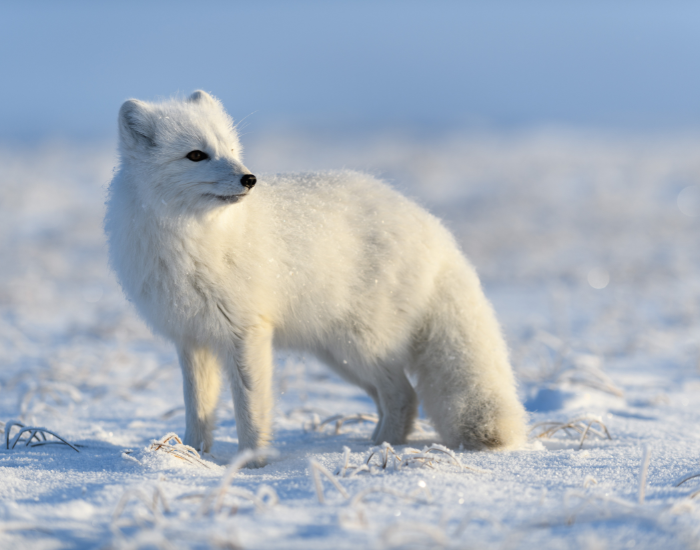
Around the year 2000, only 40 to 60 Arctic foxes survived in Sweden. The species is still classed as Endangered there, despite protection since 1928. It is one of the most threatened species in Swedish nature.
Recovery came from hard work: supplementary feeding, red fox control and yearly den surveys. In 2025, surveyors confirmed 56 litters in Sweden. The Arctic fox population across Sweden, Norway and Finland is now about 526 adults.
Everything depends on lemmings and voles. Good rodent years bring big litters, while poor years bring very few. In winter the fox turns snow white, then moults to grey-brown for summer. It is also Iceland’s only native land mammal.
8. Red Fox (Vulpes vulpes)
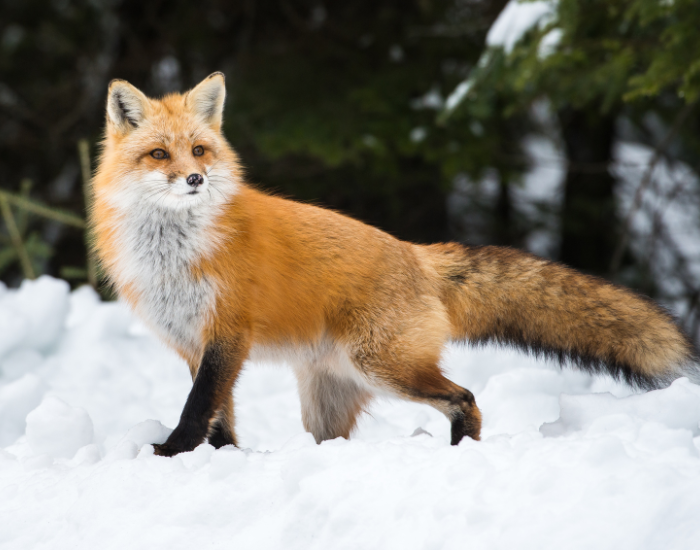
The red fox is the fox most visitors actually see. It lives almost everywhere, from farmland and city edges to the mountains. Unlike its Arctic cousin, it eats nearly anything.
That flexibility creates problems higher up. Larger red foxes compete with Arctic foxes for food and dens. Consequently, red fox control is part of Arctic fox conservation in the fjäll.
Swedish red foxes also taught ecologists a famous lesson. When sarcoptic mange swept through them in the late 1970s and 1980s, fox numbers crashed. Small game such as hares and grouse then increased. You can compare it with other types of foxes.
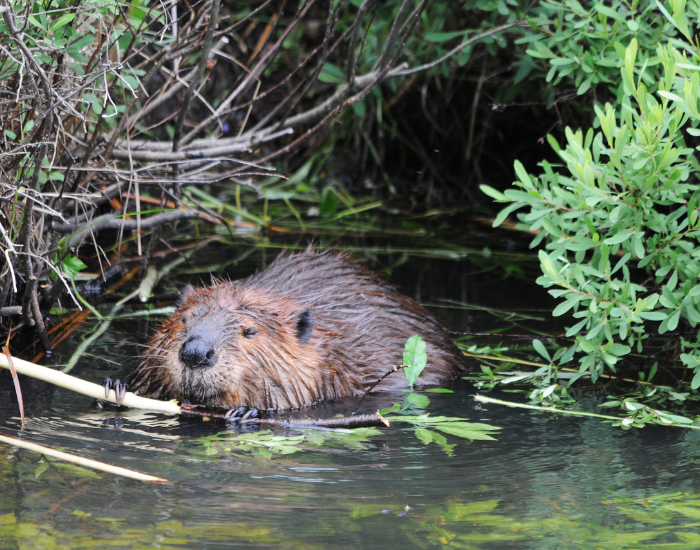
9. Eurasian Beaver (Castor fiber)
Hunters had wiped beavers out of Sweden by the 1870s, mainly for fur and castoreum. In 1922, museum curator Eric Festin released a pair from Norway into the Bjurälven in Jämtland. Around 80 beavers followed at 19 sites by 1939.
It was one of the world’s earliest wildlife reintroductions and an early rewilding success. Estimates now range from about 130,000 to over 150,000 beavers. They even swim in Stockholm’s city waterways.
Beavers are Europe’s largest rodents and mostly active at dusk and night. Their dams turn streams into ponds full of insects, frogs and fish. That habitat building makes them a classic keystone species and an ecosystem engineer.
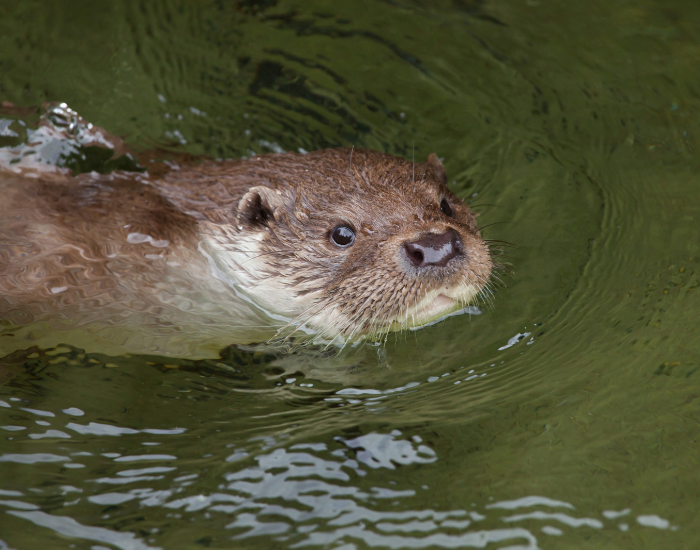
10. Eurasian Otter (Lutra lutra)
Otters were once common across Sweden. From the 1950s, however, they declined dramatically. Hunting, drowning in fishing gear and pollutants such as PCBs and DDT all played a part.
Hunting stopped in the late 1960s, yet otters kept disappearing through the 1980s. Roos and colleagues later showed recovery in the north tracked falling PCB levels. Clean water, in other words, brought them back.
Today otters live in most of Sweden, including towns such as Linköping and Kristianstad. They hunt fish in lakes, rivers and along the coast. Their South American relative, the giant river otter, can grow far bigger.
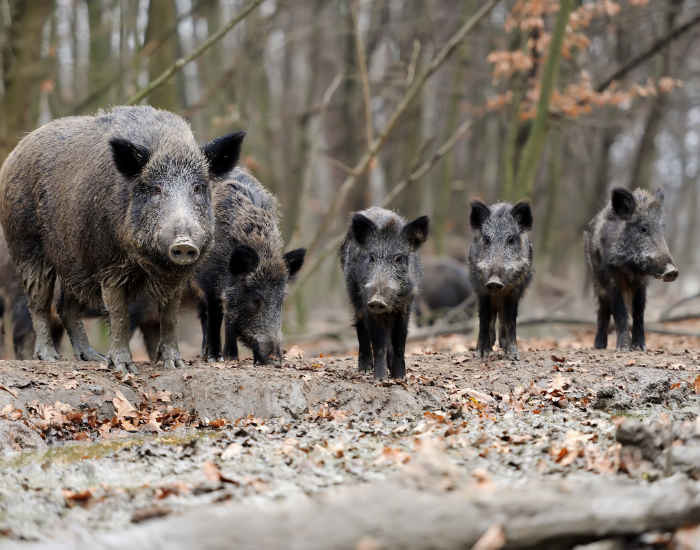
11. Wild Boar (Sus scrofa)
Sweden lost its wild boar centuries ago. In the 1970s and 1980s, animals escaped from hunting enclosures. Parliament then accepted them as part of Swedish fauna in the late 1980s.
What followed was explosive. Bergqvist and colleagues described them going from virtually extinct to superabundant in 35 years. A new 2026 estimate counted about 570,000 wild boar before the 2024/25 hunting year. About 318,000 remained afterwards.
Most live in southern Sweden, where farmland feeds them well. They travel in family groups of females and young, while adult males often live alone. In 2023, Sweden recorded its first African swine fever outbreak in wild boar.
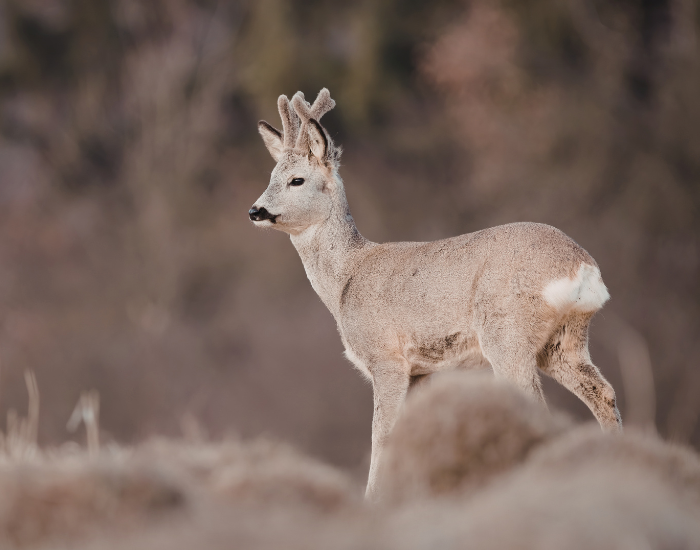
12. Roe Deer (Capreolus capreolus)
The roe deer is small, graceful and common through most of Sweden. It wears a reddish coat in summer and a grey-brown coat in winter. A white rump patch flashes as it bounds away.
Roe deer have a clever breeding trick. The mating season peaks in July and August, but the embryo pauses its development until winter. Fawns are then born in late spring, when food is plentiful.
Introduced fallow deer also live in parts of southern Sweden. Lynx, wolves and red foxes all take roe deer, which shows how one prey animal feeds a whole food web.
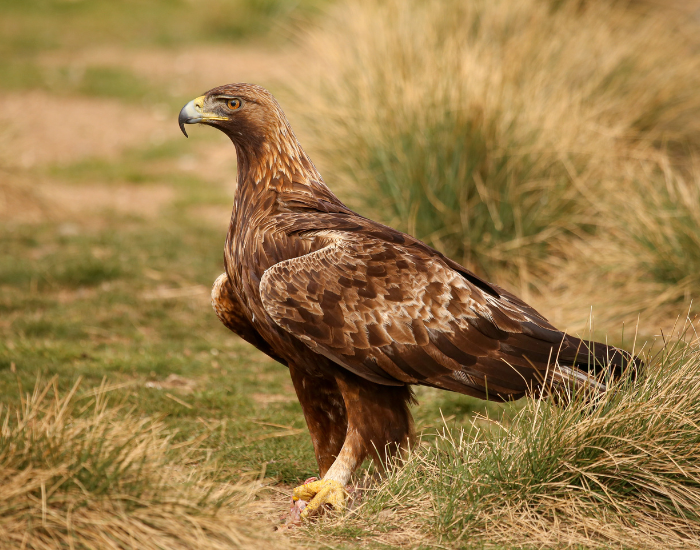
13. Golden Eagle (Aquila chrysaetos)
Most golden eagles in Sweden nest in the mountains and forests of the north. Surprisingly, the highest density lives on the flat Baltic island of Gotland. In northern Sweden, many pairs build their nests in trees rather than on cliffs.
Counties reported 612 occupied territories in 2025. Pairs bred in 316 of them, and roughly 280 raised young. Golden eagles rarely leave Sweden in winter, although some move south within the country.
Sweden manages the golden eagle alongside its large predators, because eagles take some reindeer calves. It is one of the most powerful birds of prey in Europe.
14. White-tailed Eagle (Haliaeetus albicilla)
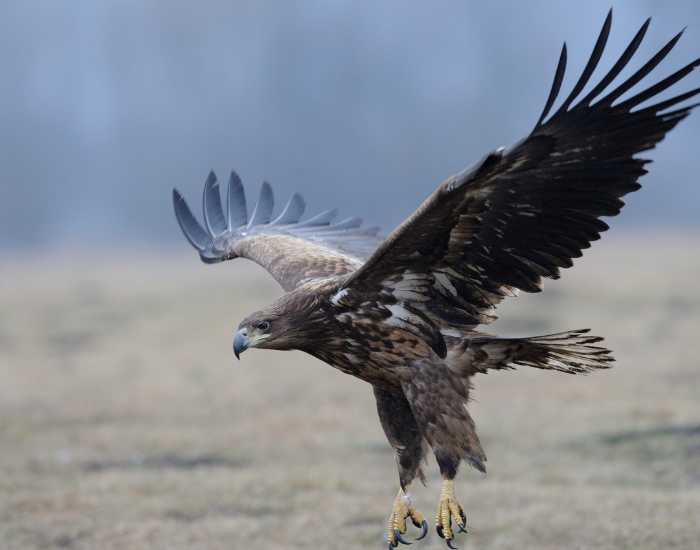
The white-tailed eagle is northern Europe’s largest bird of prey, with a wingspan near 2.4 metres. It shares a genus with the American bald eagle. Adults have a pale head and a short, wedge-shaped white tail.
By 1924, when the species gained legal protection, perhaps 50 pairs remained. DDT then thinned their eggshells, and eggs cracked or dried out. Breeding success only recovered after those chemicals were banned.
Today Sweden holds at least 800 breeding pairs, mostly along the Baltic coast. Look for them over lakes and coastal bays, especially in winter. Scientists now use them as a sentinel species for pollution in the Baltic Sea.
15. Black Grouse (Lyrurus tetrix)
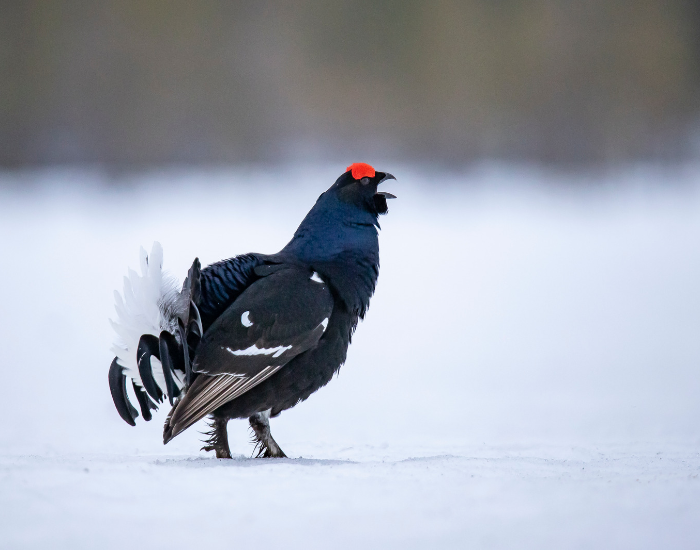
The black grouse puts on one of Europe’s best wildlife shows. In spring, males gather at dawn on open bogs, fields or frozen lakes. There they bubble, hiss and spread their tails in a display called a lek.
Males are glossy blue-black with a lyre-shaped tail, white undertail feathers and red combs above the eyes. Females are mottled grey-brown, perfectly camouflaged for nesting on the ground. Both live where forests meet open landscapes.
For birders, a lek is worth an early alarm. Arrive before first light, stay in a hide and keep quiet. It ranks alongside the best bird watching moments anywhere.
FAQs About Swedish Animals
Yes. Sweden has wild brown bears, mostly in northern and central Sweden. Naturvårdsverket estimated about 2,800 bears in autumn 2022 and roughly 2,450 after the 2023 hunt. Bears are shy and usually avoid people, so sightings are rare.
Yes. Wolves recolonised Sweden naturally after disappearing in the 20th century. The latest winter inventory estimated about 355 wolves, mostly in the forests of south-central Sweden. They generally avoid humans, and attacks are extremely rare.
The brown bear is the biggest land predator in Sweden. The wolf, lynx and wolverine complete the country’s four large carnivores. In the air, the white-tailed eagle is the largest bird of prey.
Moose live across almost all of Sweden except Gotland. Your best bet is driving or walking forest roads, clear-cuts and lake edges at dawn or dusk. Guided moose safaris also run in central Sweden, including the Bergslagen forest.
Walk Quietly, Look Closely
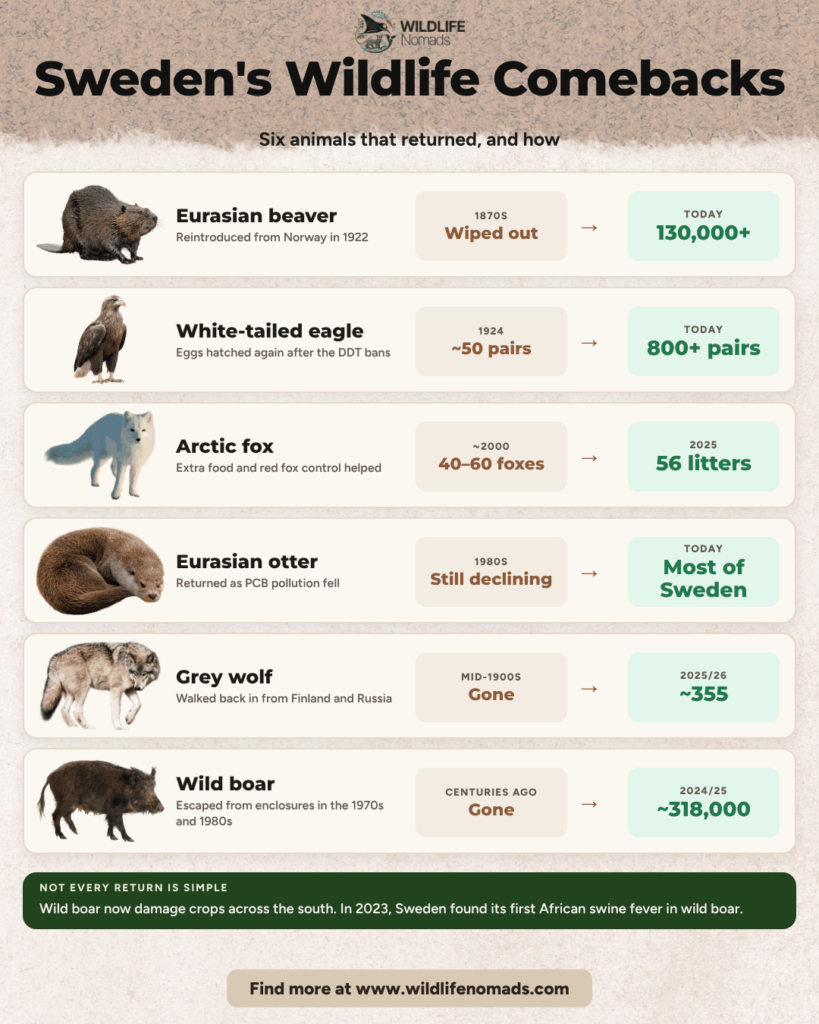
What surprised me most about Swedish animals is how many came back. Beavers, otters, white-tailed eagles and wolves all returned once people gave them space. Bears and Arctic foxes show that recovery still needs careful management.
Most of these wild animals avoid humans, so patience matters more than luck. Go out at dawn, walk quietly and read the signs: tracks in snow, chewed trees, a distant lek. My animal tracks guide will help you identify what passed by.
Have you seen a moose, a lynx or a wolverine in Sweden? Tell me where in the comments, then test yourself with the quiz below.
References:
Bergqvist, G., Kindberg, J., & Elmhagen, B. (2024). From virtually extinct to superabundant in 35 years: Establishment, population growth and shifts in management focus of the Swedish wild boar (Sus scrofa) population. BMC Zoology, 9, 14. https://doi.org/10.1186/s40850-024-00202-2
Kindberg, J., Swenson, J. E., Ericsson, G., Bellemain, E., Miquel, C., & Taberlet, P. (2011). Estimating population size and trends of the Swedish brown bear Ursus arctos population. Wildlife Biology, 17(2), 114–123. https://doi.org/10.2981/10-100
Moqanaki, E., Milleret, C., Dupont, P., Mattisson, J., Dey, S., Brøseth, H., Aronsson, M., Persson, J., Wabakken, P., Flagstad, Ø., & Bischof, R. (2025). Environmental variability across space and time drives the recolonization pattern of a historically persecuted large carnivore. Proceedings of the National Academy of Sciences, 122(5), e2401679122. https://doi.org/10.1073/pnas.2401679122
Roos, A., Greyerz, E., Olsson, M., & Sandegren, F. (2001). The otter (Lutra lutra) in Sweden: Population trends in relation to ΣDDT and total PCB concentrations during 1968–99. Environmental Pollution, 111(3), 457–469. https://doi.org/10.1016/S0269-7491(00)00085-3
Swenson, J. E., Schneider, M., Zedrosser, A., Söderberg, A., Franzén, R., & Kindberg, J. (2017). Challenges of managing a European brown bear population; lessons from Sweden, 1943–2013. Wildlife Biology, 2017(1), wlb.00251. https://doi.org/10.2981/wlb.00251