The other day, I was hiking through the East Coast Australian bush, fully expecting the usual marsupial suspects. Maybe a black cockatoo wheeling overhead, a wallaby bounding through the scrub, or, if I was lucky, a platypus in a quiet creek. I even had my eyes on the ground for a venomous snake or two.
What I did not expect was a deer.
Not just any type of deer, either. I was almost certain I had seen this animal somewhere else entirely, the spotted coat, the distinctive rump patch, the elegant palmate antlers. A quick search later, and I had my answer: a fallow deer, one of the most widely introduced deer species on the planet. It had no business being in the Australian bush, and yet here it was, completely at home.

As someone who has written about invasive species, like the well-documented chaos of Burmese pythons in Florida, this stopped me in my tracks. I wanted to know everything.
What is this animal, really? Where does it actually come from? And how did it end up on practically every continent on Earth? So I went deep. And what I found completely changed how I see this species.
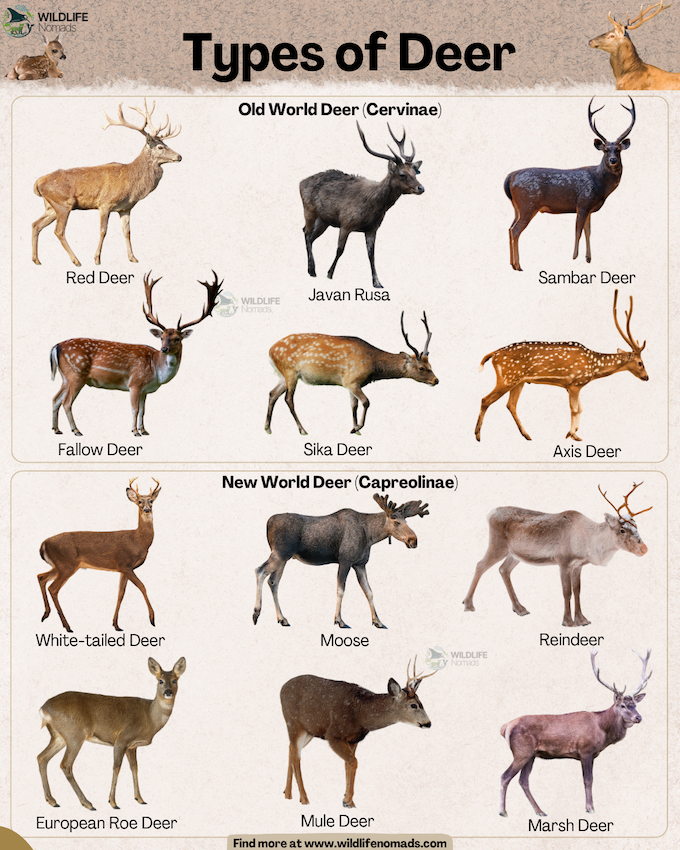
Whether you call them fallow bucks, fallow stags, or simply European fallow deer (Dama dama), these animals are ancient travellers, vocal athletes, and masters of a mating system so rare it barely exists in the entire mammal kingdom. If you want a full breakdown of deer species found around the world, we have covered that too, but today, we are going deep on one of the most fascinating and misunderstood of them all.
Here are 12 facts that will completely change how you see the fallow buck deer.
The Fallow Deer in a Nutshell
The European fallow deer (Dama dama), often called the common fallow deer, is a medium-sized deer species that has captivated humans for millennia. Native to Eurasia, these deer are instantly recognizable by their elegant palmate antlers, broad and flattened like a moose’s, but on a more compact frame, and their remarkable variety of coat colors, from the classic spotted tan to deep dark brown and even pure white.
Fallow deer are members of the family Cervidae, making them close relatives of other deer species such as roe deer, red deer, and sika deer. Their adaptability and striking appearance have led to their introduction around the world, from the forests of Europe to the grasslands of Australia.

1. Their Mating Call Sounds Like a Deep Belch
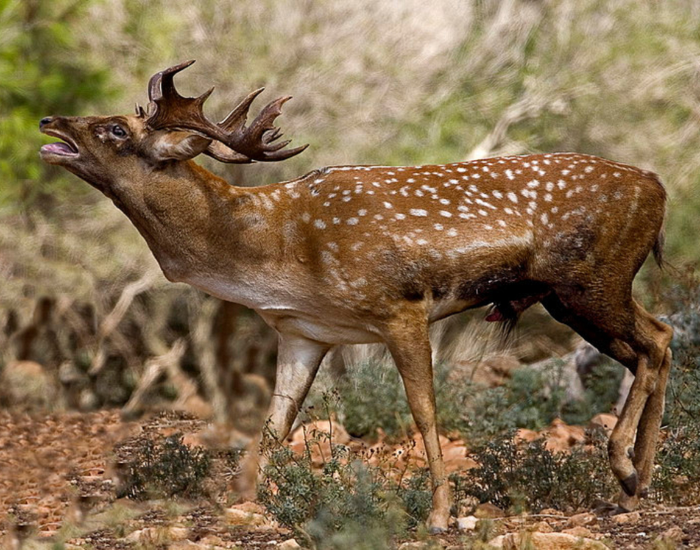
If you expect a majestic bugle when you enter fallow deer country during the breeding season, prepare for a shock. The fallow buck, an adult male fallow deer, produces a low, repetitive vocalization known as a “groan” — and it sounds remarkably like a rhythmic belch.
Research confirms that a fallow buck can produce more than 3,000 groans per hour at the peak of the mating season. This extraordinary vocal output is why scientists at Queen Mary University of London have described fallow bucks as “the most impressive vocal athletes of all deer.” However, these groans do far more than attract mates. They are honest biological signals that reveal a buck’s size, condition, and stamina to rivals. During the rut, adult males often defend a rutting stand, a small territory where they display and compete for females.
As the rut progresses and adult bucks stop feeding — losing up to 26% of their body mass — their calls become shorter, higher-pitched, and hoarser. Other fallow bucks listen for these changes and use them to decide whether to challenge a rival or keep their distance.
2. Fallow Deer Are the Only Deer Species That “Lek”
Most deer species either roam looking for mates or defend a mobile harem of females. Fallow deer do something far stranger: they lek. A lek is a communal display area where several males defend tiny, adjacent territories purely to show off.
According to research, fallow deer are the only deer species we know of that form a true lek. During the mating season, female fallow deer (fallow does) wander through the lek, inspecting each buck before selecting a mate. Therefore, this system gives females an extraordinary degree of choice, it is one of the clearest examples of female mate selection in any mammal.
Outside the breeding season, male fallow deer often form small bachelor herds of 5-10 individuals, which later break up as the rut approaches and leks form.
3. Their Palmate Antlers Are Built for Battle
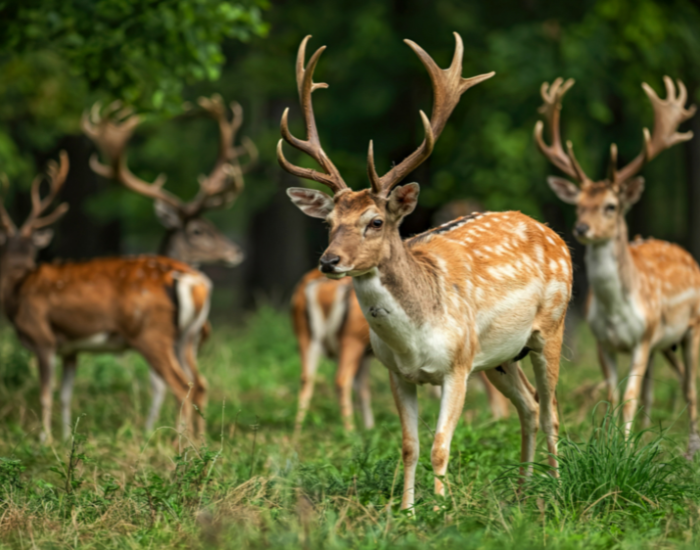
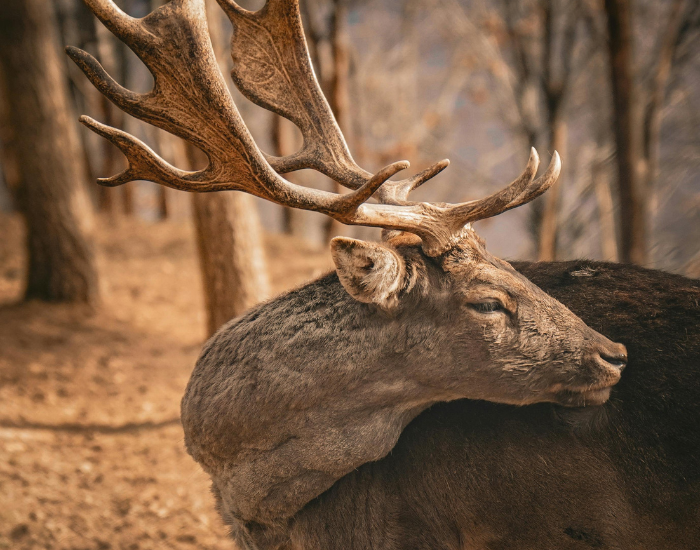
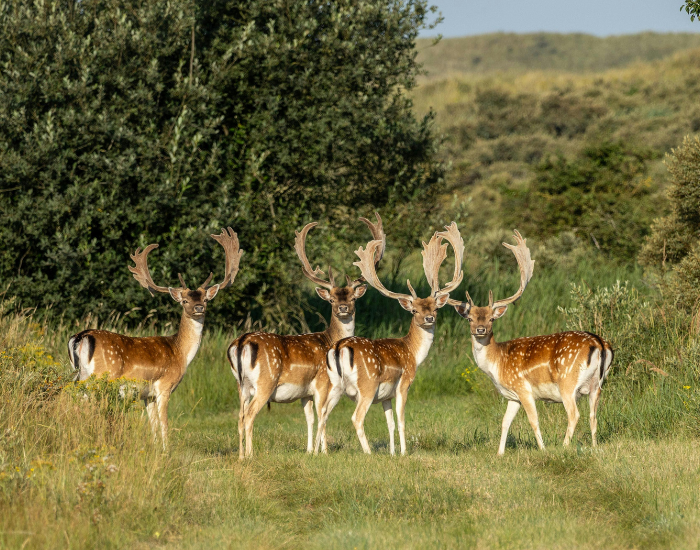
The most striking visual feature of a mature fallow stag is his palmate antlers. Unlike the narrow, branched antlers of red deer or roe deer, a fallow buck develops antlers with broad, flattened ends resembling a human palm, or a miniature moose rack. Antler size is closely linked to a buck’s dominance and reproductive success, with larger antlers often indicating superior fighting ability and attractiveness to females.
These palmate antlers only develop fully after the buck’s fourth or fifth year of life. In addition to signalling genetic quality, the wide surface area makes them highly effective shields during the violent shoving matches of the mating season. Mature bucks grow antlers each year through a physiological process known as antler growth. A full-grown buck with a 70 cm antler spread is a living testament to years of survival.
Like all deer in the family Cervidae, fallow bucks shed their antlers annually. In the Southern Hemisphere, shedding typically occurs around October. Immediately afterward, they grow antlers again in a cycle driven by seasonal changes, with a new set beginning to grow beneath a blood-rich skin called velvet, among the most fastest-growing tissues in the animal kingdom.
4. Romans Brought Them to Britain — Not the Normans
For decades, historians credited the Normans with introducing fallow deer to Britain in the 11th century. However, a landmark 2024 study published in PNAS, drawing on DNA analysis of hundreds of ancient and modern specimens, overturned this assumption entirely.
The research team, led by Durham University and the University of Exeter, traced the full biocultural history of fallow deer across 10,000 years. Their findings show that Romans were the first to introduce fallow deer to Northern Europe, with the earliest British evidence found at Fishbourne Roman Palace in West Sussex. These deer were sourced from western Mediterranean populations and kept in enclosures known as vivaria, prized as symbols of status and power and closely linked to the Greco-Roman goddesses Artemis and Diana.
However, this Roman-era population did not persist. Following the decline of the Roman Empire, fallow deer became extinct in Britain. The species was reintroduced in the medieval period, this time from Anatolia, prior to the Norman conquest, around 1000 AD. The Normans, in other words, inherited a deer population that had already been re-established, rather than introducing the species themselves.
It was this second, Anatolian-derived population that British colonial power then transported across the globe during the 17th–19th centuries, spreading fallow deer from mainland Australia to the Caribbean island of Barbuda, where the species is today the national animal.

5. They Come in Four Coat Colours
Most deer species come in one standard coat colour. Fallow deer, however, express four distinct coat varieties, all within the same species (Dama dama):
- Common — tan with white spots (similar to the axis deer) and a distinctive black stripe on the white tail
- Menil — paler, with more prominent white spots
- Melanistic — near-black, with little to no spotting
- Leucistic — pure white, caused by a genetic reduction in pigmentation
Crucially, white fallow deer are not albinos. They carry leucism, a separate genetic condition affecting pigmentation differently. In the field, watching a melanistic fallow buck step silently from dense woodland is one of the most dramatic wildlife experiences possible.

6. Fallow Bucks Can Fake a Larger Body Size
Look closely at a fallow buck during the rut and you will notice a prominent lump in his throat, a highly developed larynx, or “Adam’s apple,” larger than in most other deer species.
Research shows that fallow bucks can actively pull their larynx downward while calling, effectively lengthening the vocal tract. This makes their groans sound deeper and more imposing, signalling a larger body size to rivals. In other words, fallow bucks practise biological deception, using acoustic illusions to intimidate competitors without fighting.
7. The Tail Tells Fallow Deer Apart From Other Deer
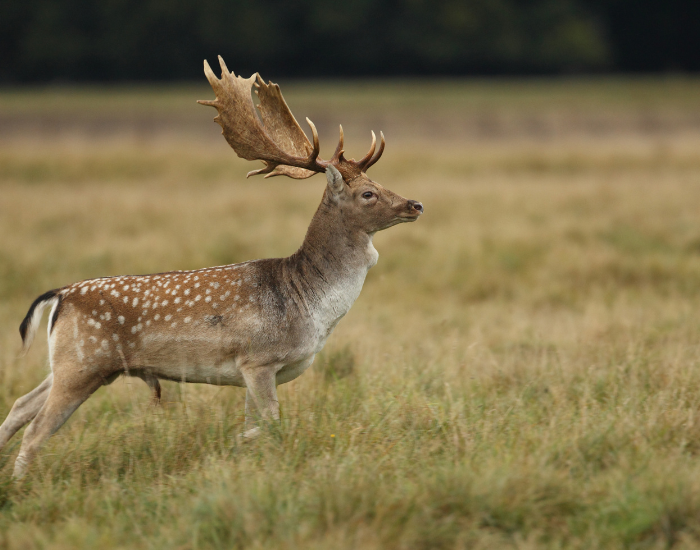
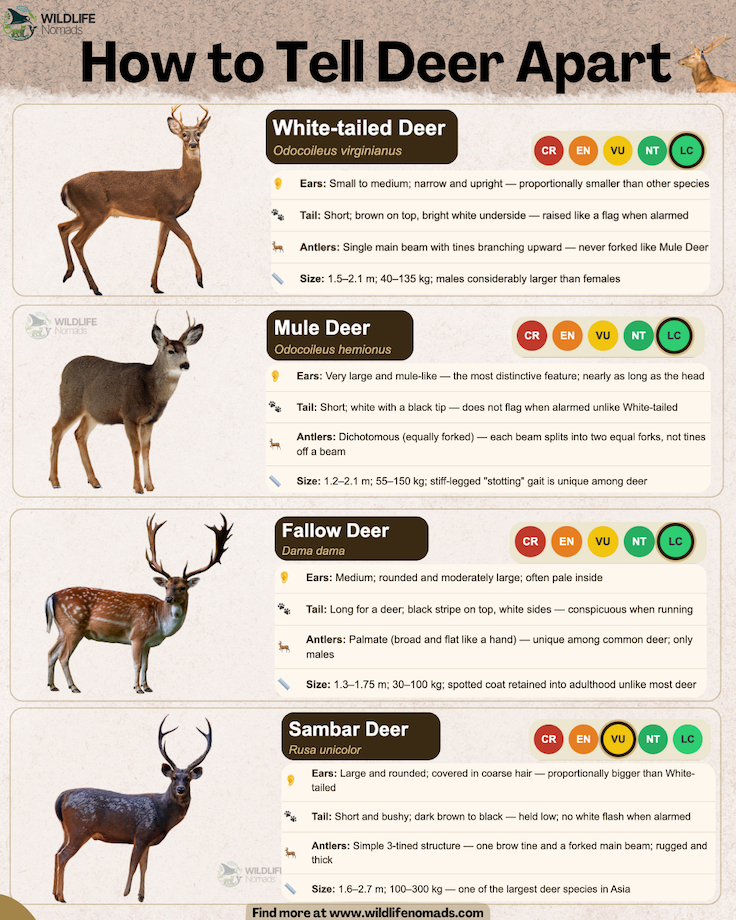
A quick comparison of fallow deer vs whitetail deer reveals one instantly obvious difference: the tail. A fallow deer has a noticeably longer tail with a bold black stripe running along the top, framed by a white heart-shaped rump patch outlined in black, making the white rump patch one of the species’ most recognisable identification features. The typical tail length of a fallow deer is 17–23 cm, which is longer than most other deer species.
When startled, fallow deer engage in “pronking”, a stiff-legged, bouncy gait that displays the white rump patch prominently. This signals to predators and observers alike that the animal has detected the threat. In contrast, a whitetail deer raises its tail to flash a large white flag; a roe deer has almost no visible tail at all.
8. Their Global Range Is a Map of Human History
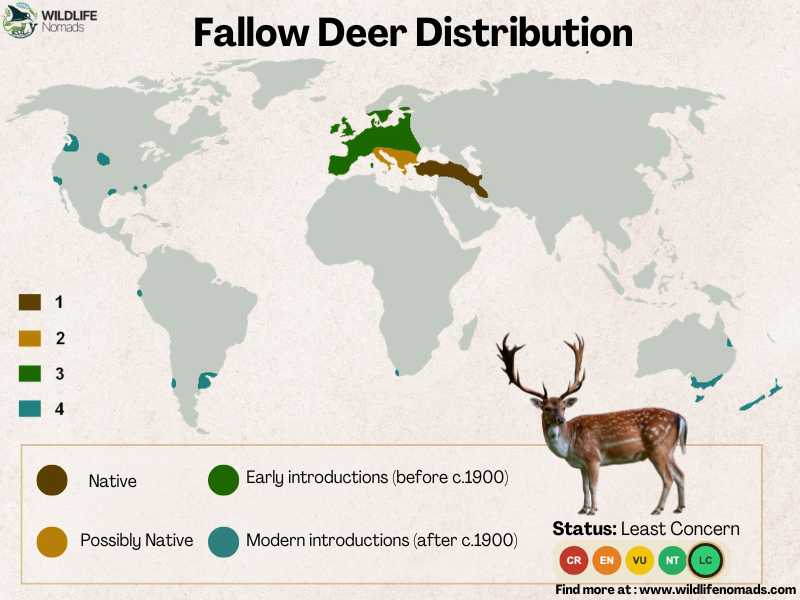
The modern fallow deer range is effectively a map of human expansion. Native to the eastern Mediterranean and Anatolia, fallow deer now live wild across Europe, the United States, South Africa, mainland Australia, and beyond, largely because humans deliberately moved them as symbols of power and privilege for thousands of years.
In Australia, where fallow deer have lived for over over 160 years, they are often managed as feral or invasive species because they outcompete native wildlife for food and habitat. However, the PNAS 2024 research argues that fallow deer challenge the very categories of “wild,” “domestic,” and “invasive”, because their global presence is inseparable from human cultural history.
9. They Are the “Goldilocks” Deer of the Cervid World
In terms of fallow deer size, these animals hit a useful middle ground. Adult bucks stand around 90 cm at the shoulder and can weigh up to 100 kg, though free-ranging males in the wild often average closer to 46–80 kg. Female fallow deer are noticeably smaller, typically weighing 30–50 kg.
This medium build gives fallow deer real survival advantages. They are agile enough to clear high fences but robust enough to compete physically during the rut. In addition, their adaptable feeding habits allow them to graze like cattle in open grasslands and browse like a giraffe in mixed woodland, making them resilient across a wide range of habitats.
In the wild, the fallow deer lifespan typically reaches 12–16 years, which is impressive for a mid-sized herbivore facing constant predation pressure.
10. The Sexes Remain Separated for Most of the Year
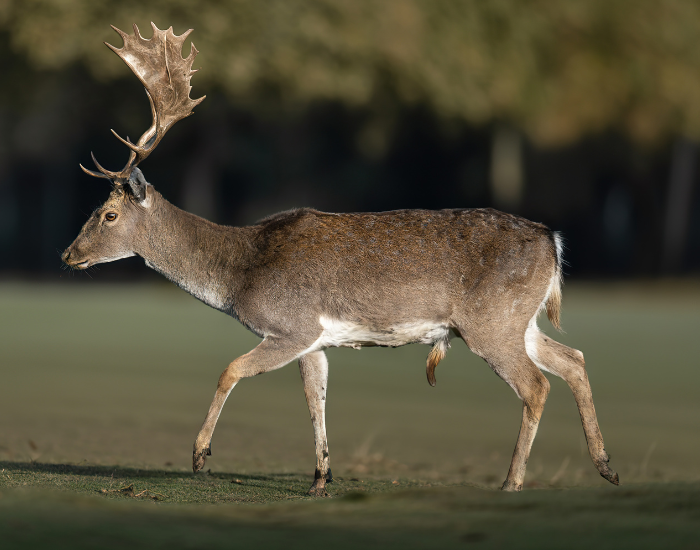
Outside the mating season, fallow deer practice sexual segregation. Adult bucks typically form small bachelor groups or roam alone. Meanwhile, female fallow deer and their young form larger herds in mixed woodland and open grassland. The sexes remain separated until the rut draws them together each autumn.
This separation reduces competition for food resources. Dominant males use the time to build the body mass and condition they will need during the breeding season, when they largely stop eating for weeks at a time.
11. They Reproduce Once a Year
Fallow deer produce one fawn per year, with twins being extremely rare. In the Northern Hemisphere, fawns are typically born in June after a gestation of approximately 229–240 days. In the Southern Hemisphere, the timing shifts accordingly, fawns in mainland Australia, for example, arrive around December.
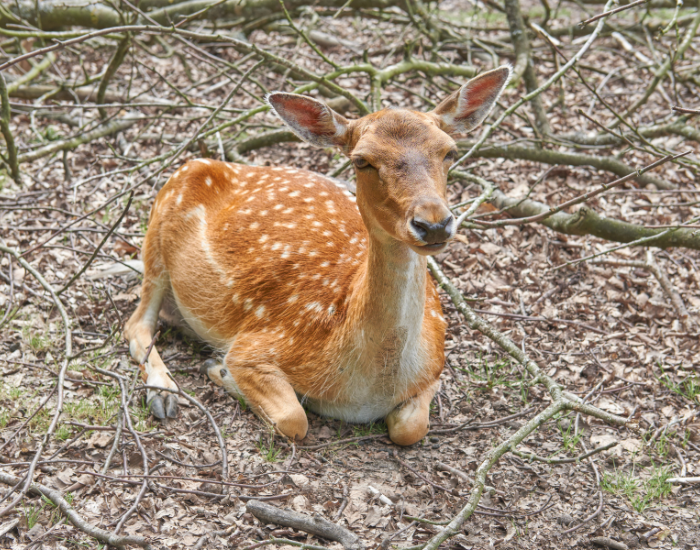
Newborn fawns are spotted and odourless for the first weeks of life, which helps them avoid predators while lying hidden in vegetation. The female fallow deer, or fallow doe, nurses her single fawn for several months before the young deer begins to feed independently.
12. The Mesopotamian Fallow Deer Is One of Earth’s Rarest Deer
Most people are unaware that there are two distinct fallow deer species. The familiar European fallow deer (Dama dama) is classified as Least Concern by the IUCN thanks to its massive global population. However, its close cousin, the Persian or Mesopotamian fallow deer (Dama mesopotamica), is a very different story.
Dama mesopotamica is larger than the European fallow deer and has antlers that are less palmate and more branched. Its historical range once stretched from Iran and Iraq across to Turkey, Israel, and Palestine. By the mid-20th century, however, hunting and habitat loss had pushed this species to the edge of extinction.
Quick Comparison: Fallow Deer vs. Other Common Deer Species
| Feature | Fallow Deer | Red Deer | Roe Deer |
| Antler Shape | Palmate (Flat) | Branched (Multi-tine) | Short & Simple |
| Coat Pattern | Often Spotted | Solid Brown | Solid Reddish-Brown |
| Tail | Long, Black/White stripe | Short, Buff | Almost Non-existent |
| Mating System | Herds / Leks | Harems | Solitary / Small Groups |
| IUCN Status (EU) | Least Concern | Least Concern | Least Concern |
FAQs About Fallow Buck Deer
The clearest difference is the antlers — only the fallow buck grows them. Adult bucks are also significantly larger, heavier, and have a more prominent larynx (Adam’s apple) in their throat. During the mating season, bucks produce the characteristic deep groan; female fallow deer are generally silent.
Generally, fallow deer are not aggressive toward humans. However, during the mating season (the rut), a fallow buck becomes intensely territorial. He can pose a real threat to other males — and occasionally to humans who approach too closely during this period.
A fallow deer vs whitetail comparison shows several key differences. Fallow deer are typically spotted, have palmate antlers, and possess a distinctive long tail with a black stripe and white rump patch outlined in black. Whitetail deer have plain brown coats, branched antlers, and a large white flag-like tail. Fallow deer also form leks; whitetails do not.
Fallow deer are herbivores and intermediate feeders. They graze on grasses and herbs in open areas, and browse on broadleaf trees, shrubs, and fungi in woodland. This dietary flexibility is a major reason fallow deer have successfully colonised such a wide range of habitats around the world.
A Biologist’s Final Word
The next time you spot a fallow buck deer in a deer park or woodland clearing, look again. See the Roman traveller, the vocal athlete, and the ecological survivor that has outlasted empires. These are not just pretty animals. They are living archives of natural and human history — and they deserve far more curiosity than they usually get.
References
Baker, K. H., Miller, H., Doherty, S., Gray, H. W. I., Daujat, J., Çakırlar, C., Spassov, N., Trantalidou, K., Madgwick, R., Lamb, A. L., Ameen, C., Atici, L., Baker, P., Beglane, F., Benkert, H., Bendrey, R., Binois-Roman, A., Carden, R. F., Curci, A., De Cupere, B., … Sykes, N. (2024). The 10,000-year biocultural history of fallow deer and its implications for conservation policy. Proceedings of the National Academy of Sciences of the United States of America, 121(8), e2310051121. https://doi.org/10.1073/pnas.2310051121
Frey, R., Wyman, M. T., Johnston, M., Schofield, M., Locatelli, Y., & Reby, D. (2021). Roars, groans and moans: Anatomical correlates of vocal diversity in polygynous deer. Journal of anatomy, 239(6), 1336–1369. https://doi.org/10.1111/joa.13519
Hoyle, Z. E., Miller, R. A., & Rands, S. A. (2021). Behavioural synchrony between fallow deer Dama dama is related to spatial proximity. BMC ecology and evolution, 21(1), 79. https://doi.org/10.1186/s12862-021-01814-9
Imperio, S., Lombardi, S., De Marinis, A., Ronchi, F., Santini, G., & Focardi, S. (2020). Female mating tactics in lekking fallow deer (Dama dama): experience explains inter-individual variability more than costs. Scientific reports, 10(1), 3598. https://doi.org/10.1038/s41598-020-58681-5
McElligott, A. G., & Hayden, T. J. (1999). Context-related vocalization rates of fallow bucks, Dama dama. Animal behaviour, 58(5), 1095–1104. https://doi.org/10.1006/anbe.1999.1237
Rahimi, E., Dong, P., & Ahmadzadeh, F. (2024). Assessing climate niche similarity between persian fallow deer (Dama mesopotamica) areas in Iran. BMC ecology and evolution, 24(1), 93. https://doi.org/10.1186/s12862-024-02281-8
Pitcher, B. J., Briefer, E. F., Vannoni, E., & McElligott, A. G. (2014). Fallow bucks attend to vocal cues of motivation and fatigue. Behavioral Ecology, 25(2), 392–401. https://doi.org/10.1093/beheco/art131
Sykes, N. J., Baker, K. H., Carden, R. F., Higham, T. F. G., Hoelzel, A. R., & Stevens, R. E. (2011). New evidence for the establishment and management of the European fallow deer (Dama dama dama) in Roman Britain. Journal of Archaeological Science, 38(1), 156–165. https://doi.org/10.1016/j.jas.2010.08.024