
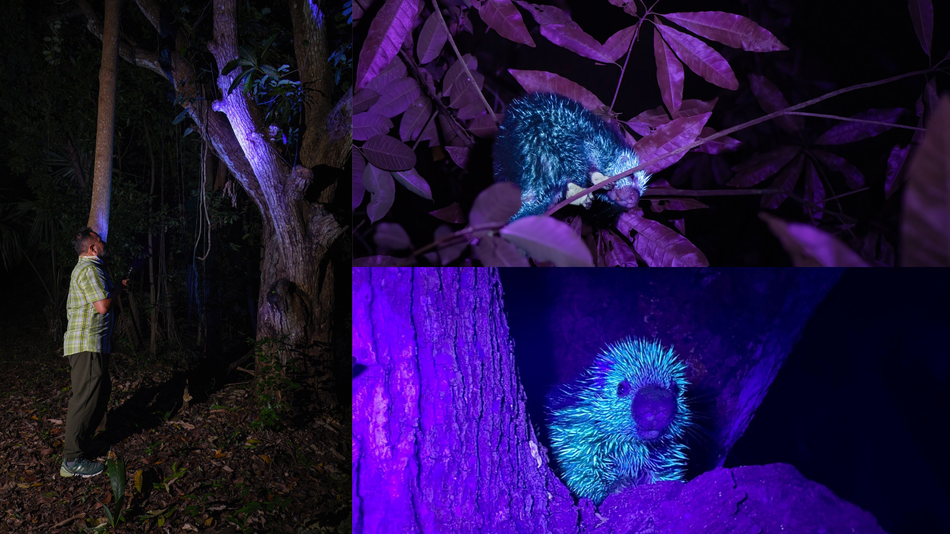
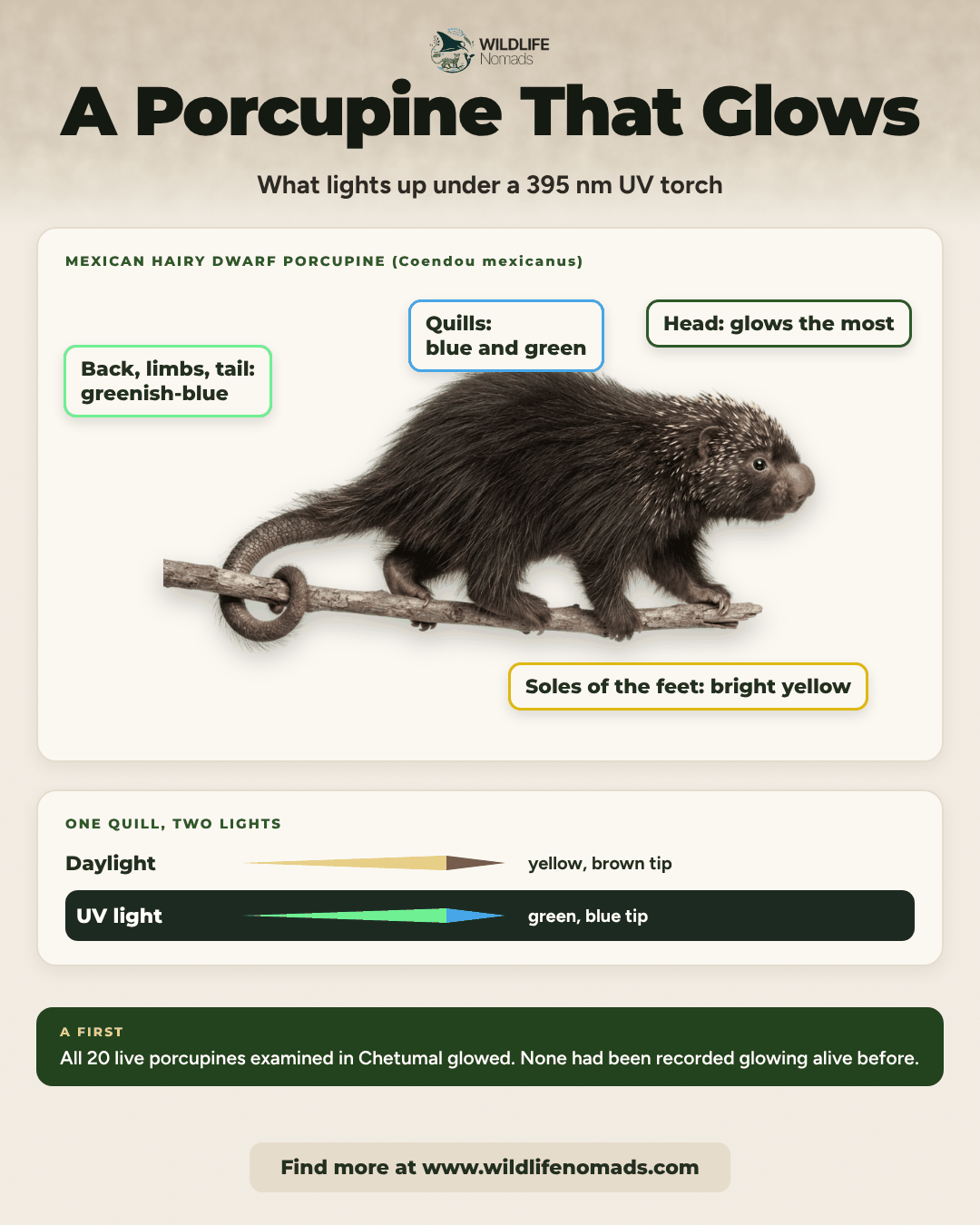
Shine a cheap UV torch on a Mexican hairy dwarf porcupine at night, and it lights up. Its quills glow blue and green. The soles of its feet turn bright yellow.
I was born in Mexico, so this one made me smile. The study comes from Chetumal, in Quintana Roo. That’s the same state where I dived with whale sharks off Holbox. Mexico keeps surprising me, even about animals that live in city trees.
A Discovery During Rescue Work
Since 2023, the research centre El Colegio de la Frontera Sur (ECOSUR) has helped rescue porcupines in Chetumal. It works with the state wildlife authority IBANQROO and the federal agency PROFEPA. Rescued animals get a clinical check-up.
In June 2024, wildlife vet Jonathan Pérez-Flores was examining two females. He switched on a portable 395 nm UV flashlight. Both porcupines glowed.
Over the next three months, the team checked 20 adults: 17 females and 3 males. Every single one glowed. The results came out in Neotropical Biology and Conservation in November 2026.
What Glows, and in Which Colour
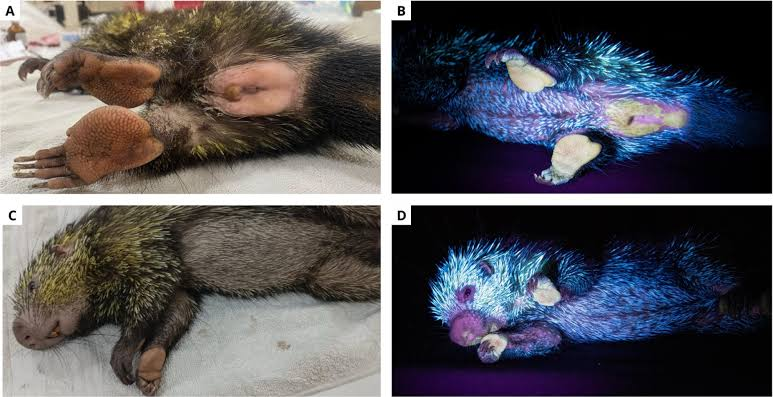
The head glows the most. The back, limbs and tail give off a greenish-blue glow. The soles of the feet shine bright yellow.
The quills are the most striking part. In daylight they look yellow with brown tips. Under UV, the yellow section turns green and the brown tips turn blue.
Scientists call this photoluminescence. Tissue absorbs short-wavelength light and gives it back at a longer wavelength. It’s different from bioluminescence, where an animal makes its own light, like a glow worm.
Live Animals Glow Brighter
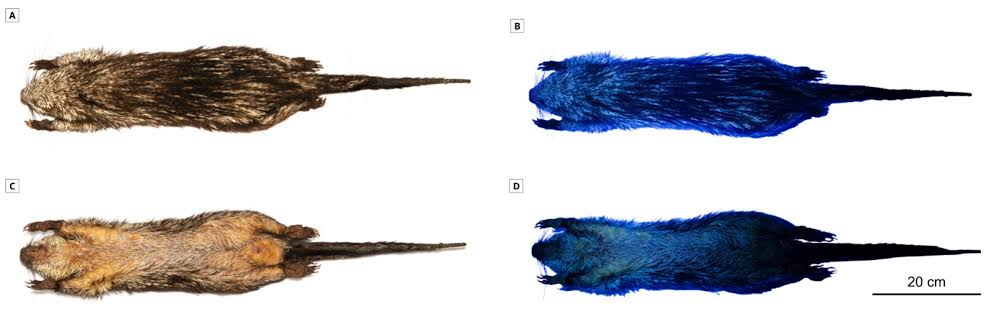
The team also checked two museum specimens, both preserved for more than ten years. They showed only a faint greenish glow. Live animals glowed far more strongly and in more colours.
The authors think keratin, the main protein in quills, breaks down over time. Light exposure may also fade the effect. That matters, because most glowing-mammal records come from museum drawers.
The platypus is a famous example. Scientists found its fur glows blue-green in 2020, using museum specimens. Flying squirrels glow pink, and scorpions are the classic UV glowers.
A Torch That Finds Porcupines
Mexican hairy dwarf porcupines are hard to see. They are solitary, nocturnal and live high in trees. So the team tested whether UV light could help find them.
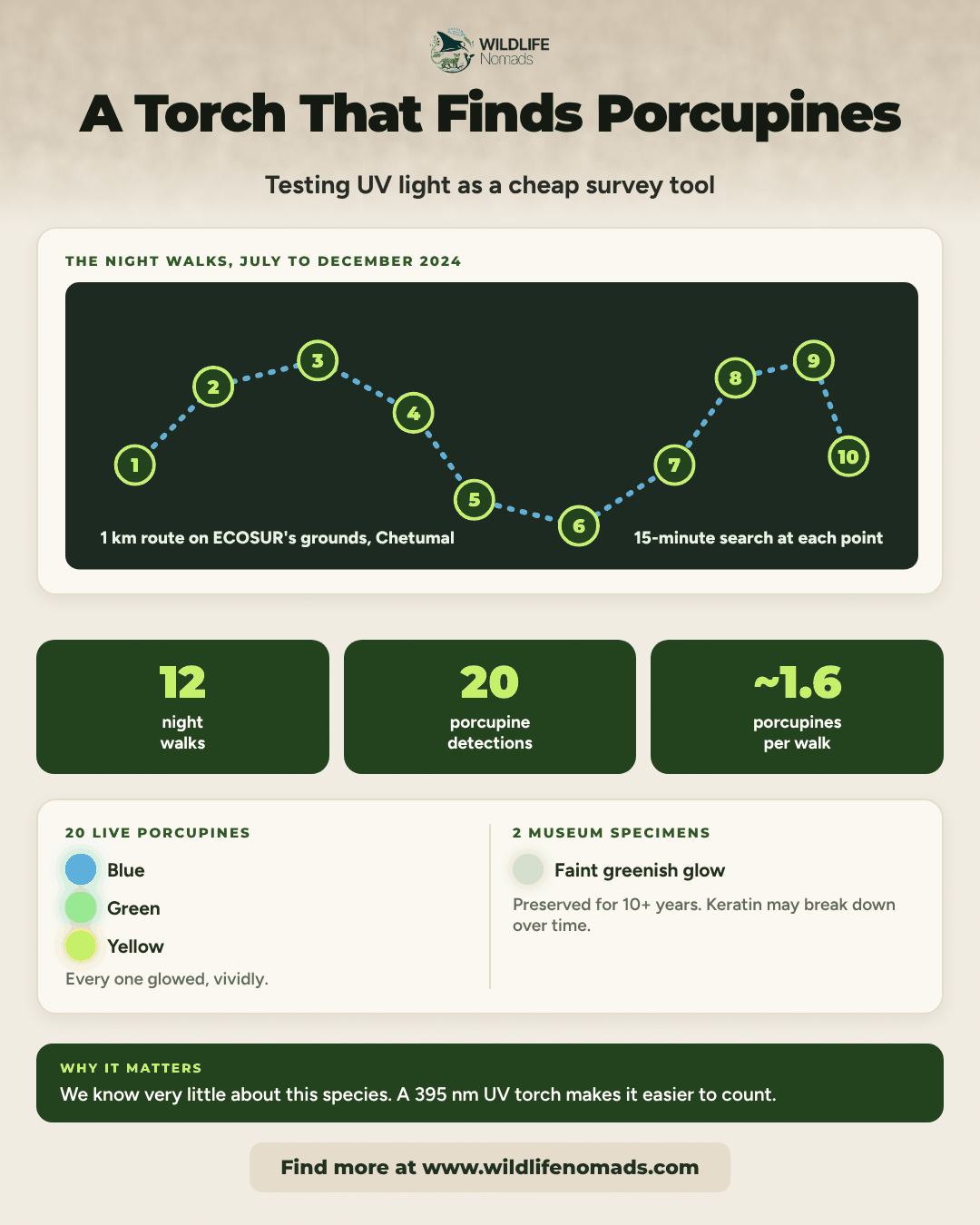
They ran 12 night walks between July and December 2024. Each walk followed a 1 km route on ECOSUR’s grounds. They stopped at 10 points and searched for 15 minutes at each.
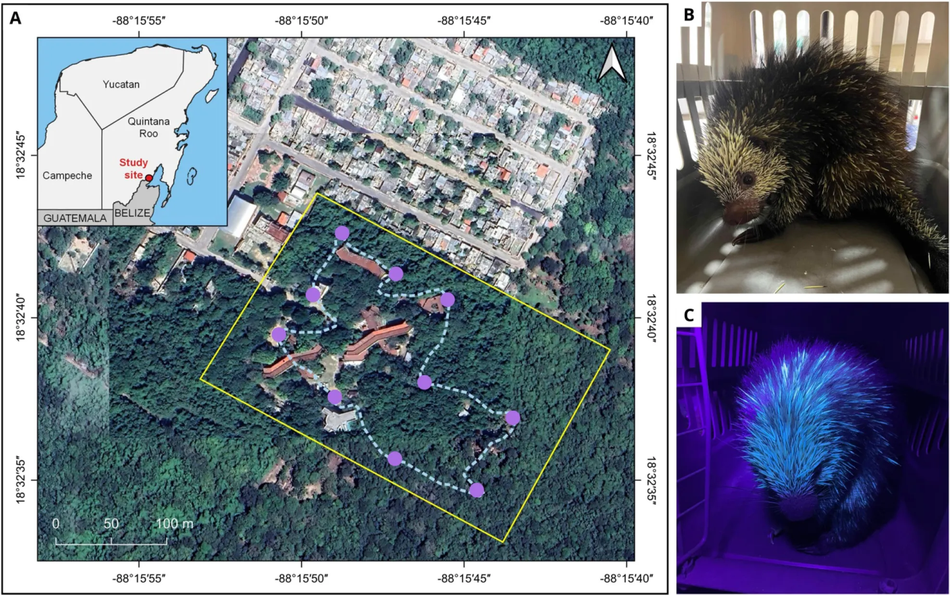
The walks produced 20 porcupine detections, about 1.6 per walk. The glowing quills and feet stood out clearly against leaves and bark. The authors call UV torches a cheap new tool for counting this little-known species.
What the Study Can’t Tell Us Yet
Nobody knows why the porcupines glow. The authors suggest it might help them recognise each other at night. Testing that means studying what their eyes can actually see.
The sample is also small and from one city. Most animals examined were females. Future work should compare 365 nm and 395 nm light, since glows can differ between the two.
A Little-Known Neighbour
The Mexican hairy dwarf porcupine (Coendou mexicanus) lives from central Mexico to Panama. It’s one of several types of porcupines, and like all of them, a rodent. The IUCN lists it as Least Concern, but Mexico lists it as threatened under its NOM-059 law.
We know surprisingly little about its basic ecology. A torch that makes it easier to find could change that.
FAQs About Glowing Porcupines
Not on their own. Mexican hairy dwarf porcupines glow only under ultraviolet light. Their quills shine blue and green, and the soles of their feet turn yellow.
Nobody knows yet. The researchers suggest the glow might help porcupines recognise each other at night. Studies of their vision are needed to test this.
Platypuses, flying squirrels and some opossums have fur that glows under UV light. Most of these records come from museum specimens rather than live animals.
Shine a Light on the Night
A cheap torch revealed a hidden side of a city porcupine. Next time you are out at night, look up into the trees. Then explore more animals of Mexico on the blog.
References:
Pérez-Flores, J., Bahena-Basave, H., Weissenberger, H., Anaya-Constantino, A., Olguin-Zepeda, M., Julio-Cardoso, S., & González-Jaimes, A. (2026). Ultraviolet-induced photoluminescence discovered in the Mexican hairy dwarf porcupine (Coendou mexicanus), and its potential applications for monitoring in the wild. Neotropical Biology and Conservation, 21(4), 377–388. https://doi.org/10.3897/neotropical.21.e210650
Pensoft Publishers. (2026, November 25). Mexican hairy dwarf porcupines glow under UV light. blog.pensoft.net
Anich, P. S., Anthony, S., Carlson, M., Gunnelson, A., Kohler, A. M., Martin, J. G., & Olson, E. R. (2021). Biofluorescence in the platypus (Ornithorhynchus anatinus). Mammalia, 85(2), 179–181. https://doi.org/10.1515/mammalia-2020-0027