Most people have never given porcupines a second thought. They’re slow, they’re prickly, and they tend to mind their own business. But spend enough time outdoors — and enough time around wildlife — and you start to realise just how extraordinary these animals actually are. It was an early encounter with a Mexican hairy dwarf porcupine, clinging quietly to a branch above my head, that sent me down a rabbit hole I never fully climbed out of: just how many porcupine species are there in the world?
Turns out, quite a few. Today, we’re covering 15 types of porcupines you need to know, busting major myths (no, they cannot shoot their quills), and exploring why these animals are some of nature’s most impressive survival engineers.
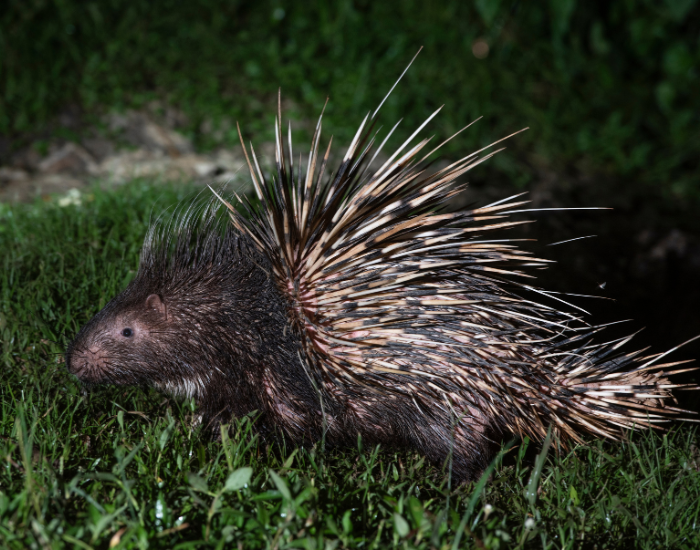
Old World vs. New World Porcupines: Know the Difference
Before diving into specific species, you need to understand one key split. Not all porcupines share a common ancestor — they’re actually a textbook example of convergent evolution.
Old World Porcupines (Family Hystricidae) live in Africa, Europe, and Asia. They are strictly ground-dwelling (terrestrial) animals, and their quills grow in distinct clusters.
New World Porcupines (Family Erethizontidae) are native to North, Central, and South America. These species are the acrobats of the family — mostly tree-dwelling (arboreal), with quills interspersed among fur. Many New World species also have prehensile tails, acting as a fifth limb for navigating forest canopies.
If you’re ever in the tropics of Mexico and spot a spiny ball hanging by its tail from the trees, you’re looking at a New World specialist.
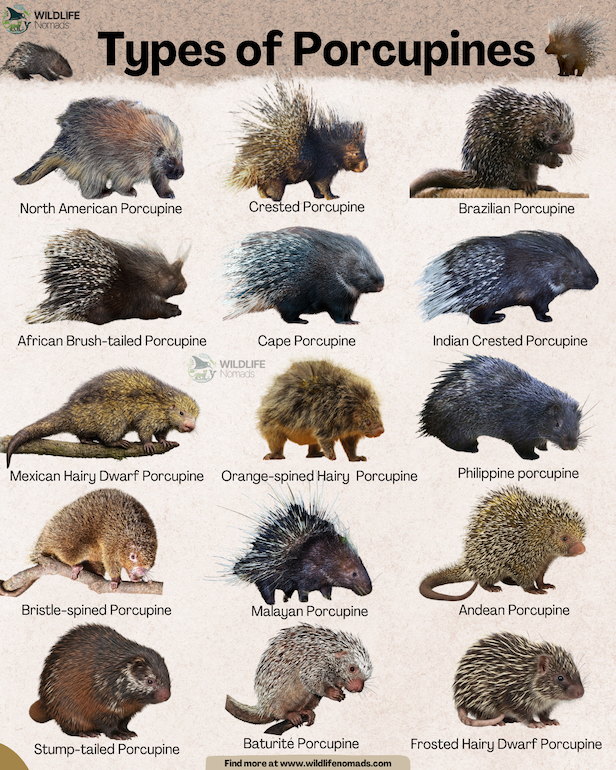
15 Types of Porcupines You Need to Know
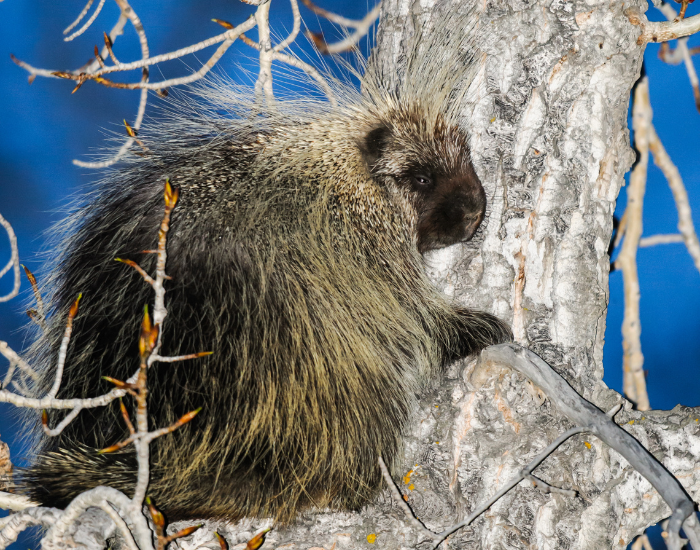
1. North American Porcupine (Erethizon dorsatum)
Size: 60–90 cm | Weight: 5–14 kg | Status: Least Concern
Range: Canada, United States, and Northern Mexico
This is the heavyweight of North America. It’s the second-largest rodent on the continent, trailing only the beaver. Found across Canada, the United States, and northern Mexico, it thrives in coniferous and mixed forests, tundra, and even desert habitat. Its diet includes bark, needles, and leaves. In winter, it shifts almost entirely to tree bark — gnawing behavior that actually thins dense vegetation and lets sunlight reach the forest floor.
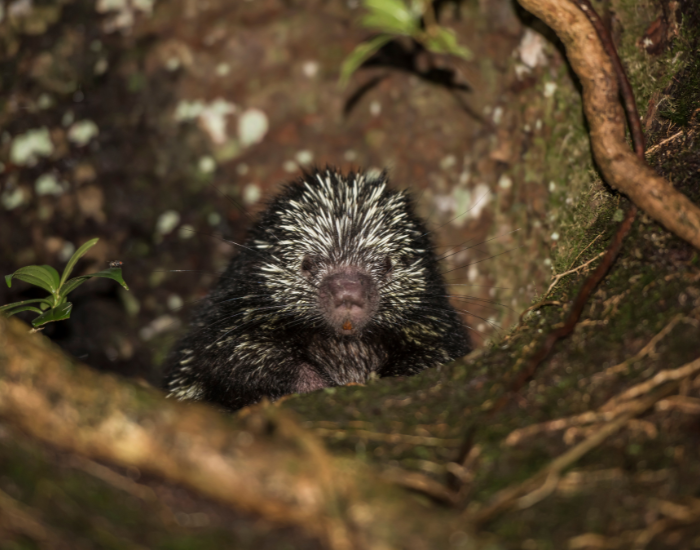
2. Mexican Hairy Dwarf Porcupine (Coendou mexicanus)
Size: 50–80 cm including tail | Status: Least Concern
Range: Central Mexico to Panama
This is my hometown hero. Unlike its northern cousin, this species spends its life in the trees. Its naked prehensile tail lets it hang from branches while foraging for fruit and flowers in the forest canopy. Its quills hide beneath dark hair, which explains the “hairy” in its name. It ranges from Central Mexico to Panama, through mixed-mountain and coniferous forests.
3. Crested Porcupine (Hystrix cristata)
Size: 60–83 cm | Weight: 13–27 kg | Status: Least Concern
Range: Italy, North Africa, and Sub-Saharan Africa
This is the “classic” porcupine most people picture. Found in Italy, North Africa, and Sub-Saharan Africa, it uses its impressive crest of long quills as a defensive display — raising them to appear nearly twice its actual size. When threatened, it rattles its quills and charges backward toward predators. This Old World species prefers rocky areas, forests, and croplands.

4. Cape Porcupine (Hystrix africaeaustralis)
Size: Up to 1 meter | Weight: 18–30 kg | Status: Least Concern
Range: Southern Africa
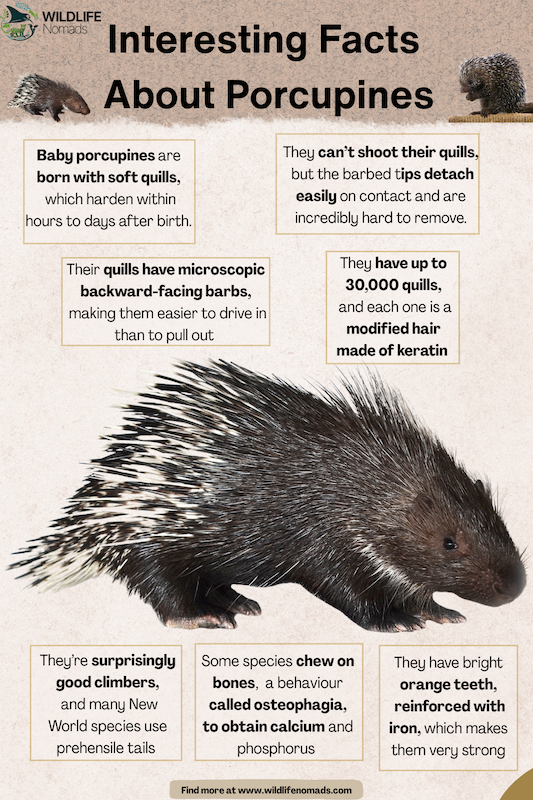
Africa’s largest porcupine species. It ranges across southern African habitat, from desert lowlands, savannahs, to mountain peaks. Interestingly, these animals practise osteophagia: they chew on bones to extract calcium and phosphorus, nutrients essential for growing and replacing their massive quills.
5. Brazilian Porcupine (Coendou prehensilis)
Size: 30–60 cm | Weight: 2–5 kg | Status: Least Concern
Range: South America (Brazil, Argentina, Venezuela)
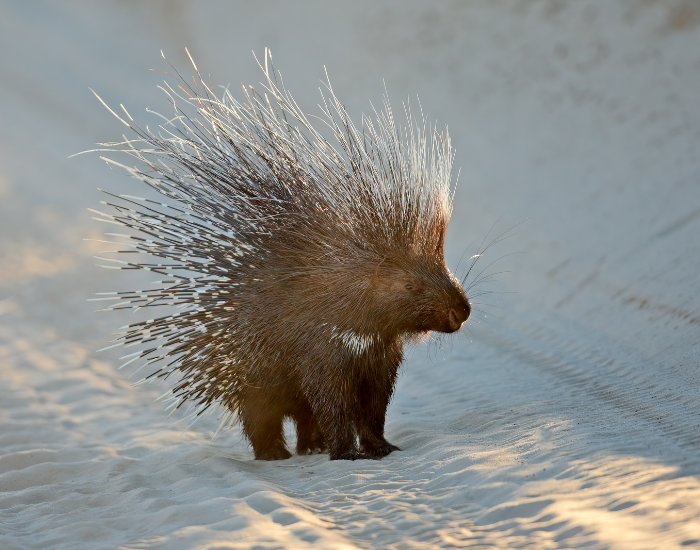
Also called the prehensile-tailed porcupine, this South America native is a true master of the rainforest canopy. These animals almost never descend to the ground. They live entirely in tropical forest trees, feeding on leaves, flowers, and shoots. Their prehensile tail is their lifeline, literally.
6. African Brush-tailed Porcupine (Atherurus africanus)
Size: 40–50 cm | Weight: ~3 kg | Status: Least Concern
Range: Central Africa
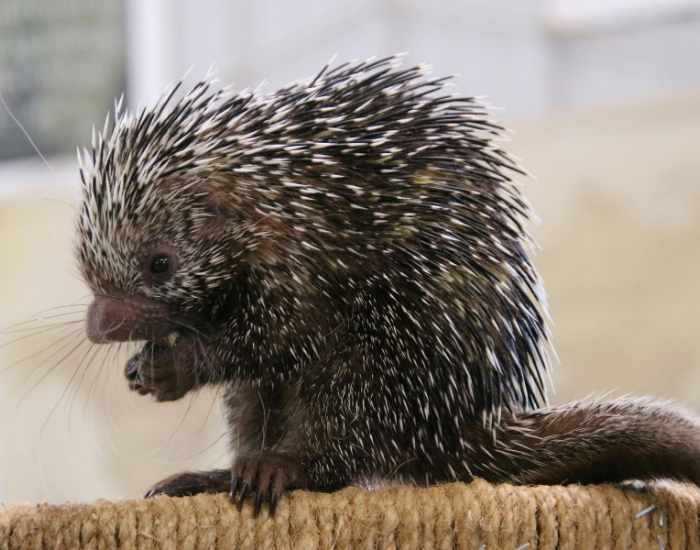
These animals look more like large, spiny rats than traditional porcupines. They inhabit the tropical rainforests of Central Africa, where they forage for fallen fruit and roots. Their distinctive tail ends in a tuft of bristles — a built-in rattle they use to warn predators.
7. Indian Crested Porcupine (Hystrix indica)
Size: 70–90 cm | Weight: 11–18 kg | Status: Least Concern
Range: Southern Asia and the Middle East
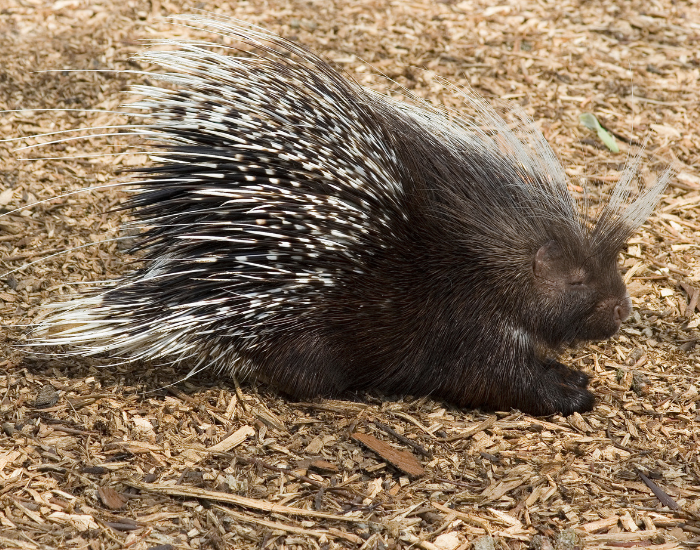
This highly adaptable Old World species lives across southern Asia and the Middle East in scrublands and forests. When cornered, it charges backward aggressively, driving its quills into any predator unlucky enough to be too close. It also raids crops, making it a frequent source of conflict with farmers.
8. Orange-spined Hairy Dwarf Porcupine (Coendou spinosus)
Size: 35–45 cm (14–18 in) | Weight: 2–5 kg (4.4–11 lbs)
Range: Southern Brazil, Uruguay, Paraguay, Argentina | Status: Least Concern
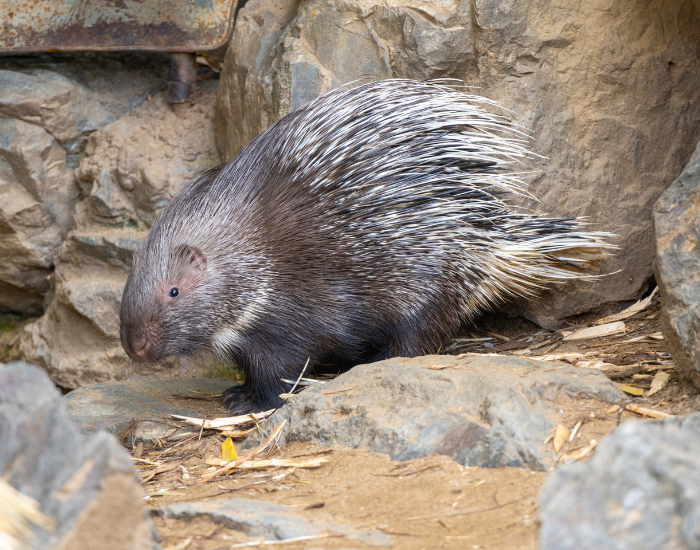
This is easily one of the most visually striking porcupines in South America. As the name suggests, its quills carry a warm orange or yellowish tint that contrasts sharply against its dark, coarse fur. In my experience looking at South American canopy species, this coloration is a fascinating adaptation, it can actually help them blend into the dappled light and dead leaves of the subtropical forest floor if they ever have to descend.
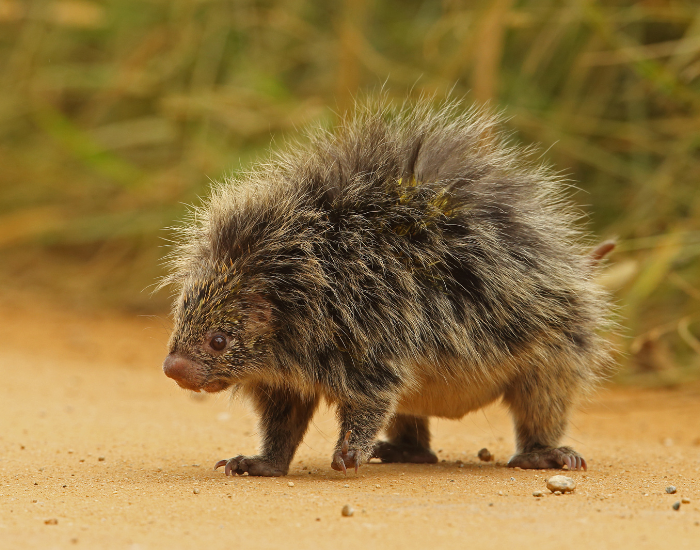
9. Palawan Porcupine (Hystrix pumila)
Size: 42–60 cm | Weight: 3–5 kg | Status: Vulnerable
Range: Palawan Island (Philippines)
This is one of the species I worry about most. Endemic to the Palawan island chain in the Philippines, it lives in lowland forests with almost no room for error. Island-specialist animals like this are deeply vulnerable to habitat loss — when their forest disappears, they have nowhere to go. Conservation efforts focused on Palawan are critical for this species’ survival.
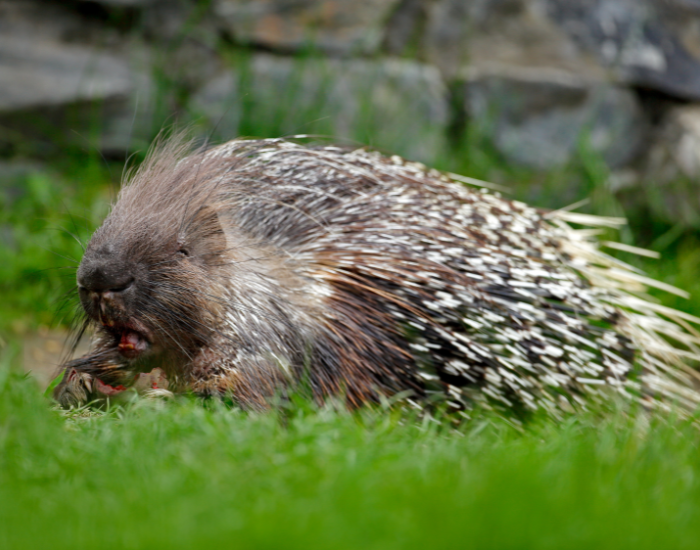
10. Bristle-spined Porcupine (Chaetomys subspinosus)
Size: 38–45 cm | Status: Vulnerable
Range: Atlantic coast of Brazil
Often called the bristle-spined rat, this taxonomic oddity lives along the Atlantic coast of Brazil in coastal restinga forests. It sits halfway between a spiny rat and a porcupine in appearance, and it faces serious pressure from the rapid deforestation of Brazil’s Atlantic Forest. Conservation efforts in this region are urgently needed.
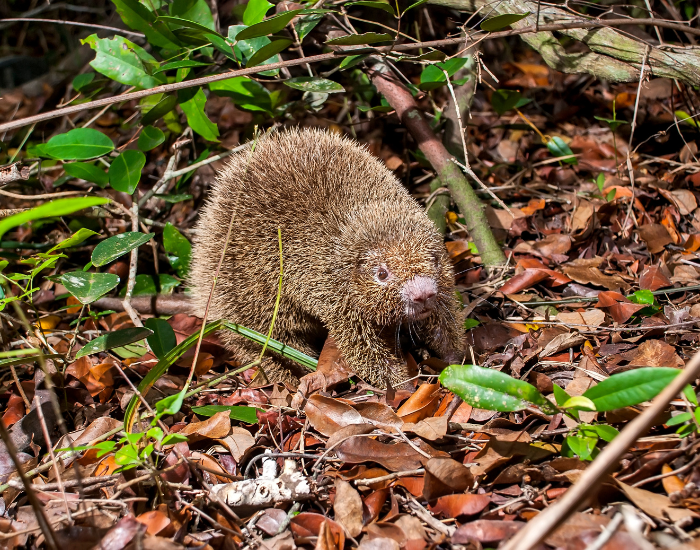
11. Malayan Porcupine (Hystrix brachyura)
Size: 60–75 cm | Status: Least Concern
Range: Southeast Asia
A common sight in the forests of Malaysia and Thailand, this species is known for constructing elaborate burrow systems in open areas near forests. It feeds primarily on bark and fallen fruit, making it an important seed disperser in its ecosystem.
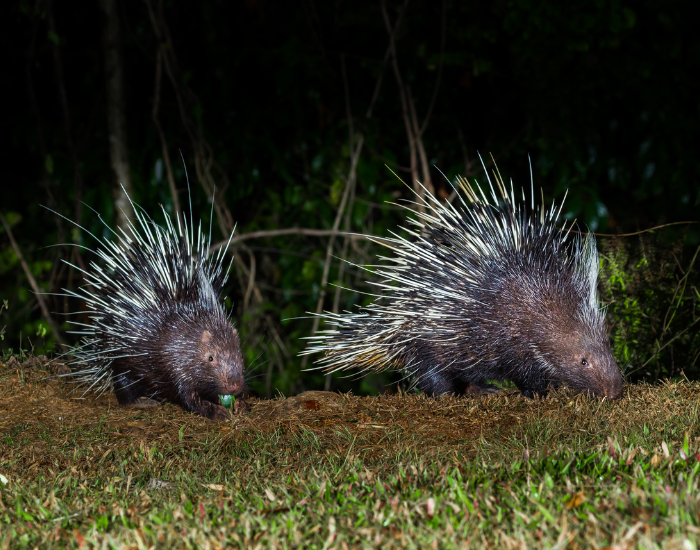
12. Stump-tailed Porcupine (Echinoprocta rufescens)
Size: ~37 cm | Status: Least Concern
One of the smallest New World porcupine species, found in the high-altitude cloud forests of the Andes Mountains in Colombia. Unusually for a South American species, it has a very short, non-prehensile tail. It feeds on fruits and vegetation at elevations where few other porcupines venture.
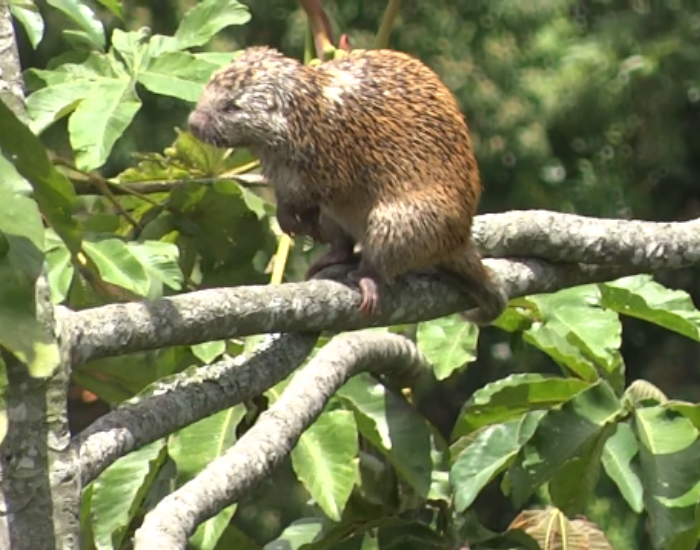
13. Quichua Porcupine (Coendou quichua)
Range: Ecuador, Peru, Bolivia | Status: Least Concern
Another prehensile-tailed specialist of the South American cloud forests. This species inhabits the eastern slopes of the Andes, where dense montane forest provides both shelter and foraging ground. Like its Coendou relatives, it spends most of its life in the trees — venturing out at night to feed on fruit, leaves, and seeds. It’s rarely encountered in the field, and relatively little has been formally documented about its behaviour and population size. That kind of mystery is part of what makes New World porcupines so compelling — there’s still so much left to learn.
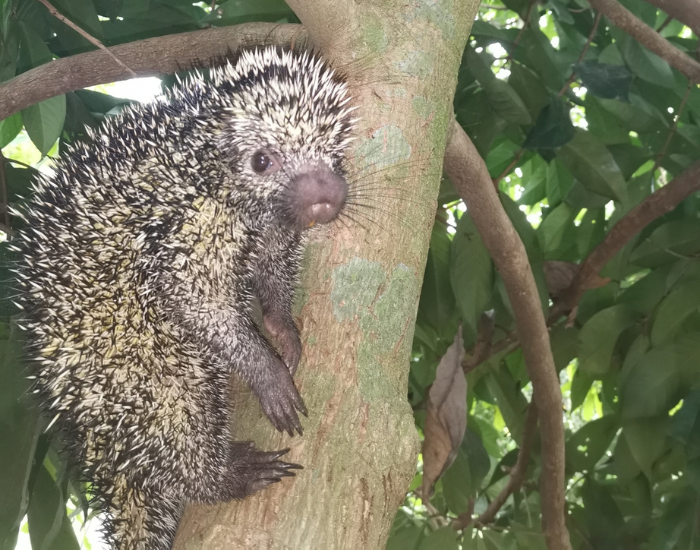
14. Baturité Porcupine (Coendou baturitensis)
Size: Medium | Status: Data Deficient
Described by science only around 2013, this species lives on “forest islands” — isolated patches of high-altitude habitat surrounded by dry scrubland in Brazil’s Baturité Massif. It demonstrates beautifully how geographic isolation can drive the evolution of entirely new species. Conservation data is currently limited.
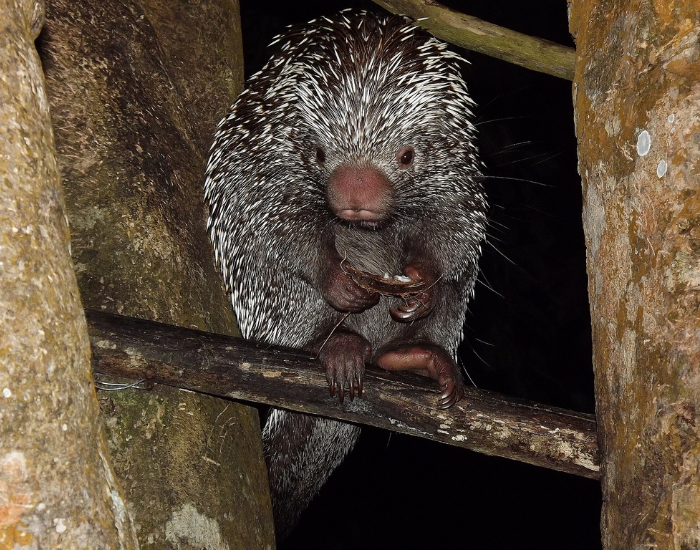
15. Frosted Hairy Dwarf Porcupine (Coendou pruinosus)
Range: Venezuela, Colombia, northern Brazil | Status: Least Concern
This one earns its name. The Frosted Hairy Dwarf Porcupine has quills tipped in pale white or silver, giving it a distinctly frosted appearance against its darker underfur — one of the more visually striking members of the Coendou family. It inhabits the tropical forests of northern South America, where it spends its nights foraging in the canopy for fruit, leaves, and seeds. Like most dwarf porcupines, it relies heavily on its prehensile tail to move through the trees with surprising agility. It’s a small species, but what it lacks in size it more than makes up for in character. A good reminder that some of the most interesting animals in the wild are the ones most people have never heard of.
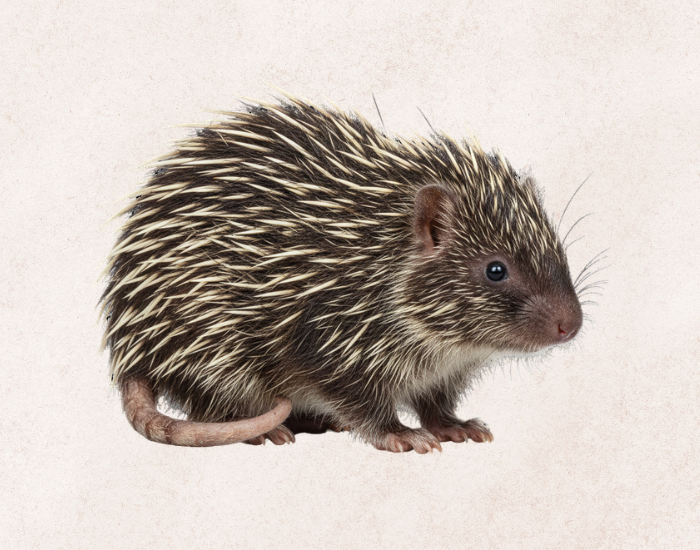
The Science Behind the Spike
So, how many quills does a porcupine actually have? The North American porcupine can carry upwards of 30,000 quills. However, the number varies significantly across the 15-plus species — smaller species carry far fewer.
Each quill is a modified hair made of keratin — the same protein in your fingernails. However, here’s what makes them truly remarkable. Microscopic, backward-facing barbs coat each quill’s tip. Research published in the Proceedings of the National Academy of Sciences confirmed that these barbs make quills easy to drive into flesh but extremely painful and difficult to remove.
Can Porcupines Shoot Their Quills?
No. This is a persistent myth. Porcupines cannot launch or shoot their quills. However, when threatened, they can dislodge loose quills by shaking their bodies or tail, which may cause these quills to become detached unintentionally. These loose quills can pose a hazard if they embed into a human or animal. The confusion likely arose from observers watching quills fly off when a porcupine shakes its body rapidly, or after a fast-moving predator made contact before the observer noticed. You have to physically touch a porcupine for the quills to detach.
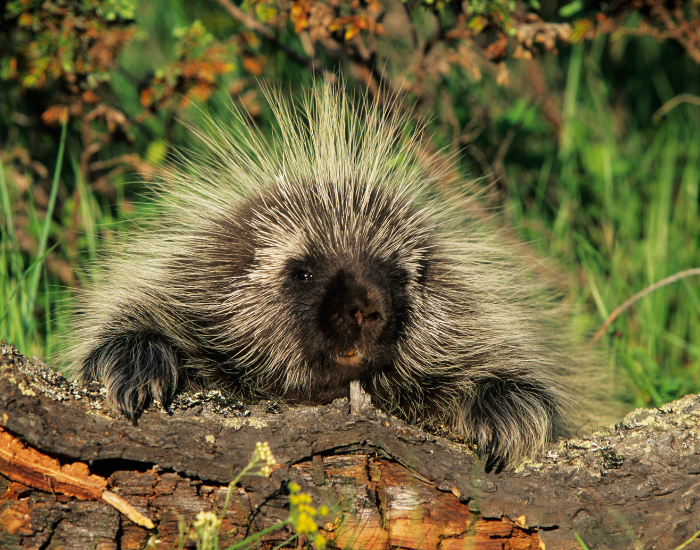
Porcupines: 10 Wild Facts You Should Know
- They have orange teeth. Iron reinforces their incisors, giving them that distinctive orange tint.
- Porcupines are herbivorous rodents living in forests, shrublands, and deserts across Canada, the
- Porcupines are generalist herbivores. Their diet changes with the seasons due to changes in plant chemistry. They consume a variety of plant material, including leaves, bark, stems, grasses, and in spring and summer, they eat berries, grasses, and stems. In winter, they eat bark, evergreen needles, inner bark, and pine needles.
- Porcupines breed only once a year. Breeding occurs in October and November, with gestation lasting 210 days. Several males may gather around a single female during the mating season, competing for dominance. The courtship dance involves vocalizations and displays. Female porcupines typically give birth to a single offspring per year and provide parental care, mainly by feeding their young. Porcupines are not sexually mature until the age of 25 months for females and 29 months for males.
- Adult porcupines are solitary and equipped with numerous quills for defense. They are capable climbers and often feed in trees.
- Predator encounters: Porcupines defend themselves with their quills, which are a primary defense mechanism. Predators such as mountain lions, fishers, and great horned owls may target the porcupine’s unprotected belly, with fishers sometimes flipping the animal to access this vulnerable area. Human awareness is important to avoid conflicts with porcupines.
- The nickname ‘quill pig’ comes from the Latin roots of the animal’s name and refers to its spiny appearance.
- In Southeast Asia, particularly Vietnam, porcupines are often eaten as a food source, contributing to declines in their populations. The Chinese porcupine was widely farmed for its meat in China until a broad ban on the consumption of many wild animals in 2020.
FAQs About Porcupines
In the U.S., porcupines inhabit most western states from Alaska down to Texas, the Northeast (New England, New York, Pennsylvania), and the Great Lakes region. They are largely absent from the Southeast.
The North American porcupine has around 30,000 quills. Quill count varies across species, but all porcupines carry thousands. Quills across all species share the same basic structure: hollow, keratin shafts with barbed tips.
The word comes from the Middle French porc d’épine, meaning “spiny pig.” Scientifically, they belong to either Hystricidae (Old World) or Erethizontidae (New World).
You can, but it requires care. Because of the barbs, quills act like fishhooks and can migrate deeper into tissue — up to 1 mm per hour — if not removed promptly. Always see a vet if your dog gets quilled.
Yes, they do. Porcupines grow new quills to replace those lost in a defensive encounter, with replacement quills growing at roughly 1–2 mm per day. This process is similar to regrowing hair, but the result is much sharper. Interestingly, porcupettes—the baby porcupines—are born with soft hair or soft quills, which harden into sharp adult quills within a few days.
The Quiet Architects of the Wild
I don’t see a spiny rodent when I look at a porcupine. I see a wild animal that has survived for millions of years by becoming an expert in both defense and ecological niche-filling. Whether it’s the Mexican hairy dwarf porcupine in my home region or the massive Cape porcupine of southern Africa, these animals actively shape forest health by thinning vegetation, dispersing seeds, and serving as prey for predators like mountain lions and fishers, which helps maintain the balance of their ecosystems.
Monitoring porcupine populations is important for ecosystem health and conservation efforts, as their numbers are influenced by factors such as predation, habitat loss, and environmental changes. Fortunately, porcupines are not endangered; their populations are stable and classified as ‘Least Concern.’