

Those large black birds perched on your garden fence? The ones loitering on a city bench, watching you eat lunch? They are crows, and they are literally everywhere. You probably walk past them every single day without a second thought.
Then I wrote a deep dive on ravens for Wildlife Nomads, and something shifted. I’d been so consumed by raven intelligence, their eerie social rituals, their unsettling habit of studying you back, that I started paying real attention to their smaller, scrappier cousins. Crows had always been background noise during my fieldwork. Cawing from power lines, picking through garbage in city parks, gathering in flocks at dusk. I’d been ignoring the most adaptable corvids on the planet.
That changed one afternoon in Melbourne. I was cutting through a parking lot near the Botanic Gardens when a crow landed a few meters ahead of me and dropped a walnut onto the asphalt. It hopped back, waited for a passing car to crush the shell, then swooped down to eat. No hesitation. No trial and error. This bird had a system. I stood there, genuinely stunned, and realized crows deserved far more than a passing mention in my field notes.
There are roughly 45 species in the genus Corvus, and crows make up a significant portion. Here are 15 types of crows that showcase the remarkable diversity of these intelligent birds.
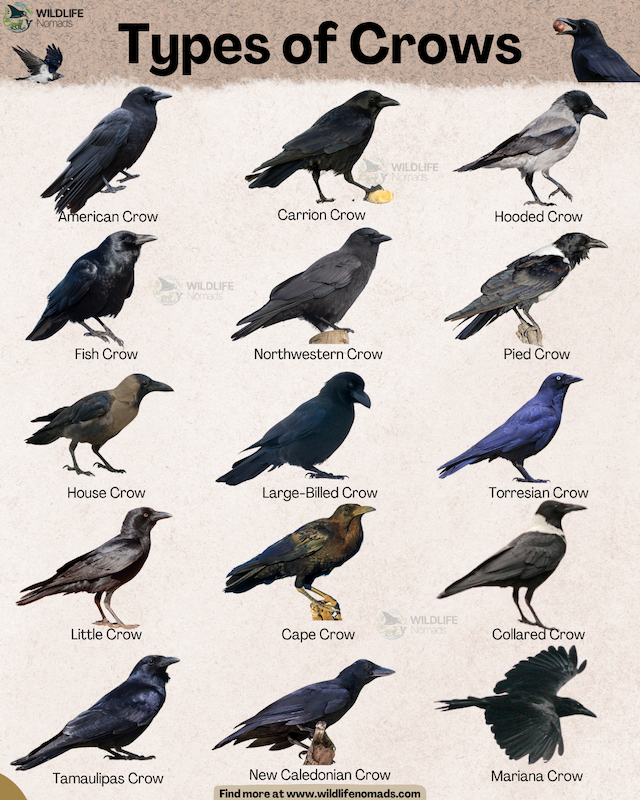
1. American Crow (Corvus brachyrhynchos)
The American crow is the crow most people in North America picture when they hear the word. Entirely black with a distinctive caw, this species thrives in woodland, farmland, urban neighborhoods, and just about every habitat in between, from dense woods to semi open habitats like agricultural fields. Their range stretches across most of the United States and southern Canada.
What makes the American crow genuinely fascinating is its social complexity. They form large communal roosts in winter, sometimes tens of thousands of birds gathering in a single stand of trees. Young crows from the previous year often stay with their parents to help raise the next generation of chicks, a behavior called cooperative breeding. I’ve watched family groups of American crows work together to mob a hawk and other birds of prey, each bird taking turns diving while the others rested in a tall tree nearby.
These crows eat practically anything. Seeds, fruit, insects, eggs, small animals, carrion, and yes, human garbage. They are textbook omnivores and remarkably effective scavengers. Corvus brachyrhynchos has been the subject of groundbreaking studies on facial recognition — researchers demonstrated that American crows remember individual human faces for years.
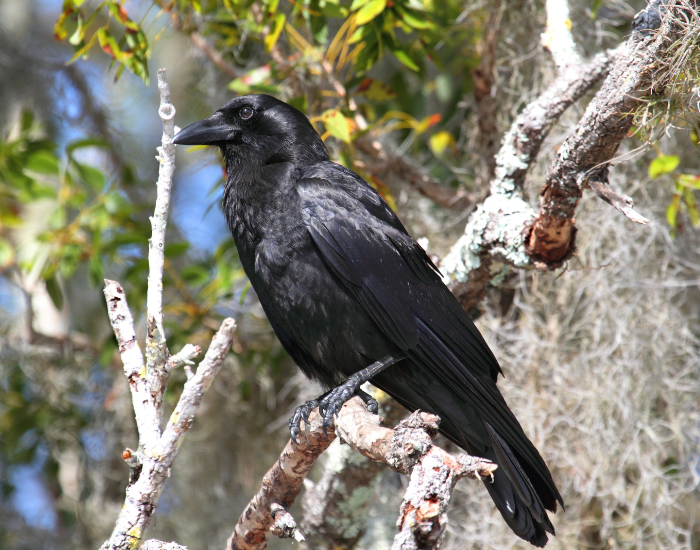
2. Carrion Crow (Corvus corone)
Carrion crows are the dominant crow species across Western Europe. Sleek, entirely black, and slightly smaller than ravens, they favor semi-open habitats, farmland edges, woodland clearings, and suburban parks. The name says it all: these birds are basically scavengers, they feed heavily on carrion, though they also eat insects, seeds, fruit, and eggs.
I’ve spent more time watching carrion crows than almost any other corvid species. In the UK, they are everywhere. During a breeding season you can observe the female arranged sticks while the male brought materials, sometimes flying over 200 meters to find the right branch. Their nests are sturdy structures lined with moss, animal hair, and whatever soft material they can scavenge.
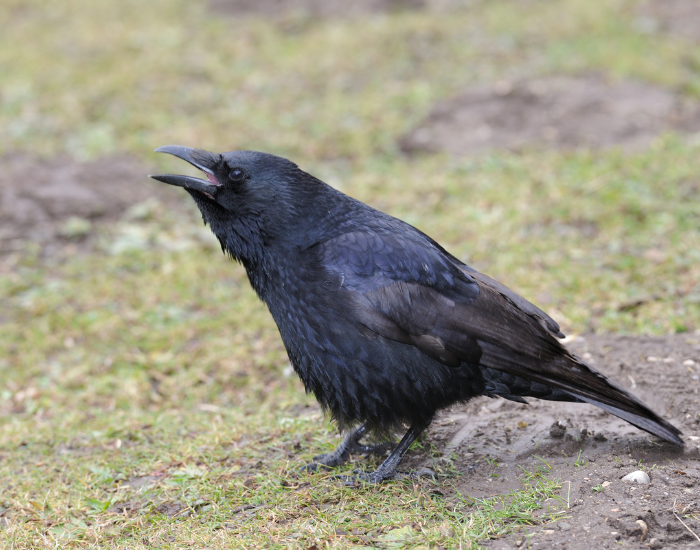
3. Hooded Crow (Corvus cornix)
The hooded crow is one of the most visually striking crows in the world. Its body is gray, a soft, ashy tone, while the head, wings, and tail remain jet black. This two-toned pattern makes it unmistakable. Hooded crows range across Eastern Europe, Scandinavia, the Middle East, and parts of northern Africa.
Here is where taxonomy gets interesting. Hooded crows and carrion crows were once classified as a single species. They hybridize where their ranges overlap, a narrow contact zone running through central Europe. Modern genetic analysis now treats them as separate species, though the debate continues among ornithologists. I find these hybrid zones fascinating because they reveal evolution in real-time.
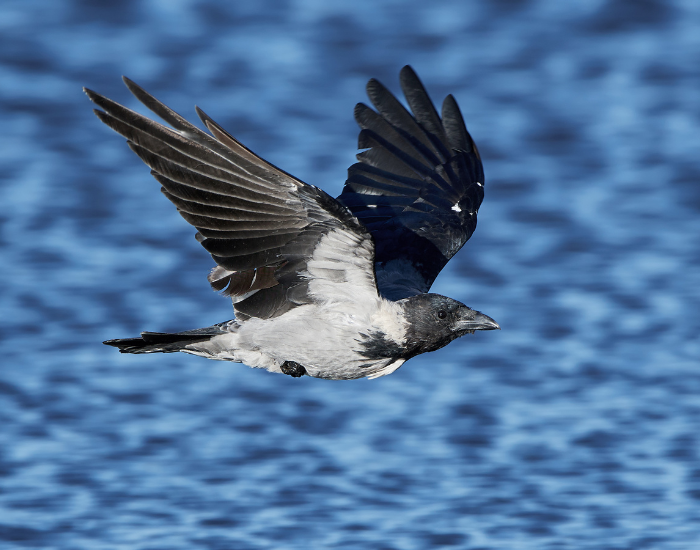
4. Fish Crow (Corvus ossifragus)
The fish crow is the American crow’s smaller, sneakier cousin. Found primarily along the eastern and southeastern United States coastline, this species specializes in aquatic food sourcesm crabs, fish, shrimp, and other marine invertebrates. They also eat eggs, insects, fruit, and carrion, but their connection to water distinguishes them from other crows.
Telling a fish crow apart from an American crow by sight alone is nearly impossible. They are slightly smaller, but the real giveaway is their voice. Fish crows produce a nasal, two-note call — almost like a nasally “uh-uh” — compared to the American crow’s classic caw. During fieldwork along the Chesapeake Bay, I learned to identify them by ear long before I could spot any physical difference.
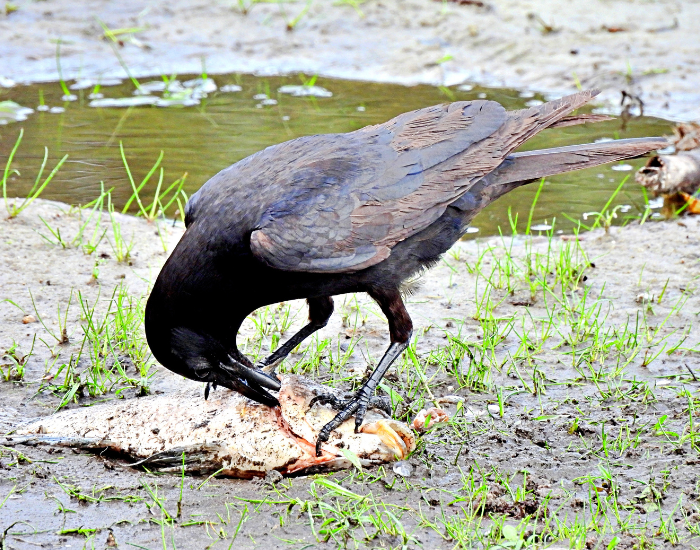
5. Northwestern Crow (Corvus caurinus)
This is one of the most debated crows in North American ornithology. The northwestern crow inhabits the Pacific coast from Alaska down through Washington State. It closely resembles the American crow in appearance, though it tends to be slightly smaller with a subtly different caw.
The controversy? Many taxonomists argue the northwestern crow is not a separate species at all. Genetic studies have found minimal differences between northwestern and American crows where their ranges overlap. In 2020, the American Ornithological Society officially merged the two species. However, some field researchers still recognize behavioral and ecological differences, particularly in coastal foraging habits.
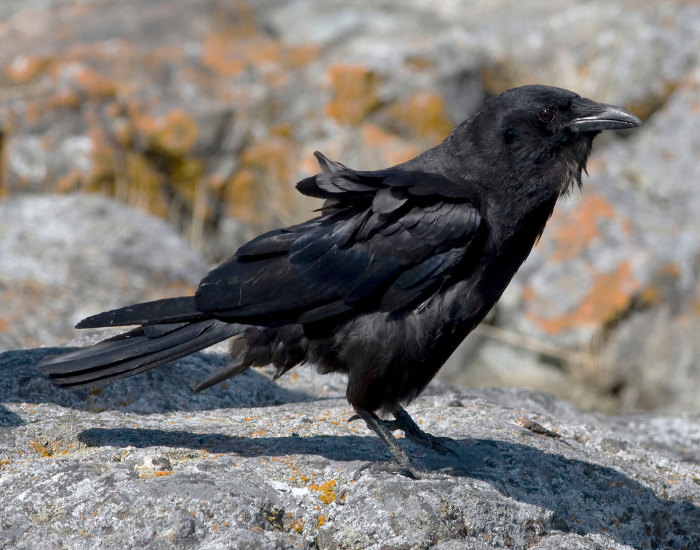
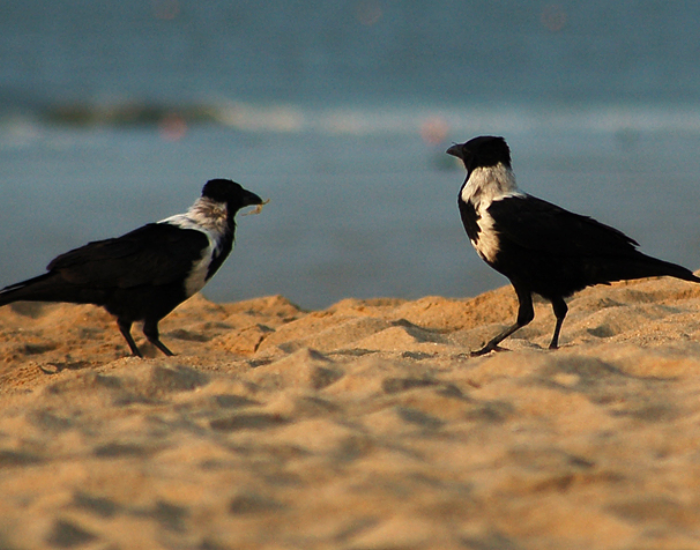
6. Pied Crow (Corvus albus)
The pied crow is Africa’s most widespread crow species. With a white chest and belly contrasting against black plumage, it looks like a crow wearing a formal vest. Pied crows range across Sub-Saharan Africa and Madagascar, occupying everything from open savanna to dense urban areas.
These birds are bold. Remarkably bold. They work in pairsm one distracts while the other grabs the prize. This cooperative hunting strategy is well-documented across the corvid family, but pied crows execute it with particular confidence.
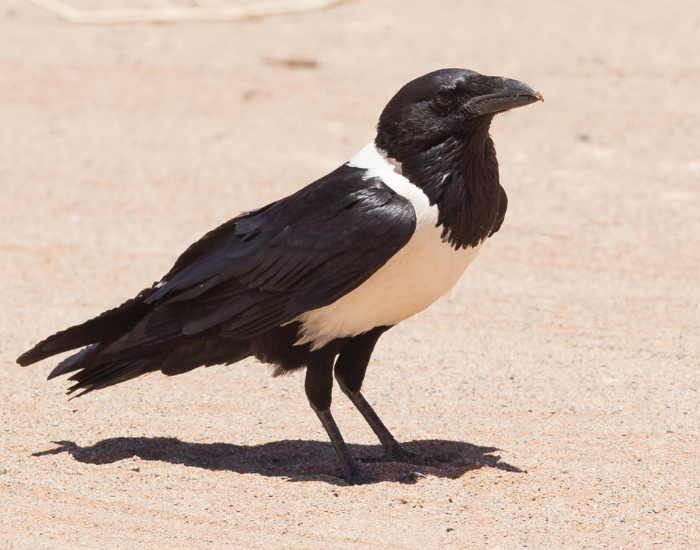
7. House Crow (Corvus splendens)
If there is a crow that has perfected the art of living with humans, it is the house crow. Native to South Asia (India, Sri Lanka, Bangladesh) this medium-sized crow has spread across the world through shipping routes. Established populations now exist in Eastern Africa, the Middle East, and parts of Eastern Asia.
House crows are slender, with a gray nape and breast that contrasts with their black face and wings. They are utterly dependent on human activity. These birds feed almost exclusively on food waste, garbage, and scraps from markets and restaurants. In Mumbai, house crows outnumber almost every other bird species in the city.
Their ecological impact outside their native range is concerning. House crows compete aggressively with other birds for nests and food. They raid the eggs of other species and can suppress local bird populations. Some subspecies show slight variation in plumage shade, but the behavioral pattern remains consistent. Several countries, including Australia and South Africa, treat the house crow as an invasive species and have active control programs.
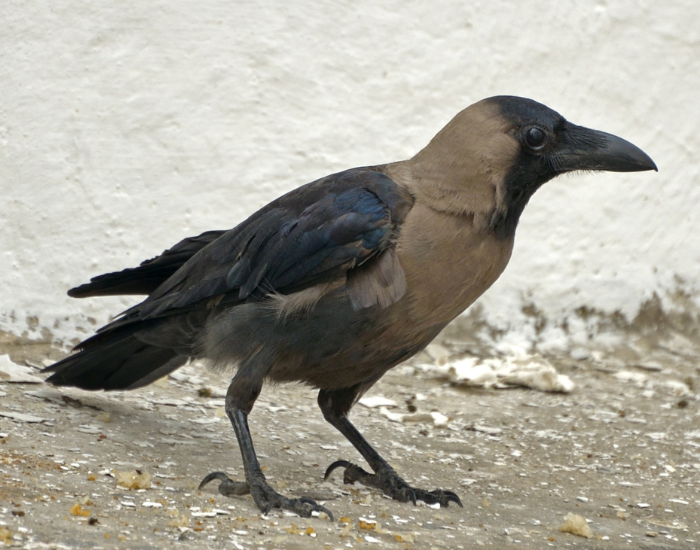
8. Large-Billed Crow (Corvus macrorhynchos)
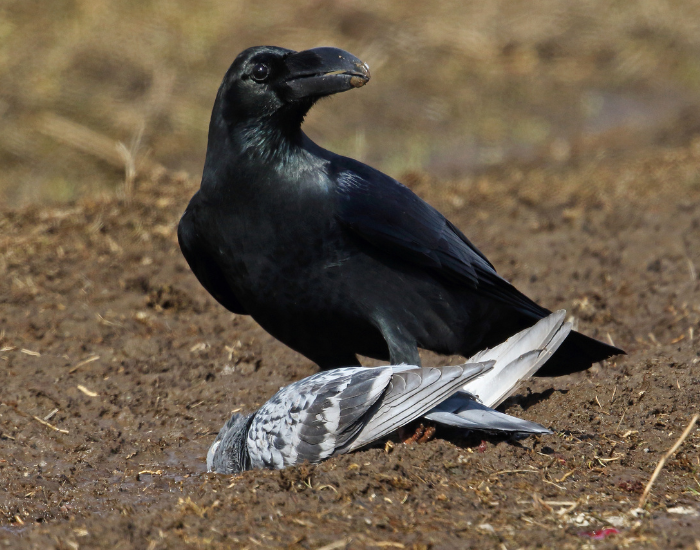
The large-billed crow — also called the jungle crow — is one of the most common corvids across Eastern Asia. Its range extends from Afghanistan through India, Southeast Asia, Japan, and into the Pacific islands. As the name suggests, it has a notably thick, arched beak.
This species thrives in woodland, farmland, and increasingly in urban environments. In Tokyo, large-billed crows are famous for tearing open garbage bags on collection days, creating a long-running conflict between the birds and city officials. The Tokyo Metropolitan Government has spent decades trying to manage their populations.
9. Torresian Crow (Corvus orru)
The Torresian crow inhabits northern and eastern Australia, New Guinea, and parts of Indonesia. It replaced the little crow in my daily birdwatching during fieldwork around Sydney. Entirely black with a white eye base visible at close range, this species favors open woodland and urban areas.
What struck me about Torresian crows was their voice. Their caw is slower and more drawn-out than many other crow species, a kind of strangled, gargling call that sounds almost pained. Locals in Australia often call them “grumpy crows” for exactly this reason.
10. Little Crow (Corvus bennetti)
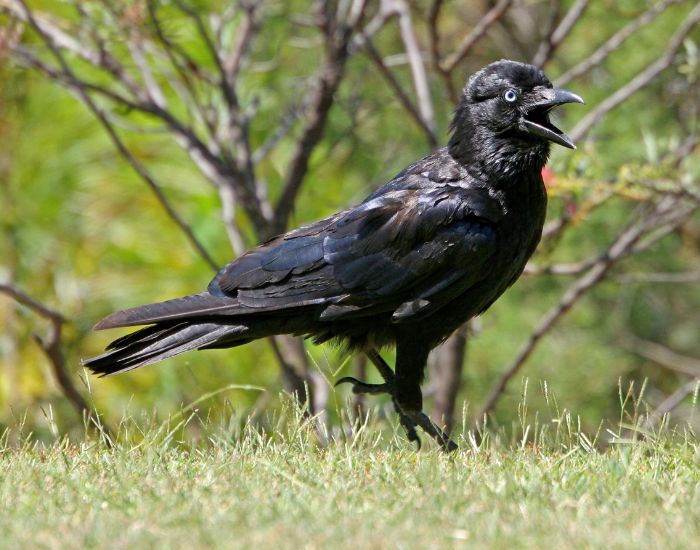
Australia’s little crow is a compact, highly social species found across the arid and semi-arid interior of the continent. It is noticeably smaller than the Torresian crow, with a shorter bill and a rapid, clipped caw.
Little crows are nomadic. They follow food and water across vast distances, gathering in flocks of hundreds when conditions align. After heavy rains in the outback, insect populations explode, and little crows capitalize on the abundance. They also eat seeds, grain, fruit, and sometime they act as facultative scavengers by eating carrion.
Their breeding cycle is tied to rainfall rather than a fixed calendar. When food is plentiful, little crows breed in loose colonies. Nests are built in trees, typically in the fork of a branch, and the female incubates 3–5 eggs while the male guards the territory and brings food. This adaptability to unpredictable environments makes them one of Australia’s most resilient corvids.
11. Cape Crow (Corvus capensis)
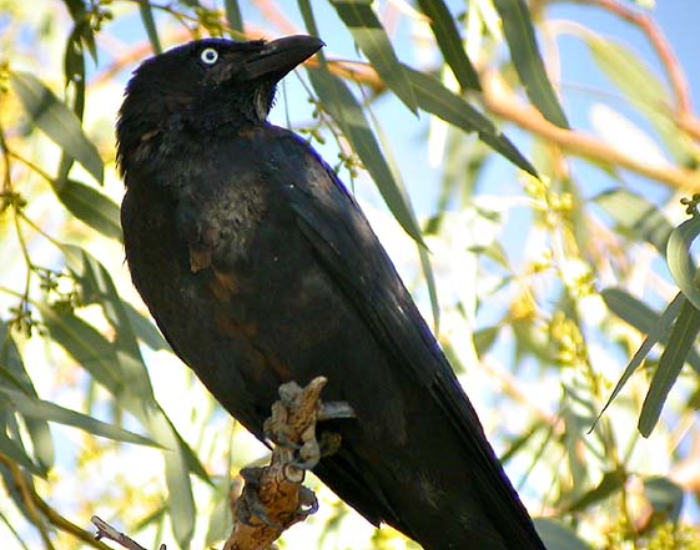
Also called the black crow, the Cape crow ranges across eastern and southern Africa. It is a large, glossy-black crow with a long, slightly curved beak. Cape crows prefer open grasslands, farmland, and agricultural areas, they avoid dense forests entirely.
Cape crows forage primarily on the ground. They walk through short grass searching for insects, larvae, seeds, and grain. During the breeding season, mated pairs become territorial and build large stick nests in trees or on utility poles. The female lays 3–4 eggs, and both parents share feeding duties once the chicks hatch.
12. Collared Crow (Corvus torquatus)
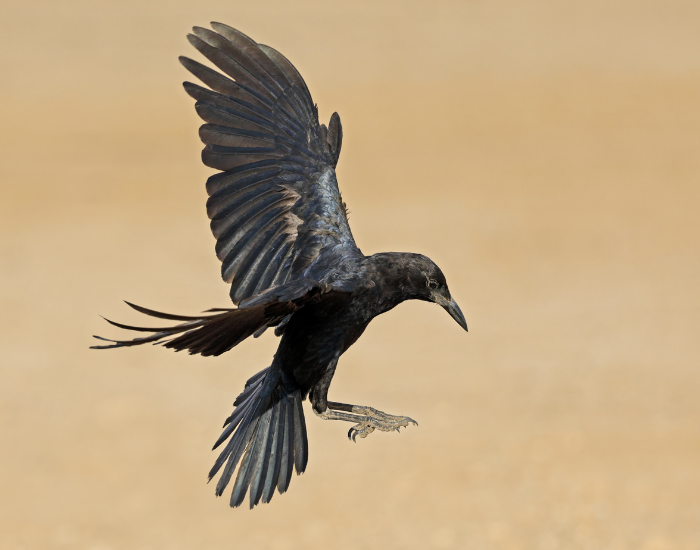
The collared crow is a striking species found in southern China, Vietnam, and parts of southeastern Asia. It gets its name from the broad white collar around its neck and upper breast, a feature that makes it easy to identify even at a distance.
Collared crows prefer wetlands, rice paddies, and river valleys. They feed on fish, frogs, insects, grain, and carrion. However, this species is declining in parts of its range. Habitat loss from agricultural intensification and wetland drainage has reduced their available nesting and foraging areas.
Unlike many crow species, collared crows tend to be somewhat shy and wary of humans. They forage in small groups near water and roost in large trees along riverbanks. Their conservation status warrants closer attention as wetland habitats across Eastern Asia continue to shrink.
13. Rook (Corvus frugilegus)
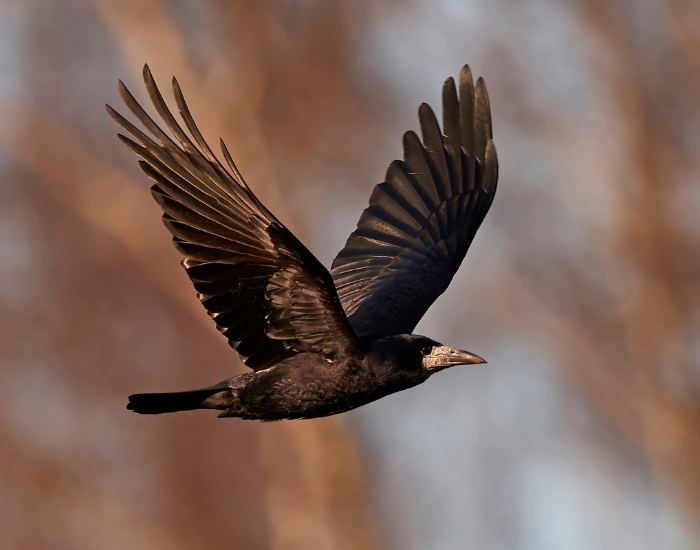
I know, rooks are technically not “crows” in the common-name sense. But they belong to the same genus Corvus, they sit firmly in the corvid family, and omitting them from any serious discussion of crow-like birds would be a disservice. Rooks are colonial nesters found across Europe and into northern Asia.
Rooks are highly social. They breed in large, noisy colonies called rookeries, often in the tops of trees in woodland edges or city parks. Their nests cluster tightly together, and the cacophony during breeding season is genuinely overwhelming. I’ve stood beneath a rookery in Sweden with hundreds of rooks screaming overhead. It is an unforgettable sensory experience.
Frequently Asked Questions
Crows rank among the most intelligent birds in the world. The corvid family — which includes crows, ravens, magpies, and jays — demonstrates problem-solving abilities on par with great apes. Along with jays specifically, crows consistently outperform other animals in cognitive tests. American crows recognize human faces and hold grudges. New Caledonian crows manufacture tools. Multiple species use cars to crack nuts. Their brain-to-body ratio rivals that of primates, making them exceptional among all animals.
Crows form massive communal roosts during fall and winter, sometimes with tens of thousands of birds. These large roosts offer protection from predators like owls and hawks. They also serve as information hubs — crows that found good food sources during the day lead others back the following morning. Winter roosts in city parks are especially common because urban areas offer warmer temperatures and fewer northern predators.
Crows are opportunistic omnivores. They eat insects, seeds, nuts, fruit, eggs, small animals, carrion, and human food waste. Some species, like the fish crow, specialize in aquatic food. Others, like the house crow, rely almost entirely on garbage and scraps. Crows also feed on grain in farmland and break into shellfish along coastlines. Their dietary flexibility is a key reason they thrive across so many habitats worldwide.
The Crow Family Deserves Your Attention
Every continent except Antarctica hosts at least one species of crow. They have adapted to forests, deserts, coastlines, mountains, and the densest cities humans have built. From the carrion crows methodically working English farmland to New Caledonian crows crafting tools on a Pacific island, the genus Corvus represents one of evolution’s greatest success stories.
Next time you hear that familiar caw overhead, stop for a moment. Watch what the bird does. You might witness something that reshapes how you think about animal intelligence entirely. And if you have your own crow encounters, I’d love to hear about them in the comments.
References:
Marzluff, J. M., Walls, J., Cornell, H. N., Withey, J. C., & Craig, D. P. (2010). Lasting recognition of threatening people by wild American crows. Animal Behaviour, 79(3), 699–707. https://doi.org/10.1016/j.anbehav.2009.12.022
Hunt, G. R., & Gray, R. D. (2003). Diversification and cumulative evolution in New Caledonian crow tool manufacture. Proceedings of the Royal Society B, 270(1517), 867–874. https://doi.org/10.1098/rspb.2002.2302
Rutz, C., Klump, B. C., Komarczyk, L., Leber, R., Lucas, J., van der Wal, J. E. M., & St Clair, J. J. H. (2016). Discovery of species-wide tool use in the Hawaiian crow. Nature, 537(7620), 403–407. https://doi.org/10.1038/nature19103
Miller, R., Laskowski, K. L., Schiestl, M., Bugnyar, T., & Schwab, C. (2016). Socially Driven Consistent Behavioural Differences during Development in Common Ravens and Carrion Crows. PloS one, 11(2), e0148822. https://doi.org/10.1371/journal.pone.0148822
Emery, N. J., & Clayton, N. S. (2004). The mentality of crows: Convergent evolution of intelligence in corvids and apes. Science, 306(5703), 1903–1907. https://doi.org/10.1126/science.1098410
Seed, A., & Byrne, R. (2010). Animal tool-use. Current Biology, 20(23), R1032–R1039. https://doi.org/10.1016/j.cub.2010.09.042
Kabadayi, C., & Osvath, M. (2017). Ravens parallel great apes in flexible planning for tool-use and bartering. Science, 357(6347), 202–204. https://doi.org/10.1126/science.aam8138
Taylor, A. H., Hunt, G. R., Holzhaider, J. C., & Gray, R. D. (2007). Spontaneous metatool use by New Caledonian crows. Current Biology, 17(17), 1504–1507. https://doi.org/10.1016/j.cub.2007.07.057
Slager, D. L., Epperly, K. L., Ha, R. R., Rohwer, S., Wood, C., Van Hemert, C., & Klicka, J. (2020). Cryptic and extensive hybridization between ancient lineages of American crows. Molecular Ecology, 29(5), 956–969. https://doi.org/10.1111/mec.15377





.jpg)
