The first time a spider walked across my neck in the Sydney bush, I froze. I was crouched in leaf litter working in the field in a reserve in North Sydney, and my coworkers barely looked up. Over the following months, spiders crawled over my boots, sleeves and notebook more times than I could count. Australian arachnids, I learned, simply come with the territory here.
That lesson came back on my lap around Australia in search of wildlife. Spiders and their relatives have been my most constant companions, from webs across the tent door to lodgers in the awning. Recently I wrote about the jumping spiders I’ve found along the way. Not every arachnid is that cute, though.
This guide covers 15 species and groups that travellers and locals actually meet. You’ll learn how to identify them, which ones deserve real respect, and why most deserve none of your fear.
How Many Arachnids Live in Australia?
Arachnids include spiders, scorpions, mites, ticks and harvestmen, and I cover the full family tree in my guide to types of arachnids. Australia holds roughly 10,000 spider species, and scientists have described only a fraction of them. Many exist nowhere else, so our arachnid fauna shows a remarkably high degree of endemism.
These animals have adapted to deserts, alpine heath, mangroves and rainforest. Many Australian spiders hunt actively rather than building webs. Most spiders use their fangs to inject venom and subdue insect prey. Even so, most Australian arachnids are harmless to humans. Only the funnel-web and redback spiders carry medically significant venom, and antivenom exists for both.
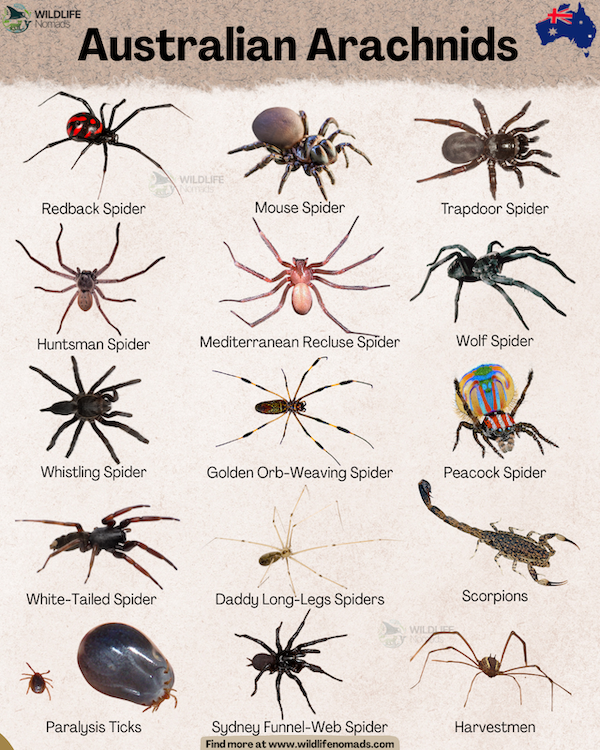
15 Australian Arachnids to Know by Sight
1. Sydney Funnel-Web Spider (Atrax robustus)
Early in my Sydney fieldwork, a coworker asked if I’d ever seen a funnel-web. He walked me over to a bank and pointed at an ordinary hole. No drama, just silk-lined edges and trip lines fanning into the leaf litter. I tell the full story of the Australian funnel-web spider in a separate article.
The Sydney funnel web spider is Australia’s deadliest spider. Glossy black females reach about 3.5 cm in body length, and big ones top 5 cm including legs. However, the highly toxic venom produced by males causes the real danger. Its key toxin affects insects and primates severely, while leaving most other mammals (like dogs and cats) unaffected. The Australian Museum links 13 deaths to this species before antivenom arrived in 1981, and none since.
In summer, wandering males often fall into swimming pools and survive underwater for hours. Scoop them out with a net, never your fingers. In 2025, researchers also split this species into three, which I explain in the FAQ below.

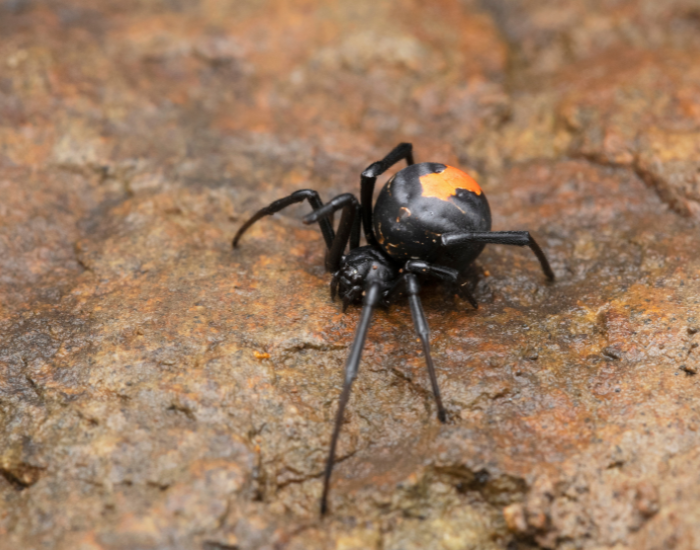
2. Redback Spider (Latrodectus hasselti)
The female redback measures about 1 cm, with a pea-shaped black body and a red dorsal stripe. Males stay tiny and often somersault into the female’s jaws during mating. Look for messy, tangled webs under outdoor furniture, letterboxes and old tyres. This is another spider I found myself encuntering during my fieldwork, but i this case a coworker had it in a jar after finding it in the toolbox.
Australians report about 2,000 redback spider bites each year. Despite its tiny fangs, redback venom causes local pain that spreads, plus sweating around the bite site. Antivenom has existed since the 1950s. Interestingly, a 2014 trial found it worked no better than placebo for pain, so doctors now reserve it for severe envenomation. Harmless black cupboard spiders (Steatoda spp.) look similar but lack the red stripe.
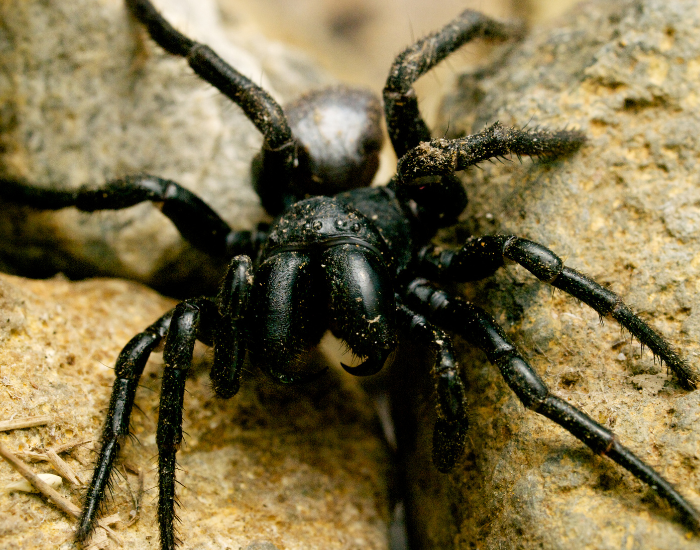
3. Mouse Spiders (Missulena spp.)
Mouse spiders are stocky, with a bulbous head and large fangs. Females stay black, while males of some species show red jaws or a blue abdomen. They often dig burrows near waterways and creek banks.
Big black spiders bolting across a path in daylight are often male mouse spiders searching for mates. Their venom is similar in toxicity to funnel-web venom, so treat it as potentially dangerous venom. In practice, many bites cause only mild symptoms, and funnel-web antivenom works for severe cases.
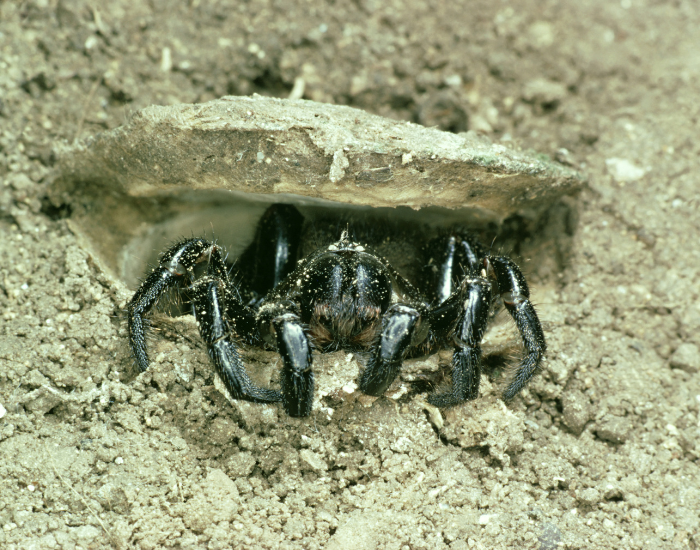
4. Trapdoor Spiders (family Idiopidae and relatives)
During my Sydney fieldwork, I came across trapdoor spiders far more often than funnel-webs. Adults measure 1.5 to 3 cm long. They seal their burrows with a hinged lid of silk and soil, then ambush passing insects from the doorway.
Australia has a high diversity of mygalomorph spiders, the ancient group containing trap door spiders, funnel-webs and tarantulas. One female trapdoor spider in Western Australia, known as “Number 16”, lived for 43 years. Their bites cause local pain at most. Still, dark brown trap door species get mistaken for funnel-webs, so avoid handling any big burrowing spiders.
5. Huntsman Spiders (family Sparassidae)
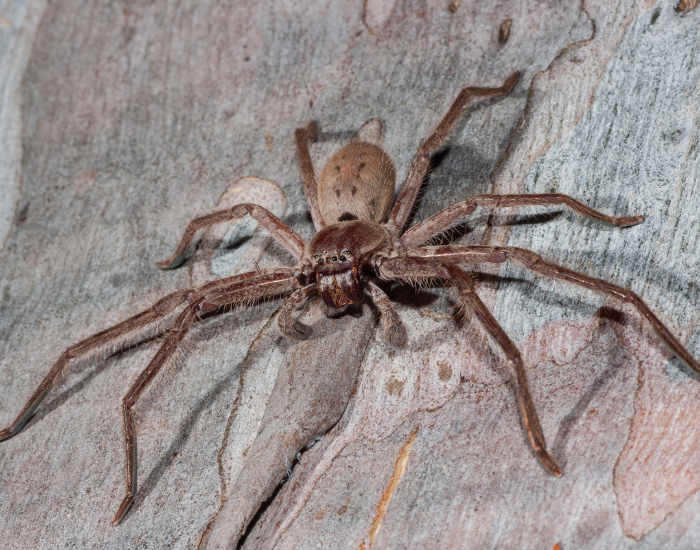
We all have a huntsman story, and mine is recent. At Illaroo campground in northern New South Wales, I found two huge huntsmen living inside my awning walls. They looked terrifying and behaved like perfect housemates.
Huntsman spiders have flattened bodies and crab-like legs, with leg spans reaching around 15 cm. They build no snare webs and hunt cockroaches and other insects at night. These are timid spiders that run rather than bite. When they do bite, expect painful bites with swelling but no lasting harm. The social huntsman (Delena cancerides) even lives in family colonies under bark.
6. White-Tailed Spiders (Lampona cylindrata and L. murina)
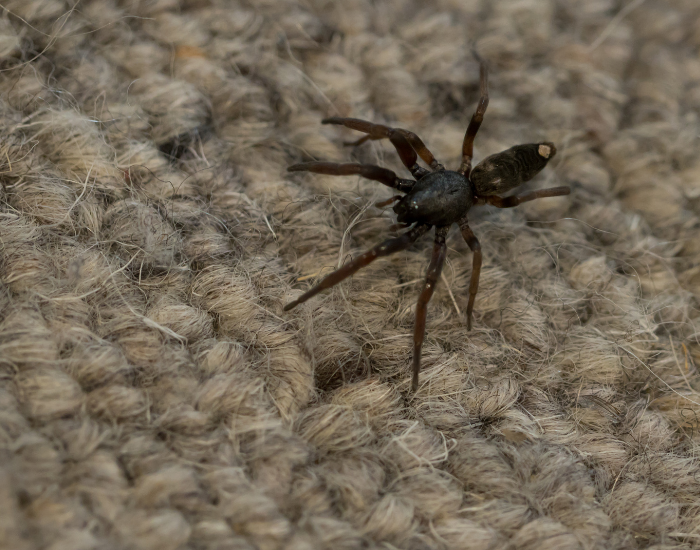
Two species share this name, both with cigar-shaped grey bodies and a pale tip on the abdomen. They hunt other spiders at night, which brings them indoors. For decades, doctors blamed them for flesh-eating ulcers.
A study of 130 confirmed white tail spider bite cases found no necrotic ulcers at all. The image of this spider inflicting terrible damage is a myth. A white-tailed spider bite causes local pain, redness and itch. Today, clinicians diagnose skin ulcers more carefully, because infections often explain them.
7. Wolf Spiders (family Lycosidae)
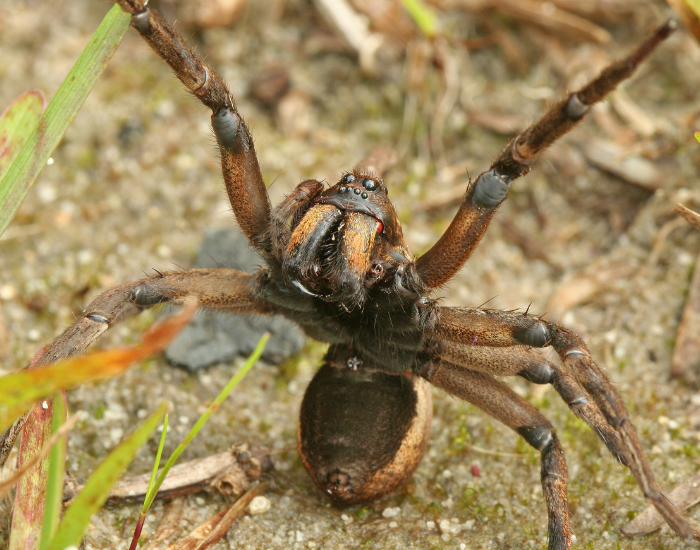
Wolf spiders hunt on the ground, and you’ll spot them at night by their eyes shining in a torch beam. Some dig burrows, but most roam, unlike burrowing spiders that wait at a door. Females drag their egg sac from the spinnerets. Later, the hatched spiderlings ride on her back.
Their bites cause local pain but no serious effects. Wolf spiders act as free pest control in gardens, eating crickets, beetles and other insects.
8. Whistling Spiders, Australia’s Own Native Tarantulas (Selenocosmia and Phlogius spp.)
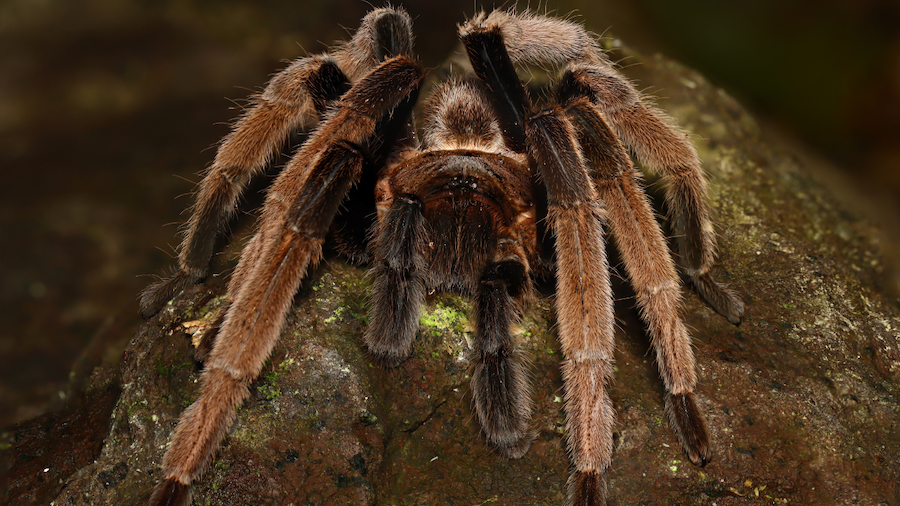
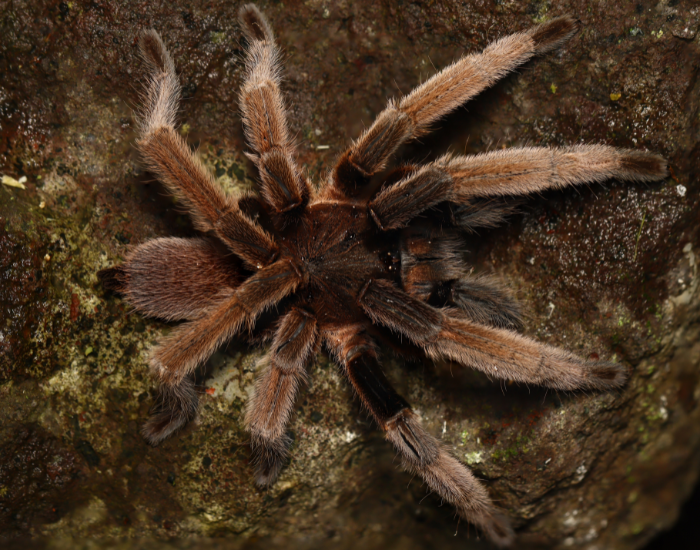
Yes, Australia has its own native tarantulas. Locals call them whistling or barking spiders, because they hiss by rubbing their mouthparts together. Some people also call them bird eating spiders. They live mostly in northern Queensland, the Northern Territory and Western Australia.
These hairy giants reach a 6 cm body length and wield large fangs. They eat insects, frogs and small lizards, and occasionally prey on nestlings. Their bites can kill dogs within hours, while humans usually suffer pain and nausea. At the zoo, I cared for a Mexican redknee tarantula, a far calmer cousin.
9. Golden Orb-Weaving Spiders (Trichonephila spp.)
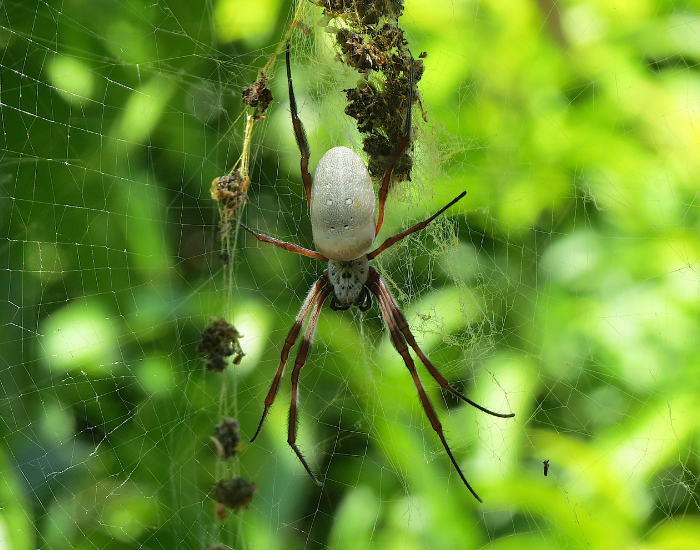
Among web spiders in Australia, these are the easiest to spot. I have found them in several place, like walking along Burleigh Heads National Park or among trees in Coombabah. Females weave huge golden-silk webs across trails, generally weaving webs at face height. The female dwarfs the male, who often waits at the edge of her web.
Orb weaving spiders feed on flies, beetles and moths, and their webs occasionally trap small birds. Bites are rare and cause only local pain.
10. Daddy Long-Legs Spiders (Pholcus phalangioides)
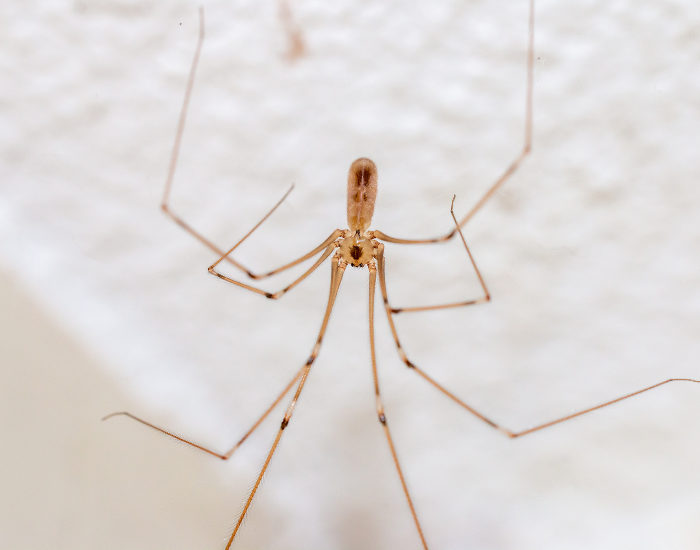
This introduced species lives in ceiling corners across the country. When disturbed, it vibrates its web into a blur. Despite the famous myth, no evidence shows its venom threatens people.
Daddy long legs spiders punch well above their weight. They regularly kill redbacks and even young huntsmen, eating smaller insects between those bigger meals. They’re the quiet pest control in most Australian homes.
11. Peacock Spiders (Maratus spp.)
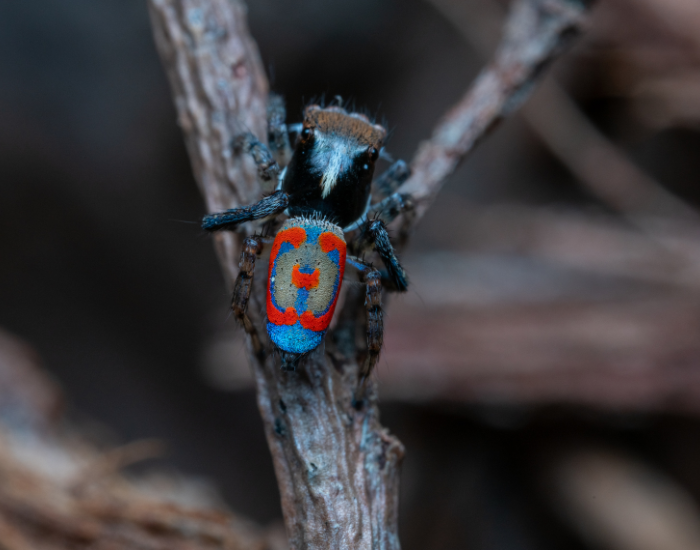
Peacock spiders measure just 4 to 5 mm, yet they carry some of the brightest colours of any spider. Males raise an iridescent abdominal flap and dance, drumming vibrations through the ground. Research shows females pay attention to both the colours and the vibrations.
Like all jumping spiders, they can leap many times their own body length. Most species live in southern Australia and Western Australia. My types of jumping spiders guide covers more of these tiny hunters.
12. Mediterranean Recluse Spider (Loxosceles rufescens)
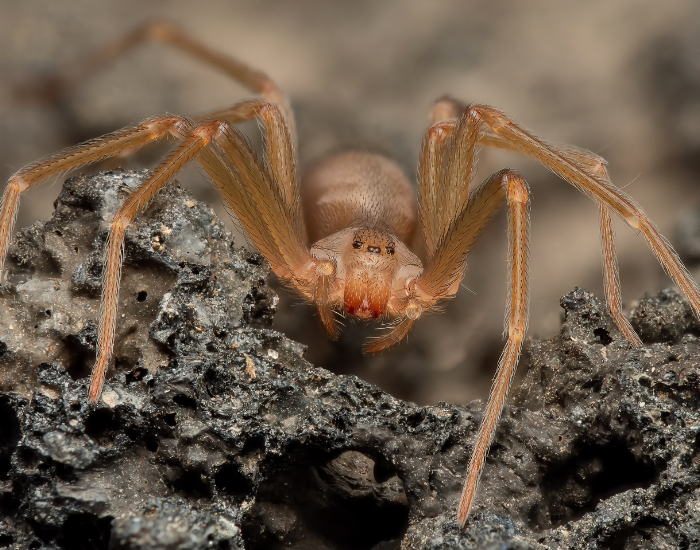
This introduced recluse spider arrived from the Mediterranean and now lives mainly in South Australia. It carries a violin-shaped mark on its head, hence the name fiddleback spider. It hides in cracks, cupboards and storage areas.
Recluse venom can damage skin in some cases overseas. In Australia, however, confirmed bites remain extremely rare, and no deaths have occurred.
13. Scorpions (Urodacus, Lychas and Cercophonius spp.)
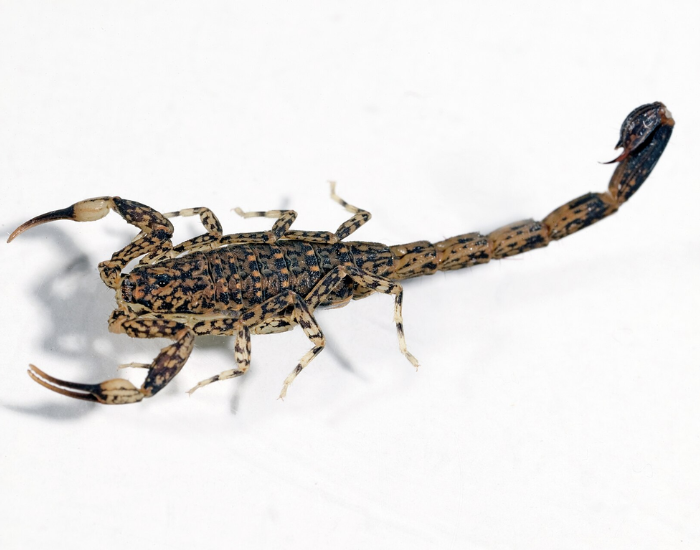
Australia has 47 described scorpion species, and researchers suspect the true number could reach 500. You’ll find them under logs, bark and rocks, from desert dunes to Tasmanian forest. Under UV light, their exoskeleton glows blue-green.
I’ve seen scorpions in the field in Oaxaca and Baja California, where some species demand real caution. Australian scorpions deliver a sting comparable to a bee sting, with pain but rarely other symptoms. Wood scorpion mothers carry their live-born young on their backs for weeks. One specialist species even hunts trapdoor spiders in their burrows.
14. Paralysis Ticks and Mites (subclass Acari)
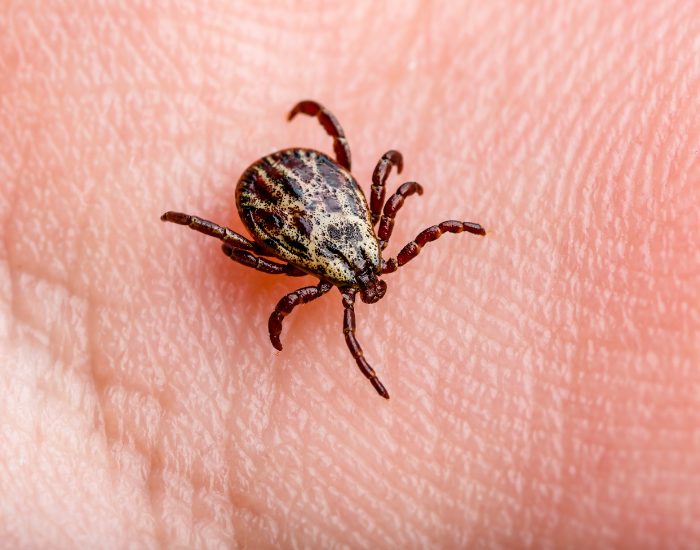
Mites and ticks are parasitic or predatory arachnids. The paralysis tick (Ixodes holocyclus) lives along eastern Australia and injects a toxin that can paralyse pets. In people, tick bites are also linked to mammalian meat allergy. Freeze a tick with an ether-based spray instead of squeezing it out.
Mites range from itchy scrub mites in Queensland grass to predatory mites farmers release for biological pest control.
15. Harvestmen (order Opiliones)
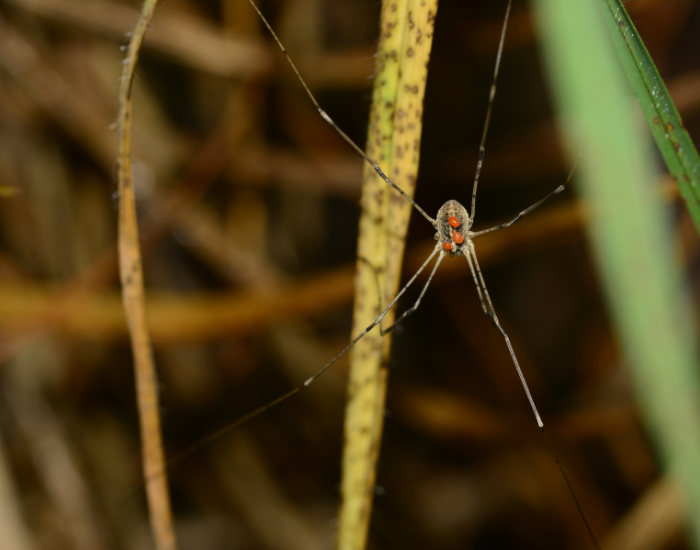
Harvestmen look like spiders on stilts, but they belong to a separate order. Their body forms one fused oval, and they have no silk glands. Harvestmen are distinct from spiders and do not possess venom glands. They eat small invertebrates and decaying matter in damp forests, and they are completely harmless.
Frequently Asked Questions
The Sydney funnel-web spider (Atrax robustus) is the deadliest spider in Australia. Male venom can kill an adult human, and 13 deaths occurred before 1981. Antivenom arrived that year, and no fatalities from funnel-web bites have occurred since.
Most toxinologists rank the Sydney funnel-web among the most dangerous spiders in the world for humans. Brazilian wandering spiders (Phoneutria spp.) are its main rival. Among the most venomous spiders, deaths are now very rare anywhere antivenom exists.
In 2025, researchers split the Sydney funnel-web into three species. The Newcastle funnel-web (Atrax christenseni), nicknamed “Big Boy”, is the largest. The southern Sydney funnel-web (Atrax montanus) completes the trio. Current antivenom works against all three.
Most spiders eat flies, cockroaches, mosquitoes and even redbacks, so they work as free pest control. Grabbing one to squash it is also how many spider bites happen. Relocate them with a jar and card instead. Professional spider pest control applies residual products to eaves when a real infestation needs it.
No. Among thousands of spider species, only funnel-webs, mouse spiders and redbacks cause serious bites. Most spiders produce, at worst, local pain similar to a bee sting. Brown snake bites kill more Australians than any spider now does.
Living Alongside Australian Arachnids
Australian arachnids have a scary reputation, yet only a handful pose any real risk, and antivenom covers the worst. The rest keep insects in check around our homes, gardens and campsites. After years in the bush, I’ve come to see them as neighbours rather than threats.
Want to go deeper? Explore my guide to spider species worldwide, or compare them with the most dangerous snakes in Australia. Then grab a torch tonight and look for eyeshine in the grass.
What’s your best huntsman story? Tell me in the comments, and follow my next finds on the Australia lap.
Australian Arachnid Visual ID Challenge
Look at the photo for each question and select the correct Australian spider or arachnid from the 4 options below!
Photo Identification
References:
Girard, M. B., Elias, D. O., & Kasumovic, M. M. (2015). Female preference for multi-modal courtship: Multiple signals are important for male mating success in peacock spiders. Proceedings of the Royal Society B: Biological Sciences, 282(1820), 20152222. https://doi.org/10.1098/rspb.2015.2222
Isbister, G. K., & Gray, M. R. (2002). A prospective study of 750 definite spider bites, with expert spider identification. QJM: An International Journal of Medicine, 95(11), 723–731. https://doi.org/10.1093/qjmed/95.11.723
Isbister, G. K., & Gray, M. R. (2003). White-tail spider bite: A prospective study of 130 definite bites by Lampona species. Medical Journal of Australia, 179(4), 199–202. https://doi.org/10.5694/j.1326-5377.2003.tb05499.x
Isbister, G. K., Gray, M. R., Balit, C. R., Raven, R. J., Stokes, B. J., Porges, K., Tankel, A. S., Turner, E., White, J., & Fisher, M. M. (2005). Funnel-web spider bite: A systematic review of recorded clinical cases. Medical Journal of Australia, 182(8), 407–411. https://doi.org/10.5694/j.1326-5377.2005.tb06760.x
Isbister, G. K., Page, C. B., Buckley, N. A., Fatovich, D. M., Pascu, O., MacDonald, S. P. J., Calver, L. A., & Brown, S. G. A. (2014). Randomized controlled trial of intravenous antivenom versus placebo for latrodectism: The second Redback Antivenom Evaluation (RAVE-II) study. Annals of Emergency Medicine, 64(6), 620–628. https://doi.org/10.1016/j.annemergmed.2014.06.006
Loria, S. F., Frank, S.-C., Dupérré, N., Smith, H. M., Jones, B., Buzatto, B. A., & Harms, D. (2025). The world’s most venomous spider is a species complex: Systematics of the Sydney funnel-web spider (Atracidae: Atrax robustus). BMC Ecology and Evolution, 25, 7. https://doi.org/10.1186/s12862-024-02332-0