If you’ve ever been birdwatching near a marsh and spotted a tiny, chestnut-colored duck with a tail pointing straight at the sky like a flagpole, you’ve met the ruddy duck (Oxyura jamaicensis). This isn’t your average park-pond mallard. The ruddy duck is a bit of an eccentric in the waterfowl world.
I’ve written extensively about unusual species like the mysterious narwhal, the giant capybara (the world’s largest rodent), the intelligent wombat, the mountain goat takin, and fascinating animals in the deep sea. The ruddy duck fits the bill, literally. With a bright blue bill that looks like it was dipped in neon paint and a personality that ranges from “aggressive bubble-blower” to “stealthy underwater navigator,” there is so much to unpack about this species.
In this guide, we’re going to explore 10 essential facts about the drake ruddy duck, the elusive hen ruddy duck, and why this compact duck is currently at the center of one of Europe’s most intense conservation debates.
1. That Blue Bill Isn’t Just for Show
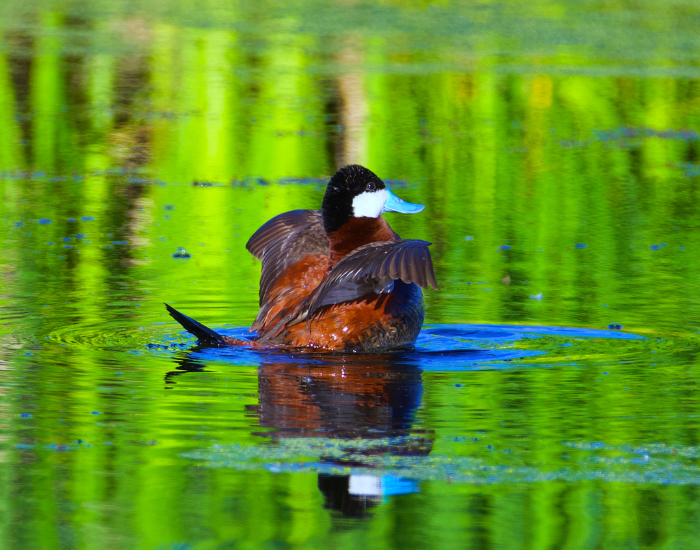
When people ask, “What kind of ducks have blue bills?” well, the ruddy duck is almost always the answer. However, here’s the kicker: they aren’t born with it, and they don’t keep it year-round.
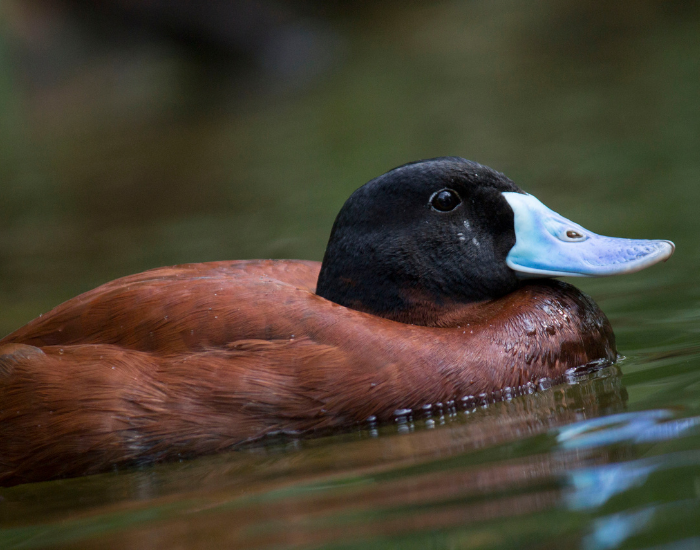
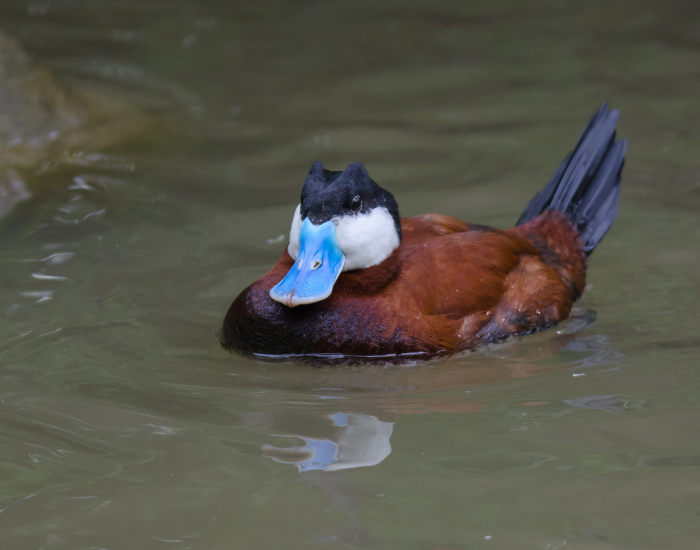
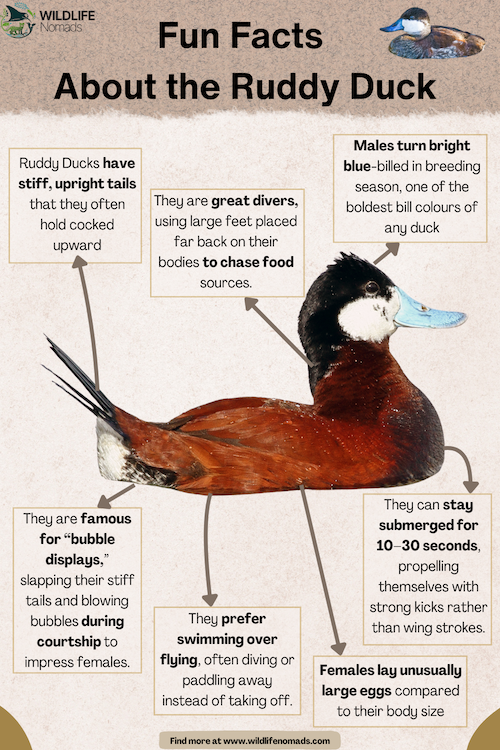
The bright blue bill is a seasonal flex. During the breeding season, the male ruddy duck undergoes a hormonal transformation. His bill turns a vivid, chalky turquoise. This serves as a high-contrast signal to female ruddy ducks that he is healthy, virile, and ready to mate.
What does it mean if a duck has a blue beak? In the case of the ruddy, it’s a sign of peak physical condition. The blue bill appears only when breeding males are in prime health. Once the summer heat fades and the breeding plumage is swapped for winter males’ drabber tones, that neon blue fades back to a dull, dark gray.
The bill color transformation is controlled by testosterone levels. Therefore, male ruddy ducks with the brightest blue bills tend to have the most reproductive success. In addition, the bill serves multiple functions beyond courtship displays.
2. They Are the “Stiff-Tailed” Specialists
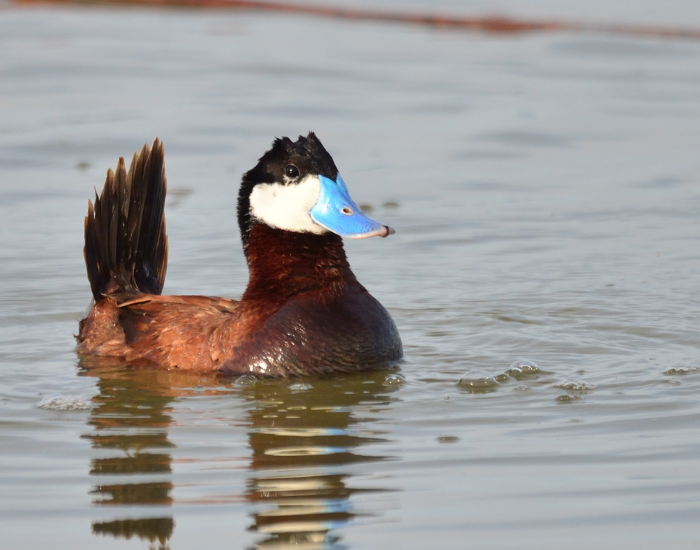
The ruddy duck belongs to a specific group known as stiff-tailed ducks. Unlike a mallard, whose tail sits flat on the water, the ruddy duck has long, rigid tail feathers that it frequently cocks upward.
Why the stiff tail? It acts as a rudder (hence the name rudder ducks, as they are sometimes colloquially called). When swimming underwater, these feathers help them maneuver with incredible agility. The stiff tail can fan out or close tightly depending on the duck’s needs.
If you see a duck that looks like it’s trying to point its tail at the clouds, you’re looking at a member of the Oxyura genus. Other stiff-tailed ducks include the white-headed duck of Europe and several South American species. However, the ruddy duck stands out among stiff-tailed ducks for its adaptability and range.
3. The “Belch-Like Call” and the Bubble Dance
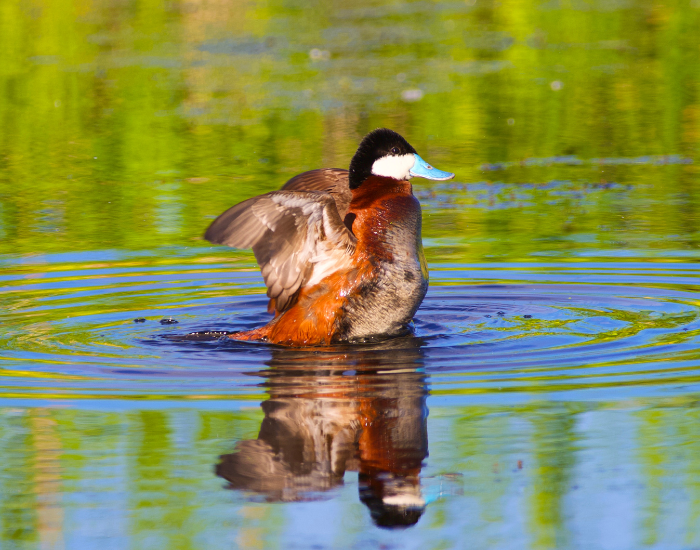
Courtship in the bird world can be beautiful, but for the male ruddy duck, it’s a bit… gassy. To attract a mate, the male performs a unique courtship display where he beats his bill against his inflated neck.
This action forces air out of his feathers, creating bubbles in the water while producing a low, rhythmic, belch-like call. The belch-like call isn’t exactly a romantic ballad by human standards. Nevertheless, for a ruddy duck hen, it’s irresistible.
The courtship displays involve the male puffing up his chest and rapidly drumming his bill against his neck. Bubbles form on the water’s surface as air escapes from between his feathers. This creates a visual and auditory spectacle that female ruddy ducks find attractive.
Male ruddy ducks will perform these displays repeatedly throughout the breeding season. The most vigorous displays typically occur in the early morning hours. Birds that produce the most bubbles and the loudest belch-like calls often attract multiple females.
4. They Are Absolute Diving Machines
You won’t see a ruddy duck “dabbling” (tipping its butt in the air to eat grass). These are quintessential diving ducks. They have large, lobed ruddy duck feet set far back on their bodies.
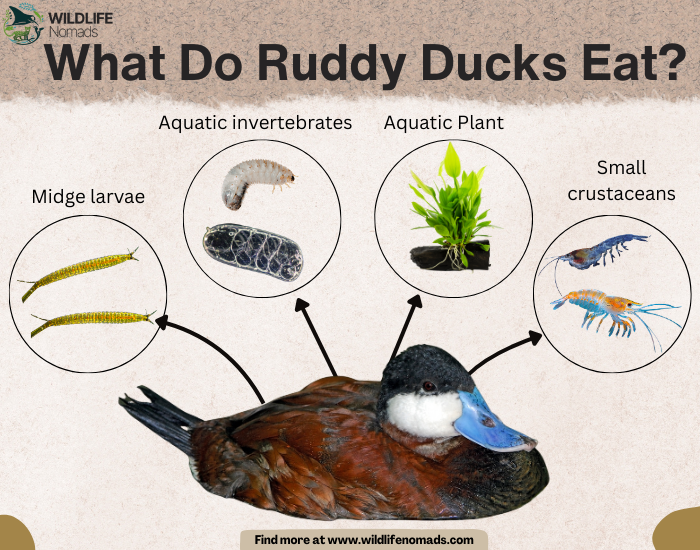
While this makes them incredibly clumsy on land, they can barely walk, it makes them torpedoes in the water. Diving ducks like the ruddy can reach depths of 10 feet or more. They dive to the bottom of lakes and open water to forage for:
- Midge larvae (their favorite snack)
- Aquatic invertebrates
- Aquatic plants and seeds
- Small crustaceans
They use a “scoop-shaped bill” to filter through the mud. The bill has sensitive nerve endings that help them locate food. Ruddy ducks rely on tactile sensation rather than sight to find food in murky depths.
Diving and swimming underwater takes considerable energy. Therefore, these ducks spend much of their day foraging. Adult males and female ruddy ducks both exhibit exceptional diving abilities. Immature males learn diving skills from watching adults.
5. The Mystery of the “Invasive” Label
Is a ruddy duck rare? In their native North America, absolutely not. You can find them across the Prairie Pothole Region, North Dakota, and even down into South America.
However, in Western Europe and the UK, the story is very different. The ruddy duck is considered one of the most controversial invasive species. Ruddy duck populations in Europe originated from escaped captive birds. They were introduced to UK waterfowl collections in the 1940s, escaped, and spread to European countries like Spain.
The problem? They started breeding with the endangered white-headed duck (Oxyura leucocephala). This hybridization threatened to wipe out the white-headed duck entirely. Conservation groups recognized the threat early but struggled to control expanding ruddy duck populations.
As a result, conservation groups like the RSPB and WWF supported a controversial culling program to protect the native European species. Other European countries joined the effort to eliminate ruddy ducks from the continent. The culling program remains contentious among wildlife advocates.

6. Identifying the Ladies: The Ruddy Duck Hen
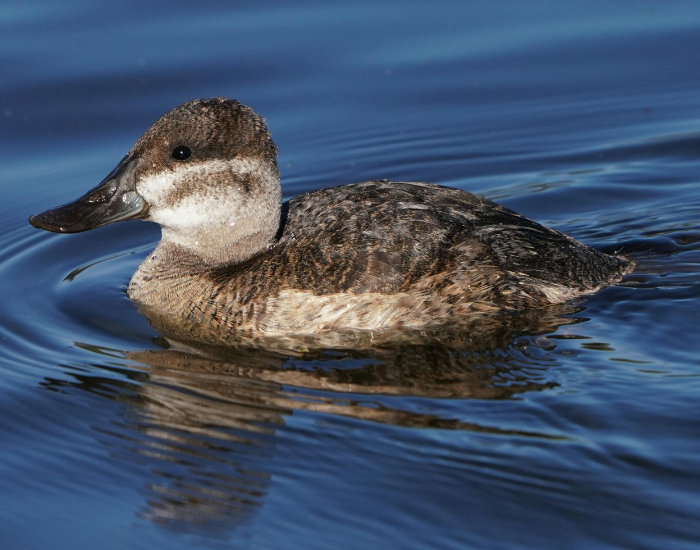
While the males get all the glory with their chestnut body and white cheeks, the female ruddy duck (or hen ruddy duck) is a master of camouflage.
To identify her, look for:
- A dull gray-brown body
- A pale cheek patch crossed by a single, blurry stripe (the dark line)
- A dark cap that sits low over the eyes
Female ruddy ducks lack the bright white cheeks of breeding males. Instead, females maintain relatively consistent plumage throughout the year. The pale cheek patch helps identify females from other duck species.
Immature males often look like females, making identification tricky until the young drakes start developing their white cheek patch and darker crowns. Young males gradually develop adult male characteristics over their first year.
7. They Lay Giant Eggs (Relative to Their Size)
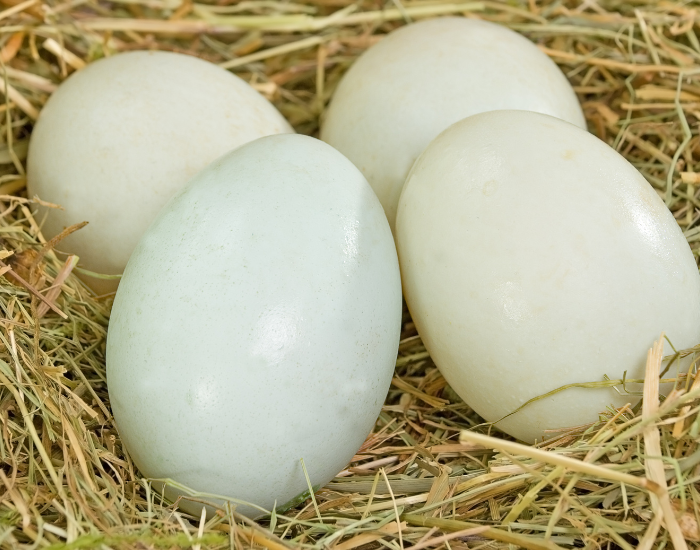
For a compact duck, the ruddy duck produces surprisingly large eggs. In fact, they lay the largest eggs of any duck in the world relative to their body size.
A ruddy duck hen might lay a clutch of 3 to 13 eggs. These eggs are so nutrient-dense that ducklings are born highly “precocial.” This means they are ready to leave the nest, dive, and hunt for aquatic invertebrates independently within 24 hours of hatching. Talk about a fast-tracked childhood!
The eggs measure approximately 2.5 inches long and weigh about 3.5 ounces each. Female ruddy ducks invest enormous energy into egg production. Therefore, hens must consume large quantities of protein-rich midge larvae and aquatic invertebrates before laying.
Nest sites are typically hidden in dense marsh vegetation or dense emergent vegetation. Females line nests with down feathers for insulation. However, unlike other ducks, male ruddy ducks provide no parental care.
8. Migration and Habitat: Where to Find Them
Where are ruddy ducks found?
Breeding Grounds: Mostly in the Prairie Pothole Region of the northern US and Canada. They love dense marsh vegetation and dense emergent vegetation where they can hide their nests. North Dakota and other prairie states host the largest breeding populations.
Wintering Grounds: They migrate to coastal bays, unfrozen lakes, and marshes across the southern US and Mexico. Some populations extend to South America during winter months.
During the winter, they lose their breeding plumage and gather in large flocks on open water. At this time, both the male ruddy and the female look remarkably similar, just little dark gray floaters on the water. Winter males lack the distinctive bright white cheeks and blue bill of the breeding season.
The Prairie Pothole Region provides ideal breeding habitat for waterfowl. This area spans across multiple states and contains thousands of shallow wetlands. European countries lack comparable wetland systems, which partly explains why ruddy ducks became problematic invasive species there.

9. Are They Good to Eat?
A common question that pops up is: Are ruddy ducks good to eat? Historically, they were actually quite popular in the early 20th-century market hunting era. Because of their diet, rich in protein from midge larvae, they were nicknamed “butterballs” and considered a delicacy.
However, by modern standards, most hunters find them difficult to hunt because they prefer to dive rather than fly away when approached. Today, they are mostly appreciated through binoculars rather than on a dinner plate.
The meat is dark and rich-flavored due to their diving duck lifestyle. Nevertheless, hunting regulations now protect most waterfowl populations. Species like ruddy ducks are more valuable alive for birdwatching and ecological purposes.
10. They Are Fiercely Territorial
Don’t let the body size fool you. The ruddy duck is a tiny titan, maybe not one of the largest birds in the world, but definitely big. During the breeding season, pairs form and the males become incredibly territorial.
Male ruddy ducks have been known to chase away much larger birds. They will aggressively defend their territory against American coots, geese, and even swans if they get too close to their nesting site in the dense marsh vegetation. Their aggressive “bubble-blowing” isn’t just for the ladies; it’s a warning to any other waterfowl that the ruddy duck is the boss of his little patch of the marsh.
Breeding males establish territories in early spring. They use courtship displays to signal ownership of prime breeding areas. Other species quickly learn to avoid aggressive male ruddy ducks. In addition, males will fight with each other over the best territories.
Comparison: Ruddy Duck vs. Similar Species
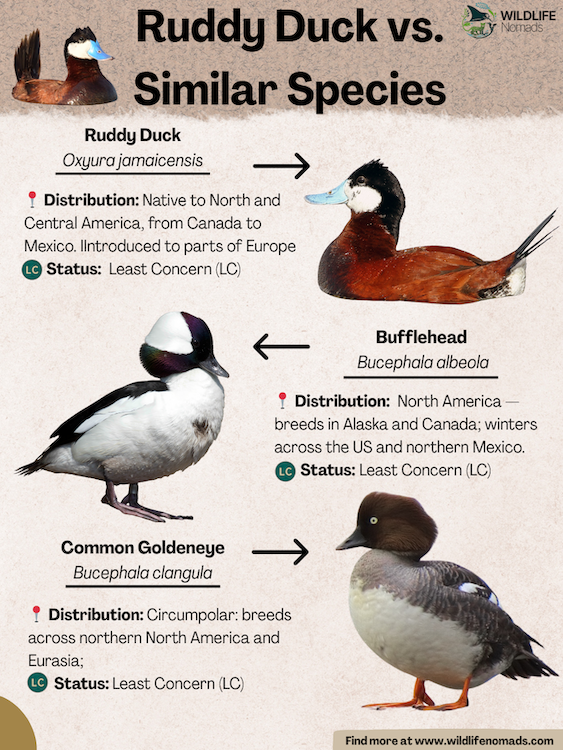
| Feature | Ruddy Duck | Bufflehead | Common Goldeneye |
|---|---|---|---|
| Bill Color | Bright Blue (Male/Summer) | Dark Gray/Black | Dark Gray |
| Tail Shape | Stiff Tail (often upright) | Short/Flat | Short/Flat |
| Cheek Pattern | Bright White Cheeks | White patch behind eye | Round white spot near bill |
| Body Color | Dull gray-brown to Chestnut | Black and White | Black and White |
Understanding these differences helps birdwatchers correctly identify species. Other ducks may share some characteristics with ruddy ducks. However, the combination of stiff tail, blue bill, and white cheeks makes male ruddy ducks unmistakable.
FAQs About Ruddy Ducks
While the ruddy duck is common, the Laysan Teal is often cited as the rarest duck in the US (specifically Hawaii). In the continental US, the Steller’s Eider is among the rarest. However, ruddy duck populations remain stable throughout North America.
If you mean “blue feathers,” the Blue-winged Teal is a top contender. If you mean “blue bills,” the ruddy duck is the king. There is also a breed called the Blue Swedish duck, but those are domestic birds, not wild.
No, they have a stable population in North America. Ruddy duck populations benefit from wetland conservation efforts. They are only “rarely” seen in certain parts of the world where they aren’t native, or where culling programs have reduced their numbers.
Winter males and females gather in large flocks on open water. They lose their distinctive breeding plumage during this short period. Winter flocks can contain hundreds of birds feeding together on aquatic invertebrates.
Why the Ruddy Duck Matters
The ruddy duck is a masterclass in adaptation. From its scoop-shaped bill designed for mud-filtering to its giant eggs and defensive bubble-blowing, it’s a species that refuses to be ignored.
Whether you’re watching them in the Prairie Pothole Region or reading about the complex conservation efforts to manage ruddy duck populations in Europe, these birds remind us that even the smallest species can have a massive impact on their ecosystem.
Next time you’re near a marsh, keep an eye out for a dark cap, a stiff tail, and a flash of turquoise. You might just spot the most charismatic compact duck in the wetlands. Male ruddy ducks and female ruddy ducks both contribute to the ecological diversity of North American wetlands.
Understanding waterfowl like the ruddy duck helps us appreciate the complexity of wetland ecosystems. Therefore, supporting wetland conservation benefits countless species beyond just one compact duck.