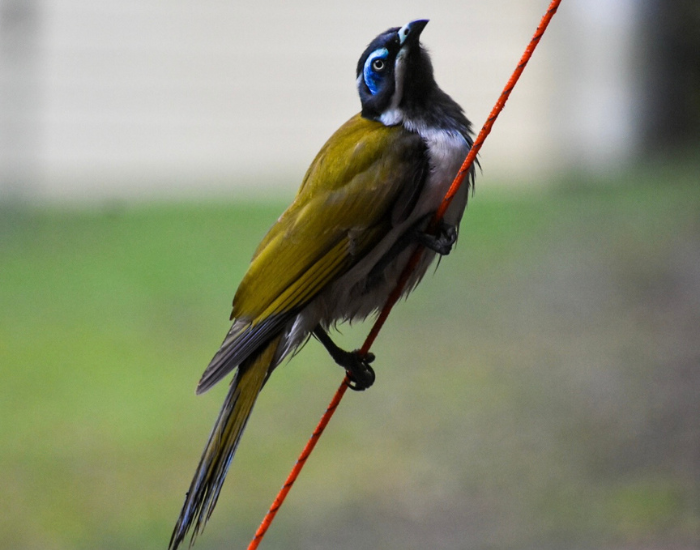
In my years studying Biology in Sweden, I went to Denmark as a holiday while I was at Uppsala University, and I witnessed one of the best spectacles in nature. Thousands of starlings flying like a single organism across the winter sky, twisting and folding in perfect unison. I had always wanted to see starling murmurations in person. Looking at them in real life, watching those birds move all together at the same time, was magical. It really makes you wonder — what is the leader? What is directing their movements? The answer, as it turns out, is that there is no single leader. Each bird in those tight flocks reacts to the seven nearest neighbours, creating a wave of behaviour that ripples through the group faster than any predator can follow.
That experience sent me down a rabbit hole. I started reading everything I could about the starling family, and I quickly realised that the European starling is just one member of an enormous and wildly diverse family. The family Sturnidae contains around 128 species spread across 36 genera. From the glossy, dark plumage of African starlings to the snow-white feathers of the critically endangered Bali myna, this family has far more range than most people realise. Here are 15 starling types that deserve your attention.
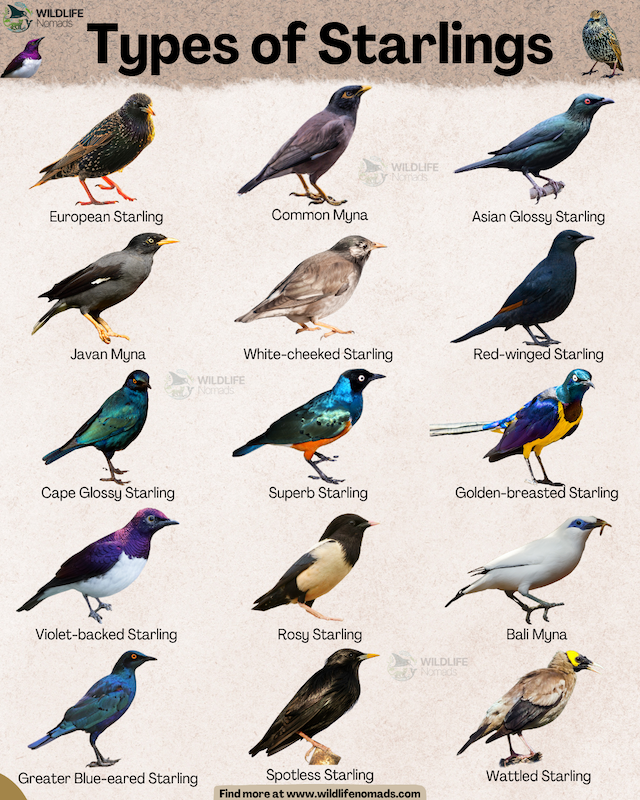
1. European Starling (Sturnus vulgaris)
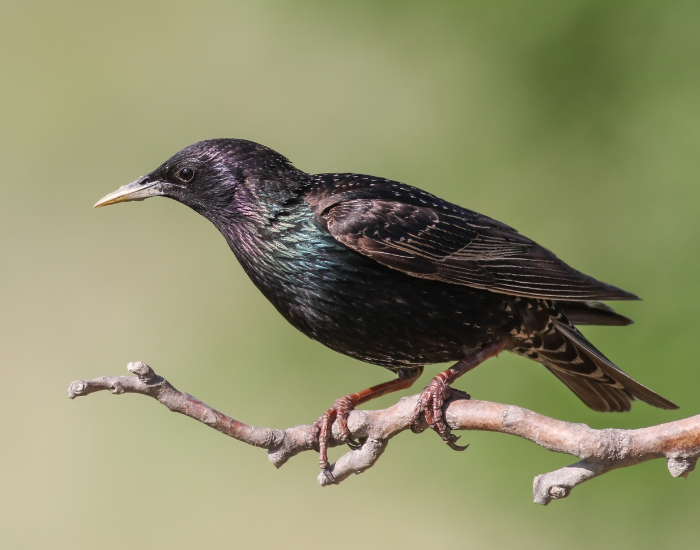
The common starling (Sturnus vulgaris) is arguably the most recognised bird in the starling family. Native to Europe, North Africa, and western Asia, this species now occurs across much of the world thanks to multiple introductions during the 19th and 20th centuries. In North America alone, the population descended from roughly 100 birds released in New York City in 1890, popularly attributed to admirers of William Shakespeare who wanted every bird mentioned in Shakespeare’s works to live in the New World.
Today, European starlings number over 200 million birds in North America. That population explosion from multiple introductions makes Sturnus vulgaris one of the most successful introduced birds in history. Their breeding plumage is spectacular up close, dark feathers covered in an iridescent green and purple metallic sheen that most people never notice from a distance. During the nonbreeding season, those same brown-speckled feathers become heavily dotted with white and buff spots, and the yellow bill shifts from bright yellow in summer to dark brown -to black/dark/grey in winter. They have a short tail, triangular wings in flight, and a stocky build that separates them from blackbirds and robins at a glance. Blackbirds, house sparrows, and robins often share the same habitats, but the starling’s iridescent dark feathers and yellow beaks set them apart immediately.
European starlings are aggressive cavity nesters. They use holes in trees, gaps in artificial structures, and crevices in buildings. This nesting behaviour puts Sturnus vulgaris in direct competition with native birds like the American robin, bluebirds, house sparrows, and woodpeckers.
2. Spotless Starling (Sturnus unicolor)
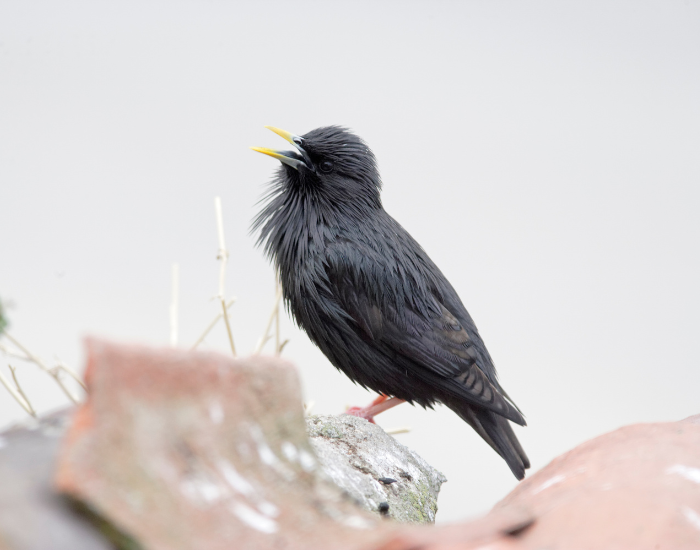
The spotless starling is the closest relative of the common starling. It lives almost exclusively in the Iberian Peninsula and parts of North Africa. As the name suggests, its dark feathers lack the pale spots seen on Sturnus vulgaris during winter. Instead, the plumage appears uniformly dark brown-black with an oily green and purple sheen.
Scientists believe this species descended from an ancestral common starling population that survived in Iberia during an ice age. The yellow bills turn darker brown in winter, just like its more famous cousin. Spotless starlings prefer farmland, open woodlands, and grassy areas near human settlements. They nest in holes in trees and buildings, feeding on insects and fruits on the ground. In spring and summer, they become more vocal, producing a range of whistles and clicks that echo through Spanish villages.
3. Common Myna (Acridotheres tristis)
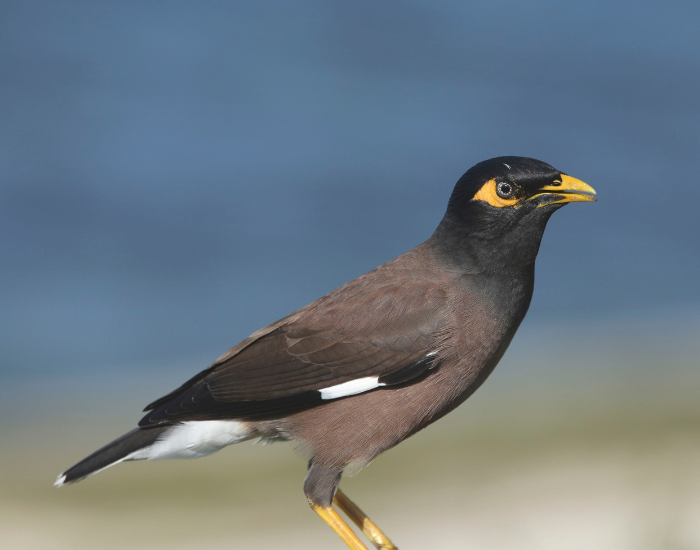
The common myna is one of the most recognisable birds in the starling family across Asia. Brown body, dark head, bright yellow beaks, yellow eye patches, and bold behaviour around humans make this species impossible to miss. Originally native to southern Asia, the common myna has been introduced to Australia, South Africa, the Pacific Islands, and parts of North America through multiple introductions.
Like the European starling, it thrives in cities and urban environments. Common mynas are cavity nesters and fiercely territorial birds. They compete with native species for nesting holes and food, displacing blackbirds and other animals from prime spots. The IUCN lists this bird among the world’s 100 worst invasive species. Their diet includes insects, fruits, and scraps from human food waste. Brown feathers cover most of their body, with dark brown wings and a glossy dark head.
4. Hill Myna (Gracula religiosa)
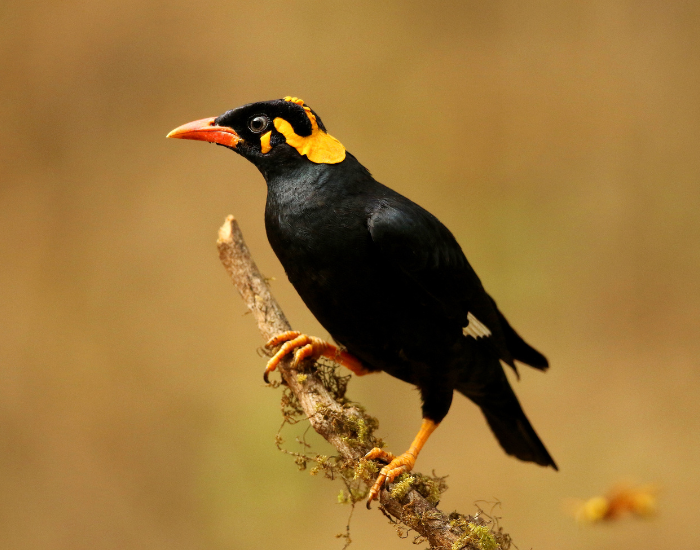
If you have ever heard a bird perfectly mimic a human voice, chances are it was a hill myna. This species is famous worldwide for its extraordinary vocal abilities. Found in tropical rainforests across South and Southeast Asia, hill mynas sport glossy dark plumage with a green and purple sheen, bright yellow-orange wattles on the face, and a thick dark bill. They feed mainly on fruits, berries, and insects found in the tree canopy.
Their conservation status is concerning, wild population numbers have dropped sharply due to trapping for the pet trade. Several countries now restrict their export. Hill mynas prefer dense, humid forests with tall trees, which makes deforestation an additional threat to their population. These birds roost in tree holes at night, and their loud, melodic calls carry through the forest canopy at dawn. Unlike European starlings, hill mynas rarely occur in large flocks or open farmland.
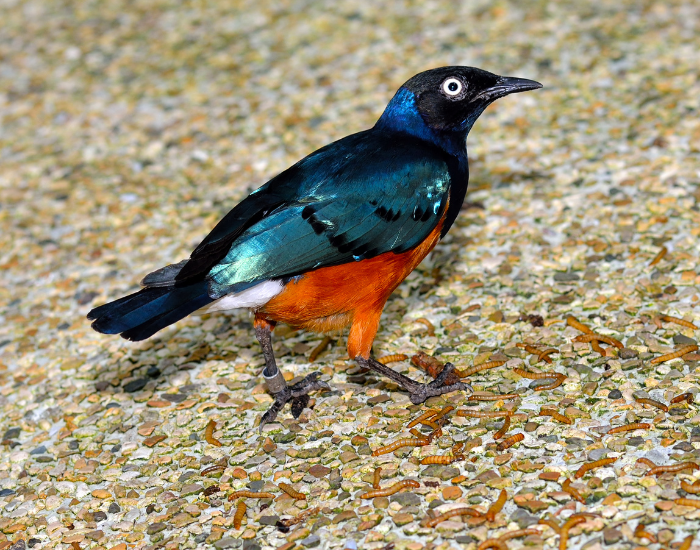
5. Superb Starling (Lamprotornis superbus)
The superb starling is the bird that makes every wildlife photographer in East Africa reach for their camera. Its plumage is an explosion of iridescent blue and green on the back, a bright orange-red belly, and a narrow white band separating the two.
Superb starlings live in savanna, grasslands, and open woodlands across Kenya, Tanzania, Ethiopia, Somalia, and Uganda. They are cooperative breeders, meaning helpers from previous broods assist the breeding pair in raising chicks. Their diet includes insects, fruits, and seeds foraged on the ground and in low bushes.
6. Golden-breasted Starling (Lamprotornis regius)
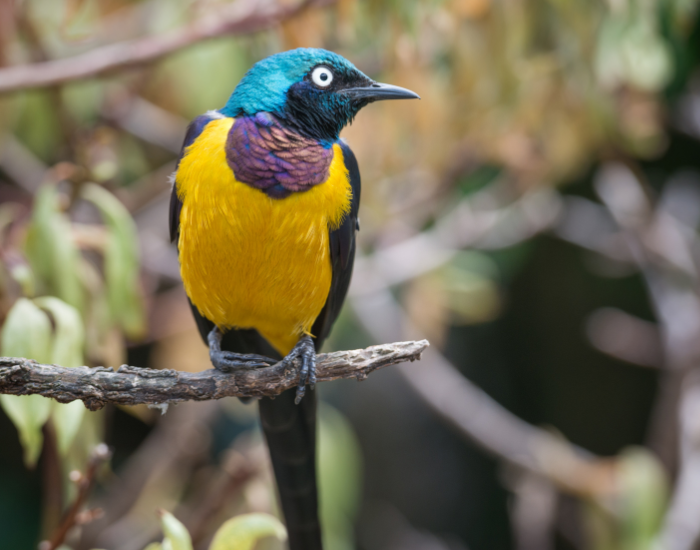
Often called the most beautiful bird in the starling family, the golden-breasted starling has an iridescent dark blue-green back, a vivid golden-yellow breast, and a long tail that sets it apart from other African glossy starlings. This species occurs in the dry thornbush and savanna of East Africa, primarily Somalia, Ethiopia, Kenya, and Tanzania.
Unlike many starlings that travel in large flocks, golden-breasted starlings are usually spotted in small family groups. They are cavity nesters, using holes in trees for breeding. Their diet consists of insects, termites, and fruits. Their conservation status remains stable, but habitat loss in their range is a growing concern.
7. Cape Glossy Starling (Lamprotornis nitens)
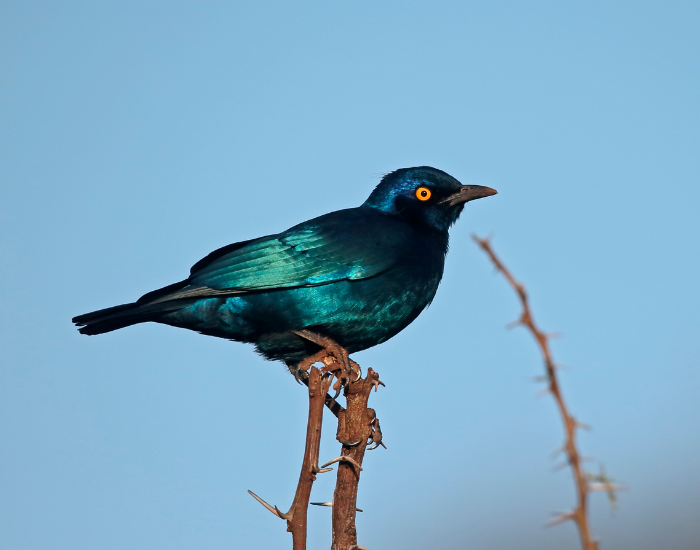
The Cape glossy starling is one of the most common and widespread starlings in southern Africa. Its plumage is a uniform iridescent blue-green, and its bright yellow-orange eyes are striking against that dark, glossy background. These birds occur in open woodlands, farmland, gardens, and urban parks from South Africa to Angola and Mozambique.
Cape glossy starlings are gregarious, they rest and forage in noisy flocks, feeding on fruits, insects, and nectar. They nest in holes in trees and will readily adopt nest boxes. At roosting sites, they gather alongside blackbirds and other birds in mixed flocks. Their bold, confident behaviour around humans makes them a common sight at picnic areas and rest stops across the region. The blue and green iridescence on their bill and feathers shifts depending on light angle.
8. Violet-backed Starling (Cinnyricinclus leucogaster)
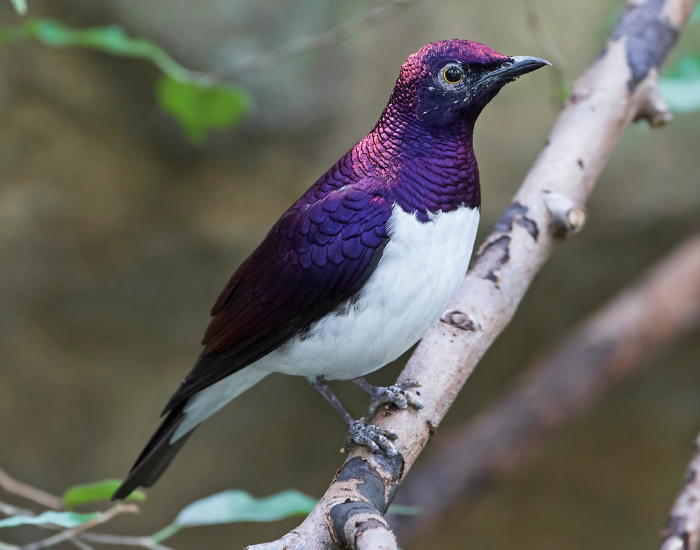
The violet-backed starling is one of the most sexually dimorphic birds in the family. Males have a brilliant iridescent purple back and a clean white belly. Females, by contrast, are brown with streaked underparts, so different that beginners often mistake them for a completely separate species.
This bird occurs across sub-Saharan Africa in woodland, forest edges, and savanna. Violet-backed starlings are frugivores primarily, feeding on fruits and berries in the canopy, though they will also take flying insects. They breed in tree holes during the spring and summer months. Their plumage makes them one of the most photographed starlings on the continent.
9. Bali Myna (Leucopsar rothschildi)
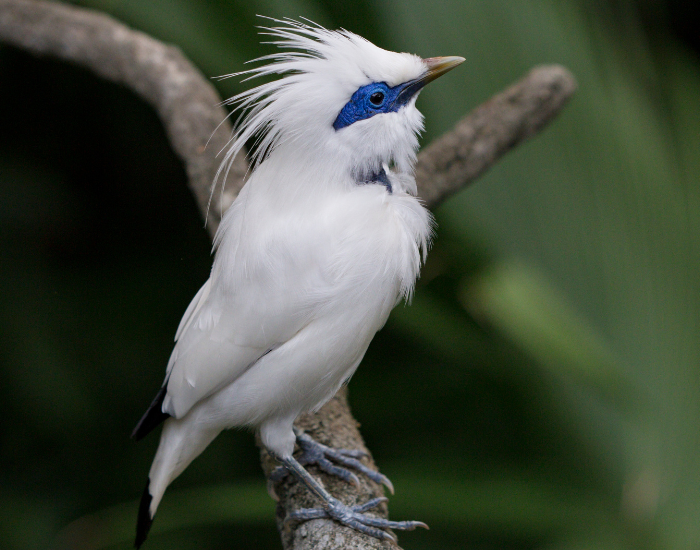
The Bali myna is the starling family’s most urgent conservation story. This white bird with black wing tips, a blue eye patch, and a graceful drooping crest is endemic to a single island, Bali, Indonesia. Fewer than 300-400 adults survive in the wild making them one of the most endangered birds in the world. Habitat destruction, illegal trapping for the pet trade, and competition with other species have devastated its population.
Captive breeding programs at zoos around the world are the species’ best hope for survival. The Bali myna nests in tree holes and feeds on fruits, seeds, and insects on the forest floor. Its conservation status is Critically Endangered on the IUCN Red List. Unlike dark, glossy starlings, the Bali myna’s white feathers make it one of the most visually unusual members of the family. I consider this one of the most beautiful birds in the world, and its decline is a reminder of how fragile island animals can be.
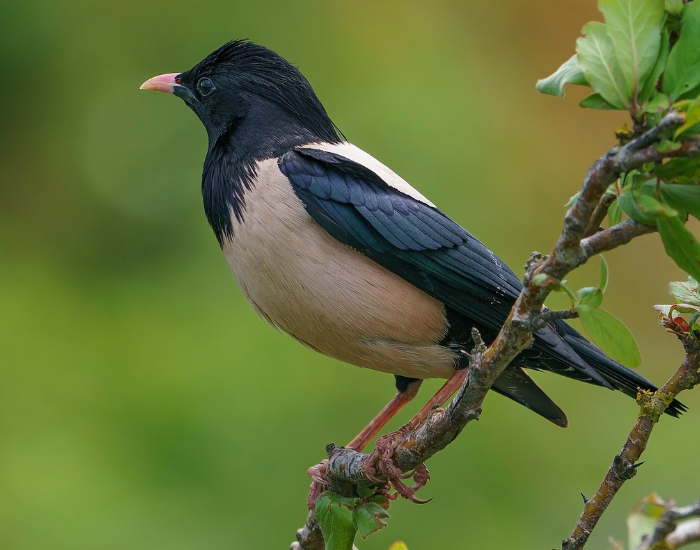
10. Rosy Starling (Pastor roseus)
The rosy starling is a visually stunning bird with pink and black plumage and a shaggy dark crest. Found from southeastern Europe through Central Asia, rosy starlings are migratory and nomadic birds. They breed in the Balkans and Central Asian steppes during summer, then fly south to winter in India and the Arabian Peninsula. What makes them particularly fascinating is their appetite for locusts.
Large flocks of rosy starlings can devour enormous numbers of locusts during outbreaks, making them one of the most effective natural pest control animals in their range. Farmers in Central Asia actually welcome these birds as allies against pests. They feed in open farmland, grassy areas, and agricultural fields, foraging on the ground in large numbers. During the spring breeding season, they nest colonially in rocky crevices, holes in cliffs, and rubble. Their brown and pink feathers make them easy to spot against green vegetation.
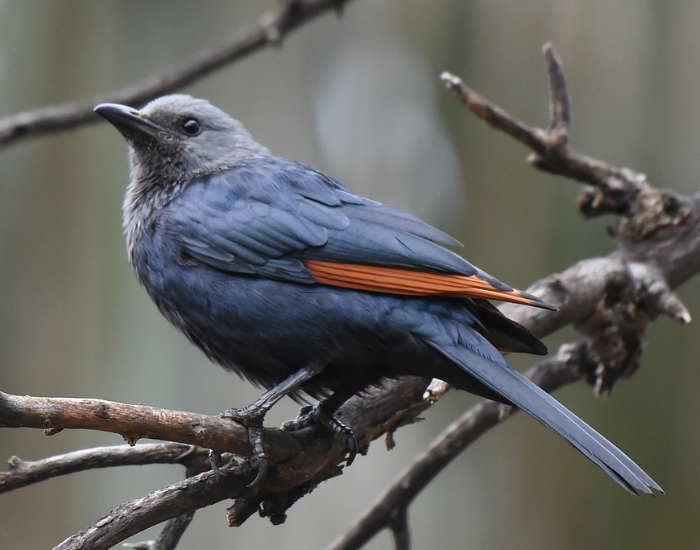
11. Red-winged Starling (Onychognathus morio)
The red-winged starling is a large, dark, glossy bird native to eastern and southern Africa. Males are entirely glossy black with striking brick-red wing patches visible in flight. Females have a grey head and brown upper breast, making them easy to distinguish. You can encounter these birds in South African cities, where they have adapted brilliantly to urban life, perching on buildings, flying between rooftops, and feeding on scraps alongside humans.
Red-winged starlings eat fruits, insects, nectar, and even food from outdoor restaurants. Their bill is dark and strong, suited for cracking open fruits and probing bark for insects. They nest on cliff ledges, buildings, and other artificial structures, making them true urban adapters. At roosting sites they mix with blackbirds and other native species. Their whistled calls — a distinctive cher-leeeoo — carry across city blocks.
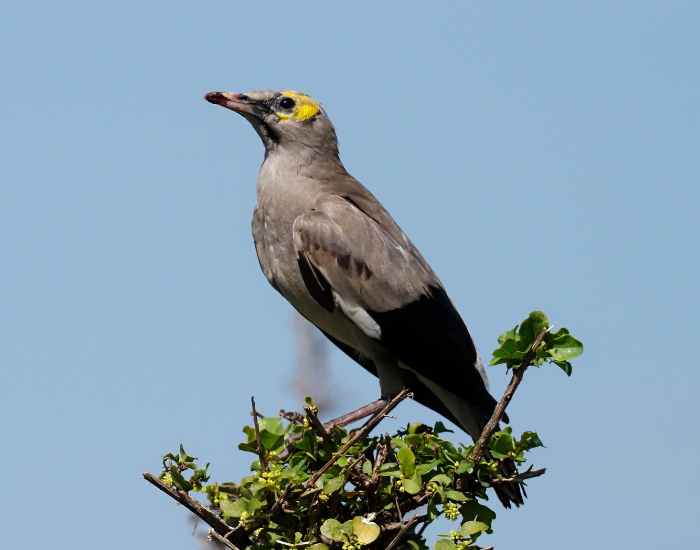
12. Wattled Starling (Creatophora cinerea)
The wattled starling is one of the strangest-looking members of the family. During the breeding season, males develop bare yellow facial skin and fleshy black wattles that hang from the forehead and throat. Outside of breeding, these wattles shrink and the birds look remarkably plain, pale grey-brown with dark wings.
Wattled starlings occur across sub-Saharan Africa in open grasslands, floodplains, and farmland. They are nomadic, following insect swarms and locust outbreaks across vast distances. Large flocks descend on areas with abundant food, breed rapidly, and move on. Their bill is designed for catching insects on the ground and in the air!
13. Asian Glossy Starling (Aplonis panayensis)
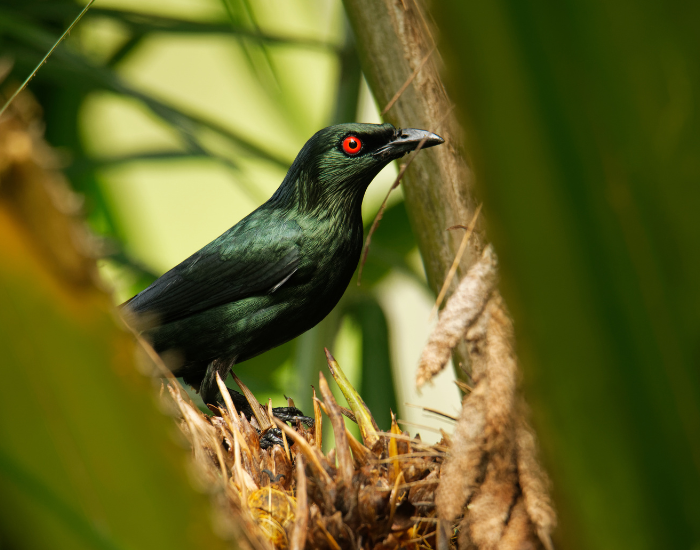
The Asian glossy starling is widespread across Southeast Asia, from India to the Philippines and Indonesia. Adults are entirely dark with a deep green gloss on their feathers and piercing red eyes. Juveniles look completely different, pale below with heavy brown streaking, which often causes confusion in the field.
These birds thrive in forests, plantations, gardens, and cities. They feed on fruits, berries, and insects, foraging in noisy flocks through fruiting trees. Asian glossy starlings nest in tree holes, palm crowns, and even gaps in buildings. Their population remains stable across most of their range, making them one of the more secure species in the family.
FAQs about Starlings
The word “starling” comes from the Old English stærlinc. This is a combination of stær (the bird’s name) and the diminutive suffix -linc, effectively meaning “little starling.” While many believe the name refers to the star-shaped white spots that decorate their winter plumage, most linguists trace the root back to the Proto-Germanic starlaz. It is a happy coincidence of nature that a bird named “little star” eventually grows a coat of feathers that looks like a midnight sky.
Starlings are remarkable for several reasons. Their starling murmurations — massive, swirling flocks that twist and turn through the winter sky — are among the most spectacular displays of collective behaviour in nature. Many species possess extraordinary vocal abilities, including mimicry of human speech, other birds, and environmental sounds.
The name comes from the Old English stærlinc, which essentially means “little star.” This almost certainly refers to the pale, star-shaped spots scattered across the breeding plumage of the common starling (Sturnus vulgaris) during winter. The Latin name Sturnus has ancient roots and was used by Roman naturalists to describe these birds.
Why the Starling Family Matters
The starling family is one of the most ecologically diverse and behaviourally complex bird families on the planet. From the vast winter flocks that darken the skies over European cities to the critically endangered Bali myna clinging to survival on a single island, these birds tell a story about adaptation, resilience, and — in many cases — the consequences of human intervention. Whether you are watching rosy starlings devour locusts on Central Asian farmland or spotting a superb starling steal chips off your plate in Kenya, this family rewards attention.
If you have seen any of these species in the wild, I would love to hear about it in the comments. And if this guide made you curious about other bird families, check out these related posts on Wildlife Nomads.
References:
BirdLife International. (2021) Leucopsar rothschildi. The IUCN Red List of Threatened Species 2021: e.T22710912A183006359. https://dx.doi.org/10.2305/IUCN.UK.2021-3.RLTS.T22710912A183006359.en.
Cabe, P. R. (1993). European Starling (Sturnus vulgaris), version 1.0. In The Birds of North America (A. F. Poole and F. B. Gill, Editors). Cornell Lab of Ornithology. https://doi.org/10.2173/bna.48
Catto, S., Sumasgutner, P., Amar, A., & Cunningham, S. J. (2021). Pulses of anthropogenic food availability appear to benefit parents, but compromise nestling growth in urban red-winged starlings. Oecologia, 197(2), 565–576. https://doi.org/10.1007/s00442-021-05033-3
Craig, A. J. F. K. and C. J. Feare (2020). Wattled Starling (Creatophora cinerea), version 1.0. In Birds of the World (J. del Hoyo, A. Elliott, J. Sargatal, D. A. Christie, and E. de Juana, Editors). Cornell Lab of Ornithology, Ithaca, NY, USA. https://doi.org/10.2173/bow.watsta1.01
Craig, A. J. F. K., C. J. Feare, and A. Bonan Barfull (2020). Spotless Starling (Sturnus unicolor), version 1.0. In Birds of the World (J. del Hoyo, A. Elliott, J. Sargatal, D. A. Christie, and E. de Juana, Editors). Cornell Lab of Ornithology, Ithaca, NY, USA. https://doi.org/10.2173/bow.sposta1.01
Stuart, K. C., Hofmeister, N. R., Zichello, J. M., Rollins, L. A., & Cassey, P. (2023). Global invasion history and native decline of the common starling: Insights through genetics. Biological Invasions, 25(4), 1291–1316. https://doi.org/10.1007/s10530-022-02982-5
Jeschke, J. M., & Strayer, D. L. (2005). Invasion success of vertebrates in Europe and North America. Proceedings of the National Academy of Sciences, 102(20), 7198–7202. https://doi.org/10.1073/pnas.0501271102